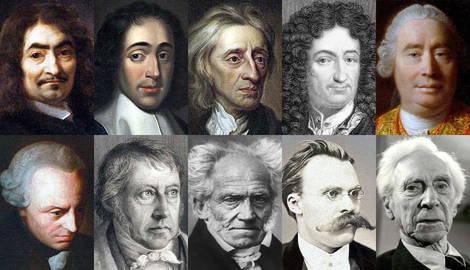

The Modern Age represents one of the most radical turning points in the history of human thought. Between the 17th and 19th centuries, traditional authorities were questioned, scientific reasoning gained prominence, and the individual emerged as a central subject of philosophical inquiry. Thinkers of this period reshaped humanity’s understanding of knowledge, reality, politics, morality, and the self. Their ideas laid the foundations for modern science, democracy, psychology, and contemporary philosophy. Modern philosophers transformed the intellectual landscape of the Western world.
1. René Descartes
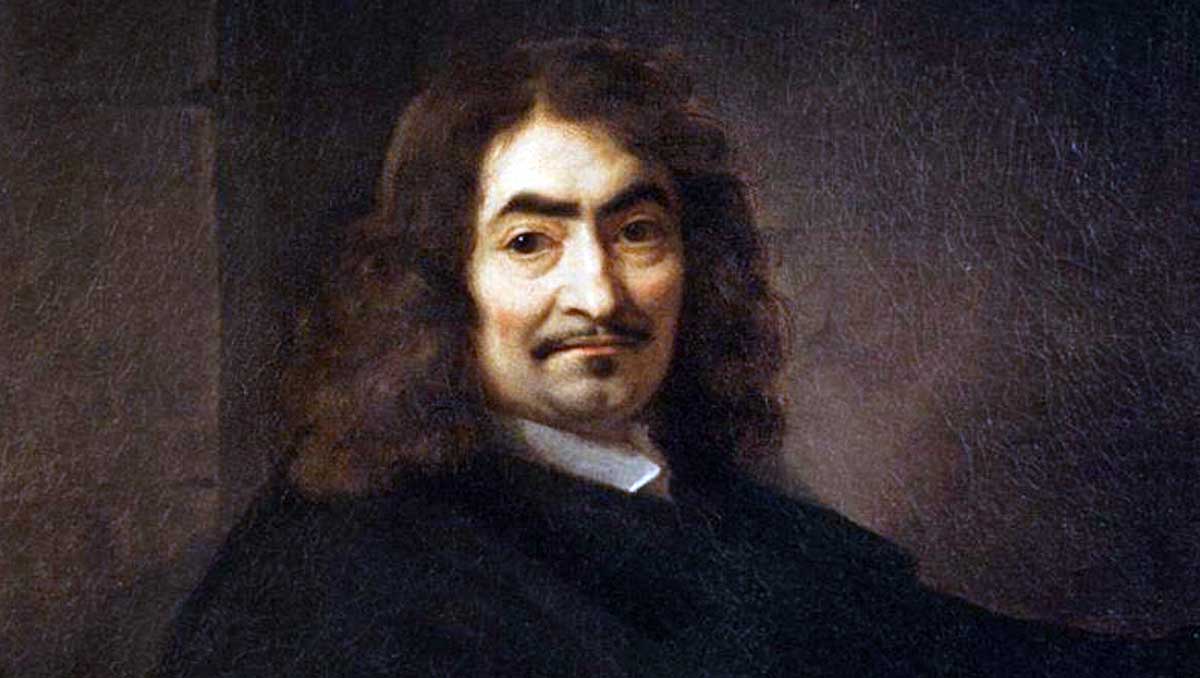
“I think, therefore I am.”
René Descartes is widely regarded as the founder of modern philosophy for his decisive shift toward methodical doubt and rational inquiry. Writing in the 17th century, Descartes sought to establish knowledge on a foundation so certain that it could withstand skepticism. In his Meditations on First Philosophy, he famously employed systematic doubt, questioning all beliefs that could conceivably be false, including sensory experience and inherited authority.
This process led to his most famous conclusion: cogito, ergo sum, meaning “I think, therefore I am.” Descartes argued that while everything else could be doubted, the act of doubting and therefore thinking itself proved the existence of the thinking subject. From this certainty, he attempted to rebuild knowledge through reason alone, emphasizing the role of clear and distinct ideas.
Descartes also introduced a dualistic view of reality, distinguishing between mind and body. This mind–body dualism profoundly influenced later debates in metaphysics, psychology, and science, where the concept of cerebral death or brain death was still unknown. Beyond philosophy, Descartes made major contributions to mathematics and science, including the development of analytic geometry. His work reshaped Western thought by prioritizing rational certainty, individual consciousness, and methodological rigor as the foundations of knowledge.
2. Baruch Spinoza
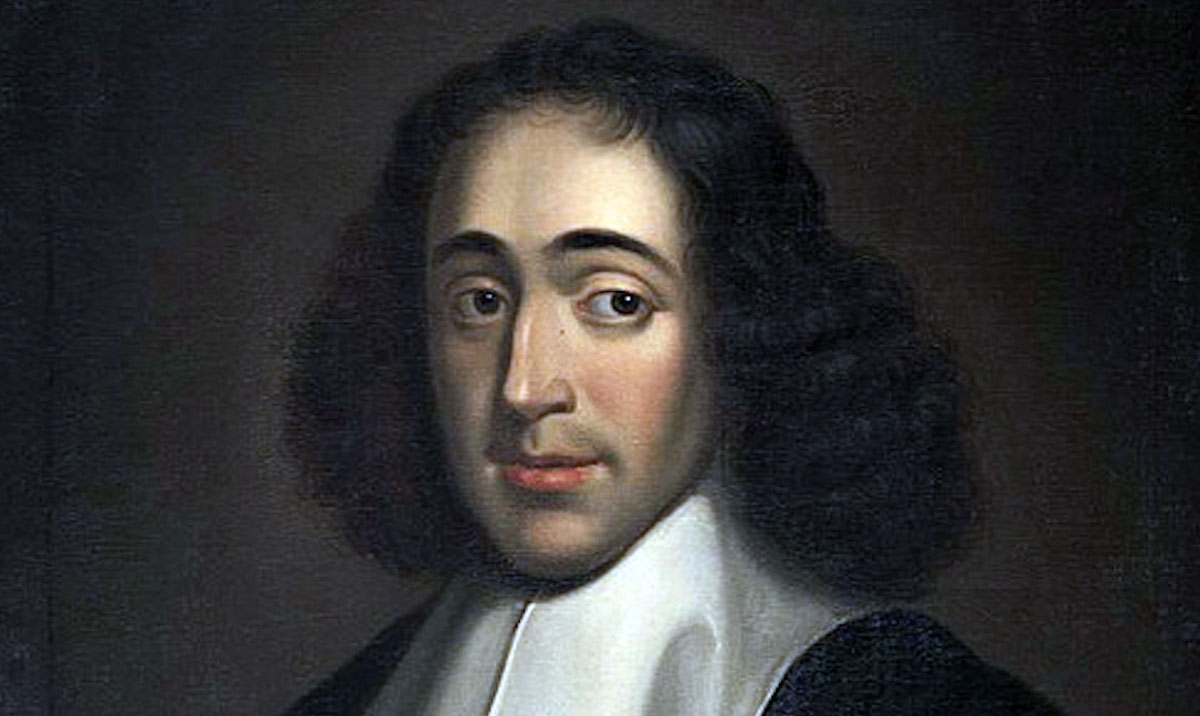
“The more we understand individual things, the more we understand God.”
Baruch Spinoza was one of the most original and radical thinkers of modern philosophy, developing a system that challenged traditional views of God, nature, and human freedom. Writing in the 17th century, Spinoza sought to construct philosophy with the rigor of mathematics, most notably in his major work, Ethics, which is written in a geometric style of definitions, axioms, and propositions.
At the center of Spinoza’s thought is the claim that there exists only one substance, which he identified as God or Nature. Unlike the transcendent God of traditional theology, Spinoza’s God is immanent, identical with the natural order itself. Everything that exists is a mode of this single substance and follows from it by necessity. As a result, Spinoza rejected free will in the traditional sense, arguing that human actions are determined by natural causes, just like all other events.
Spinoza’s ethics, the major part of his philosophy, is grounded in understanding this necessity. Human suffering arises from inadequate ideas and emotional bondage, while freedom consists in achieving a rational understanding of nature and oneself. Through reason, individuals can transform passive emotions into active ones, attaining tranquility and intellectual love of God. Spinoza’s work profoundly influenced later philosophy, offering a vision of freedom rooted in rational self-understanding.
3. John Locke
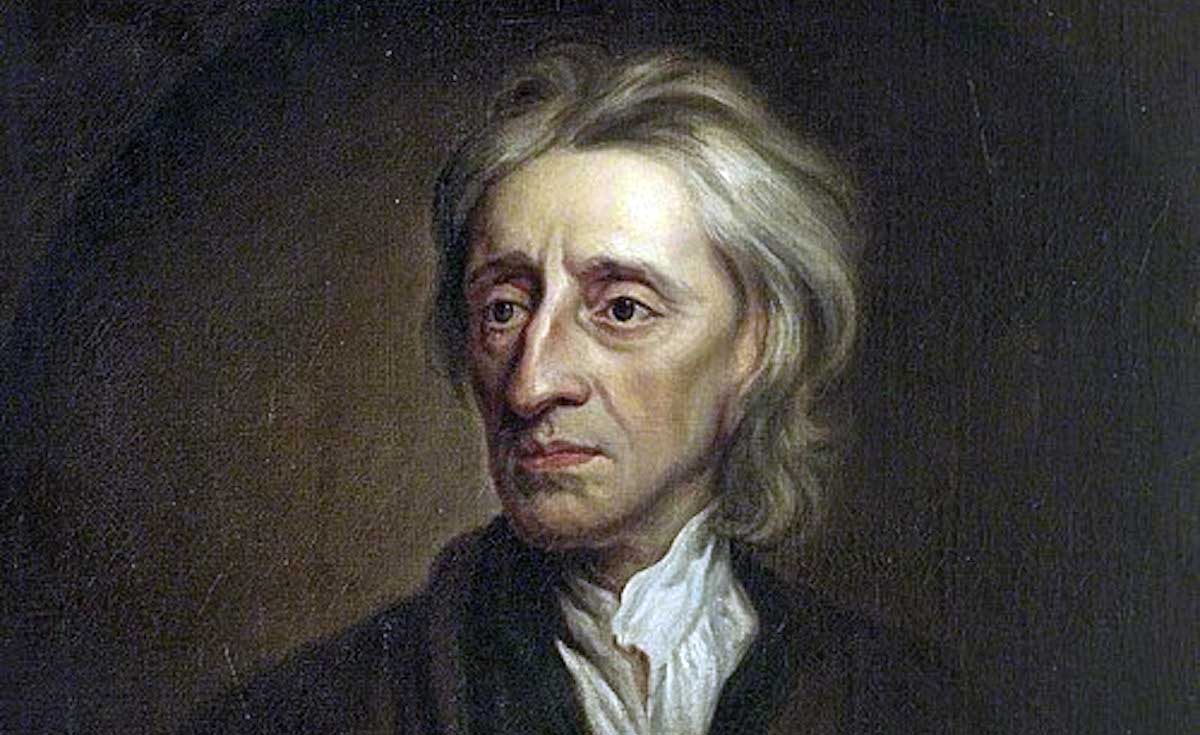
“No man’s knowledge here can go beyond his experience.”
John Locke was another central figure of modern philosophy and, much in contrast to the previously mentioned authors, one of the founders of empiricism, shaping debates about knowledge, politics, and human understanding. Writing in the late 17th century, Locke rejected the idea of innate ideas, arguing instead that the human mind at birth is a tabula rasa, or blank slate. In his Essay Concerning Human Understanding, he claimed that all knowledge arises from experience, through sensation and reflection.
Beyond epistemology, Locke made enduring contributions to political philosophy. In his Two Treatises of Government, he argued that legitimate political authority rests on the consent of the governed and that individuals possess natural rights to life, liberty, and property. Governments exist to protect these rights and may be justly overthrown if they fail to do so. Locke’s thought deeply influenced Enlightenment philosophy and the development of modern liberal democracy. His emphasis on experience, individual rights, and limited government remains very influential for political institutions all around the world.
4. Gottfried Wilhelm Leibniz
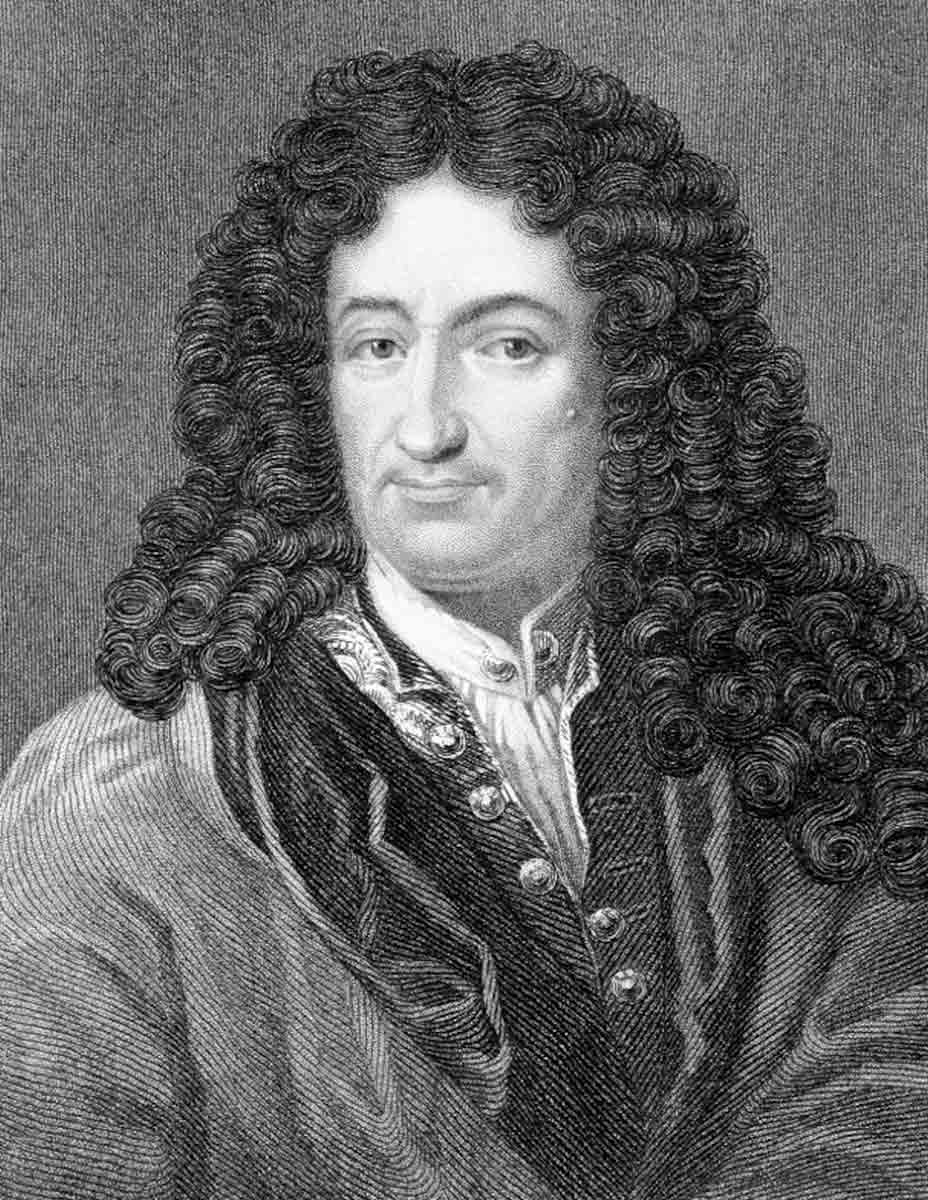
“Nothing happens without a reason.”
Gottfried Wilhelm Leibniz was a central figure of modern rationalist philosophy, known for developing a comprehensive metaphysical system grounded in reason, logic, and harmony. Writing in the late 17th and early 18th centuries, Leibniz sought to reconcile science, theology, and philosophy into a unified rational framework. At the core of his metaphysics is the concept of monads, simple, immaterial substances that make up reality, much like the atoms that science would discover later on. Each monad reflects the entire universe from its own perspective, yet monads do not interact causally with one another. Instead, their apparent coordination is explained by Leibniz’s doctrine of pre-established harmony, according to which God arranged the universe so that all monads unfold in perfect correspondence.
Leibniz also defended the Principle of Sufficient Reason, which states that nothing happens without a rational explanation, and the Principle of the Identity of Indiscernibles, which holds that no two distinct things can be exactly alike. In his Theodicy, he famously argued that this is the “best of all possible worlds,” claiming that God, as a perfectly rational being, chose the optimal balance of order and freedom. Beyond philosophy, Leibniz made major contributions to mathematics, including the development of calculus, and to logic.
5. David Hume
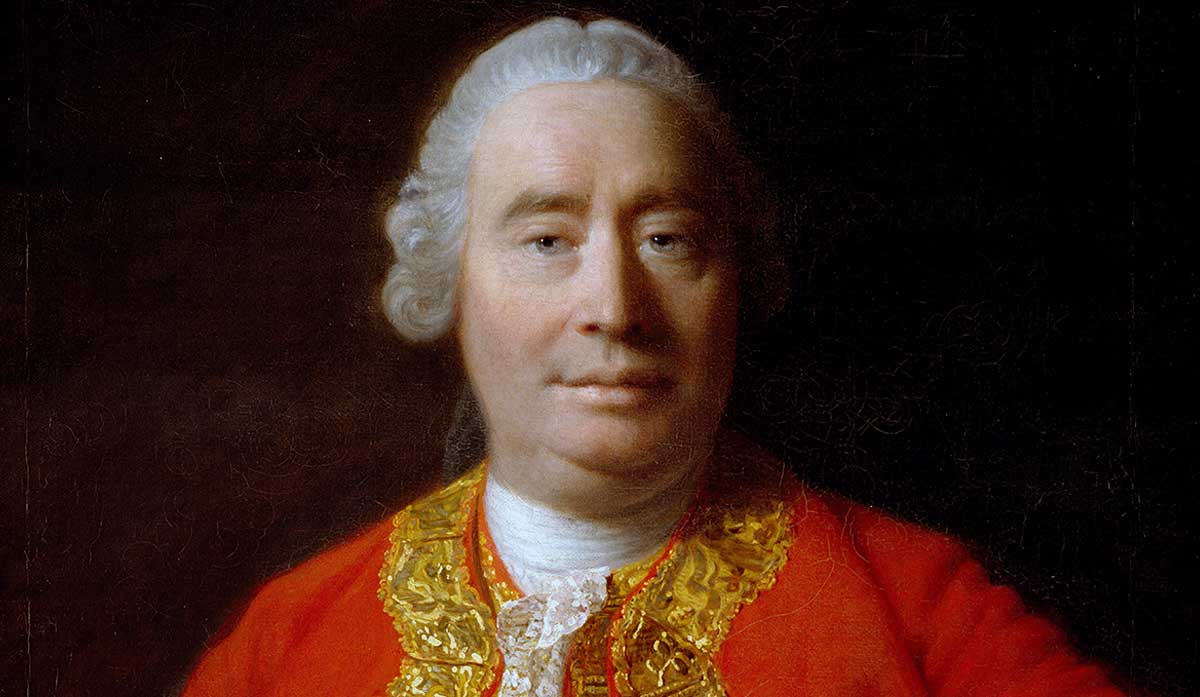
“A wise man proportions his belief to the evidence.”
David Hume was one of the most influential empiricist philosophers of the modern era, much like the aforementioned John Locke, known for his rigorous skepticism and profound impact on epistemology, metaphysics, and ethics. Writing in the 18th century, Hume sought to apply the methods of empirical science to the study of human nature, most notably in A Treatise of Human Nature and later works.
Hume argued that all ideas originate from sensory impressions, rejecting any concept not traceable to experience. This led him to challenge traditional notions of causation, substance, and the self. He famously claimed that causality is not rationally perceived but inferred through habit: we expect one event to follow another because of repeated experience, not logical necessity. Similarly, Hume denied the existence of a permanent self, describing personal identity as a bundle of perceptions in constant flux.
In ethics, Hume rejected moral rationalism, arguing that moral judgments arise from sentiment rather than reason. Reason, he claimed, is the “slave of the passions,” serving to organize desires rather than generate values. Hume’s skepticism deeply influenced later philosophy, particularly Immanuel Kant, who credited Hume with awakening him from “dogmatic slumber.” His work reshaped philosophical inquiry by exposing the limits of reason and grounding knowledge in human experience.
6. Immanuel Kant
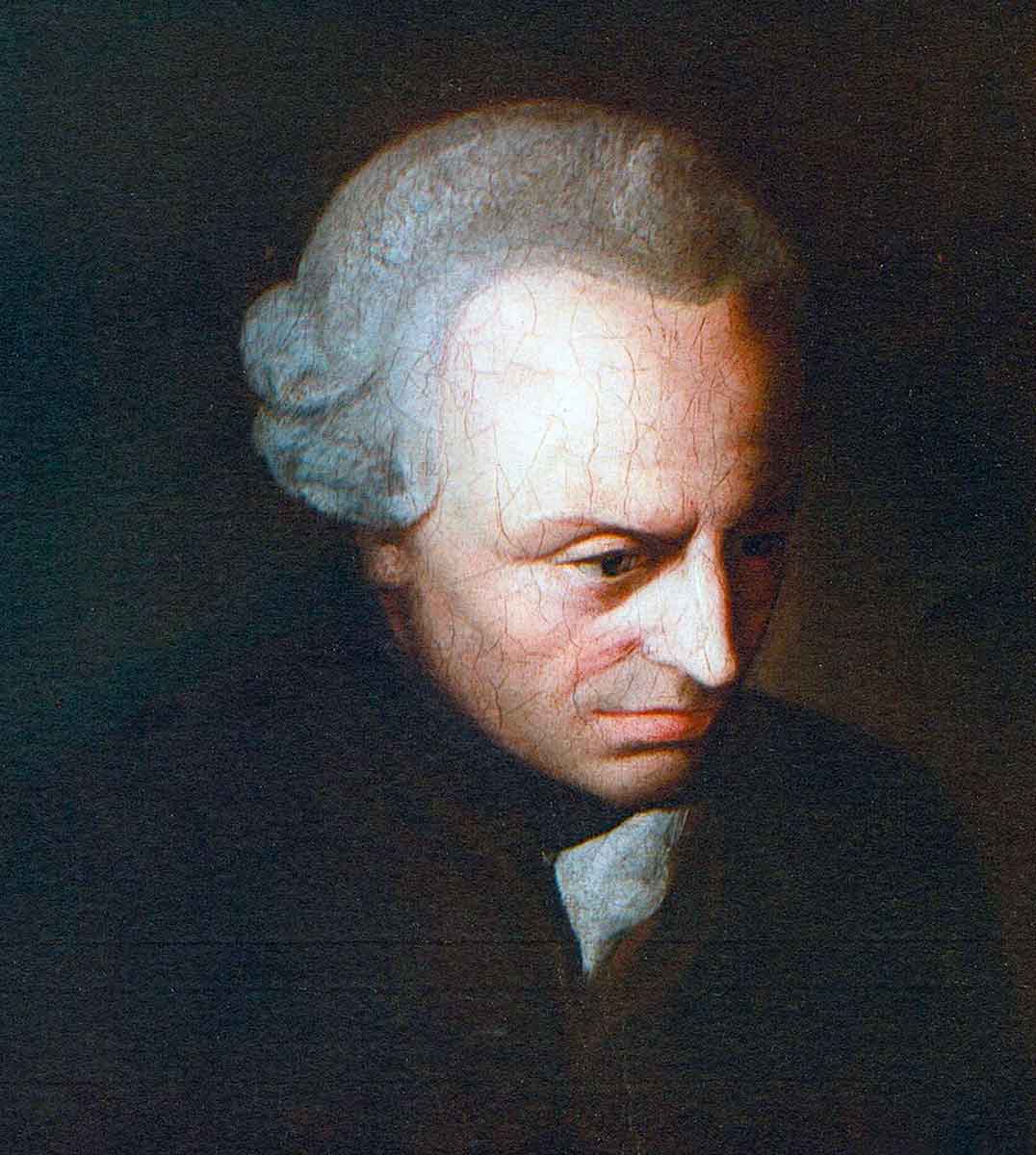
“Sapere aude! Have courage to use your own understanding.”
Immanuel Kant is one of the most influential philosophers in the history of Western thought, best known for synthesizing rationalism and empiricism, the two philosophical schools that we have analyzed so far, into a brand new philosophical framework. Writing in the late 18th century, Kant sought to respond to the skepticism of David Hume while preserving the possibility of objective knowledge. His most important work, Critique of Pure Reason, examines the limits and conditions of human understanding.
Kant argued that knowledge arises from the interaction between sensory experience and the mind’s innate structures. Space and time are not properties of the external world itself but forms of human intuition, while categories such as causality and substance organize experience. As a result, we can know phenomena, meaning the world as it appears to us, but not noumena, which are the things as they are in themselves.
In ethics, Kant developed a rigorous moral philosophy centered on reason and duty. In the Critique of Practical Reason and Groundwork of the Metaphysics of Morals, he introduced the categorical imperative, which demands that moral actions be universalizable and respect the rational autonomy of all persons. Kant’s work reshaped metaphysics, epistemology, and ethics, establishing a critical philosophy that continues to influence modern thought.
7. Georg Wilhelm Friedrich Hegel
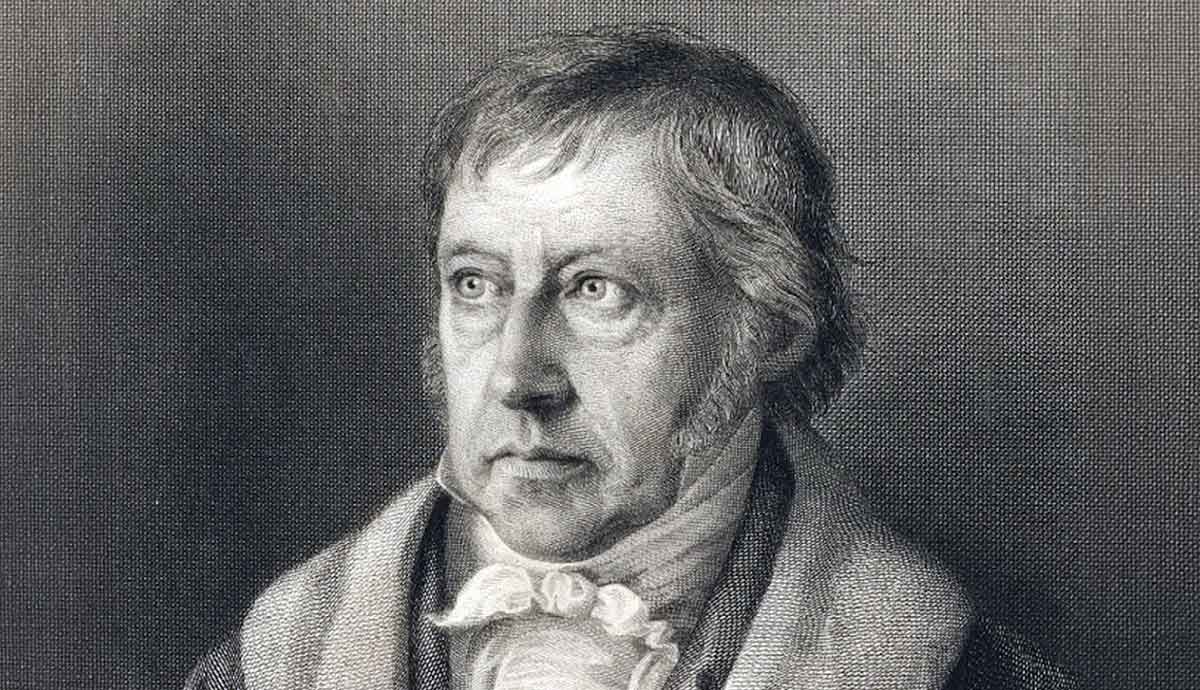
“The real is rational, and the rational is real.”
Georg Wilhelm Friedrich Hegel was a central figure of German Idealism, known for developing a dynamic and systematic philosophy of history, reality, and consciousness. Writing in the early 19th century, Hegel rejected static views of truth, arguing instead that reality unfolds through a rational process over time. His philosophy sought to explain how thought, society, and history develop according to internal logical necessity.
At the heart of Hegel’s system is dialectical development, often summarized (though simplistically) as thesis, antithesis, and synthesis. Through conflict and contradiction, ideas and social forms evolve toward higher levels of self-understanding. This process culminates in Absolute Spirit, where reality fully comprehends itself through philosophy, art, and religion.
In Phenomenology of Spirit, Hegel traced the development of consciousness from immediate sense experience to self-consciousness, reason, and ethical life. He argued that freedom is realized not in isolation, but within social institutions such as the family, civil society, and the state. History itself is rational, guided by the progressive realization of human freedom. Hegel’s influence was vast, shaping later movements including Marxism, existentialism, and phenomenology. His work transformed philosophy by viewing reality as a historical process.
8. Arthur Schopenhauer
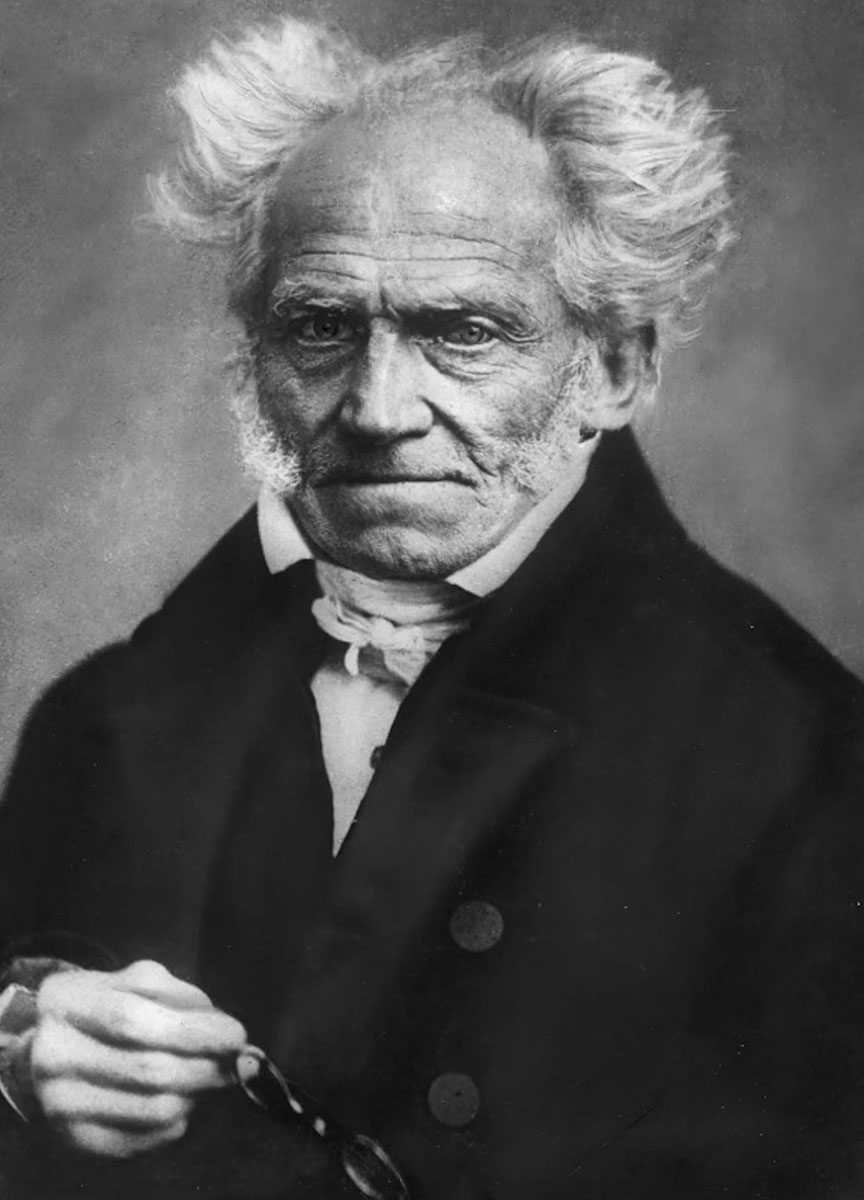
“Life swings like a pendulum backward and forward between pain and boredom.”
Arthur Schopenhauer was a distinctive and influential philosopher of the 19th century, as well as the greatest critic of the previously mentioned Hegel, known for his deeply pessimistic metaphysics and emphasis on the irrational forces underlying human existence. Strongly influenced by Kant, Schopenhauer accepted the distinction between phenomena and noumena but sought to identify the thing-in-itself that Kant claimed was unknowable.
In his major work, “The World as Will and Representation,” Schopenhauer argued that reality has two aspects. As representation, the world appears to us through perception and cognition. As will, it is an unconscious, blind, and relentless force driving all natural processes and human desires. This will is the source of suffering, as it produces endless striving without lasting satisfaction.
Schopenhauer’s ethics centers on compassion as the basis of moral life. Since all beings are manifestations of the same will, recognizing this shared condition leads to empathy and moral concern. He believed that suffering could be temporarily alleviated through aesthetic contemplation, especially in art and music, which suspend the demands of the will. More enduring relief, however, comes from ascetic practices that deny desire, as Schopenhauer was deeply inspired by Buddhism. Schopenhauer’s work profoundly influenced later thinkers, including Nietzsche, Freud, and existentialist philosophers; however, his work only became truly successful after his death.
9. Friedrich Nietzsche
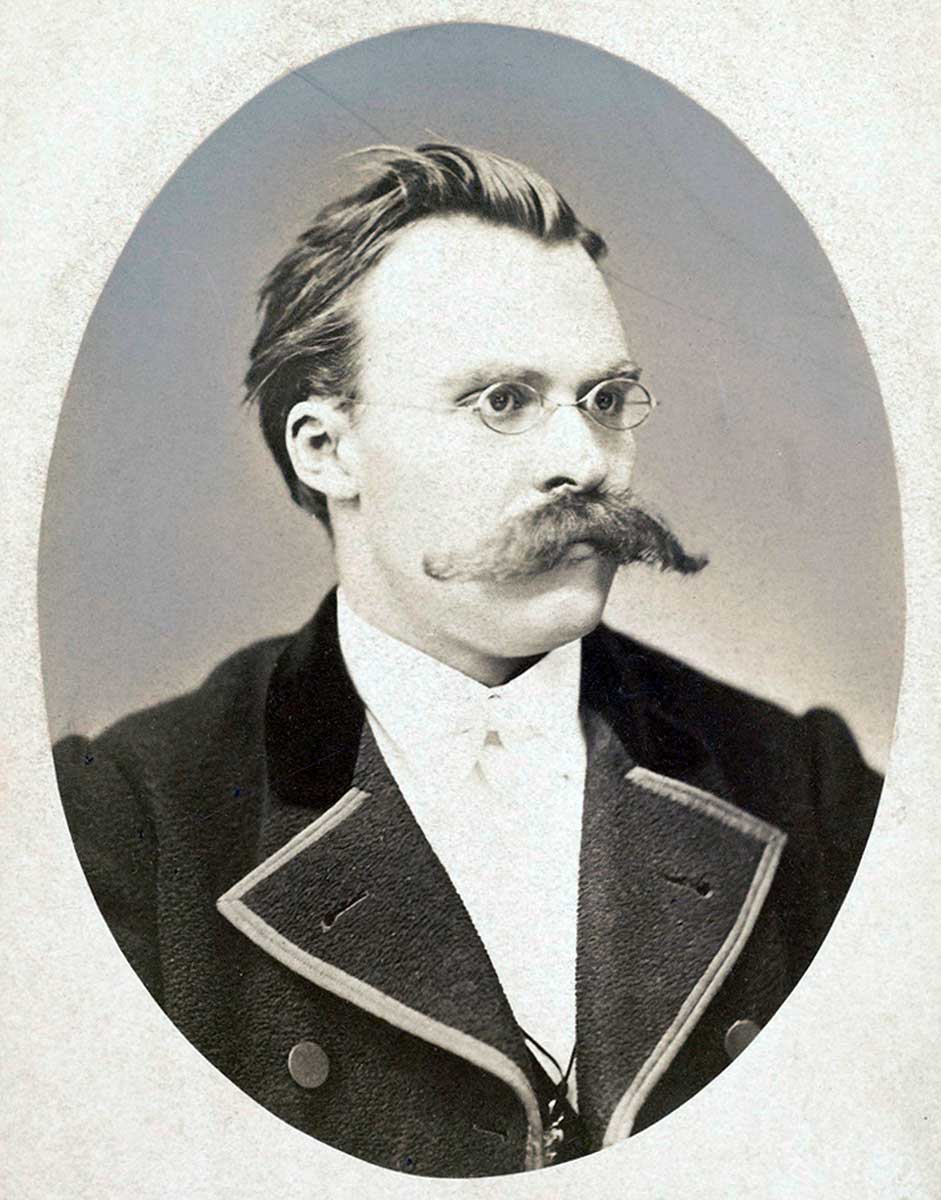
“He who has a why to live can bear almost any how.”
Friedrich Nietzsche was one of the most provocative and original philosophers of the modern era, known for his radical critique of morality, religion, and traditional philosophy. He is also very famous in pop culture. Writing in the late 19th century, Nietzsche challenged the foundations of Western thought, which he believed were shaped by life-denying values. Rather than constructing a systematic philosophy, he wrote in aphorisms, poetry, and polemic, aiming to awaken rather than reassure.
Central to Nietzsche’s work is the critique of slave morality, which he associated with Christianity and moral systems that exalt humility, obedience, and self-denial. He contrasted this with master morality, rooted in strength, creativity, and affirmation of life. Nietzsche famously declared the “death of God,” signaling the collapse of absolute values and the resulting crisis of meaning in modern culture.
To confront this crisis, Nietzsche introduced concepts such as the Übermensch, the ideal of self-overcoming and value creation, and the will to power, the fundamental drive underlying human behavior. He also proposed the thought experiment of eternal recurrence, challenging individuals to live as if they would be happy repeating their lives endlessly. This philosophy deeply influenced existentialism, psychology, and postmodern authors.
10. Bertrand Russell
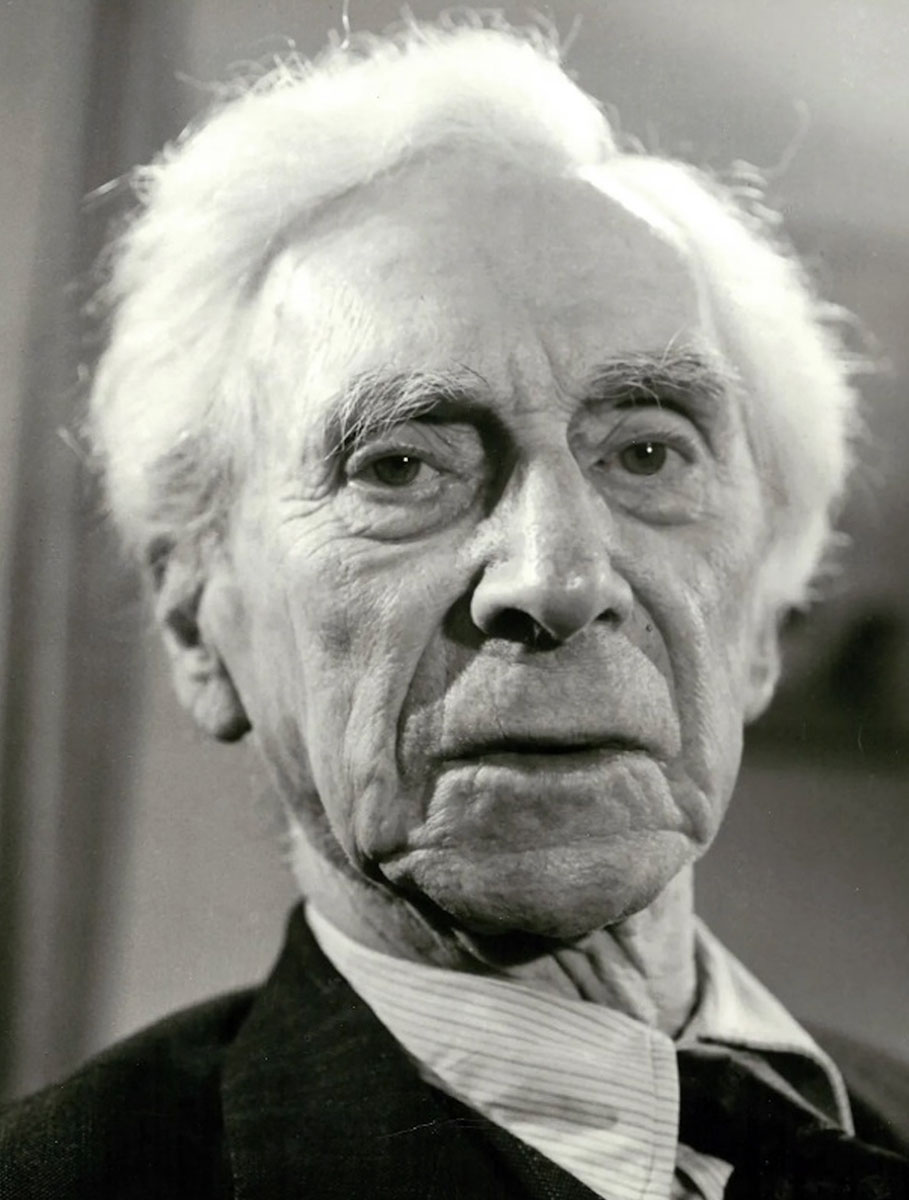
“The good life is one inspired by love and guided by knowledge.”
Bertrand Russell was one of the most influential philosophers of the 20th century, playing a central role in the development of analytic philosophy and modern logic, with many considering him the last modern philosopher, marking the shift between modern and contemporary philosophy; much like Descartes marking the transition between medieval and modern philosophy. His work sought to bring clarity, precision, and scientific rigor to philosophical inquiry. Writing across philosophy, mathematics, and social criticism, Russell aimed to eliminate confusion through logical analysis.
One of Russell’s most significant contributions was his work in logic and the foundations of mathematics. In Principia Mathematica, co-authored with Alfred North Whitehead, he attempted to derive mathematics from logical principles. His theory of descriptions revolutionized the philosophy of language by showing how seemingly problematic statements could be clarified through logical form. Russell also addressed major philosophical questions in epistemology and metaphysics, advocating a form of logical atomism, which held that the world consists of independent facts that can be analyzed through language. He emphasized the importance of scientific knowledge and was skeptical of metaphysical speculation not grounded in empirical or logical support.
Beyond academic philosophy, Russell was an outspoken public intellectual. He wrote extensively on ethics, education, religion, and politics, promoting rationalism, pacifism, and humanistic values. His commitment to reason and clarity left a lasting impact on modern philosophy and intellectual life.