The urge for “more” isn’t new. Ancient Greeks saw how people leaned toward accumulating wealth, status, possessions, even knowledge, and treated it not as sin but as a matter of proportion. How much is enough, and what happens when wanting more warps one’s sense of measure? Concepts like sophrosyne and pleonexia helped philosophers show how excess could distort the self. Their varied responses, from Stoic detachment to Epicurean simplicity, all suggested that desire is natural, provided it’s shaped rather than allowed to run wild.
Pleonexia and the Problem of “More Than One’s Share”
Greek writers used the word pleonexia to describe the urge to take more than one’s fair share. It was a subtle word meaning something less than “greed” but more than “ambition.” In daily life, it could mean grabbing the largest portion at a meal. In politics, it was far more serious and indicated a threat to the balance of a community.
Plato and Aristotle both saw pleonexia as a force that, once unleashed, was hard to contain as it defied easy limits. Aristotle in particular saw it as a type of injustice because it involves taking or wanting what belongs to someone else. At worst, pleonexia was a persistent and insatiable drive that could disrupt relationships, households, and communities.
Against this tendency, Greek thought consistently affirmed the need for measuredness. The relevant virtue, called sophrosyne, meant self-control (sometimes translated as “soberness”). Rather than demanding abstinence or denial, it stressed the importance of keeping one’s desires in alignment with both nature and circumstance. The real issue was not how much one possessed, but whether one’s wants were appropriate and reasonable. A person could be wealthy and still show sophrosyne, just as someone with few possessions could be unsettled by wanting more than reason allowed.
This concern with balance rested on a broader assumption in Greek ethics: human beings need internal principles to check excessive desire. Pleonexia, then, was not only a warning about consumption but an early attempt to describe a psychological propensity towards “more” as the answer to dissatisfaction. Long before modern economics or consumer culture, it shaped how the Greeks thought about accumulation and its effects on life.
The Stoic Way
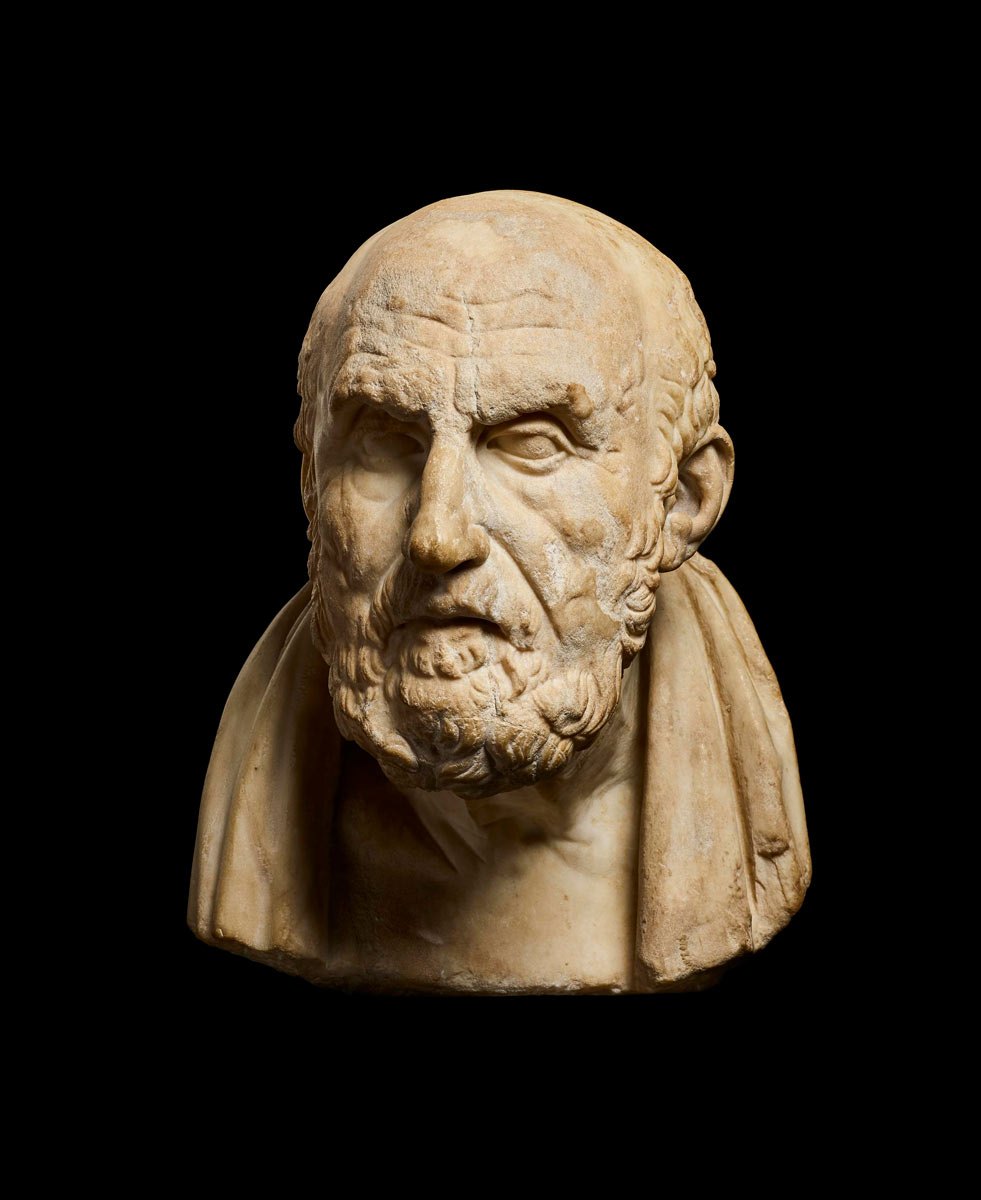
The Stoics recognized that people acquire goods and that life requires provisioning and preparation. Their primary concern, however, was the extent to which sought-after or tightly held possessions could control or disturb the mind. Motivations such as wealth, reputation, or comfort were not inherently corrupting. Danger arose when a person’s identity became entangled with them and one’s wellbeing fluctuated according to their evolving state.
In response, Stoic teaching encouraged a stance of use without attachment. A person should be able to lose possessions without losing themselves. The founder of Stoicism, Zeno of Citium, argued that material things are indifferent by nature and that virtue alone defines the good life. Chrysippus and other early thinkers clarified that certain indifferents such as health or wealth might be preferred, yet they remain outside the soul and cannot determine its goodness. This principle was later echoed by Roman figures such as Seneca and Epictetus.
How one was meant to internalize Stoic principles was developed through specific exercises. In one such example, practitioners imagined loss in order to disentangle the psyche from reliance on unhealthy values. As Seneca says in his letter to Lucilius: “Gentle comes the blow of misfortune that has been anticipated…And so a wise person gets used to future misfortunes and what other people make bearable by long suffering he makes bearable by prolonged thinking” (Letter 76: 34-35).
Such practices thus aimed to prevent possessions from dominating the self. When possessions become essential to identity, they cease to be tools and become liabilities. The Stoic way of living meant moving through the world unenslaved by fortune, unshaken by gain or loss, and guided by reason and virtue rather than the happiness suggested by wealth and objects.
Epicureanism and Reducing Needs
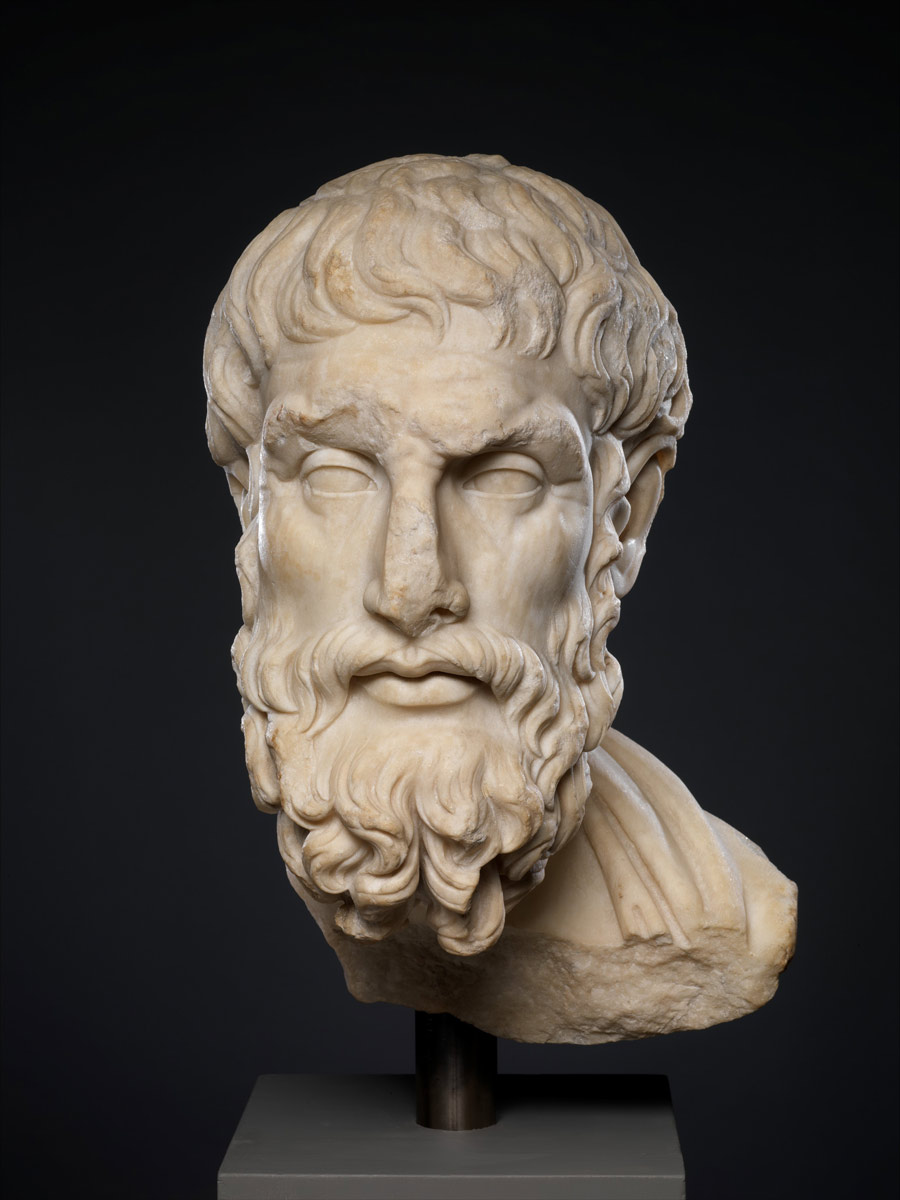
If Stoicism addressed accumulation by loosening emotional attachment, Epicureanism approached it by reducing desire itself. The Epicureans were not minimalists in the modern lifestyle sense, nor were they hostile to pleasure. But they did notice that its pursuit often increased anxiety rather than satisfaction. People exhausted themselves chasing goods that promised happiness but delivered restlessness.
Epicurus responded with a nuanced classification of desires. Some were natural and necessary, like food, shelter, and companionship. Some were natural but unnecessary, like fine meals or elaborate leisure. These were pleasant but not essential. Others were neither natural nor necessary and arose from social comparison, vanity, or convention. These last desires were the most dangerous because they multiplied without limit and depended on circumstances outside one’s control.
For Epicurus, the aim was to organize one’s needs in a way that made tranquility (ataraxia) possible and allowed for the quiet pleasure of a life free from disturbance (aponia). Pleasure, in his view, was not a matter of intensity but of stability aided by the steady contentment that comes from wanting little and lacking nothing essential. To achieve this, he advised curating one’s life so it required less constant pursuit of superfluous indulgences. When longing shrinks to what is sufficient, satisfaction thus becomes easier to attain. Similarly, accumulation becomes unnecessary once one recognises how few things are truly needed for wellbeing. Instead of endlessly adding to life, the Epicurean method tries to remove the pressure that incessant craving places upon it.
Cynic Minimalism
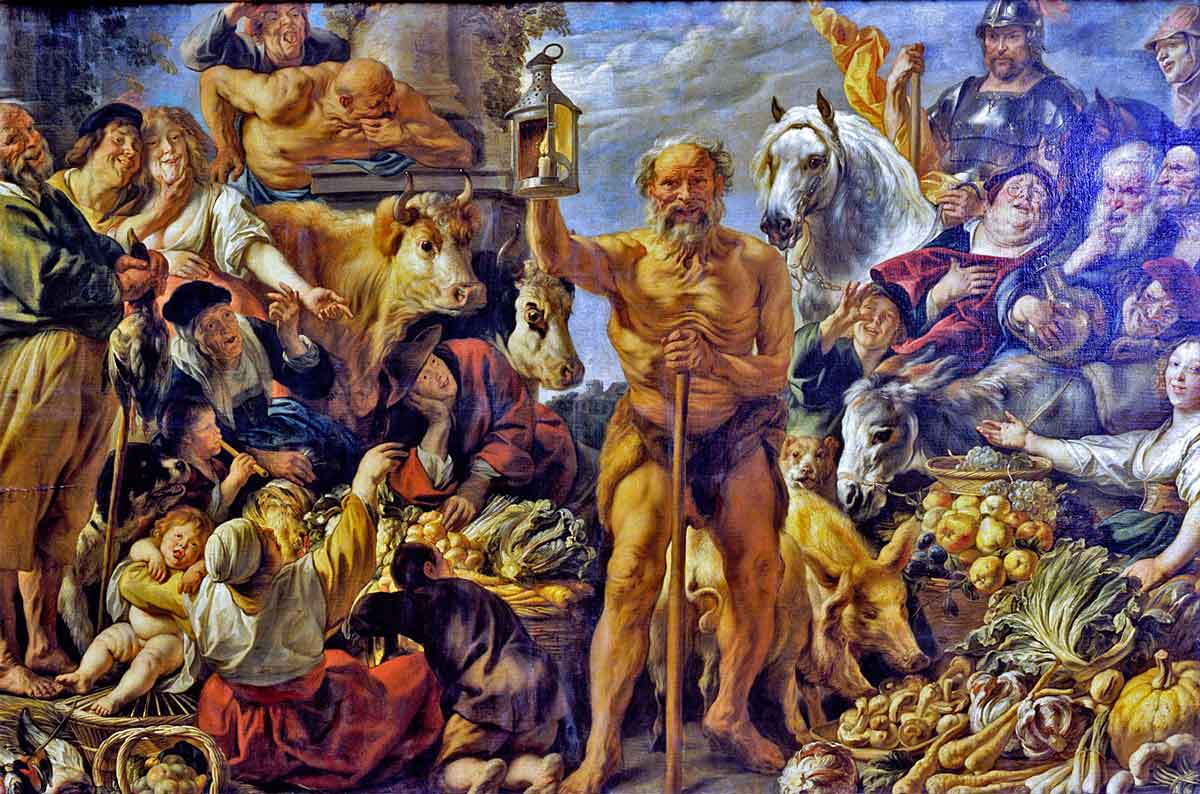
The ancient Cynics approached the problem of accumulation by questioning what a person genuinely needs to live well. Their critique was direct, often unsettling, and aimed at showing how much of everyday life rested on habit and social expectation rather than genuine requirement. They used simplicity not as a badge of virtue but as a way to unsettle assumptions about what a person must have to live well.
Diogenes, the most famous of them, lived in a large jar in Athens and carried almost nothing. He begged for food, wore only a cloak, and wandered the streets confronting people with questions about wealth and status. At one point, when he saw a boy drinking from his hands, he threw away his cup, saying it was unnecessary. His life was not strictly meant as an example but as a challenge: if someone could live with almost nothing, what did most people really need?
Cynic teaching often worked through shock. Its philosophers acted in ways meant to make people uncomfortable and sought to show how much of life was shaped by habit and expectation rather than need. The husband and wife pairing of Crates and Hipparchia, for example, gave away wealth, rejected private domestic life, and lived their philosophy openly in public. They consequently turned everyday norms of respectability and gender roles into objects of scrutiny.
For Cynics, luxury and unnecessary possessions were regarded as distractions that often dictated how people measured value in themselves and others. Simplicity produced a particular freedom. Fewer possessions meant fewer dependencies, less anxiety, and reduced vulnerability to loss or judgment. In a society obsessed with accumulation, the Cynics treated their unique version of minimalism as a method for discerning what genuinely supports life and conversely what only clutters it. Their example suggests that living better does not always mean adding more, but learning how much can be let go without losing what is essential.
Socrates and the Limits of Knowledge
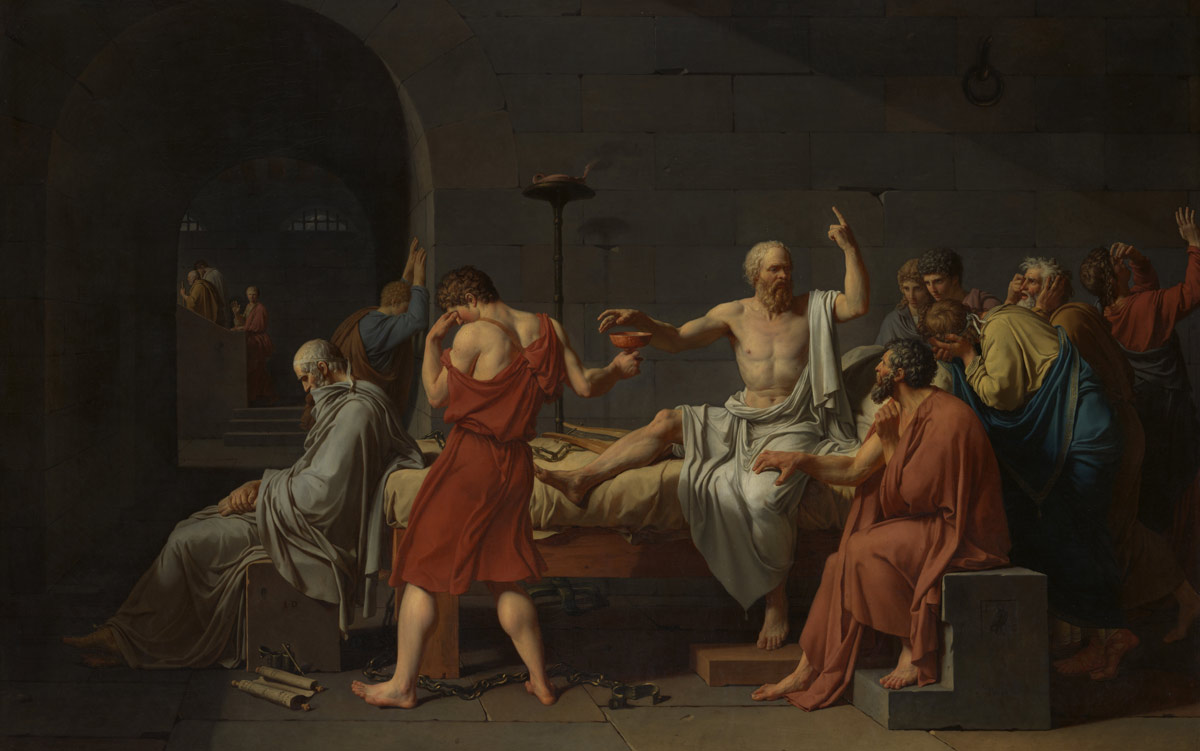
For the Greeks, excess was not confined to material goods. Knowledge, too, could become a form of accumulation. Socrates addressed this by refusing to treat knowledge as something to be possessed or displayed. His defining claim that he was wise precisely because he recognized how little he knew was not a gesture of humility but a disciplined stance against false certainty.
In contrast to the sophists of classical Athens, who presented knowledge as a transferable commodity and sold expertise as a form of status, Socrates practiced inquiry as a process rather than an achievement. Through questioning and what is now called “Socratic dialogue,” he exposed the unexamined assumptions and contradictions of others and revealed how confidence without understanding could distort judgment. For Socrates, when knowledge was treated as a personal asset, it risked becoming ornamental or instrumental rather than truthful.
Socratic restraint therefore lay in limiting what one claimed to know. Wisdom consisted not in accumulating answers but in maintaining a careful relationship to uncertainty. This orientation made room for reflection and ethical awareness, suggesting that intellectual excess, much like material excess, could burden rather than improve life.
How to Live Better
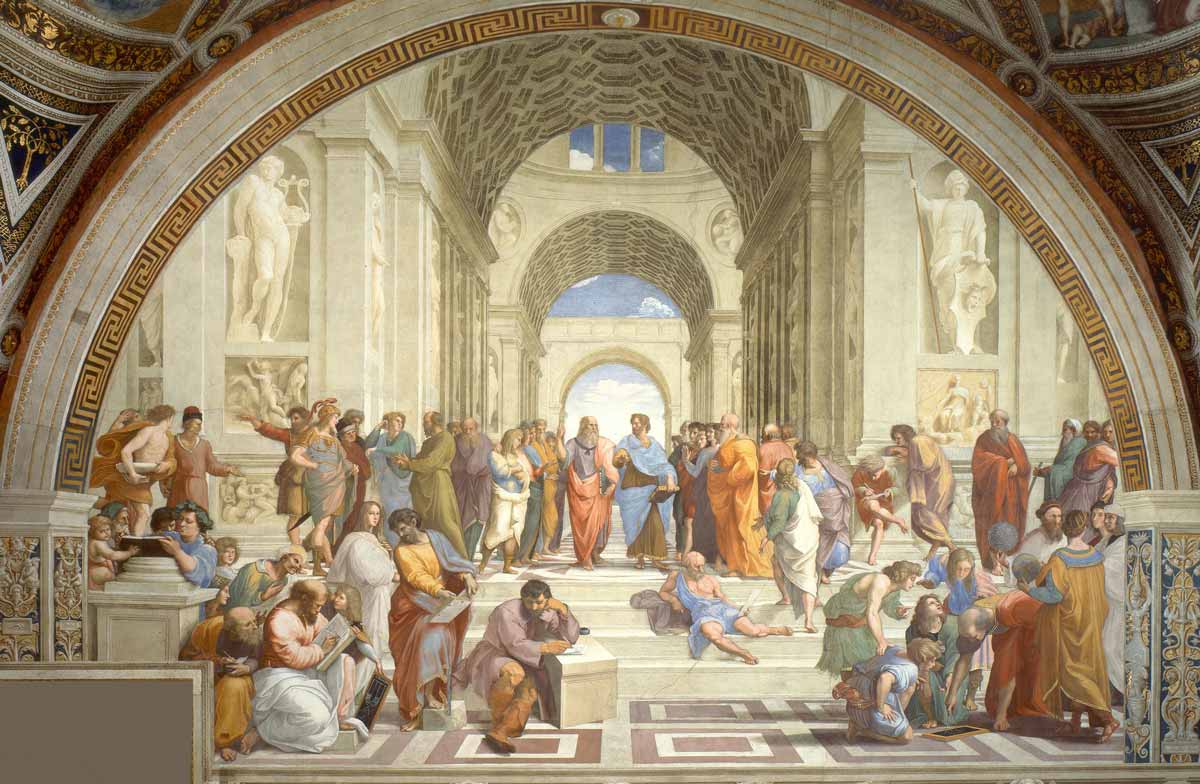
Greek philosophy did not condemn desire or advocate a life stripped of pleasure. Across their differences, philosophers shared a central insight that the good life depends on the reevaluation of wants and needs. Though desire is natural, it requires attention, self-awareness, and personal limits.
Living better, in this view, is not about having more but about knowing what truly matters. Greek philosophy teaches us that freedom comes from clarity and not from possession. It also helps to distinguish what sustains life from what merely distracts and what actually nourishes the mind from what inflates it unnecessarily. The Stoics taught mental detachment from possessions, the Epicureans recommended limiting unnecessary indulgences, the Cynics practiced radical simplicity, and Socrates emphasized intellectual humility.
In a world that encourages endless consumption, the ancient Greek approach offers an alternative model. Ultimately, it suggests that the art of living well lies in letting go of what is superfluous and in cultivating a life measured by reflection and sufficiency. Wanting less, the Greeks remind us, is not a restriction on life, but a path to living better.