
Built across the narrow waist of central Scotland during the reign of Antoninus Pius, the Antonine Wall represented the furthest northern point of Roman expansion in Britain. Built following the example of the more southern Hadrian’s Wall, it stretched from the Firth of Forth to the Firth of Clyde. The goal of the Antonine Wall was to secure Roman territory and control the Caledonian tribes. Despite the enormous engineering undertaking, this wall remained in use for just two decades before the Romans withdrew further south to Hadrian’s Wall. Was the Antonine Wall ineffective in securing Roman expansion into Scotland?
Why Emperor Antoninus Pius Pushed the Roman Britain Frontier Into Scotland
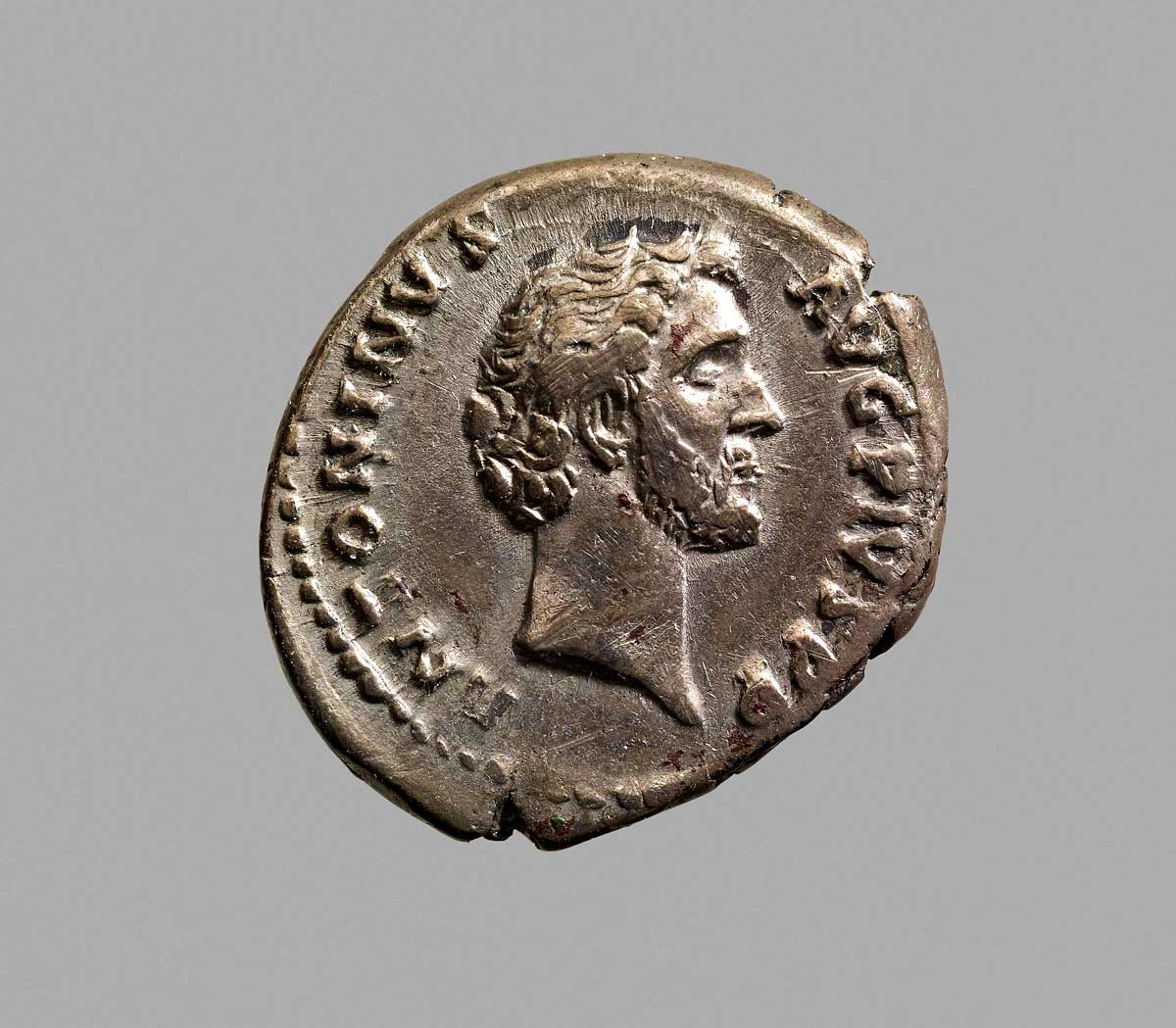
Antoninus Pius ruled Rome from AD 138 to 161. He was born near Rome in Lanuvium to a distinguished senatorial family, and throughout his career gained a great reputation in administration and politics. Emperor Hadrian adopted him as his successor shortly before his death, but on the condition that he appoint Marcus Aurelius and Lucius Verus as heirs. The nickname “Pius” was probably given to him because of his loyalty to Hadrian. Ancient sources describe him as calm, careful, and exceptionally devoted to Roman tradition.
Antoninus Pius did not have great military experience when he came to power in AD 138. His rise to power was more administrative and political, which at the time was unusual, as Rome valued military prestige. Although his reign would later be associated with stability and prosperity, Antoninus Pius lacked visible military success to bolster his claim to power. As he attempted to fill this gap in his qualifications, the emperor turned his attention to the north of Britain. The emperor Claudius had previously ordered the conquest of Britain for similar motives.
Between AD 141 and 143, the newly appointed governor, Quintus Lollius Urbicus, pushed into the Scottish Lowlands, subjugating the local Celtic tribes, including the Votadini, the Selgovae, and the Damnonii. Antoninus Pius celebrated a triumph for the success in Rome in AD 143.
Turf and Timber Provided a Faster Defensive Barrier Than Stone
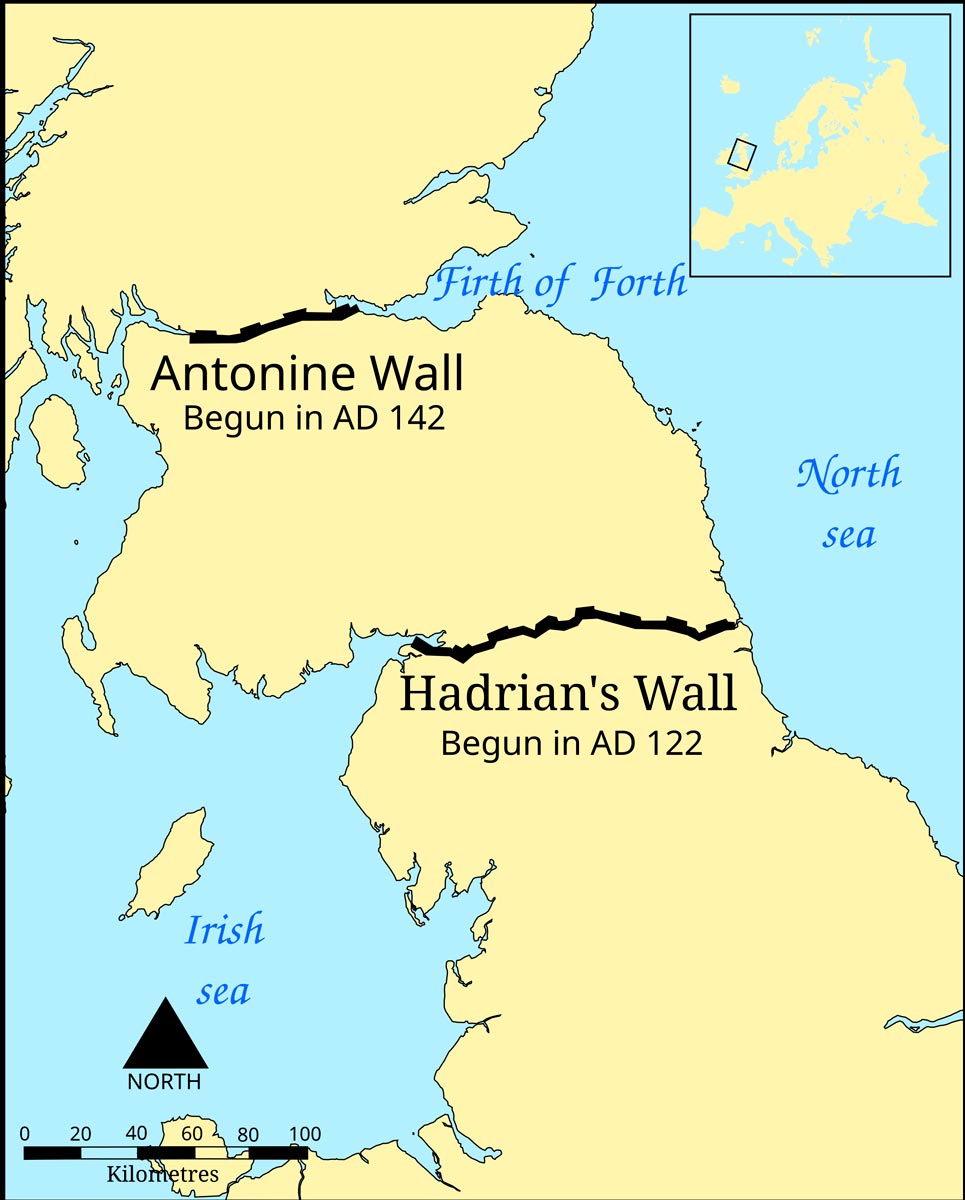
Construction of the Antonine Wall started in AD 142 to secure the newly conquered territory. The construction project was inspired by Hadrian’s Wall, but the Antonine Wall differed in many respects.
Unlike the stone Hadrian’s Wall, the Antonine Wall was not primarily made of stone. Roman engineers relied on a combination of stone foundations, compressed turf ramparts, timber constructions, and a large defensive ditch placed in front of the border. This kind of construction was not a sign of bad planning or penny-pinching. Rome simply wanted to create a functional border in the north as quickly as possible. Most of the materials were of local origin and did not have to be brought from far away.
The wall itself stood on a solid stone base between 4.3 and 4.5 meters wide. Roman workers stacked layers of turf on top to create a large rampart that reached a height of between three and four meters. In front of the wall, the Roman soldiers dug a deep ditch intended to slow down attackers and expose them to the missiles from above. Beyond the ramparts, a classic Roman road connected the forts and lookouts.
Using this method, the wall was completed in just two to three years and stretched for 60 kilometers. Despite the cheaper construction, tens of millions of sesterces were still spent on the project.
Seven Thousand Soldiers Manned the Northernmost Outpost of the Empire
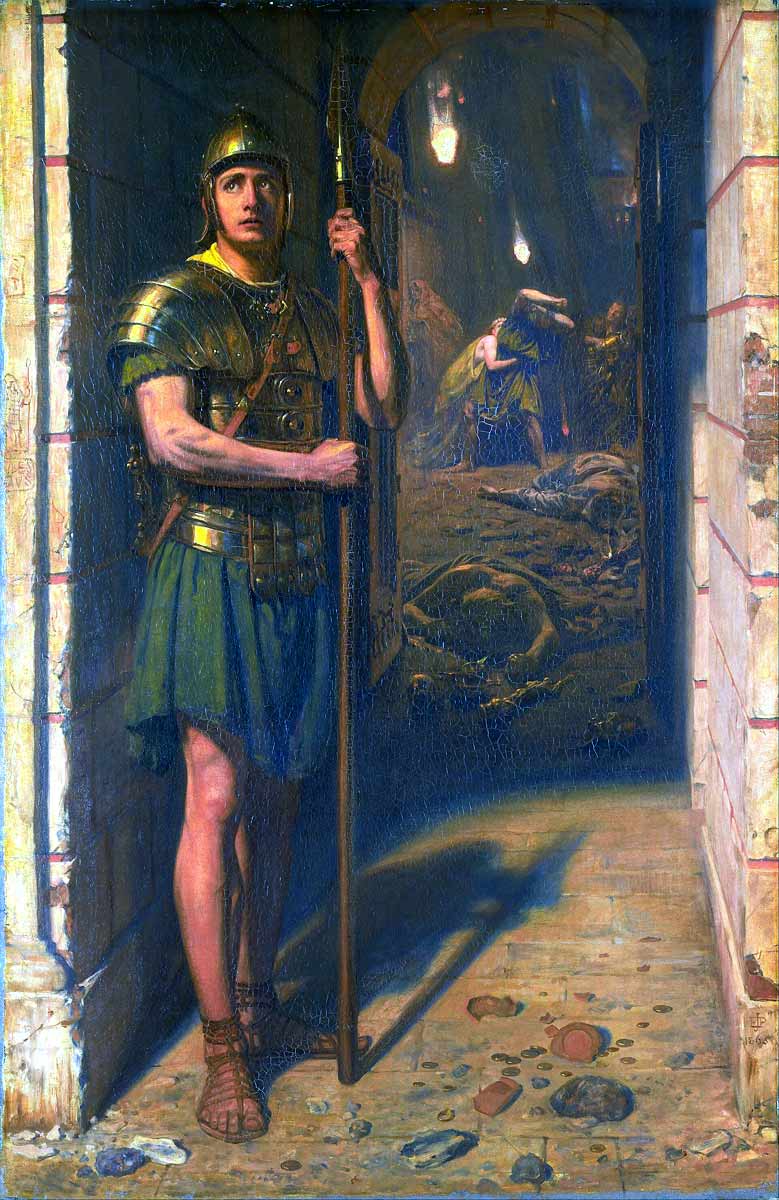
The Antonine Wall became the northernmost border of the Roman Empire. At its peak, it was manned by between 7,000 and 7,500 troops. These were not only Romanized locals, but troops who came to serve from different parts of the Empire. Alongside legionary detachments, the border was guarded by cavalry from Gaul, infantry from the Germanic provinces, and archers from the eastern provinces, creating a culturally mixed army.
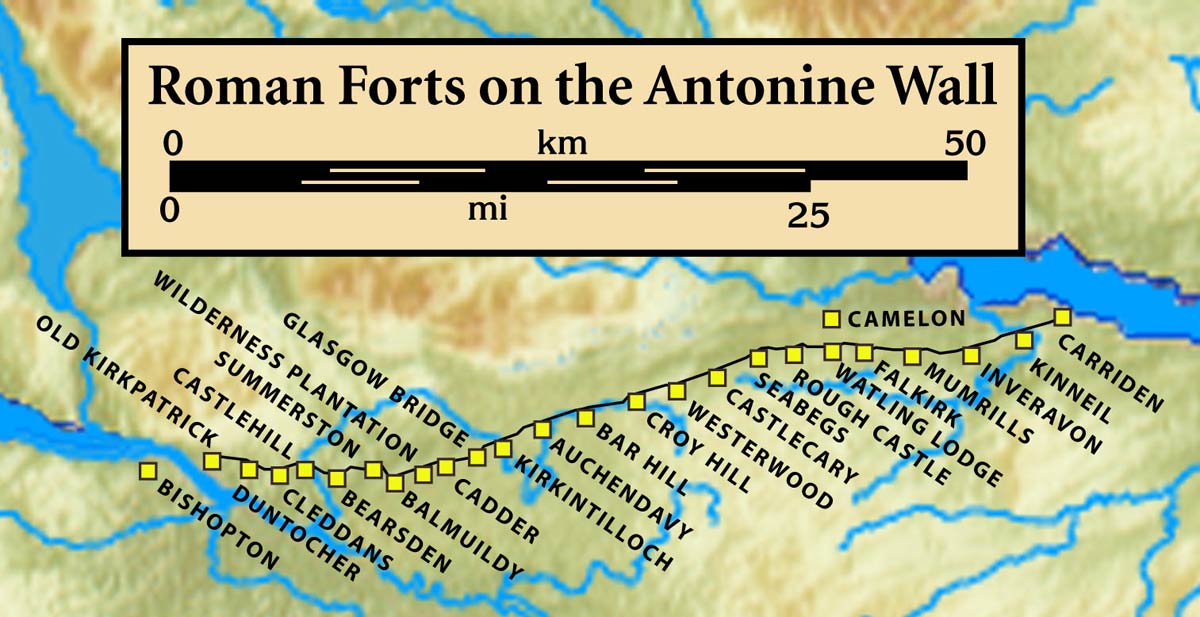
The defense system was based on a chain of nineteen forts evenly distributed along the entire 60 kilometers of the wall. This ensured that no part of the wall was left without military support. In the event of an attack, troops from other fortifications could be quickly deployed to reinforce the threatened parts. At the head of the chain of command was the Roman governor in Britain, while individual forts were commanded by a prefect and sometimes a tribune, depending on the size of the garrison.
The Antonine Wall also served as a kind of border crossing. Rather than merely stopping movement, the wall controlled trade links with northern territories outside imperial authority and tracked migration. This is evidenced by a large number of gates, patrol points, and fortified crossings. Movement through this border could be observed, filtered and, if necessary, restricted.
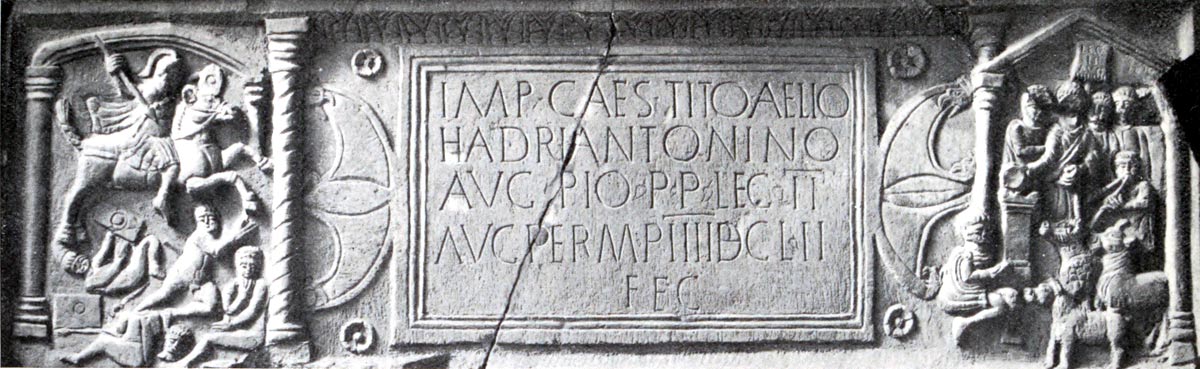
Many archaeological remains have been found that provide insight into life in these forts. The most interesting are the so-called Distance Stones, inscriptions erected by certain Roman legions on their sections of the wall. In addition, numerous everyday objects have been discovered, such as writing tablets, footwear, clothing, and letters.
Did the Antonine Wall Truly Secure Roman Britain?
On paper, the Antonine Wall looked ideal, but how did it perform in practice? In the years that this border wall was in use, it did not face any massive battles. However, there was always minor but constant pressure from Roman enemies from the north, such as the Maeatae and Caledonian tribes. They did not have the manpower or resources to test the Roman defensive barrier in a large and organized attack. The Romans knew this. They designed the wall to respond quickly to small enemy threats rather than to defend against a possible invasion from the north.
Ancient sources and archaeological remains indicate that the Romans carried out punitive expeditions beyond the wall. Cavalry detachments and auxiliary troops would move north to disrupt enemy settlements and then turn back. Thus, the Antonine Wall was not only a barrier but also a place to launch offensive counterattacks. However, the northern environment was not suitable for the Romans. These forays north drained resources. The harsh and wet conditions meant that supplying the activity of the wall was difficult.
While the Antonine Wall was in use, Hadrian’s Wall was left with a skeleton crew. They also removed the heavy wooden gates and filled in the ditches in front of the gateways to make crossings. This meant that any breach of the new frontier could pose a threat to greater Roman Britain.
Why Did Rome Abandon the Antonine Wall After Only Twenty Years?
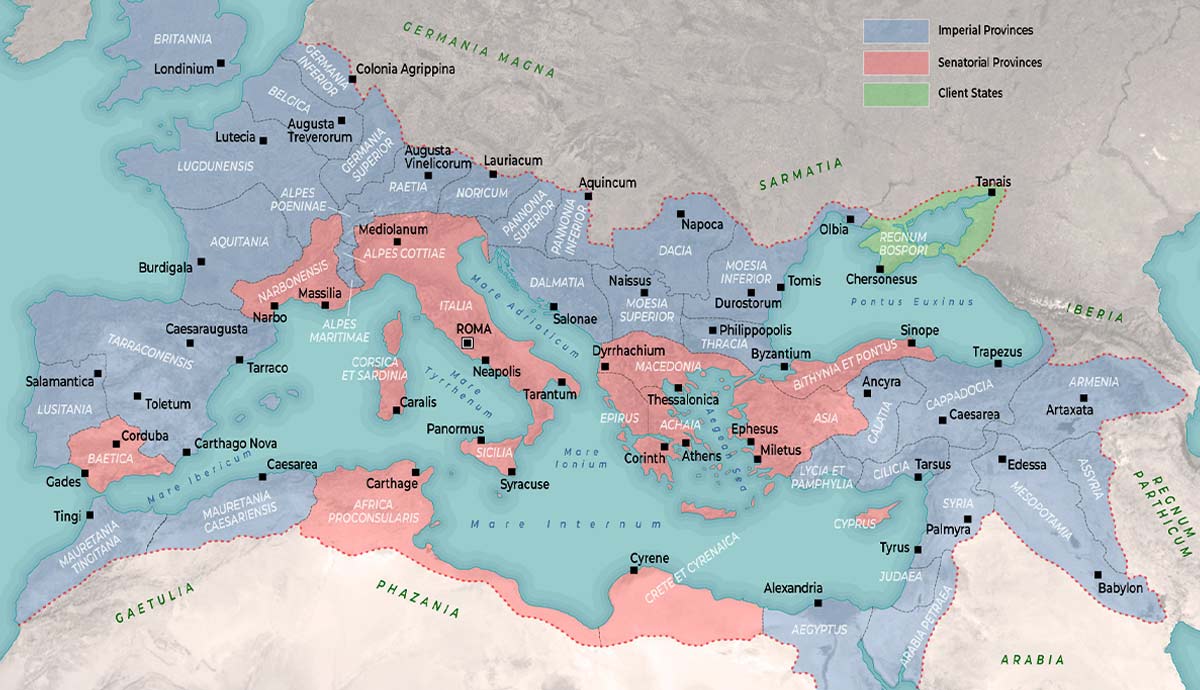
In AD 161, Antoninus Pius’ successors inherited an Empire that was exposed to danger from all directions. Rome found itself at war with the powerful Parthian Empire, and then involved in the Marcomannic Wars with Germanic and Sarmatian tribes. This was accompanied by the devastation of the Antonine Plague. Funding expansion in Roman Britain was no longer the best use of Rome’s military resources. Plus, the newly acquired territory was not only unstable and expensive to maintain, but also offered limited economic opportunities. The area did not offer enough resources to justify the stationing of 7,000 Roman troops.
The decision to abandon the Antonine Wall was not sudden but a calculated strategic consolidation. The Antonine Wall was abandoned not as a failed concept, but because the wider demands of the Empire made it unsustainable.
When withdrawing, the Romans did not want their adversaries to benefit from their military technology, so they burned down the wooden barracks and the internal buildings inside the forts. They smashed equipment that could not be transported and filled in wells so that they could not be used. The distance slabs were ritually buried, face down, which helped preserve them.
Archaeological Remains Reveal the Sophistication of Roman Frontier Engineering
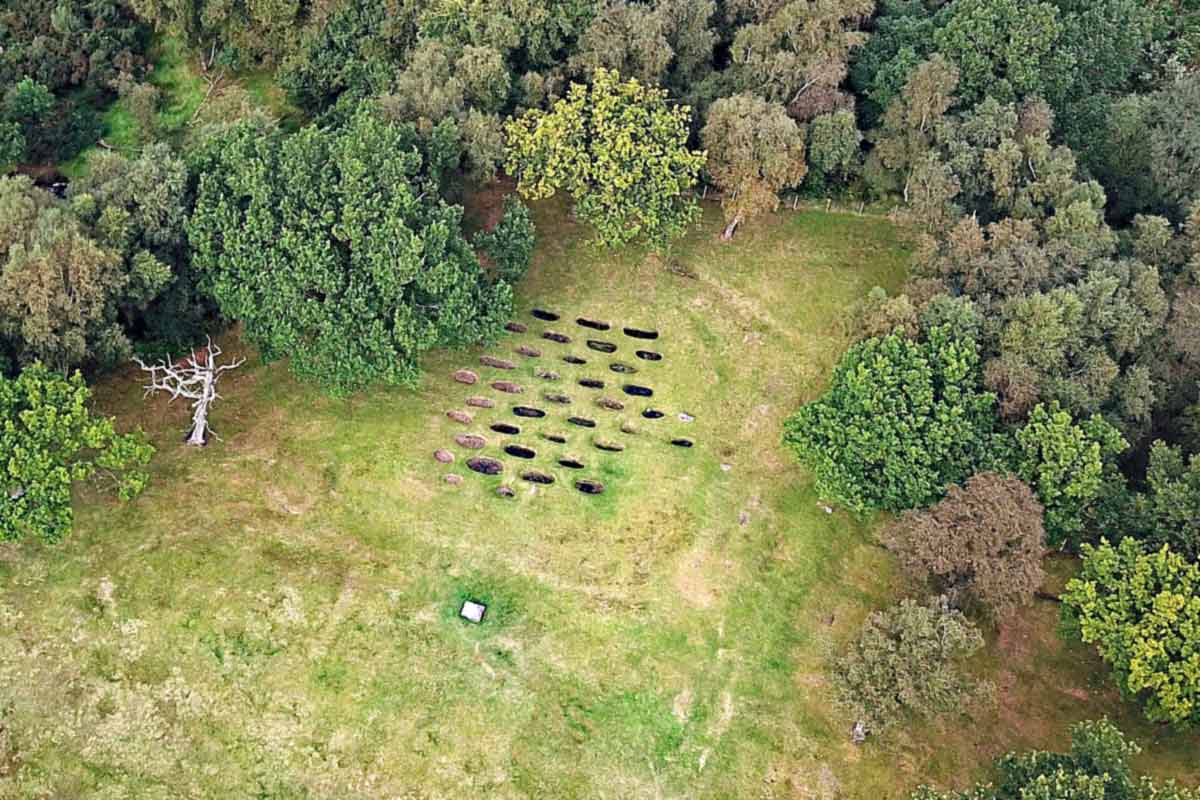
Rough Castle Fort is considered the best-preserved fort of the Antonine Wall. This fort provides the clearest insight into sophisticated Roman military engineering. It is located near the Scottish city of Falkirk and is carefully integrated into the surrounding landscape. The most famous surviving part of Rough Castle Fort is a series of defensive pits known as lilia. These were deep and narrow holes with sharpened stakes that represented death for enemies who fell into them.
In addition to these pits, the foundations of a headquarters building, barracks, a bathhouse, an altar dedicated to Victory, and numerous other artifacts were found. The artifacts include military clothing and footwear, black polished pottery, glass bracelets, and a plaque suggesting that the fort was built by members of the Cohors VI Nerviorum (Sixth Cohort of Nervians).
Today, the Antonine Wall is part of the Frontiers of the Roman Empire UNESCO World Heritage Site. In addition to the Antonine Wall, this site also includes Hadrian’s Wall, the Upper German-Rhaetian Limes in Germany, and extensive parts of the Danube Limes that stretch through modern Germany, Austria, Slovakia, and Hungary.