
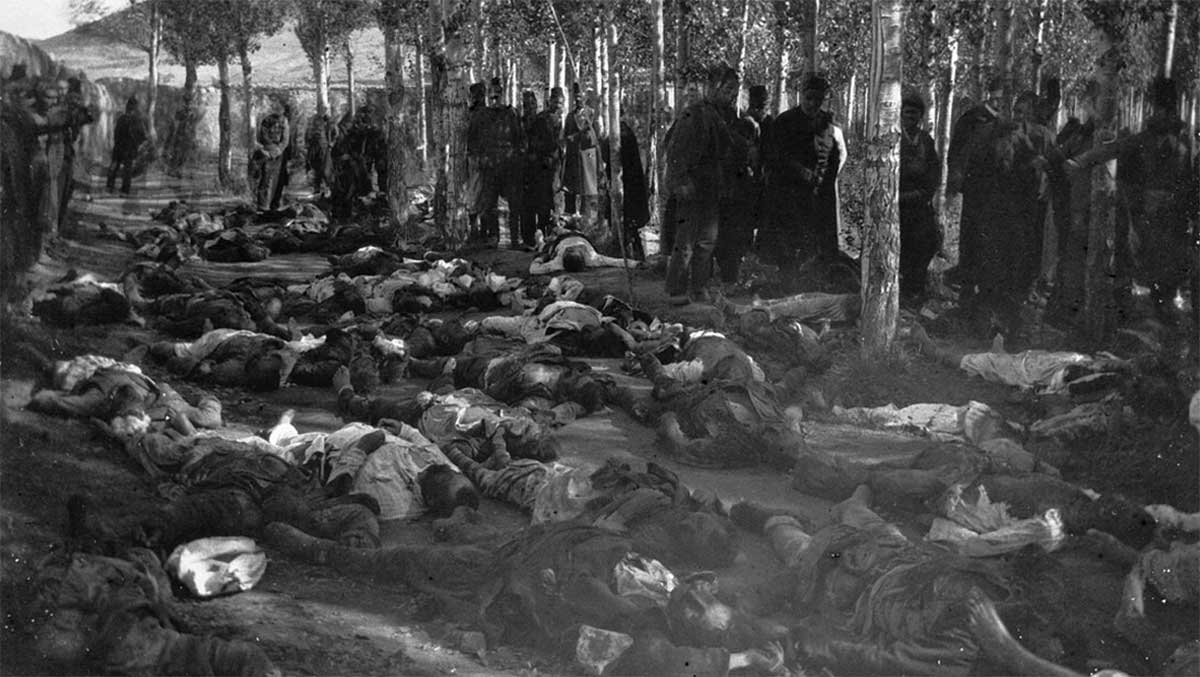
The Armenian Genocide began in April 1915 when the Young Turks government of the Ottoman Empire arrested 250 Armenian intellectuals and ordered the displacement of the ethnic Armenian population. The policy was part of Pan-Turkism—an ideology calling for the establishment of a mega-Turkish empire comprising all Turkish-speaking peoples. The systemic oppression of the Armenian population continued until the Ottoman Empire collapsed in 1923. By this time, about 1.2 million Armenians lost their lives as a result of mass executions, ill-treatment, or starvation.
Origins of the Armenian Genocide in the Ottoman Empire
In the 14th and 15th centuries, the Ottoman Empire emerged as a dominant power, reaching its peak in the 16th century. However, by the 19th century, the empire faced significant challenges caused by internal weaknesses, nationalist movements, and external pressures from leading European powers. By the start of World War I in 1914, the Ottoman Empire had lost half of its territories in Europe and Africa, retaining control over Anatolia, parts of the Middle East, and a small portion of southeastern Europe.
Internally, the Ottoman Empire suffered fragmentation. It was a multiethnic, multireligious political entity that was home to several Christian communities, including Armenians, Greeks, and Assyrians. The Armenians, one of the largest Christian groups, lived mainly in Eastern Anatolia, relatively distant from other Christian populations.
Despite being historically regarded as a “loyal nation” by the Ottoman state, Armenian political movements advocating for reform gained prominence during this period. The so-called “Armenian question” arose in the Turkish political agenda as Armenians demanded administrative reforms for the Armenian-inhabited provinces and better police protection from predatory tribes among the Kurds.
The Ottoman Empire, which had just recently lost the Balkan territories to a nationalist movement, answered the Armenian plea for more representation and rights with violence. The ensuing tension resulted in the Hamidian massacres of 1894-1896, when the pogroms, orchestrated by the Ottoman state, claimed the lives of hundreds of Christian Armenians. The Hamidian massacres marked the first large-scale, systematic violence against the Armenian population. Armenian historian Vahakn Dadrian referred to the violence as a “dress rehearsal” for the Armenian Genocide that would follow in 1915.
The already tense internal situation worsened when the Balkan Wars of 1912-1913 deprived the Ottoman Empire of almost all its remaining territory in Europe.
The loss of European territories and the decline of the empire as a dominant power intensified internal socio-political struggles, paving the way for a nationalist political group, the Young Turks, to seize power by revolution in 1908. The Young Turks formed the Committee of Union and Progress (CUP), acting as the head of the government, and adopted the ultra-nationalistic ideology of Pan-Turkism.
This ideology aimed at the cultural and political consolidation of all Turkish people within a single, common state. According to Pan-Turkism, the territory of a unified Turkish state should be stretched from the Balkans to Crimea, and from Eastern Siberia to Western China, encompassing all Turkish-speaking peoples and their areas of settlement. These areas were mainly located on the territories of the Russian Empire.
To achieve these expansionist goals, the CUP sought an alliance with Imperial Germany and joined the Central Powers in October 1914 to oppose the Russian Empire in World War I.
However, the Ottoman Empire’s involvement in World War I did not yield the results the CUP hoped to achieve. Indeed, during the first year of conflict, the empire experienced several significant defeats against the Russians (the Battle of Sarikamis, from December 22, 1914, to January 17, 1915) and the British Empire (the Suez Canal Campaign, between January 26 and February 4, 1915).
The CUP utilized the negative developments of World War I as an opportunity to target ethnic minorities, particularly Armenians, and accuse them of assisting the Russian Empire against the Ottoman forces. Indeed, a small group of Armenian Volunteer Corps did join the Russian troops in the Caucasus region, providing a reason for CUP to initiate the systemic oppression of the Armenian population.
April, 1915: The Beginning of the Armenian Genocide
In February 1915, the Turkish government ordered the removal of Armenian soldiers, as well as other small groups of non-Muslims, from their duty and placed them into labor battalions. The majority of these disarmed soldiers were subsequently executed by the Ottoman forces. Simultaneously, Ottoman troops began raids in the Armenian-populated villages near the Russian border, executing ethnic Armenians.
The Armenians resisted and formed barricades in the city of Van. Guerilla warfare erupted, allowing the Ottoman government to frame the resistance as an Armenian rebellion supporting the advancing Russian forces.
On April 24, 1915, the CUP ordered the arrest of 250 Armenian intellectuals, politicians, artists, physicians, and clerics living in Istanbul. Targeting high-ranking Armenians was an action meant to deprive the Armenian community of leadership. Most of these detainees were executed during the following months. April 24, 1915, is regarded as the start of the Armenian genocide.
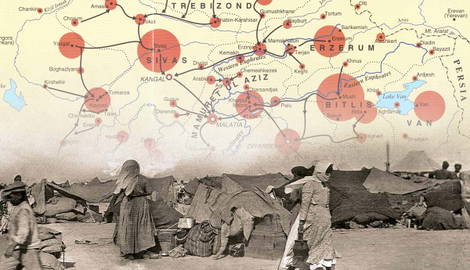
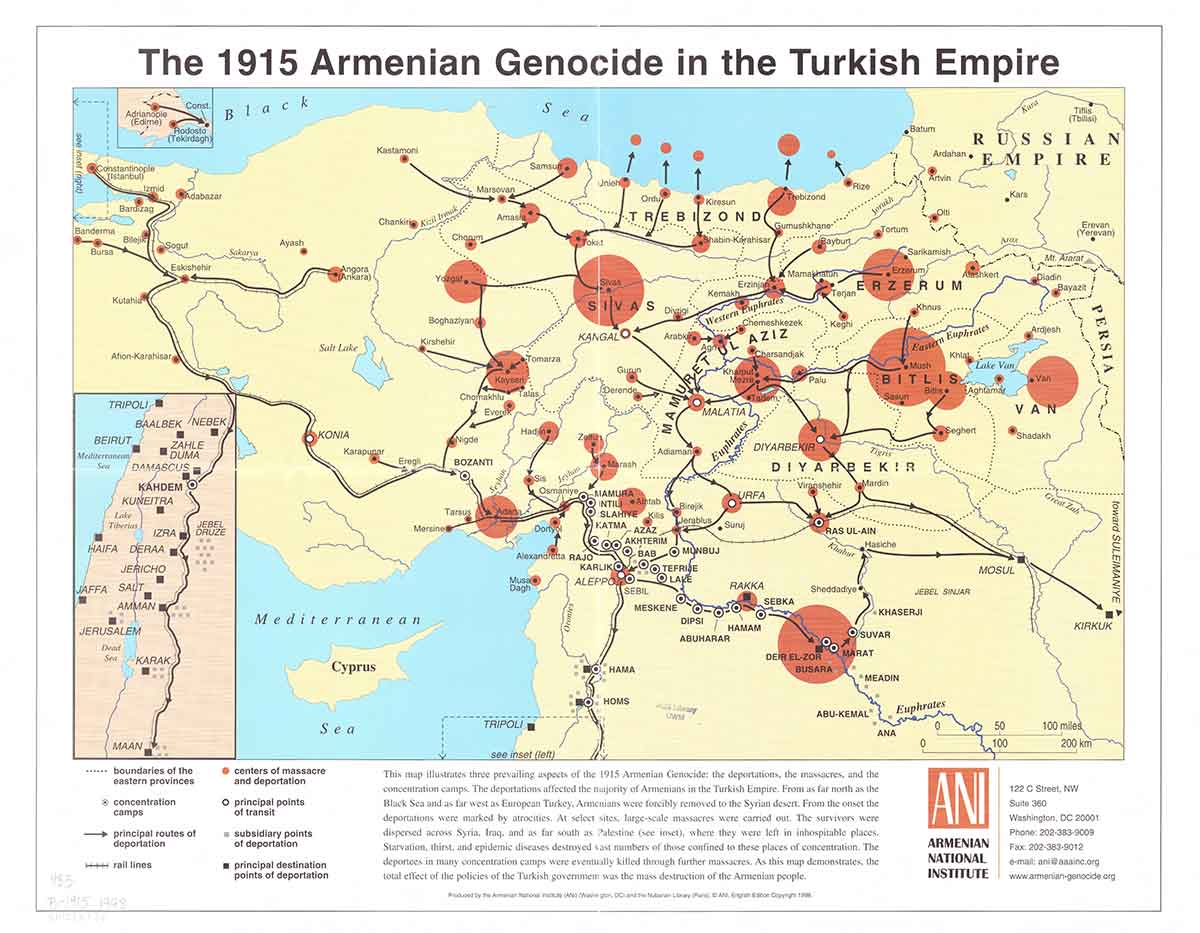
As the next step of achieving an ethnically homogenous Turkish state, in May 1915, the Ottoman government authorized the deportation of the Armenian population. The mass deportation, initially targeting Armenians from Eastern Anatolia, was presented as a measure against a supposed threat to Turkish national security. By the beginning of June of the same year, the order had been extended to encompass all Armenian populations outside of the war zones in Turkish-controlled territories.
Mass Deportations of the Armenian Population
The Ottoman Empire disguised the deportation of the Armenian minorities as a “national resettlement program,” targeting the regions where Armenians constituted more than five to ten percent of the population.
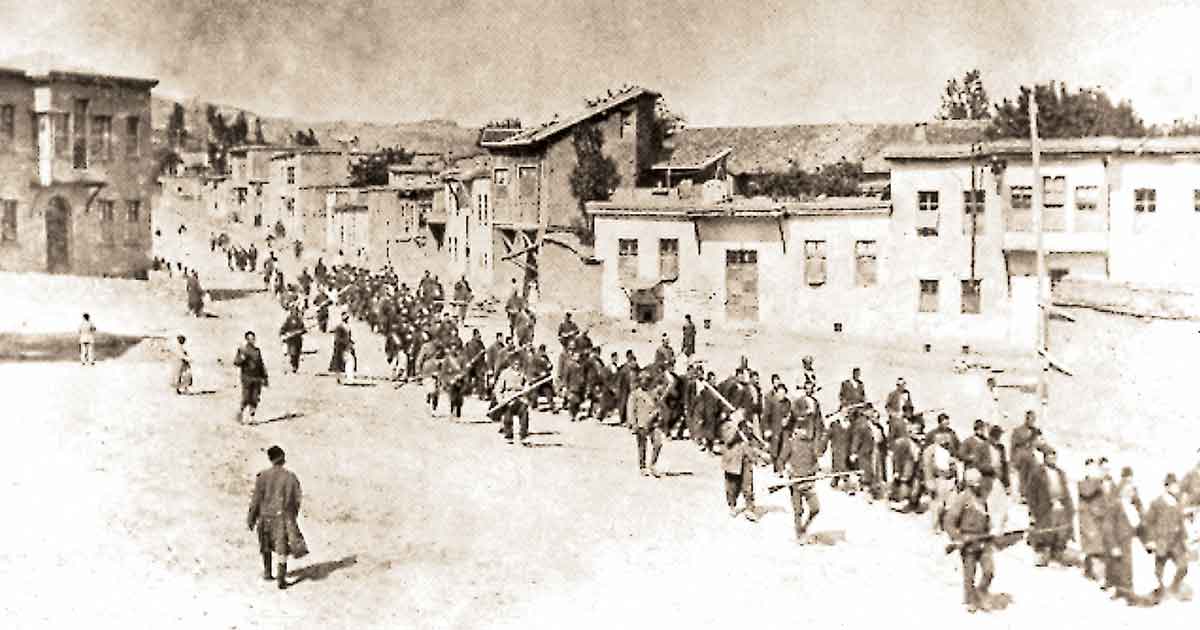
The CUP gave Armenians a few days to a few hours’ notice to pack or sell their belongings. During the Spring and Summer of 1915, thousands of Armenians, including women, children, and older people, left their homes, businesses, and social lives behind.
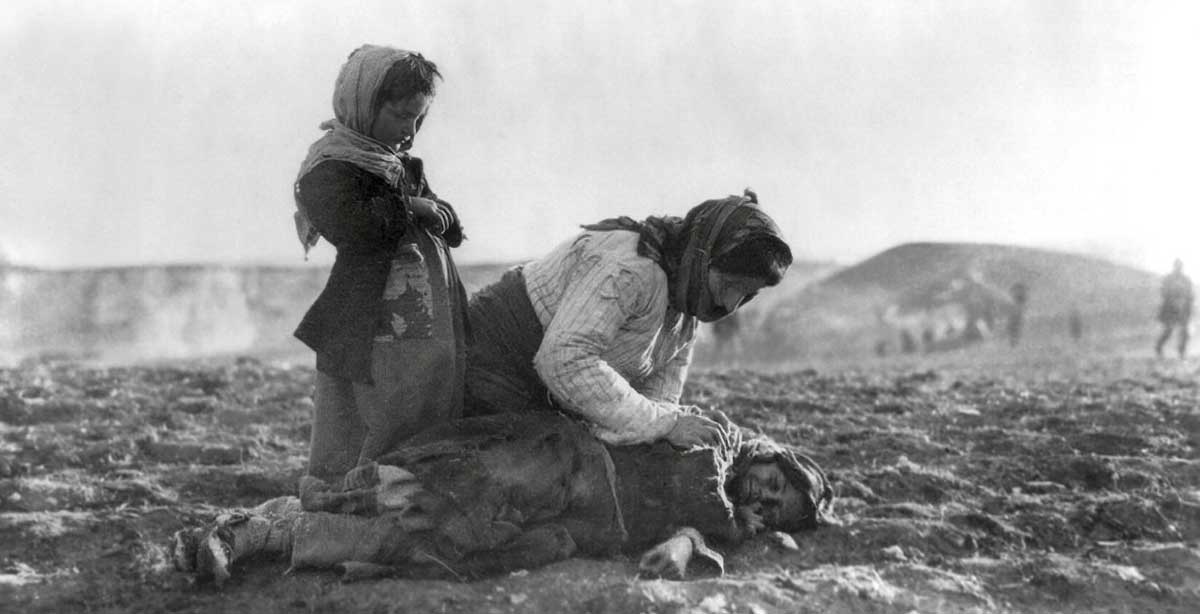
The deportation process was brutal and harsh, and many refer to the forced migration route as a “death march.”
The Ottoman government authorized the formation of gangs, also known as the Special Organization or Teshkilâti Mahsusa. The organization was mainly composed of former convicts who were instructed to execute a systemic extermination of the deportees. These groups often attacked Armenians on the deportation route.
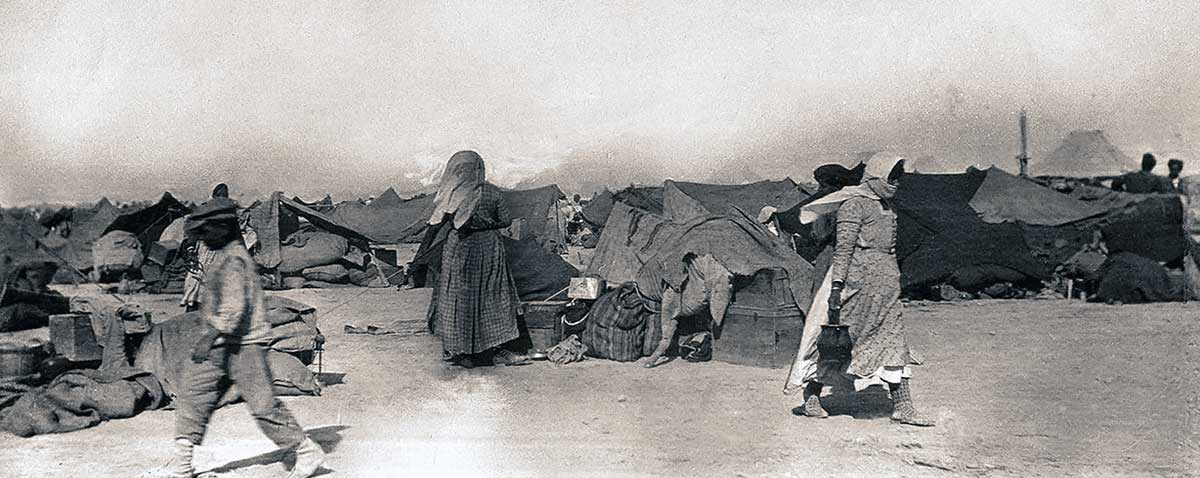
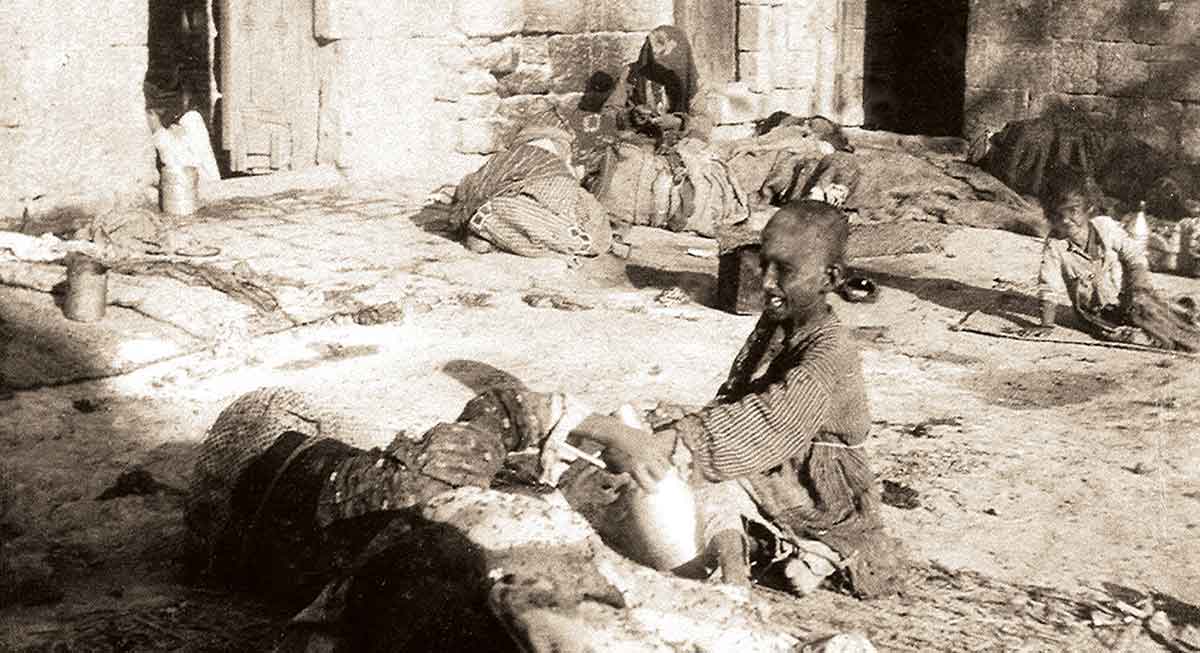
However, starvation became the leading cause of the death toll among the deportees. The Ottoman government did not make any provisions in this matter. Thus, the Armenians were denied food and water, causing many to die on their way to the Northern Syrian border, near the Syrian desert of Deir ez-Zor, the largest of the resettlement camps.
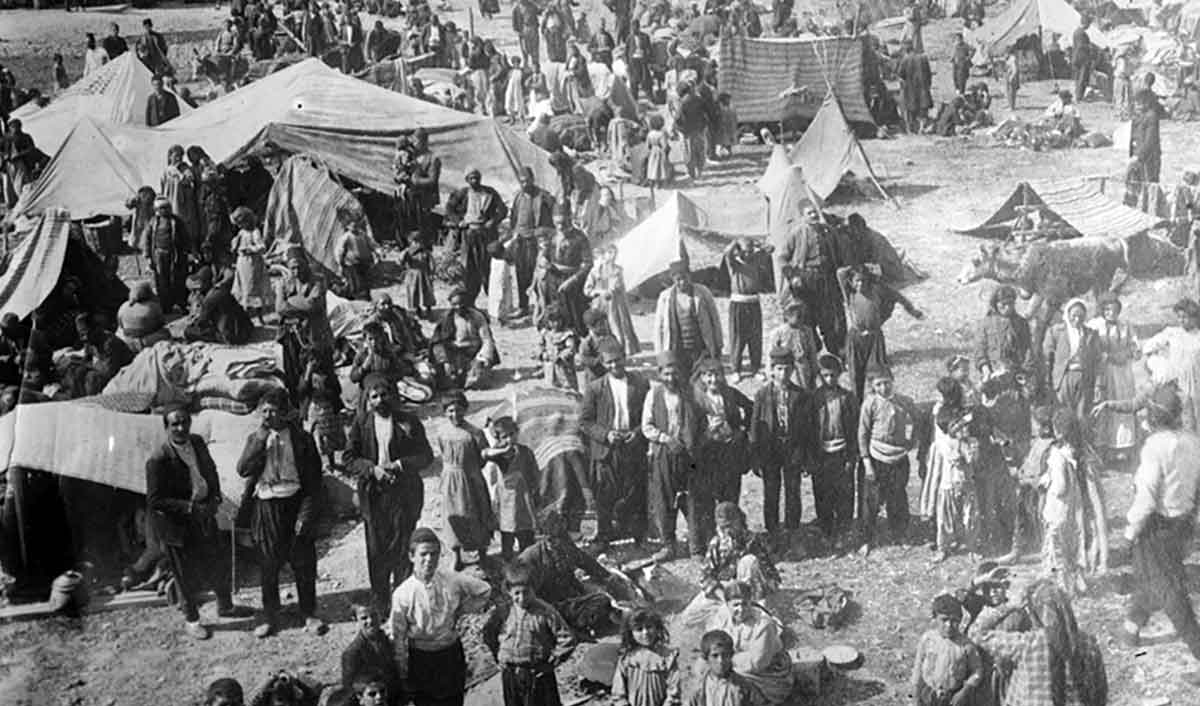
Those who managed to reach the camps experienced a lack of food and water, as well as basic living conditions. Their life expectancy was short due to exhaustion, starvation, dehydration, and unsanitary conditions. Many young Armenian women were trafficked or forcibly taken as servants by Turkish and Kurdish militiamen.
The mass deportation was accompanied by a series of laws giving CUP the right to confiscate Armenian properties and businesses for the cause of financing the war efforts.
International Response & Intervention
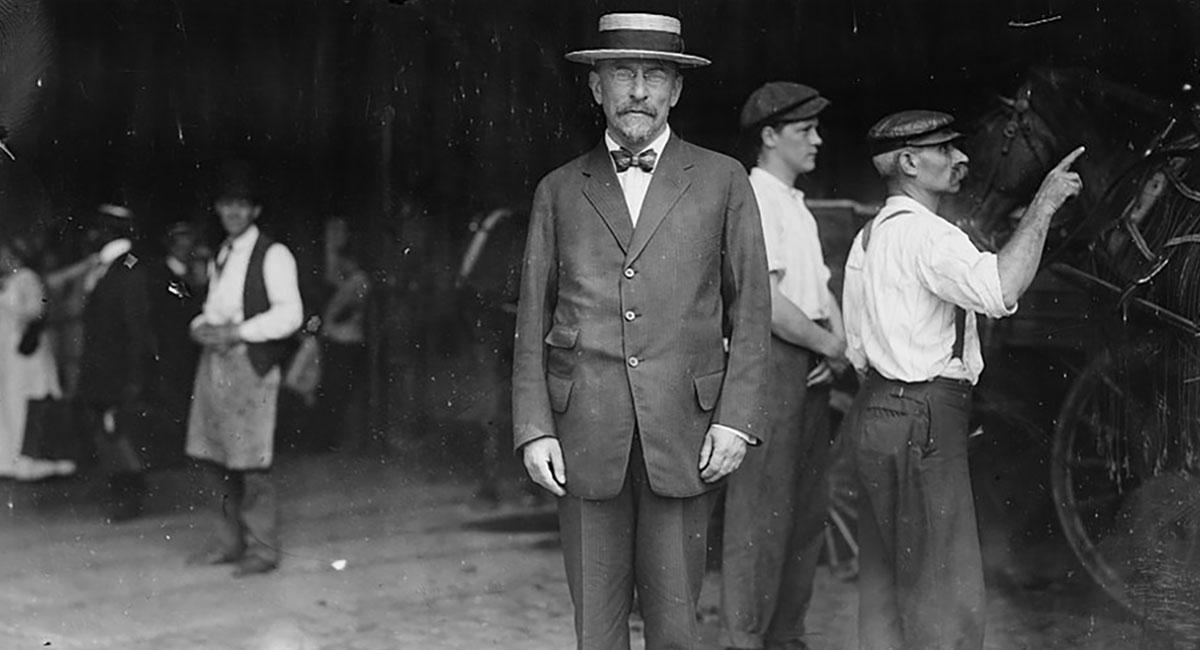
The Armenian Genocide received extensive media coverage, including from leading newspapers such as The New York Times, The Washington Post, The Los Angeles Times, The Globe and Mail, and The Toronto Star.
However, while the Western nations condemned the action, they did not initiate any significant steps to curb the atrocities. The American Ambassador to the Ottoman Empire, Henry Morgenthau, emerged as a leading figure in organizing the humanitarian interventions to assist the Armenian refugees. He stated in Morgenthau’s Story, (1919):
“When the Turkish authorities gave the orders for these deportations, they were merely giving the death warrant to a whole race; they understood this well, and, in their conversations with me, they made no particular attempt to conceal the fact. … I am confident that the whole history of the human race contains no such horrible episode as this. The great massacres and persecutions of the past seem almost insignificant when compared to the sufferings of the Armenian race in 1915.”
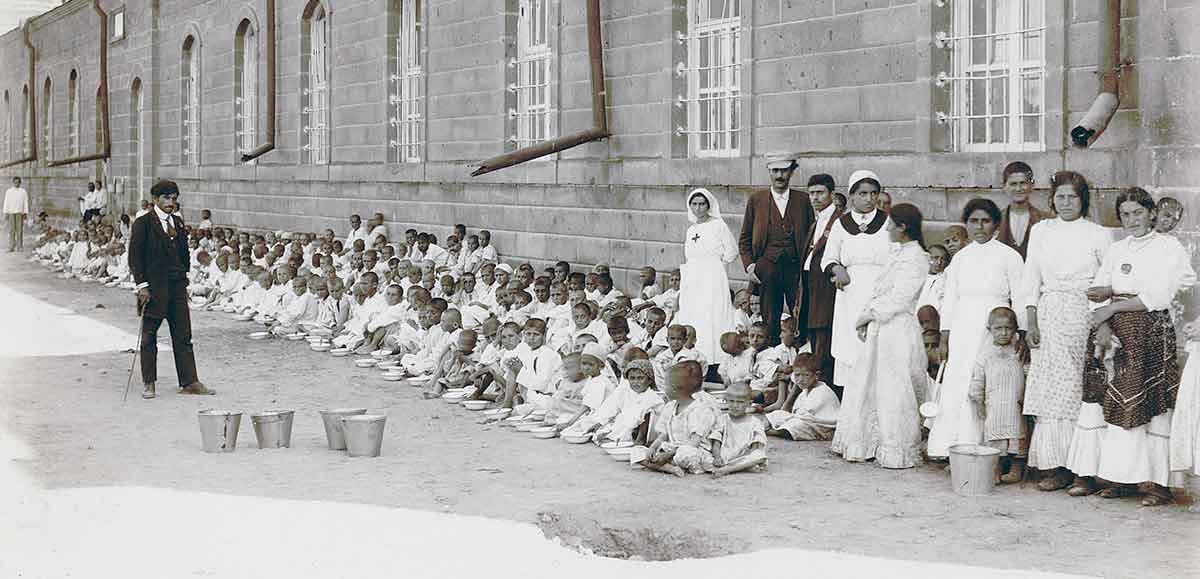
With Morgenthau’s active work, the United States Congress authorized the establishment of the relief committee, tasked to raise funds for the “starving Armenians.” The plight of the Armenians triggered an unprecedented public philanthropic response in the United States, involving President Woodrow Wilson, Hollywood celebrities, and many thousands of Americans. As a result of these efforts, the Near East Relief Committee (NER) was formed, raising $117 million in funds (over $2 billion in 2025). The funds would help over a million Armenians, of which 130,000 were orphans. The NER actively supported the survivors’ post-World War I rehabilitation process by setting up the necessary facilities: refugee camps, orphanages, medical clinics, and educational facilities.
Legacy & Result of the Armenian Genocide
The Ottoman Empire’s actions against the Christian Armenian minorities eventually transformed the empire into a homogeneous nation. Following the end of World War I, the Ottoman Empire collapsed, and the new Republic of Turkey emerged in 1923. By this time, more than 90% of the Armenian population had already perished. According to a study conducted by the University of Minnesota’s Center for Holocaust and Genocide Studies, only about 387,800 ethnic Armenians remained on the territories of the former Ottoman Empire by 1922, compared to the 2,133,190 Armenians living in the empire in 1914.
On August 10, 1920, the Treaty of Sèvres was signed between the Allied powers and Türkiye.
The treaty required the Ottoman government to hand over those accused of atrocities to the victorious Allied powers. One hundred forty-four high-ranking officials were arrested and transferred to the island of Malta, Europe, to stand trial for their involvement in the genocide. However, the Treaty of Sèvres was never ratified and eventually, all the detainees returned to Turkey without any charges.
The official stance of the Republic of Türkiye, the successor of the Ottoman Empire, remains that the events of 1915 do not meet the legal definition of genocide, a position disputed by most historians and international bodies.
According to the Turkish official statement, even though the deportation and atrocities did take place, it was dictated to safeguard the national security from the rebellious Armenian elements. This official narrative does not fit in the definition of the concept of genocide: violent crimes committed against groups with the specific intent of destroying their existence.
The matter remains complex and controversial, as the CUP destroyed most of the documents regarding their actions. The moral weight and strong emotions surrounding the Armenian genocide also make it difficult for historians to reach a consensus.
As history showed, the organized deportation and intentional deprivation of food and hydration cast a long and tragic shadow on Armenian national identity. Following the Armenian genocide, a strong Armenian diaspora emerged, seeking refuge and recognition across the world. The diaspora members played a crucial role in safeguarding Armenian heritage and showcasing socio-cultural resilience.
Internationally, the events of 1915-1915 resonated with the Holocaust era, the systematic persecution and extermination of European Jews later staged by Adolf Hitler. Ambassador Morgenthau’s son, Henry Morgenthau Jr, later became the secretary of the treasury in the administration of President Franklin D. Roosevelt. Deeply touched by the memories of the Armenian genocide, Henry Morgenthau Jr. would play a decisive role in establishing the War Refugee Board which rescued as many as 200,000 Jews from Nazi Germany.
Moreover, the Armenian genocide, serving as a precedent for later atrocities, inspired the development of international laws on crimes against humanity, including the 1948 United Nations Genocide Convention. Up to 31 states have recognized the Armenian genocide. The struggle to give the victims of the genocide the recognition they deserve, however, continues to this day.