
Phineas Gage has been referred to as “the man who began neuroscience,” but he was not a doctor. He was a patient—the miraculous survivor of a misfortune that, by all accounts, should have been fatal.
An accidental blast sent an iron rod through his skull, destroying a significant part of his brain. His survival sparked massive interest from the medical community, and researchers studied the changes to his personality—and his life.
The Tamping Iron Incident in Vermont

On September 13, 1848, near Cavendish, Vermont, Phineas Gage was working as a foreman on the construction of a railway line. While using a tamping iron to pack explosives into a tight hole, the charge went off and drove the iron with such force that it flew through the man’s skull and landed some 80 feet away. It had passed upward through the left cheekbone, behind the left eye and through the frontal left side of the brain.
Gage landed on his back and gave a few convulsions, but within minutes he was talking, and could walk with assistance to the oxcart which took him back to his lodgings in town.
Challenging 19th-Century Views of the Mind
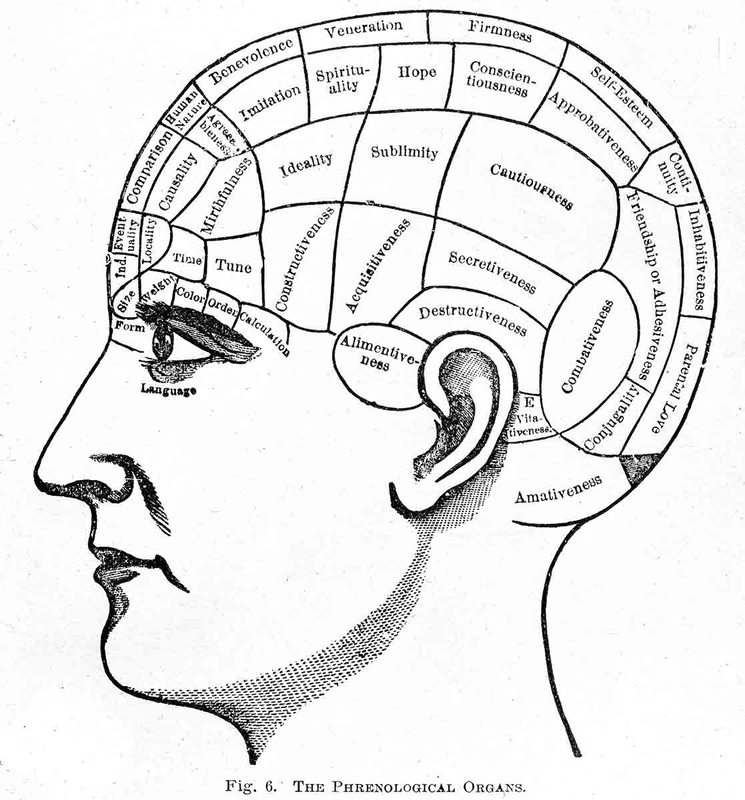
Even today, the brain is an enigmatic contrivance that holds far more secrets than we ever could have imagined. In the 19th century, knowledge of the brain was comparatively nonexistent, and theories relied heavily on the pseudoscience of phrenology, which overlapped with the belief that the brain’s functions were localized rather than spread throughout the organ through interconnected networks. While there are localizations to a degree (and this part is justifiably scientific), the loss of one part of the brain, and its main functions, can be picked up and relearned by other parts of the brain.
The case of Phineas Gage opened this debate to new levels as both sides argued over what Gage’s recovery meant.
This, however, did not mean Gage returned to who and what he was before the accident. He survived, but there were noticeable changes to his personality. Physician John Martyn Harlow was key to Gage’s recovery, performing medical procedures to remove coagulated blood and skull fragments during the time the patient was in his care. He documented Gage’s recovery through bouts of delirious consciousness. Harlow reported, however, that by four weeks, Gage’s memory was as perfect as ever.
Debunking the Myth of the Irredeemable Monster
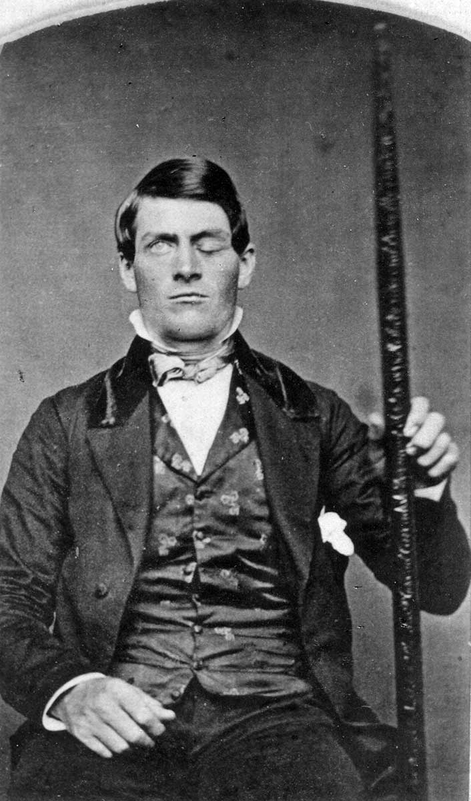
Phineas Gage never recovered to the point where he was the same man as before the accident. His colleagues noted that “he was no longer Gage,” pointing towards a major personality shift. Where before, he had been energetic and smart, now he was fitful and showed little deference to his fellows, while using a great deal of profanity. As such, the decision was made not to give him his old job back.
Gage became a well-known figure in the press, and was subjected to mythological constructions about his personality. He appeared at Barnum’s American Museum in New York, and this was exaggerated to the point where Gage became a freak show at a circus— a whole fabrication.
Other fabrications include Gage as an aimless vagrant, a drunkard, and a braggart. The idea that he became a completely unlikeable and horrible person has little evidence to support it. He was even accused of mistreating his wife and children despite the fact that he had neither.
The truth is he moved to Chile and became a long-distance stagecoach driver, where he was required to exercise cognitive skills, as well as a fair modicum of social skills—skills which the exaggerations claim he lacked. His doctor in Chile described him as having “no impairment whatever.”
The Lasting Legacy of Phineas Gage in Modern Neuroscience
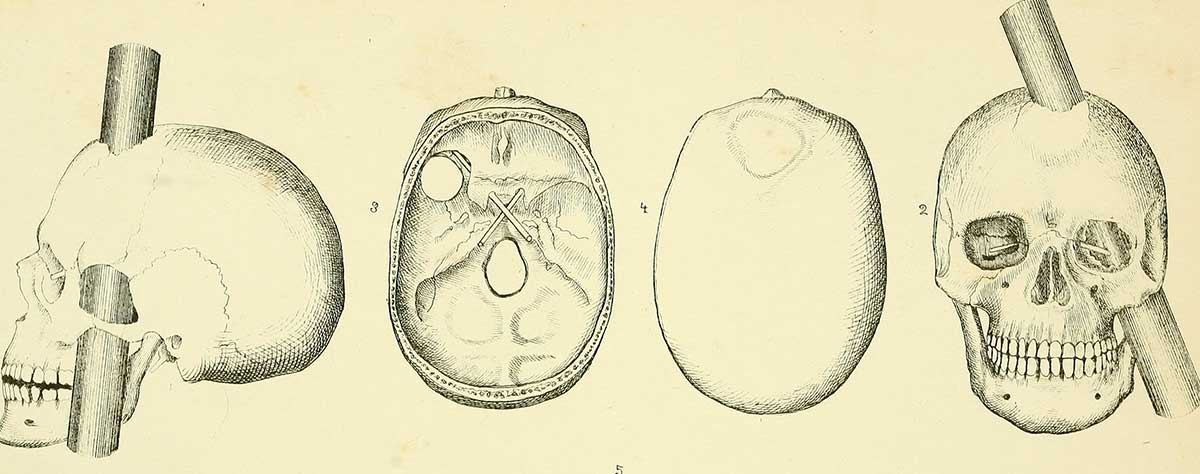
While at home with his mother in San Francisco on May 21, 1860, Gage suffered a seizure and died. He was buried in Lone Mountain Cemetery. With the consent of his family, the body was exhumed a few years later, and the skull was given to John Harlow along with the rod which Phineas had kept since his accident. The skull and the rod are kept in Harvard Medical School’s Warren Anatomical Museum.
Phineas Gage represents a major point in the study of neuroscience. His accident and survival sparked massive debates that challenged certain beliefs and reinforced other, more accurate ideas about how the brain works.
The skull still contributes to this science and has been used in research with modern neuroimaging techniques, providing further insight into the man’s injuries. Combined with notes on his recoveries, the scientific data provides useful information about neural physiology.