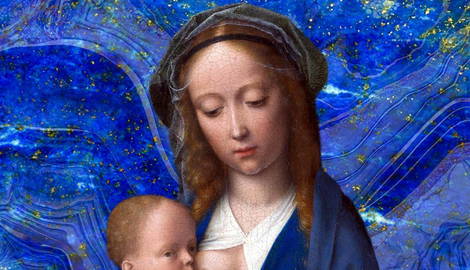

Color has a language of its own— a language that most artists understand. Beyond light versus dark, each color has a significant interpretation connected to it. In Biblical paintings, yellow is for Judas and blue for Mary. It’s not always clear where these ideas come from, but in the case of ultramarine blue, the color’s history explains why it was used for the Mother of Jesus.
What Was the Economic Value of Ultramarine Blue in the Middle Ages and the Renaissance?
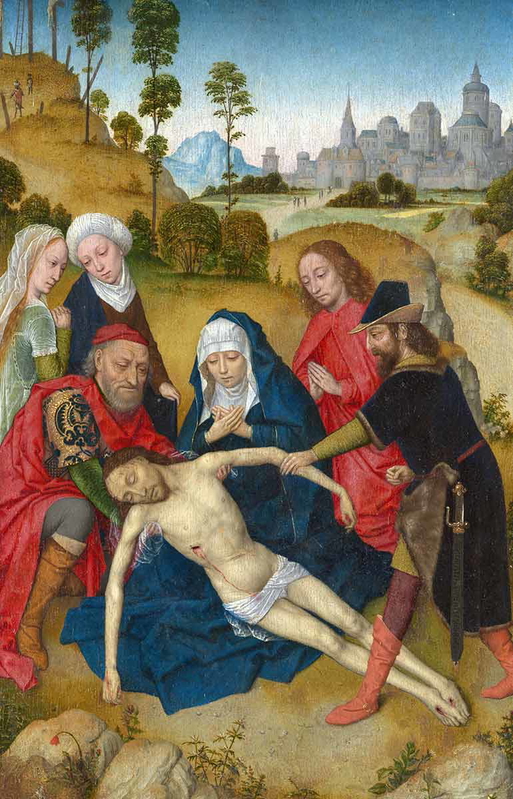
Ultramarine is a deep and lively blue that used to be made by an extensive process of crushing and washing the semi-precious stone called lapis lazuli. Nowadays, it is synthetically produced, but when we spot ultramarine blue in paintings from long ago, it signifies something: The artist was saying, “This matters. I am willing to spend my most expensive pigment on this.”
Therefore, it is no surprise that patrons and artists kept this very special blue for sacred or divine figures alone. In the Roman Catholic expression of faith, this honor was bestowed on the Virgin Mary as Christ’s mother.
Luke 1:46-55, Mary after the annunciation:“My soul magnifies the Lord, and my spirit rejoices in God my Savior…”
The Journey of Lapis Lazuli From Afghanistan
Not only was the process of making the lasting blue pigment labor-intensive and expensive, but the lapis lazuli also had to come from afar. The source was the Sar-e-Sang mines in the remote Badakhshan province of modern-day Afghanistan.
The name “ultramarine” (ultramarinus) literally translates to “beyond the sea,” highlighting its exotic and distant origins.
Artists working with this precious paint understood its worth in a world that was not as connected as our own. Each brush stroke was expensive and spoke of intention and special care. By painting her in this color, Mary is given the highest level of honor (hyperdulia) among all of humanity.
Luke 1:38, Mary after the visitation of the angel:
“Behold, I am the handmaid of the Lord; let it be to me according to your word.”
Why Blue Became the Official Color of the Virgin Mary
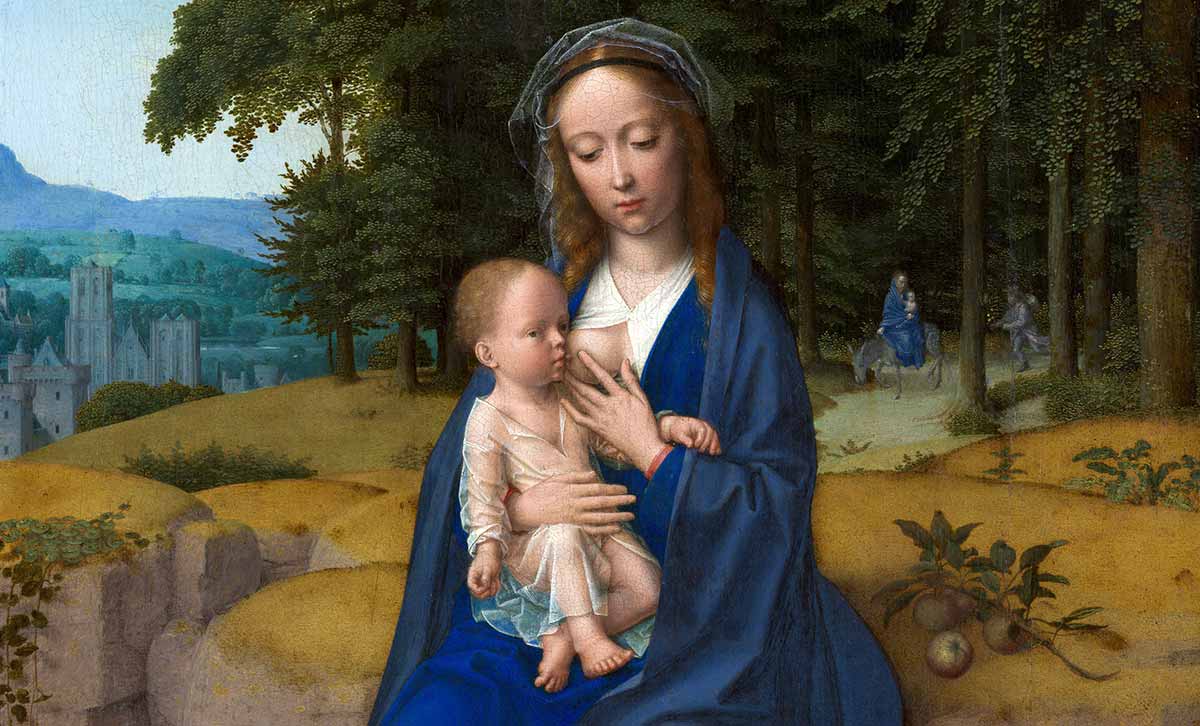
Mary, the mother of Jesus, has most often been depicted as a holy picture of motherhood. Her virginity signifies purity; her angelic visits indicate a connection to the heavens; and her role as mother to the Messiah made her the perfect bridge between that which is earthly and the divine.
The incarnation meant that God became man and walked the Earth, yet Mary is seen as playing a crucial role in this process. In a similar way to how the prophets of the Old Testament were God’s special chosen messengers to bring glimpses of his Kingdom to Earth, Mary was the chosen vehicle through which Jesus came.
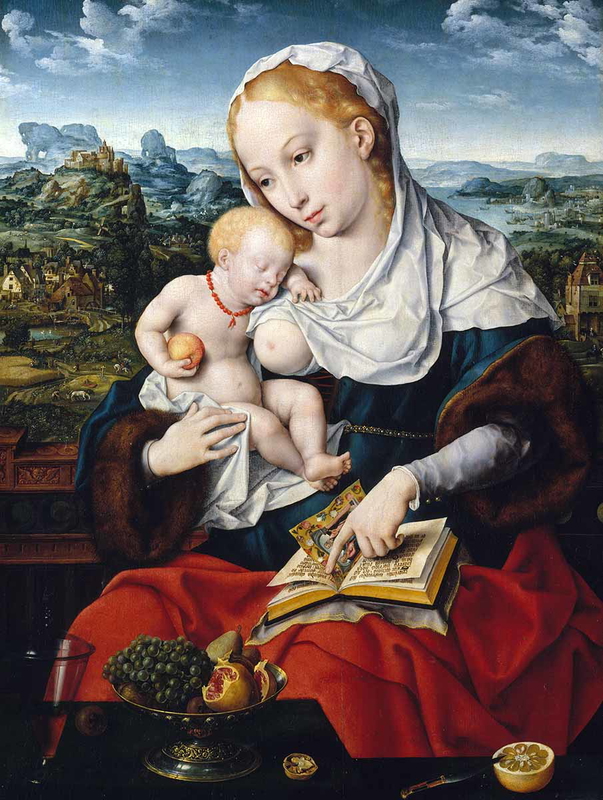
The contrast between Heaven and Earth is often depicted in art by the use of strong red surroundings representing earthly humanity and a blue mantle representing heavenly divinity (as shown in the painting above). Note that Mary alone is wearing this expensive color.
How Color Theory Defined the Status of the Divine
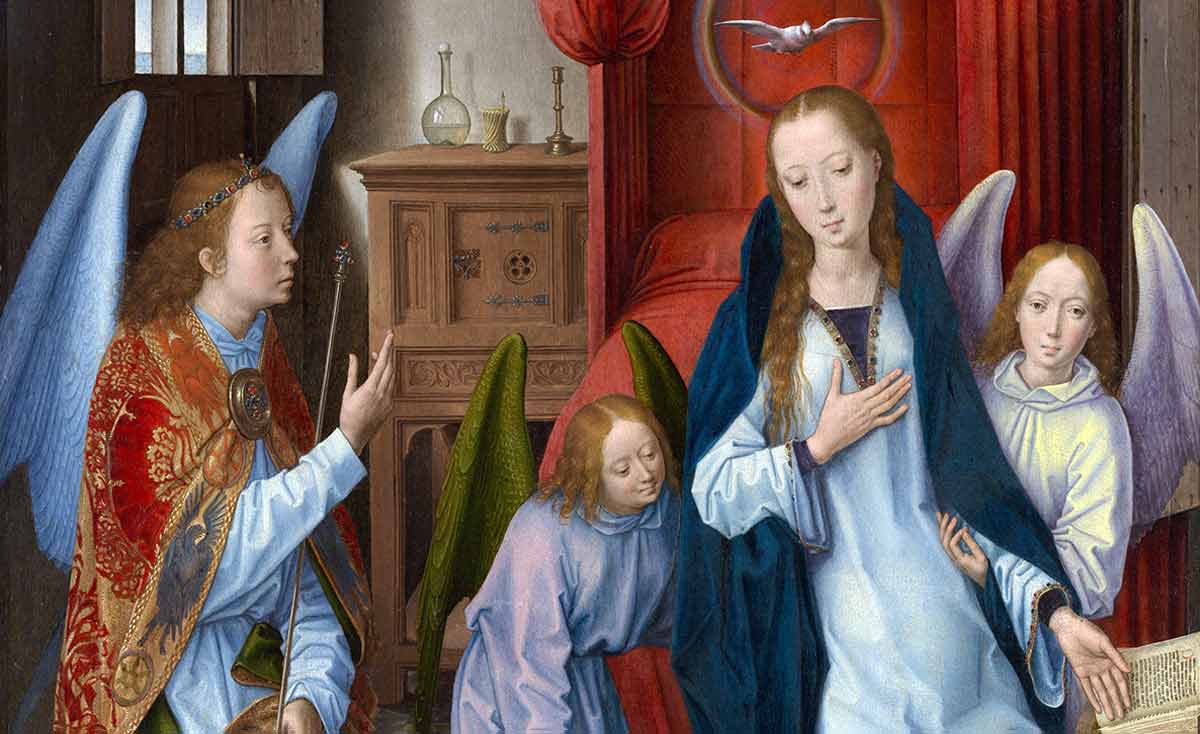
Color served as a visual hierarchy that allowed even illiterate viewers to instantly identify the most important figure in a crowded painting or altarpiece. Anybody could glance at the artwork and immediately see who is divine, and who isn’t.
In direct comparison to how royal blue was used to glorify Mary, one can consider how painting Judas in yellow indicated dishonesty and guilt.
To an artist, colors are more than pigment on a paintbrush, and the choice of which color is attributed to which character/person seems to be done very intentionally. Artists know this as “color theory,” or the language of color— that which allows them to guide the observer to feel or react in a deliberate way. Without using a single word, an artist can communicate ideas and cause the observer to think certain thoughts.
The Legacy of Marian Blue in Modern Visual Culture
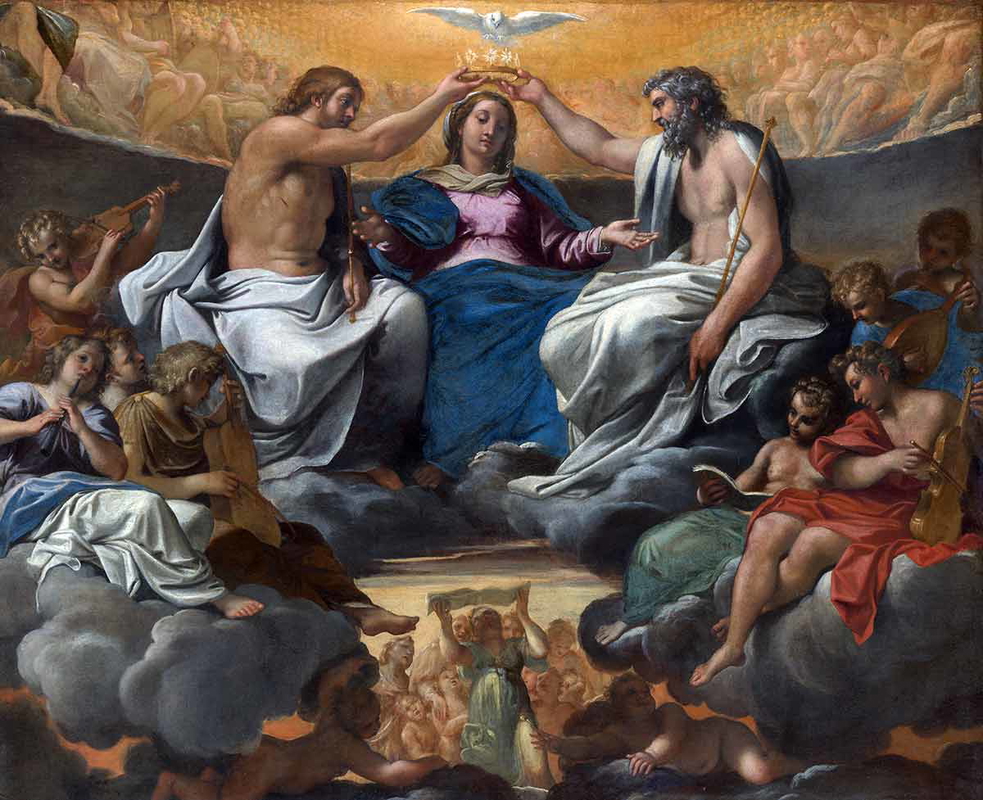
The cool color of blue is found in “Creation in calm” scenes like large lakes, the open sky, or ocean waves. Its use in art is similar in that it has a positive connotation, whereas colors like black or red convey darker emotions.
Understanding why ultramarine blue was reserved for Mother Mary is the ultimate intersection of trade, geology, and faith. Each piece of canvas covered in this rare pigment was an offering, indicating devotion and commitment to the faith.
John 2:5, Mary at the Wedding at Cana:
“Do whatever he tells you.”