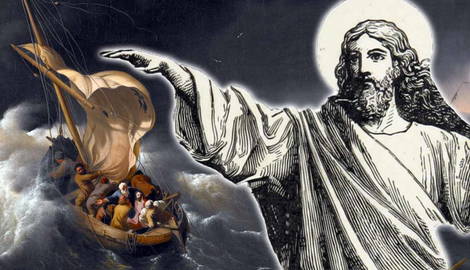

While spending time on a boat on the Sea of Galilee, a sudden squall broke out. Frantically, the experienced fishermen-turned-disciples shouted commands, scooping water from the boat, fearing for their lives. Yet their rabbi, Jesus, was sound asleep.
Was the sleep a sign of physical exhaustion, a test for the disciples, or a profound statement of divine sovereignty?
The “Wind Tunnel” Effect: The Science of the Galilee Storms
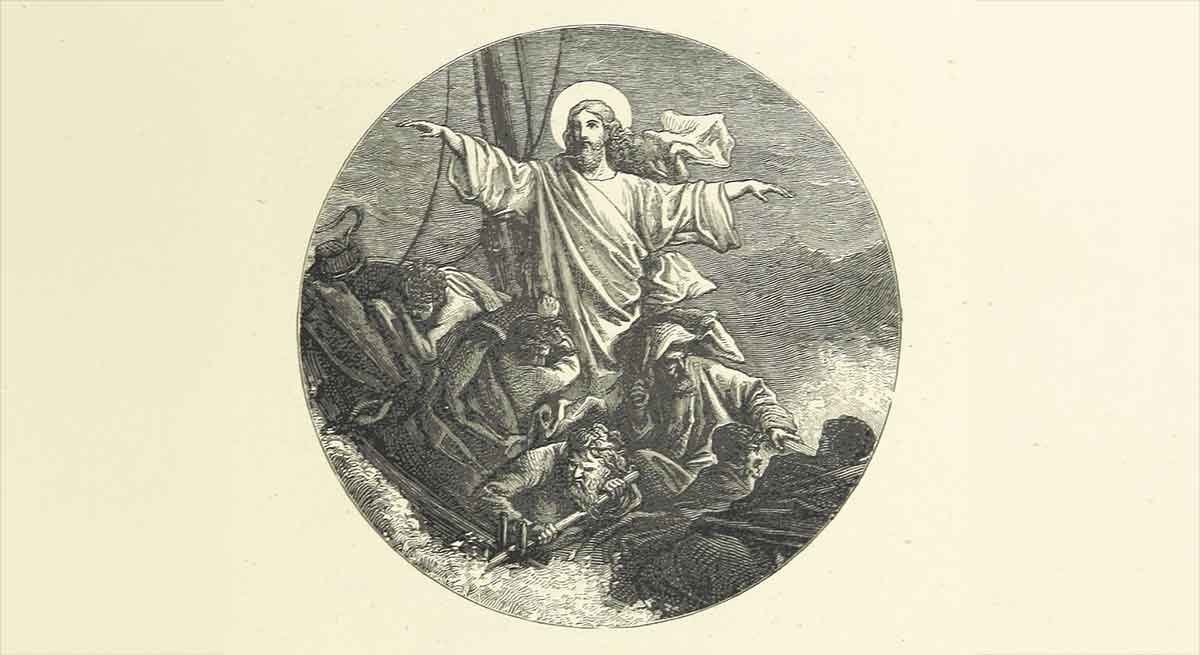
The Sea of Galilee is a lake lying in the Jordan Rift Valley, which creates a tunnel effect when the wind blows through it, making the Sea of Galilee prone to sudden, violent storms. These weren’t mere rain showers, but life-threatening “seiches” that could swamp a first-century fishing boat in minutes. A seich is a particular kind of wave that forms in an enclosed or partially enclosed body of water (i.e., a lake versus the sea). Seiches can arise suddenly, stand tall, and slosh back and forth.
It might not sound that bad to the modern reader, but we also need to take into account the boat they were in. In the 1900’s, there was a severe drought, and the water level of the Sea of Galilee dropped to reveal a sunken first-century fishing boat that might be similar to the one Jesus and his disciples were in. It was a particularly shallow vessel, not well designed to withstand sudden, violent storms.
The Pillow in the Stern: The Humanity of Exhaustion
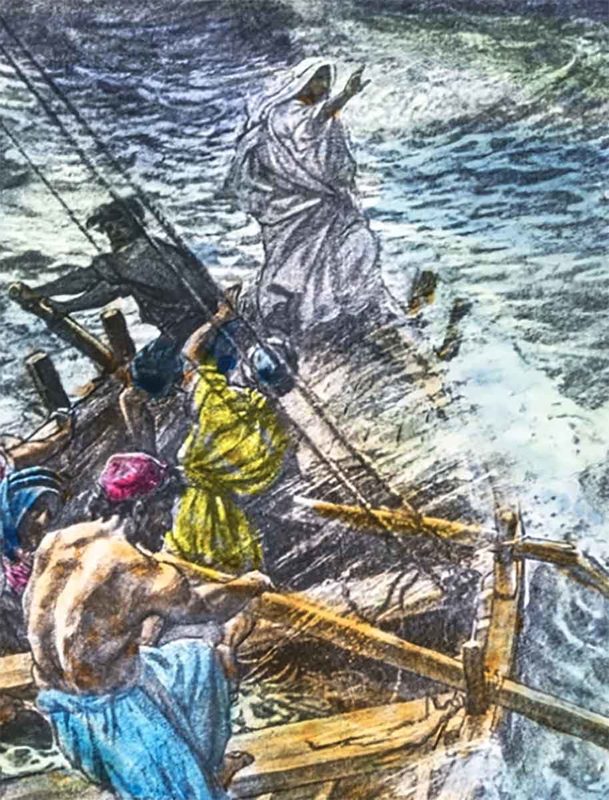
Mark’s Gospel details that Jesus was resting his head on something soft “προσκεφάλαιον” (proskephalaion). The kind of missionary ministry Jesus and his disciples did was exhausting. Jesus often withdrew from the crowds to quiet places to pray (Luke 5:16), and he taught his disciples to do the same (Mark 6:31).
Theologically speaking, Jesus is believed to be the incarnated Son of God – fully man; fully human. Therefore, his physical limitations are of great importance.
This nap of Jesus is one of the most humanizing moments in the New Testament, grounding the miracle in a weary reality. Other moments like it include when he wept outside Lazarus’s grave, when he got hungry and looked for figs in a tree, and when he experienced hematohidrosis before his crucifixion.
Sovereignty Over Chaos: The Theology of Stillness
The Bible, as a piece of ancient literature, makes more sense when you read more of it. The very second verse in it explains “chaos waters” and God’s Spirit hovering over them. In the following (first two) chapters of Genesis, the reader learns how God spoke the universe into existence. This tells us: 1. His voice – spoken word – has incredible authority; 2. In Jewish thought, only God can command the wind and sea.
Theologians have considered the rebuke Jesus gave to the sea and the wind (“Peace, be still”) as an act of re-establishing order over a chaotic world. Jesus said that he came to the world to bring a Kingdom – God’s rule and reign.
Jesus did not sleep in the stern because he did not care about the people on the boat; he slept because he understood the power he had over the storm.
The Disciples’ Fear and The Master’s Peace
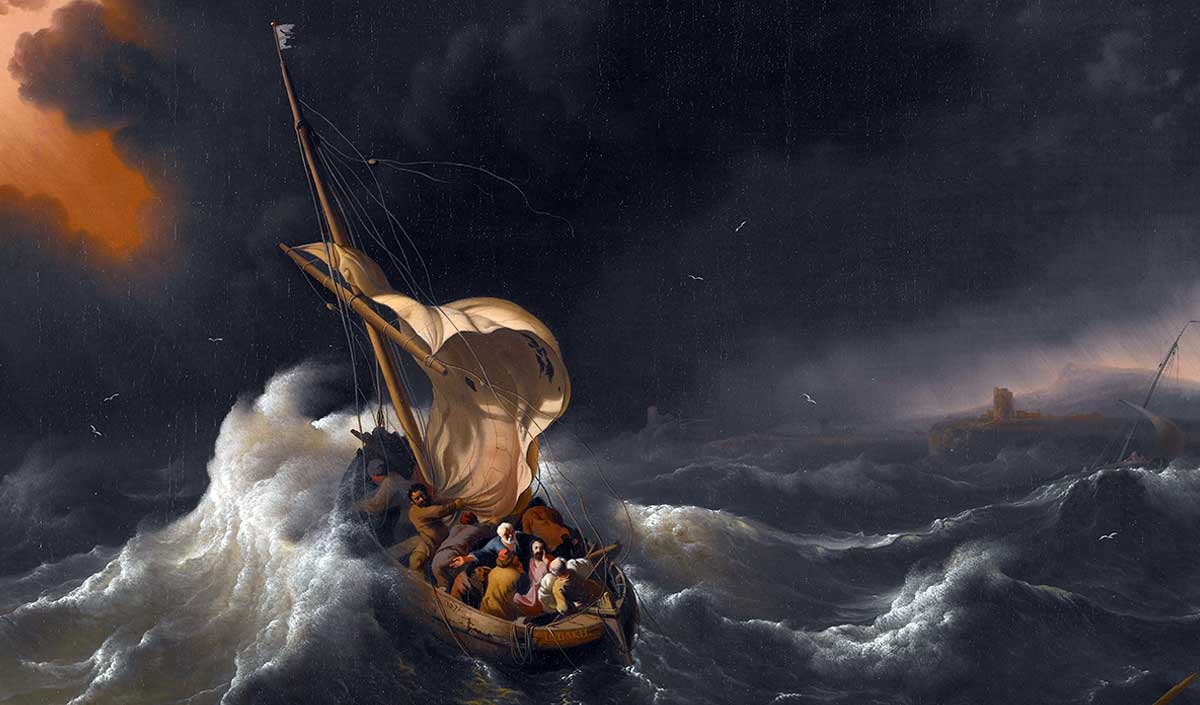
Mark 4:37-38 “A furious squall came up, and the waves broke over the boat, so that it was nearly swamped. Jesus was in the stern, sleeping on a cushion. The disciples woke him and said to him, “Teacher, don’t you care if we drown?”
The others on the boat were fearing for their lives. Many of Jesus’s disciples were fishermen whom he then called to be “fishers of men.” These were professional sailors who truly believed they were perishing. Then, after Jesus calmed the storm, they turned to one another and shared another scared look. They shifted from the fear of the storm to the “great fear” of the person who could stop it.
Mark 4:41 – “They were terrified and asked each other, ‘Who is this? Even the wind and the waves obey him!’”
Mastering the Waves: The Storm in Art History
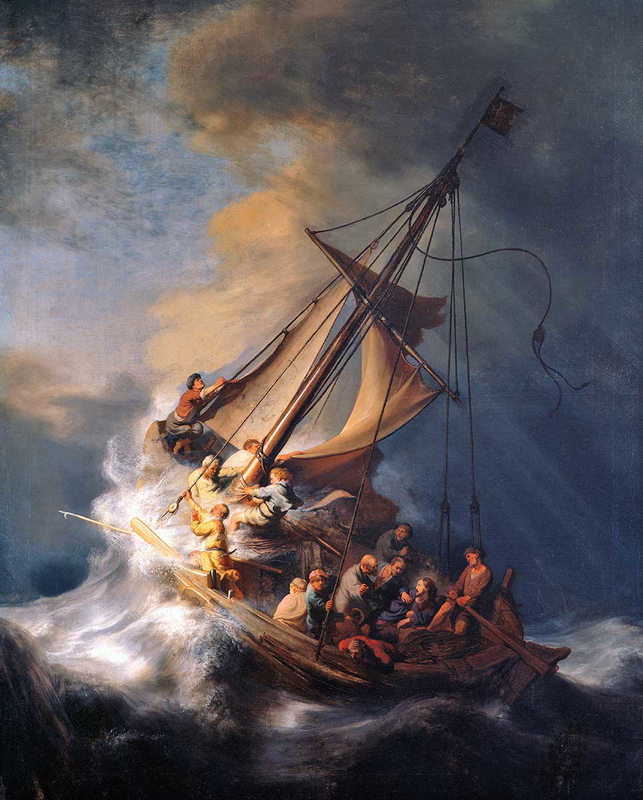
The only seascape ever painted by Rembrandt is entitled “The Storm on the Sea of Galilee” (above). His clever use of light and dark to draw the eye to the stern, where Jesus is asleep, has been applauded over the years.
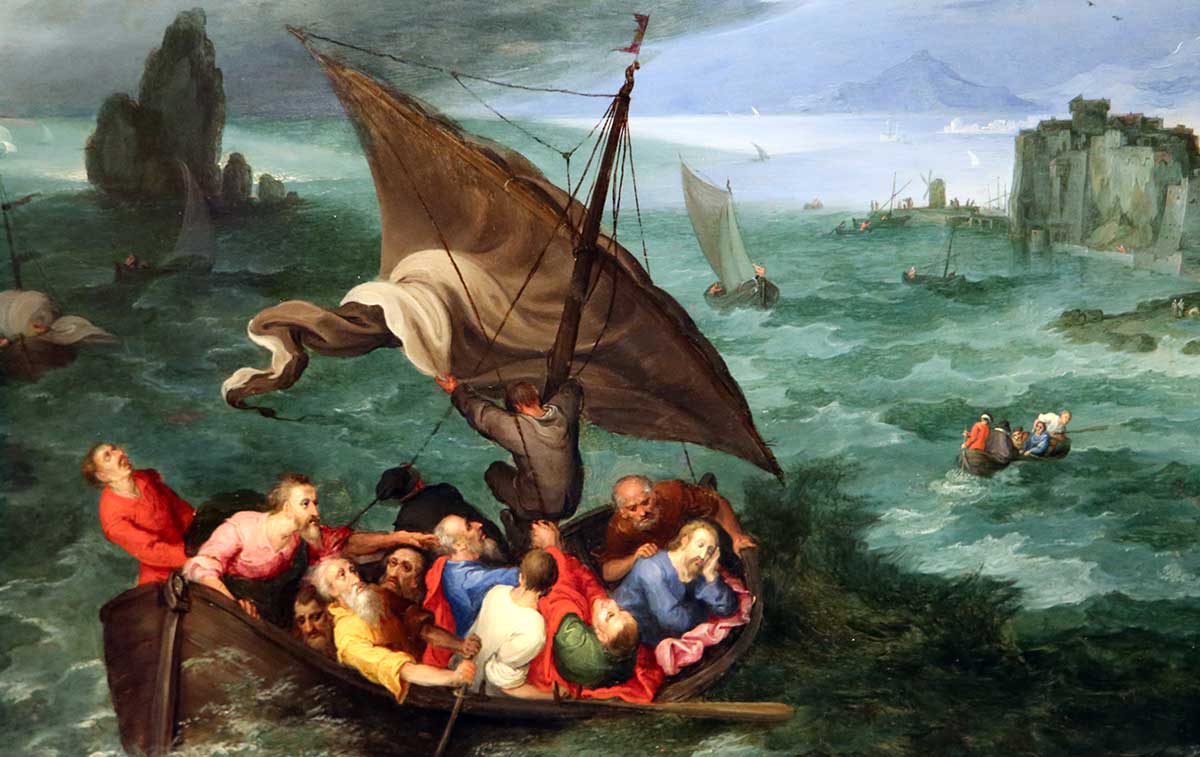
Many other artists through the eras have portrayed the contrast between the movement of the water and the stillness of Jesus. These artworks of Biblical events are very moving because they literally capture the calm in the storm.
This miraculous event, written about in the Gospels, still carries weight today. The “Sleeping Jesus” remains a timeless symbol of peace amid life’s literal and metaphorical storms that come our way daily.