
At the heart of the Aztec (Mexica) Empire was the enormous city of Tenochtitlan, where the battle for cosmic order was waged high up in the temples that towered above the surrounding sprawl. Demanding devotion, sacrifice, and blood, several deities ruled every aspect of life, death, and warfare.
Huitzilopochtli, the Solar Warrior and Patron of the Mexica
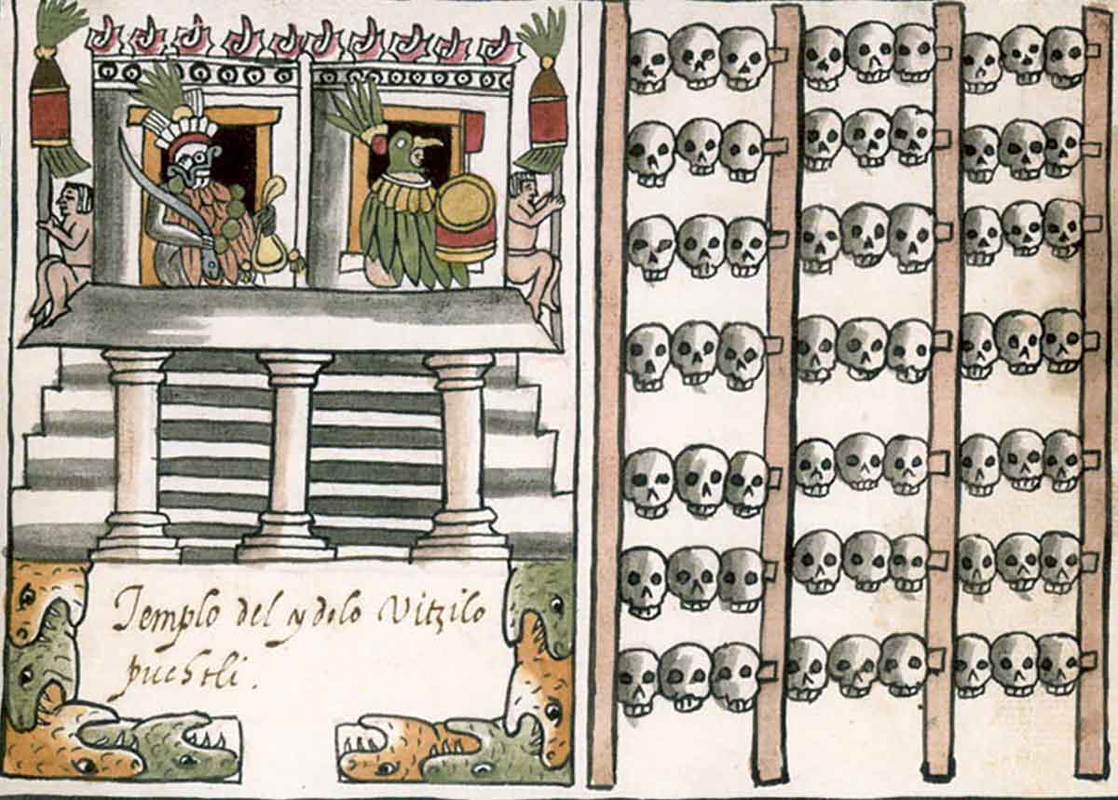
As the patron god of Tenochtitlan, Huitzilopochtli held a high place in Aztec life. He was a war god of sacrifice, and represented the renewal of the sun in its constant chase of the moon across the sky.
This was believed to be connected to Huitzilopochtli’s origin as the youngest child of Coatlicue. Her children conspired to murder her, and Huitzilopochtli burst forth from her womb to defend her. Since then, he chases his sister and all her brothers across the sky.
If Huitzilopochtli were to ever fail, his siblings would destroy his mother and thus, the world. As such, it was of prime importance that he had power to continue his constant chase. This power came from blood.
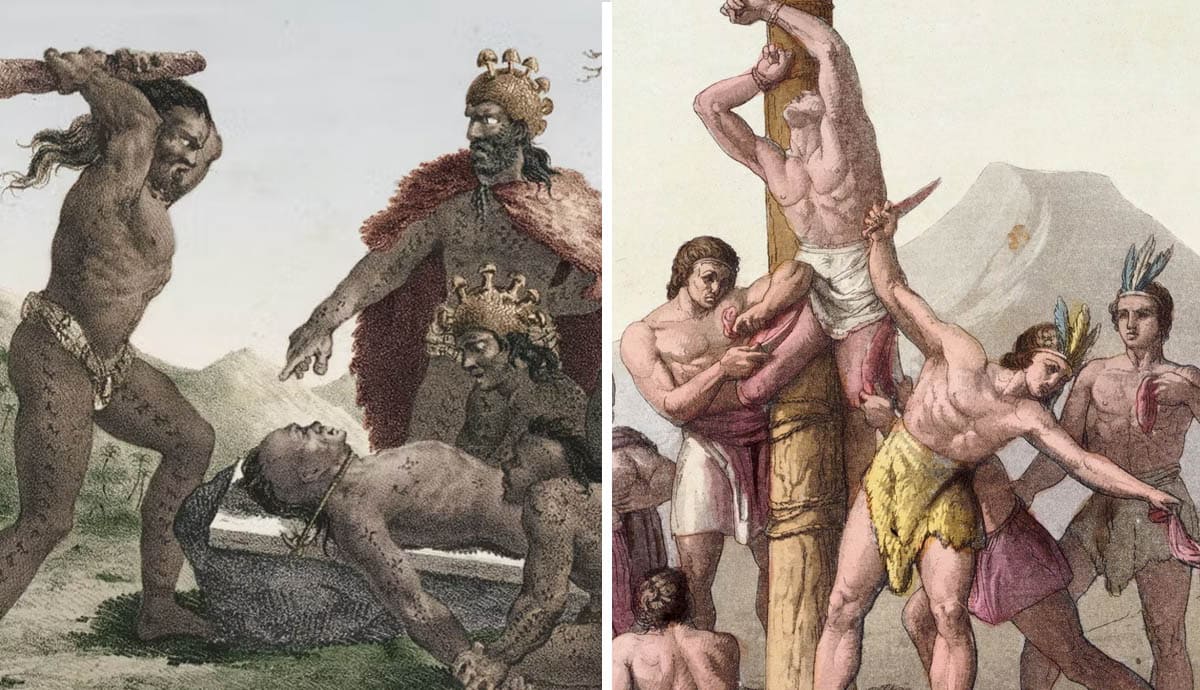
Sacrifices to Huitzilopochtli were gruesome and often involved cutting the heart out of the victim’s chest. When victims were sacrificed at the top of Templo Mayor, their hearts were ripped out, and their bodies were tossed down the steps. The victims were generally captives from battle or slaves, with a select few being ixiptla, deity impersonators who were prepared months before their sacrifice and were treated well before their deaths.
Tláloc, the Rain Giver and Devastating Storm God
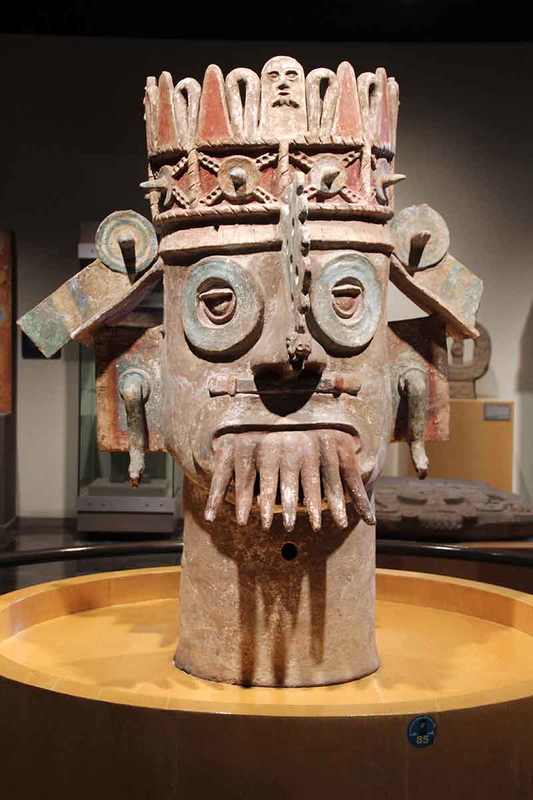
Worshipped as a provider of life, Tláloc was the god of rain and earthly fertility. He was often depicted with fangs and a forked tongue, adding to his fearsome reputation and ability to control storms. Despite this, he was not seen as a malicious god, but like other Aztec deities, he required sacrifice.
In Tenochtitlan, a shrine to Tláloc sat alongside the shrine to Huitzilopochtli atop Templo Mayor, and received many bloody offerings. 44 miles east of Templo Mayor was Cerro Tláloc, a mountain where it was believed Tláloc dwelled.
Being the god of rain, sacrifices and offerings to Tláloc were usually associated with water, like shells, jade, or sand. A disturbing fact is that sacrifices were often focused on children. Their tears were especially important, and it was thought that if the children cried on their way to being sacrificed, there would be abundant rains, and if there were no tears, then there would be a dry season.
Quetzalcoatl, the Feathered Serpent of Wisdom and Creation
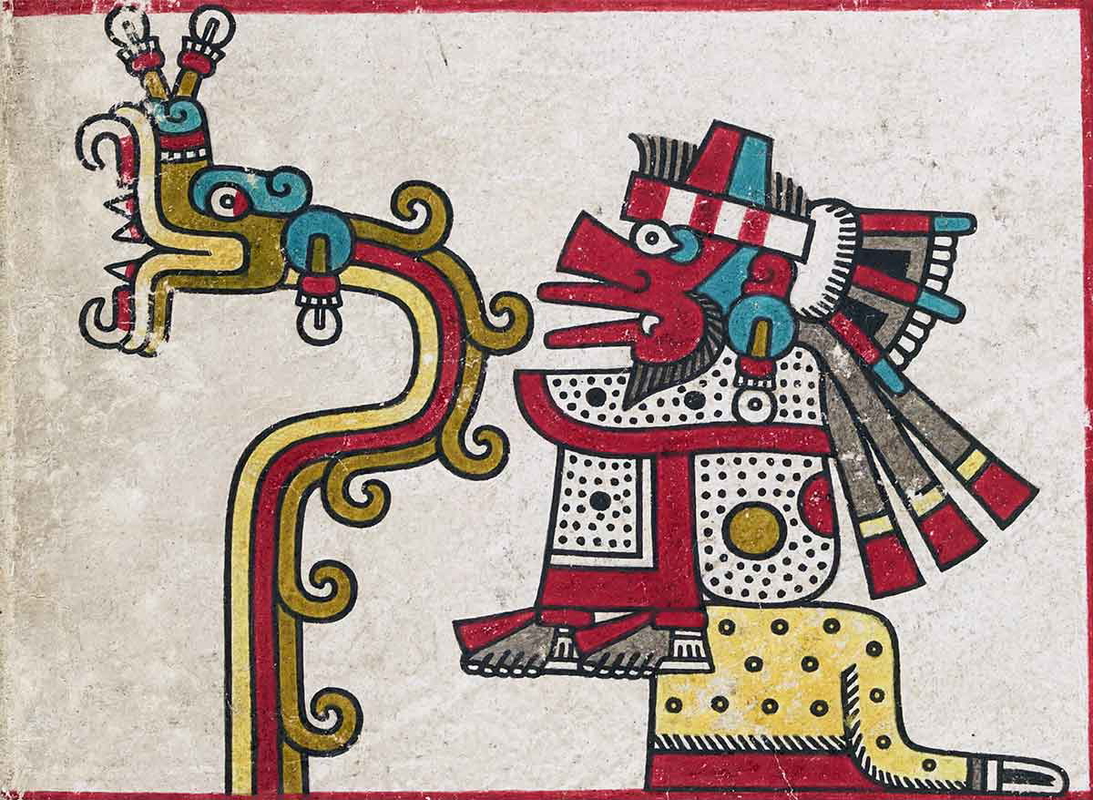
One of the oldest deities in the Aztec pantheon, Quetzalcoatl’s worship predates the Aztecs by more than a millennium, with the earliest evidence suggesting the worship of a feathered god synonymous with Quetzalcoatl as far back as the first millennium BC.
Quetzalcoatl was the god of a wide range of domains, and as such, he played a significant part in the life of everyday people across Aztec society. Apart from being a god of wind and the sun, he was the patron of merchants, arts, crafts, knowledge and learning. His wisdom and intelligence were sought after by all manner of people, from those in the marketplace to builders, carpenters, artists, students and priests. In the Calmecac, religious institutions of learning annexed to temples, Quetzalcoatl was particularly important. He presided over those wishing to enter the priesthood and the education of noble sons.
In Aztec society, Quetzalcoatl was also thought to have invented the calendar and discovered maize— the most important crop in Mesoamerican society. Along with his ability to bring rain clouds, Quetzalcoatl was an important figure for farmers and, indeed, everyone who relied on them!
Coatlicue, the Earth Mother and Devourer of the Dead
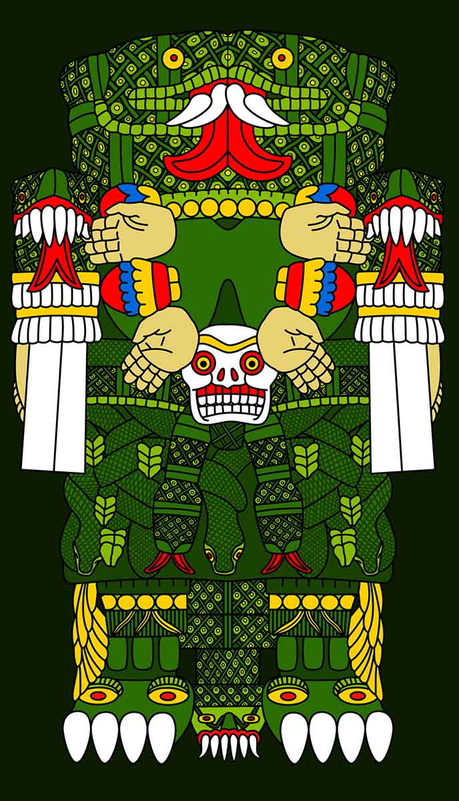
Coatlicue is a mother goddess who gave birth to the moon and the stars, as well as Huitzilopochtli, synonymous with the sun. Her countenance was fearsome, and she was depicted with a face formed by two facing serpents. Her skirt was made of snakes, and she wore a necklace decorated with human hands, hearts, and skulls. Massive claws sprouted from her hands and feet.
Coatlicue was an earth-mother goddess and was worshiped as the goddess of childbirth, although she was also associated with governance, warfare, and agriculture
She was worshiped during the Tozoztontli—the third month of the 18-month Aztec calendar. This is the beginning of the rainy season, and falls in late March and early April. She was also worshiped in a ritual during Quecholli, the 14th month. In this festival, an ixiptla was sacrificed.
Tezcatlipoca, the Lord of the Smoking Mirror and Destiny
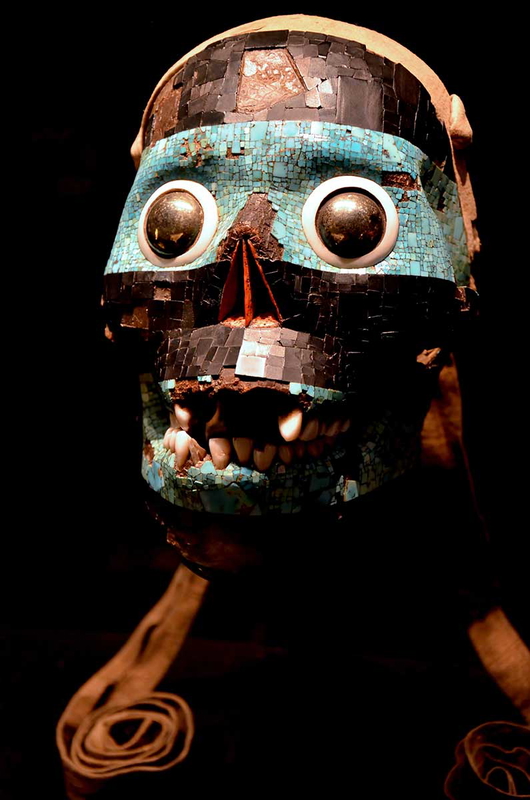
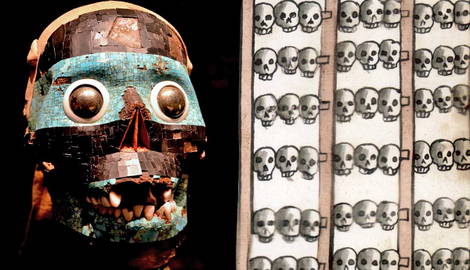
Of great importance in the Aztec pantheon was Tezcatlipoca, who represented the night sky, hurricanes, and obsidian. His connection to the latter garnered him the name of the “smoking mirror,” as mirrors were made from polished obsidian and were also associated with divination and prophecy.
He was the protector of common people and slaves, rewarding those who treated their charges well with riches and fame, while punishing those who mistreated their slaves with disease and misfortune. Indeed, Tezcatlipoca was seen as thus, a capricious god of fate, both feared and revered.
An ixiptla lived as the embodiment of Tezcatlipoca, living in luxury accompanied by four goddesses for a year. At the end of this period, in the fifth ritual month of Toxcatl, he ascended a small temple, and his heart was removed from his chest.