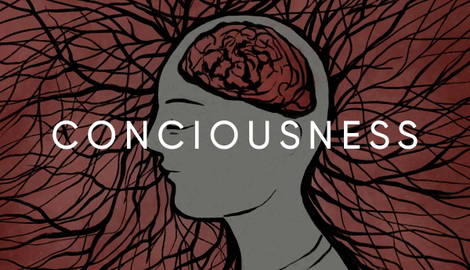

The fact that you’re aware, or conscious, opens up one of philosophy’s greatest mysteries. Is consciousness something that just happens when brains become complex enough, like steam rising from hot water? Or is it altogether more profound: a fundamental part of the universe, akin to space and time? This debate attracts not only philosophers but also thinkers from fields such as neuroscience and quantum physics. If they can resolve it, we may finally understand more than just ourselves.
What Do We Mean by Consciousness?

Consciousness is an incredible and odd sensation of knowing something. It is responsible for making you enjoy the heat from sunlight and chocolate, or fret about an exam. These kinds of feelings are called qualia by philosophers: they are what it is like to be you.
There are two main types of consciousness. One is phenomenal consciousness. This refers to your individual, inner world of experiences: things that only you can see or feel. It is access consciousness, on the other hand, which allows your brain to do things with information. Like remembering a name, or focusing on a task at hand.
In the words of René Descartes, “I think, therefore I am.” When we reflect on our thoughts, he believed, we have proof of our existence. Contemporary science and philosophy take this notion further: What is the self that does the thinking? Is it a mere byproduct of brain activity, or is it something more?
This question is more than armchair semantics. The way we define consciousness has wide-ranging implications, from how we interact with artificial intelligence and animals to our place in the cosmos. If consciousness ends up being another name for cleverly orchestrated neuronal activity, there may one day be a scientific explanation for it. But if being conscious turns out to be a fundamental feature of reality akin to space or time, then we have got a puzzle on our hands.
The Emergent View: Mind From Matter

According to the emerging perspective, consciousness is not a fundamental aspect of the universe. Rather, it emerges from complexity. Just as individual water molecules are not wet, but they start to feel wet when you put enough of them together.
A number of philosophers and scientists find this compelling. Daniel Dennett believes that brains are clever tricksters. They create consciousness because it’s useful for processing information.
Patricia Churchland thinks we will come to understand more about what consciousness is and what it does as neuroscience progresses. Indeed, doctors can now point to which parts of our brains light up on scans when we feel pain, see colors, or imagine eating pizza.
This view aligns with materialism, the notion that all things, including the mind, arise from physical matter. It is an optimistic stance, too. As we discover more about the brain, we come ever closer to accounting for consciousness. There is, however, a drawback. Even if we were able to chart all the activity in the brain, we would still be faced with the “hard problem”: why does all this brain activity feel like anything at all? Why is there an “inner movie”? This mystery continues to keep the discussion alive.
The Fundamental View: Consciousness as a Basic Feature of Reality

Consider this: What if consciousness isn’t something created by the brain but something it uncovers? This is the basic idea. Instead of being a byproduct of neurons doing their thing, consciousness could be a fundamental feature of the universe, like gravity or energy.
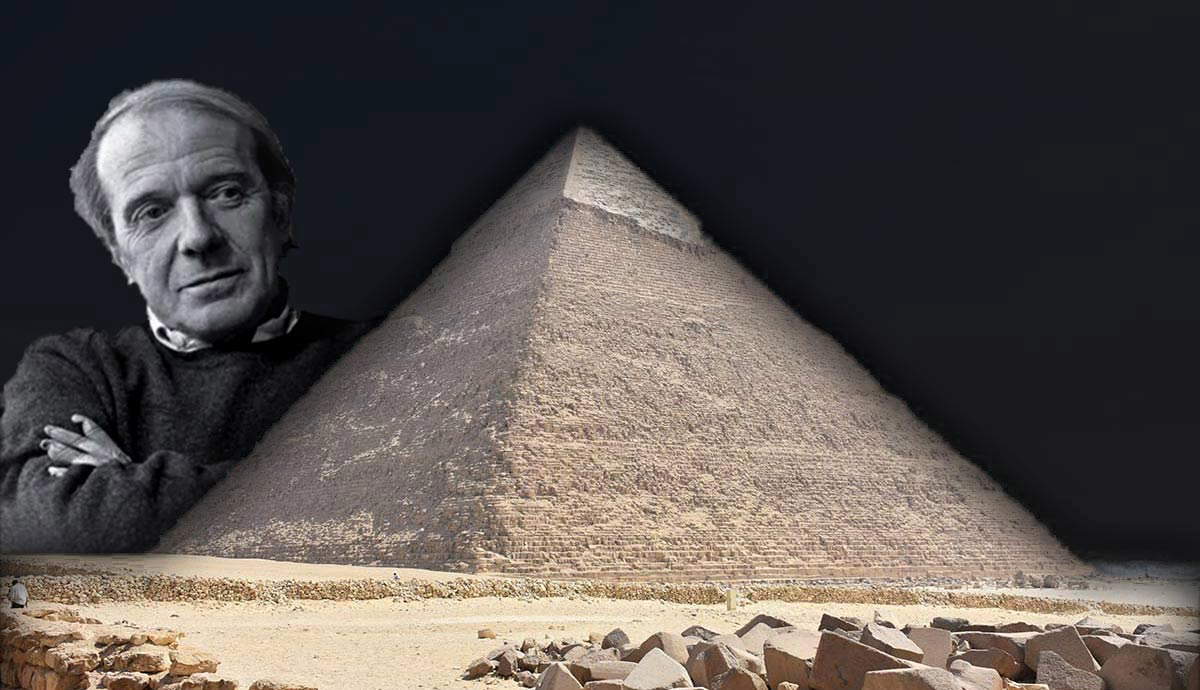
That’s where panpsychism comes in. Philosophers, including Philip Goff and Galen Strawson, think that even the tiniest particles might have very basic forms of consciousness. Not thoughts or feelings, just experience. It might sound weird, but the theory solves a huge mystery. Instead of explaining how dead matter can somehow become alive and aware, we can say it was never entirely non–conscious in the first place.
Additionally, there is idealism, a view most famously propounded by George Berkeley, which turns this on its head. He said that the physical world is here because of minds, not vice versa: if you look at it in one way, its core is mental. A modern take that both scientists and philosophers can get behind is Integrated Information Theory (IIT). This suggests that consciousness simply emerges when a system has a lot of integrated information, as human brains do, or maybe even other things, like complex computers.
What’s good about this idea? It tells you what all conscious things have in common. And what’s bad? There are no currently known ways to measure, test, or verify it. However, that does mean there’s still plenty left to find out and some rather odd implications to consider.
Consciousness in Machines: Emergent, Fundamental, or Illusion?
Is it possible for a machine to be conscious in the truest sense of the word, or can it only act that way? This question is discussed a lot nowadays. For example, it comes up when people talk about AI chatbots or human-looking robots that can chat with you, respond when you tease them, and express feelings like sadness or happiness.
One idea is that if consciousness emerges (as when you bring lots of simple things together, such as water drops forming an ocean), then perhaps yes. One day, we might be able to make machines so complex that they, too, will become conscious. But if consciousness is something basic and necessary for existence, a fundamental part of the way everything works, then things get more complicated. It could be argued that machines will never be able to have consciousness in this deep sense; they will only simulate it very cleverly.
Alan Turing proposed a test that questions whether it is possible for machinery to dupe mankind into believing it is human. However, there is a disparity between feigning awareness and the real deal. Sure, an automaton may declare: “I’m feeling great!” but does this imply sensation, or could its statement be merely well-coded lines doing a thoroughly persuasive job?
Such considerations lead us to ask: When we talk of consciousness, are we focusing primarily on behavior (including verbal statements and passing written exams)? Or does the notion require an entity that actually “feels” things in some sense as well? This remains unclear.
The Hard Problem and the Explanatory Gap

Why does red seem red? It’s the question that lies beneath the surface of philosopher David Chalmers’ celebrated “hard problem of consciousness.” It isn’t hard because it’s complex; it’s hard because it’s profound. Scientists can solve all the “easy” questions: how the brain handles sounds, how we respond to threats, and even how we concentrate. None of that answers the question of why there’s an internal experience or why we feel fear or perceive color, rather than act robot-like.
That’s the explanatory gap: the gap between brain function and lived experience. We have all the neural traces we can follow as someone enjoys chocolate, but still cannot explain what the pleasure feels like.
Emergent accounts have a problem here. How do the physical elements assemble to yield as vivid and personal a thing as a recollection or a dream? Basic positions propose that perhaps we can’t explain it because we’re starting from the wrong location. Perhaps consciousness isn’t caused at all; maybe it just exists.
Either way, the mystery remains. Consciousness isn’t about brains, it’s about being. Until we crack the hard problem, we’re left to ask: are we clever machines having a trick of consciousness? Or is the fact that we’re conscious the most real thing? It’s a problem that still keeps philosophers and scientists up all night.
Is a Synthesis Possible? Dual-Aspect and Future Theories About Consciousness

Suppose that mind and matter are not two distinct entities, but only two sides to the same coin. That’s the premise of dual-aspect monism, a theory that dates back to philosopher Baruch Spinoza. He was convinced that reality exists both physically (such as brains and neurons) and mentally (such as thoughts and feelings), and that these are two sides of the same coin. Now, thinkers are returning to this concept to close the gap between material science and the enigma of consciousness.
Others are looking to quantum physics. Roger Penrose and Stuart Hameroff have suggested that minute quantum occurrences in the cells in the brain may give rise to consciousness. It’s far-fetched and still in dispute, but it illustrates the way that people are venturing out of conventional science for explanations. Perhaps the real revolution will result from the integration of multiple frames. New theories may incorporate neuroscience, physics, and philosophy to understand how consciousness exists within the universe. Or we may need entirely new tools and frames of thinking that we have not yet created.
Consciousness isn’t about neurons or particles, although those do play a part in it. Consciousness is about being. In order to understand it really well, we might need to redefine not only reality as we study it, but reality as we define it. The mystery remains unsolved.