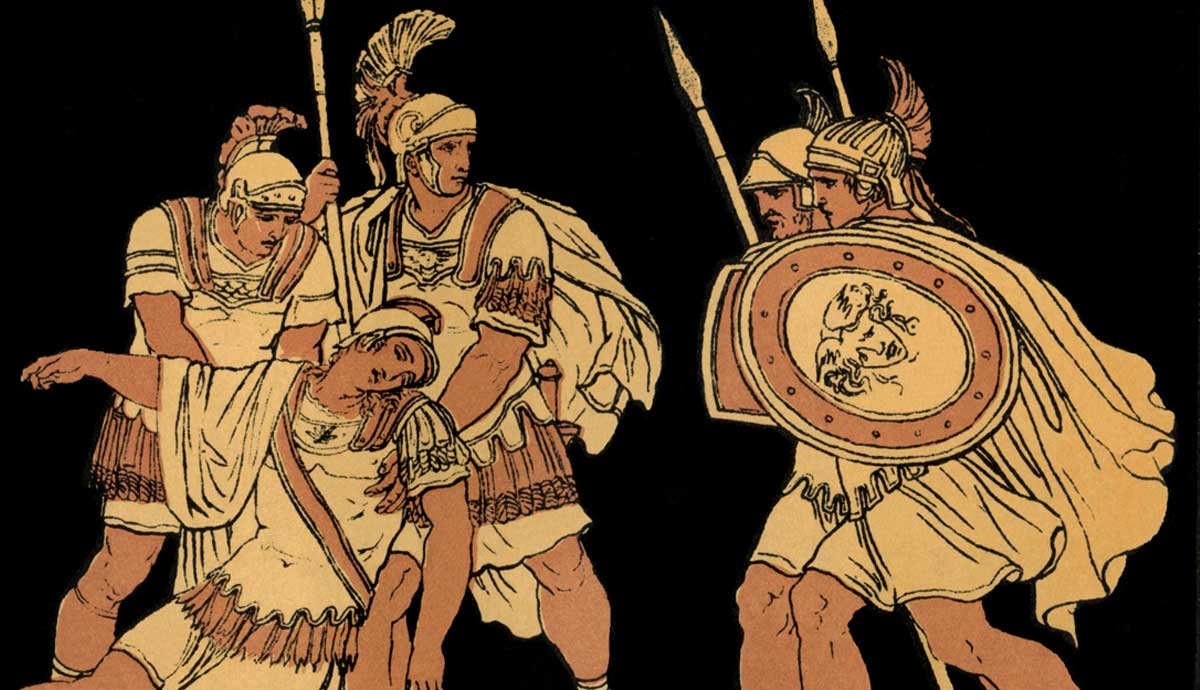
When Homer’s Iliad begins, the Trojan war has already been raging for nine years. The cause of the war is only alluded to briefly, but the ancient audience would have been very familiar with the context of the story. The events that led to the Trojan War, including the Judgement of Paris, the Abduction of Helen, and the expedition to Troy, were all narrated in another epic poem, called the Cypria. Though now mostly lost, the poem formed part of what Hellenistic scholars called the Epic Cycle. It provided a wealth of material for tragic authors such as Euripides and Aeschylus, but over time, Homer’s poetry became favored and the Cypria faded from view. What do we know about the Cypria and its account of the Trojan War?
What Was the Cypria?
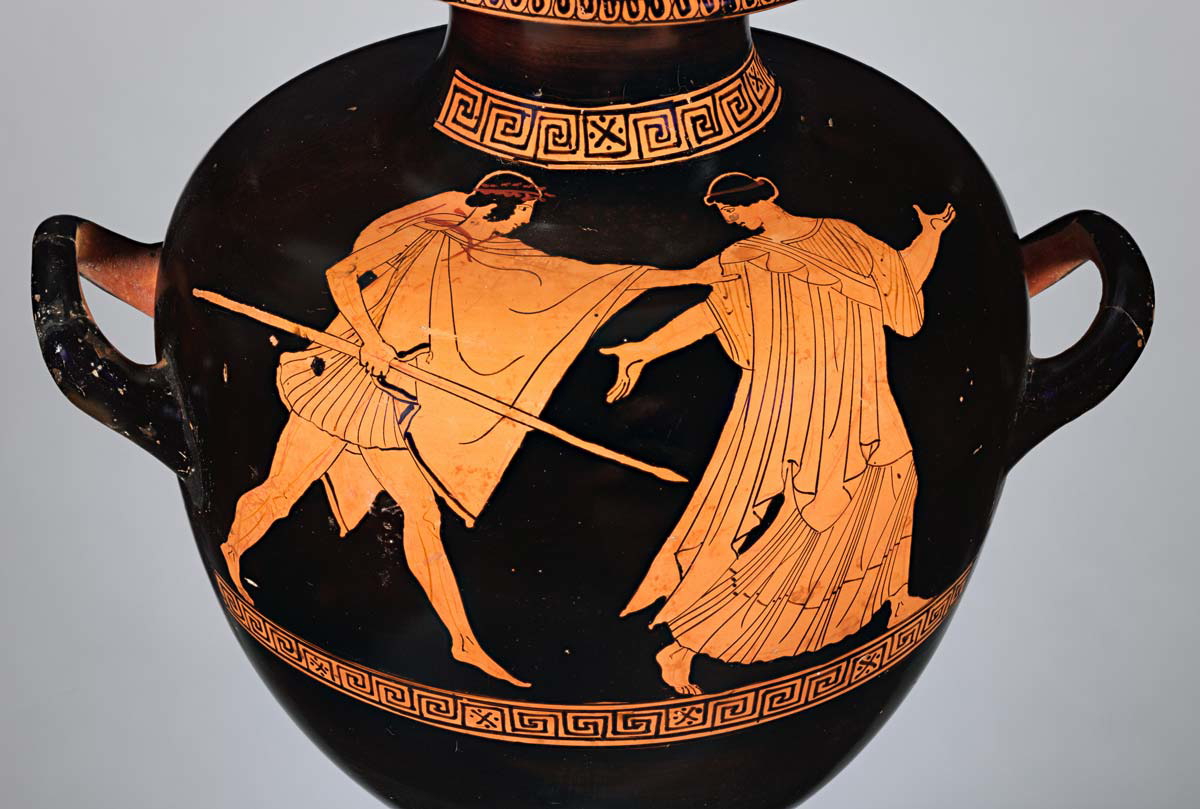
The Cypria was an epic poem that was part of what scholars call the Epic Cycle, a series of poems that collectively recount events around the Trojan War and its aftermath. The Epic Cycle included the Theban epics and poems concerning the Sack of Troy and the Returns. Many of these poems were once attributed to Homer, but analysis of the diction, meter, and literary style has shown them to be composed later. Likely composed in the late 7th century BCE, the Cypria was set before the Trojan War, narrating the cause of the war and the Greek expedition to Troy.
The Cypria is commonly attributed to Stasinus of Cyprus, though there have been other alleged authors proposed, such as a man named Kyrias, who was a semi-legendary poet from Halicarnassus. There was even a later anecdote that the poem was composed by Homer, who gave it to Stasinus as a dowry when he married his daughter.
Much of what’s known of the Cypria comes to us from Proclus, an author whose date is debated but who likely lived in either the 2nd or 5th century CE. He wrote a summary of the epic. Other authors, such as Herodotus and Apollodorus, provide quotes and paraphrases from the poem. There are a total of approximately 30 known fragments pertaining to the epic. This leaves a lot of work to reconstruct the narrative, with much of the heavy lifting being done by Proclus’ summary.
Zeus’ Plan & the Judgement of Paris
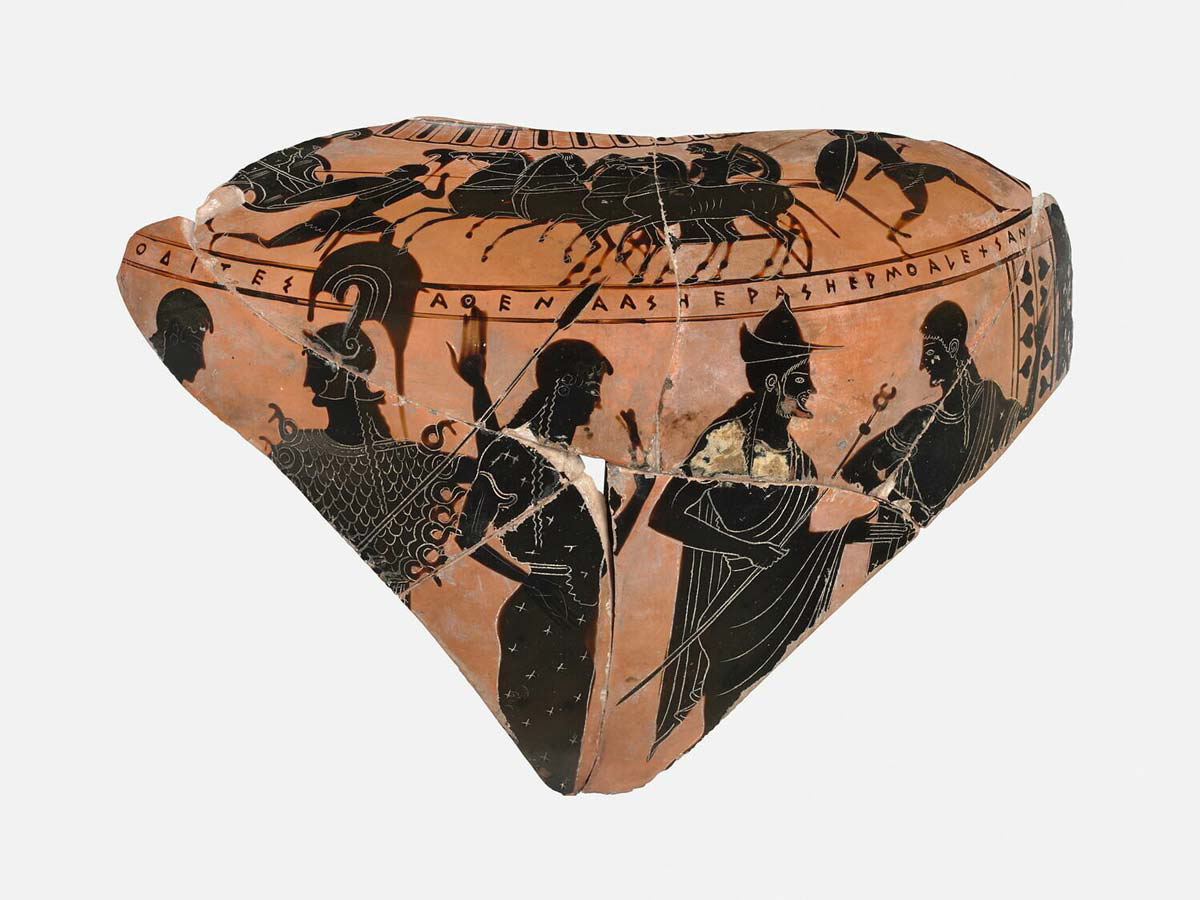
According to Proclus, the Cypria was divided into 11 books, or episodes, though we don’t know the exact composition of each. The epic began with Zeus and Themis planning to bring about the Trojan War to ease the burden of overpopulation on Earth. This is followed by the wedding of Peleus and Thetis, which is interrupted by Eris, the goddess of strife, who causes an argument among the goddesses Hera, Athena, and Aphrodite over which of them was the fairest. It is unclear whether the Cypria detailed the cause of the argument as the golden Apple of Discord, or if that was a later invention. Zeus then commands Hermes to guide the goddesses to Mount Ida, where Paris (here called Alexandrus) will decide between them. All the goddesses promised him gifts for his choice, but he was most tempted by marriage to Helen of Sparta, so he chose Aphrodite. At Aphrodite’s suggestion, Paris built ships and sailed to Sparta.
Once there, he was hosted by Menelaus, and in the course of a feast, Paris gave many gifts to Helen. Menelaus then sailed for Crete and told Helen to give the Trojans anything they needed until they left. Aphrodite then brought Helen and Paris together, and after their union, they placed many treasures on their ships and sailed away in the night. Hera, upset at not being chosen as the fairest, caused a storm that blew the Trojans off course, landing them in Sidon. Paris captured the city and then sailed off to Troy, where he and Helen were married.
Mustering the Greek Forces
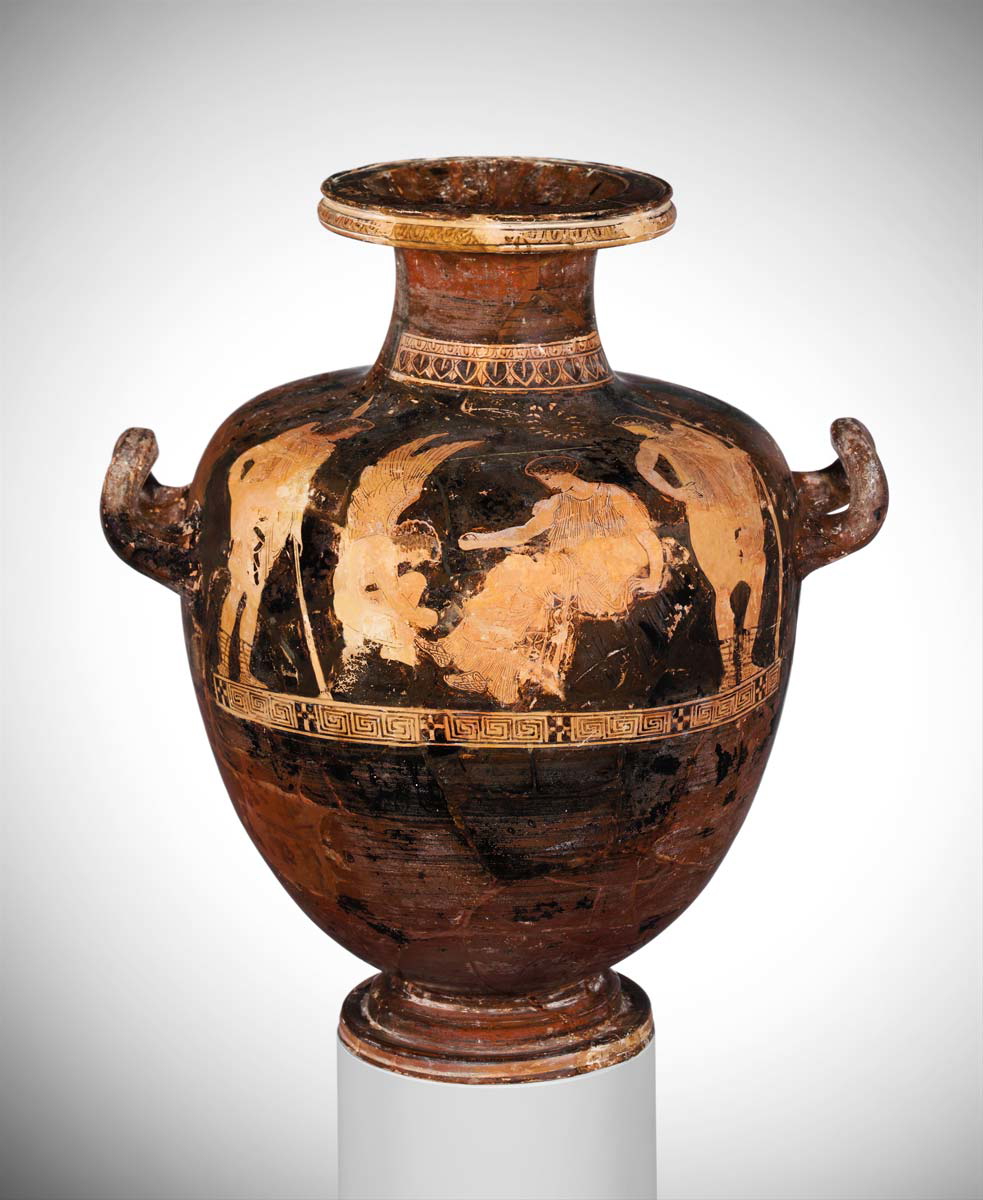
The epic then goes into a digression about Castor and Polydeuces, the brothers of Helen, and how Zeus came to give them immortality every other day. Iris, the messenger goddess, then told Menelaus what happened at his home. He returned to Sparta and planned an invasion of Troy with his brother Agamemnon, the king of Mycenae. They first recruit Nestor, then go gather other Greek leaders. Odysseus pretended to be insane in an effort not to join the expedition, but at the suggestion of another warrior, Palamedes, they took his son Telemachus and threatened to beat him. Odysseus gave up the ruse and joined the expedition. All the Greek leaders met at Aulis, where they gave sacrifices and sailed out for Troy.
The Greek army landed in Mysia, a region of Anatolia, where they sacked the city of Teuthrania, mistaking it for Troy. When they sailed out from Mysia, the fleet was scattered by a storm. Achilles landed on Scyros, where he married Deidameia, daughter of Lycomedes. The Greeks again mustered at Aulis to prepare the expedition to Troy.
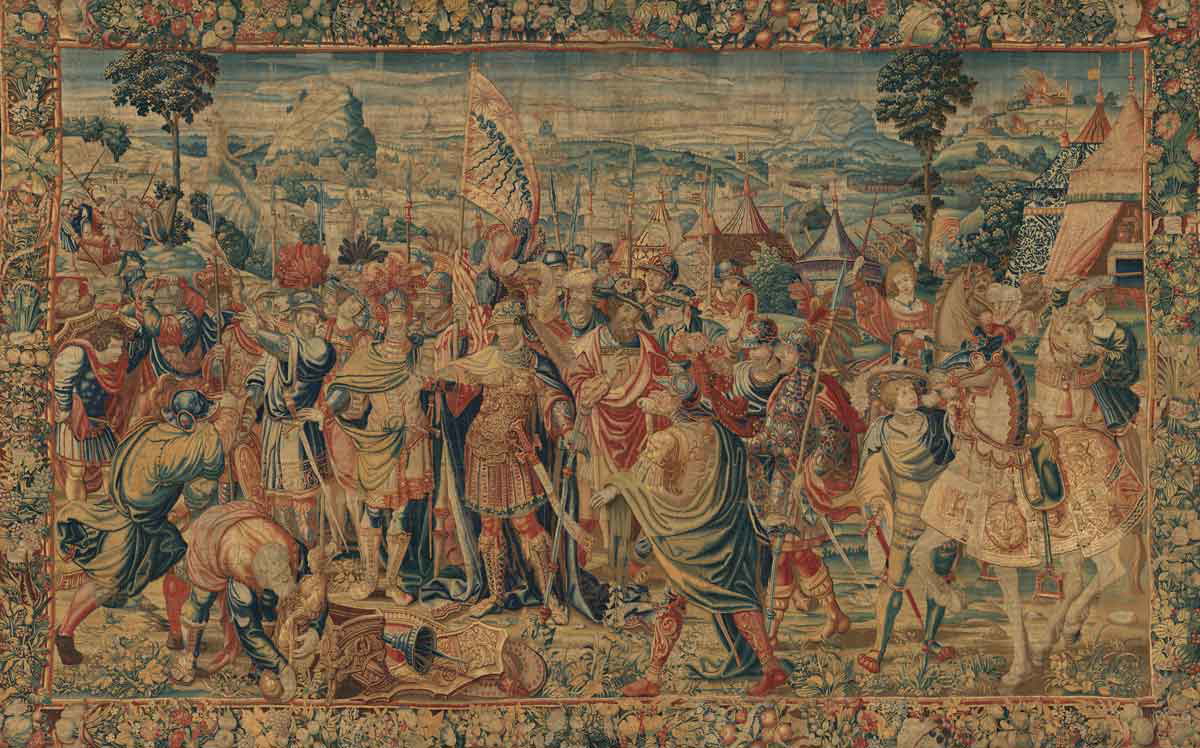
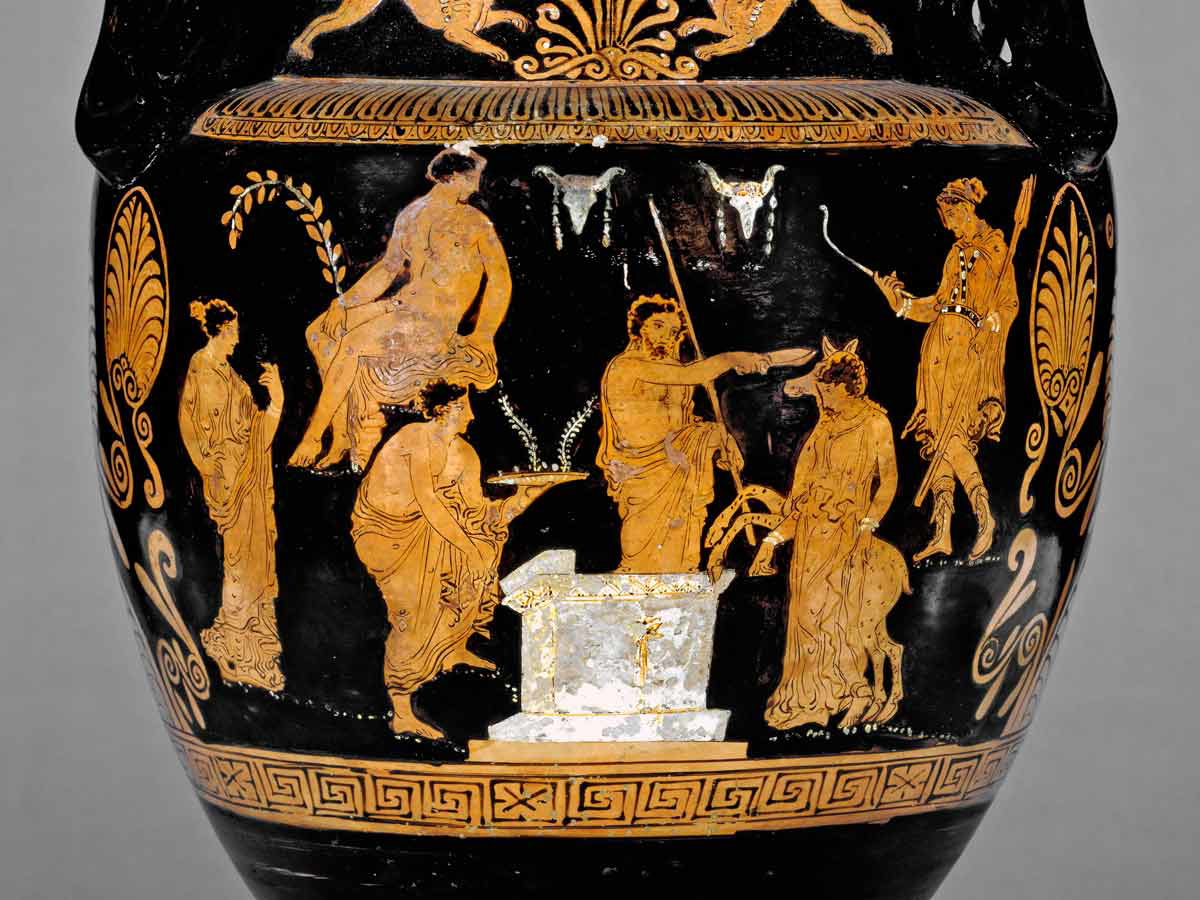
Agamemnon, while out hunting, killed a stag and bragged that he was a better hunter than Artemis. The goddess heard him and sent stormy winds to prevent the fleet from sailing. Agamemnon was told by the prophet Calchas that to appease Artemis, he had to sacrifice his daughter, Iphigenia. Agamemnon tricked his daughter into traveling to Aulis by telling her that he was arranging her marriage to Achilles. He then placed her on the altar to be sacrificed to Artemis, but the goddess snatched her away and replaced her with a stag.
Arrival at Troy
When the Greek army finally arrives at Troy, their landing is contested by Hector and the Trojans. In the fighting, Achilles kills Cycnus, a son of Poseidon, and pushes the Trojans back so the Greeks can land. The Greeks then demanded the surrender of Helen and the return of the treasures she stole. The Trojans refused, so the Greeks assaulted the city and ravaged the countryside and surrounding cities.
Achilles wanted to see Helen, so the goddesses Aphrodite and Thetis enabled a meeting. The Greeks then wanted to leave and go back home, but Achilles stopped them, and they sacked more cities. From those cities, Achilles took Briseis as a war prize and Agamemnon took Chryseis. Next follows the death of Palamedes and Zeus’ plan to relieve the Trojans by making Achilles sit out of the fighting. The epic ends with a catalog of Trojan allies.
Ancient Reception
It might be taken for granted that the Iliad and Odyssey were more popular than the Cypria in the archaic era when they were written, given that those two epics have withstood the test of time. In 335 BCE, Aristotle also criticized the Cypria in his Poetics, stating that it fails his criteria of a “good” epic, given that it doesn’t focus on a single action but a period of time with multiple events occurring. To Aristotle, this was more like history, where all events are causally linked, but there is no narrative or thematic unity. The Iliad and the Odyssey both centered on a single character, whereas the Cypria presented many characters, all of whom turn the action of the story. As a result, multiple stories can be extricated from it, while Homer’s poems only have one.
In the later Hellenistic and Roman eras, Aristotle’s view of the Cypria was adopted and proliferated by scholars like Aristarchus, who pushed forward the supremacy of the Homeric poems over the others of the Epic Cycle. Around this time, the Epic Cycle was compiled into a continuous and unified “cycle,” with evidence suggesting that some epics were truncated to achieve this unity. As such, the Epic Cycle as we now know it could be merely a collection of select episodes or abridgments of the individual poems, some of which, like the Cypria, may have narrated in less detail the same events as the Iliad and Odyssey.
The Cypria in Historical Context
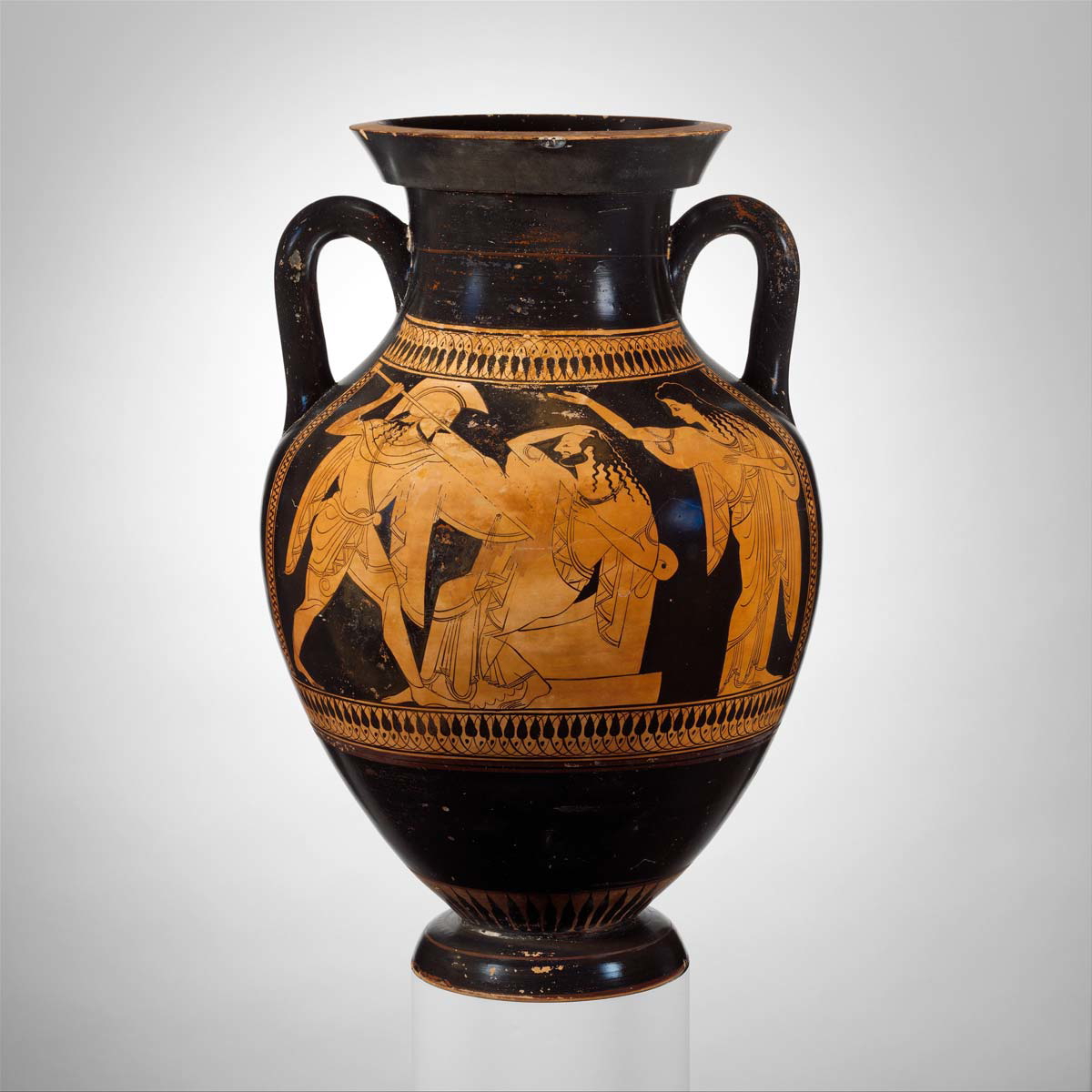
Aristotle’s criticisms may explain the Cypria’s ultimate fading from the literary tradition, but they are based on Classical sensibilities and story structure. By Aristotle’s time, there was a dramatic tradition in Athens that developed around the many tragic playwrights like Euripides and Sophocles. To apply the same criteria to the Cypria as one might use to judge one of the tragic plays would be an unfair criticism, as it overlooks the historical context in which it was written.
When the Cypria was composed, oral poetry was still being performed and was the main mode of consuming narrative. The poems were likely performed in episodes and not as a whole, since performing entire epics could take upwards of an entire day. The rich variety of narrative material within the Cypria is, therefore, well-suited to episodic performance.
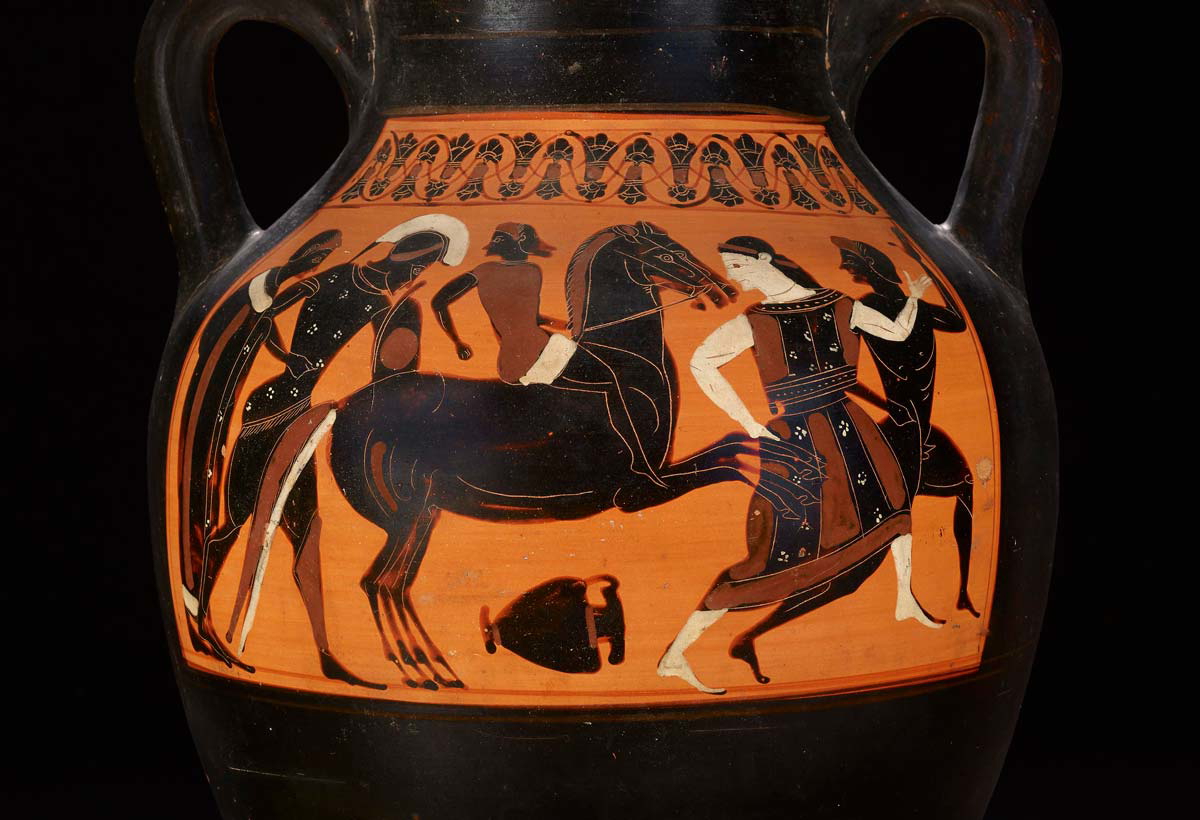
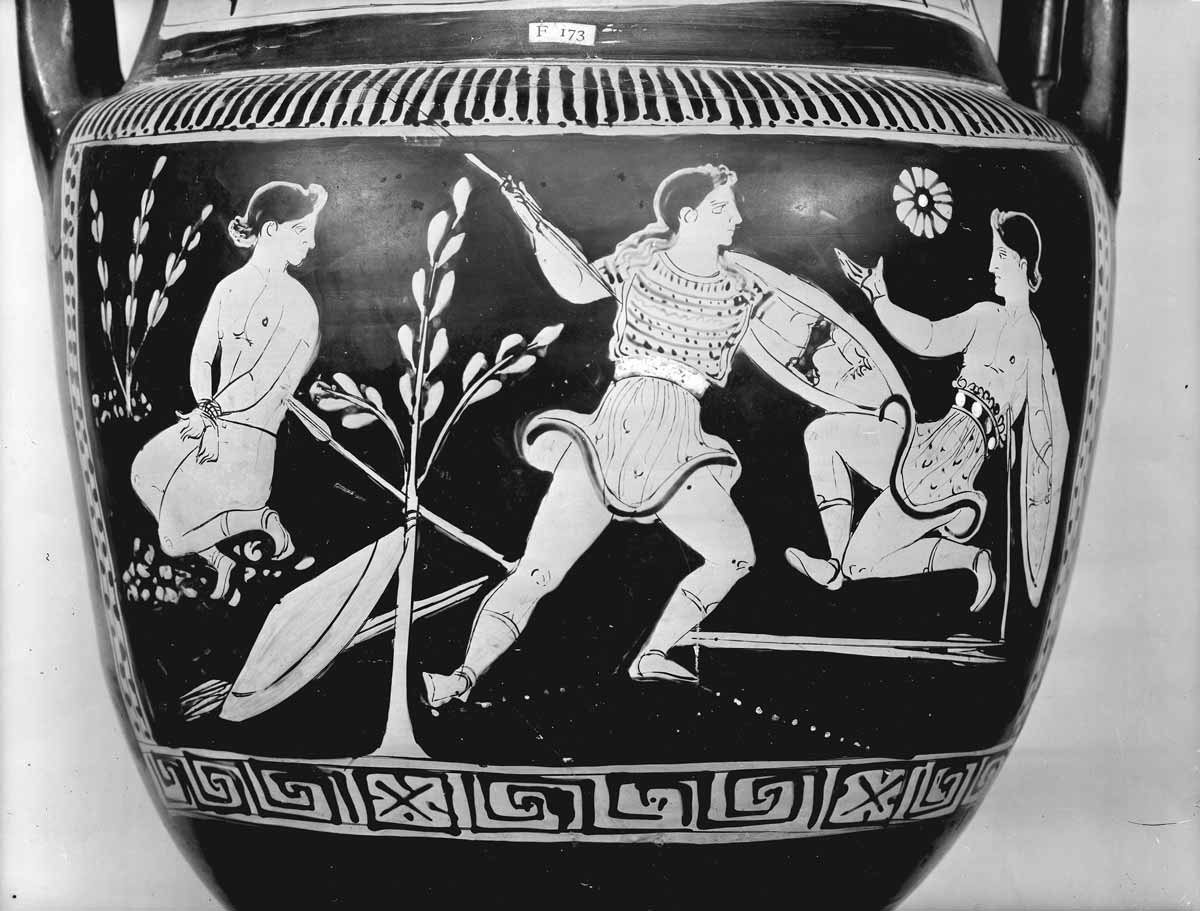
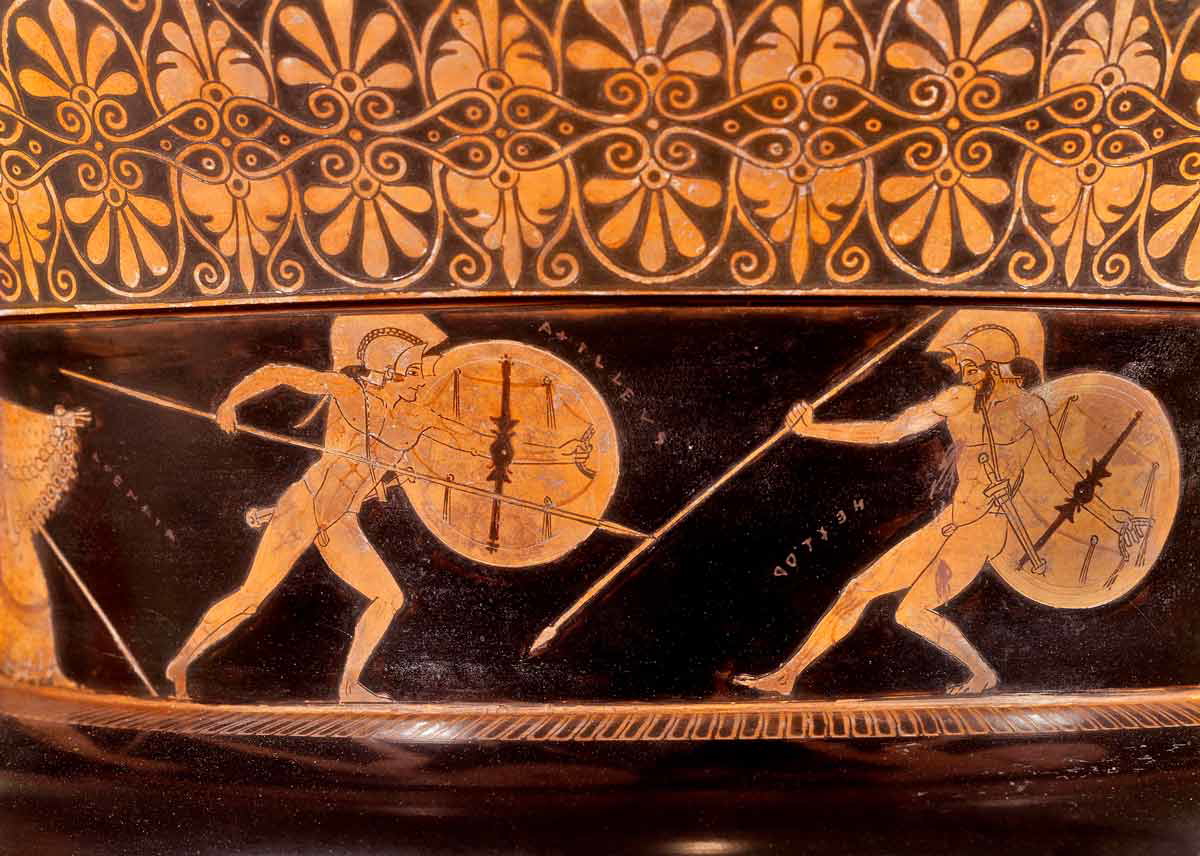
There is also a wealth of artistic representations of events from the Cypria from 6th-century vase paintings. It is thought that the events in the epic were traditional mythological stories. However, if we believe that the artists were painting from poems they heard recited in public, it could be argued that the Cypria was more popular than the Iliad, if only for the wealth of mythological material that it covered.
Relation to the Iliad
When considering the composition of the Cypria, the question still stands as to whether it was written with the intention of introducing the Iliad. Modern scholars debate this point. What is clear is that the poem, as summarized by Proclus, was compiled in a way that fit with the Epic Cycle as a whole, to offer some semblance of continuity and unity between the many poems that made up the Cycle. However, some of the references to the Cypria seem to contradict Proclus’ summary, and even contradict the Iliad, which it supposedly was trying to introduce.
For example, in the Iliad, Achilles is said to be raised by Phoenix, but the Cypria relates the more traditional story that Achilles was raised by the centaur Chiron. If it was written to introduce Homer’s poem, why then does it contradict it on something so basic as Achilles’ education? There is also the problem that both the Cypria and the Iliad duplicate the catalog of Trojan allies, suggesting that this was traditional and not an invention from the Iliad. If the Cypria was meant to introduce the Iliad, why would it duplicate and overlap with the beginning of the story it’s trying to introduce?
This only makes sense if we believe that the Cypria was never meant to introduce the Iliad, but was instead its own complete epic. The catalog of Trojan allies is placed in a narratively logical place in the epic, coming after the episodes where Achilles has sacked the neighboring towns of Troy and after Zeus’ plan to remove him from the fighting. With Achilles no longer participating, the greater plan of Zeus to relieve the Earth of mortals has now come full circle.
We will never truly know how the Cypria was structured, but what remains reveals a rich tapestry of mythological material that resonated in the imaginations of its original audience. Though later critics considered it inferior to Homer’s poems, that was more due to changing tastes than to any inherent flaws in the poem. In Proclus’ summary and the surviving fragments of the Cypria, we can glimpse the mythic tradition that both informed and was informed by the Iliad.
References
- Burgess, J. S. (1996). The Non-Homeric Cypria. Transactions of the American Philological Association (1974-), 126, 77–99.
- Davies, M. (2019). The Cypria (Hellenic Studies Series, No. 83). Center for Hellenic Studies.
- Finkelberg, M. (2000). The Cypria, the Iliad, and the Problem of Multiformity in Oral and Written Tradition. Classical Philology, 95(1), 1–11.
- Marks, J. (2002). The Junction between the Kypria and the Iliad. Phoenix, 56(1/2), 1–24.
- Mazurek, E. F. (2013). Homer and the Epic Cycle in Ovid, “Heroides” 16-17. Transactions of the American Philological Association (1974-2014), 143(1), 153–170.
- Scaife, R. (1995). The “Kypria” and Its Early Reception. Classical Antiquity, 14(1), 164–192.
- West, M. L. (Ed. & Trans.). (2003). Greek Epic Fragments: From the Seventh to the Fifth Centuries BC (Loeb Classical Library No. 497). Harvard University Press.