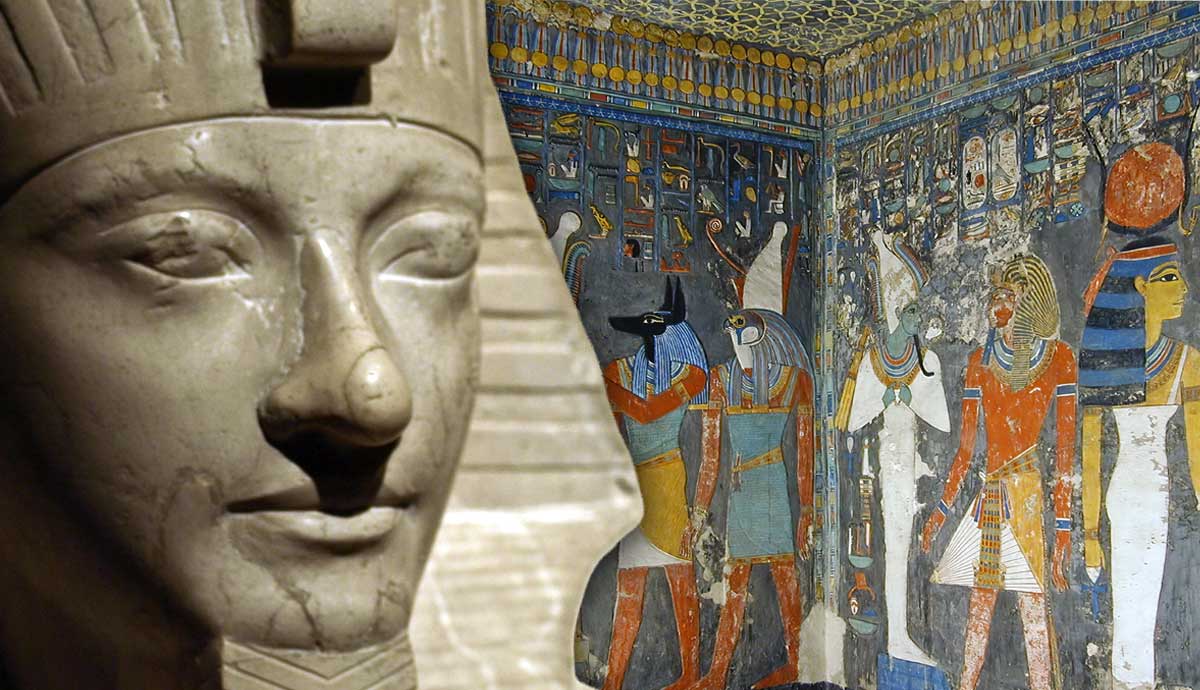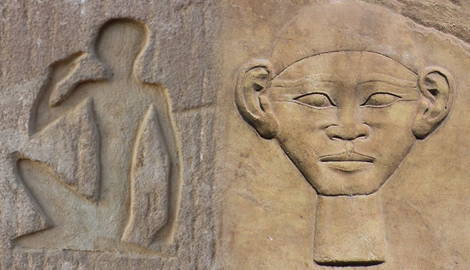

The ancient Egyptian hieroglyphic writing system first appeared over 5000 years ago. The signs quickly became standardized, and artists carved them on tomb and temple walls in forms that changed little for more than 3000 years. Hieroglyphic forms, in turn, influenced other forms of art.
Egyptian statues, figurines, and two-dimensional scenes of various activities often have a similar appearance to the hieroglyphic signs from which they were derived. In this article, we review some of the more interesting hieroglyphic signs of people and human body parts.
1. Woman Giving Birth
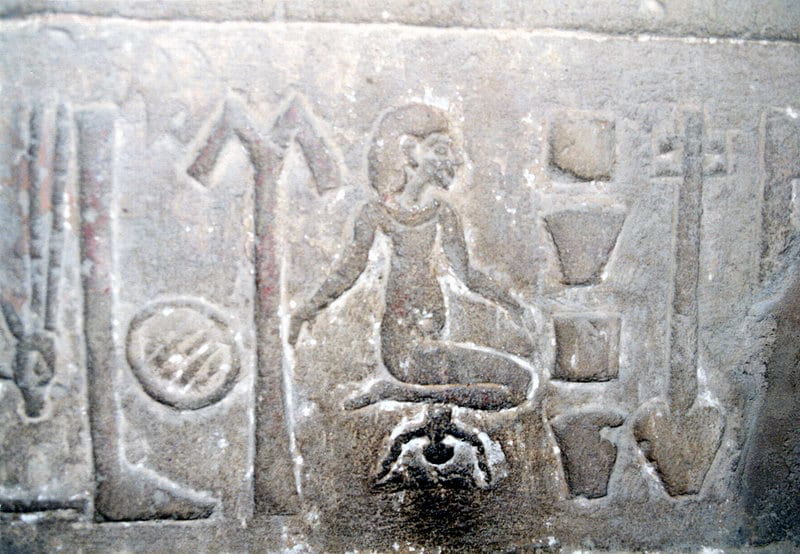
Unlike the contemporary Western practice of delivery on the back, a woman gave birth in ancient Egypt sitting or squatting on bricks, or kneeling. This sign depicts a woman delivering her baby in this way, with the arms and head of the baby poking out from underneath. It is used to write the word “to give birth” and related terms.
2. Bound Prisoner
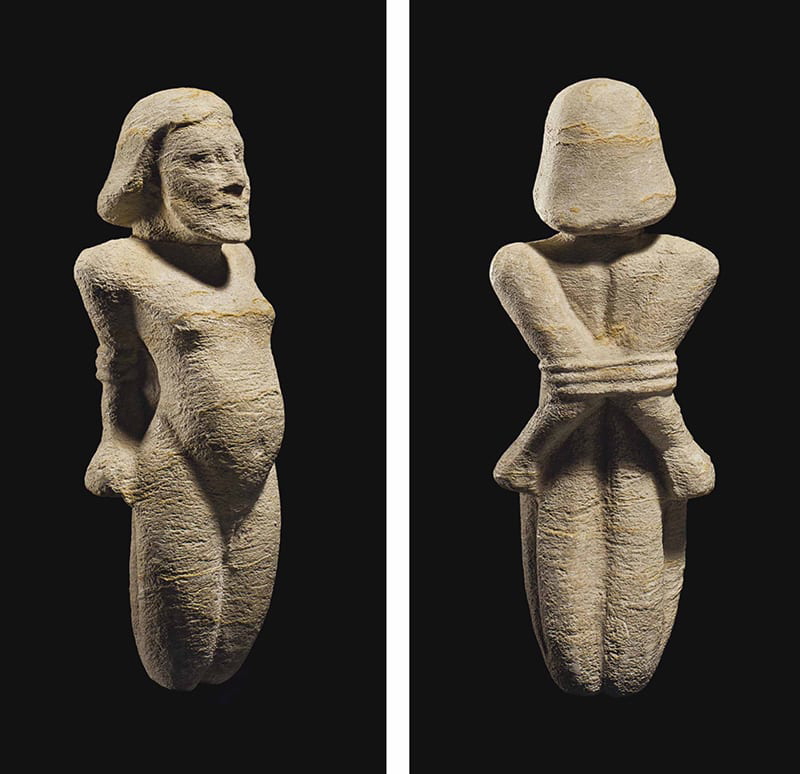
This is a sign depicting a foreign enemy in the most common posture, kneeling with his hands behind his back. The feather and beard are particularly foreign features. This is also the form of the voodoo-like figurines that Egyptians made to harm their enemies. Originally, only the king engaged in this practice, but it eventually spread to the general population.
This magical practice did not die out with the coming of Christianity or Islam to Egypt, but has continued until today.
3. Child
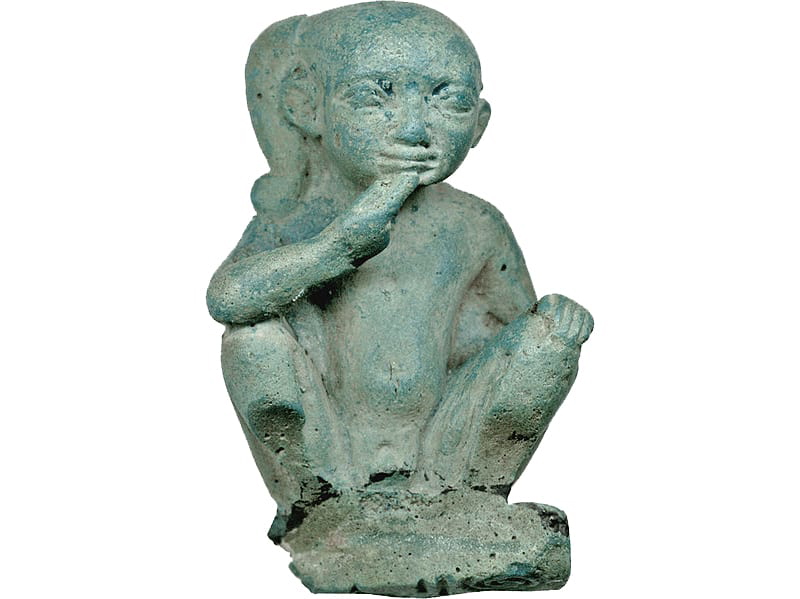
Like teething children everywhere, ancient Egyptian children sucked or chewed on their fingers. Thus, Egyptians wrote words related to children with a figure of a child with his index finger in his mouth. The god Horus often appeared in this form. He sported a single lock of hair on one side of his head, a common hairstyle for children in ancient Egypt.
4. Man With Hand to Mouth
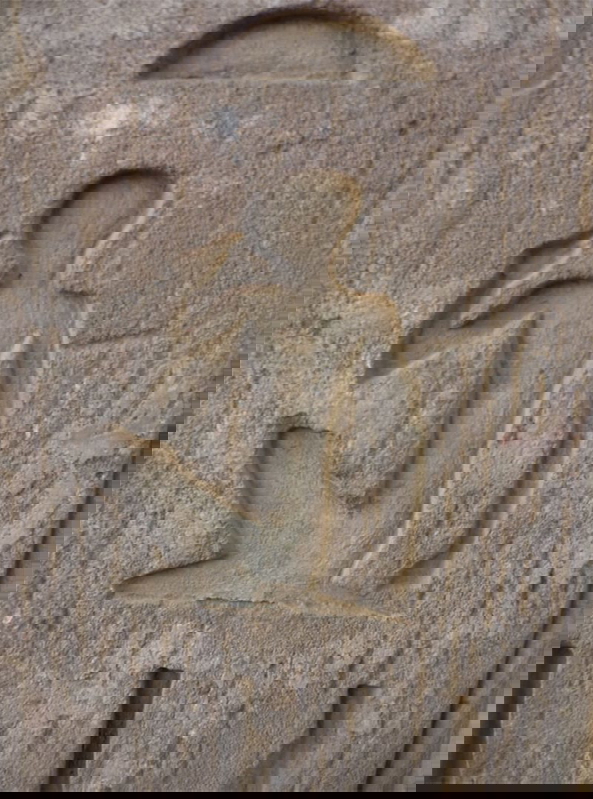
When the scribes needed to write a word that involved activities of the mouth, they used this sign. This included words for eating, drinking, and speaking. They used it for more abstract concepts like advice and even love. The squatting posture distinguishes it from the child glyph.
5. Man With Stick
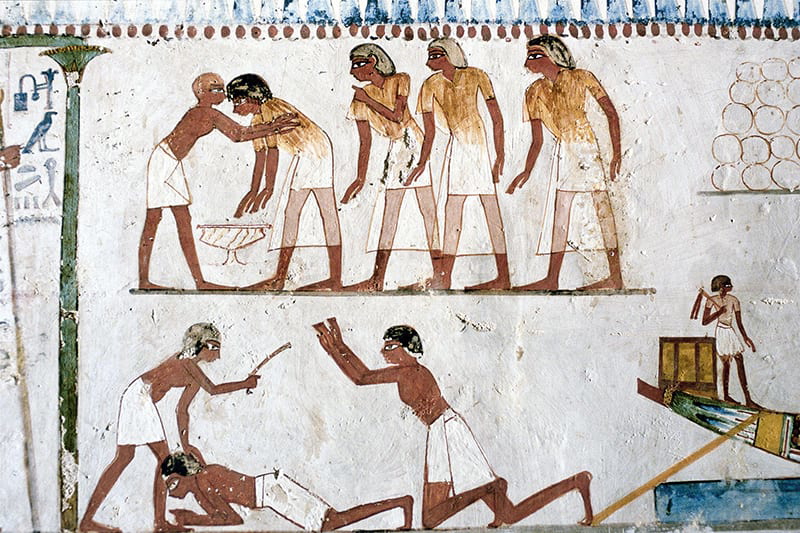
The ancient Egyptians used to say, “a boy’s ear is on his back; he listens when it is beaten.” Corporal punishment was standard practice in schools. Egyptians used the stick as a tool in many situations.
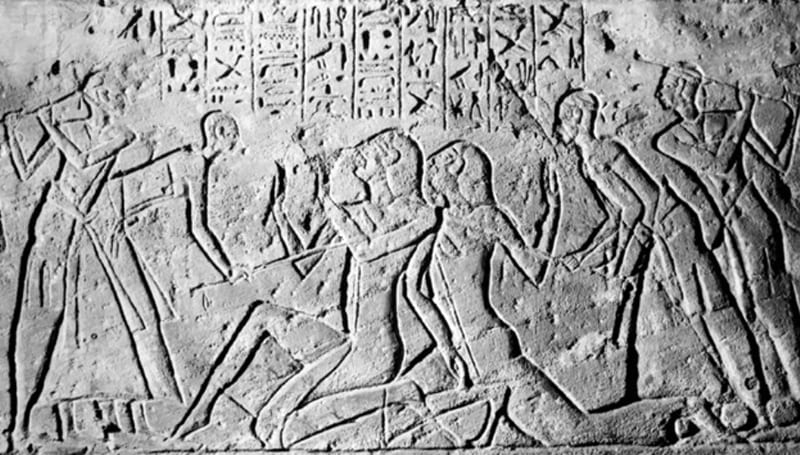
Supervisors kept their workers in line, police interrogated criminals, and soldiers extracted information from enemy spies with sticks. The sign was used to write related words like “strike,” “strong,” “take away,” “plunder,” and even “teach.”
6. Face Hieroglyph
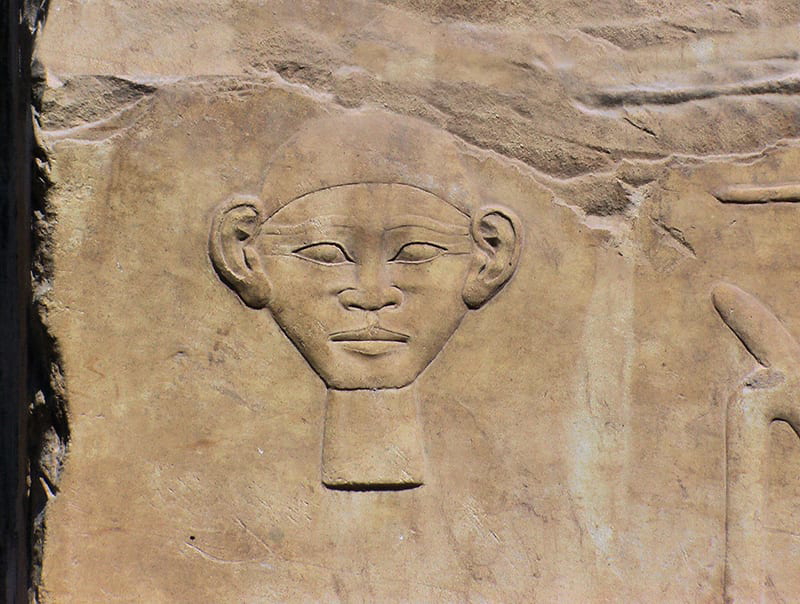
If you are an aficionado of ancient Egyptian art, this glyph may appear a bit odd to you. One of the most characteristic aspects of two-dimensional Egyptian art is that human faces were always depicted in profile, save for the eye. The only common exception to this is the hieroglyph depicting the human face, which shows a human face in full frontal view. However, the ears themselves appear in profile view, and the figure generally features an oversized beard.
7. Phallus
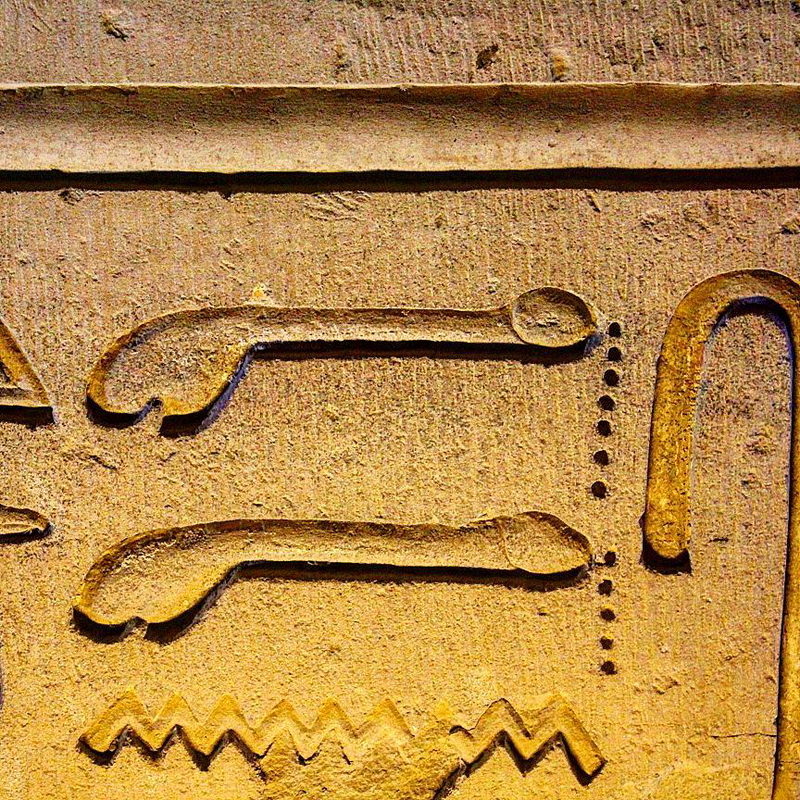
Can’t see the hieroglyph above? The Egyptians did not show any prudishness when it came to depicting human private parts, but some companies like Microsoft and Google do. Of all the hieroglyphs available, the ones showing the human phallus are censored in some standard fonts, so you may only see a box where the glyph should appear.
The Egyptians wrote the word for husband using a penis, and it also appeared in the phrase “in front of (someone).” Hardly X-rated concepts. Maybe we should start a petition to all the tech companies to stop this censorship!
8. Hathor Headed Figure
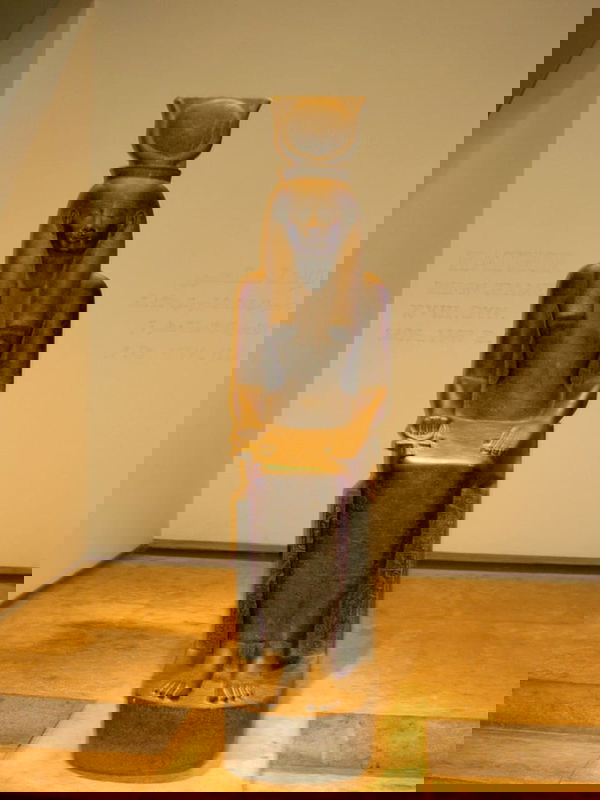
Some hieroglyphs were anthropomorphic, meaning they had human bodies with animal heads. One such hieroglyph was the glyph representing the goddess Hathor. This cow goddess was the goddess of love, motherhood, and happiness. While some statues of her in pure cow form exist, she more frequently appears as a human female with cow horns and a sun disk on her head.
9. Seated God
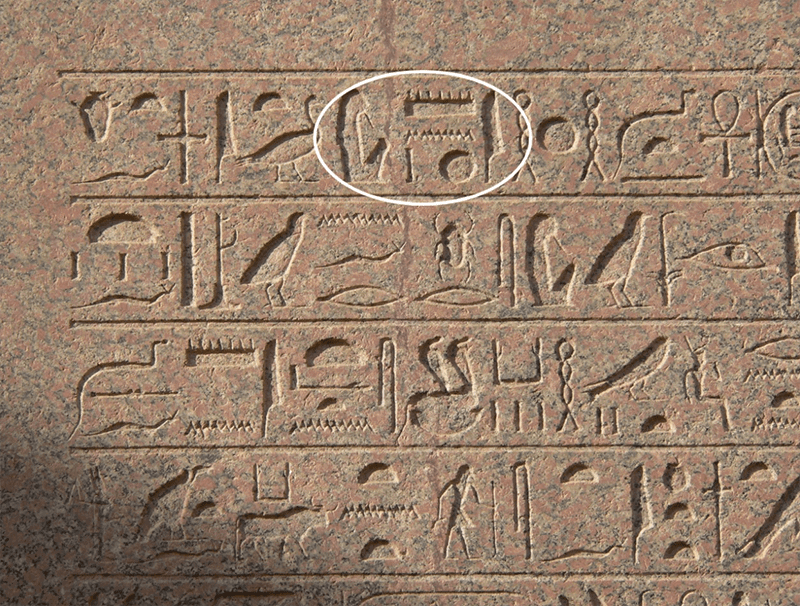
When writing the names of gods, or even kings, Egyptian scribes would write this sign at the end of the word. This indicated that it was a god’s name and not that of an ordinary mortal person. When a text used the word “I” to refer to a god or king, it was also written with this sign. The glyph depicts the god with a long beard, which was also worn by kings.
10. Worshipping Figure
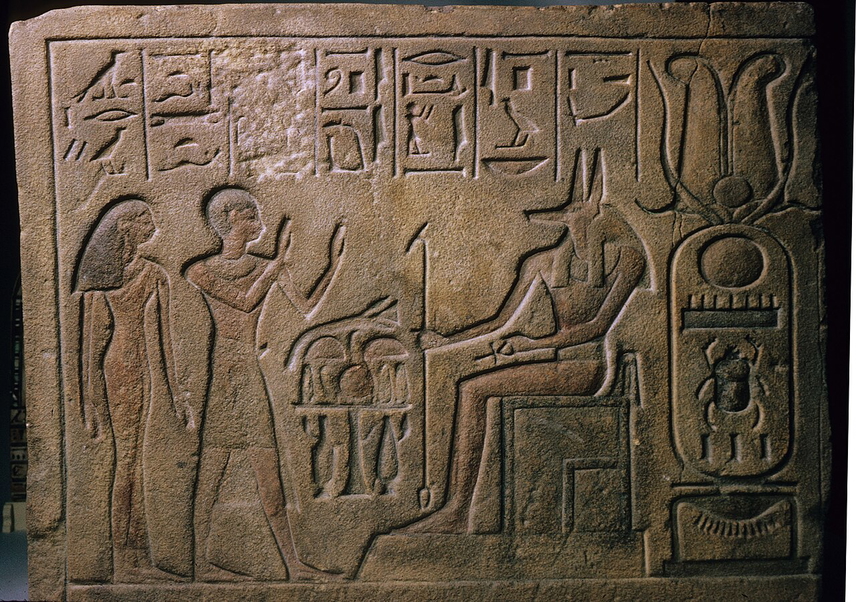
When ancient Egyptians worshipped gods and goddesses, they would hold both palms open in front of them, sometimes kneeling. The hieroglyph shows one hand slightly in front of the other, but this was simply an artistic convention artists used to depict both hands in profile view. The two hands would have been side by side.
Coptic Christian descendants of the ancient Egyptians still use this same hand gesture when worshipping God today.
11. Finger
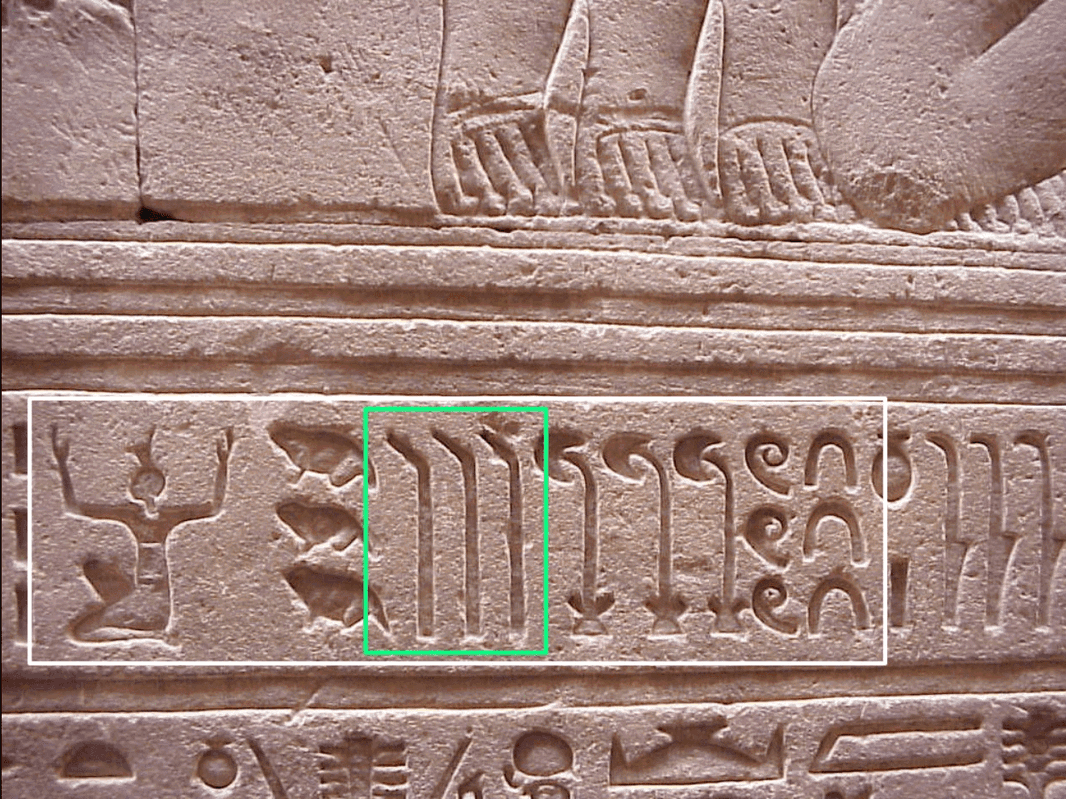
The Egyptians used a base-ten system, but they did not have place-value numerals; instead, they repeated signs for powers of ten as needed. The sign for 10,000 was a pointing finger. A finger sign also appeared in the word for “finger” and “precise.”
12. Seated Man of Rank
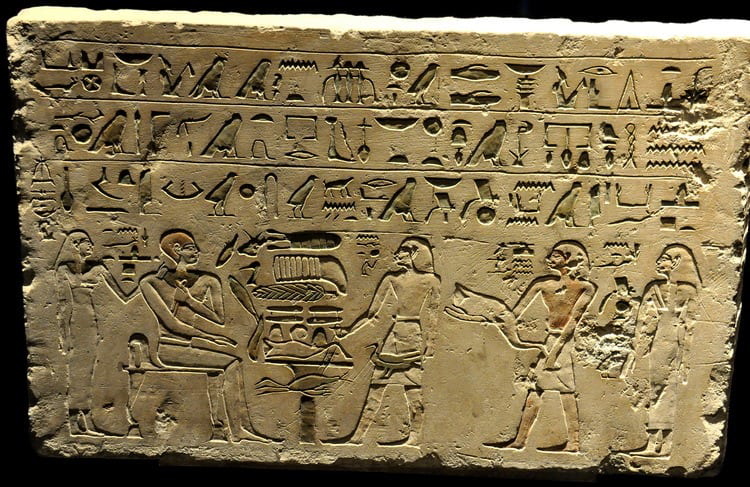
When we attend an event or meeting led by an important person, normally that person stands while we all sit in chairs. In ancient Egypt, things worked the opposite way. Important people had the luxury of sitting in a chair, while those who were less important or served them stood. This is clearly illustrated by this hieroglyph, which shows a noble man seated. It was used to write words like “courtier” and “noble.”