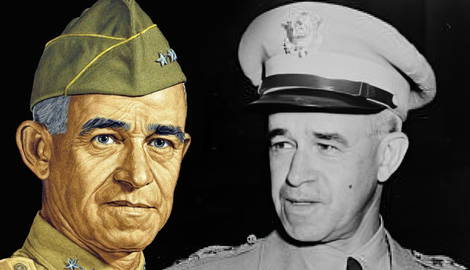

Storming the beaches of Normandy on D-Day was a terrifying endeavor for all Allied combatants, but few felt the immense responsibility of the safety of American soldiers like General Omar Bradley, commander of United States forces during Operation Overlord. A seasoned leader of the North African and Sicilian Campaigns, Bradley understood the necessity of the invasion despite the significant casualties. A man from humble beginnings, Bradley ascended the military ladder to become the first Chairman of the Joint Chiefs of Staff in United States history.
Early Life, Family, and Education
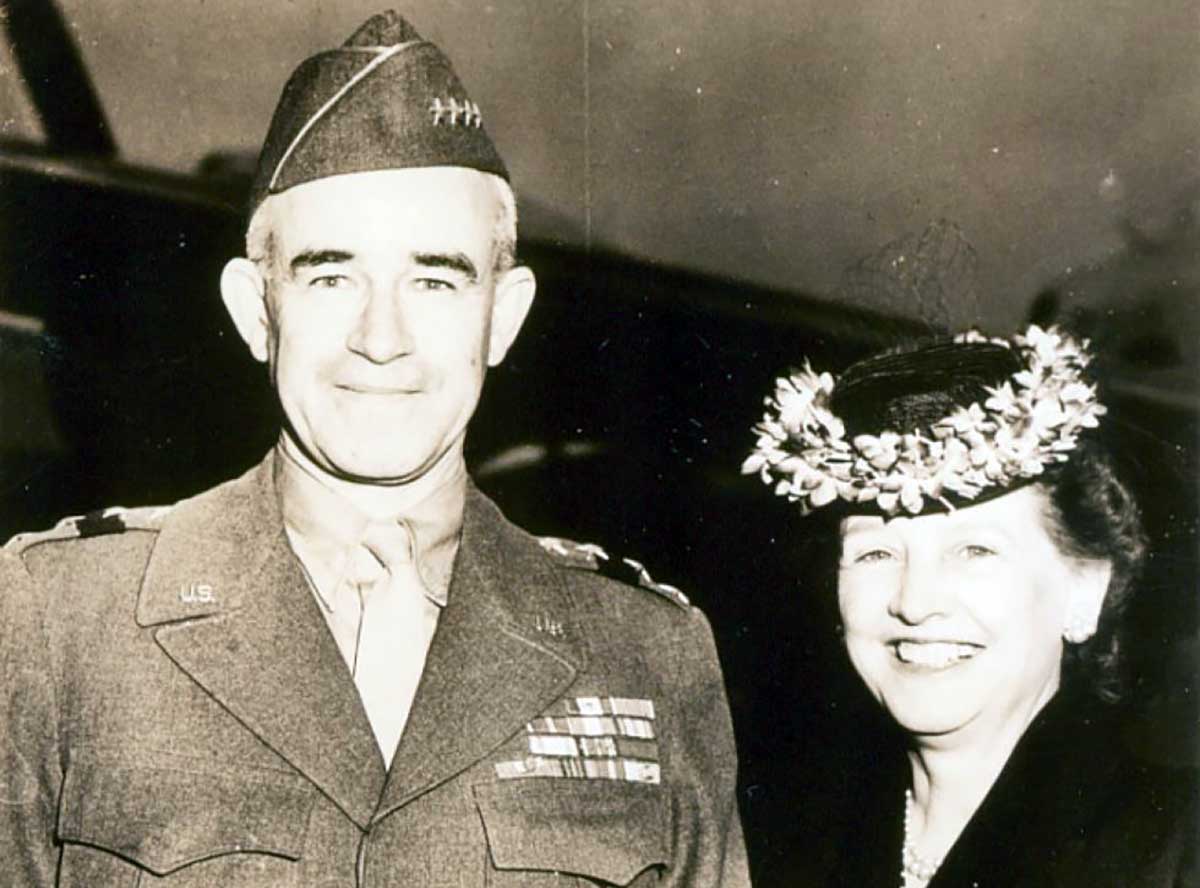
Omar Bradley, born on February 12, 1893, in Clark, Missouri, was no stranger to hardship even before his military career. At just 14 years old, his father passed away, leaving his mother, who earned a humble wage as a seamstress, to support the family. Graduating high school in 1910 and without enough money to enroll in college, Bradley worked as a boilermaker at the Wabash Railroad. Although he planned to study law at the University of Missouri, Bradley was encouraged to apply to the United States Military Academy at West Point at the recommendation of one of his teachers. In 1911, Bradley was accepted into the revered officer commissioning program.
At West Point, Bradley excelled in collegiate sports. A two-sport star of baseball and football, he turned down the chance to play professional baseball to fulfill his military obligations. Bradley graduated from the Academy in 1915 ranked 44th in his class of 164 cadets. While academically overshadowed by other standouts like Dwight D. Eisenhower in the “class the stars fell on,” because of the disproportionate number of graduates who would become generals, Bradley was the first among them to achieve the rank of general officer. As a young second lieutenant while the First World War was raging in Europe, Bradley had much to learn before his ascent up the ranks.
In 1916, Bradley married his childhood neighbor in Missouri, Mary Quayle, and the couple remained together until her death in 1965. Together, they had one daughter, Elizabeth, born in 1923.
Early Military Career
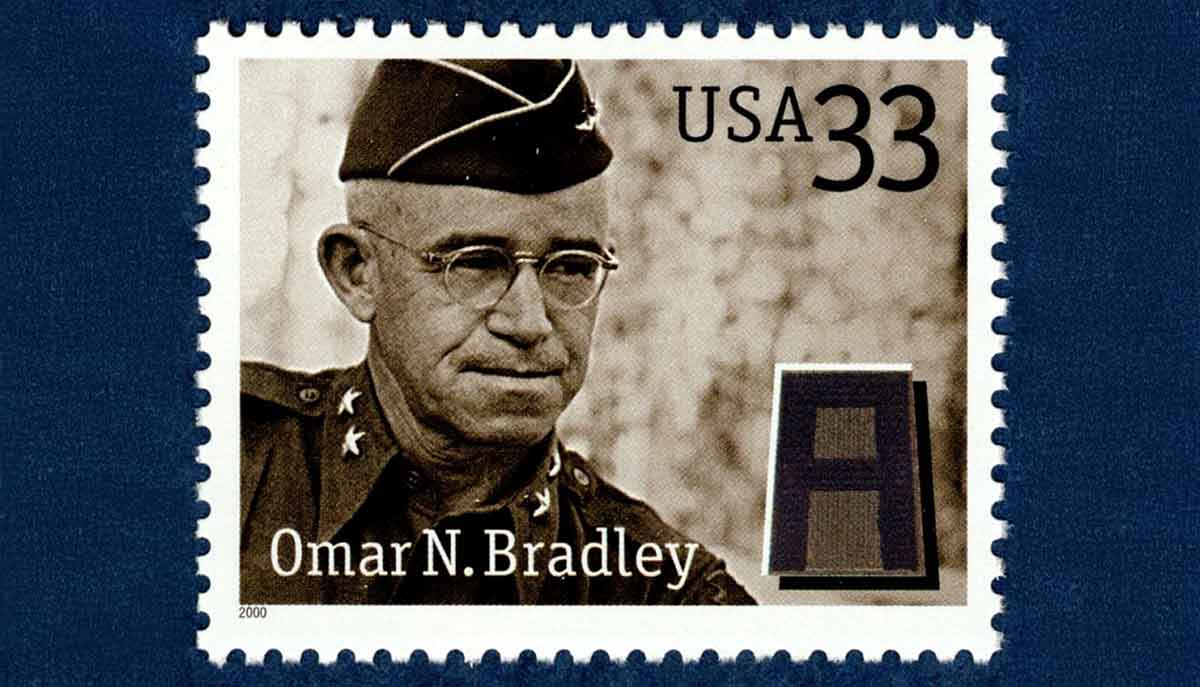
After his commissioning, Bradley joined the 14th Infantry Regiment at Fort George Wright in Washington. While he missed the opportunity for action in World War I as his regiment was responsible for protecting coal mines in South Dakota, Bradley did have the opportunity to receive instruction from John J. Pershing, the commander of the American Expeditionary Force in World War I. Pershing, also a Missouri native, mentored the officers of the 14th Infantry Regiment during their service at the United States-Mexico border prior to his departure for Europe.
After serving as a company commander, Bradley held various positions prior to World War II. Namely, Bradley spent a year as assistant professor of military science at South Dakota State University before instructing mathematics at his alma mater for four years. By 1924, the future D-Day commander was promoted to major and oversaw National Guard operations, but his most noteworthy pre-war arrangement was yet to come.
In 1929, Bradley was presented with two options: return to West Point to serve as the treasurer of the United States Military Academy or move to Georgia to teach infantry tactics at Fort Benning. The latter choice proved to be one of the most important decisions of Bradley’s life, according to first-hand accounts. At the infantry school, Bradley was mentored by then-Lieutenant Colonel George C. Marshall, the legendary organizer of victory as the Army’s Chief of Staff during World War II. Nearly a decade later, Bradley once again served under Marshall at the War Department’s General Staff when World War II began in September 1939.
World War II: North Africa and Sicily
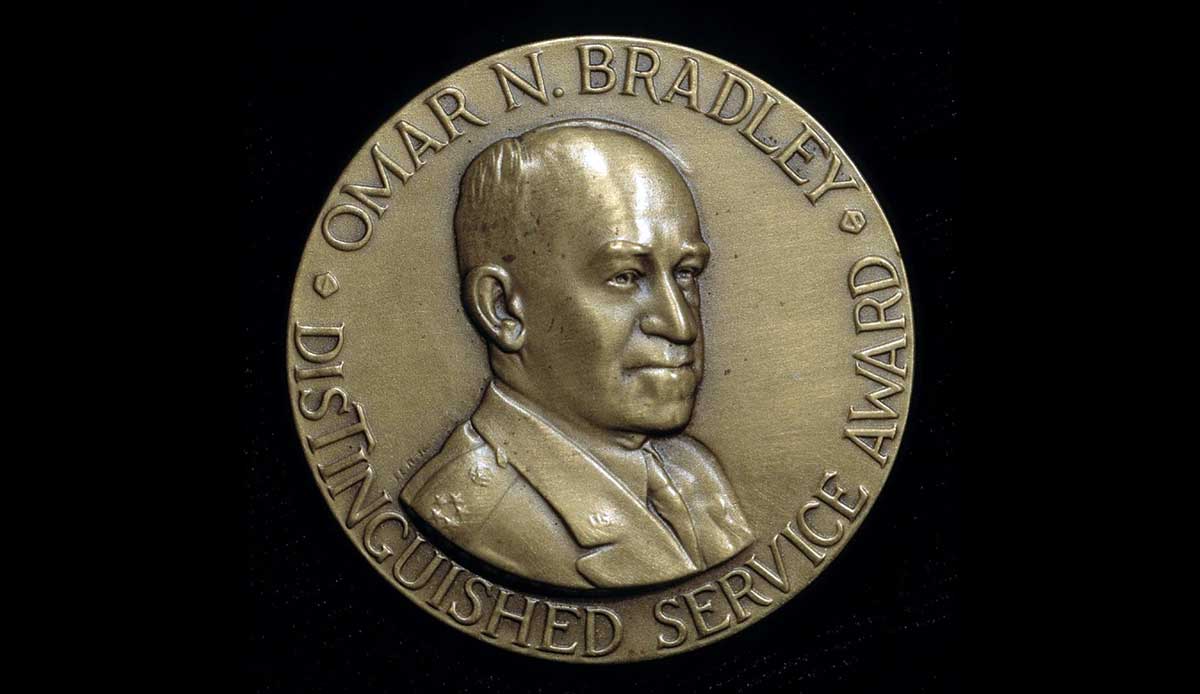
During the early years of World War II, Bradley led major preparatory exercises for American troops. The accomplished commander spearheaded training exercises for over 400,000 soldiers and was promoted to brigadier general, skipping the rank of colonel. While prewar restructuring of the Army’s officer candidate school program is considered one of his most impressive achievements, Bradley soon found himself at war in North Africa.
In 1943, General Marshall officially appointed Bradley as a corps commander. In the wake of a major defeat to Axis forces at Kasserine Pass in February, Bradley’s leadership of the Army’s II Corps turned around the North African Campaign. Bradley, under General Patton’s command, led the Allies to a decisive victory by capturing Bizerte, Tunisia, a battle which led to the surrender of a quarter of a million Axis troops, leading to the fall of the enemy-controlled country. Turning the tide of the war in North Africa allowed the United States to look north into invading Europe from Italy.
Bradley’s forces soon initiated the Allied invasion of Sicily. A difficult task, Bradley navigated the complex challenges of coordinating the offensive with British General Montgomery, circumventing restrictive terrain and resisting fierce and well protected enemy defensives. The successful operation and the subsequent landing in Naples consolidated Allied control of the Mediterranean and resulted in the collapse of Italian dictator Benito Mussolini’s government. Mussolini set up a German puppet government in northern Italy, but the redeployment of German military assets to Italy gave the Allies an opportunity to strike in France.
D-Day and the European Theater
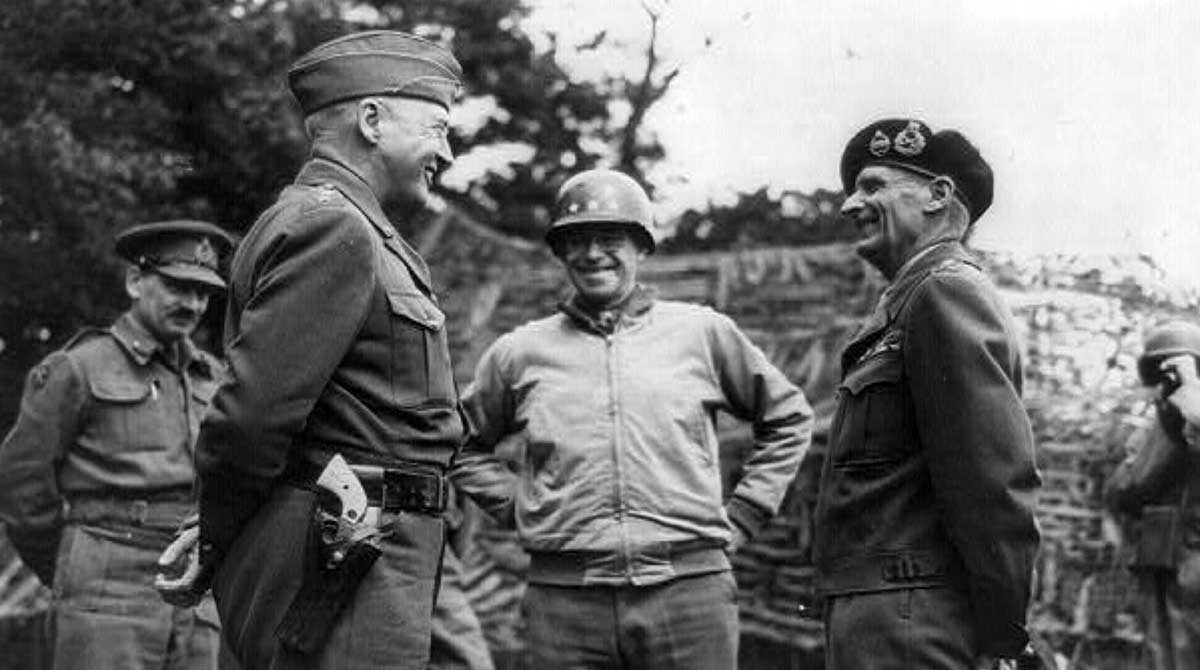
By mid-1944, the Allies were planning the most consequential operation of World War II. Operation Overload, better known as D-Day, set the ambitious goal of invading Normandy to serve as a springboard for the liberation of France and the Low Countries from Nazi occupation. While the offensive was largely overseen by Eisenhower in his capacity as Supreme Allied Commander, Bradley was appointed as the commander of American forces on the fateful day.
After months of in-depth planning, D-Day ultimately proved a vast success for the Allies despite significant casualties. Aboard the USS Augusta, Bradley made crucial decisions that enabled American formations to overwhelm German defenders. By prioritizing aerial attacks to weaken enemy fortifications, coordinated assaults, and thorough reconnaissance, Bradley’s insight and determination efficiently guided American troops through the chaos. Bradley was determined to continue the attacks on Omaha Beach even as officers on the ground doubted the possibility of breaking through German machine gun nests, obstacles, and artillery bombardment.
Following pivotal success on D-Day, Bradley was promoted to supervise subsequent strategic operations in the European Theater. Now in command of the Twelfth Army Group, Bradley’s attention to detail, care for soldiers, and intelligent judgement saw American forces drive deeper into France, Luxembourg, Czechoslovakia, the Netherlands, and finally, Germany. By the war’s end, Bradley had command of four armies, the most of any American group commander. Bradley’s leadership played a pivotal part in the Allied Powers’ ability to achieve victory in Europe and liberate numerous concentration camps across the continent.
Post-War Career
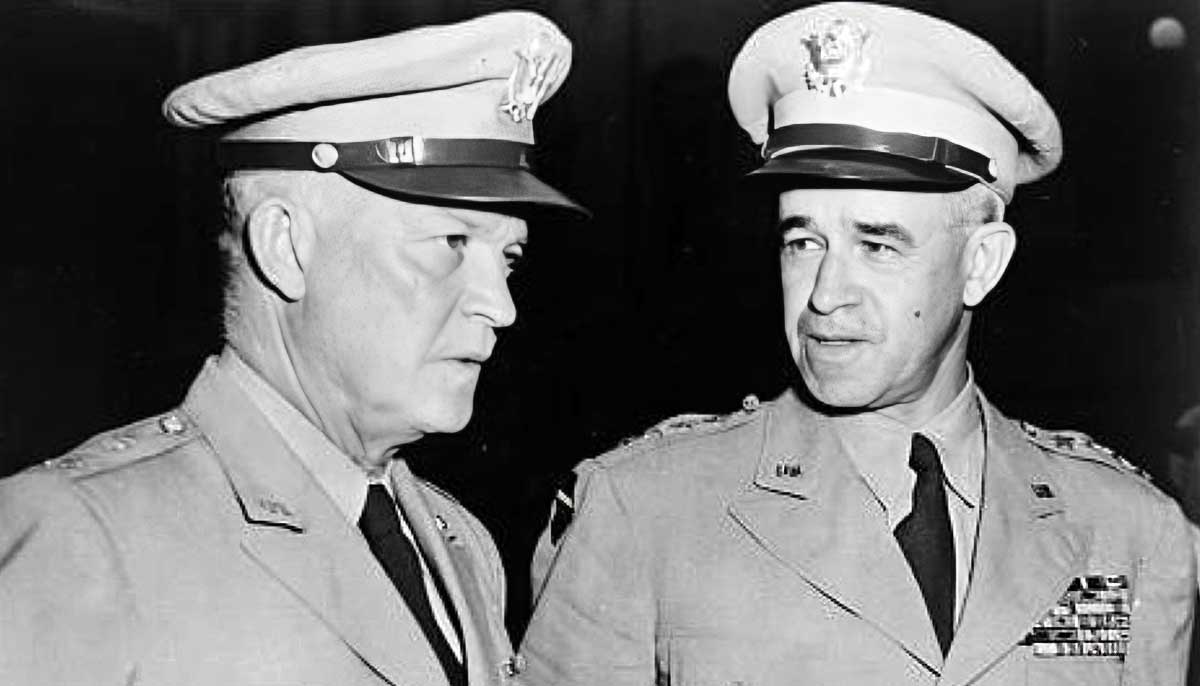
Bradley’s dedication to American military superiority and national defense did not stop after World War II. Less than a week after the United States deployed its second atomic bomb against the Japanese at Nagasaki, President Harry Truman selected Bradley to head the Department of Veteran Affairs. This appointment was largely due to Bradley’s love and admiration of soldiers of every rank. For two years, he guided the federal government’s efforts to improve the livelihoods of war veterans, enhancing job training programs, educational benefits, loan initiatives, and insurance and disability enrollment growth.
In 1948, Bradley became the Army’s Chief of Staff. Although he only briefly held this role before being promoted once more, Bradley was instrumental in overseeing modernization efforts of the postwar Army. The following September, he became the first Chairman of the Joint Chiefs of Staff, the newly established body bringing together the heads of the Army, Navy, and Air Force. As the nation’s senior military officer, Bradley advised President Truman and his cabinet on military issues and shaped defense policy during the early years of the Cold War at a time when the North Atlantic Treaty Organization was in its infancy. Bradley served as the first Chairman of the NATO Military Committee and was promoted to the five-star rank of General of the Army in 1950. During the Korean War, Bradley played an influential role in the controversial dismissal of General Douglas MacArthur. After his retirement from active service in 1953, Bradley served as a military advisor to President Lyndon B. Johnson during the Vietnam War.
Legacy
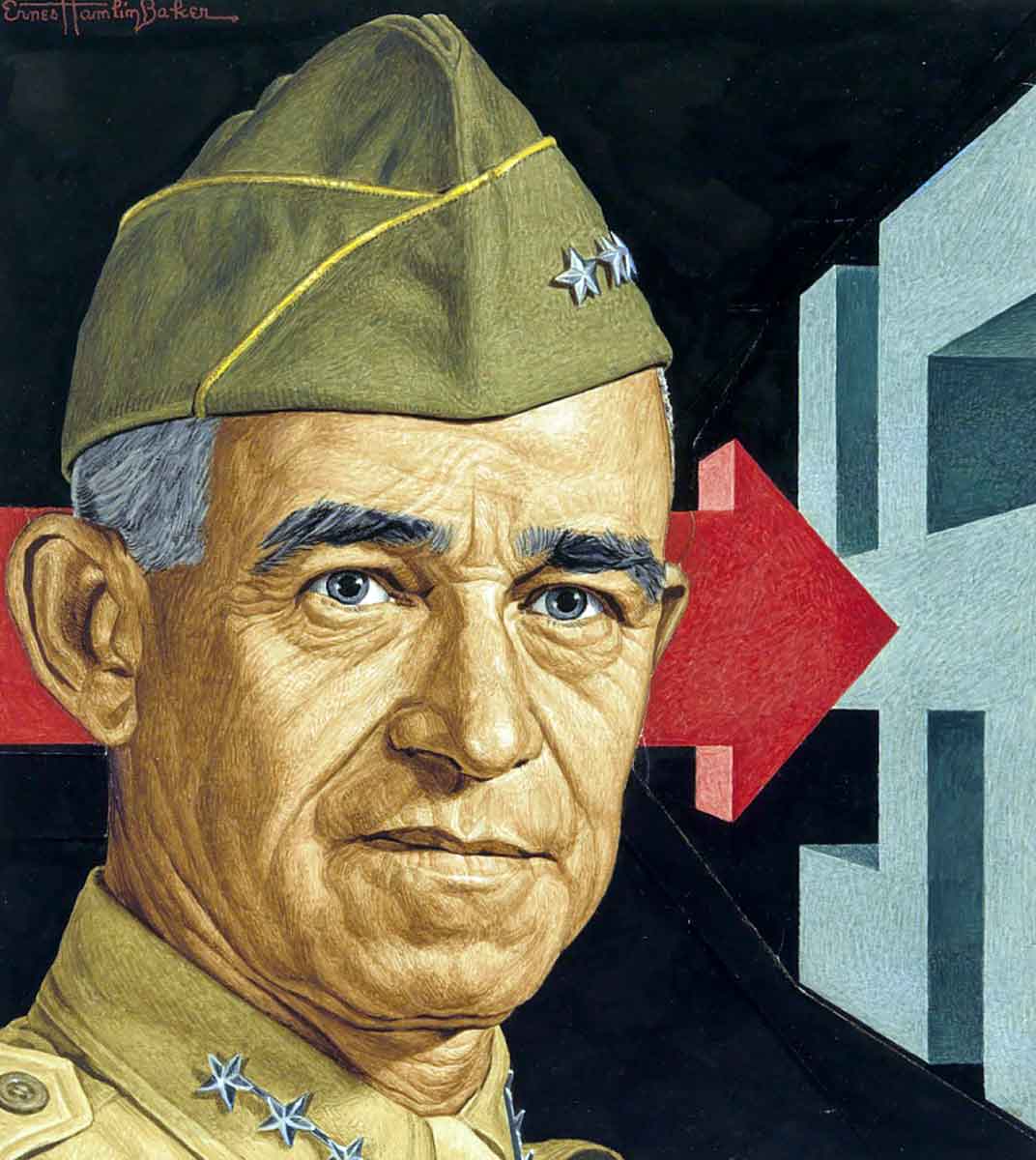
From rising as a junior officer to senior military officer in the United States, Bradley’s influence on some of the most turbulent periods in the history of the United States is undeniable. Today, Bradley lives on in several ways. His influential 1953 memoir A Soldier’s Story communicates his most important lessons, perspectives, and reflections, and continues to be studied by American officers today. As the leader of American forces during the most ambitious and consequential amphibious invasion in modern history, Bradley’s leadership principles are likely to remain relevant for decades to come.
Bradley’s wartime accomplishments are second to none. He is one of the few individuals honored as a five-star general in United States history. In 1977, the former commander was presented with the Presidential Medal of Freedom, the nation’s highest civilian award, by President Gerald Ford, a fellow World War II veteran.
Bradley passed away on April 8, 1981 in New York City after receiving an award from the National Institute of Social Sciences. As a five-star officer, Bradley remained on active duty into his retirement, and his tenure of 69 years of active duty is unlikely to be replicated. Later that year, the United States Army named its newest infantry and reconnaissance vehicle the Bradley Fighting Vehicle in his honor. Bradley’s commitment to the United States, its international partners, and its veterans in both times of peace and war is unmistakable, and his legacy is forever inscribed in the annals of American military history.