
Driving through the countryside of southern Zimbabwe, with its small villages and grazing cattle, you would never guess that one of Africa’s greatest cities once stood here. Between the 11th and 15th centuries, Great Zimbabwe was home to as many as 20,000 people who prospered from the gold and ivory trade. Its massive stone walls, built without mortar, still rise above the hills as lasting witnesses to a powerful kingdom. You can wander through the Valley Ruins and climb the Hill Complex for sweeping views across the countryside.
The City of Stone Walls and Passageways
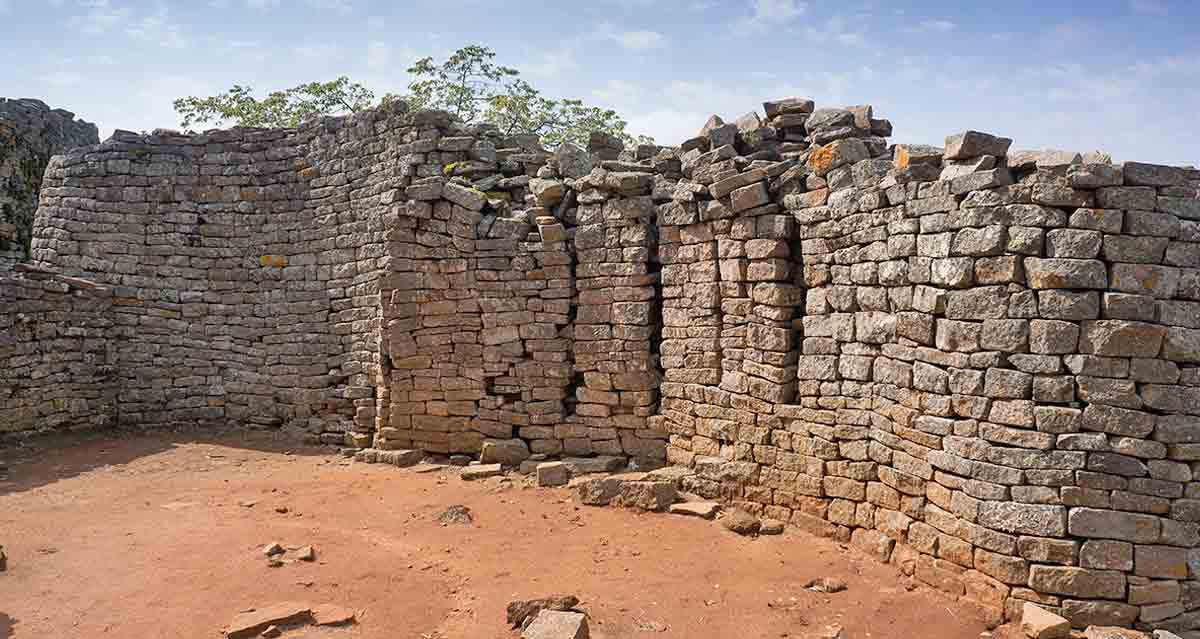
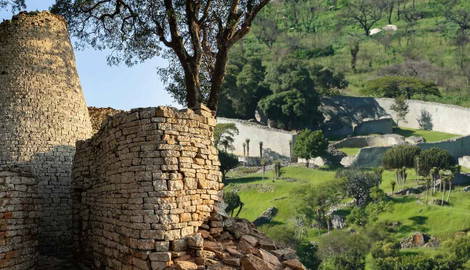
Unbeknownst to many, the name Zimbabwe comes from the Shona phrase for “house of stone,” the name given to its mighty ancient capital. Covering about 1,800 acres (722 hectares), the city’s walls rise up to 36 feet (11 m) and were built entirely from granite blocks stacked with remarkable precision. No mortar was used, yet the walls have stood for centuries.
If the mortarless walls of Great Zimbabwe remind you of Inca stonework at Machu Picchu, you’re not far off. The two styles share the same principle but use different methods. The Inca cut blocks so precisely that they interlocked without gaps, while at Great Zimbabwe, the granite was shaped and stacked in courses, forming vast curving walls held firm by weight and gravity.
At its peak, Great Zimbabwe was the largest stone city in sub-Saharan Africa. You certainly get the sense of the scale and prominence just walking the curved passageways and broad courtyards. There is nothing here to suggest this was ever meant as a temporary abode, but rather it was intentionally built to last.
The Hill Complex Above the Valley
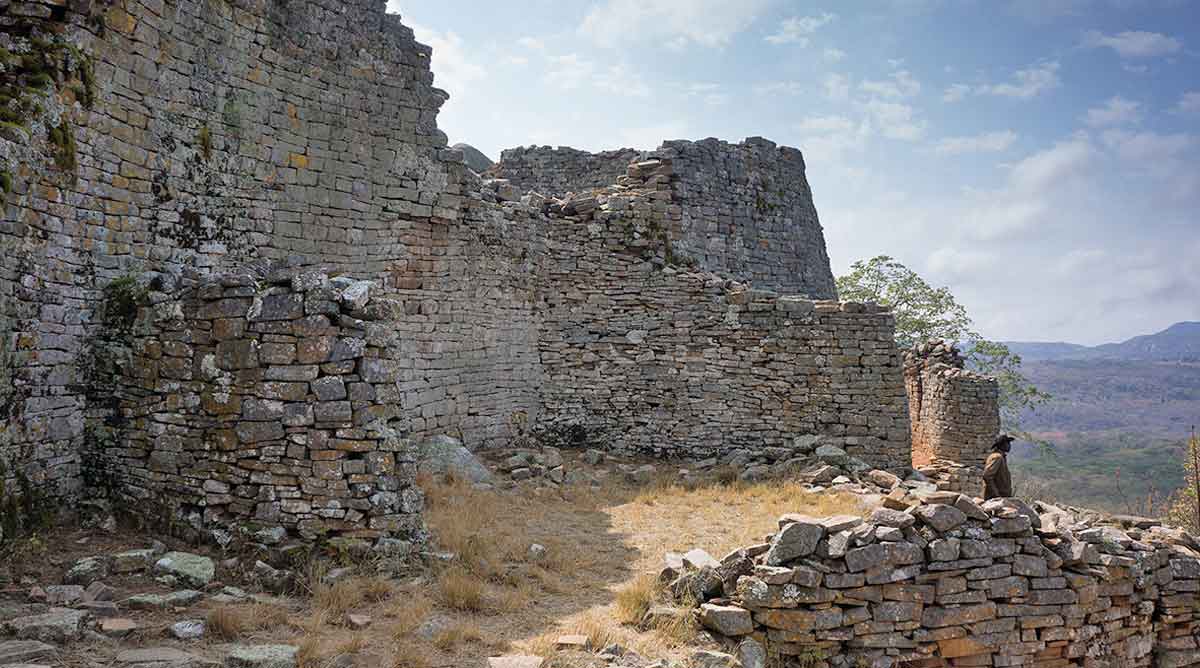
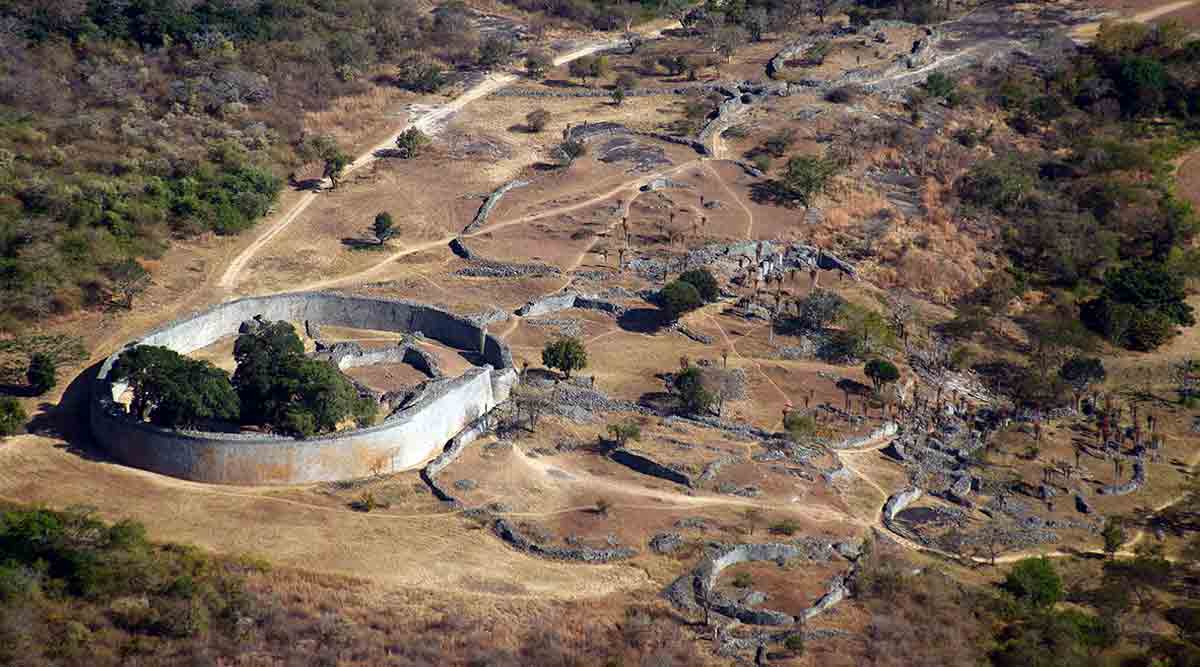
The Hill Complex is the oldest part of Great Zimbabwe, first occupied in the 9th century and later developed into the kingdom’s political and spiritual center. Leaders likely lived here, apart from the population below, while ceremonies and rituals took place among the granite boulders built into stone walls. From the summit, you can look down over the Great Enclosure and the Valley Ruins, a vantage point not unlike the Acropolis of Athens or citadels in other great ancient cities, built to signal the power of those who lived higher up.
The Great Enclosure and Its Tower
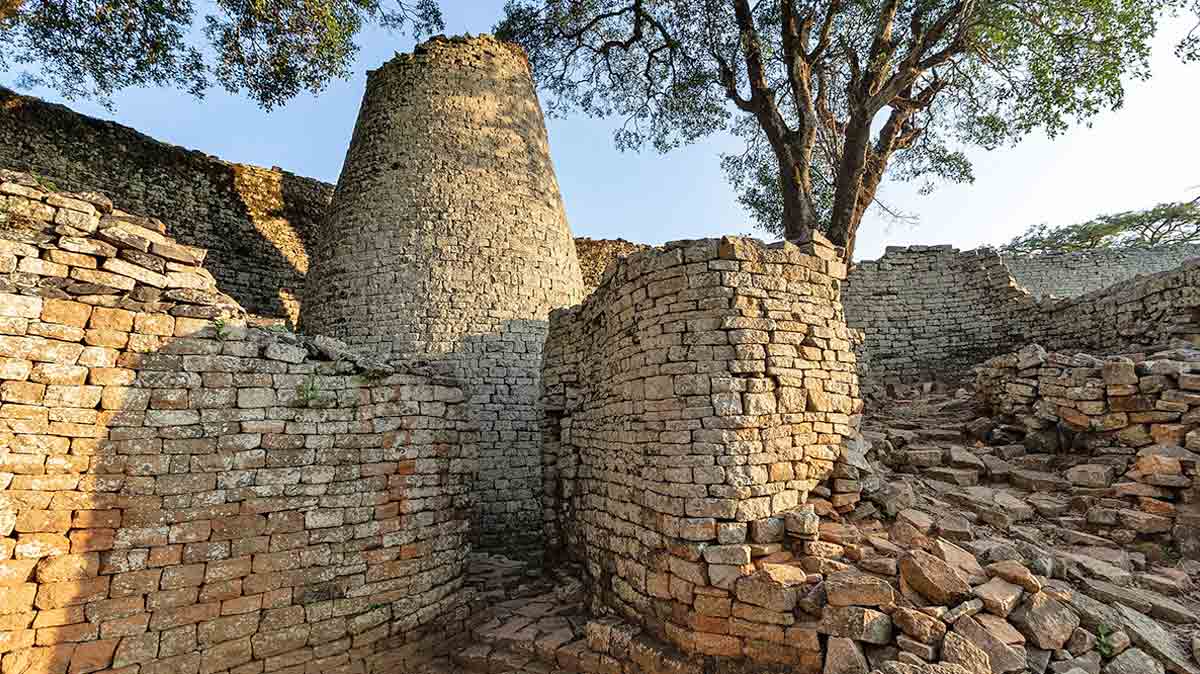
The Great Enclosure is the largest structure at the site. Its outer wall runs more than 820 feet (250 m) and rises nearly 36 feet (11 m), curving in a great arc around an open interior. At the center stands the conical tower, about 30 feet (9 m) tall and 18 feet (5.5 m) across. Solid and without windows or even a doorway, it is the largest ancient structure of its kind in sub-Saharan Africa, and its purpose is still debated. Some believe it was a granary, others see it as a symbol of fertility or power. Early European explorers could not accept that locals had built it and claimed it must have been the work of outsiders, from the Phoenicians to the Queen of Sheba. Those myths have long been debunked, yet the tower’s meaning still fuels lively debate among archaeologists.
The Valley Ruins of Everyday Life
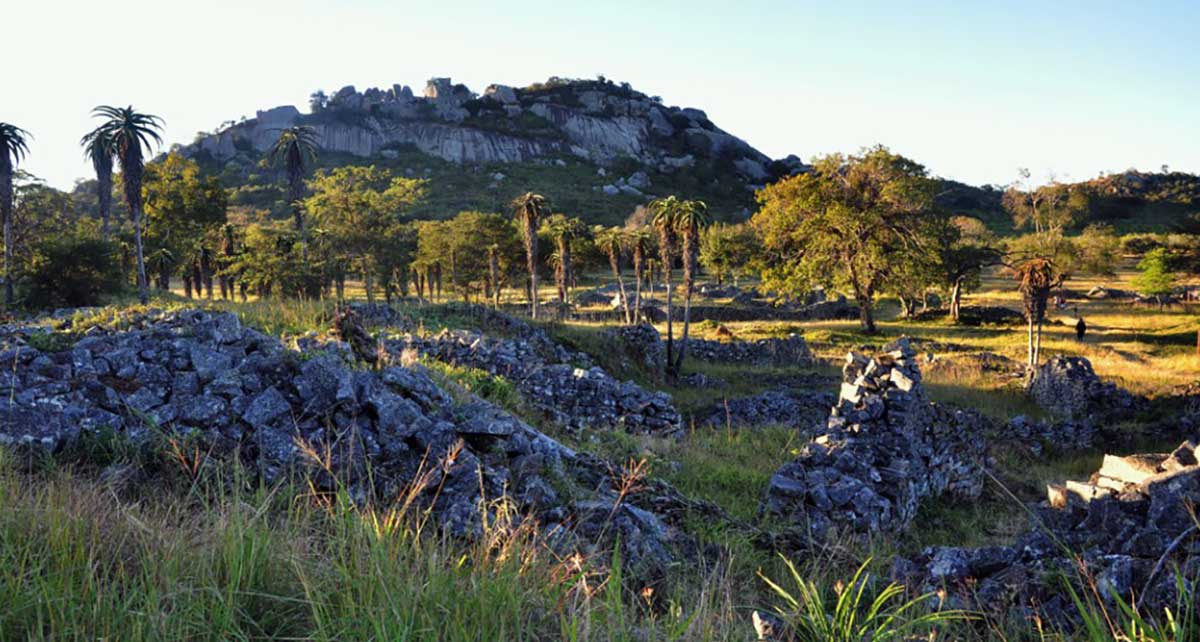
The Valley Ruins were inhabited between the 14th and 16th centuries, and this is where most people lived. Excavations have uncovered stone and clay houses, pottery, iron tools, and traces of weaving and metalworking. The foundations of homes and the outlines of neighborhoods are still visible, showing a city where families raised children, farmers worked the land, and craftsmen made goods for trade.
The Wealth of Trade and Exchange
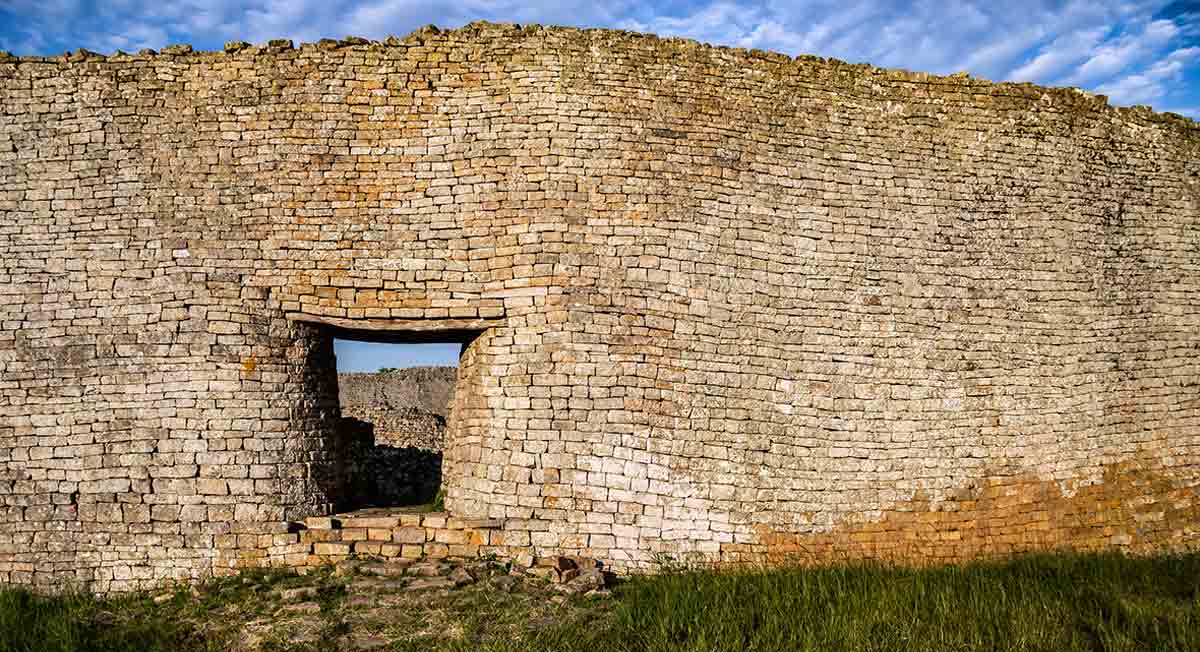
Great Zimbabwe’s wealth came primarily from trade, aided by its advantageous location. Positioned near gold fields and ivory routes, the city became a vital link in the trading network that stretched all the way to the Indian Ocean. From here, goods moved to coastal cities like Sofala and Kilwa, where they were sold to merchants from Arabia, India, and China, who in turn had arrived with their own wares. Excavations in the city have uncovered Chinese porcelain, Arab coins, and glass beads, clear evidence of how connected and even cosmopolitan it had become.
Part of a Bigger Story
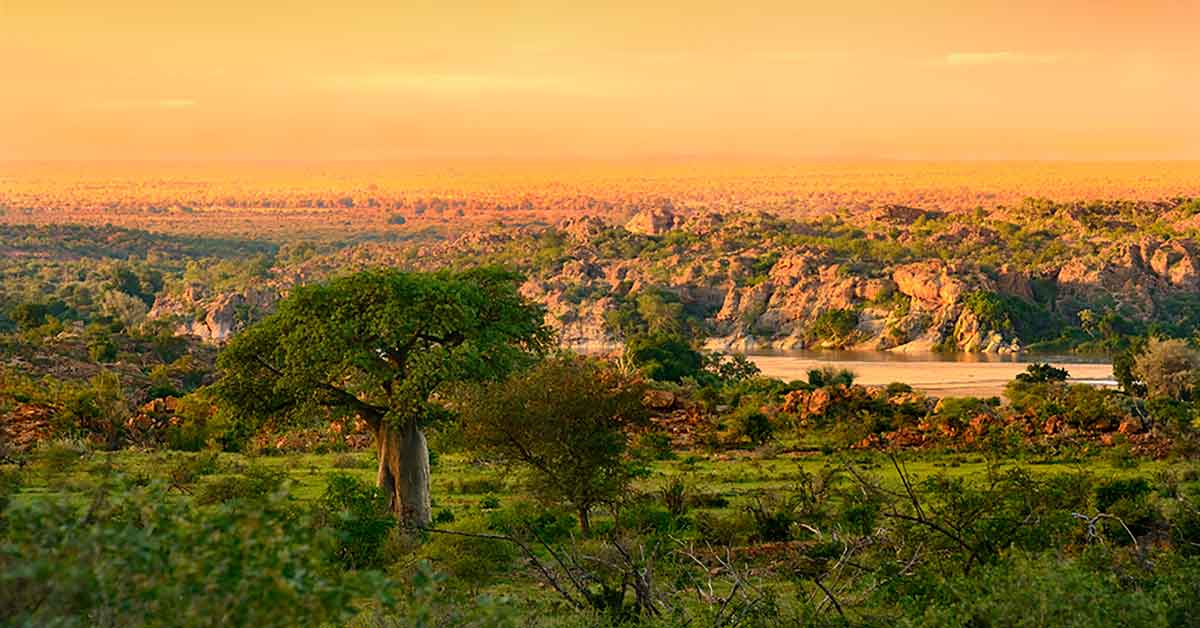
It is important to note that Great Zimbabwe didn’t rise out of nowhere, but was a logical consequence of a much wider story of settlement and trade in southern Africa. An earlier city, Mapungubwe, flourished at the meeting of the Limpopo and Sashe Rivers around the 11th century.
Like Great Zimbabwe, it traded in ivory and gold, and its rulers lived apart on a hilltop, setting a pattern later seen here. Archaeologists also use the term Zambezia to describe the broader trading world of the time, a loose network of communities stretching across what is now Zimbabwe, Zambia, and South Africa. Seen in this light, Great Zimbabwe is not considered a solitary marvel but rather the culmination of a prosperous and well-connected region.
The Decline and the Myths of Abandonment
By the 15th century, Great Zimbabwe was beginning to decline, though the reasons remain debated. Overgrazing, exhausted soils, drought, shifting trade routes, political unrest, or disease may all have played a part. By the early 1500s, Portuguese chroniclers were already describing it as a city abandoned. That decline may help explain why later Europeans refused to believe Africans had built it, for by the time they arrived, there was nothing else remotely as grand across the region.
Whatever the causes of its decline, the fact remains that a formidable power in Africa faded just as swiftly as it had risen, and no one knows why.
Then and Now at Great Zimbabwe
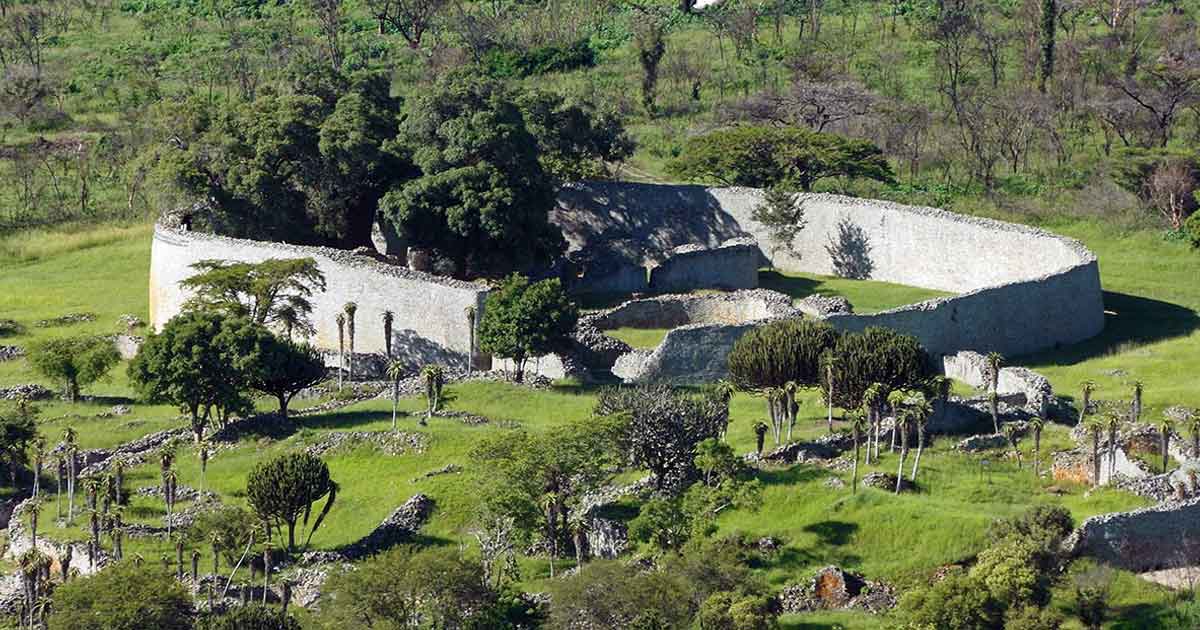
Today, the ruins are UNESCO-listed and stand as a proud symbol of Zimbabwean identity and its remarkable past. Visiting is easy enough, with Masvingo just a short drive away and the best place to base yourself. Stay overnight, and you can explore at a leisurely pace. Fight the urge to visit on a day trip from Harare: it’s a five-hour-long drive, one way, on potholed roads. Unnecessarily exhausting.
The museum displays artifacts, and you’ll find a handy visitor’s map in the souvenir shop. But hiring a local guide to walk around with you and bring the place to life will elevate your visit. Just make sure to research their credentials and past reviews. You will need at least half a day to explore, though a full day is best if you want to see the Hill Complex, the Great Enclosure, the Valley Ruins, and the museum in an unhurried way. The site is rarely crowded, which makes walking here feel personal and atmospheric.
Show up early in the morning (another reason to overnight in Masvingo) and you might just be lucky enough to have Great Zimbabwe to yourself.