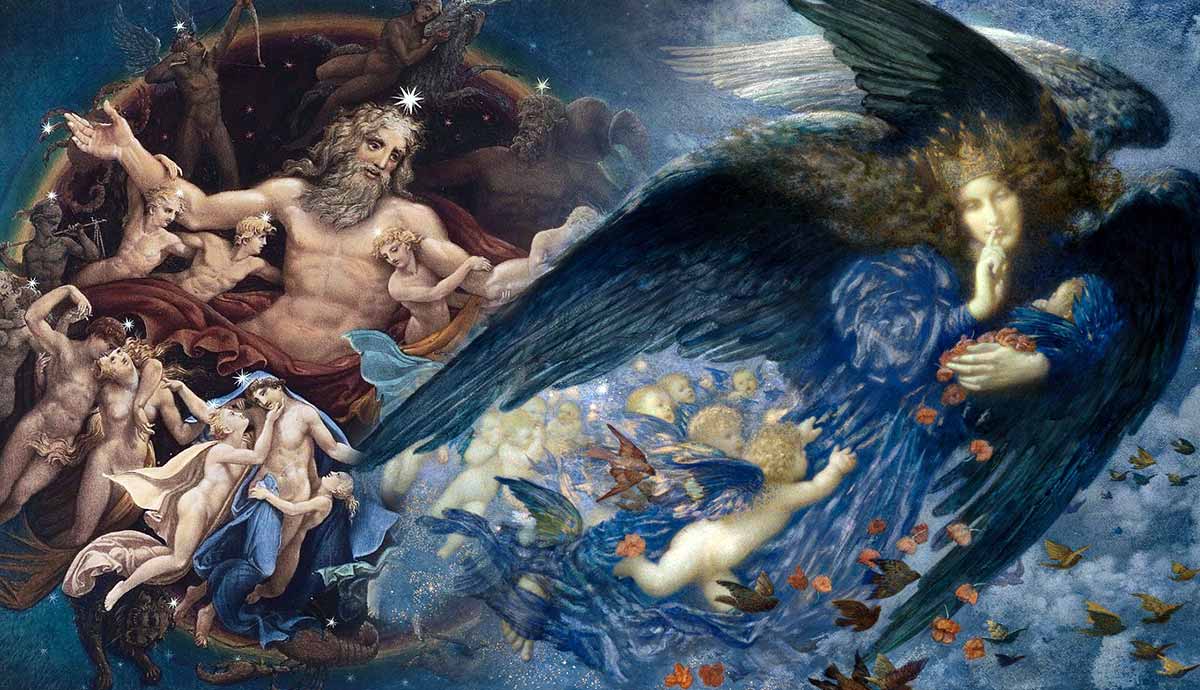
For the ancient Greeks, lineage was of prime importance. To a large extent, it determined one’s standing in society. It could be a badge of honor or a stain of ignominy beyond one’s control.
This dynamic was apparent in the mythologies as well, and ancestry meant as much to the gods as it did to the mortals in the real world. It defined successions, rivalries, and divine power.
From the Primordials to the Titans and the Olympians, lineage shaped the story of the Greek deities, defining their place in the cosmos.
The Primordials: The First Lineage in Greek Mythology
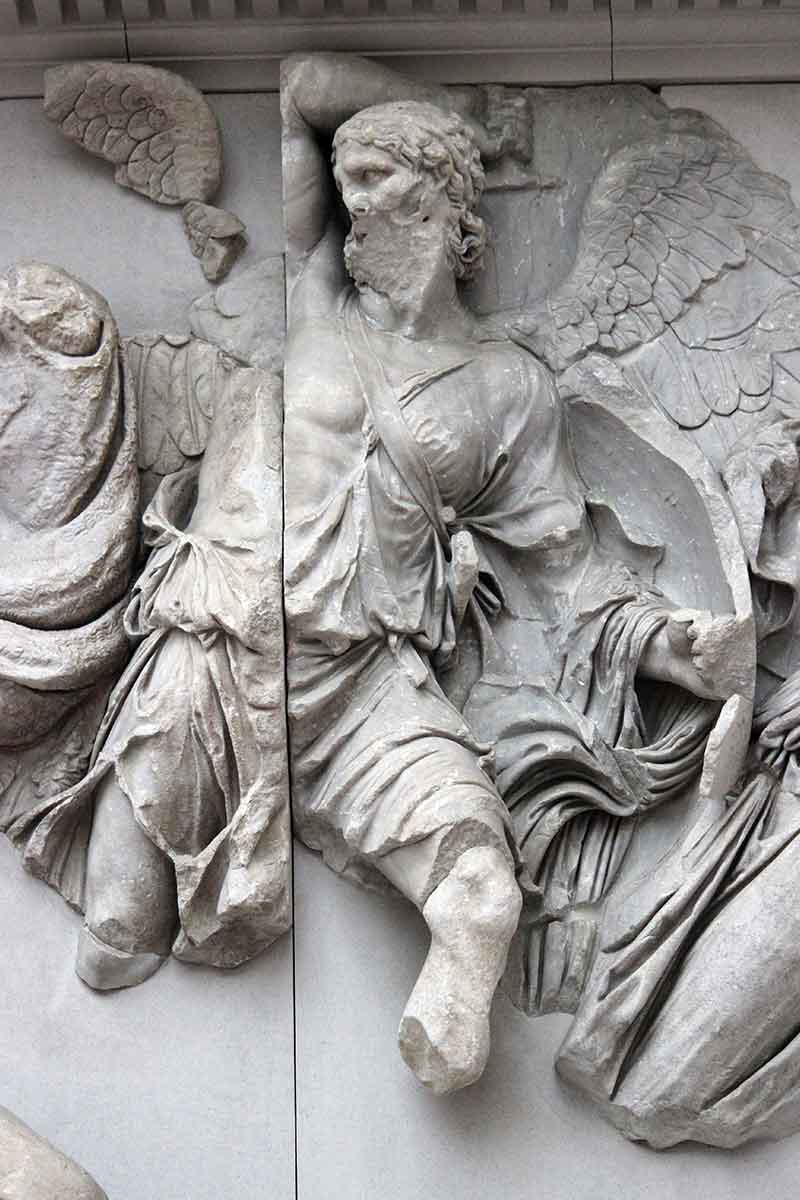
Before the Titans and the Olympians, there were the Primordials—immensely powerful forces rather than beings resembling stereotypical gods, and as such, they were never worshiped. These concepts were, however, personified with certain human characteristics in order for the Greeks to make sense of creation.
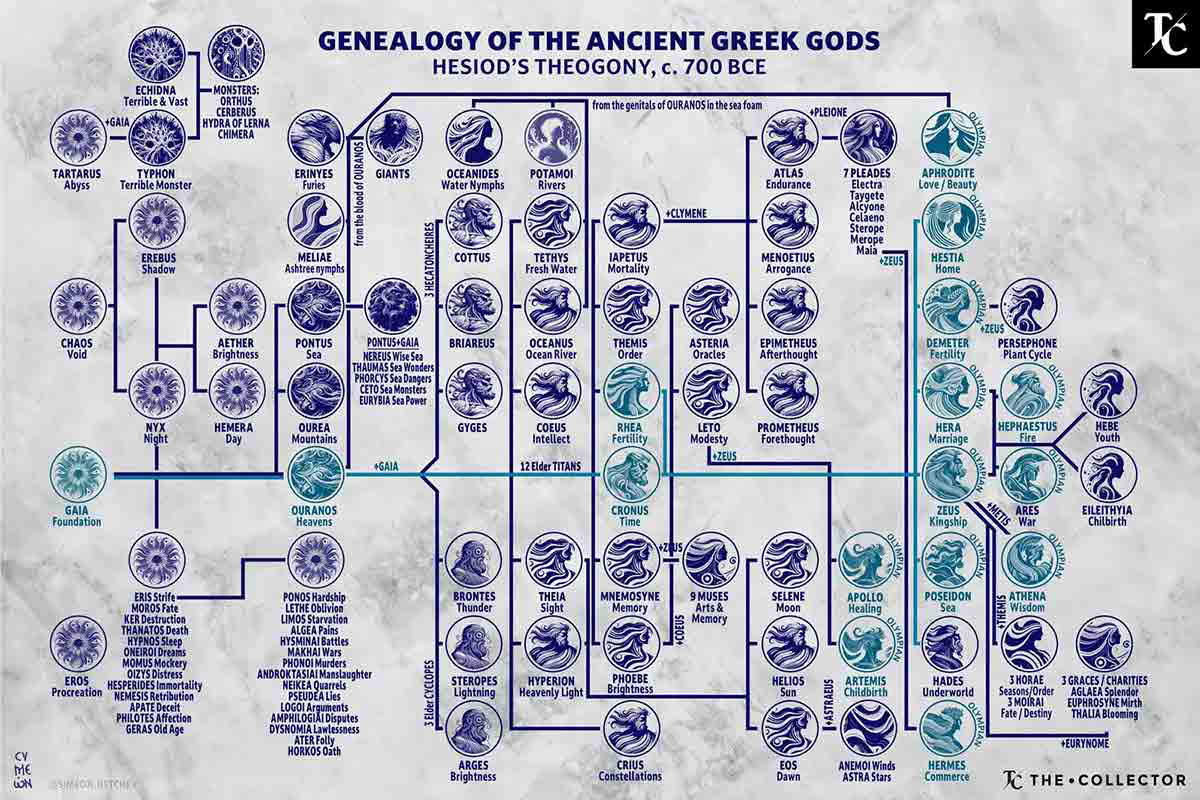
In the beginning, there was Chaos, the first “being” to exist, and from whom all others sprang. It was a formless mass that existed as the opposite of order, rendered as the idea of a yawning chasm or void. After the creation of Chaos, Gaia was formed. She was the personification of “Mother” Earth and parthenogenetically gave birth to the sky (Uranus/Ouranos), the sea, and the mountains. This method of reproduction is not understood as being in human terms, but rather as divine concepts far beyond the bounds of organic reproduction. Therefore, the fact that Uranus became Gaia’s husband is not considered an incestual taboo.
More Primordials were formed. Tartarus was the personification of a great abyss where night, darkness, sleep, and death made their home. Tartarus, as a deity and a place, later becomes the prison for the Titans. The other Primordials included Eros, the representation of love, and Erebus, the personification of darkness.
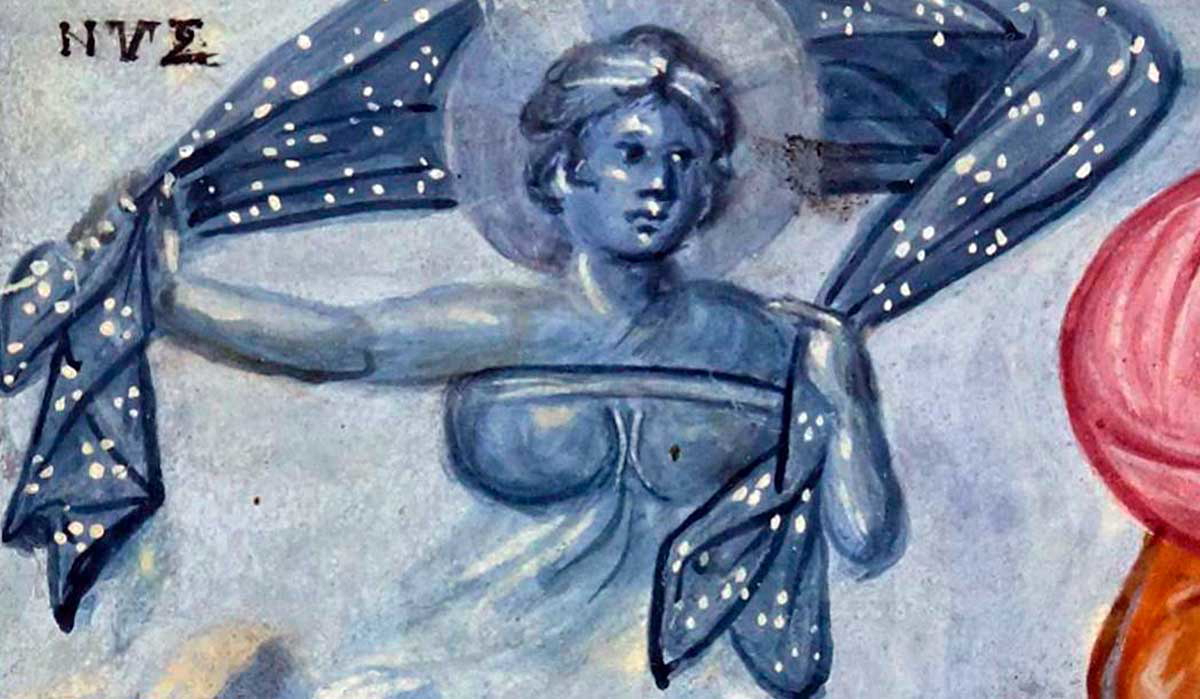
From these Primordials came all other life. Nyx, the personification of night, came from Chaos and was the mother of many deities listed by ancient authors such as Hesiod, Cicero, and Hyginus. Among them were Aether and Hemera, the personifications of air and day, respectively. She gave birth to a thousand daughters known as the Keres, who were the goddesses of cruel and violent deaths. She also had a thousand sons known as the Oneiroi, the gods of dreams who worked with Hypnos, the god of sleep.
Among her other children were Moirai—the Fates, Nemesis, the goddess of retribution, Geras, the god of old age, Thanatos, the god of death, and Philotes, the goddess of love, affection, friendship, and sex.
One of her daughters, Eris, the goddess of discord, went on to have many children of her own, each a deity representing an abstract concept.
The Titans
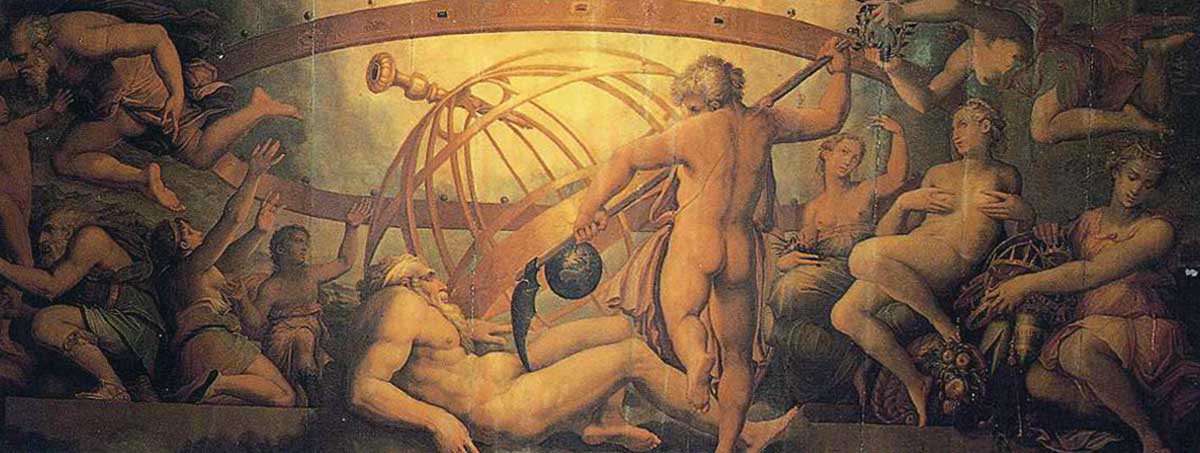
Representing the first godly dynasty in Greek myth were the Titans. They were 12 of the offspring of Gaia and Uranus, who also sired the Cyclopes. According to Hesiod, Uranus hid their giant offspring, the Cyclopes and the Hecatoncheires, in Tartarus, and in an act of revenge, Gaia sought the help of her Titan children, but only Cronus helped her. They planned an ambush, and Cronus castrated his father with a sickle. This act marked the end of the Primordial era and the beginning of the age of the Titans.
Where Uranus’ blood met the ground arose the Gigantes, Erinyes, and Meliae, and from the mixture of blood and semen, Aphrodite was created.
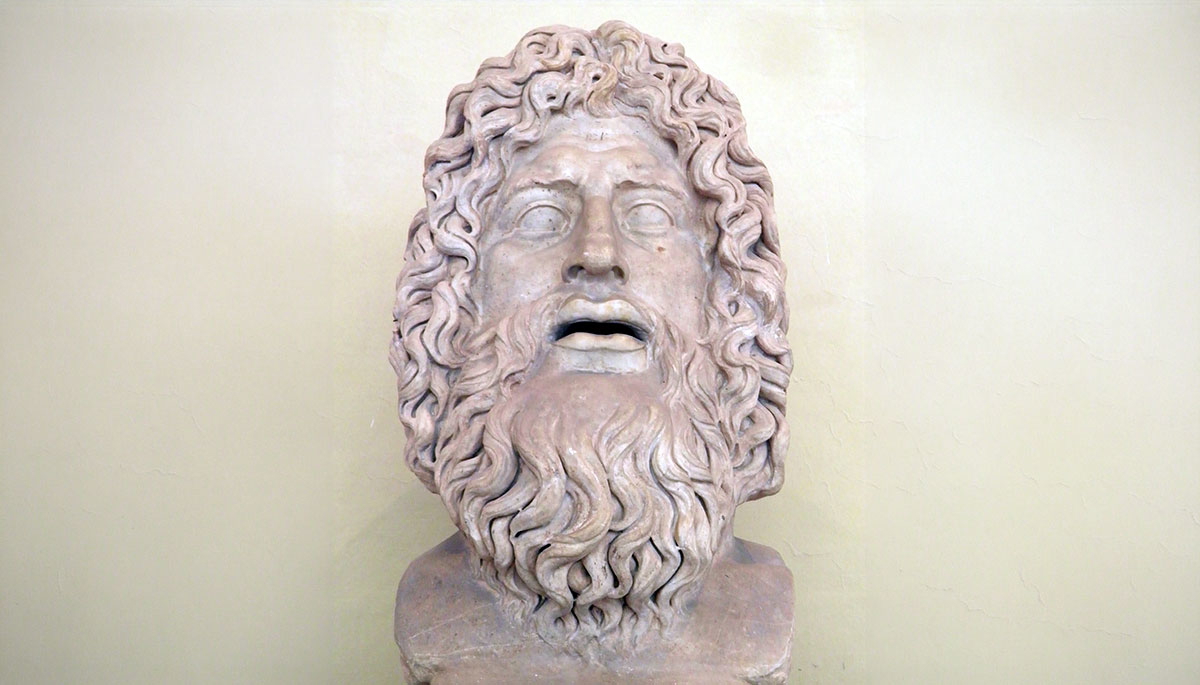
Not much was written about the Titans regarding their domains. Six of the Elder Titans were male. Oceanus was the eldest and was the embodiment of water, as he formed the ocean or river that encircled the world. His brother, Coeus, based on his name, which means “question,” has been linked to intelligence and the pursuit of knowledge.
Crios was associated with the constellation Aries, and may have been further associated with the stars, while Hyperion was also associated with cosmology, fathering Helios (the Sun) and Selene (the Moon). Iapetus was linked to mortality and human lifespan, and Cronus, the youngest, ruled over destructive time, but was also seen as a deity of the harvest.
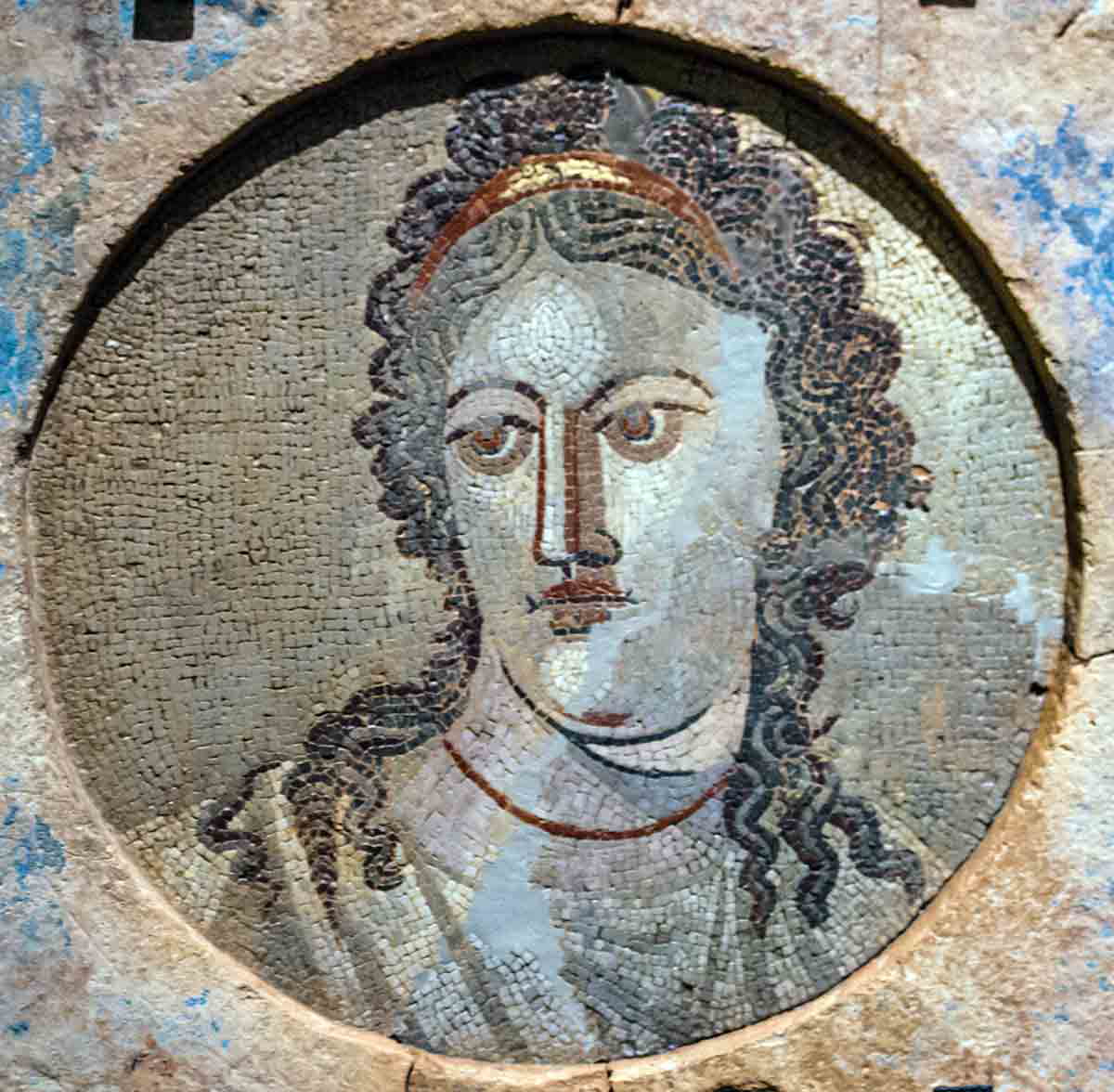
Of the six sisters, Theia was associated with sight, brightness, and the brilliance of precious metals, while Rhea was labeled a “mother goddess” linked to fertility and fruitfulness. Associated with oracles and prophecies, Themis also ruled over justice and order, while Mnemosyne was the mother of the Muses and the goddess of memory.
Also associated with prophecy, Phoebe was the goddess of intellect, while Tethys was associated with water, being the wife and sister of Oceanos, with whom she bore the Oceanids and the river gods.
At this point, the genealogy becomes more inconsistent and confusing, as the offspring of some of the Titans are considered a younger generation of Titans, while the offspring of other Titans are not considered Titans at all. Titans of note were Atlas and Prometheus, both sons of the Titan Iapetus and the Oceanid Clemene, whereas those not considered Titans were the Oceanids, the Muses, the Horae, the Moirai, and, fatefully, the first generation of Olympians, the children of Cronus and Rhea.
The designation of Titan here is malleable in certain cases due to the inconsistent and imaginative nature of the sources.
Zeus and the Olympians
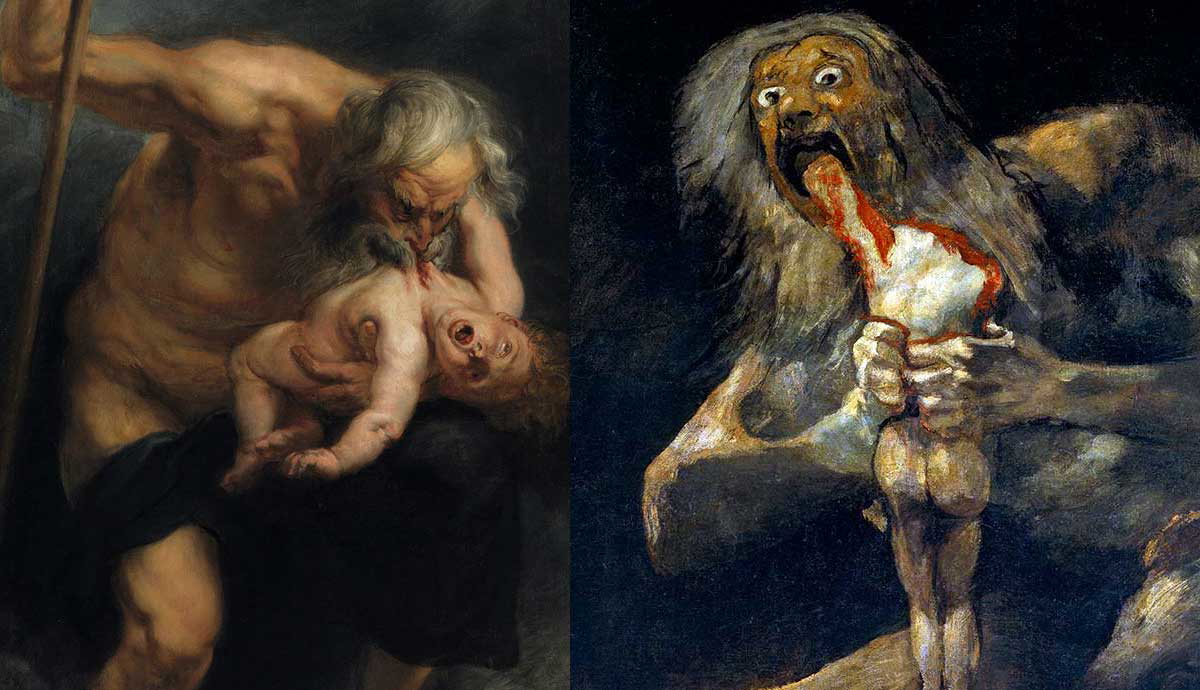
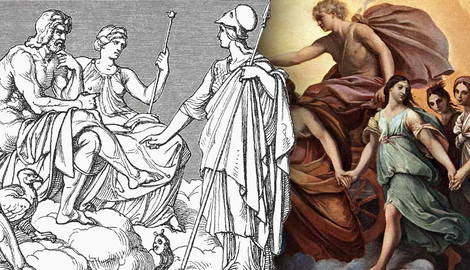
Just as he had overthrown his father, Uranus, Cronus also feared being overthrown. He swallowed each of his children when they were born from his sister-wife, Rhea. However, Rhea managed to hide Zeus, and when her son was fully grown, she fed Cronus an emetic, which caused him to vomit forth his other children, now also fully grown. Zeus freed his siblings and led them in a war against the Titans.
Aided by the Cyclopes and the Hecatoncheires, Zeus, along with his Olympian brothers and sisters, and some of the Titans who turned against Cronus, spent ten years fighting until his final victory. As punishment, he threw the Titans into Tartarus and appointed the Hecatoncheires as the guards. The Olympians then split their conquered dominion three ways between Zeus, who controlled the sky, Poseidon, who controlled the sea, and Hades, who controlled the underworld.
Zeus’ rule was further challenged by Typhon, the monstrous serpentine offspring of Gaia and Tartarus, but he repelled this challenge and solidified his place as ruler of the cosmos.
The Legacy of Zeus
One of the primary features of Zeus in the mythological texts was his penchant for sexual relations. As a result, he fathered many deities that exist within the Greek pantheon. Zeus was certainly not interested in monogamy with his wife, Hera, and he spread his seed far and wide, creating a complex family tree.
Ares, the god of war, was the result of the union between Zeus and Hera, while Artemis, the goddess of hunting, and her brother, Apollo, were the children of Zeus and the Titaness, Leto. Athena was born directly from the head of Zeus after he swallowed a pregnant Titaness named Metis, and Dionysus was born to the union between Zeus and Semele, a mortal princess of Thebes.
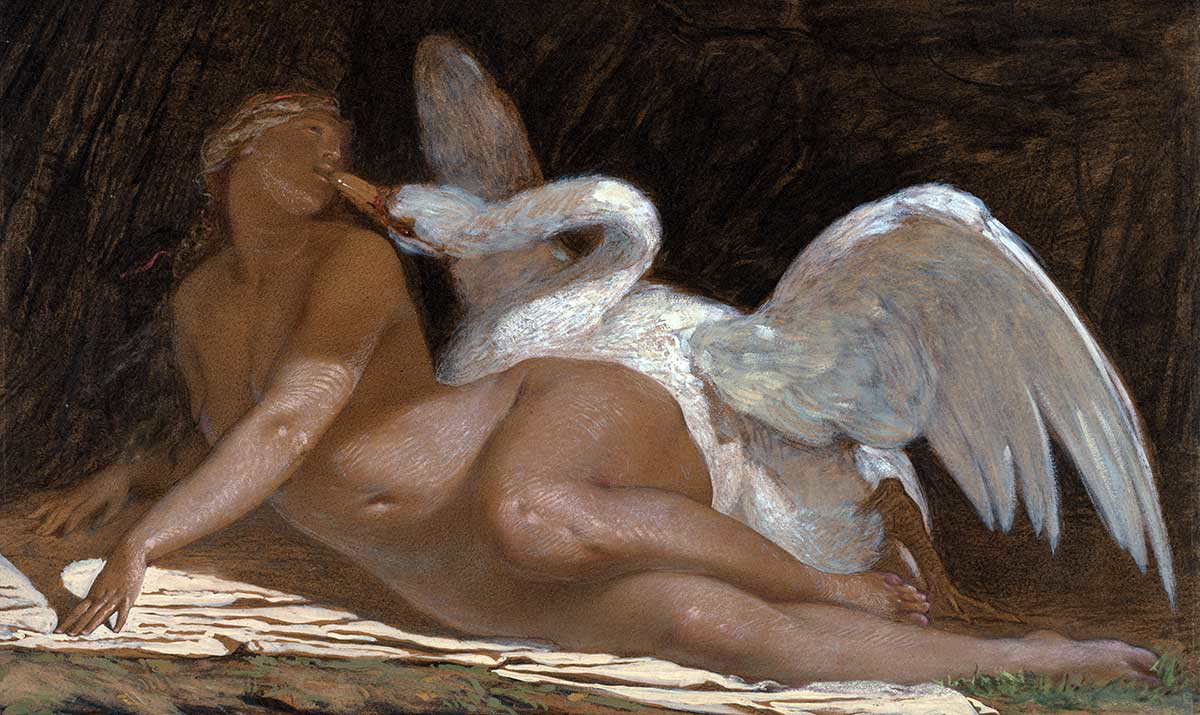
Zeus also fathered many mortal children. Among them were the mighty Heracles, as well as Helen of Troy, whose mother, Leda, was seduced by Zeus, who took the form of a swan. Yet another of Zeus’ children was the hero Perseus, famed for slaying the gorgon, Medusa.
Naturally, Hera had a distaste for her husband’s infidelity, and her revenge was often guided towards Zeus’ mistresses and offspring. She drove Heracles mad, and in a state of frenzy, Heracles killed his own wife and son. And so began the twelve labors of Heracles, whereby he tried to atone for his sins, while Hera did her best to foil his efforts.
In another example of jealous plotting, when Hera discovered Leto’s pregnancy, she made all the earth promise that Leto could not give birth on solid ground. Thus, Artemis and Apollo were born on the floating island of Delos, which was believed not to be anchored to the ground.
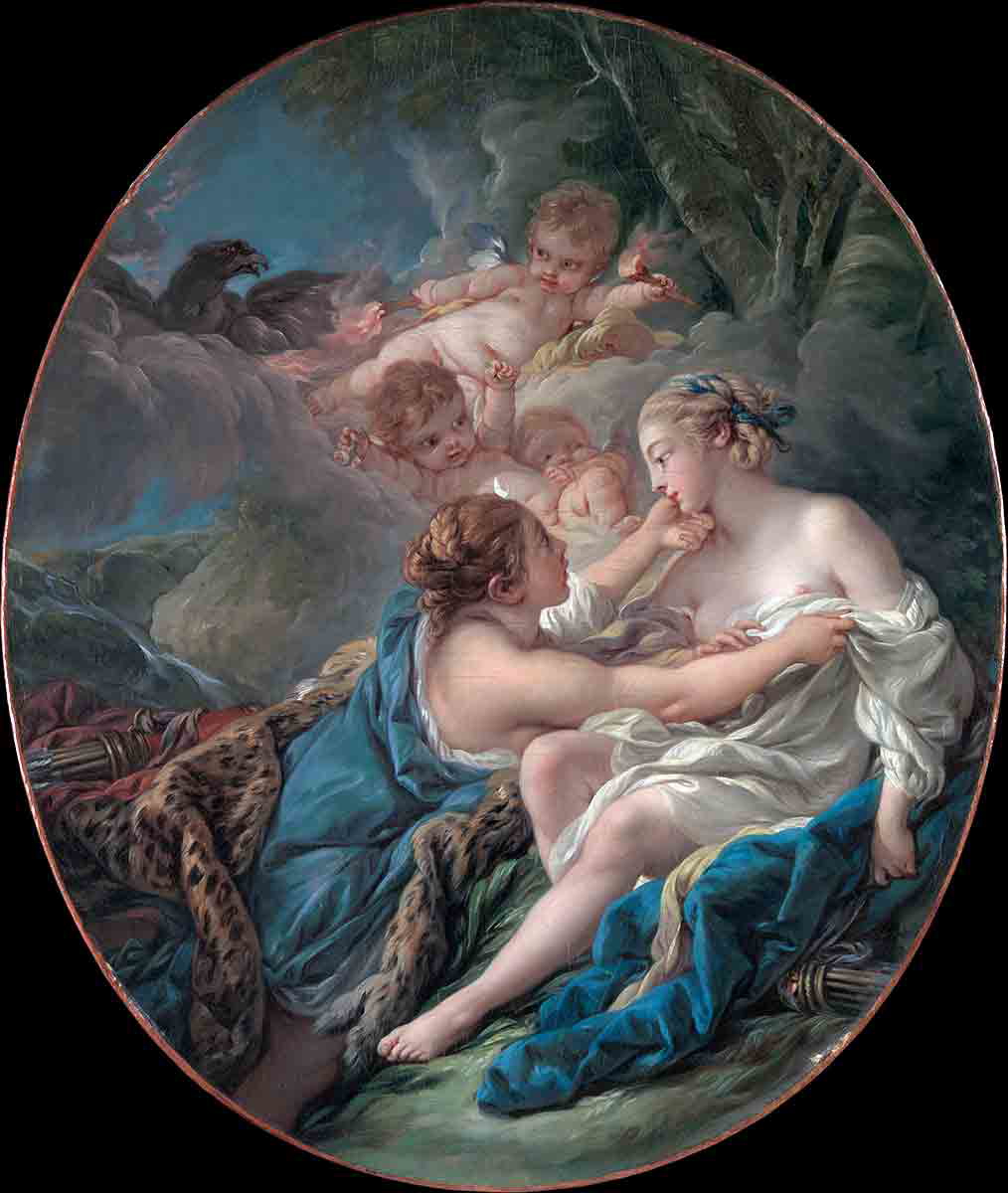
Zeus even impersonated other gods, transforming himself into Artemis in order to seduce one of her chaste followers, Callisto. The sapphic episode ends with Callisto pregnant, giving birth to Arcas, the king of the Arcadians, and being transformed into a bear by Zeus’ angry wife. Callisto finally ascended to the heavens as the constellation Ursa Major.
Other Divine Relations
Of course, Zeus wasn’t the only Olympian to have children. Prominent and powerful deities were also born to the other gods.
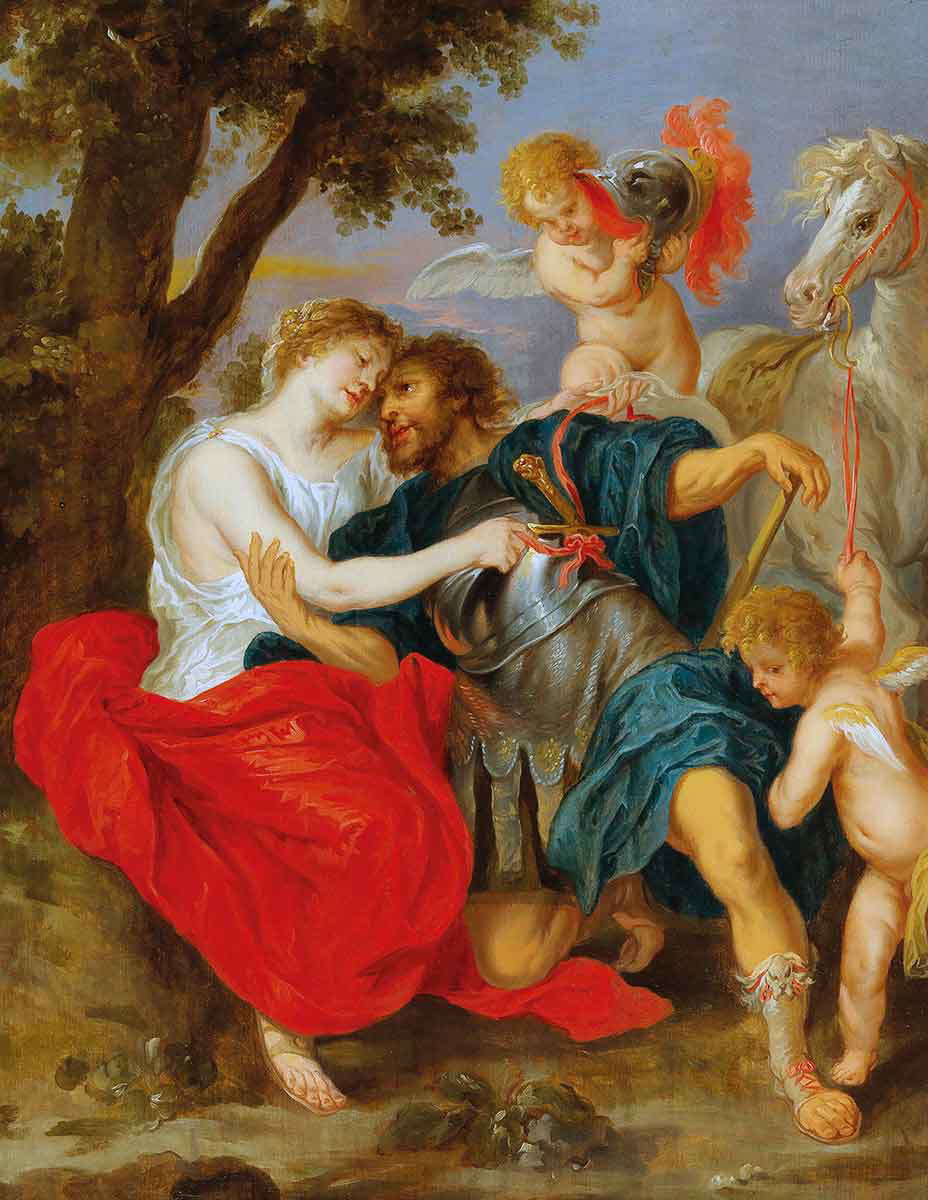
While married to Hephaestus, Aphrodite (who is also considered an Olympian despite her lineage) had a passionate affair with Ares, and the result of their union was Harmonia, the goddess of harmony and concord. In some versions of the story, Aphrodite was also the mother of Eros, previously noted as a Primordial. This exemplifies the inconsistency of the myths. Harmonia marries the hero Cadmus, and one of their children is Semele, the mother of Dionysus.
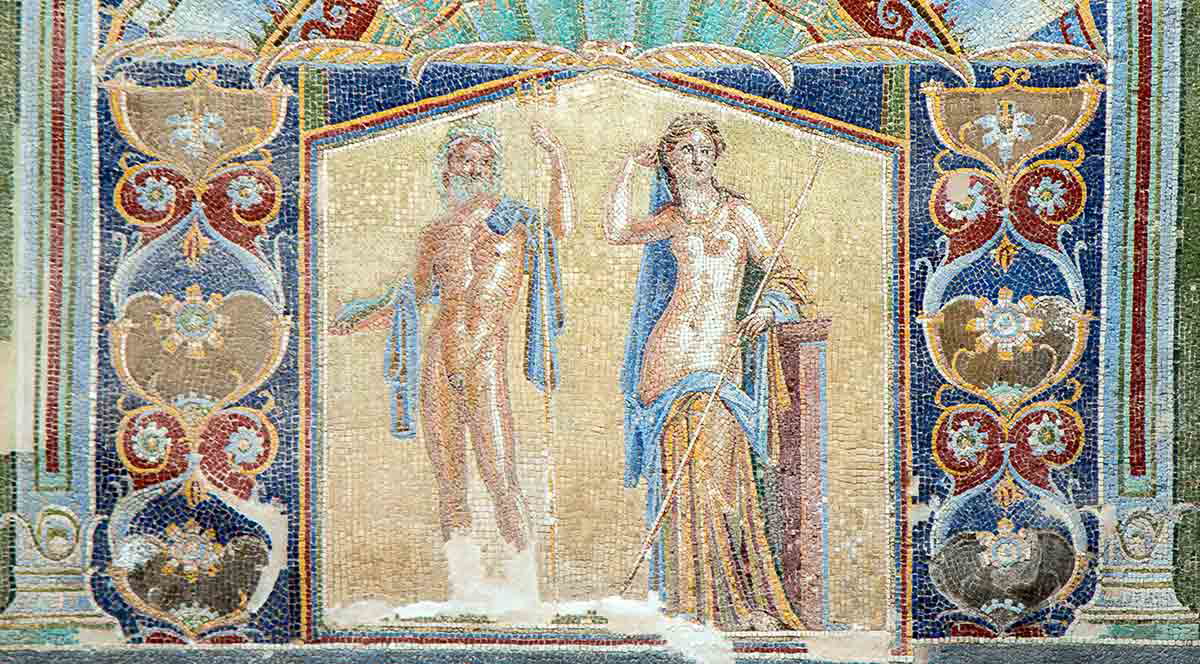
Occupying a large portion of the Greek myths are the tales of Poseidon, who fathered many children. He had many lovers of both sexes, the most famous of which was Amphitrite, a sea-goddess and nymph.
With Amphitrite, Poseidon fathered the merman Triton, and with a mortal woman named Cleito, he fathered Atlas, who would become the first ruler of Atlantis. Poseidon is also said to have fathered the minotaur-slaying Theseus, as well as the cyclops Polyphemus.
Many of the ancient Greek myths were born out of issues with lineage, from fears of succession to tales of Hera’s jealousy. Territorial claims were also connected to belief in the divine lineages. Athens identified with Athena, who was believed to have fought Poseidon for patronage of the city, while the Spartan kings’ legitimacy was based on the claim of being the descendants of Heracles.
For the ancient Greeks, mythology and its genealogies were far more than entertainment. They were explanations and justifications of the world around them, as well as being instruments of authority and power.