From figuration through Surrealism to his late Abstract Expressionist style, Rothko turned color into emotion, mortality into presence, and viewing into a spiritual encounter—works that challenge language and linger long after they are seen.
Why “Abstraction” Falls Short of Explaining Rothko
What are we to make of abstract art? Throughout the 20th and 21st centuries, it has attracted as many accusations as praises. Because it does not depict the visible world, some have dismissed it as meaningless, while others have charged it with elitism or hermeticism. Yet abstraction does not “depict” things in the conventional sense, and to reduce it to a single mode of practice only adds to the confusion. Painters grouped under the label pursued radically different intentions through distinct methods and processes, rendering “abstraction” an imprecise and often misleading category.
Abstract Expressionism emerged in mid-20th-century America as a heterogeneous movement, and Mark Rothko (1903–70) came to be regarded as one of its central figures. Yet even this term proves inadequate. Rothko rejected the label “Abstract Expressionist,” and especially the designation “abstract,” which he saw as obscuring his concern with a reality beyond the physical world. As he put it, “I do not believe that there was ever a question of being abstract or representational. It’s really a matter of ending this silence and solitude, of breathing and stretching one’s arms again.” What is at stake here is not formal categorization, but a response to a modern condition of isolation and spiritual deprivation.
From Form to Spirit: Rothko’s Mature Vision
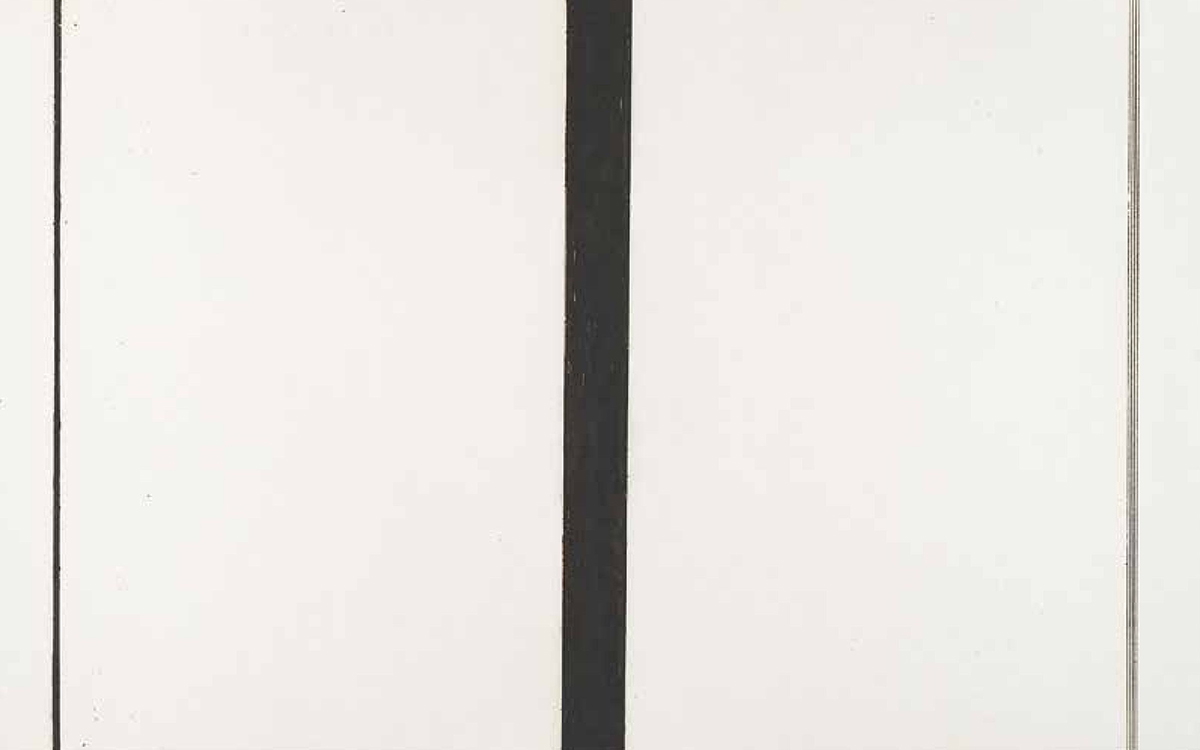
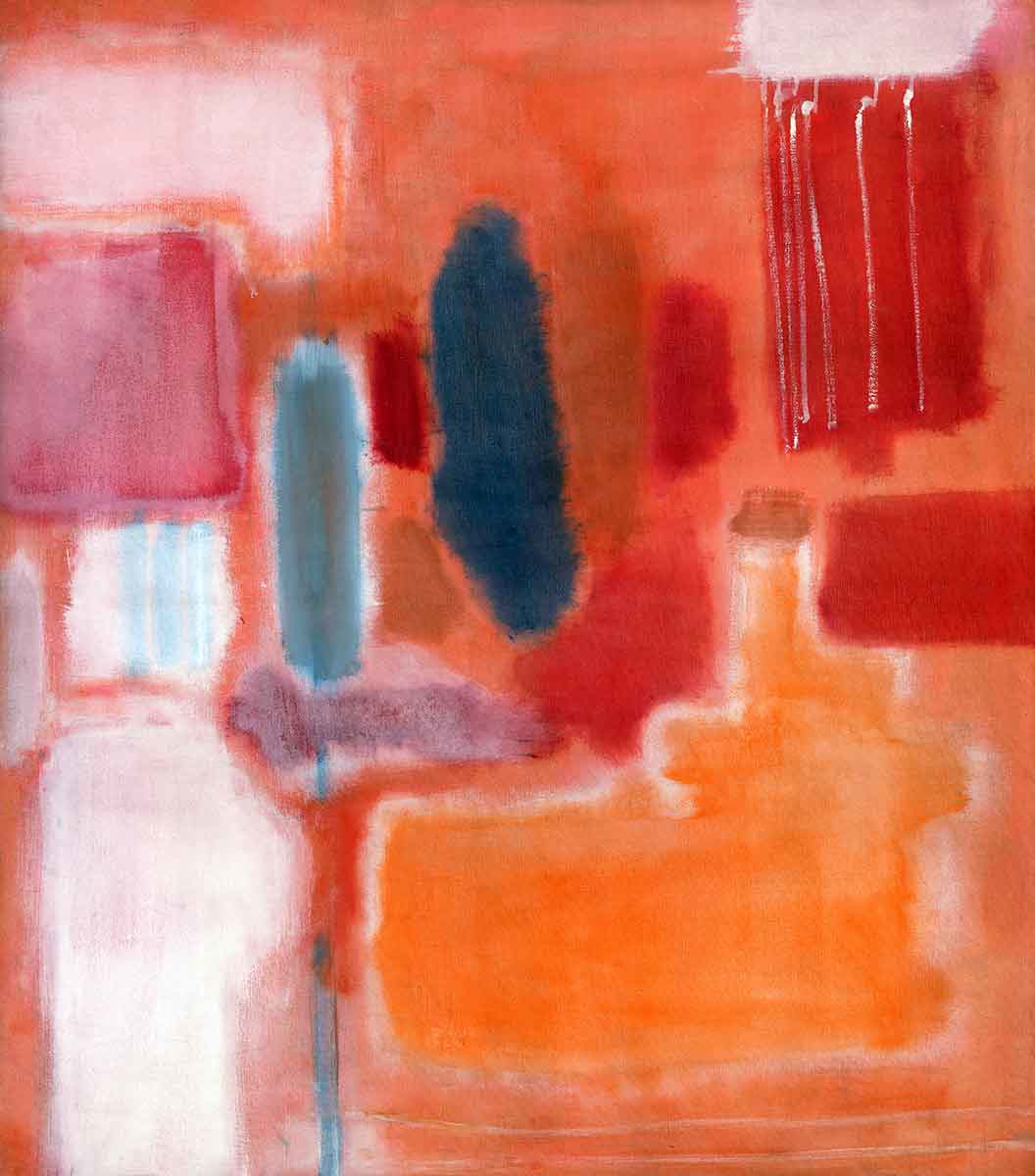
Having moved through expressionist distortion, Surrealism, and a “multiform” phase in the 1940s, Rothko arrived at his mature style by the late 1940s. This phase went beyond aesthetic innovation or dialogue with tradition. His paintings, he insisted, were “human dramas,” often tragic in implication, grounded in the inescapable fact of human mortality. Beauty, understood as a conventional aesthetic goal, was irrelevant. Rothko’s aim was not the beautiful, but the truth of spiritual experience.
For this reason, the charge that his work is elitist or hermetic fails to account for his intentions. Rothko conceived his paintings as presences—works meant to be encountered with empathy and openness. In this sense, they are social rather than exclusionary. Although he stripped away many pictorial conventions, including illusionistic space, figuration, and traditional figure-ground relations, he retained elements capable of crossing cultural boundaries. Brooding dark hues and blacks evoke mortality, while softly shifting fields of color create a sense of movement and instability. Through these means, Rothko sought to create a space in which emotion could be enacted in painting and reactivated in the viewer, provoking what he called “basic human emotions.”
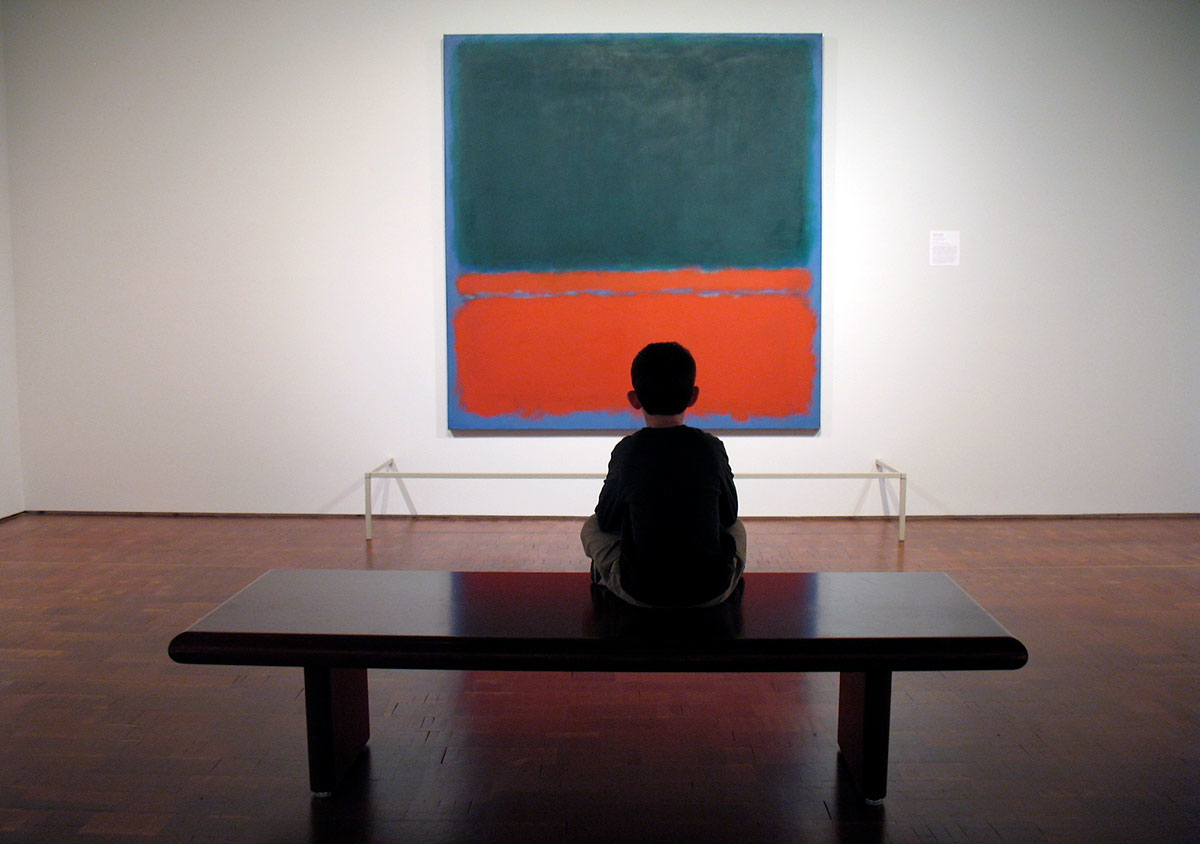
The poet Stanley Kunitz, a close friend of the artist, described Rothko as a “shaman” whose art had its origins in magic and was inherently ethical and spiritual. While not Rothko’s own language, the description captures something essential: his abandonment of traditional conventions signals a desire to return to the beginnings of human expression. For Rothko himself, the spiritual was not an ancillary concern but the prime goal of his work.
The Limits of Language in Modern Art
By the mid-20th century, a current in literary criticism and modern art privileged the artwork itself over the so-called “heresy of paraphrase,” the belief that description inevitably mutilates the work it seeks to explain. From Russian Formalism to English New Criticism, skepticism toward the sufficiency of critical language gained traction, and many Abstract Expressionists shared this view. Rothko was among those who doubted that words could do anything but distort the experience of art.
For this reason, Abstract Expressionist works were often deemed uninterpretable by both supporters and detractors. As interpretation belongs to the linguistic, it was widely held to be incommensurable with other art forms. Writing later, Jean-François Lyotard would argue that verbalizing art amounts to ideology, since the true artistic experience lies beyond words.
Beyond Words
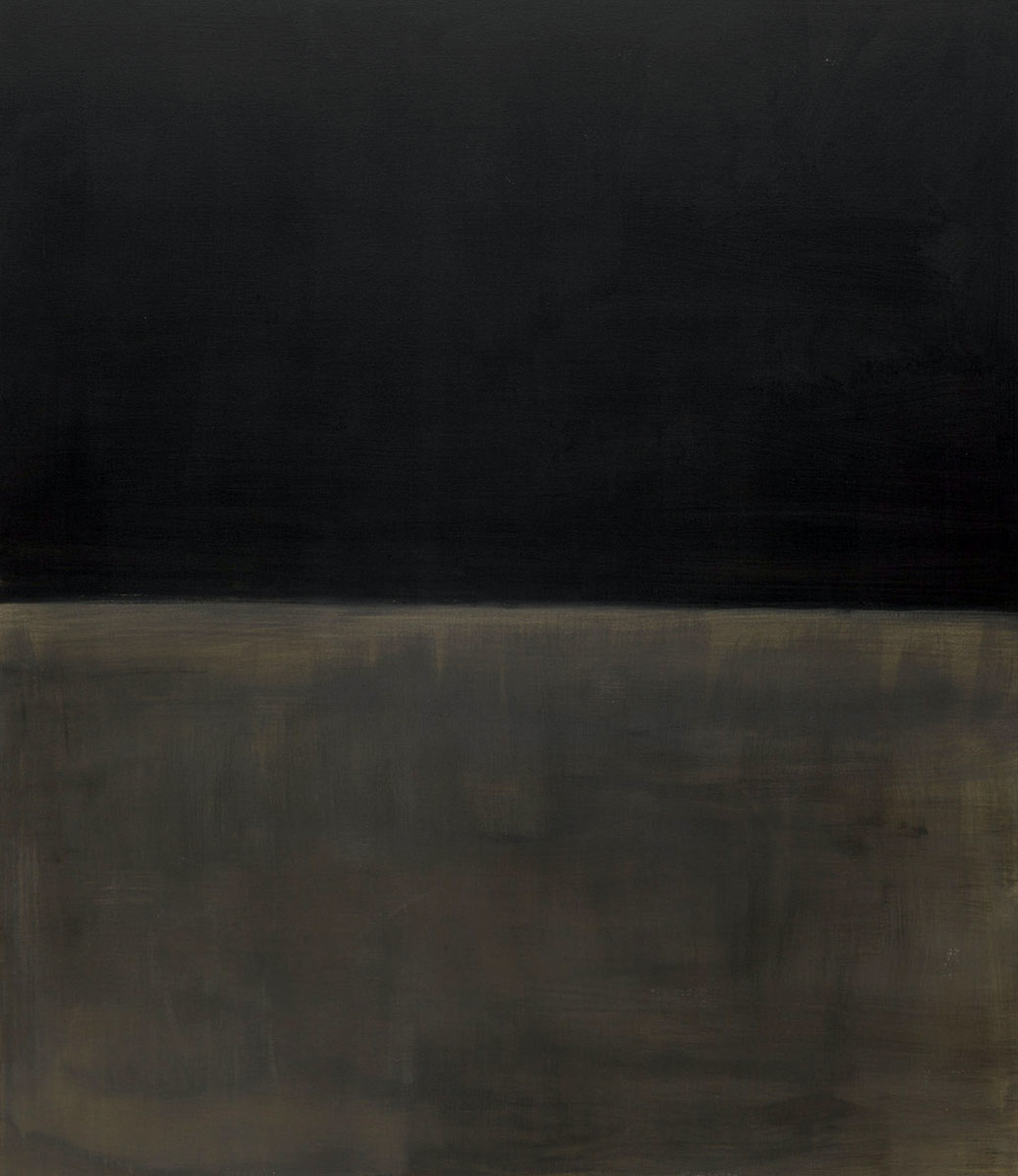
In Rothko’s late work, however, the failure of language is not merely inevitable but desired. Just as his paintings negate figuration and the objects of the visible world, they also expose the insufficiency of description, whose referents remain tied to the physical realm he sought to transcend. Description, with its habits of categorization and comparison, runs counter to Rothko’s aim of a universal sublimity freed from linguistic constraint. His paintings, he insisted, were to be encountered as pure “presences,” living as organic forms rather than as images to be decoded.
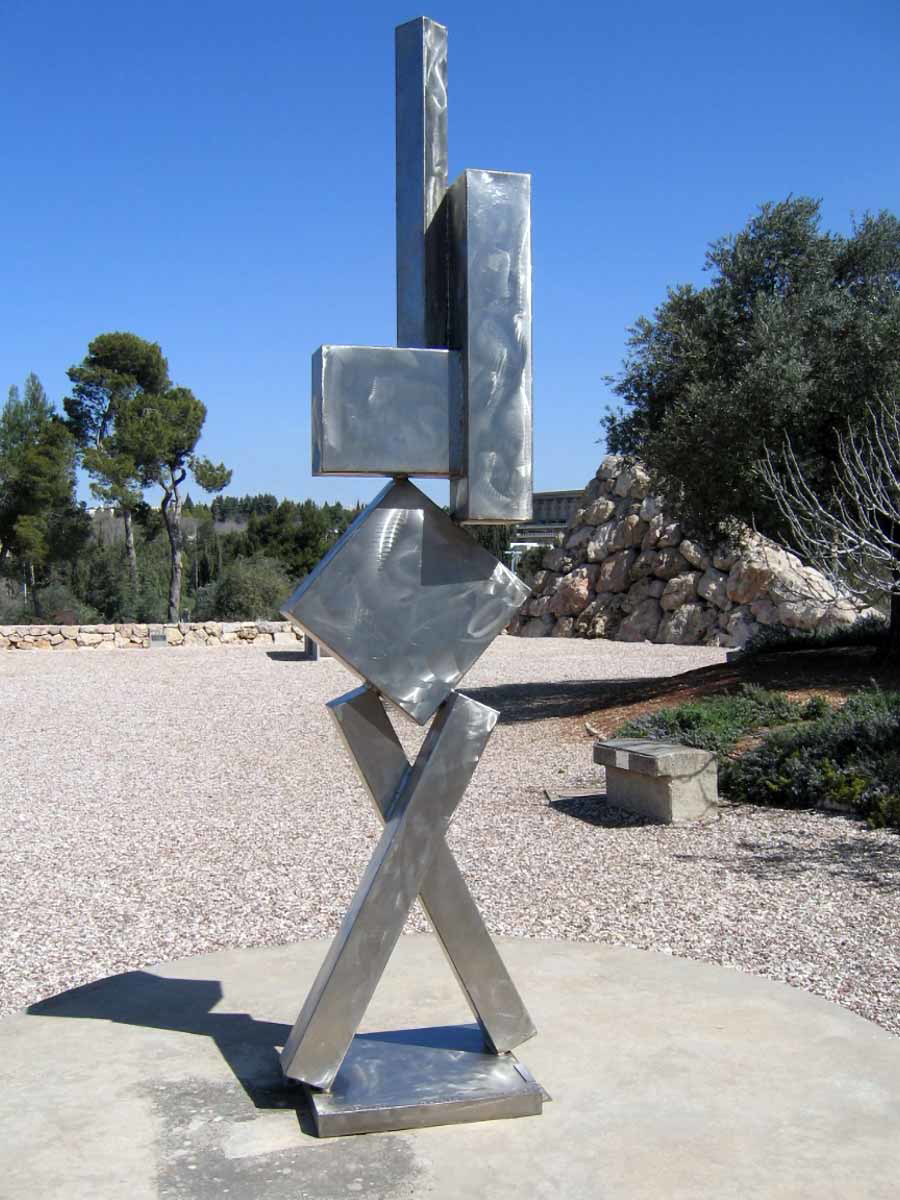
This resistance to explanation was shared by other modernists. The sculptor David Smith spoke of his work as a “return to origins, before purities were befouled by words,” and Rothko similarly warned that explanation causes a “paralysis of the mind and imagination.” Such paralysis, he feared, did not only afflict the artist who explains, but also the viewer, whose freedom of response might be compromised by preconception.
The Power of Presence

Rothko’s aversion to fixed meaning was shaped in part by a broader postwar context. After the Second World War, illusionistic realism had become associated with propaganda through its use by Nazi and Soviet regimes, while even Social Realism was viewed with suspicion. Against this backdrop, Rothko developed a horror of particularized meanings being imposed on his work. The viewer’s autonomy was paramount, even if it remained guided by the paintings’ emotional and spiritual evocations.
The resulting “poverty” of language, asserted by Rothko and embodied in the silent presences of his late paintings, renders them effectively unwritable and uninterpretable. Their frequent lack of titles, or reliance on color alone, reinforces this refusal of linguistic mediation. What is not at stake in these brooding, delicately shifting forms is a determinate meaning that can be rendered in prose. Yet this does not imply an absence of communication. Though they represent no narratives, figures, or objects, the fact of the canvas, its colors, and the moods they evoke remains undeniable—if ultimately indefinable.
Language and Rothko
Despite its limits, language can still criticize, analyze, and contextualize art—tasks to which it is endemic. What it cannot do, however, is articulate the total experience of visual art, and least of all Rothko’s painting. Even ekphrasis, developed in the Renaissance to describe artworks, could never fully convey effect or response. Description is by nature partial and therefore limiting.
This limitation is more acute in abstraction. While analysis can trace relationships and developments between works, Rothko’s paintings ultimately stand in self-evidence: they resist exhaustive description and can only be minimally indexed. Rothko himself opposed the imposition of literary interpretation on his work, though he did make occasional statements that clarified his intentions. In 1947, as he approached his mature style, he expressed a sense of confinement within American society, which he believed was hostile to art as a vehicle of true liberation. The transcendental experience he saw as art’s mission, he argued, had been marginalized by consumerism and could only be recovered by abandoning the security of the familiar.
Tragedy, Mortality, and the Transcendent
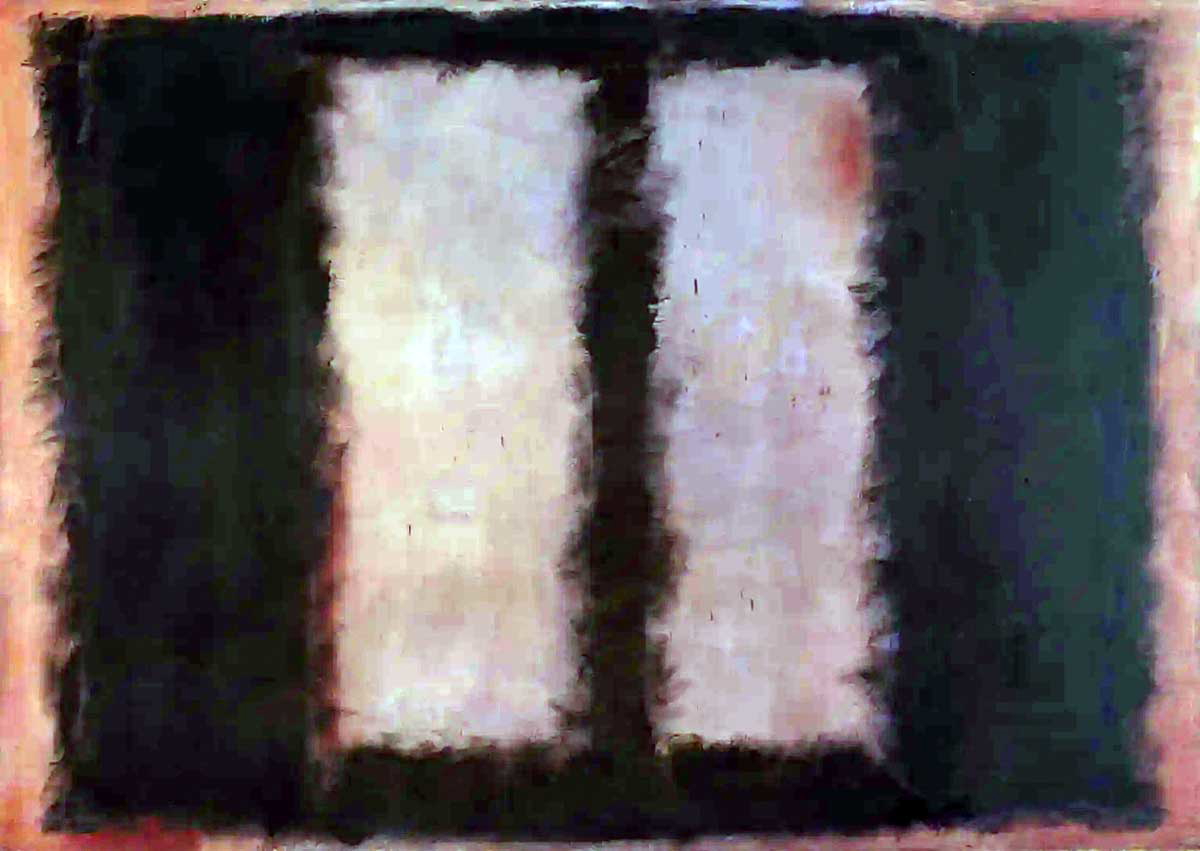
For Rothko, preconceptions were obstacles to authenticity. He described them as “the doorway through which one left the world in which they occur,” a necessary threshold for both artistic process and viewer reception. His paintings, he insisted, were “dramas,” with shapes acting as performers—organic forms endowed with volition and passion, unburdened by the “finite associations” of the visible world.
Two tragic conditions animate this vision. The first is the modern loss of the transcendental, resulting in what Rothko called human incommunicability. The second is the tragic fact of human mortality. His paintings confront both: they affirm existence while proposing vast, seemingly limitless spaces meant to intuit spiritual eternity.
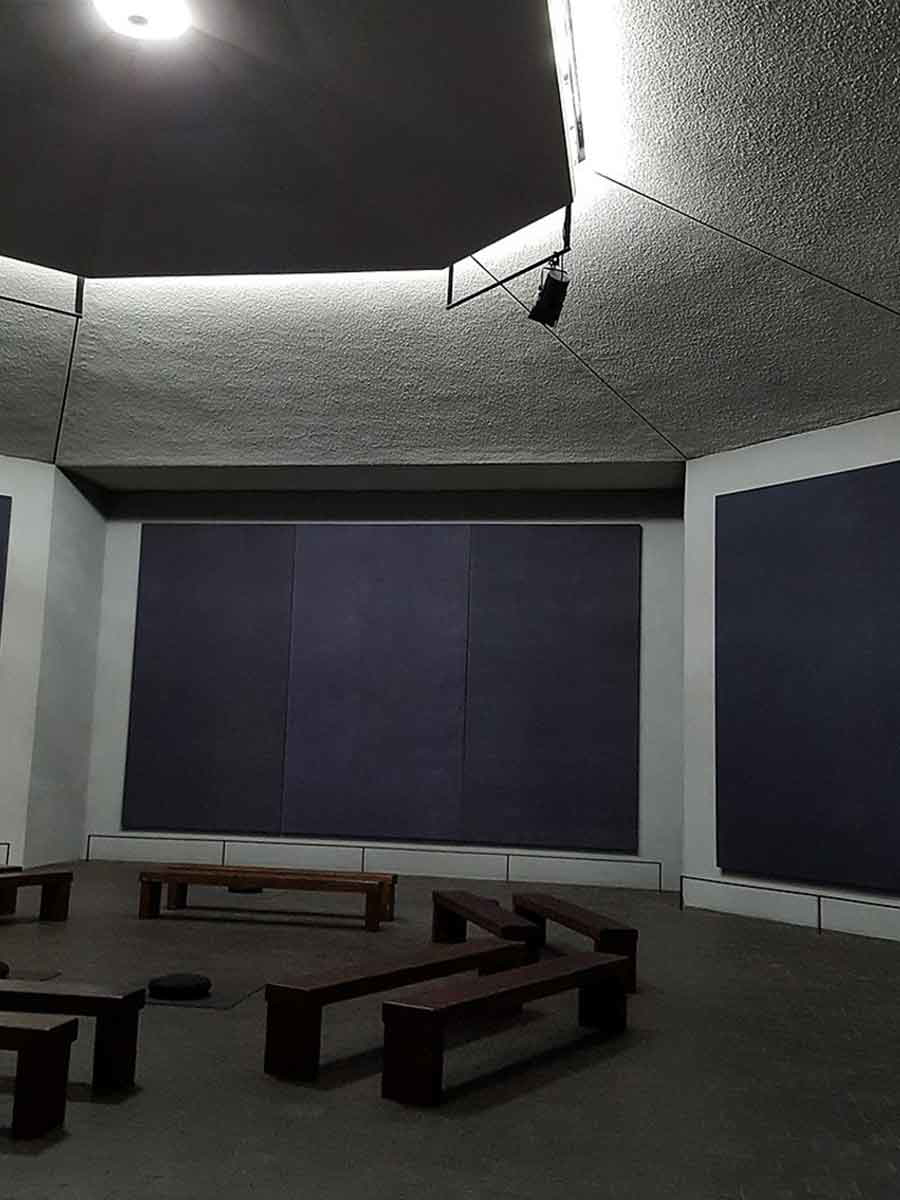
The late works were conceived as communal encounters with this boundless spirituality. Rothko even specified an intimate viewing distance—18 inches—so that the paintings might envelop the viewer. This impulse culminated in the Rothko Chapel, where the viewer is physically encircled by the works. Far from elitist or exclusionary, Rothko intended a universal address, seeking what he called “an unexpected and unprecedented resolution of an eternally familiar need.”
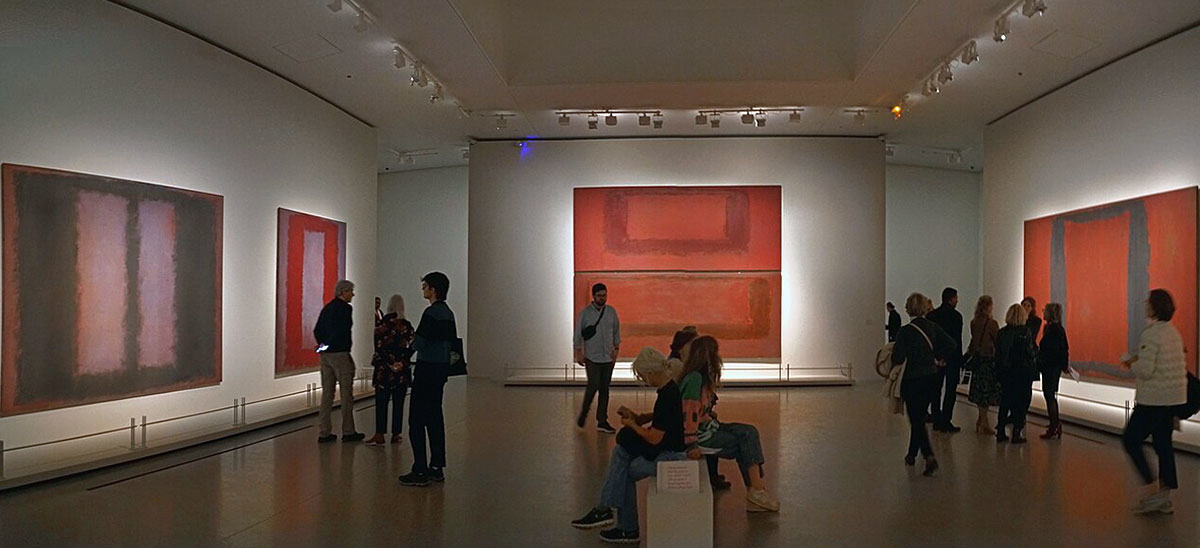
Although abstract in their refusal of depiction and narrative, the paintings are not meaningless. Rothko avoided symbols, which he saw as bound to language, and instead sought to register “basic human emotions” as directly as possible through color and shape. Yet the works point beyond the artist’s own emotions. They demand the engagement of a “sensitive” viewer—since, as Rothko put it, “a picture lives by companionship”—and they attempt an alchemy of experience. Ordinary materials are transformed into luminous, indeterminate spaces that strain against definition, offering, however briefly, an encounter in which finitude itself seems to be overcome.
Intention and Impact
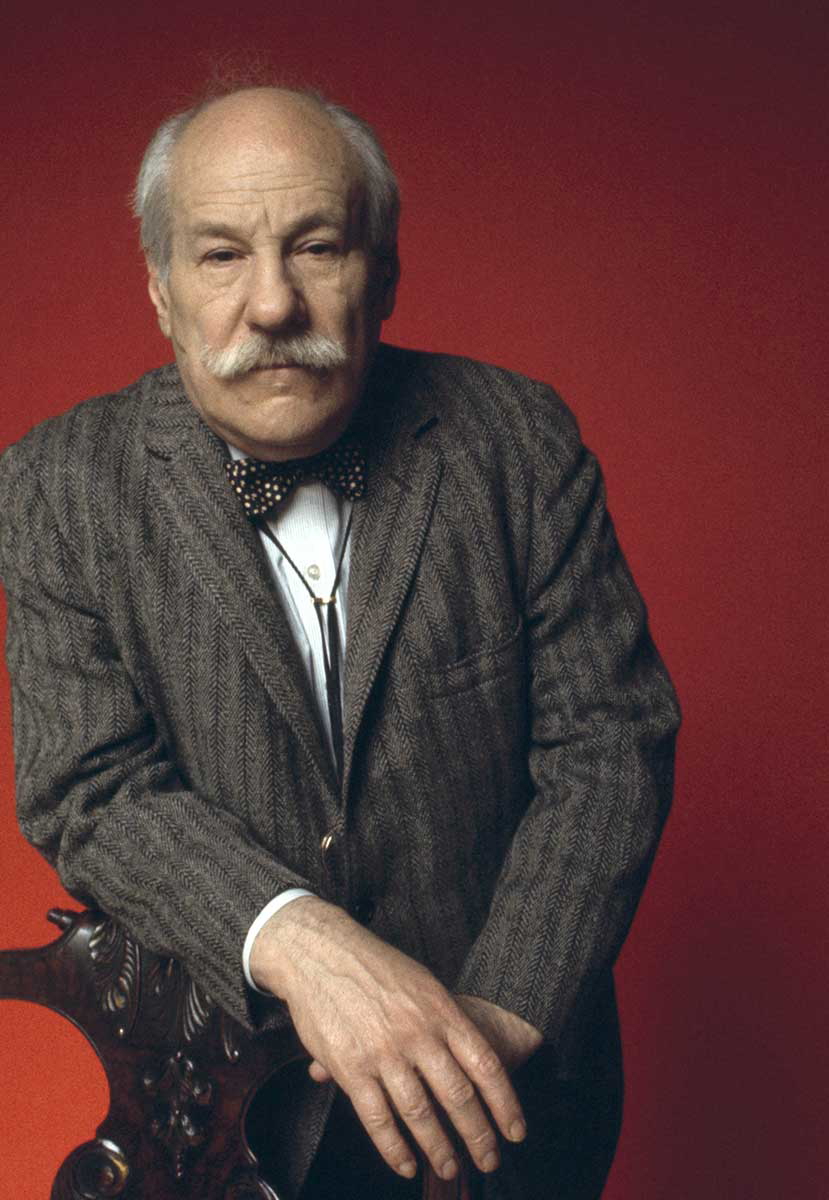
From the 1930s onward, Clement Greenberg dominated mid-century art criticism. An anti-intentionalist, he argued that only the completed painting mattered, not the artist’s intent. While Greenberg’s ideas became orthodoxy, they still offer valuable insights.
Rothko, though sparing in words, explicitly aimed to express “basic human emotions.” Unlike the High Modernists, who rejected intention entirely, Rothko’s late paintings not only demand that they be looked at, as Greenberg insisted, but also engage the observer, erasing the distance implied by pure visual contemplation.
Rothko’s approach resonates with Jean-Paul Sartre’s existentialist view that meaning resides in the spectator’s engagement rather than the artist’s intent. Yet Rothko extends this further: his works are simultaneously records of his own confrontation with the sublime and invitations to the receptive viewer, whom he called his ideal “sensitive” observer, to partake in the experience.
In this way, Rothko’s paintings balance intention and reception, making the viewer both spectator and confidante, co-participant in the emotional and spiritual encounter.
Color and the Sublime
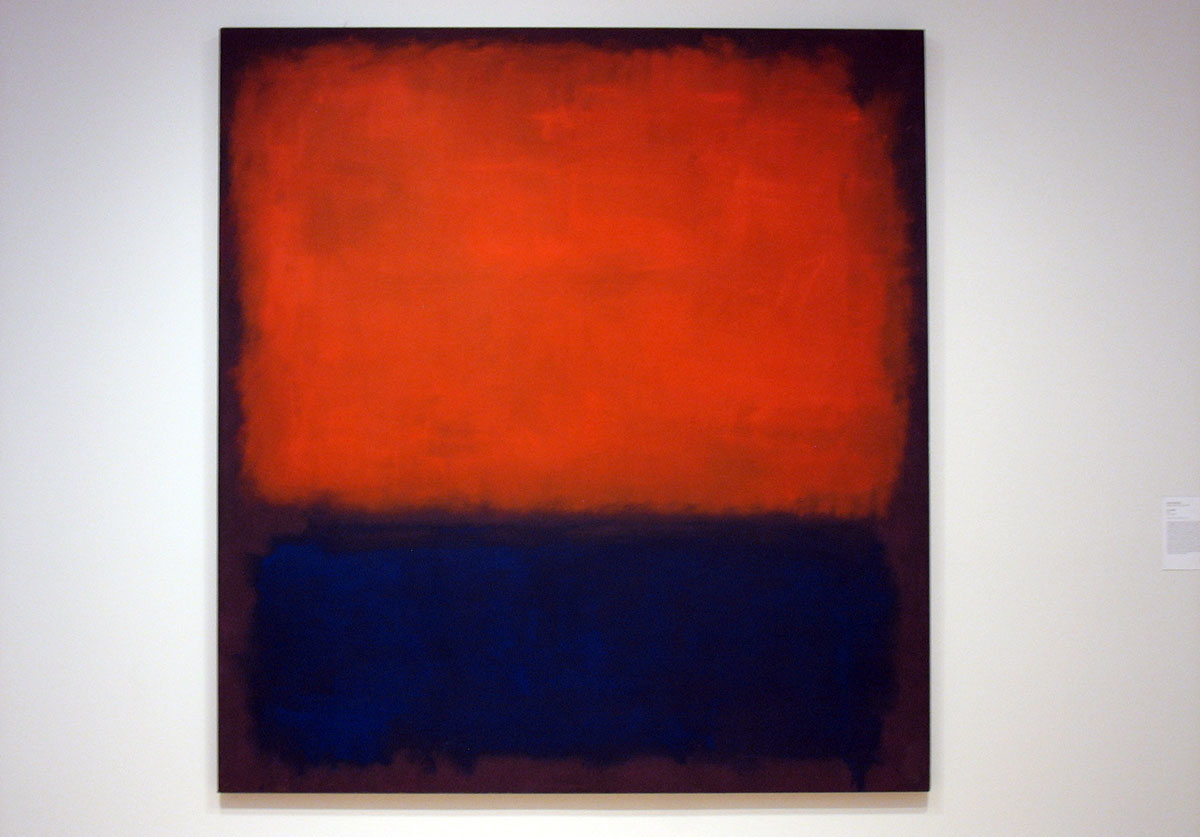
In 1948, Barnett Newman argued that European art failed to reach the sublime due to its “blind desire to exist inside the reality of sensation.” This resonates with Rothko, whose color fields pursue an unnameable sense of the sublime, beyond figurative or conceptual content.
Rothko subtly modulated tones across works—bright greens and reds, contrasting darks, later nuanced dark hues—creating an “oceanic vision” bounded only by the frame, which marks both the threshold between everyday reality and spiritual space, and between the sensibilities of artist and viewer.
Art historian Claude Cernuschi observed that the relationships in a Rothko painting exist as much in the spectator’s mind as on the canvas, echoing techniques seen in Impressionism. For Rothko, the canvas itself and its paint are objects to be transcended, evoking human emotion directly through color and light: “it’s not color, it’s light.”
From Painting as Act to Painting as Presence
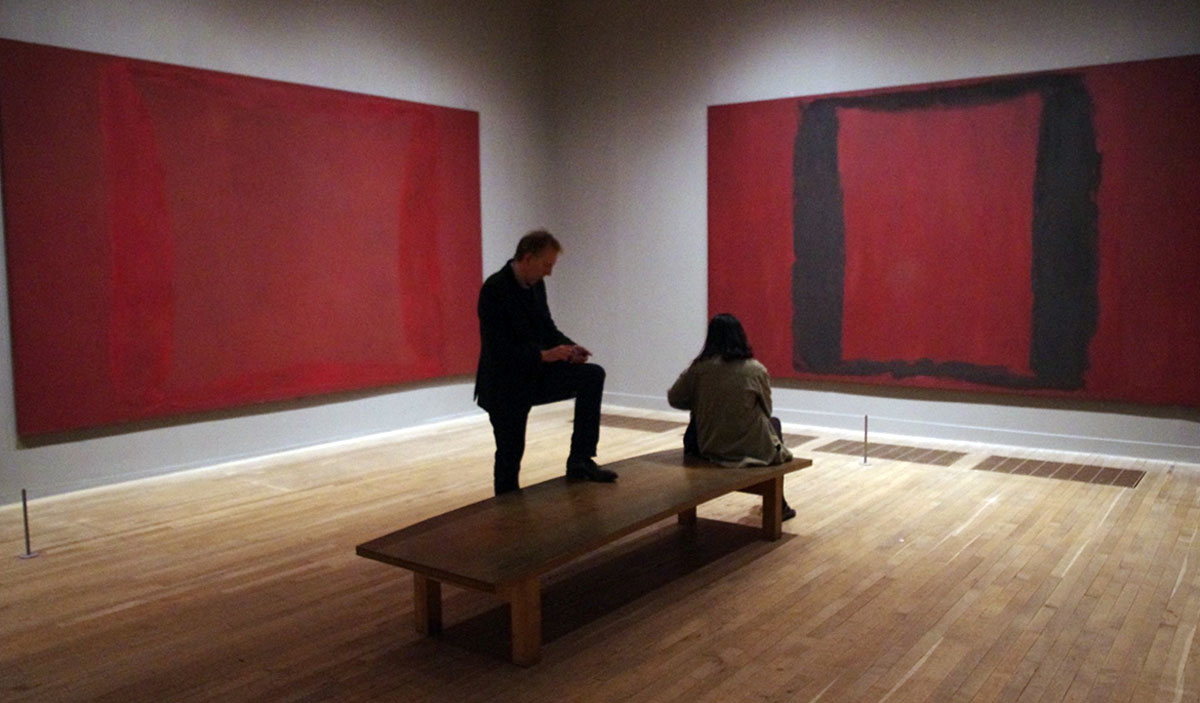
Harold Rosenberg described action painting as “the act itself is the object,” a notion that applies to Pollock but not to Rothko. For Rothko, painting is the start of a process, not its end. His late works are “pure presences,” inviting viewers into both the painting and their own encounter with the transcendent, often within the tragic awareness of mortality.
While Rothko shares with Sartre a concern for authenticity, he diverges conceptually. Sartre’s nothingness negates being; Rothko negates appearances to evoke spiritual reality. Figure-ground distinctions are irrelevant—each painting becomes both “ground” and quasi-subjective “figure,” facilitating communion with the intangible.
Critics Leo Bersani and Ulysse Dutoit note that from the 1950s onward, Rothko “subverted the readability of forms,” culminating in the Rothko Chapel. Visibility is superseded by the visionary: organic, volitional shapes move and grow as the viewer engages, transforming the act of looking into holistic participation rather than isolated perception.
Rothko and Spiritual Reality
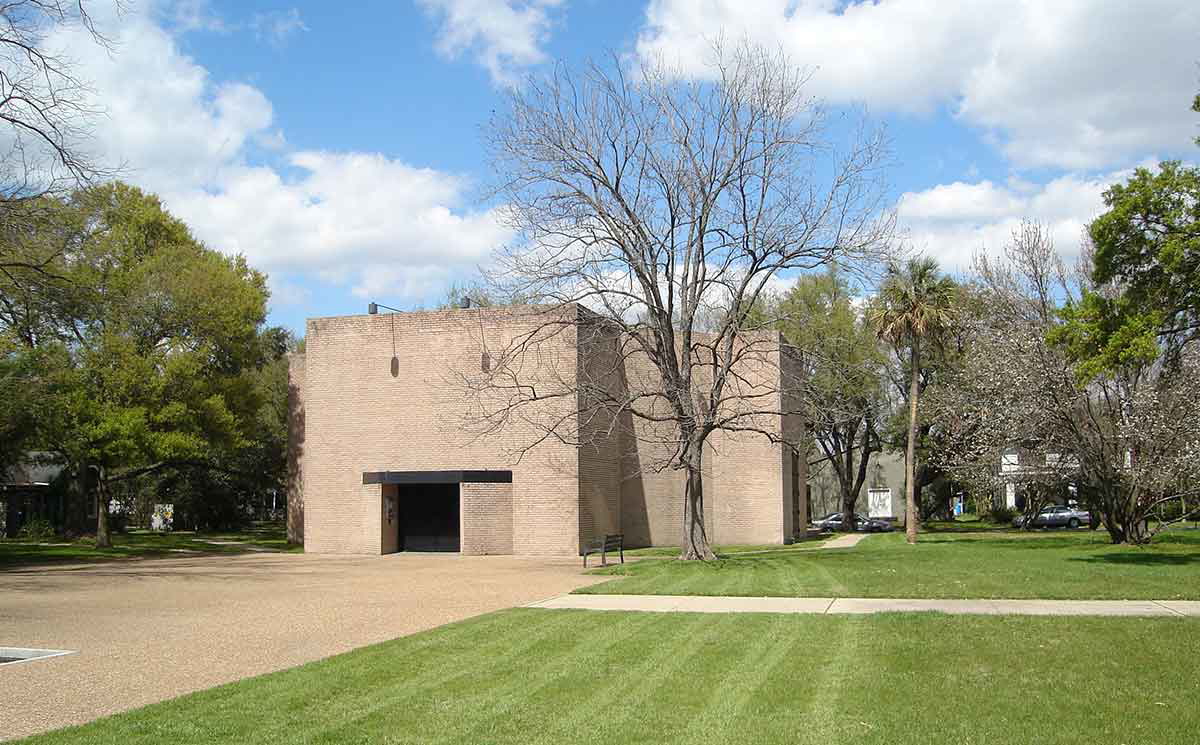
Jeffrey Weiss links Rothko to Sartre’s notion of “double nihilation”: the absent figure experienced as presence, where plenitude serves as ground. Yet this framing misrepresents Rothko. He does not negate being, only the appearances of the physical world, producing communion with something spiritually real and intangible. In this respect, he aligns more closely with Platonism than with existentialism, privileging spiritual reality over nothingness.
Bersani and Dutoit describe Rothko as “retrogressive,” returning to the moment of looking, yet in his paintings, presence is palpable. Composed of “organic” and “volitional” shapes, these works grow and move as they are viewed. Rather than depicting objects, Rothko’s canvases engender holistic experiences of the organic presences they embody, guiding the viewer toward the visionary and sublime.
Bibliography
Charles Harrison and Paul Wood (eds), Art in Theory 1900-2000.