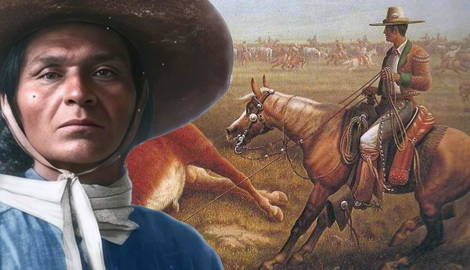

Mentions of the American West bring to mind a solitary figure riding alone across wide-open plains. That figure is most often depicted as a white male. Such imagery is part of a well-crafted legend that marginalizes cowboys from other demographics who were critical to the cattle business from the start, including early Spanish and Mexican vaqueros. Before Wild West shows and Hollywood cemented a false narrative, Native Americans with advanced horsemanship skills were instrumental as cowboys and helped develop the cattle trade.
How Spanish Horses and Cattle Transformed the Americas
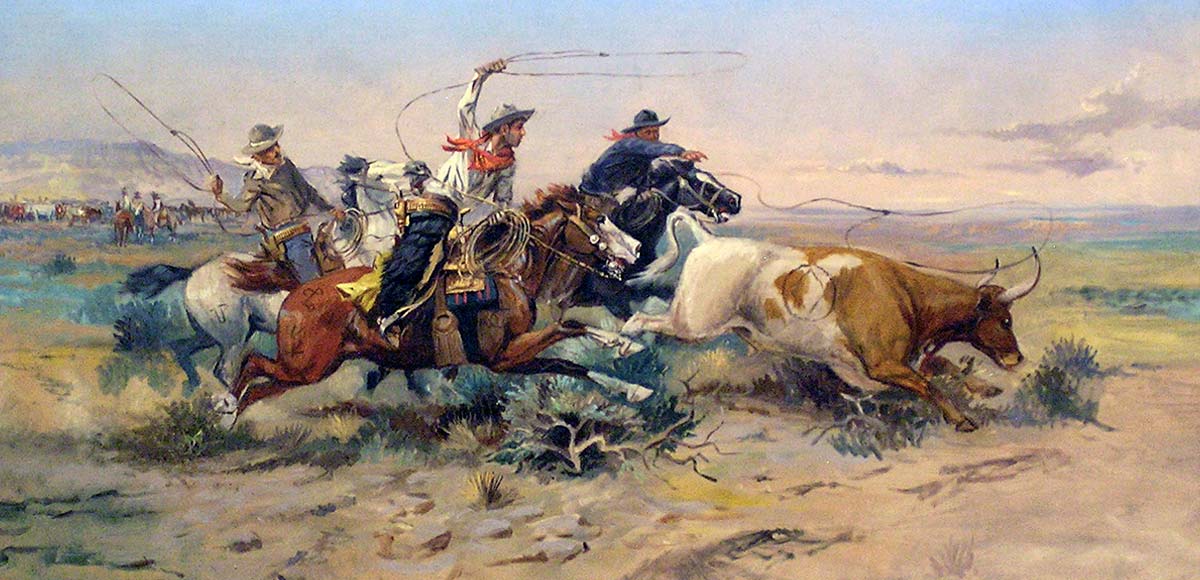
When Spanish explorers and colonists first arrived in the Americas in the late 15th century, they introduced horses and cattle. Neither had existed in the Western Hemisphere for about 10,000 years. Christopher Columbus brought the first of these animals to the Caribbean on his second voyage in 1493. Horses gave the new arrivals a military advantage, but as their numbers grew, Spanish ranchers and missionaries needed laborers to care for the animals.
Early on, the work was done by enslaved people from Africa and by forced Native labor from the encomienda system, which required communities to provide workers. By 1550, Black people, Mulattoes, and Indigenous people made up most of the early workforce. Eventually, skilled Indigenous Mesoamerican men, along with mixed-race men who had European and Indigenous roots, made up a large part of the horse-riding labor force. Known as vaqueros, a Spanish word for cattle herders, they learned how to ride horses, rope, and handle cattle from their Spanish teachers. Soon, they began to make ranching tools like the braided rawhide rope called a reata by Spanish speakers, which was renamed the lariat by English speakers. The rope was used to lasso cattle.
The Indigenous Herders Who Kept Early California Missions Running
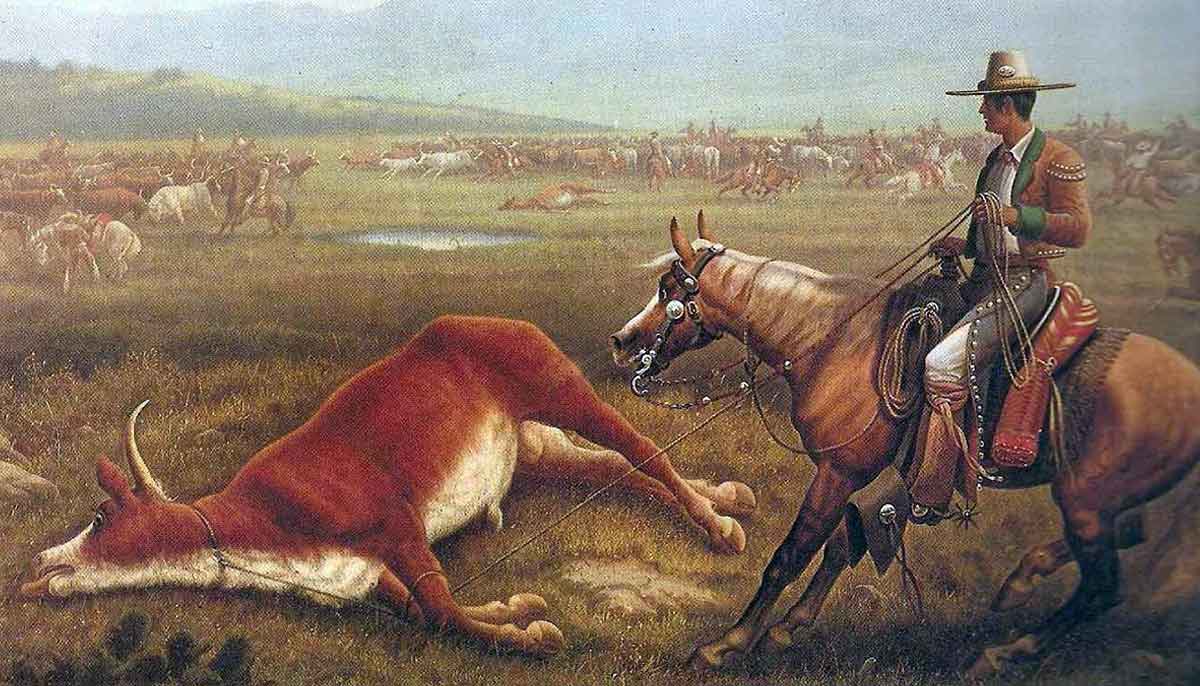
The habit of hiring natives continued as Spanish settlements expanded northward. By the 1780s, Native Americans were the main labor force controlling livestock herds at California mission complexes. Notably, in 1787, Spanish Governor Pedro Fages decreed that Native Americans should not be allowed to ride horses because they were likely to use them against the colonial powers. Mission authorities led by Father Fermín de Lasuén opposed that decree, arguing that no other workers were available. After that attempted intervention, Native American men continued rounding up cattle on horseback and driving them to pasture across mission grounds that stretched from San Diego to Monterey.
How Tribal Horse Mastery Shaped Western Ranching
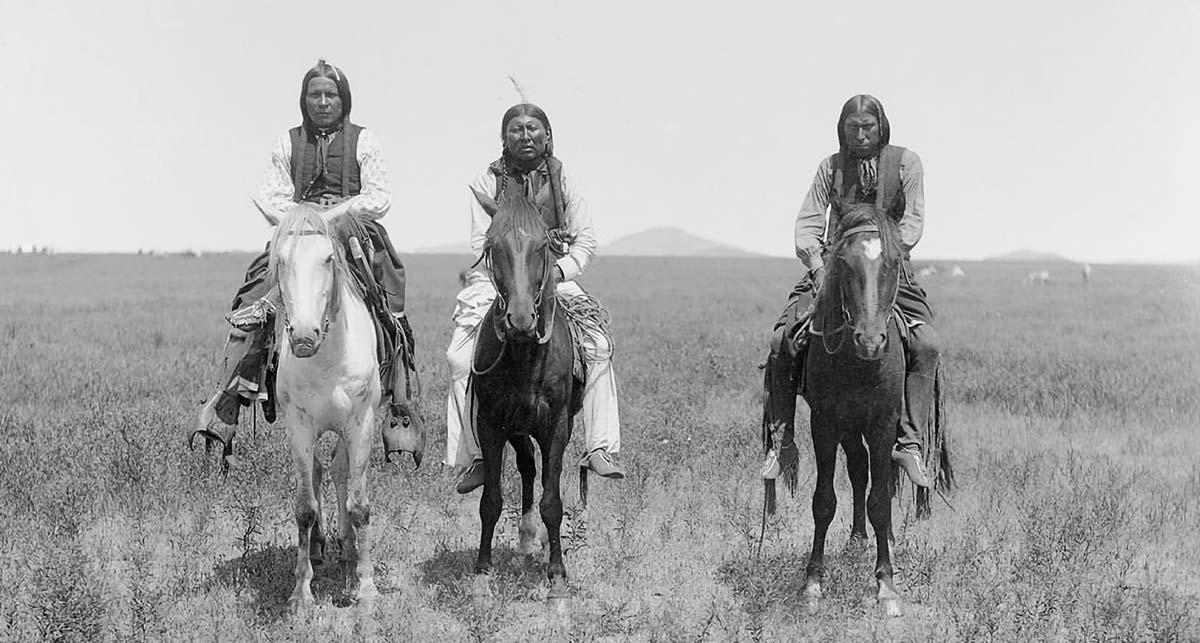
Other Indigenous peoples beyond California also readily embraced the horse-riding and livestock roping skills. The Comanche, Crow, Nez Perce, and Apache are just a few tribes that became known for their horse-riding culture. The Comanche were especially skilled and were considered to be the finest horsemen who ever rode. For the Crow, mastering the riding and training of horses was a source of pride, and many also became accomplished horse whisperers. Naturally, this knowledge served them well in later ranch work, and they became cowboys on ranches across the Great Plains and the Plateau region as well as in Arizona and throughout the Southwest when the industry expanded to those regions.
The Native Champions Who Made History in Early Rodeo
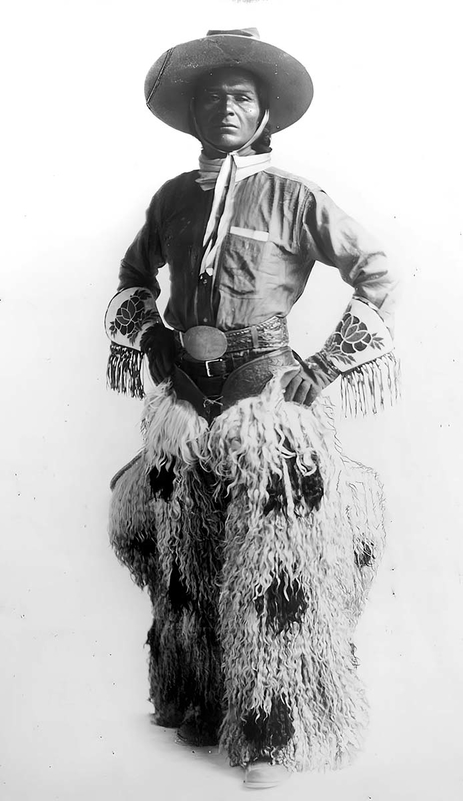
Open range ranching generally stopped as the US government closed off the frontiers in 1890. The continued expansion of railroads also eliminated the need for long cattle drives, as cattle could now be shipped directly to northern and eastern markets. As job opportunities diminished, cowboys turned to competitive rodeo events such as bronc riding, roping, and cattle work that attracted huge crowds and provided large sums of money to skilled contestants.
Jackson Sundown, born in 1863 to a Nez Perce mother, became a standout in the sport. He spent his life raising and training horses and riding competitively across the West, and at age 53, he took home the world championship saddle bronc title at the 1916 Pendleton Round-Up in Oregon. In 1912, Tom Three Persons of the Blackfoot Confederacy’s Blood Tribe became the first champion of the saddle bronc competition at the inaugural Calgary Stampede in Canada. Will Rogers, a famous cowboy who was raised in the Cherokee Nation, also used his unique expertise to entertain global audiences through his celebrated acting and writing career.
Today, there are many Native cowboys and cowgirls making names for themselves in the rodeo and ranching worlds. Some are working with their tribal herds, and others are competing professionally.