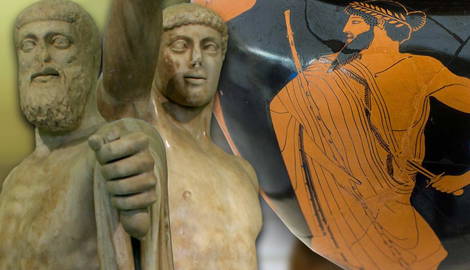

A sculptural group, depicting two men, was erected in the Athenian Agora in 510 BC. Although its precise location remains uncertain, since it was not found in situ, its preserved base, together with numerous written sources, offers valuable insights into a significant event in Athens and its meaning. The inscription records a political act, stating: “Indeed, a great light came to the Athenians when Aristogeiton and Harmodios killed Hipparchos.”
Why Were Only Gods Sculpted Until Aristogeiton and Harmodios?
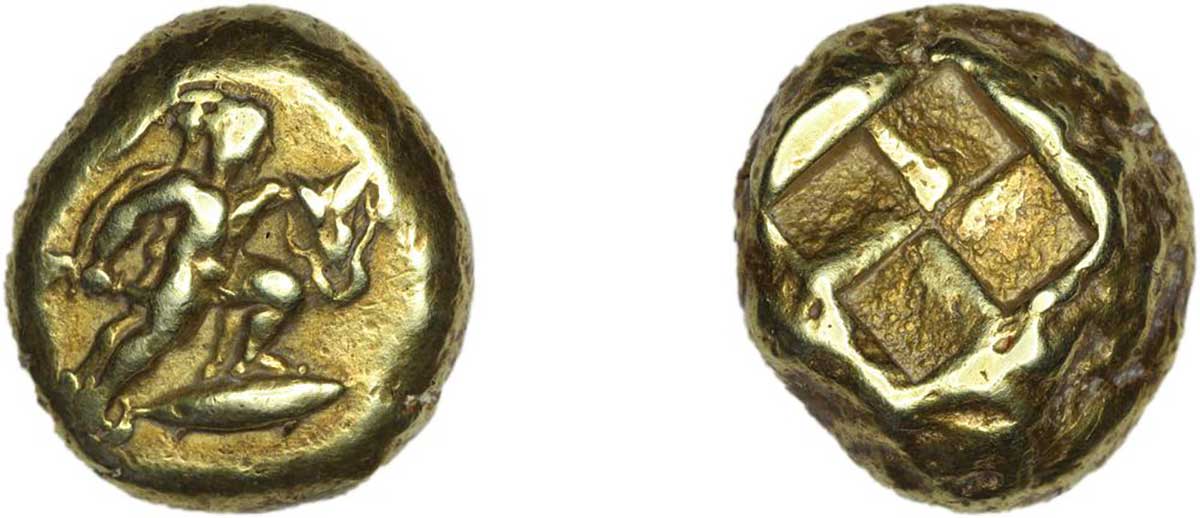
First, it is essential to examine the root of the Greek word agalma (statue) and explain its meaning in order to understand the shift toward the first mortal statues.
The word agalma derives from the verb agállein, which means to exult by glorifying or paying honor. They were the cult images solely of gods, and they were placed on altars to bring to mind the divinity. They carry symbolism by embodying beauty and respect, acting as votive offerings to the Gods. They were devoted to asking the Gods for favor or expressing gratitude for goods and answered prayers. It was a spiritual gesture that evoked delight in the viewer’s soul, while their installation directly imbued a place with sacredness.
There was only one way for mortals to be honored like gods, and that happened when they transcended their humanity and became divine figures—namely, heroes. In this way, the first mortal statues were not simply representations of humans; they captured the extraordinary actions and virtues that elevated individuals to a status worthy of admiration and veneration, bridging the gap between the human and the divine.
Why Harmodios and Aristogeiton Were Worshiped Like Gods
During the Archaic Period, a family of tyrants known as the Peisistratids ruled the city of Athens, shaping the everyday life of its people. Peisistratos was the initial ruler, and after his death in 527 BC, his two sons, Hippias and Hipparchos, assumed control of the tyranny. There were several attempts to exile the tyrants, especially Peisistratos, but he remained in power until his death. However, a crucial event affecting the stability of the tyranny happened during his sons’ rule: the assassination of Hipparchos by Harmodios and Aristogeiton.
The two Athenian aristocrats were referred to as lovers, and they are depicted as killing him together in 514 BC. The assassination took place publicly during the Panathenaic procession and significantly weakened Hippias’s authority, boosting the people’s willingness for change. The people seemed to secretly support it, awaiting this murder as a gift. This risky act eventually contributed to the end of Peisistratid rule a few years later, with Spartan assistance, in 510 BC.
They probably intended to kill both siblings; however, they only managed to kill Hipparchos, and they did not survive for long after their act. Harmodios was killed immediately after the assassination, while Aristogeiton was captured and executed later. Texts, such as the writing of Thucydides, mention that the murder happened for personal reasons. Hipparchos potentially had attempted to court Harmodios, but Harmodios rejected him in favor of Aristogeiton, a choice the tyrant could not tolerate without abusing his authority, leading to a public affront against Harmodios’s sister on the same day.
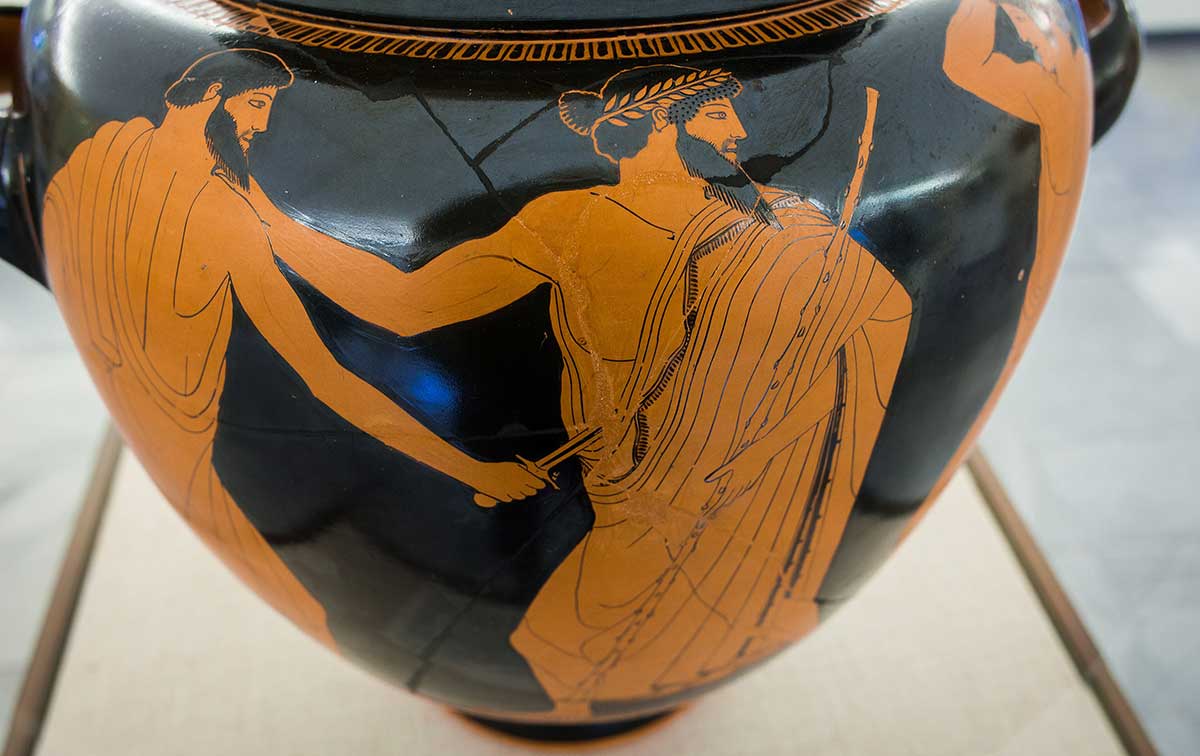
The two men were later venerated as heroes because their actions revealed the oppression of the regime, and their courage was interpreted as a willingness to save their city from this burden that they themselves could not bear. The statues were ordered by the citizens with public resources, and it is clear from Aristophanes that they were placed in the Agora of Athens.
Although the exact location is in question, Pausanias mentions this pair of statues in proximity to the Temple of Ares before moving on to his description of the Odeion of Agrippa. Their installation in the city points to the symbolism of these statues and the reason that these people were sculpted like the gods. Indeed, they evoked delight in the viewers’ souls and were honored as mortals who contributed to the subsequent good of their city: democracy.
Common Misconceptions About the First Human Statues
It would be natural to assume a link between the first sculpture and well-known heroes already familiar from the Archaic Period before 510 BC, such as Heracles, Achilles, or Theseus. These figures were closely intertwined with the mythical and religious past of the Athenians, presented through mythology as heroes and progenitors of the city. However, these heroes are not proven to have existed as historical individuals. The legends and narratives surrounding them reveal fundamental beliefs of this society and reflect the conceptual and ideal creation of the polis, the city. It was about the community’s enduring need for heroic models that surpassed their mortality, providing the virtues and goods attributed to the gods.
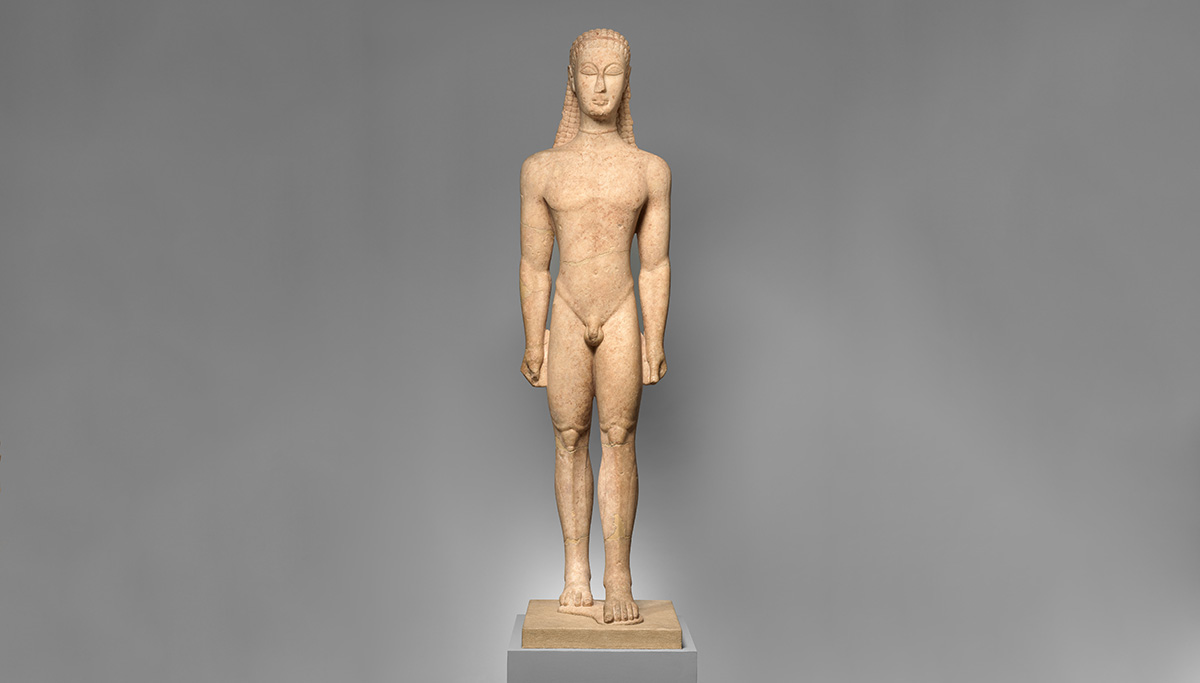
A second question concerning the earliest mortal statues involves the kouroi and korai. These are indeed an earlier category of human statues than Harmodius and Aristogeiton. They could be offered as dedications to gods. One great instance is the famous group of korai found on the Acropolis hill, dedicated to the goddess Athena. They could also serve as grave markers for young people. However, these statues of youthful humans were highly standardized and did not depict specific, historical individuals. Thus, Harmodius and Aristogeiton remain the oldest example of humans in Greek sculpture.
Were the Statues Originally Marble, and How Are They Dated?
The statues that we see today are not the originals of the group that was once erected in the Agora of Athens. The first set was crafted by the sculptor Antenor in copper, which is the first hint that dates the statues to the early Classical Period. The marble cast we can see cannot be identified as the prototype due to its posture, which better fits lighter, hollow bronze than stone. This is why an extra piece was added to the marble cast, imitating the trunk of a tree, because the stone could not be shaped moving in such a way without extra support for balance.
The use of copper gave freedom to the artists to form complex yet more natural positions that couldn’t be crafted in marble. However, copper, as a metal, is a valuable, convertible material, leading to many classical statues having disappeared throughout history.
This first creation of Antenor was installed after the expulsion of Hippias around 511 and 510 BC, but it was taken away by Xerxes after the Persian sack in 480 BC. Later, a new monument, crafted by Kritios and Nesiotes, may have been located in the same place. The first statues of Antenor were returned to Athens by Alexander after he conquered Persia. Unfortunately, due to the use of copper, neither group is preserved today, and we cannot be sure which one the preserved base is based on.
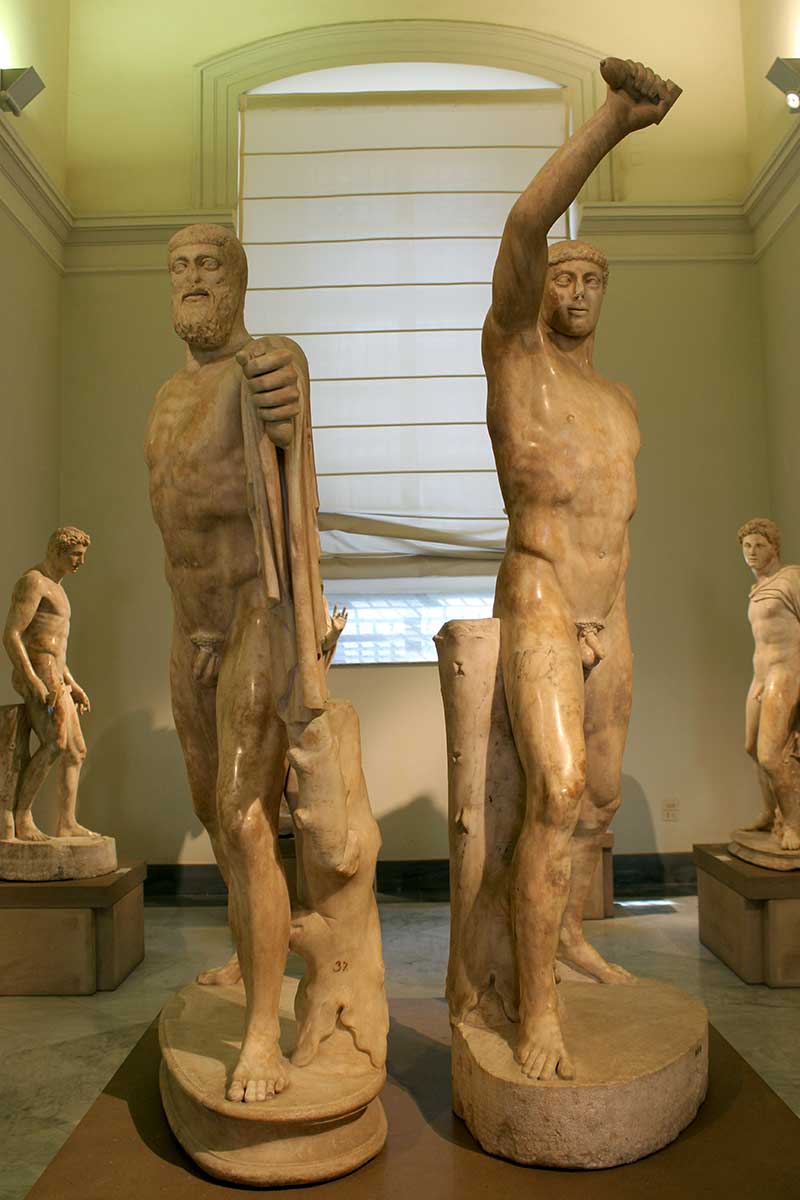
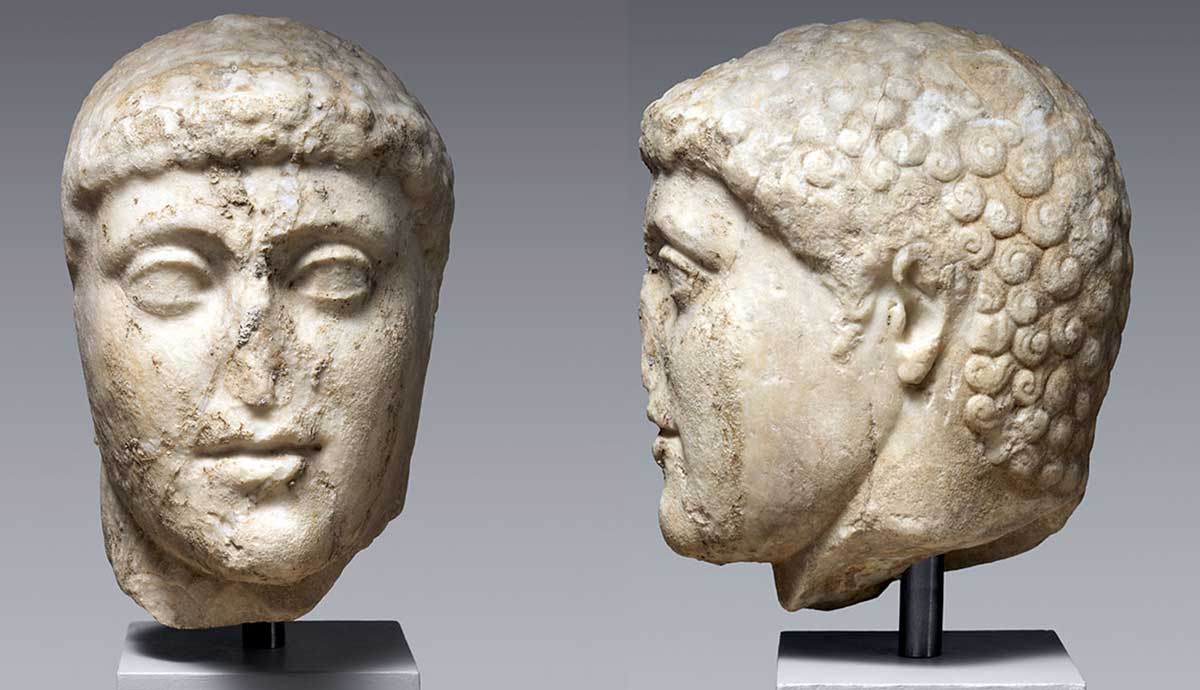
Even though the bronze originals have not survived, the Roman marble casts still show the figures in detail and reveal their early date. Today, they are in the National Archaeological Museum of Naples. The copies do not quite fit either the archaic or classical period because their heads are different from the rest of their bodies in style. Harmodios’s hair seems overly stylized, consisting of rows of snail shell-like curls, while his face is impassive. He also has almond-shaped eyes and a subtle smile, which is called the archaic smile. These characteristics are archaic in style and apply to Aristogeiton’s head as well, which has a rough and almost crudely carved beard.
On the other hand, their bodies are not as static as archaic statues but are dynamic and full of movement, reminiscent of the later contrapposto pose, capturing their lunge to kill Hipparchos and leading us to the Classical Period. These statues are not solely significant for being the first depiction of Athenian citizens, but also because they captured the transition in sculpture that occurred at this time from archaic to classical art.
Harmodios and Aristogeiton were the slayers of the tyrants, leading Athens one step closer to democracy; they were also the first humans in a public place to be worshiped as sacred. Finally, the statues provide evidence of an emerging new classical style, making them some of the most noteworthy statues of antiquity.