Held annually on the first Monday in May, the Met Gala is the primary fundraiser for the Costume Institute, housed within the Metropolitan Museum of Art. The accompanying exhibition, titled Costume Art, juxtaposes clothing and art objects from across the museum’s collection, highlighting the body. The 2026 Met Gala dress code was “Fashion is Art,” asking attendees and designers: What’s the last piece of art that inspired you?
| Celebrity | Inspiration (Artwork & Artist) | Designer |
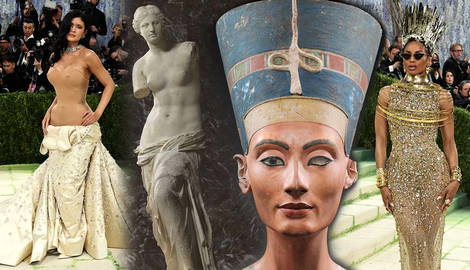
| Ciara | Bust of Nefertiti (c. 1345 BC) | Celia Kritharioti |
| Kylie Jenner | Venus de Milo (c. 150–125 BC) | Schiaparelli |
| Madonna | The Temptation of St. Anthony by Leonora Carrington (1945) | Anthony Vaccarello (Saint Laurent) |
| Angela Bassett | Girl in Pink Dress by Laura Wheeler Waring (1927) | Prabal Gurung |
| Ben Platt | A Sunday on La Grande Jatte by Georges Seurat (1884) | Tanner Fletcher |
| Emma Chamberlain | Van Gogh’s The Starry Night and Munch’s The Scream | Castro Freitas (Painted by Anna Deller-Yee) |
| Lena Dunham | Judith Beheading Holofernes by Artemisia Gentileschi (1620) | Valentino |
1. Ciara: Inspired by the Bust of Nefertiti
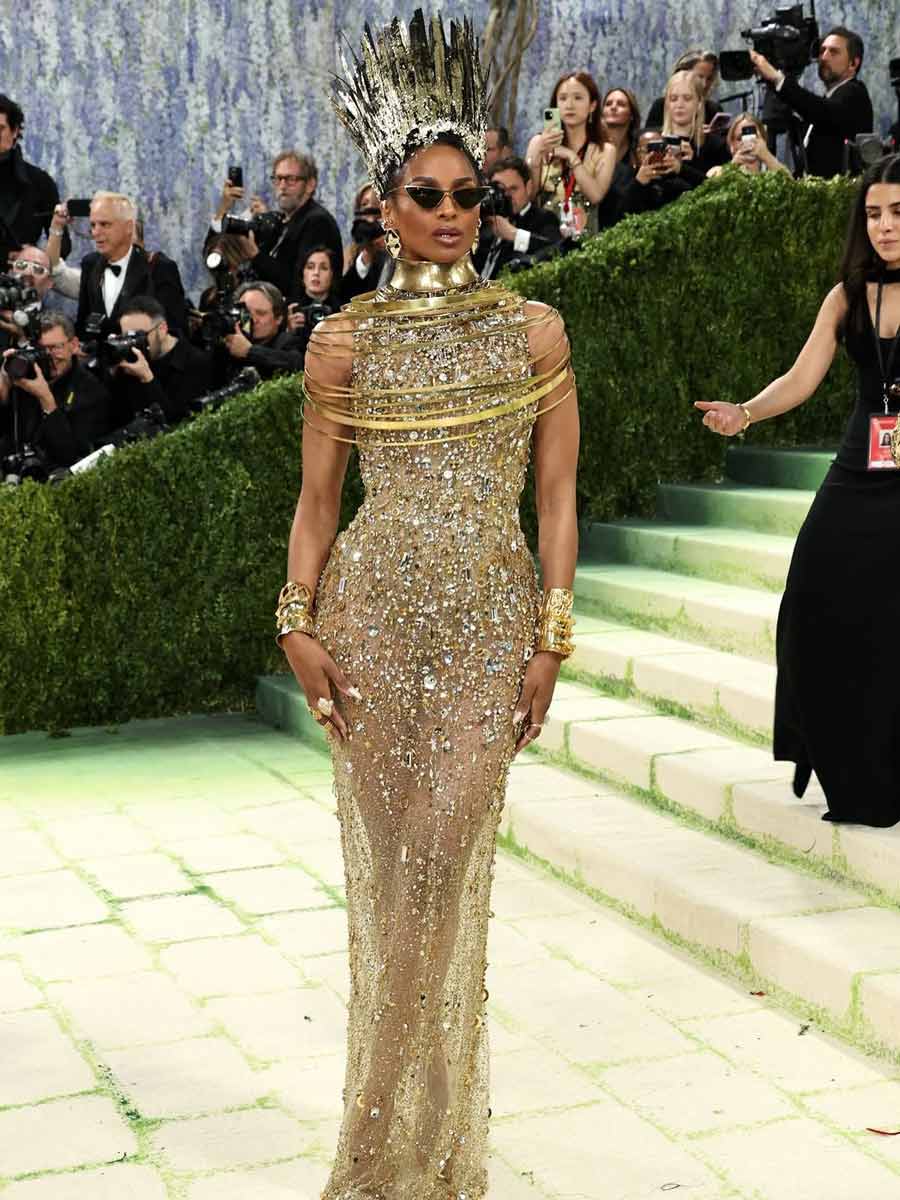
Singer Ciara reached back over 3,000 years for her inspiration. The ancient Egyptian bust of Queen Nefertiti has achieved iconic status, frequently referenced in pop culture from the styling in 1935’s Bride of Frankenstein to Beyoncé’s 2018 Coachella performance. Discovered in 1912 in Amarna, it’s believed to have been created by a sculptor named Thutmose around 1345 BC. Her image has long been considered a representation of feminine beauty and power.
Nefertiti earned that designation not only in death, but also during her life. She was the royal wife of King Akhenaten during the powerful and wealthy 18th Dynasty of Egypt’s pharaonic period. She was instrumental in the major political and religious upheaval under Akhenaten’s rule. They radically altered the state religion to a monotheistic practice centered on the solar god Aten. They also built an entirely new capital city at Amarna that was quickly abandoned after Akhenaten’s reign. Nefertiti was highly visible in the art of the time. She was even shown in scenes that would have normally been the prerogative of the king, including smiting enemies, and was the first Egyptian woman depicted driving a chariot.
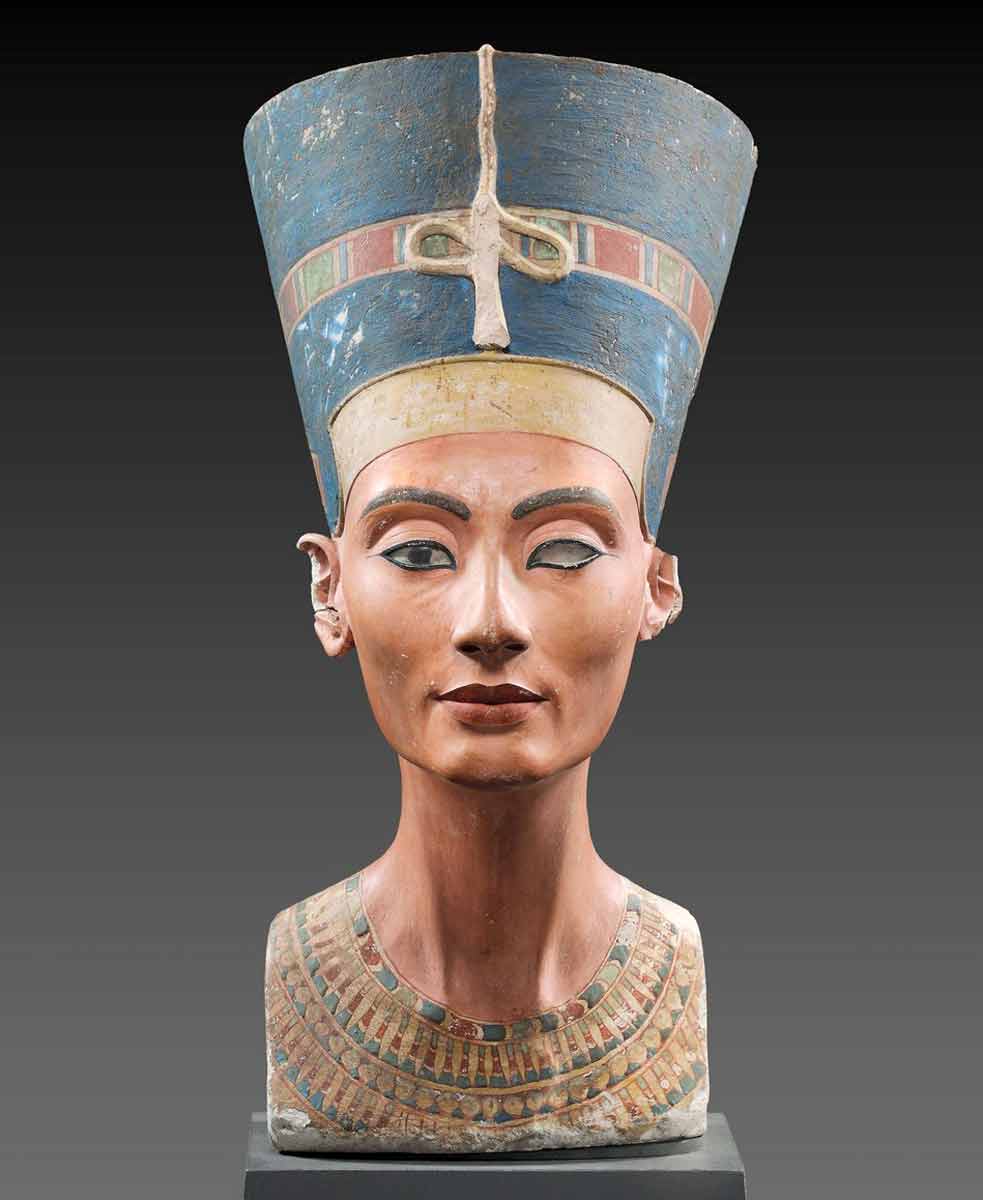
While there are many images of Nefertiti, the bust has endured as a favorite for its impressive detailing, elegance, and good preservation. Like the bust, Ciara’s look by Celia Kritharioti focused on the styling from the chest up. The bust is an artwork so famous that it can easily be identified by its silhouette. Instead of using color, the whole look is gold, perhaps referencing the prestige of the bust.
Nefertiti’s prominent collar necklace with a floral pattern was reinterpreted with thin bands of gold encircling the singer’s shoulders and a thick choker necklace. Instead of the blue crown with colorful ribbons and gold diadem, Ciara opted to model her hair in the shape of the crown with pointed ends, painted in glittering gold. The look was completed with gold earrings and chic shades. In this look, Ciara and designer Celia Kritharioti reimagined the bust through a modern lens, serving beauty, power, and an undeniable cool factor.
2. Kylie Jenner: Inspired by “Venus de Milo”
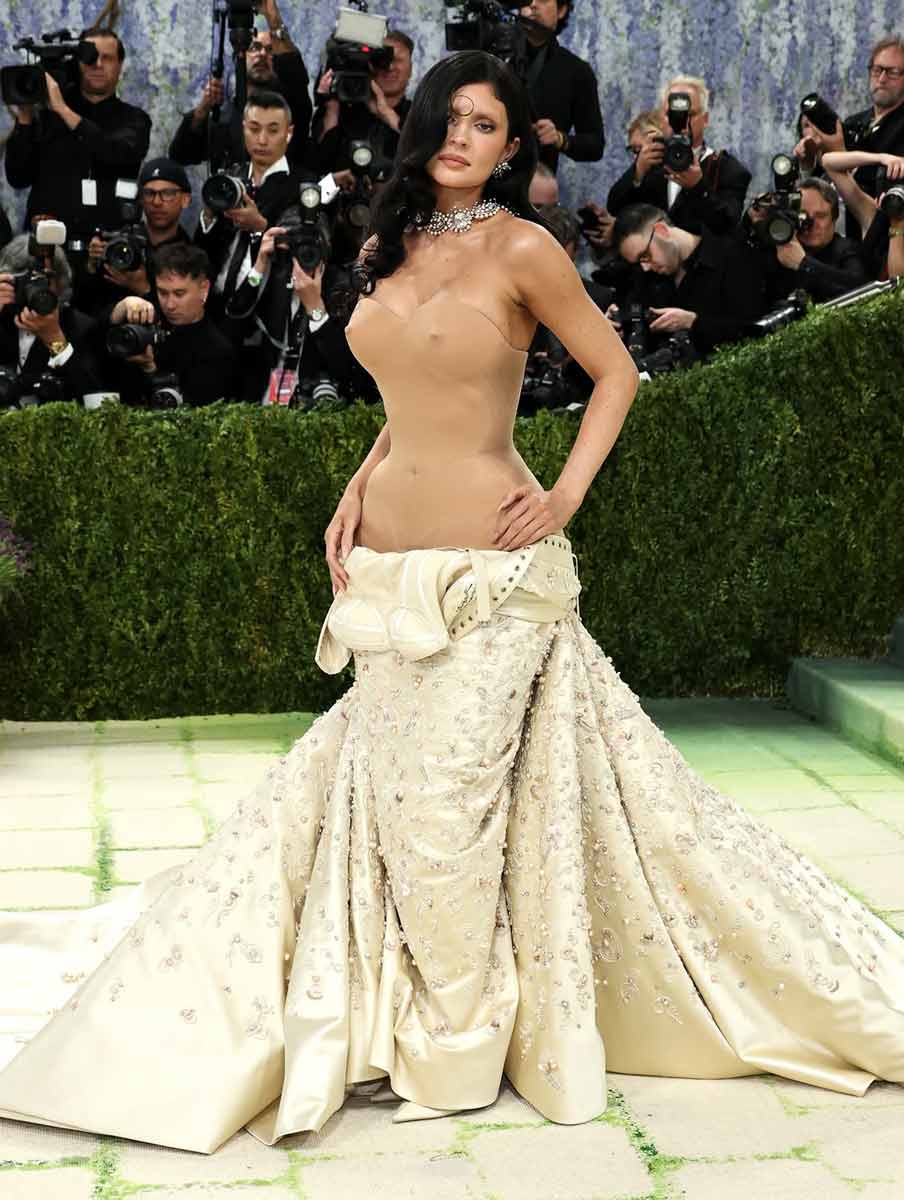
Another celebrated sculpture served as the inspiration for Kylie Jenner’s look. The Venus de Milo is perhaps the most well-known ancient Greek sculpture in the world. Currently in the Louvre, the work was originally discovered on the Greek Island of Milos in 1820. It was immediately acquired by the French ambassador and brought to France. It is dated to about 150-125 BC.
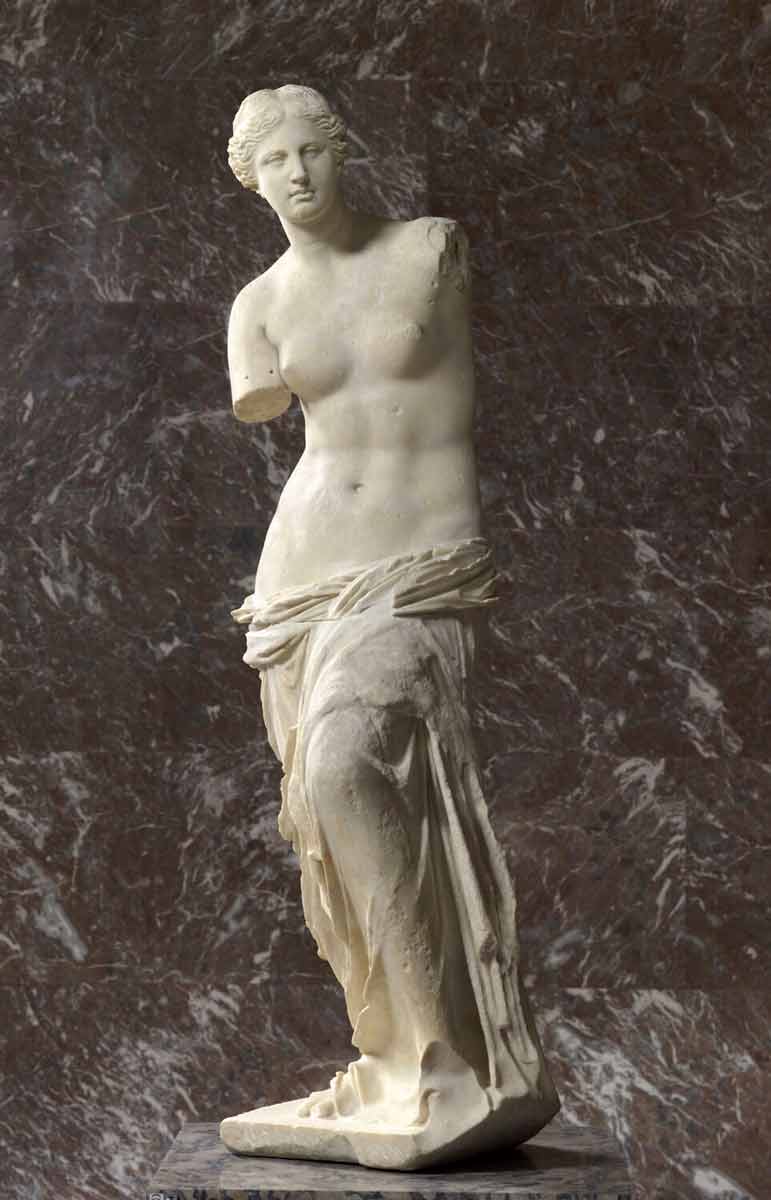
While the name references Venus, the Roman goddess of love and fertility, it is believed the sculpture actually depicts Aphrodite, her Greek counterpart. Her missing arms leave her identity ambiguous, as the object she once held would have identified her. The goddess is depicted in the classic S-curve body shape of Hellenistic sculptures. The nude torso is polished smooth, in contrast to the stiff folds of the drapery that slips around her hips.
Jenner’s look leaned into the sensuality created by the tension of concealment and exposure. The simple, soft, skin colored bodice was contrasted by a full, elaborately beaded skirt. Instead of mimicking the drapery of the Venus de Milo, the Schiaparelli gown modernized the look by using a classic evening gown of silk fabric and included the upper bust folded down as if the dress was peeling off. She was styled with curled hair and large diamond jewelry. Instead of the ancient goddess of love and sensuality, Jenner walked down the carpet as her Hollywood derivative.
3. Madonna: Inspired by “The Temptation of St. Anthony” by Leonora Carrington
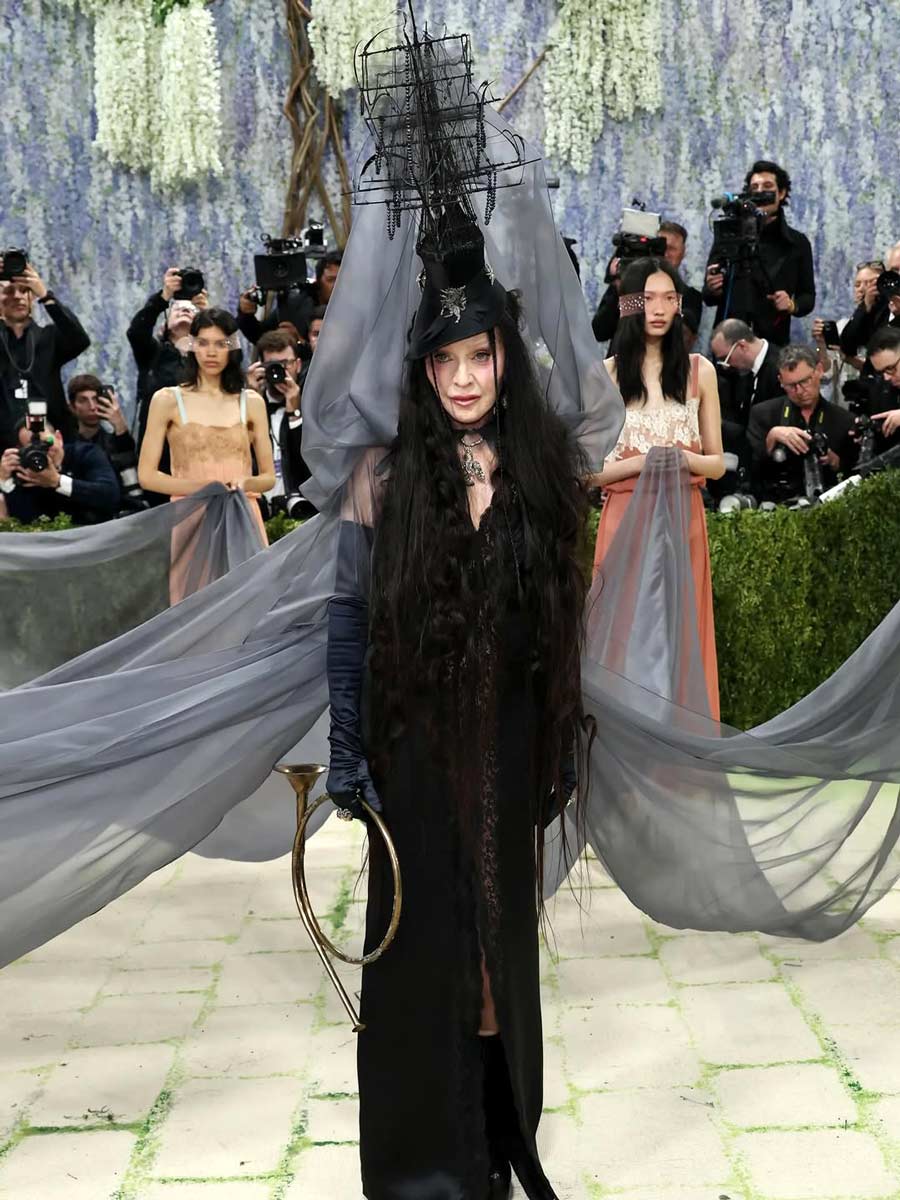
One of the most showstopping moments of the night was Madonna’s massive ensemble by Anthony Vaccarello for Saint Laurent, inspired by Mexican-English artist Leonora Carrington. Painted in 1945, the work is indicative of Carrington’s surrealist approach to both her writing and painting. Born to a wealthy British industrialist, Carrington abandoned her upper-class lifestyle for the avant-garde artists of Paris and New York, living and working with the likes of Max Ernst and Salvador Dalí. Eventually, she settled in Mexico. She was not only a feminist intellectual but also carved out a unique space in the heart of the surrealist movement.
Interestingly, this painting was created for a contest that pitted her against her fellow surrealist painters. The David L. Loew-Albert Lewin production company held a competition for artists to paint “the temptation of St. Anthony” for their 1947 film, The Private Affairs of Bel Ami. Unfortunately, Carrington wasn’t successful, and Max Ernst won.
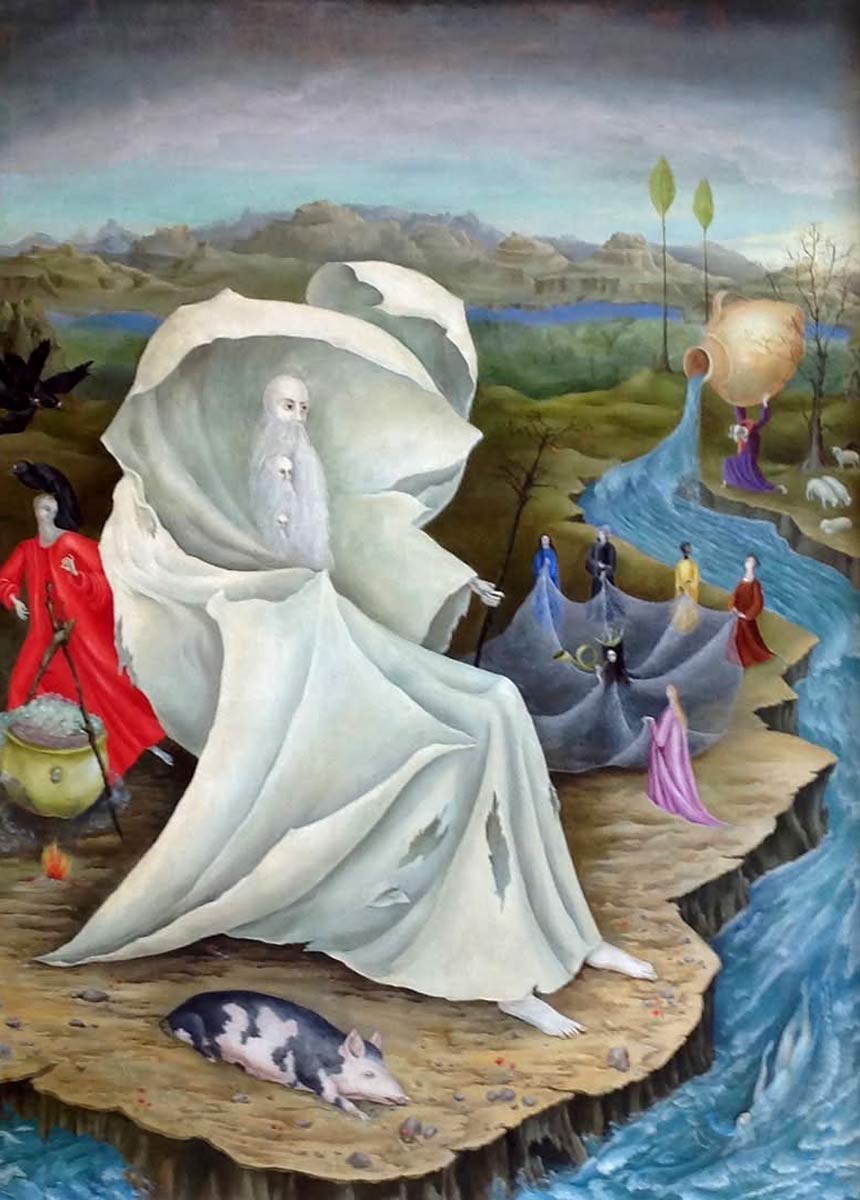
Carrington reimagines the story of the Christian monk’s harrowing journey through the Egyptian desert, where he confronts demons and supernatural temptations. The painting is a highly symbolic work typical of the surrealists. St. Anthony is depicted as an old man with multiple faces beneath a billowing monastic robe. Surrounding him are representations of his temptations: a pig, a figure in red with a cauldron, and a small, eerie figure in black, surrounded by women in long robes of various colors, holding out the garment that envelopes her. This figure seems to reflect Carrington’s interest in witchcraft and female power.
Madonna attempted to recreate this part of the scene faithfully, with attention to the symbolic details. She was dressed all in black with a gray sheer fabric covering her ship headdress and flowing outwards. She carried a metal natural horn. Six women silently surrounded her, stretching out the grey veil around her. They didn’t wear the bright colors of Carrington’s women, opting for pastel slip dresses instead. However, the look accurately captured Carrington’s fascination with the occult and leans into her expression of magical realism, existing in reality but reflecting imagination.
4. Angela Bassett: Inspired by “Girl in Pink Dress” by Laura Wheeler Waring
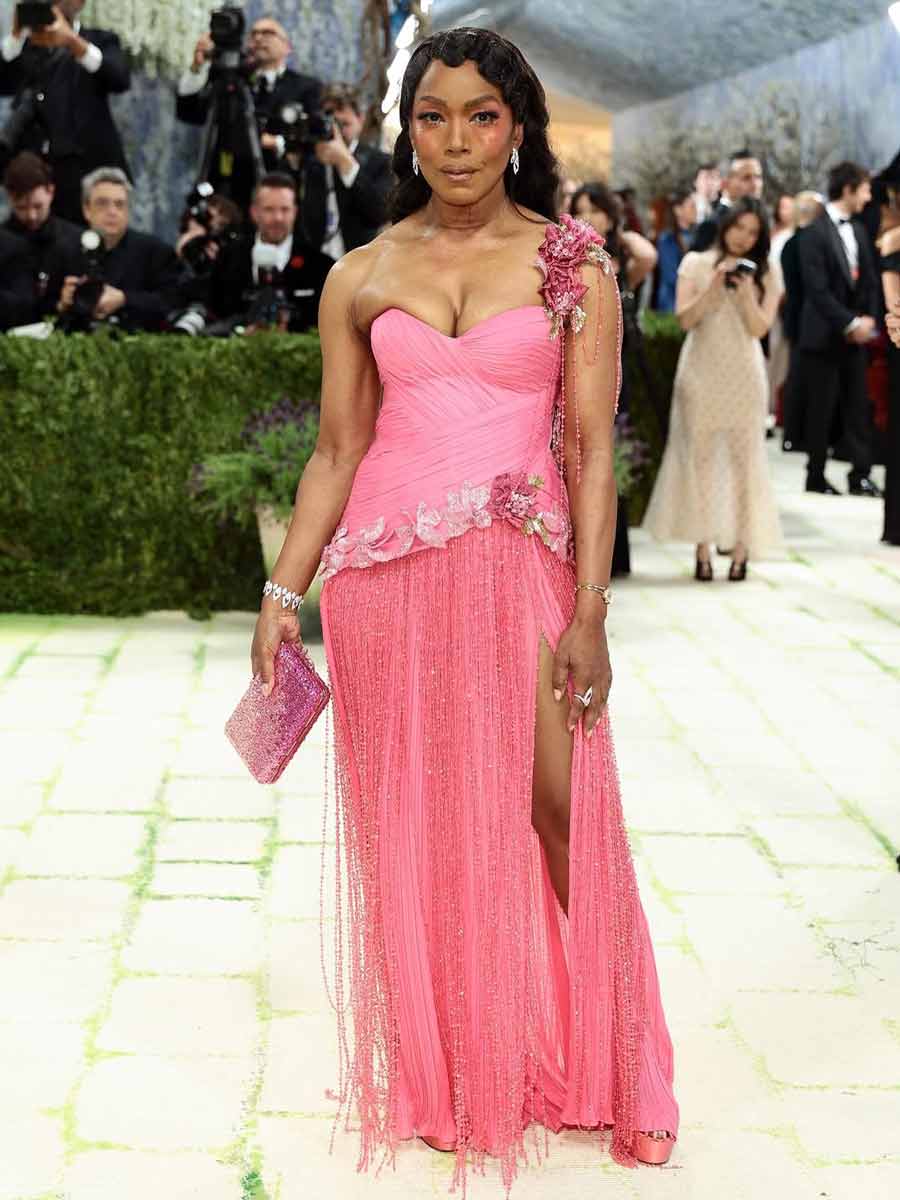
Angela Bassett found inspiration from within the MET Museum itself. Her colorful look was inspired by Laura Wheeler Waring, a black female painter. She was also a lifelong educator and traveled to Paris, where she cultivated her artistic talent and was widely exhibited. Her portraits of black women positioned her as one of the preeminent artists of the Harlem Renaissance. Based in New York City, the Harlem Renaissance was a period of vibrant African American artistic and intellectual achievement that lasted from the late 1910s through the mid-1930s.
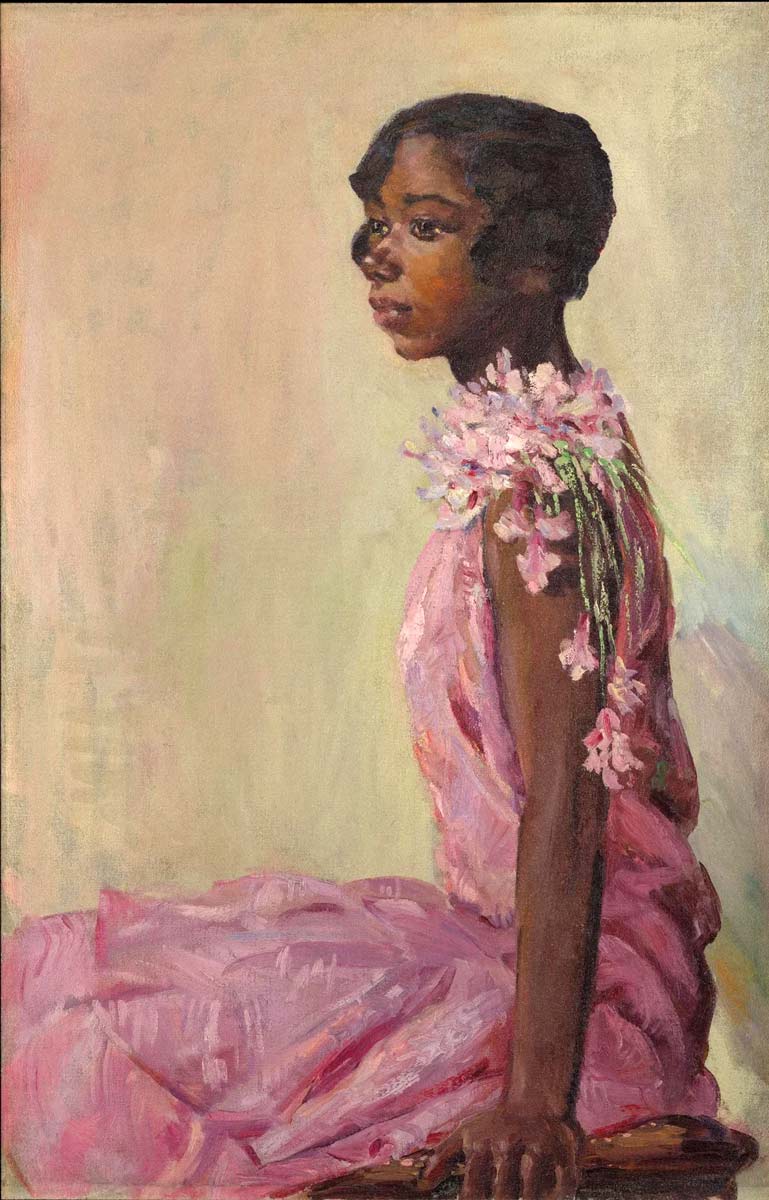
Girl in Pink Dress embodies the movement’s focus on rejecting racist stereotypes and centering black dignity and pride. The subject of the portrait is presented as the ideal vision of Jazz Age femininity. Her hair is styled in a fashionable bob. The pink drop-waist dress is adorned with dramatic pink flowers on her shoulder, which elegantly frame her face. Through carefully rendered, on-trend details, the painting places a black woman firmly at the heart of Jazz Age culture.
This is precisely where Bassett found inspiration, the actual fashion that made this portrait so powerful. Her bold pink Prabal Gurung dress also featured a drop waist with a fringed skirt, another nod to Jazz Age fashion. The pink flowers dangled down her shoulder and adorned the bottom of her bodice. She also added a pink tint around her eyes and styled her hair in finger waves in 1920s style. In conversation with Waring’s pink lady, this look also positioned Bassett as the grown-up version of the girl, still at the heart of culture and fashion.
5. Ben Platt: Inspired by “A Sunday on La Grande Jatte” by Georges Seurat.
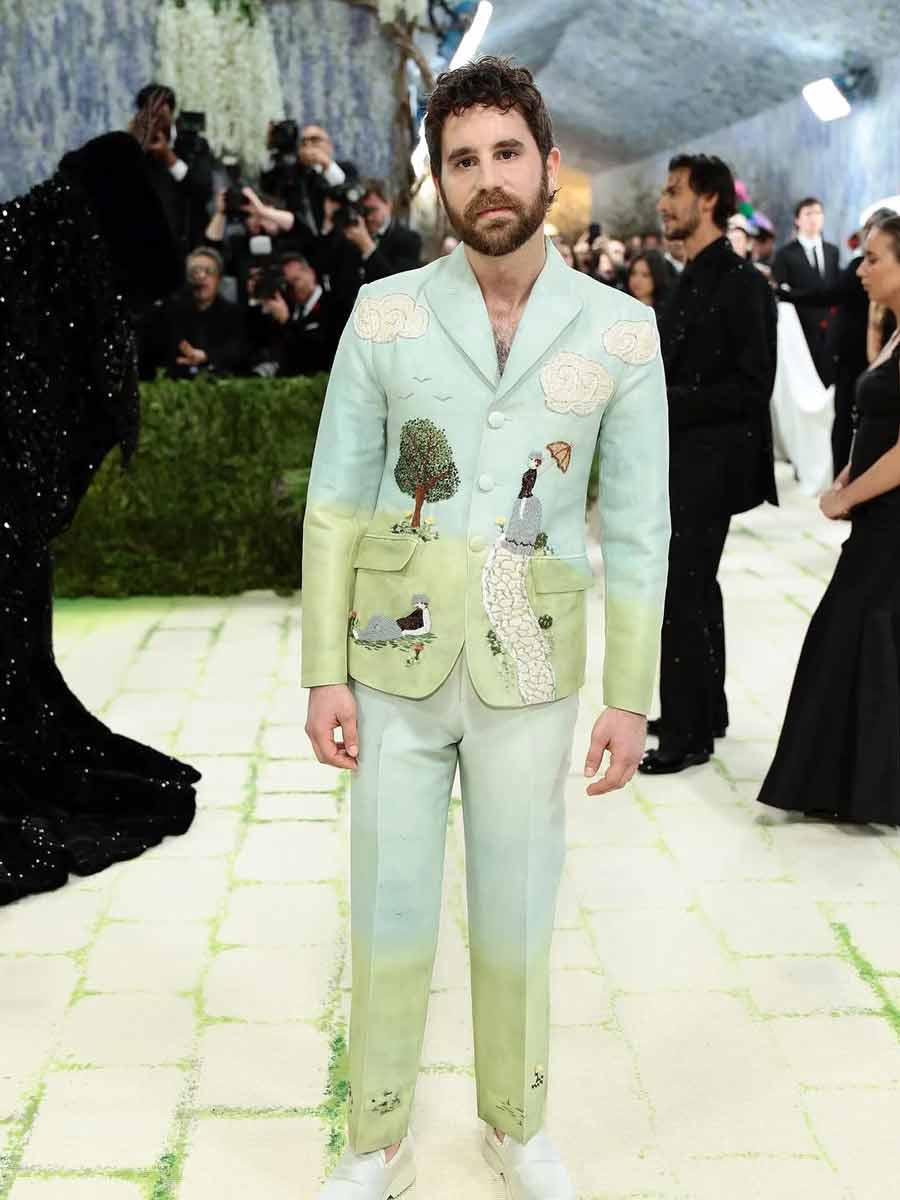
While many men at the MET Gala still opt for a black suit, Ben Platt was a breath of fresh air. Inspired by A Sunday on La Grande Jatte, Tanner Fletcher designed a pastel blue and green suit that evokes the serenity of a Parisian park, with a few subtle details evoking the painting’s significance.
Completed in 1884 by Georges Seurat, this work depicts a cross-section of Parisian society at a park on the banks of the Seine River. The large-scale canvas features babies, elderly men, soldiers, and wealthy women. In the bustling scene, parkgoers are fishing, knitting, playing trumpet, and even taking a pet monkey for a stroll. The composition was carefully thought out, and Seurat did several preparatory studies, one of which is housed at the MET Museum.
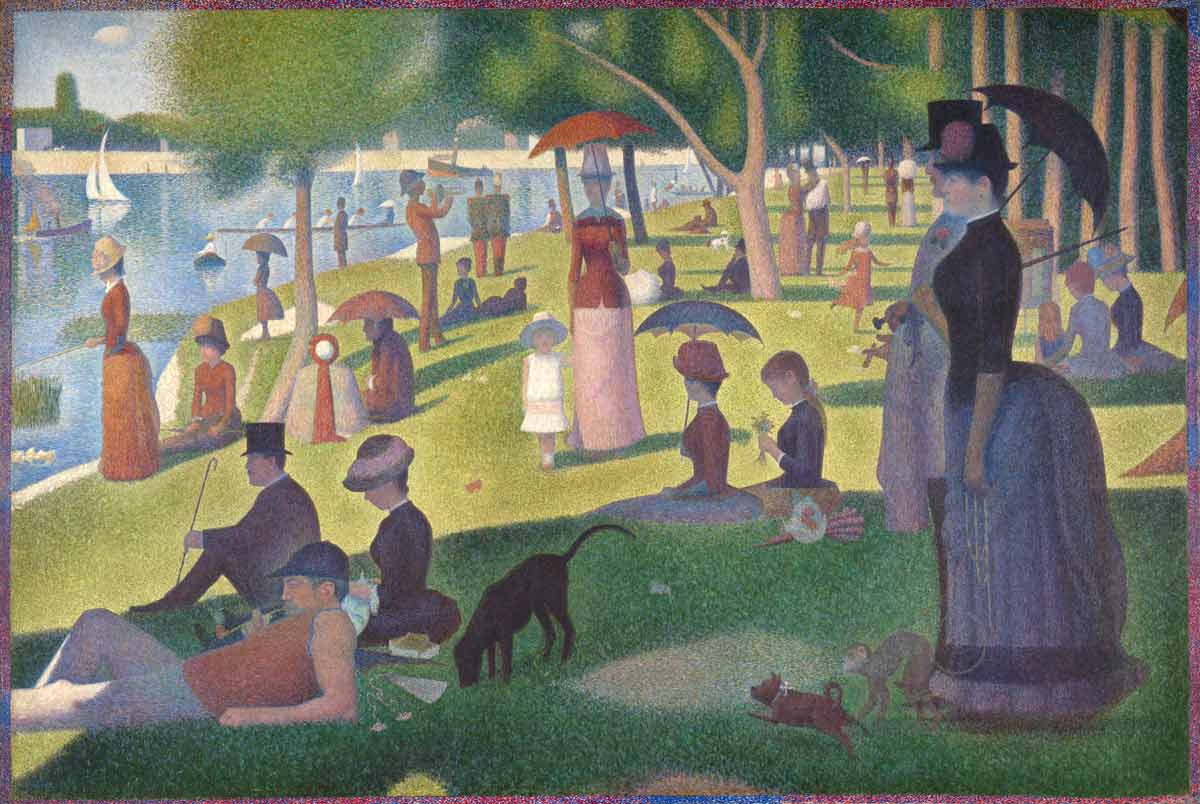
In addition to the colorful characters, the unique painting technique has made this one of the most famous paintings of the era. The artist first layered small brushstrokes in complementary colors and then added tiny dots to bring the image to life. The technique is known as Pointillism. It appears solid from a distance, but close up, the viewer can see the tiny dots of varying colors that construct the image.
The designer made reference to this innovative style in the intricate beading and embroidery on Platt’s suit. Like Seurat’s points, each tiny bead and stroke of thread contributes to the dynamic elements when seen from a distance. The designer did not attempt to recreate the entire scene, but only selected two figures for the front of the blazer. On one side, the lady in a tight, fashionable dress holds an umbrella at the top of the path. On the other side, a man lounges casually in the grass, basking in the sun. There is a clear contrast in their attitude and pose, perhaps recalling the wide spectrum of social classes present in Seurat’s painting.
6. Emma Chamberlain: Inspired by Van Gogh and Munch
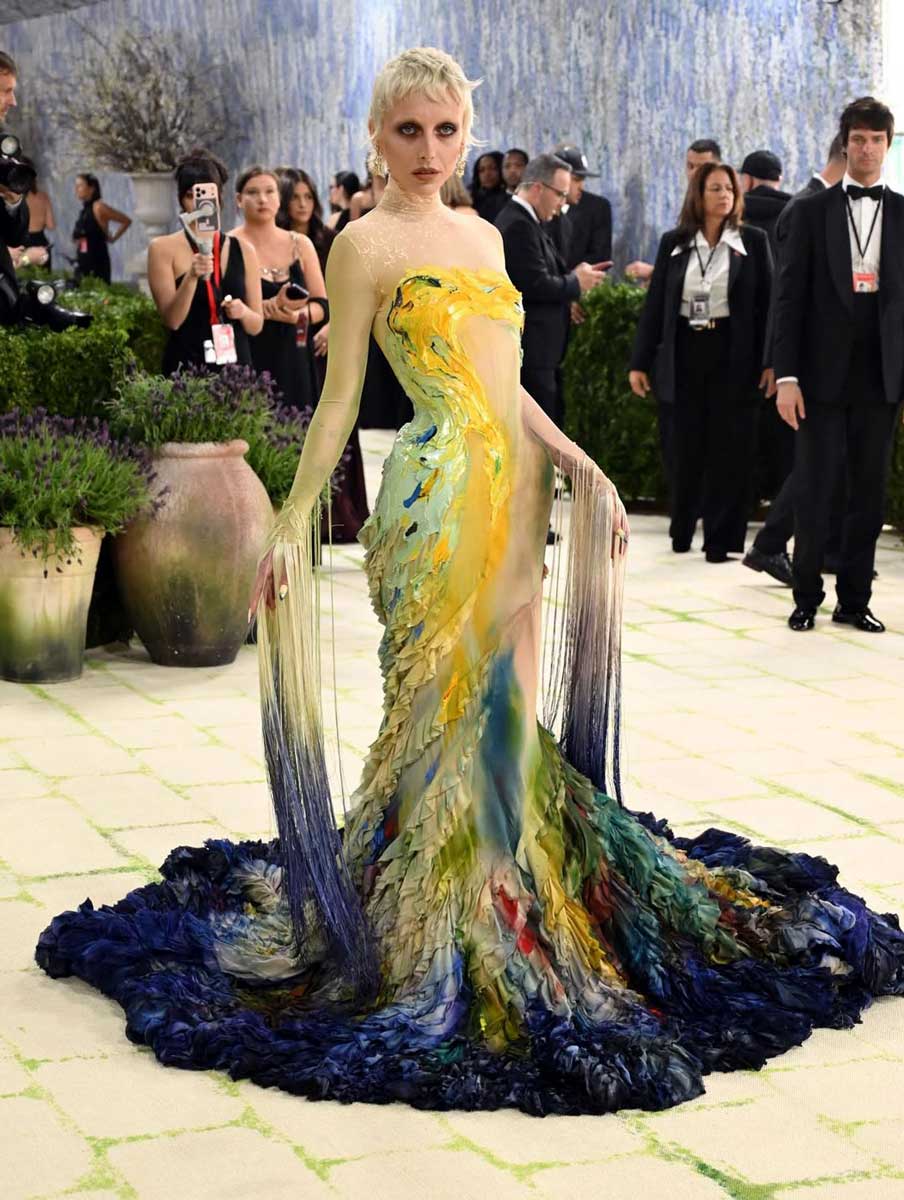
Emma Chamberlain chose to emulate a style of art, rather than a particular work. Firm in the belief that fashion is art, her Castro Freitas-designed gown was actually hand-painted by artist Anna Deller-Yee, turning her body into a canvas. Some of the reference images Chamberlain and her stylist sent to Deller-Yee included Vincent Van Gogh’s The Starry Night and Edvard Munch’s The Scream.
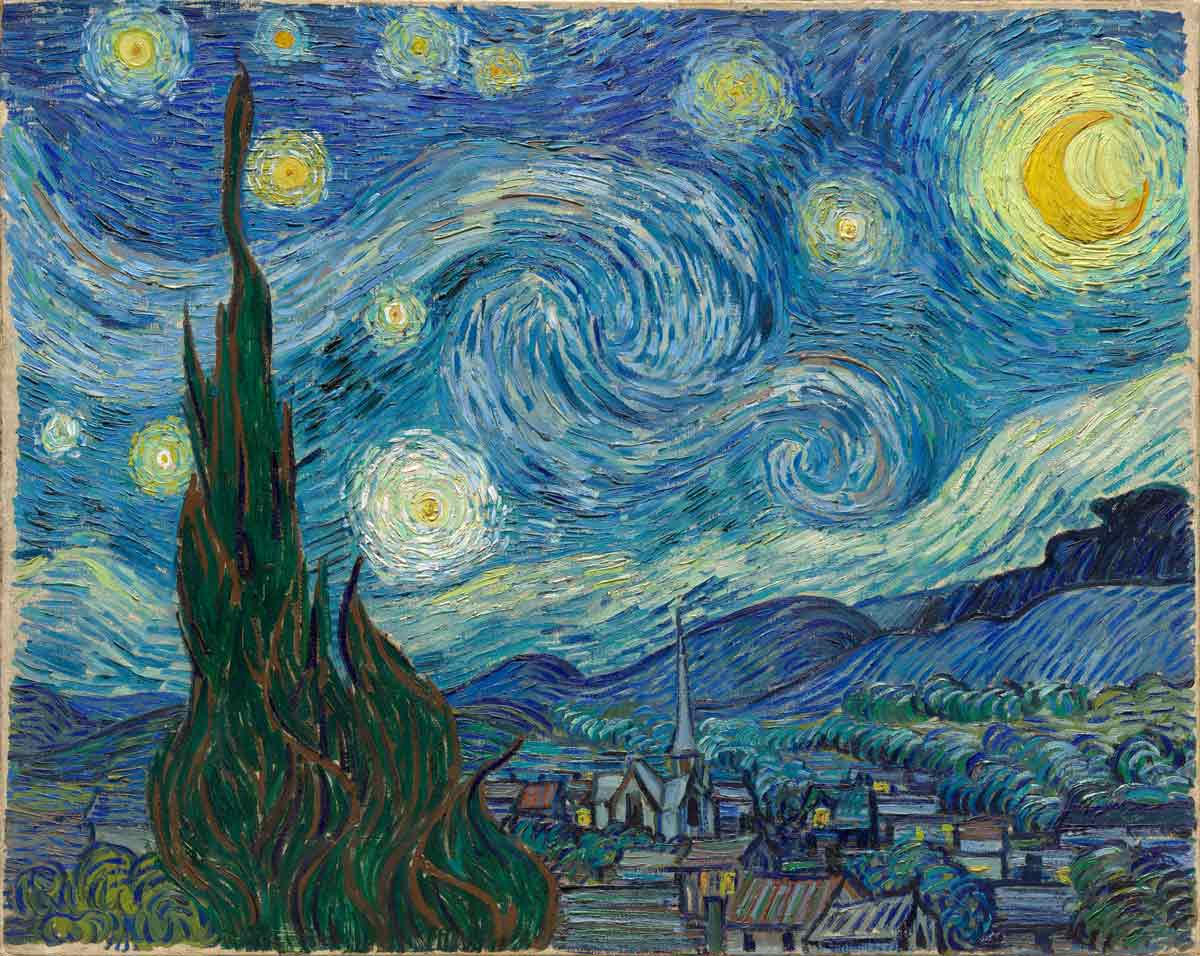
Van Gogh was a Post-Impressionist Dutch painter working in the mid to late 19th century. Munch was a Norwegian painter active in the late 19th and early 20th century, known for pioneering Expressionism. Despite the fact that they are associated with different artistic movements, time periods, and geographic locations, their works share certain inherent similarities. They used paint to express intense emotional experiences with wide, flowing brushstrokes, thick impasto, and bold colors. The painting style creates a psychological effect, evoking a sense of upheaval and melancholy, but also awe and wonderment.
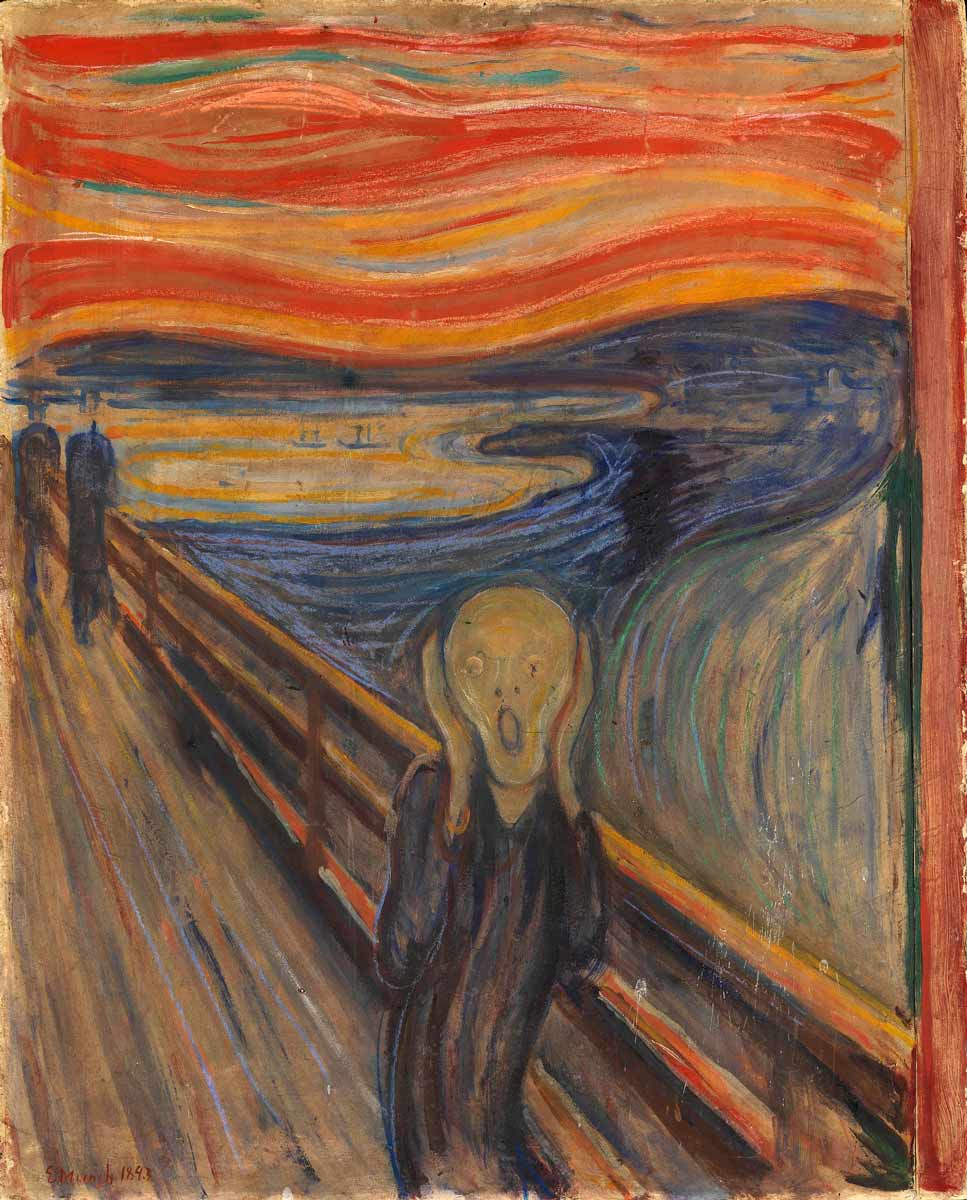
The references to these artists’ most celebrated paintings are easily read in the dress.
This expressive way of painting was mimicked in the swirling movement of color on Chamberlain’s dress and thick, visceral brushstrokes. Painted onto a flesh-toned body suit, the top starts with bright yellow and mint green, disintegrating into dark reds and blues. The sleeves were nude, but a long fringe began at Chamberlain’s hands and flowed down to the ground, dyed at the bottom with the same deep blue. As with the iconic paintings it evokes, the initial drama and beauty of the dress gave way to something more complex and overwhelming.
7. Lena Dunham: Inspired by “Judith Beheading Holofernes” by Artemisia Gentileschi
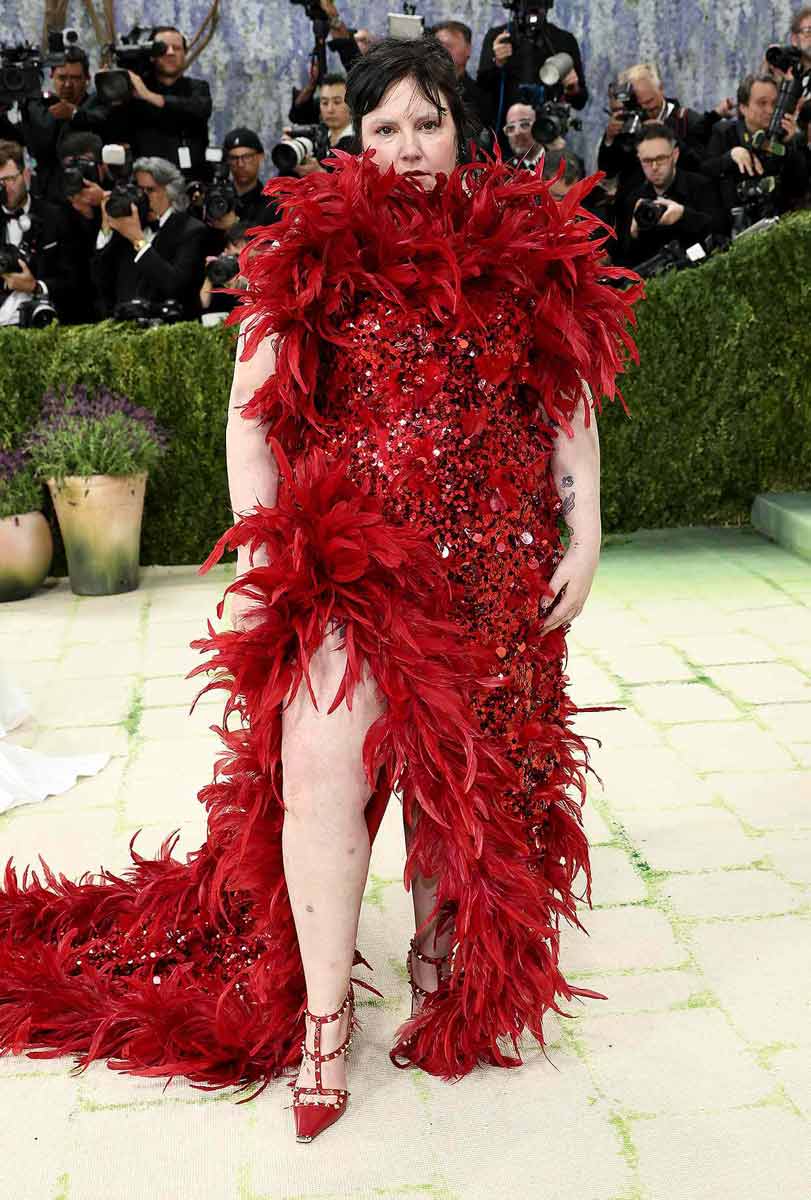
Lena Dunham decided on a more abstract approach in referencing a classic work of art. Her inspiration came from the bold work of Artemisia Gentileschi, a female Italian Baroque painter. Not only does the artwork evoke feminist themes, but Gentileschi herself has also become a feminist icon. In a time that largely shut out women from professional artistic work, Gentileschi succeeded as a court painter in Rome, Florence, and Naples, and became the first woman to enroll in the Academy of Art and Design in Florence.
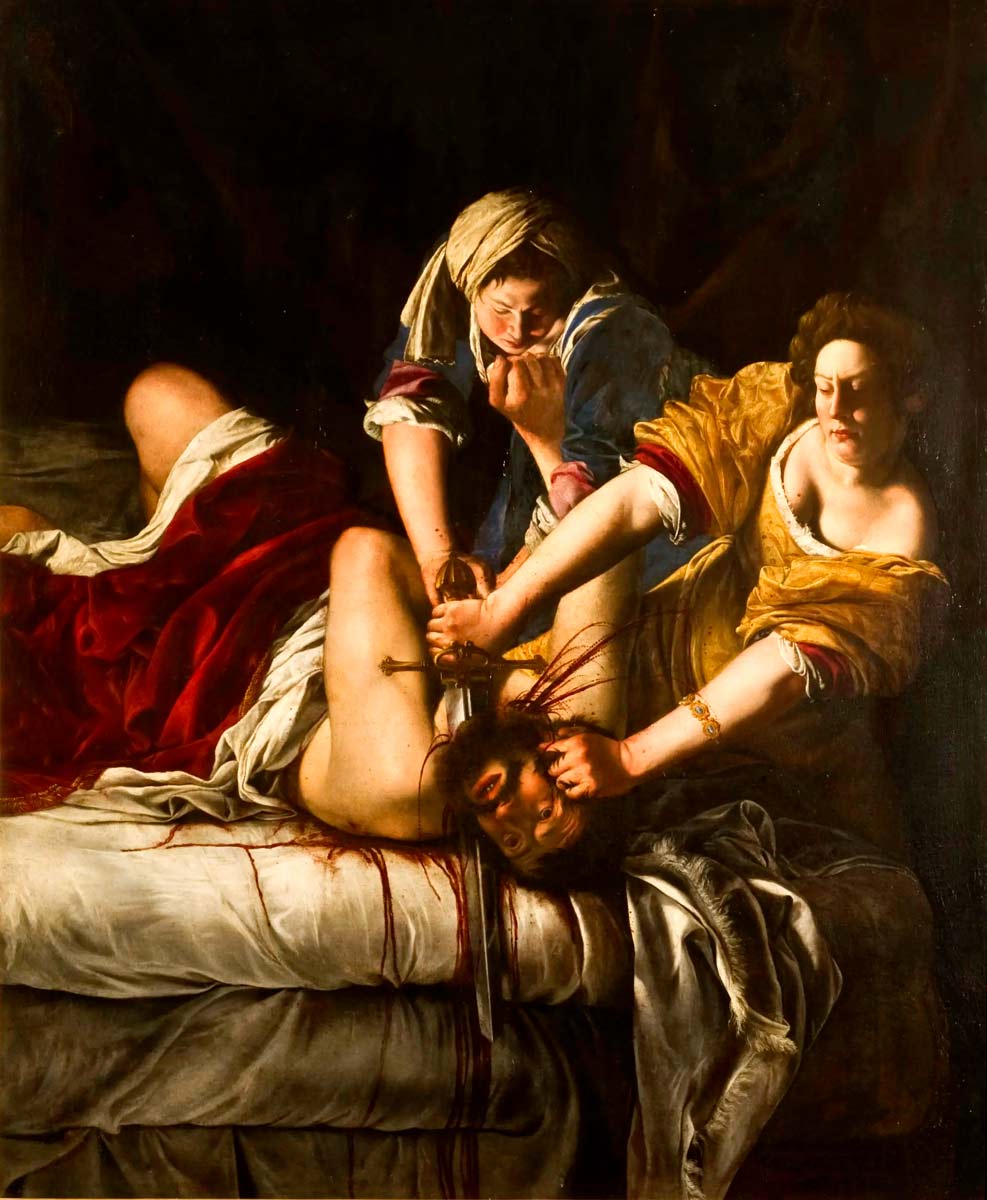
The painting referenced is a bold rendition of the biblical story of Judith beheading Holofernes. In the story, Judith heroically assassinates the drunken Assyrian general and frees the people of Israel from Nebuchadnezzar’s army. It was a common theme in Renaissance and Baroque art, but unlike some of the more restrained versions, Gentileschi puts the violence front and center, literally. At the focal point of the work is Holofernes’ head at the moment Judith plunges his own sword into his neck. The contrast of the light of the figures against the dark background highlights the action. Blood squirts and runs down against the white fabric. Judith looks determined while her maidservant exhibits quiet resolve. The women are clearly in charge.
Dunham embraced the confronting nature of this work. Her sequined Valentino gown was an arresting deep red, evoking the blood spatter from Holofernes’ severed neck. Red feathers encompassed her own neck and lined the deep split and long train, erupting outward from the garment. This symbolic approach distilled the painting down to its most powerful essence, the confrontational violence through which these women assert their agency. Dunham, it seems, has found a way to do the same through fashion.