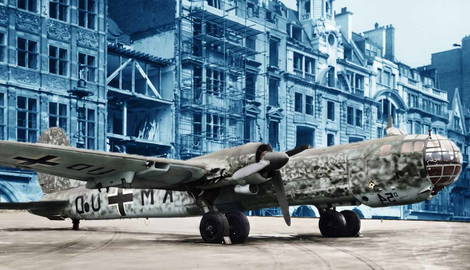
Operation Steinbock was a bombing campaign conducted by the Luftwaffe (German air force) from January 1944 to May 1944. The operation was a result of Hitler’s personal orders for the Luftwaffe to attack Great Britain, responding to the joint sustained Allied bombing campaign against Germany. By 1943, the Luftwaffe no longer ruled Europe’s skies. Weakened but not broken, it fought to keep heavy Allied bombers from Germany.
How and Why Hitler Launched Germany’s Final Blitz on London
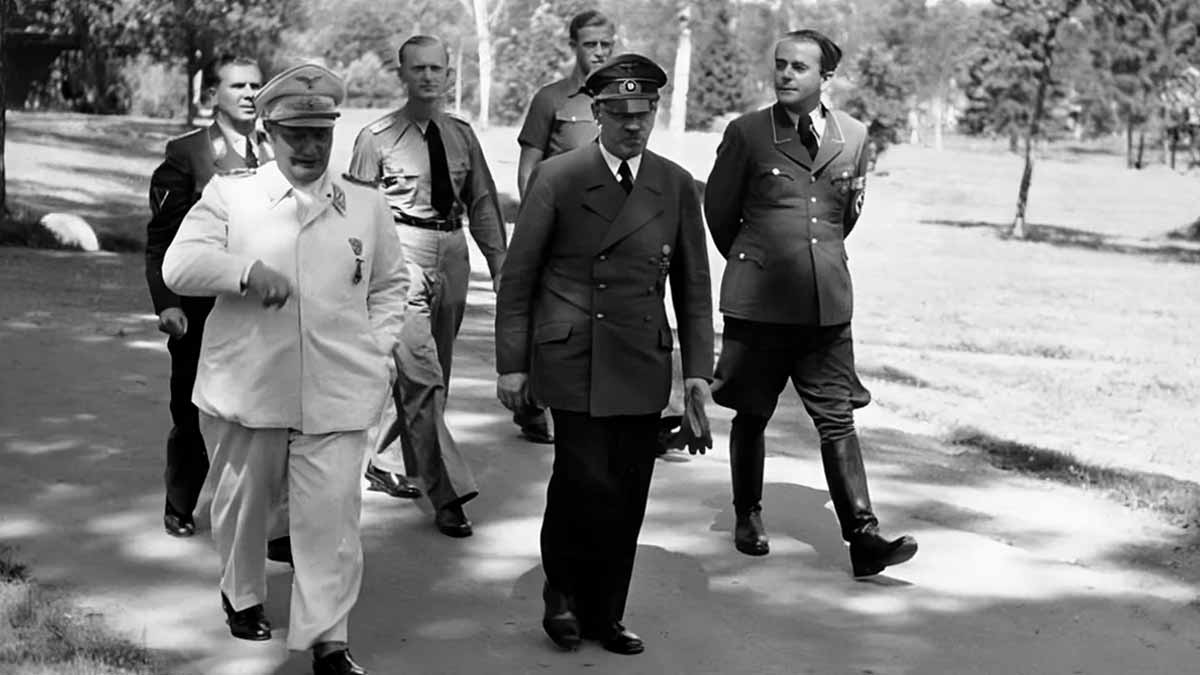
Hitler ordered this Operation in retaliation for the Allied bombing raids and to prove that Germany could strike back. He also wanted to boost civilian morale on the home front. Since late 1942, the growing Allied raids hit German cities day and night, flattening whole cities.
Hitler ordered Operation Steinbock to go ahead in late 1943, furious at the damage Allied bombers were causing in Germany. However, assembling the bombers took time to ensure a high serviceability rate. By early 1944, bombers pulled from different theaters stood ready. The first raid of Operation Steinbock occurred on the night of January 21-22, 1944, when 229 bombers attacked London. The raids continued through May 1944 with varying degrees of success. London was not always the primary target, but it was considered the most important.
Commanded by the mercurial Reichsmarschall Hermann Göring, the Luftwaffe carried out the retaliatory raids. Several Luftwaffe bomber wings, called Kampfgeschwaders, assembled at French bases nearer to England. These bombers represented the majority of the Luftwaffe’s remaining waning bomber strength.
Generalleutnant Josef Kammhuber commanded Operation Steinbock. He led the Luftwaffe’s night fighters in his last command, trying different strategies to stop the Allied bombers. His mission required him to find ways to penetrate the very tough British air defenses.
How Operation Steinbock Earned the Nickname the “Baby Blitz”
This English-coined nickname referred to the Blitz of 1940-1941 on London. The original Blitz was much larger and more ferocious as the Luftwaffe made a maximum effort to gain aerial supremacy. This required condition would mean the Wehrmacht could invade England in “Operation Sealion” and knock Great Britain out of the war. The “Baby Blitz” never matched the sheer destruction of the original Blitz.
Prime British Targets of the 1944 German Air Raids
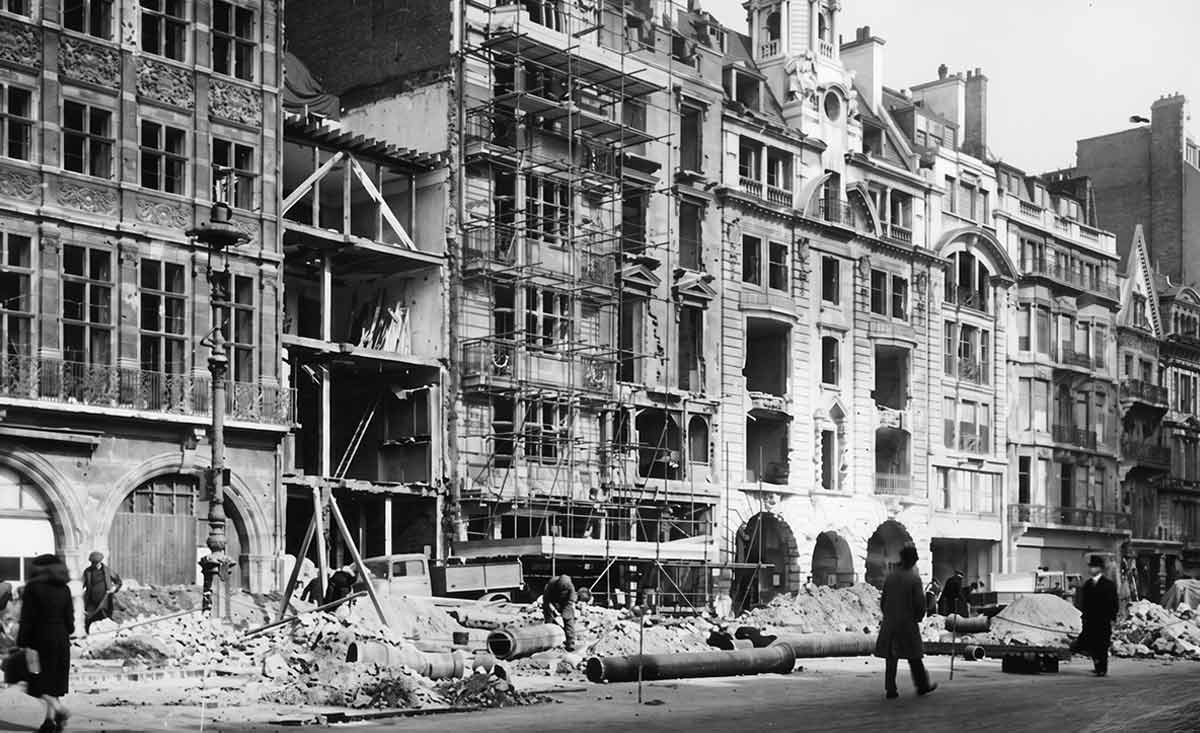
For several reasons, the Luftwaffe targeted Greater London as the main focus of the retaliation. First, London possessed a symbolic value as Britain’s capital. The Germans hoped to demoralize the island nation’s population and sought to inflict the same economic and area damage the Allies had caused on Germany. London represented a strategic target as a central industrial and transportation hub. Other cities like Bristol, Sandwich, and Hull also were bombed. These cities were industrial or central hubs, and the Luftwaffe sought to enhance the operation’s impact.
The Luftwaffe Aircraft Deployed for Operation Steinbock
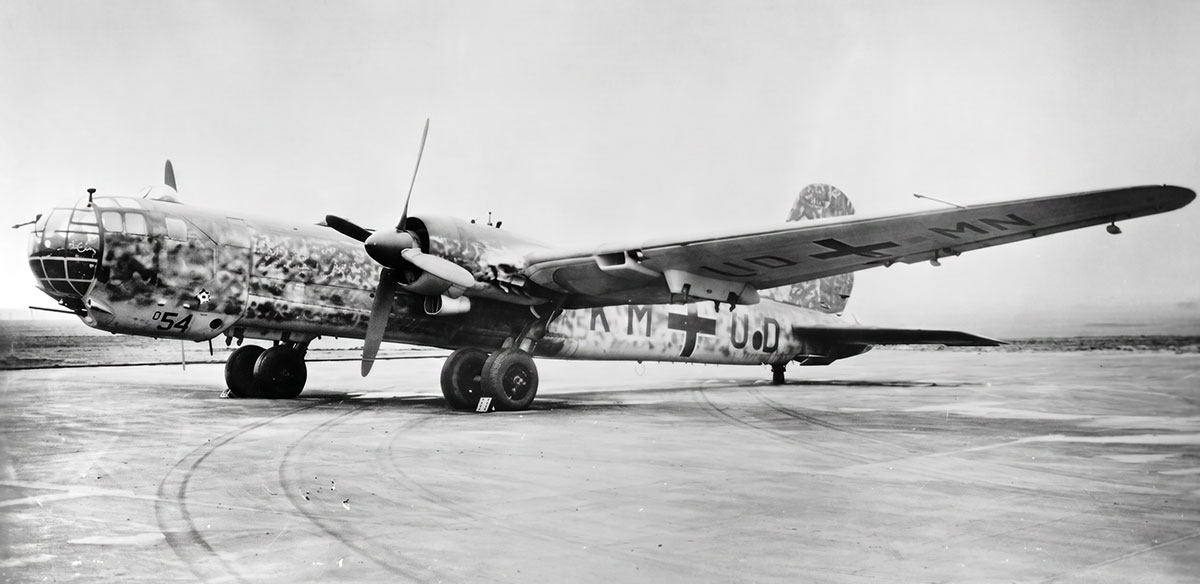
The Luftwaffe gathered at least six Kampfgeschwaders from Germany and different theaters. By late 1943, their strength numbered almost 500 planes. Most were twin-engine types, including the Junkers Ju-88 and 188s, Dornier Do-217s, Messerschmitt Me-410s, and single-engine Fw-190s. The Germans also used the He-177, a “twin engine” heavy bomber with joined engines driving one propeller. While an innovative design, the problem-plagued bomber surprisingly had a lower loss rate than the other types.
As Operation Steinbock continued, German losses grew heavier. The 1944 Luftwaffe was not the deadly war machine of 1941. By the end of the operation in May 1944, the Luftwaffe had lost 329 planes or 70% of its operational strength.
How Operation Steinbock Crippled the Luftwaffe
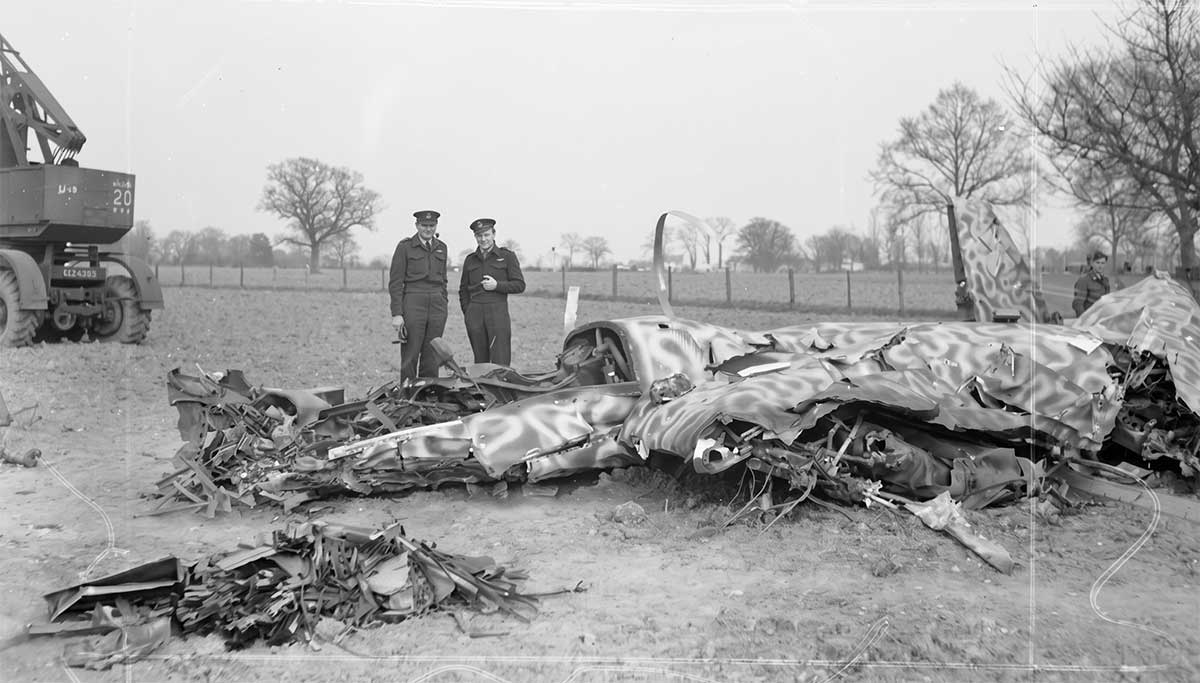
Operation Steinbock’s losses crippled the Luftwaffe bomber wing. Many irreplaceable crew members were lost, too. Even poorly-trained crewmen were a desperately-needed resource. The drain on other theaters, like the Eastern Front, left those theaters with fewer resources. As more bombers were shot down, fewer were available to fight during Operation Overlord. After Operation Steinbock, no more large-scale bomber campaigns took place. Nazi Germany switched to V1 and V2 Wunderwaffe attacks.
Operation Steinbock failed for several reasons. British defenses had improved immensely by 1944 with innovations like radar-guided anti-aircraft guns, which exacted a substantial toll on enemy air power. Despite the number of raids, the strategic impact was minimal. By March, bomber squadrons had been transferred or were only focused on attacking D-Day preparations.