Indigenous communities of North America have produced numerous high-quality women artists in the 20th Century. The fact that they are little-known in the mainstream media and in art history doesn’t diminish their artistic value. On the contrary, it actually makes their art more captivating for further analysis and interpretation. Jaune Quick-to-See Smith, Hulleah J. Tsinhnahjinnie, Rebecca Belmore, Irene Avaalaaqiaq Tiktaalaaq, and Kay WalkingStick are Indigenous women artists who should be seen as outstanding exemplars of North America’s Indigenous art.
The Invisibility of Indigenous Women Artists
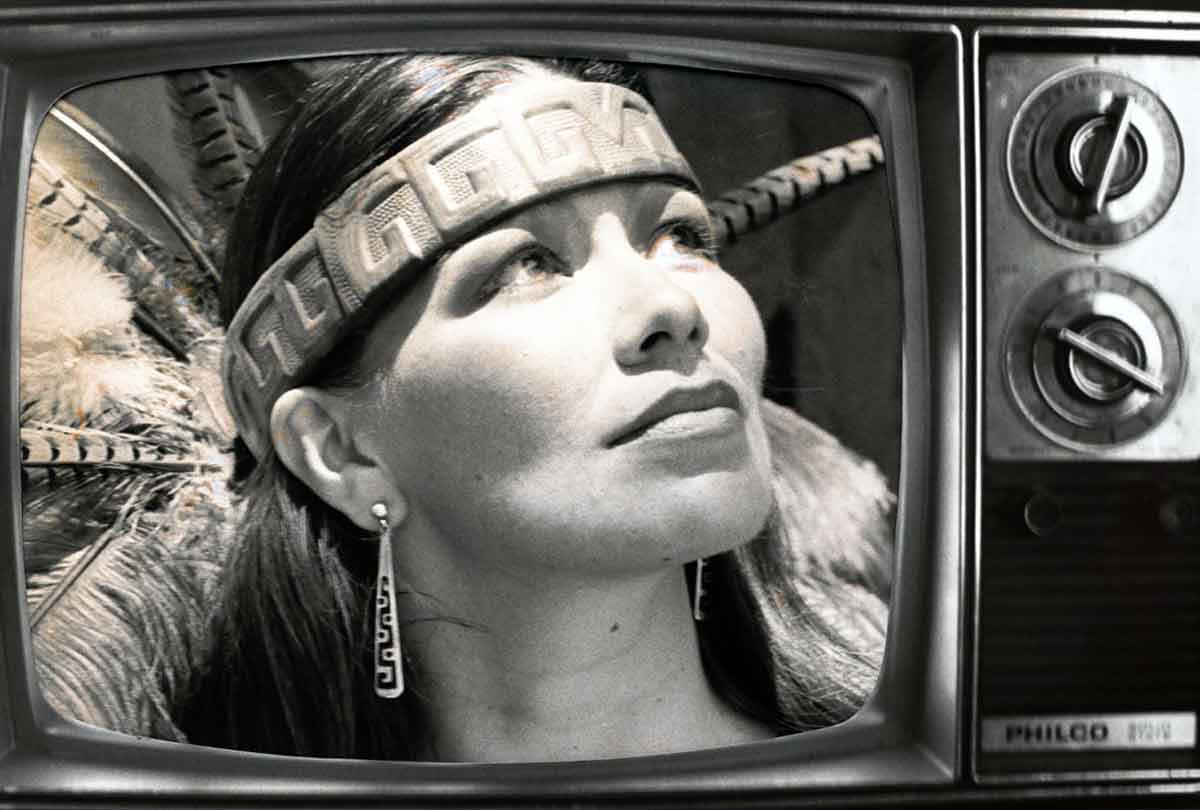
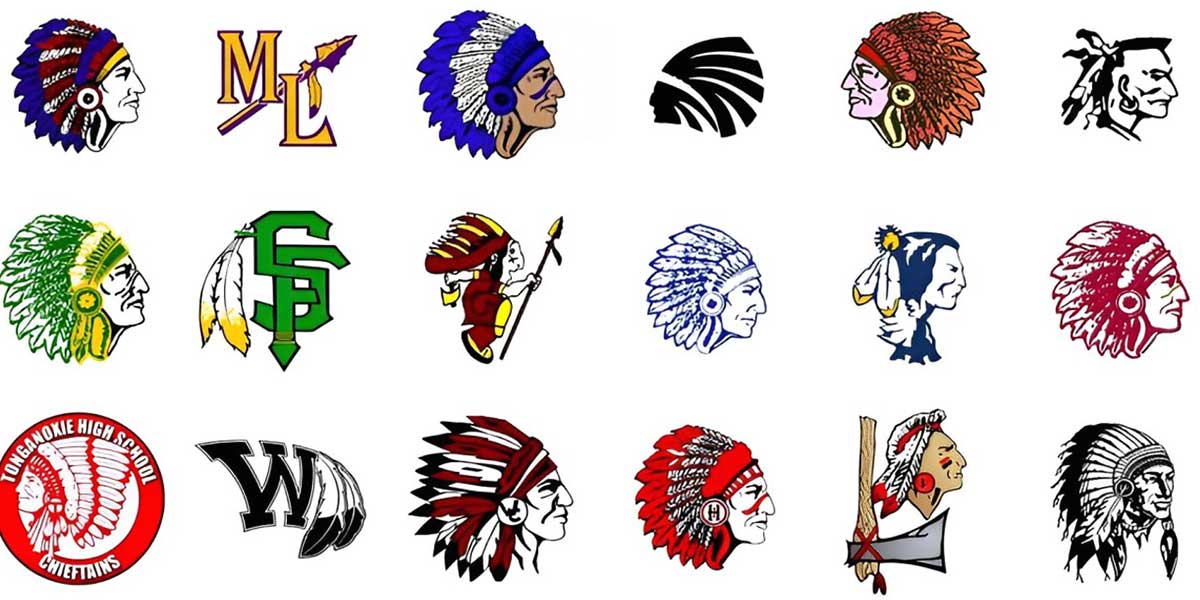
The problem with Indigenous art and its invisibility in public, media, and art history is of a multifaceted nature. Firstly, the non-native citizens of the USA and Canada have perpetually exploited Indigenous culture throughout history. Stereotypical representations in films and appropriated names and mascots for numerous sports clubs are the best examples of the trivialization of Native American culture. That is one of the reasons why Indigenous artists, regardless of their gender, were not seen as worthy of mention and attention.
Contemporary Native American artists face double discrimination when it comes to their work. While there are museums that value Indigenous art, they are solely focused on its traditional and antique forms, completely overlooking modern and contemporary artists. The only Indigenous art considered to be of quality is that which is, rather narrow-mindedly, labeled “authentic,” while living Indigenous artists who experiment with new and modern practices are left behind.
Finally, being a contemporary Indigenous woman artist means facing a triple layer of discrimination. Even White women were often treated unfairly in the arts, as it was a male-dominated field for a long time. When Jaune Quick-to-See Smith was asked in an interview what the biggest obstacles were in her career as a female Indigenous artist, her reply was instant and simple: “White men.”
The 21st century does show some kind of progress. The above-mentioned Jaune Quick-to-See Smith was the first-ever Native American artist whose painting was purchased by the National Gallery of Art in Washington in 2020. In addition to that, Jeffrey Gibson, a Choctaw/Cherokee painter and sculptor, was chosen to represent the US at the Venice Biennale in 2024. Even so, Native American artists are not so pleased, as they believe that further actions must be taken in order for them to really be fully included in American history, art, and present-day mainstream culture.
5. Jaune Quick-to-See Smith: I See Red
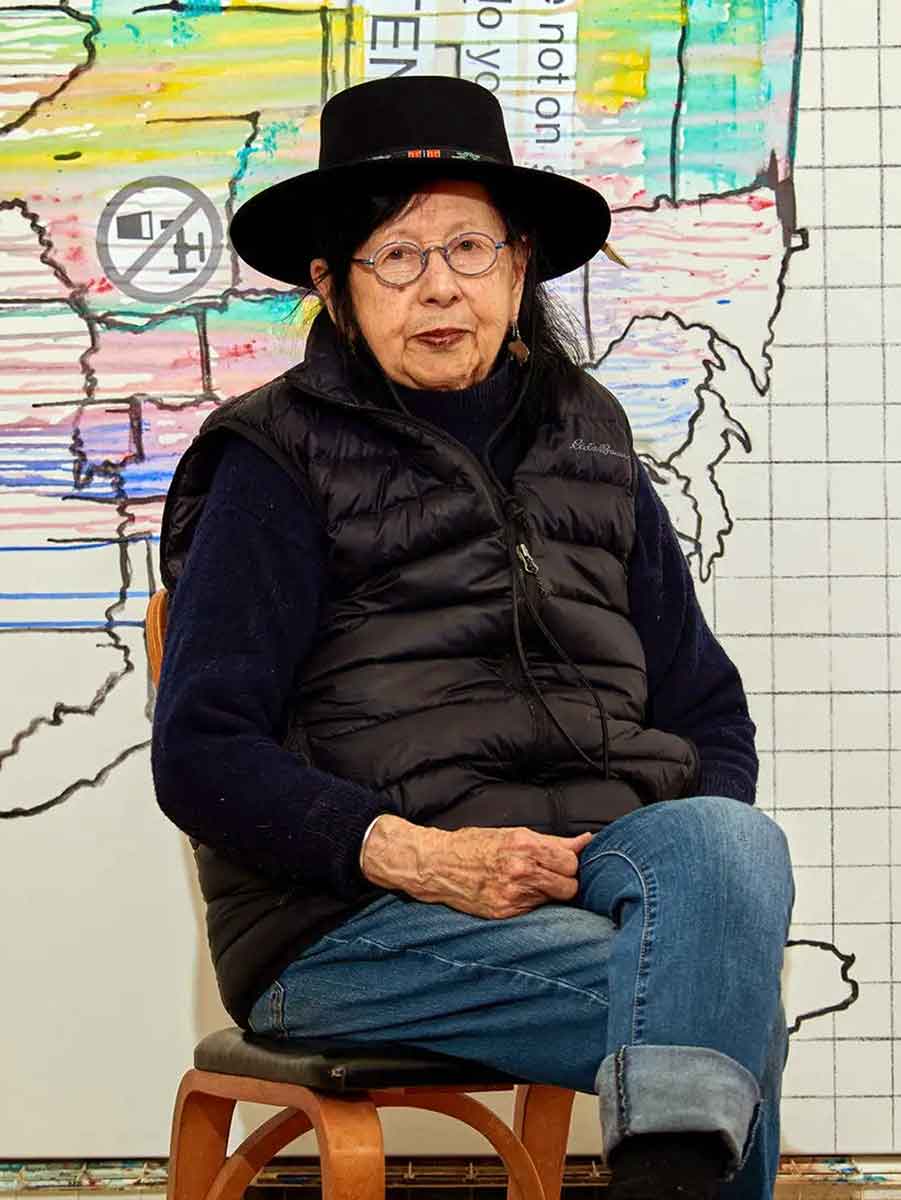
Jaune Quick-to-See Smith, born in 1940, is a member of the Confederated Salish and Kootenai Tribes. Aside from being a visual artist and curator, she is also a political and environmental activist. That is why she uses her art to investigate Indigenous identity and the oppression and exploitation of Native Americans. In terms of environmental issues, Jaune Quick-to-See Smith produced a Nomad Art Manifesto in which she advocates for avoiding toxic art supplies and reducing storage space.
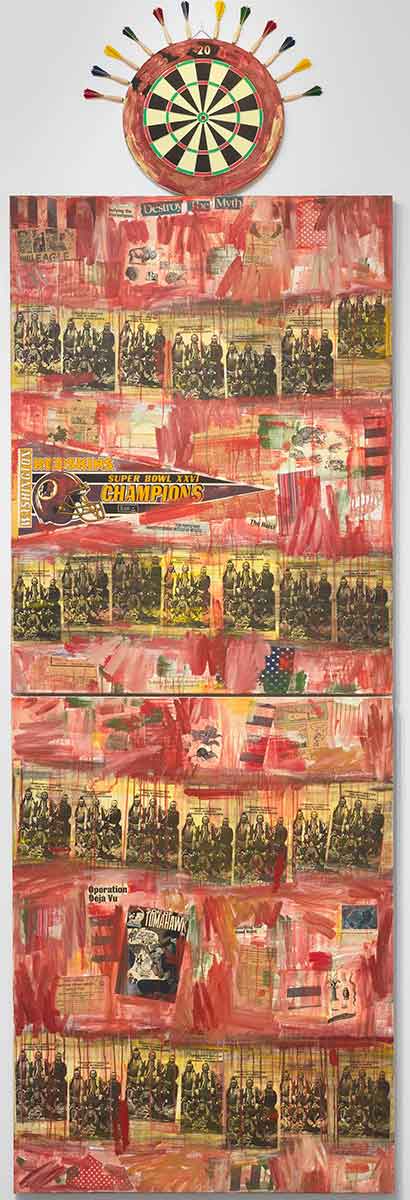
While she began her artistic career in the 1970s by experimenting with different media (painting, drawing, collage, etc.), she rose to prominence in the 1990s with the I See Red series. The mixed media work I See Red: Target from 1992 was purchased by the National Gallery of Art in Washington in 2020. This represented a huge milestone in American art since it was the first time that the National Gallery acquired a work from a Native artist.
This piece is a prime example of Smith’s style and themes, showcasing her characteristic fragmented and layered aesthetic through a composition of text, found imagery, and expressive brushwork. Smith’s artistic influences are also evident here. Drawing inspiration from Andy Warhol and the pop art movement, she incorporates commercial slogans and images. She was further influenced by Robert Rauschenberg and Jasper Johns, referencing Johns’ iconic Target (1958) in her own work.
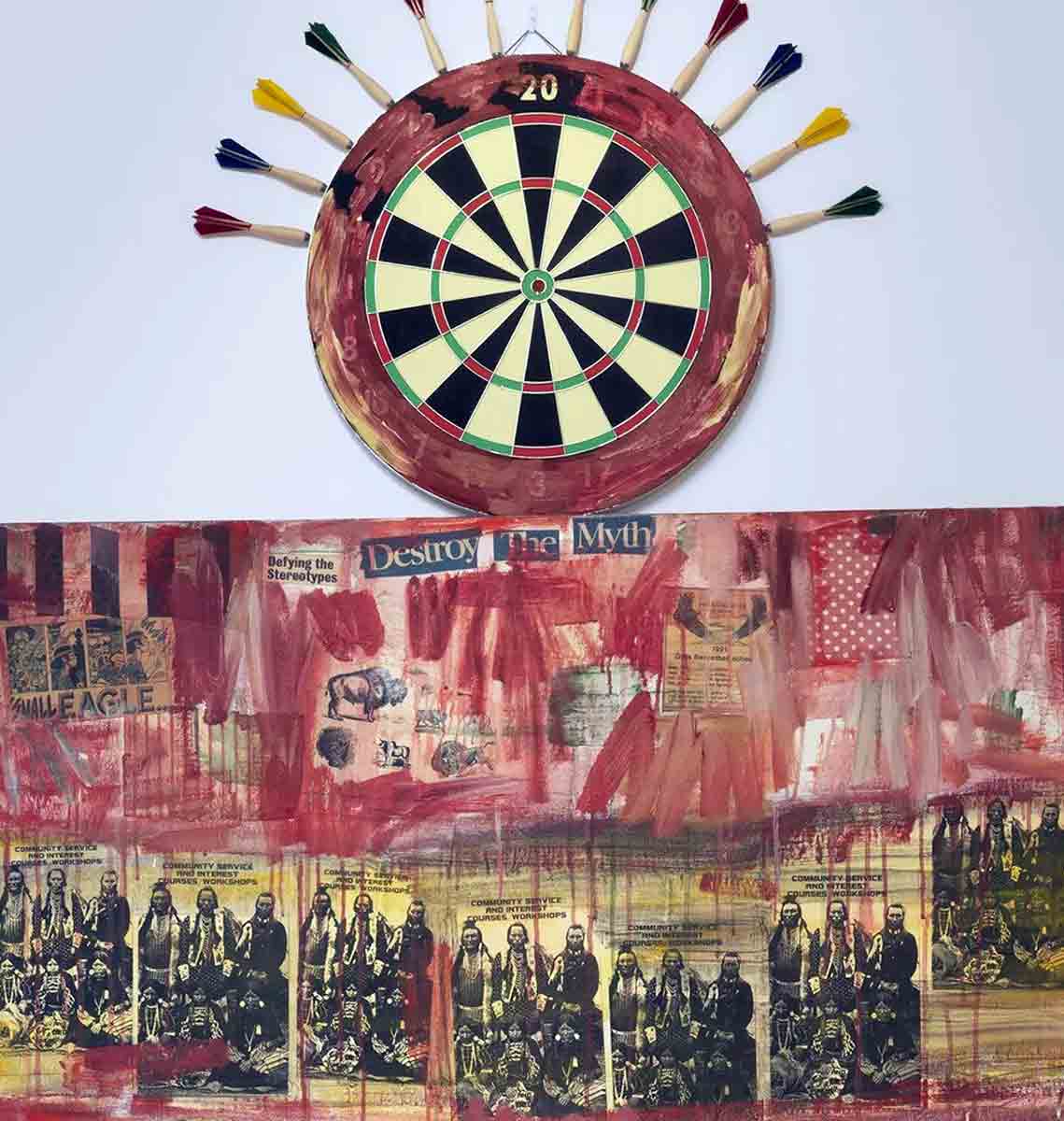
Turning the tables purposefully, Jaune adopted a Native American perspective on Johns’ artwork. The upper part of the painting has a dart board with darts arranged so it looks like a Native feather headdress. She also used photos from Char-Koosta News, which is the official newspaper of the Flathead reservation. Finally, by placing the words Destroy the Myth at the top of the painting, she criticized the commercial maltreatment and manipulation of Native American culture. “It’s like we don’t exist, except in movies or as mascots for sports teams,” Jaune said in an interview. This is perhaps the most fitting description of what it’s like to be a Native American in the U.S.
4. Hulleah J. Tsinhnahjinnie: Documenting Ourselves as We See Ourselves
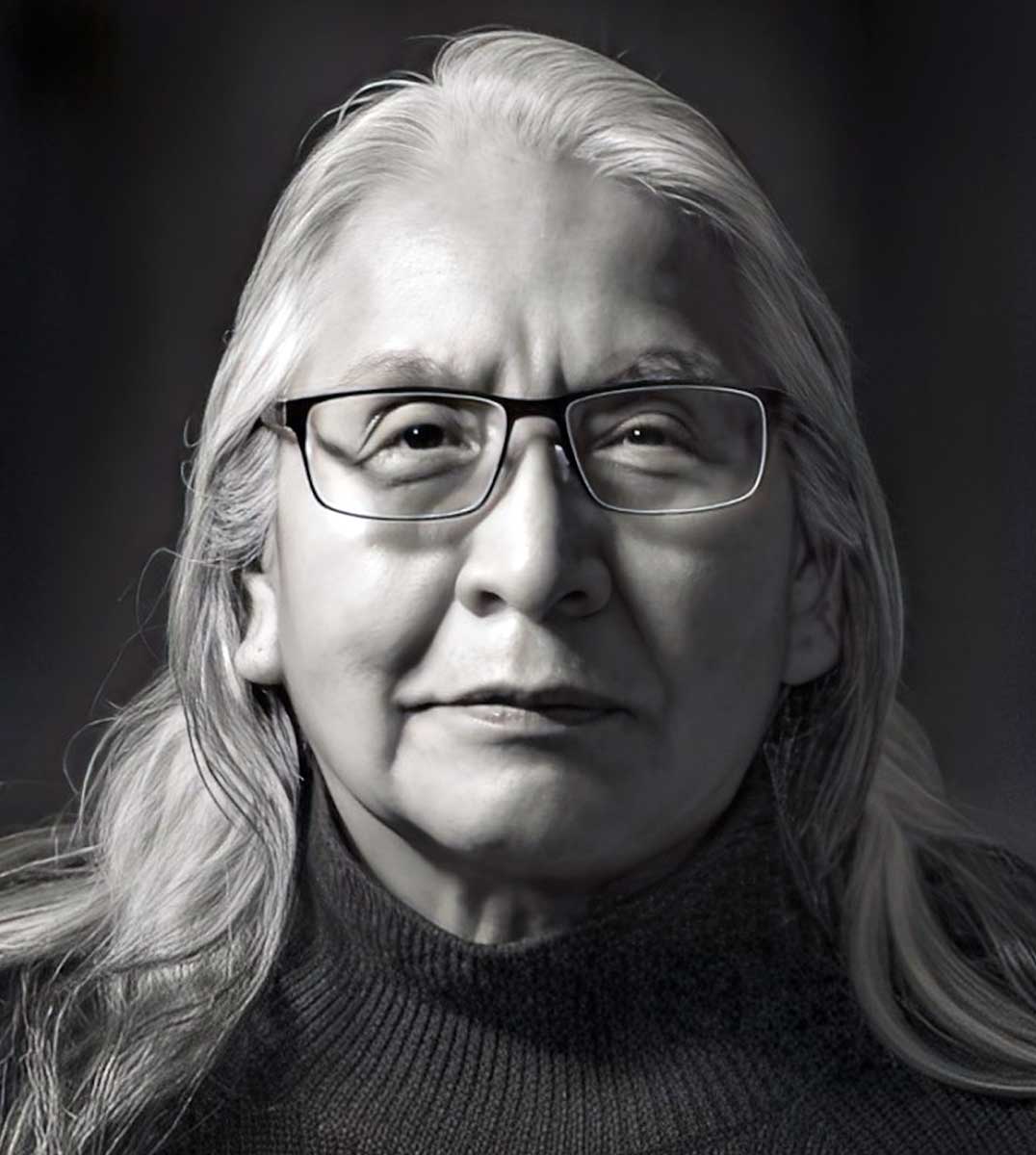
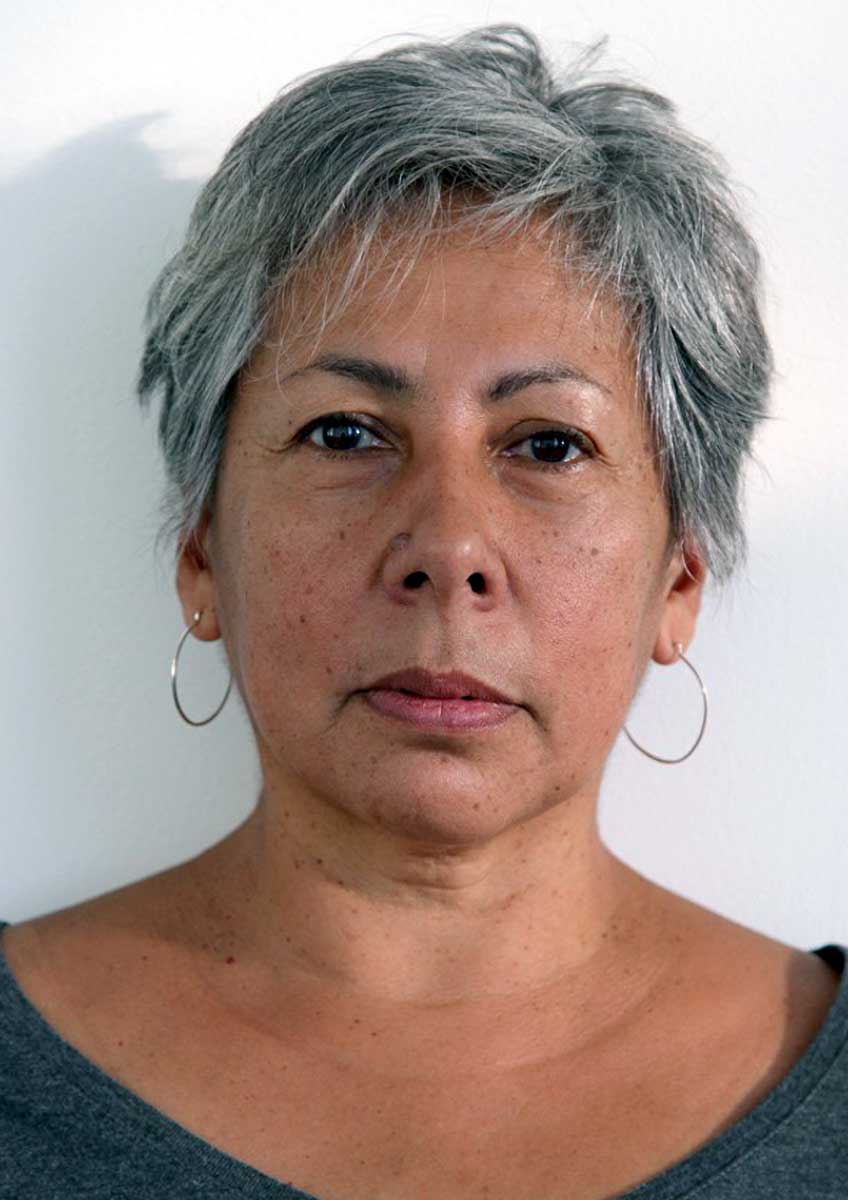
Hulleah J. Tsinhnahjinnie, born in 1954, is a Navajo photographer, curator, and professor at the University of California, Davis. She uses photography to express her personal and political stance toward stereotypes and prejudice against Native Americans. Feeling that Indigenous peoples are widely misrepresented and marginalized in history and popular culture, Hulleah uses her art to reclaim the Native American subject.
The artist herself said that her photography is not meant for White people to look at Native people but rather for Native people to look at Native people. Since Native art and culture are largely overlooked by galleries and museums, people feel a lack of belonging both to American history and to contemporary life. Therefore, Hulleah’s effort to make Native American people feel seen and heard is of immeasurable worth.
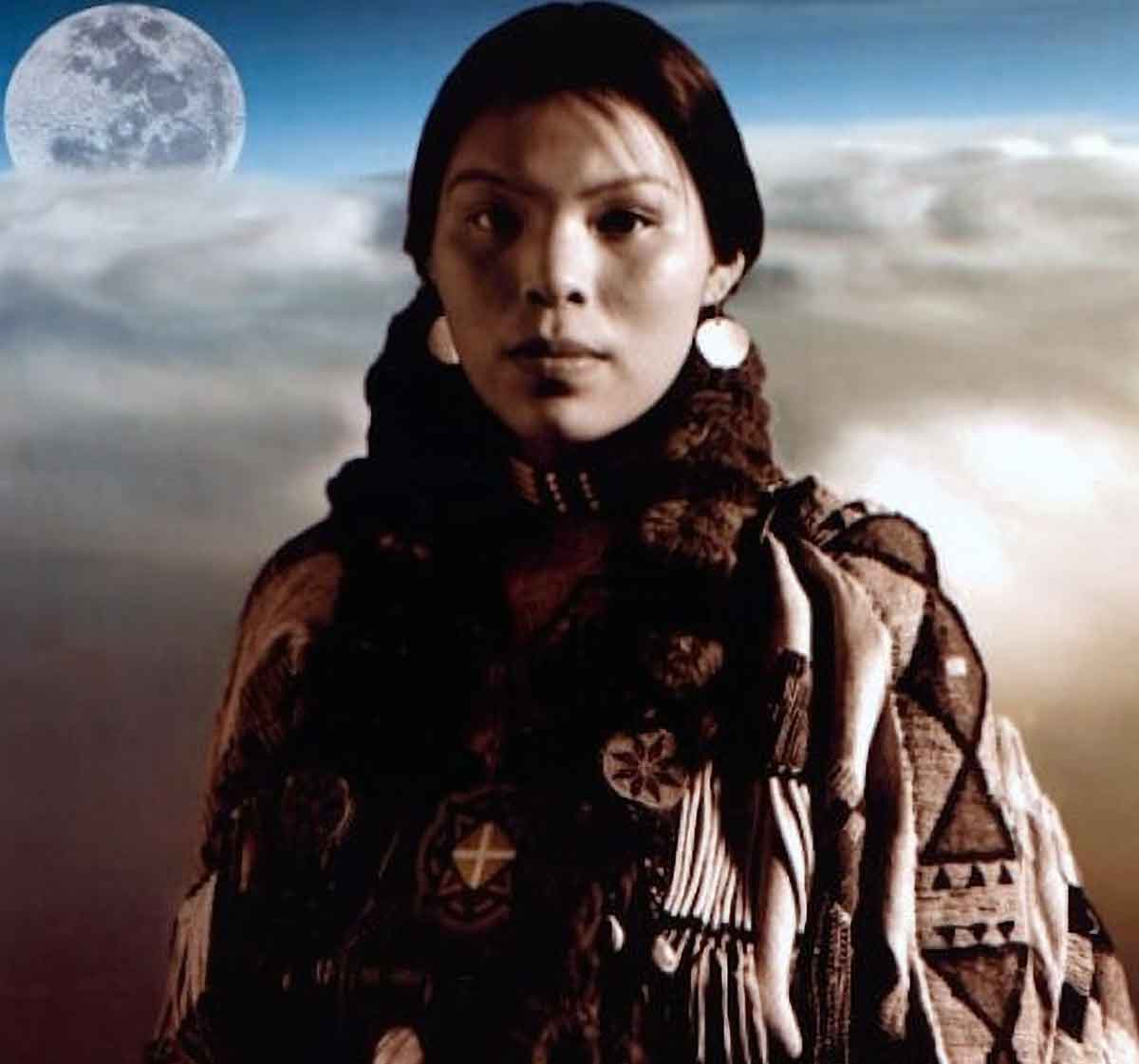
Hulleah not only takes photographs but also makes creative, experimental interventions with them. For instance, she often hand-tints her photos or incorporates them into collages. She also enjoys reworking historical photos of Native Americans, using these pieces to critique the ethnographic perspective imposed by 19th-century White photographers.
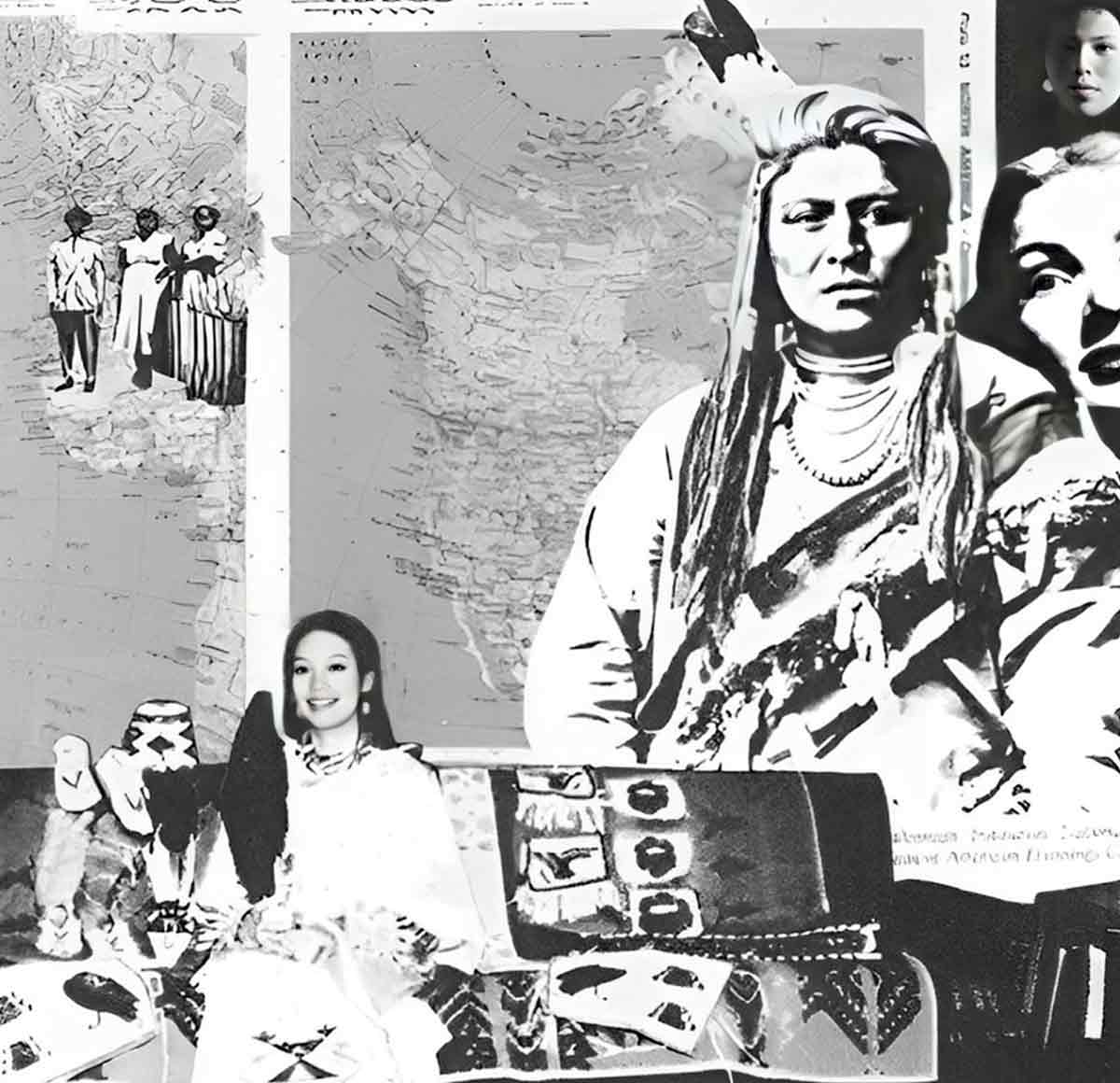
Finally, in the 1990s, Hulleah created art that tackled the issue of beauty standards. By composing a collage titled When Did Dreams of White Buffalo Woman Turn to Dreams of White Woman?, she questioned Native American women’s internalized definitions of beauty. White Buffalo Calf woman is a central figure in the Sioux religion, known for her otherworldly beauty. Hulleah used this sacred woman as a symbol of the Indigenous concepts of beauty which she juxtaposed with the neocolonial aesthetic norms imposed on women.
3. Rebecca Belmore: Look at Us and Listen to Us
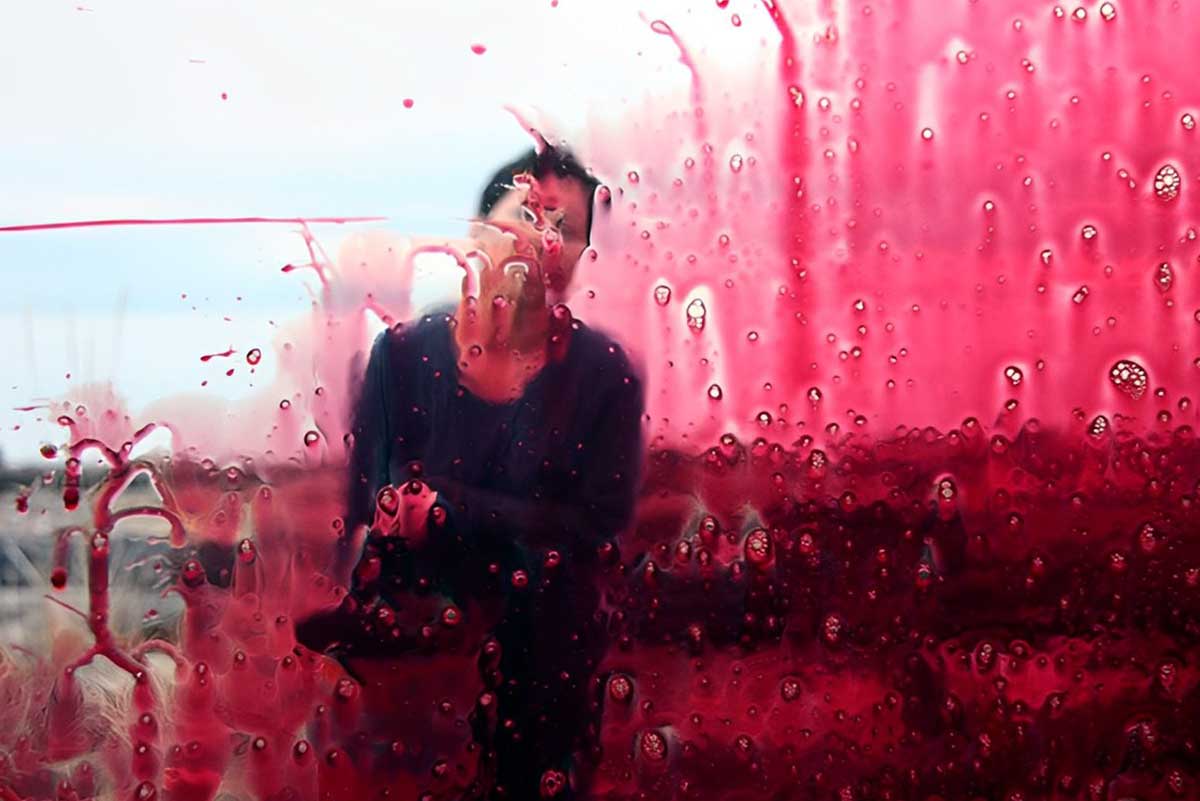
Born in 1960, Rebecca Belmore is an Anishinaabekwe artist who is known for her socio-politically engaged performance and installation artwork. She attracted the public’s attention when her performance work and video installation titled The Fountain was chosen as the official representative of Canada for the 2005 Venice Biennale. Belmore commented on her performance by saying: “When I hurl the contents of the bucket and it washes the screen with blood and I stare at you from one side and you’re on the other side, I think that really is the question: How long do I have to do this? How long do I have to say, ‘Look at us and listen to us?’”
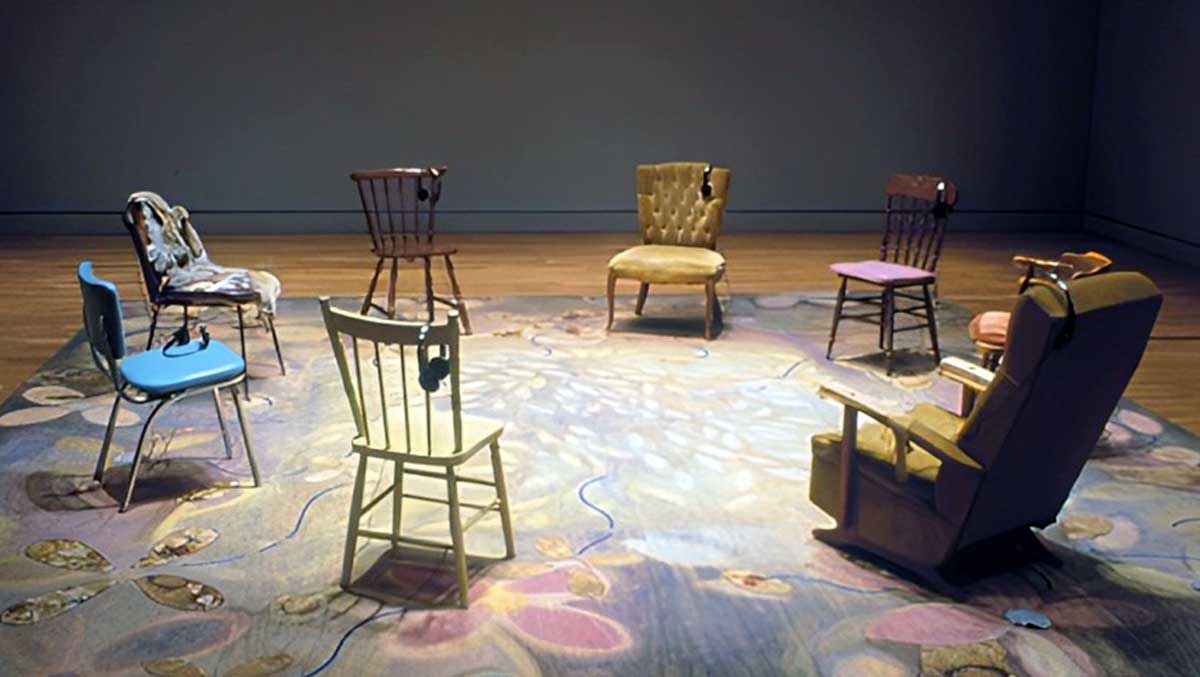
Exploration of history, identity, and underrepresentation of Native Americans led Rebecca to create an interactive installation Mawu-che-hitoowin: A Gathering of People for Any Purpose in 1992. The installation consisted of chairs arranged in a circle—some of the chairs were hers, while others were borrowed from her close female friends. A pair of headphones was set on each chair so the visitors could sit and listen to the stories of Native American women. Rebecca had her friends tell their personal histories using their own voices. In that way, Belmore literally broke the metaphorical voicelessness that surrounded Native women and their lives, giving them an opportunity to speak for themselves. By creating this work, the artist also paid homage to traditional Indigenous storytelling practice.
Finally, Belmore’s political awareness is most evident in her 1997 performance called For Dudley. She was deeply moved by the murder of Dudley George during the Ipperwash Crisis in 1995. A group of protesters occupied the Ipperwash Provincial Park, wanting to reclaim the land that had been expropriated from the Native people during World War II. During the riot, OPP officer Ken Deane fatally shot protester Dudley George, who was only holding a stick.
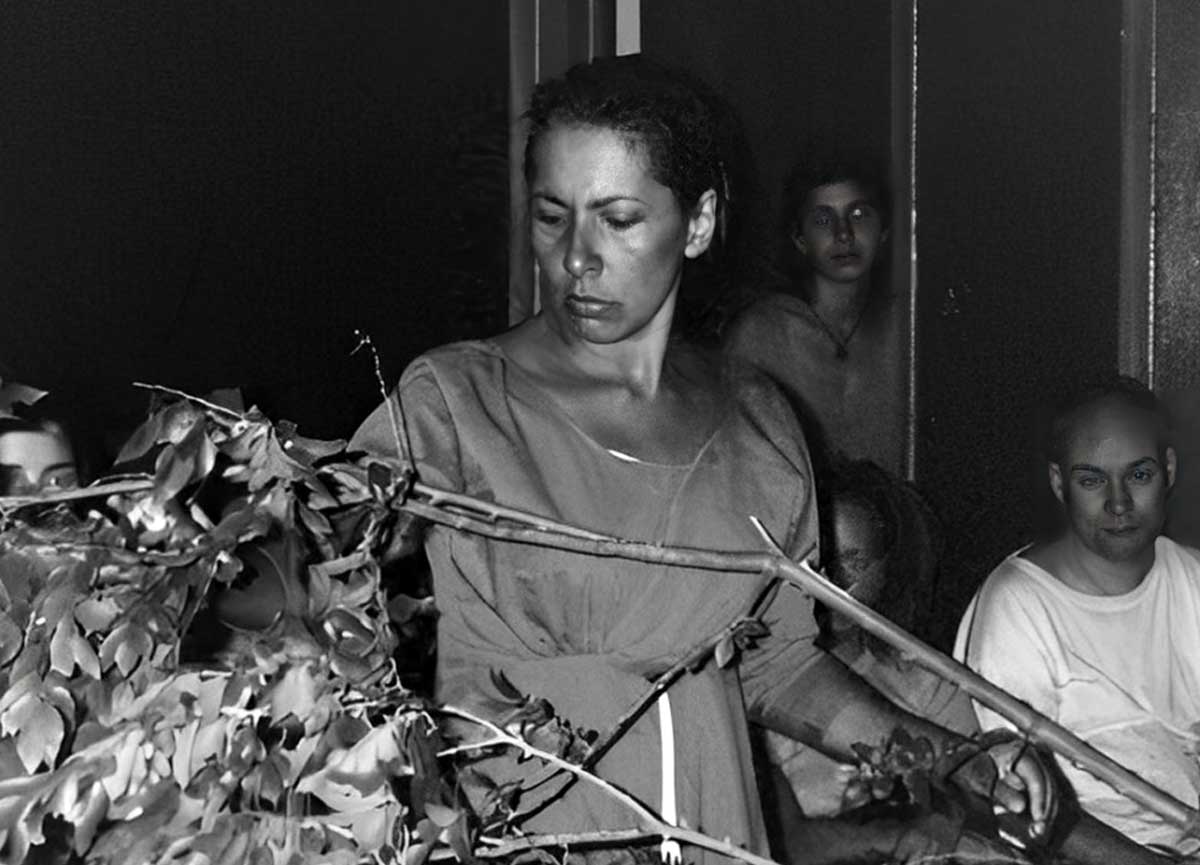
Deane later claimed that George had been armed with a firearm, but he was found guilty of criminal negligence. Belmore’s performance consisted of her stripping a tree of leaves and branches while periods of silence and repetitive strains of the 1960s song Bang Bang (My Baby Shot Me Down) rhythmically interchanged. Afterward, she hung a white shirt on the tree, creating a screen for an image of Dudley George to be projected on.
2. Irene Avaalaaqiaq Tiktaalaaq: The Loss of Traditional Nomadic Culture
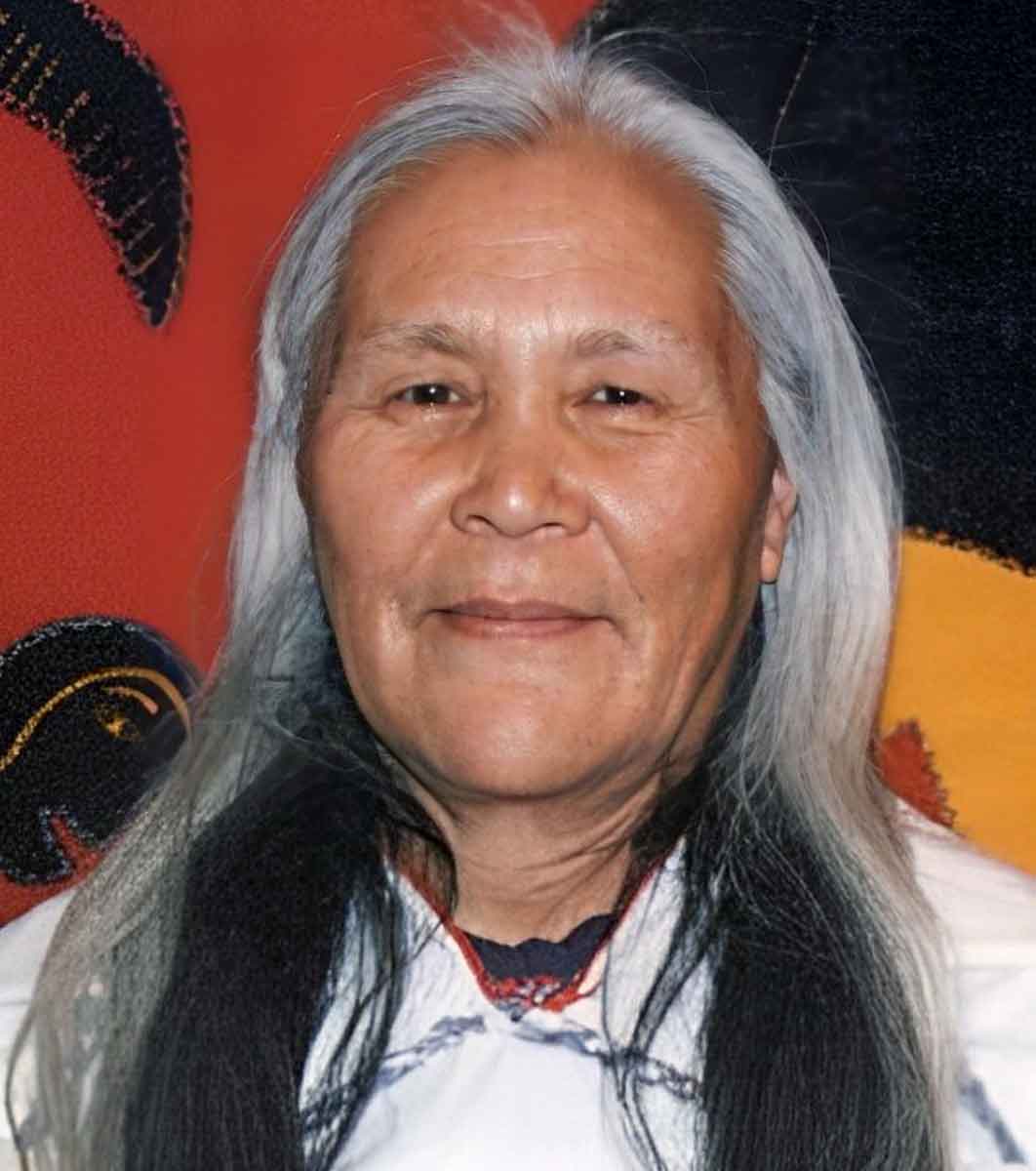
Irene Avaalaaqiaq Tiktaalaaq, born in 1941, is an Inuit artist from Canada. Although she uses mediums such as drawing and prints, she is best known for her wall hangings. Working with dyed wool, felt fabric, and embroidered cotton, she showed amazing skill and artistic talent in terms of tapestries and appliqué. Stylistically, Irene’s art is very much relying on her Indigenous roots. Hybrid part-animal, part-human forms, vibrant color palette, and a simple yet solid background are distinctive qualities of her work.
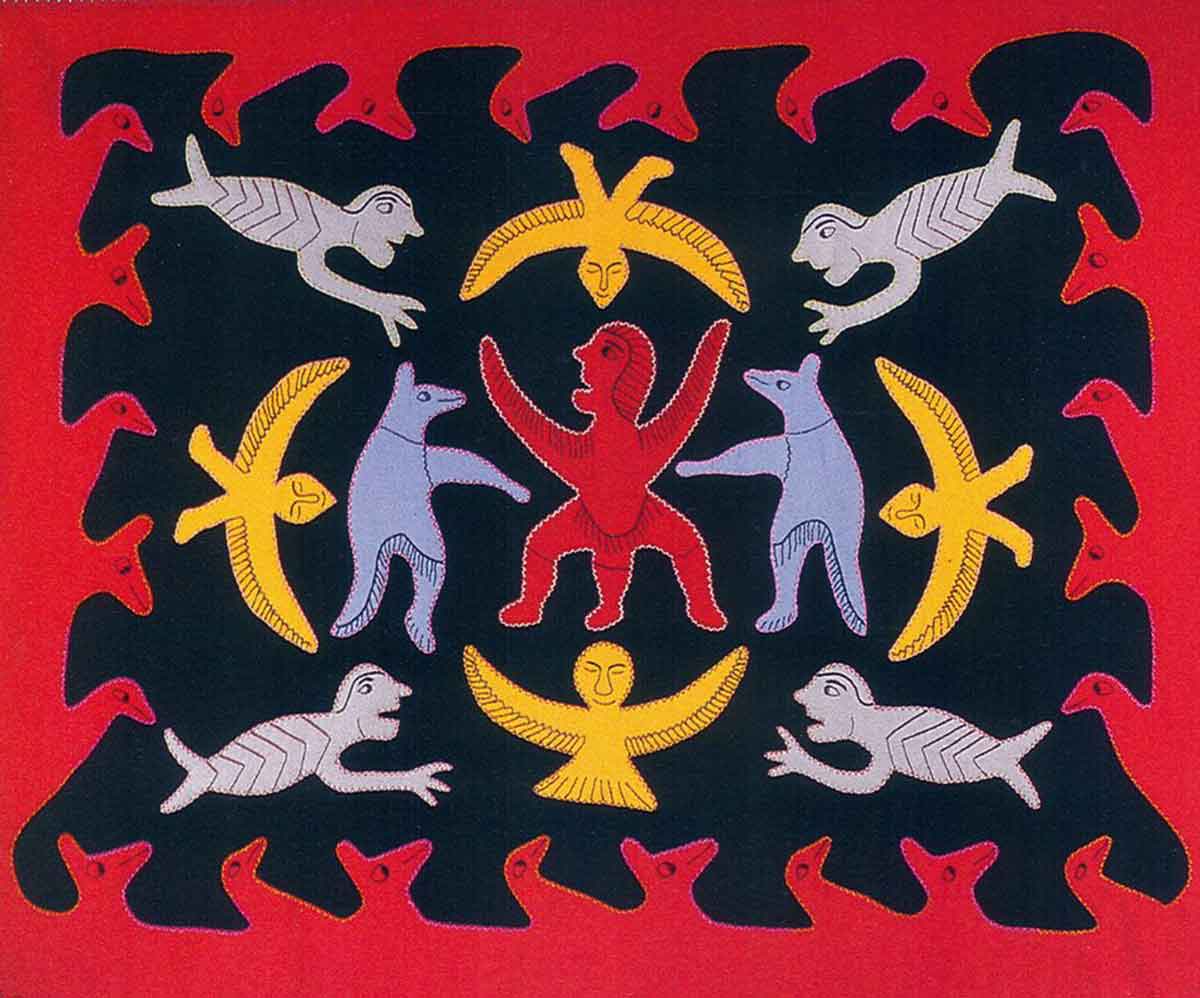
Irene is heavily influenced by Inuit culture, tradition, and religion. Recording her grandmother’s oral history, she employed stories, legends, and myths in creating her art. Spirituality, transformation, and shamanism are fields the artist predominantly investigated in order to get a hold of the collective unconsciousness. Attentively examining her Native upbringing, Irene struggled to come to terms with the clash between tradition and modernity.
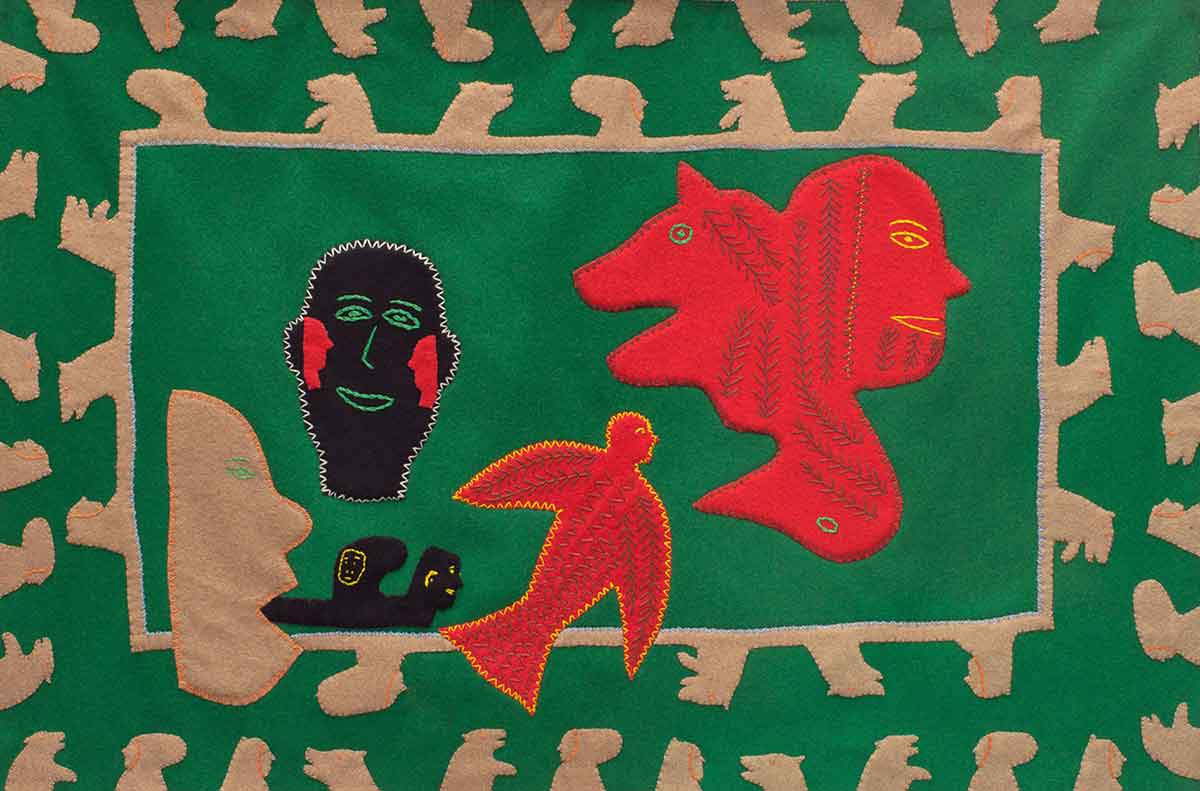
As Judith Nasby, a curator and author of the book Irene Avaalaaqiaq: Myth and Reality, points out, Irene was deeply saddened because of the loss of her traditional nomadic culture, which resulted from having to adapt to settlers’ lifestyle. That is why Irene Avaalaaqiaq put her art in the service of preserving Indigenous folklore, mythology, and history.
1. Kay WalkingStick: We Were 20 Million
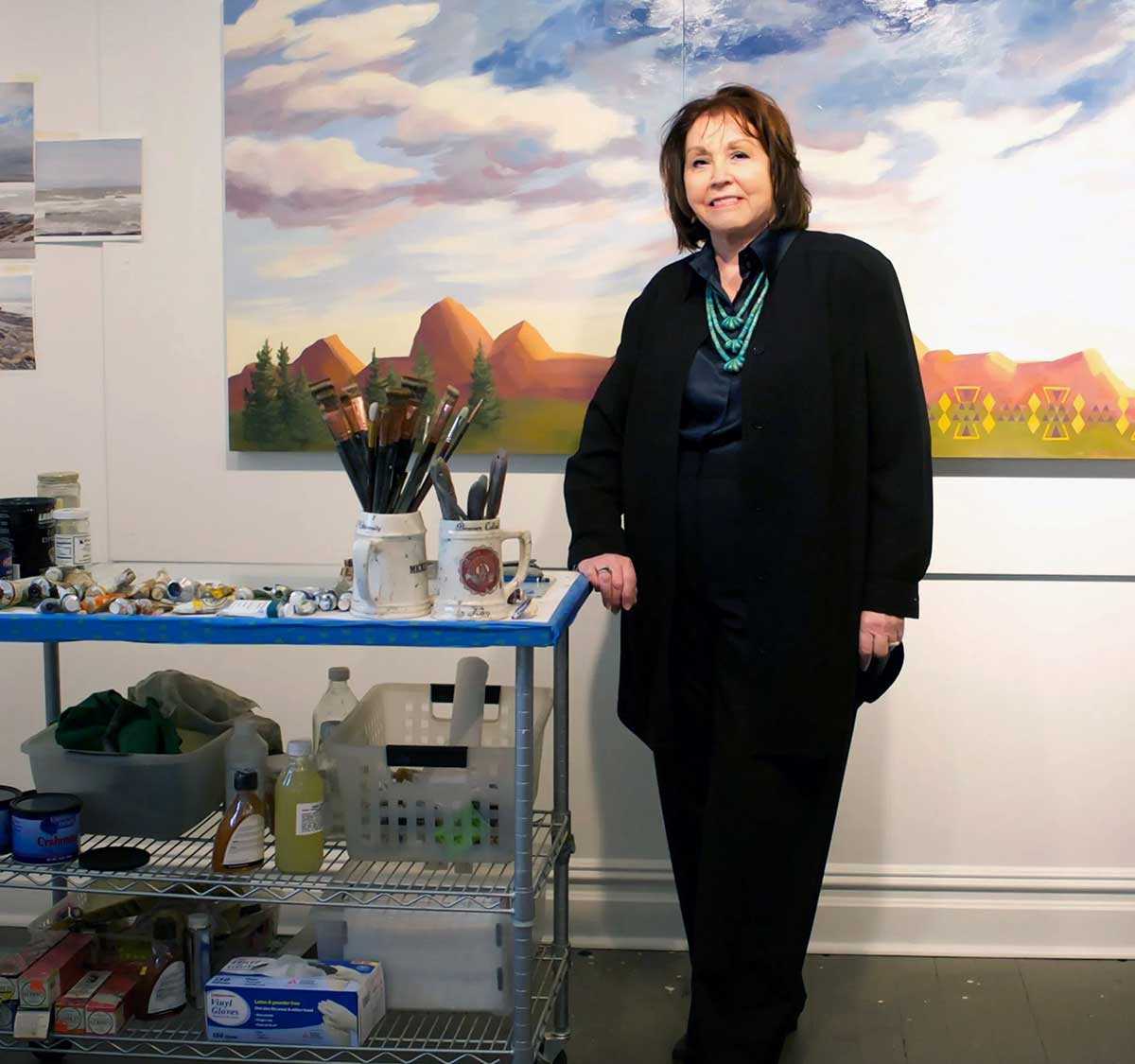
Kay WalkingStick, born in 1935, is a Native American painter who primarily focuses on the American landscape and its heterogeneous symbolism. Her mother was of Irish and Scottish descent, while her father was a member of the Cherokee Nation. For that reason, Kay’s hybrid ethnic identity plays a huge part in her artwork. Her paintings incorporate designs inspired by Southwestern Native American rugs, pottery, and other traditional art forms.
Kay WalkingStick began to create landscapes in the 1980s. At first, they were mainly done in the form of diptychs. Kay would produce a realistic landscape on one side of the panel while she placed an abstract one on the other part. In that way, she contrasted representational modes of traditional landscape with New York’s distinct style of American abstraction. However, this duality doesn’t portray only the tension between the naturalistic and the abstract. The binary quality of diptychs also alludes to Kay’s dual ethnicity and the power that can be derived from biracialism.
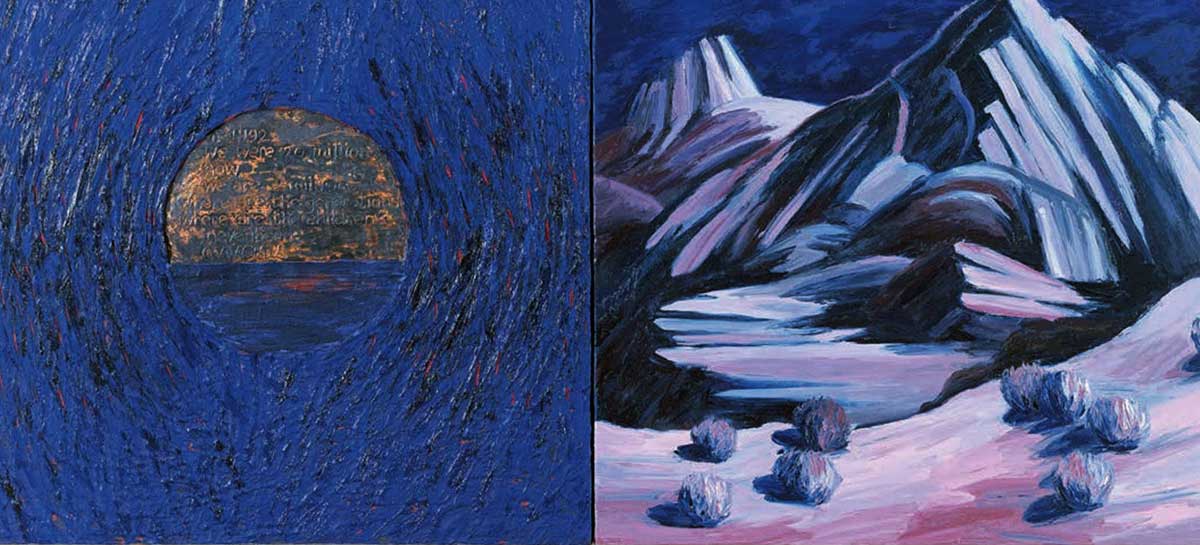
In 1991, Kay WalkingStick produced an emotive and epic work titled Where Are the Generations? This diptych is done in a very minimalist and geometric manner, with thickly layered surfaces that possess an almost sculptural quality. The abstract side on the left has a circle positioned in the center with poignant words done in copper: In 1492 we were 20 million. Now we are 2 million. Where are the children? Where are the generations? Never born. The realistic landscape on the right evokes a sense of emptiness, coldness, and extinction. It speaks very loudly of hardships imposed on the Indigenous population by European colonizers.