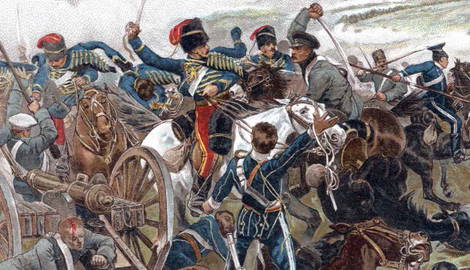

Popular history has long consigned the cavalry charge to the grave with the advent of industrial warfare on an unprecedented scale across the Western Front in 1914. Yet the cavalry charge refused its epitaph, surviving for three more decades as it adapted to the broken landscapes and sweeping expanses of the two world wars. Read on to find out, as closely as the historical evidence permits, when and where history witnessed the last successful cavalry charge.
1914: A Death Blow for This Most Noble of Arms?
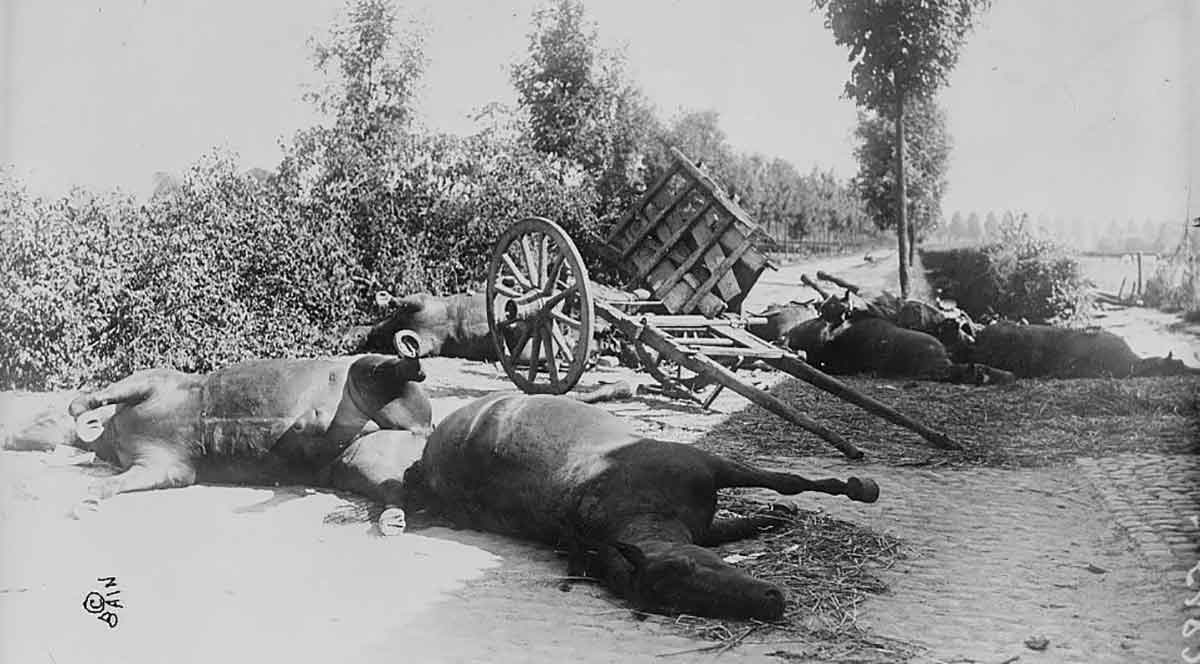
If the opening days of the First World War on the Western Front stirred cavalry officers and troopers with visions of decisive action at the point of cold steel, those illusions were soon overtaken by reality. The great mounted formations fielded by both the Entente and the Central Powers entered the campaign with two principal operational tasks: to screen the advancing armies through reconnaissance and skirmishing; and to exploit any weakness in the enemy line in the hope of dislocating it and easing the advance of the infantry. As Germany’s cavalry corps streamed down the sun-baked roads of Belgium and France, while those of the Entente rode out to meet them, the battlefield delivered its verdict with unforgiving speed.
At Haelen and a dozen nameless roadside skirmishes in early August 1914, bolt-action rifles and machine guns made ruin of lance and saber, leaving fields strewn with bodies and riderless horses. Gone were the days of great chevauchées; the cavalrymen saw themselves increasingly fighting as dragoons: riding into combat but fighting as dismounted skirmishers, irrespective of their actual designation. The German defeat on the Marne in September 1914 and the end of the race to the sea in October saw the front solidify in place as trench networks began appearing. Without room to maneuver, faced with its diminishing importance and its inability to force the stalemate, cavalry was sent to the rear to await a breakthrough. They would wait four years.
The Secondary Fronts of the Great War: A Saving Grace for the Cavalry
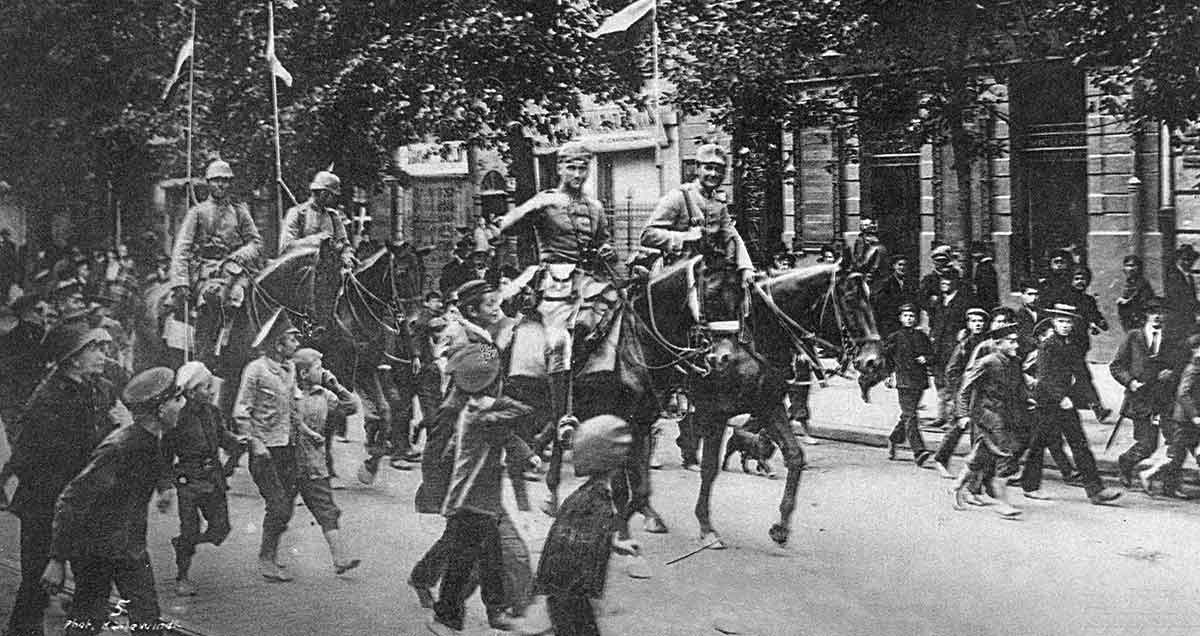
On the Eastern Front and across the theaters of the Orient, the war assumed a different character. Distances were so immense, landscapes so unforgiving, that the front resisted the rigid immobility that came to define the West. In these expansive theaters, cavalry retained a meaningful, if diminished, role. Their value as a screening force remained beyond dispute, while their capacity to deliver shock action endured in circumstances that still favored speed and surprise. Few episodes illustrate this more vividly than the charge of the Australian 4th Light Horse Brigade against Turkish positions around the town of Beersheba during the Third Battle of Gaza in the autumn of 1917.
The Charge at Beersheba, 1917
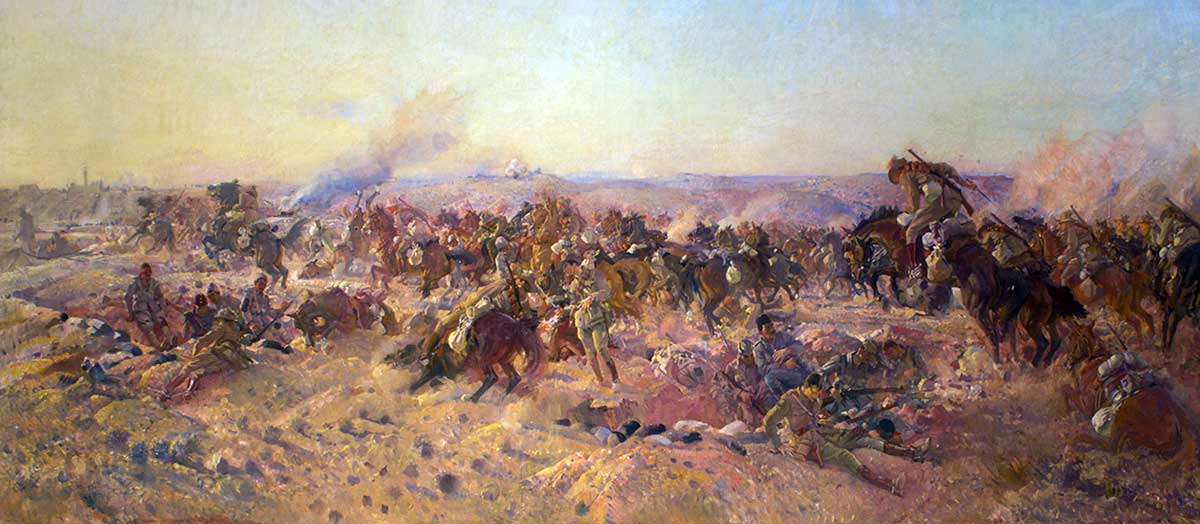
The desert town of Beersheba anchored the Turkish left flank and thus held the key to unravelling the Ottoman line in southern Palestine. Having first tested the position with infantry assaults, the British resolved to strike from the open desert with the Anzac Mounted Division. The decisive task fell to the Australian 4th Light Horse Brigade, which committed two regiments against the fortified Turkish positions. Between them and their objective stretched four miles of exposed ground. They raced across it at a furious gallop, riding through artillery and rifle fire that, though intense, proved remarkably inaccurate.
Private Eric George Elliott, watching from the infantry, never forgot the spectacle:
“It was the bravest, most awe-inspiring sight I’ve ever witnessed, and they were yelling, swearing and shouting. There were more than 500 Aussie horsemen. As they thundered past, my hair stood on end. The boys were wild-eyed and yelling their heads off” (Jarymowycz, 2008, p. 147).
Despite their losses, the Australians reached the Turkish line. Confronted with hundreds of horsemen bearing down at full speed, many of the Ottoman defenders broke before contact, allowing the Light Horse to seize Beersheba at relatively low cost.
In the war’s aftermath, cavalry officers and military theorists across Europe proved reluctant to consign the mounted arm to history. Many dismissed the tank as the peculiar offspring of trench warfare, while pointing to the cavalry’s few but celebrated successes, above all the charge at Beersheba, as evidence that the horse had not yet yielded the battlefield. For a time, at least, they were proved right.
The Polish-Soviet War 1919-1921: Great Cavalry Clashes in the East.
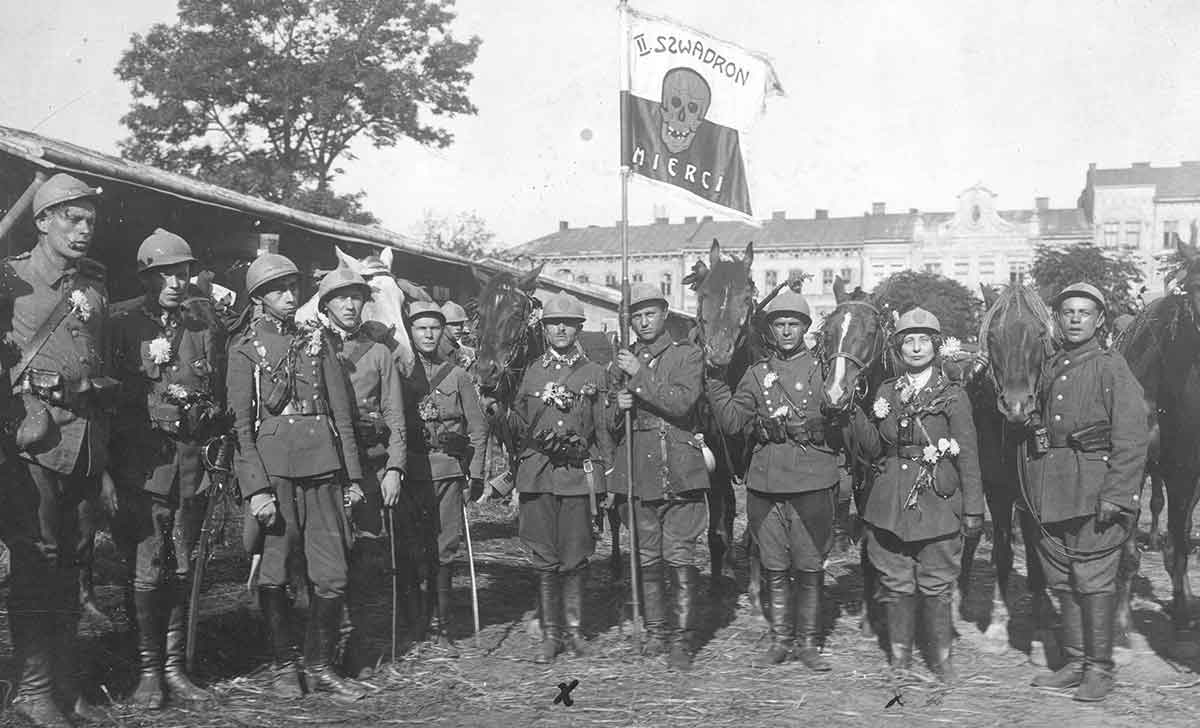
The collapse of the Central Powers in 1918 left Eastern Europe as a mosaic of new and fiercely contested states carved from the remains of the Russian Empire. Though consumed by civil war since 1917, the young Soviet state had, by January 1919, recovered sufficient strength to reclaim territories it had been forced to cede under duress in the Treaty of Brest-Litovsk. Soviet armies therefore advanced westward into Ukraine and Belarus, spearheaded by the formidable 1st Cavalry Army, the Konarmiya. Ukrainians resisted the Soviets in a bitter struggle of their own, but for the purposes of this article, it is the Polish Army’s encounter with the Soviets at the Battle of Komarów in August 1920 that commands attention. There, in the vast plains of Eastern Europe, cavalry fought one of its last great set-piece battles, one whose lessons would shape both Polish and Soviet mounted doctrine until the Second World War.
The Battle of Komarów, 1920
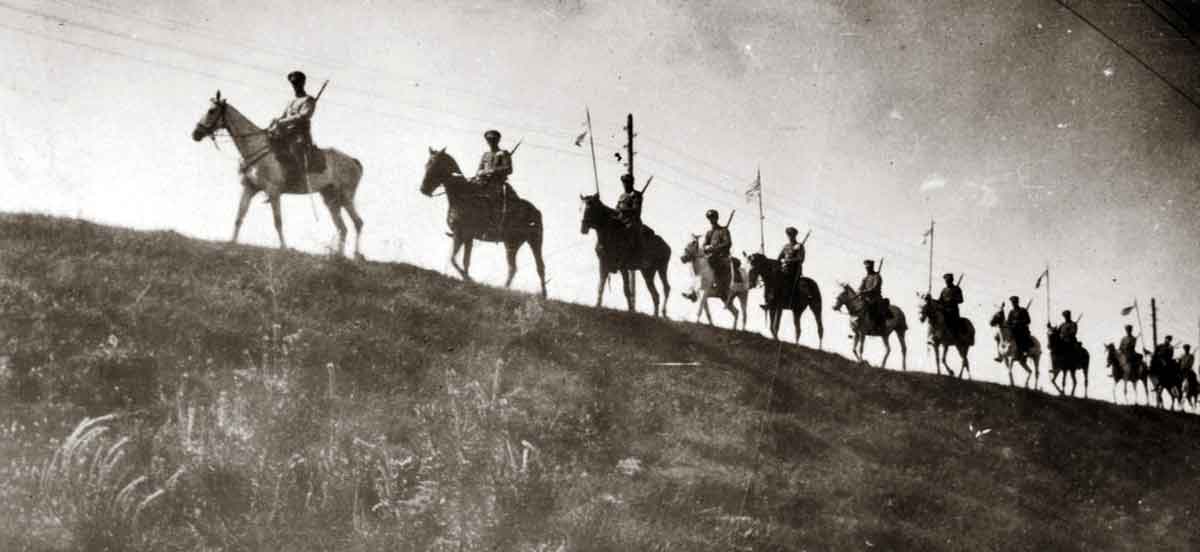
The largest cavalry battle fought in Europe since the Napoleonic Wars pitted General Semyon Budyonny’s Konarmiya, four cavalry divisions nearly 17,000 sabers strong, advancing from the Lviv region towards Warsaw, against the forces of the Polish Southern Front: some 6,000 Uhlans under General Juliusz Rómmel, supported by infantry formations. Rather than a single clash, the two armies fought several actions over two weeks around the town of Komarów, where villages, crossroads, and commanding ground became the prizes of a relentless fighting that ultimately blunted the Soviet spearhead and broke the back of the Konarmiya.
The decisive encounter came near the village of Wolica Śniatycka, where the Soviet 6th Cavalry Division was shattered by a charge of the Polish 1st Uhlan Regiment. The Poles caught their opponents as they were still deploying, and, exploiting the full momentum of the charge, broke the Soviet line before it had properly formed. What followed was a fierce mêlée. After some 30 minutes of bitter fighting, the Soviets withdrew, having suffered around 3,000 casualties. The Poles emerged as the undisputed victors with only 500 casualties.
Taken as a whole, the Battle of Komarów did more than the scattered mounted successes of the Great War to reinforce the faith of cavalry officers and generals in the continued military value of the mounted arm. Both belligerents drew enduring doctrinal lessons from the campaign. The Poles and the Soviets would employ cavalry aggressively as shock formations throughout the Second World War, while the United States, France, and Germany likewise entered the conflict with cavalry units ranging from battalions and regiments to full divisions.
1939: Cavalry Meets Blitzkrieg in Poland
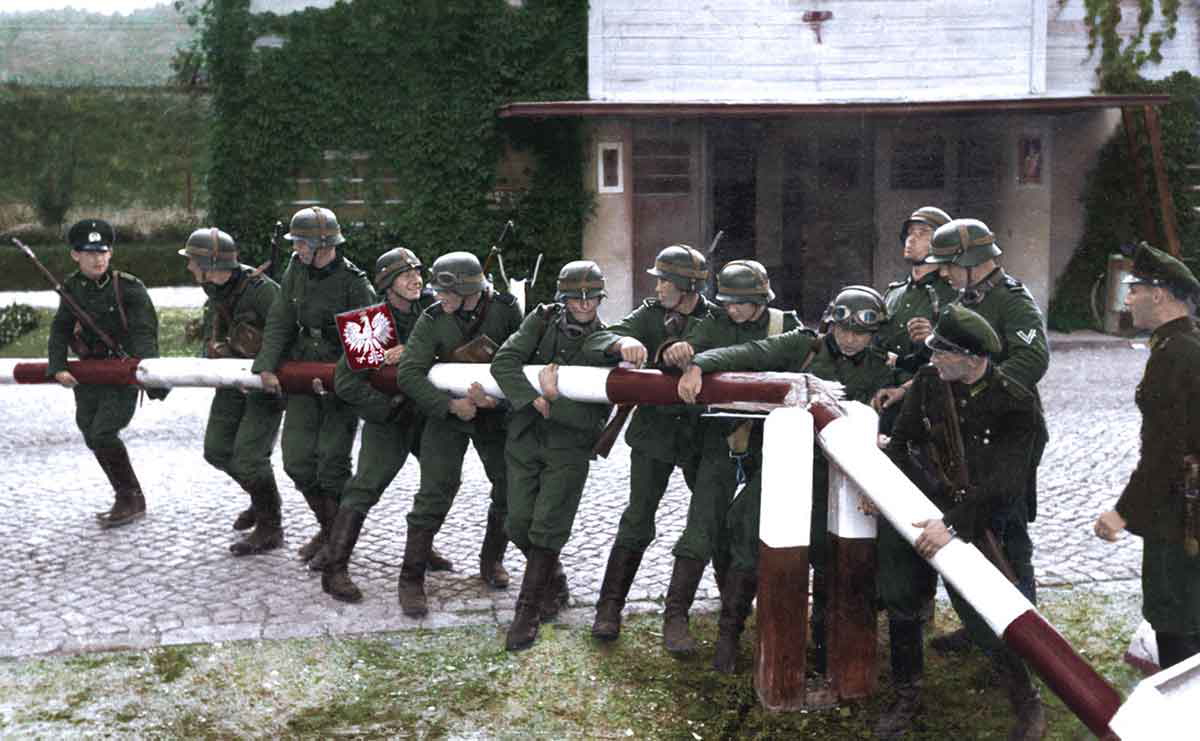
On September 1, 1939, Germany unleashed its new doctrine of combined-arms warfare against Poland. As panzer formations, supported by close air power, ruptured the Polish defensive line, the Polish High Command responded according to the lessons it believed it had learned from the Polish-Soviet War, committing its mobile reserve of eleven cavalry brigades and two motorized cavalry brigades to seal the breaches. This did not mean charging on horseback against German tanks. More often than not, these formations fought dismounted, relying on anti-tank rifles, artillery, and fieldcraft in an effort to contain the German advance. Yet the cavalry saber was not wholly absent from the campaign. On several occasions, Polish cavalry crossed blades with German infantry and, in a handful of engagements, achieved notable local success.
The Mythmaking Around the Charge at Krojanty
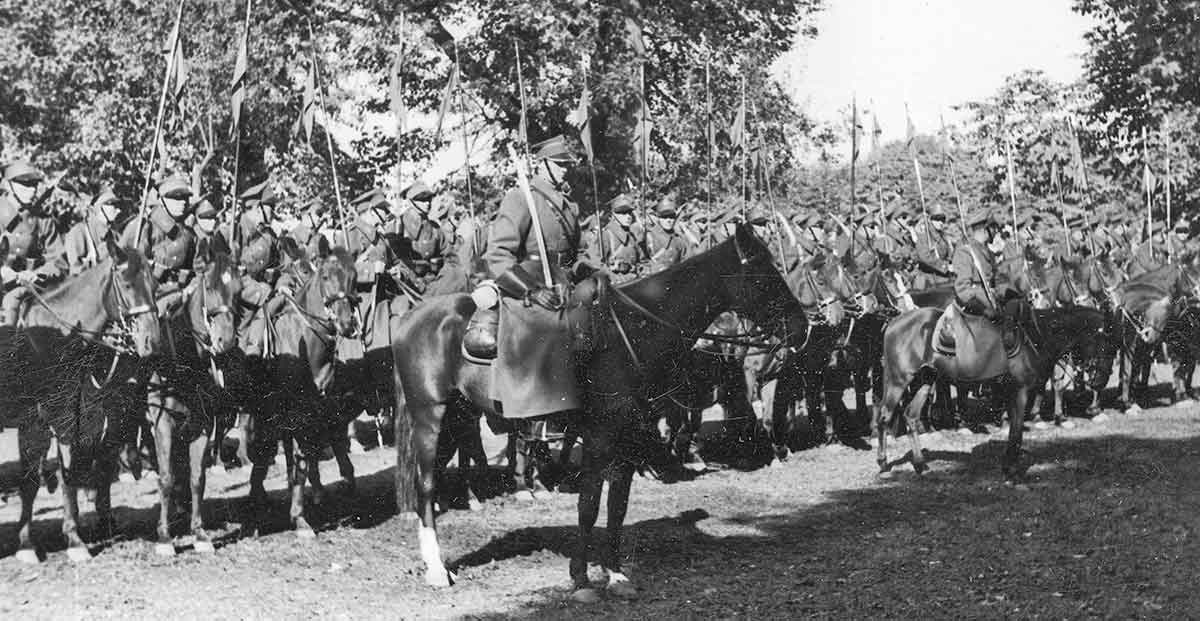
The enduring myth of Polish cavalry charging German panzers grew out of one such cavalry engagement near the Brda River. There, several squadrons of Polish Uhlans under Colonel Kazimierz Mastalerz charged against the rear of a German infantry battalion as it attempted to cross the river. Taken completely by surprise, the German infantry suffered heavily and began to fall back. The success, however, proved fleeting. As the Uhlans reformed after the charge, German armored cars armed with 20mm autocannon suddenly entered the fight, sweeping the exposed horsemen with devastating fire. Colonel Mastalerz and some twenty of his troopers were killed before the remainder of the regiment could disengage.
When German, and perhaps Italian, war correspondents reached the battlefield after the fighting had moved on, they fashioned from the scattered evidence a compelling tale of obsolete horsemen hurling themselves, lances levelled, against Germany’s modern armored might. It was simply propaganda dramatizing the triumph of mechanized warfare over a supposedly antiquated foe. The story traveled far and was repeated uncritically by sections of the Western Allied media, and has continued to shape popular perceptions of the German invasion of Poland ever since.
Krasnobród and the Success of the Uhlans
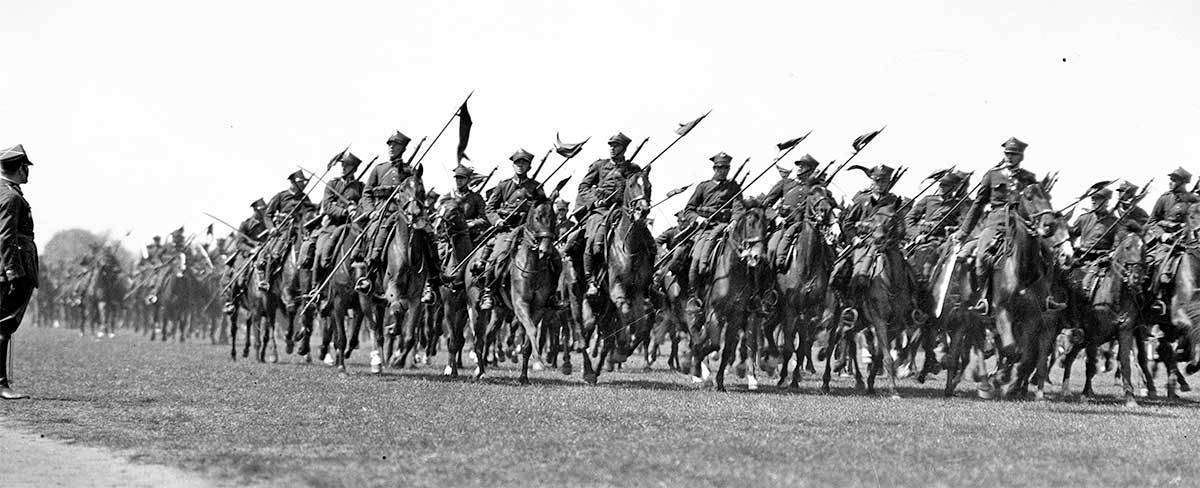
Not every mounted clash ended in disaster for the Poles. In late September 1939, near Krasnobród, a squadron of the 25th Uhlans was countercharged by German cavalry screening the 8th Wehrmacht Infantry Division. A brief but savage mêlée followed, in which the Polish horsemen gained the upper hand. Having driven off their German counterparts, the lancers pressed on into the German communications line and overran elements of the divisional headquarters. Junior officer Kamil Dziewanowski remembered the shock of the encounter:
“Sabres and lances went to work fiercely. Some confused German infantrymen pushed off our sabre blows with their rifle butts. Some simply tried to cover their heads with their arms, but our lances reached even those who tried to hide between the wagons” (Jarymowycz, 2008, p. 169).
Such dramatic engagements could do little to alter the fate of the campaign.
While Polish cavalry achieved occasional tactical success as a mobile shock force, the September Campaign also exposed the narrow circumstances in which such operations remained feasible. Accordingly, when German and French cavalry next met during Fall Gelb, they did so chiefly as mounted infantry fighting in difficult terrain, above all in the Ardennes.
On the Eastern Front, the Soviets continued to employ cavalry as an offensive arm at both the tactical and operational levels. In doing so, the Red Army would demonstrate that, under the right conditions, cavalry still retained a place on the battlefields of the Blitzkrieg era.
1941-1945: Cavalry in Soviet Operational Art
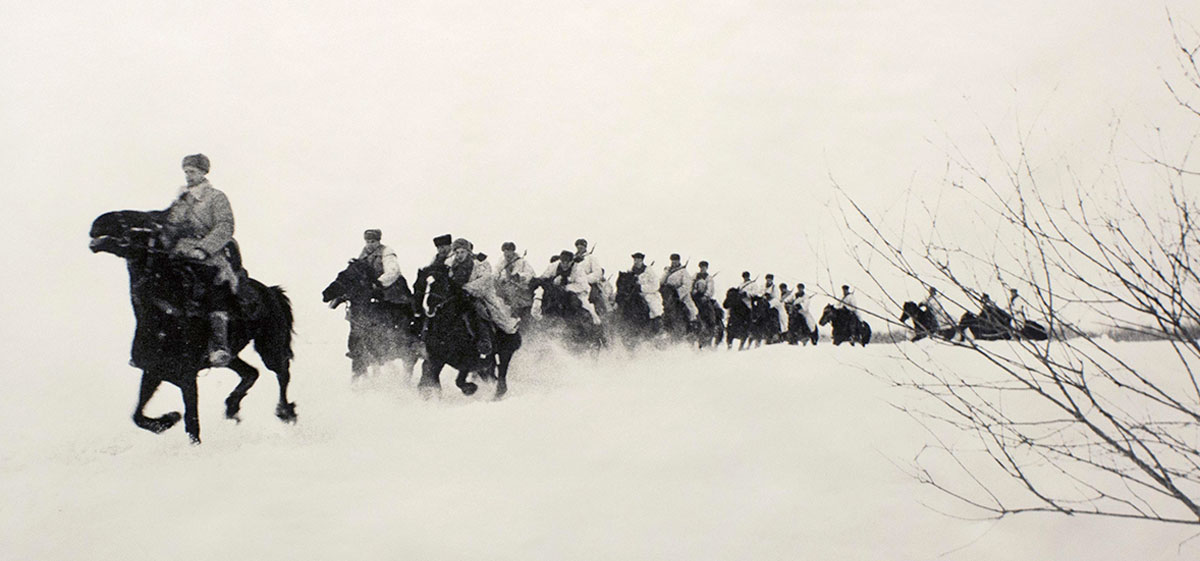
The Red Army, like that of the Poles, held no illusions about the place of cavalry in modern war. The Soviet Field Regulations of 1940 assigned mounted formations a clearly defined operational role: striking enemy flanks and rear areas; exploiting weak sectors of the front independently or alongside infantry and armor; conducting envelopments and encirclements; and harassing an enemy in retreat or active defense.
These missions lay at the heart of the Soviet doctrine of Deep Battle that would, after four years of bitter fighting, ultimately prevail over the German Blitzkrieg. Even during the desperate summer of 1941, the 15,000-strong Soviet cavalry corps, heavily supported by machine guns, artillery, and other modern weapons, carried out such missions with remarkable success following the destruction of most of the Red Army’s mechanized formations.
Few episodes illustrate this better than Colonel Lev Dovator’s two-day raid behind German lines between August 28 and 30, 1941. Breaking through the German 450th Infantry Regiment with 3,000 horsemen and a handful of machine-gun detachments, Dovator’s force overran two regimental headquarters and the Sixth Army’s topographical department, destroyed some 200 motor vehicles, inflicted roughly 2,500 casualties (according to Soviet reports), and returned to Soviet lines still fully capable of further operations.
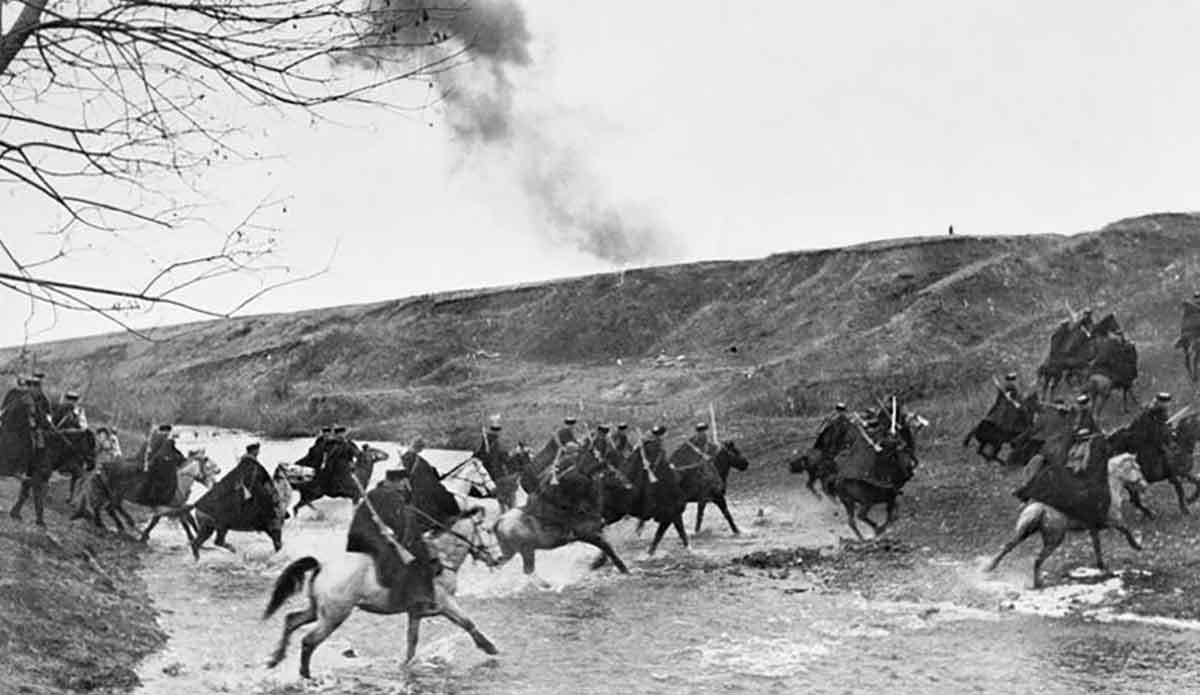
Even as the Red Army rebuilt its mechanized formations, Soviet cavalry units continued to fulfil these exploitation and raiding missions throughout the war. Among the most remarkable was the deep raid conducted by Major General Pavel Belov’s 1st Guards Cavalry Corps, which operated behind the German Ninth Army from January to June 1942. For five months, Belov’s horsemen remained a constant menace to the German rear, compelling the diversion of as many as seven divisions in repeated attempts to destroy them. Throughout such operations, cavalry fought mounted or dismounted as circumstances demanded, and saber charges were far from uncommon.
Supported by mechanized formations, Soviet horsemen also played a vital role in reducing encircled German forces, most notably during the Battle of Korsun-Cherkassy in Ukraine in 1944. Against this backdrop, it is scarcely surprising that the last significant recorded saber charge was carried out not by the Italian Savoia Cavalleria at Izbushensky in 1942, as is so often claimed, but by cavalry serving under Soviet command.
1945: The Last Confirmed Cavalry Charge
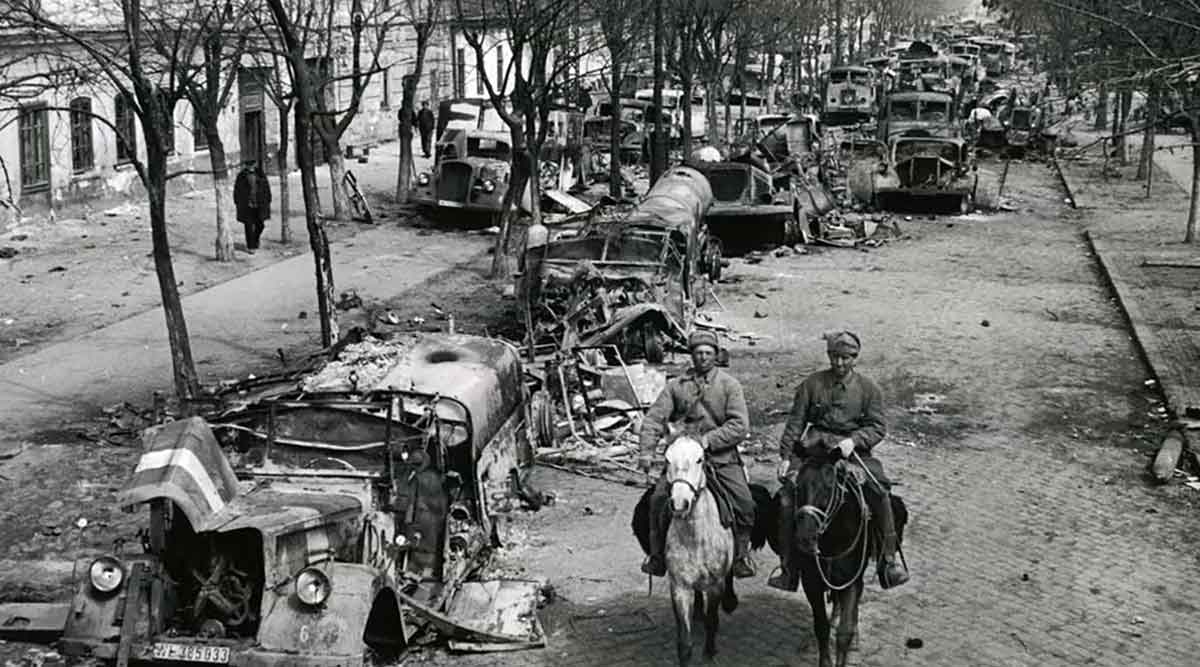
Two campaigns present plausible claimants for the final cavalry charge in military history: the East Pomeranian Offensive and the Manchurian Strategic Offensive. This article confines itself to the former. The decision is a methodological one rather than a historical judgement. Tactical evidence for the Soviet advance into Manchuria in August 1945 remains fragmentary and, where it survives in detail, is largely confined to Russian-language sources. Rather than reconstruct a hypothetical charge by one of General Issa Pliyev’s cavalry corps in Manchuria on the basis of incomplete and uncertain evidence, this article turns to the best documented candidate.
The Charge at Schönfeld, March 1, 1945
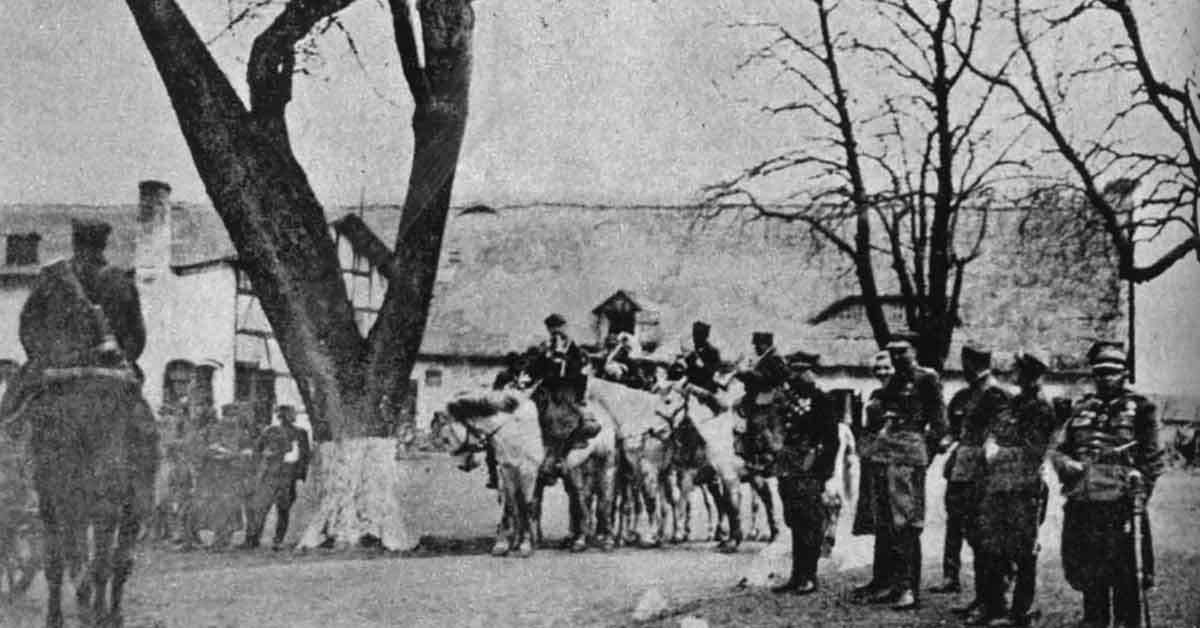
The last saber cavalry charge of true military significance unfolded during the final months of the Third Reich, in March 1945. As the Soviet-led First Polish Army advanced westwards through Pomerania in support of the wider drive towards the Baltic, it came up against the German defensive line anchoring the province. On March 1, an assault by the tanks and infantry of the 2nd Infantry Division against the fortified village of Schönfeld, perched atop Hill 157 and protected by anti-tank guns, stalled in the exposed, waterlogged ground below. Confronted with this rough terrain, the Soviets committed the 1st Independent “Warsaw” Cavalry Brigade.
Concealed in nearby woodland, two squadrons of Uhlans assembled beneath the cover of an artillery-laid smoke screen. At 15:45, a single red flare rose into the leaden Pomeranian sky. The horsemen burst forward at the gallop, covered two kilometres of open marshland, crossed a railway embankment, and swept up the slopes of Hill 157. Sabers flashed, grenades tumbled into the trenches, the anti-tank guns were overrun, and within a few minutes, the fighting spilled into the streets of Schönfeld itself. The German defenders gave way, Schönfeld fell, and cavalry triumphed on the field of glory for one last time.
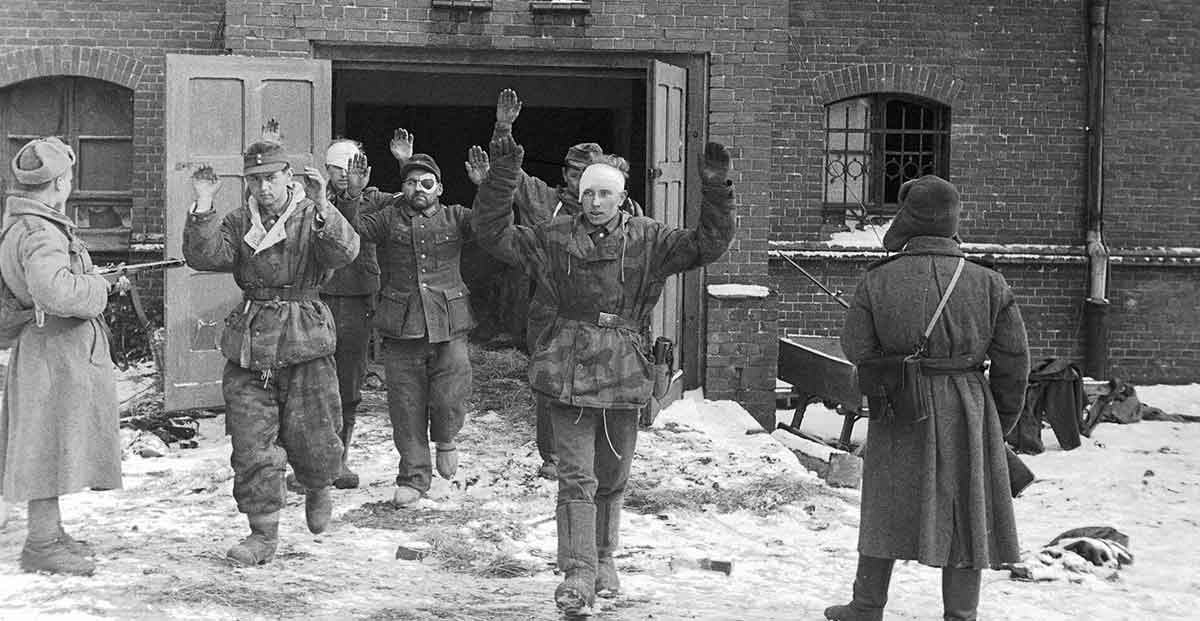
In 1946, the Red Army either disbanded or converted into fully mechanized formations most of the 26 cavalry divisions with which it had ended the war. The few mounted formations that remained in the Soviet Army, retained for reconnaissance and occupation duties in the rugged, sparsely developed regions of the USSR, would in turn disappear under Marshal Georgy Zhukov’s sweeping reforms of 1954 and 1955. The last of them, the 4th Guards Cavalry Division, was disbanded in April 1955.
Source
- Jarymowycz, R. J. , Cavalry from hoof to track, Wesport, Praeger Security International, 2008.