
Locusta of Gaul was one of the most effective assassination tools for the political elite during the Julio-Claudian era. Using her skills and knowledge as an expert botanist, Locusta of Gaul managed to make a career for herself by becoming a political weapon. Directly involved in the assassinations of both Emperor Claudius and his biological son Britannicus, she had a major impact on the power politics of the Julio-Claudian era.
Mushrooms and Poisoned Feathers That Brought Down Emperor Claudius
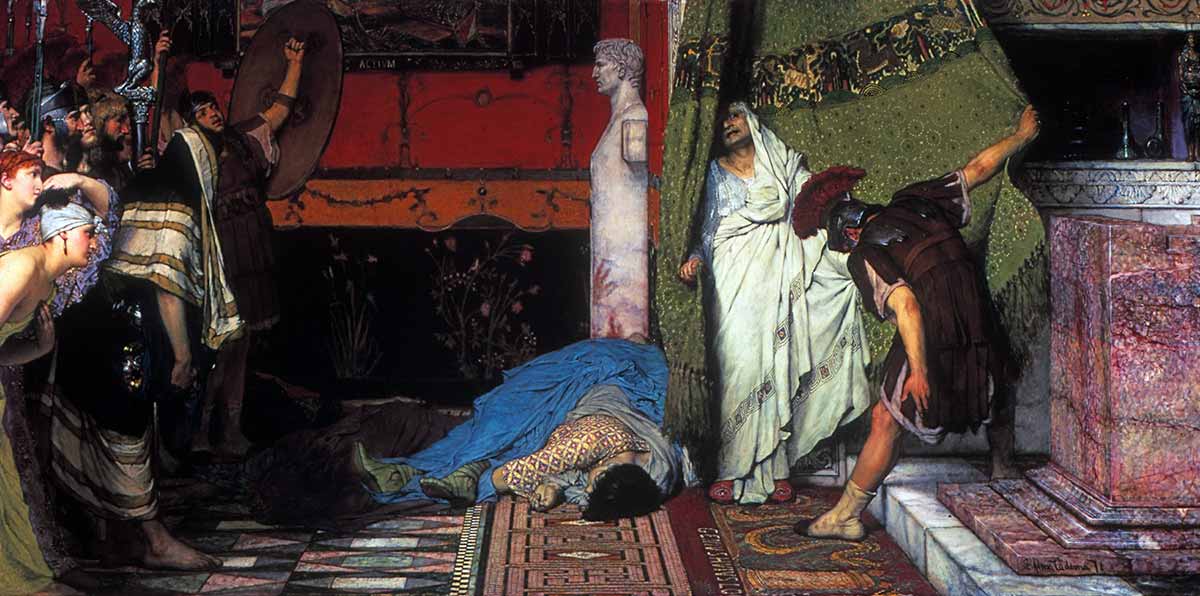
Locusta of Gaul was employed to help poison Emperor Claudius, under the service of Agrippina the Younger. The specific type and effects of the poison had to be carefully considered, and after much deliberation, Agrippina decided that the poison should be one which “deranged” Claudius’ mind and did not instantly kill him. The reasoning behind this is because Agrippina was afraid that the murder would be too obvious and easily revealed if the poison acted too quickly; on the other hand, if it was too slow, Claudius might “return his love for his son,” as he neared his end (Tacitus, The Annals, XII 63-67).
Once Locusta of Gaul had prepared the poison, it was administered to Claudius by Halotus, his eunuch who often brought in and tasted dishes. The poison was infused into a bowl of mushrooms, but initially was not effective enough to kill Claudius. In an effort to distance herself from any accusations of poisoning, Agrippina sought help from the doctor Xenophon, who had already allied himself with Agrippina, and then smeared Claudius’ throat with a feather dipped in some rapid-acting poison (Tacitus, The Annals, XII 63-67).
From Laxative Failure to Instant Death in Nero’s Plot Against Britannicus
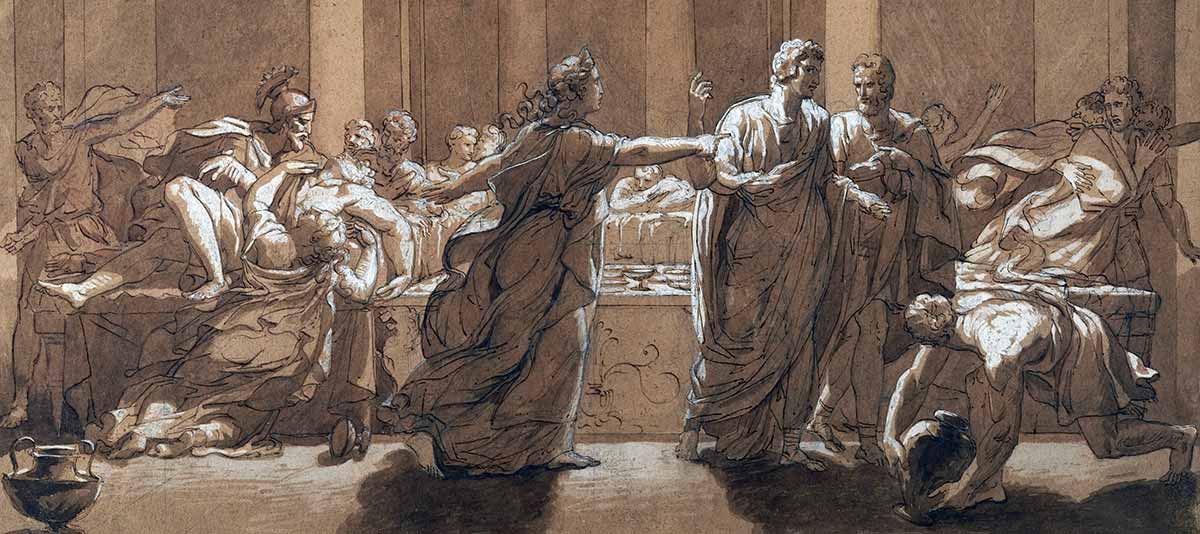
In 55 AD, Nero attempted to poison his main political rival, Britannicus, who was his stepbrother and Claudius’s biological son. Locusta of Gaul was tasked with concocting the poison, which initially did not work as Nero had hoped: Suetonius writes that the effect was “violently laxative” (Suetonius, Life of Nero, 1.34).
After this initial failure, Nero beat Locusta of Gaul, accusing her of giving Britannicus medicine instead of poison, and demanded that she concoct a more lethal poison. Locusta of Gaul and Nero then went into his bedroom, and he watched over her as she concocted a new poison. This poison was then tested on a child, who took five hours to die, which Nero thought was far too long, and made Locusta of Gaul yet again create a faster-acting poison. This third poison was then tested on a pig, which died instantaneously.
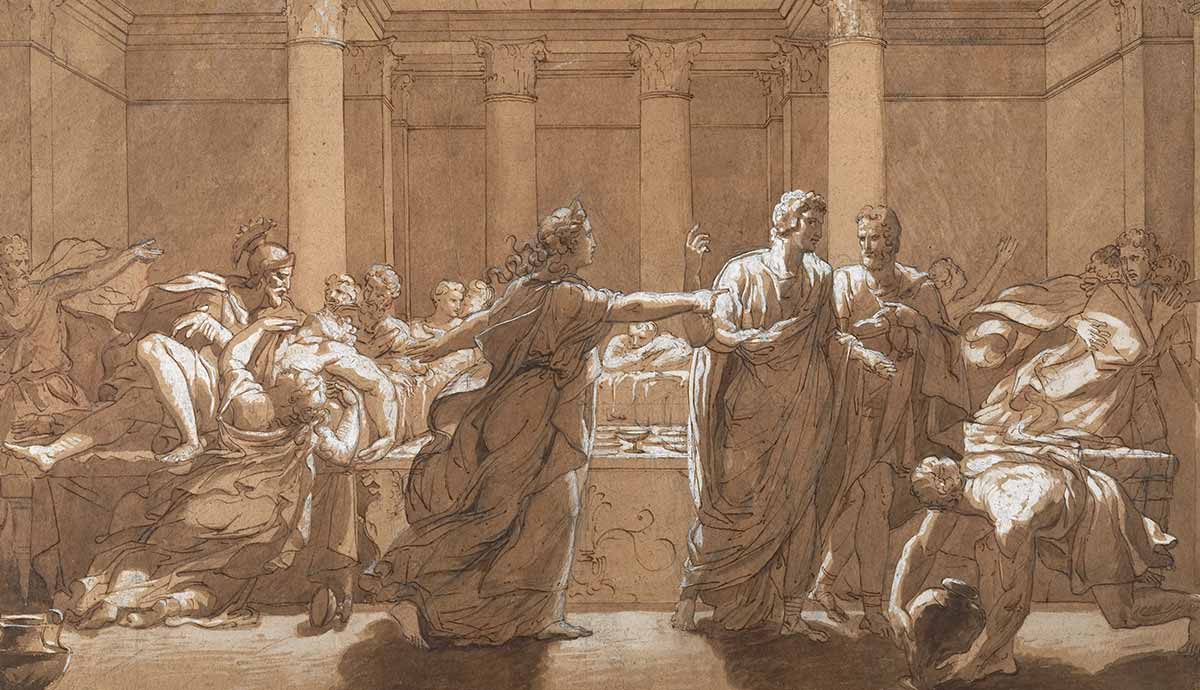
At the feast later that night, Nero had Locusta of Gaul’s poison poured into Britannicus’ cup, and as soon as he took a sip, he dropped dead on the spot. As a cover-up, Nero told all of his guests that Britannicus had suffered from epileptic seizures all his life, and his death was a result of this. Locusta of Gaul was then granted political immunity by Nero, as well as some land, and even some students (Suetonius, Life of Nero, 1.34).
Nero’s Poisoner Paraded in Chains and Executed Under Galba
Angered by Nero’s tax policies, a Gaul named Gaius Julius Vindex gave a speech declaring open revolt against Nero in 68 AD, which garnered a lot of support amongst the people (Cassius Dio, Roman History, 63.22). Vindex selected Servius Sulpicius Galba, governor of Spain with a large military force at his disposal, as the man who should replace Nero as Emperor (Cassius Dio, Roman History, 63.23).
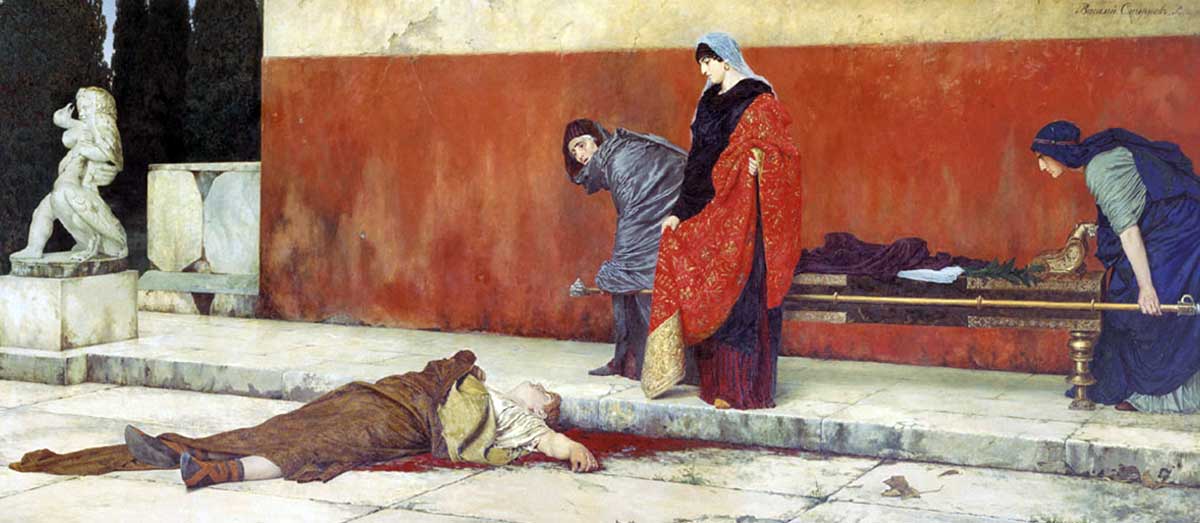
After a disastrous slaughter of his men at the town of Visontio against a governor who opposed him named Rufus, Vindex committed suicide (Cassius Dio, Roman History, 63.24). Rufus ended up deserting, and Galba was declared emperor by the soldiers (Cassius Dio, Roman History, 63.26). Nero was then declared an enemy of the state by the Senate and attempted to flee to a more secluded location (Suetonius, Life of Nero, 1.47). Just before this, he asked Locusta of Gaul to give him some poison, which he put in a golden box, most likely to use on himself later (Suetonius, Life of Nero, 1.47). When he was found, however, he took his own life by other means (Cassius Dio, Roman History, 63.29), bringing the Julio-Claudian dynasty to an end.
Galba was then officially declared Emperor, and as one of his first acts, he ordered the poisoner Locusta of Gaul, along with others who had aided Nero, to be paraded through Rome in chains and then to be executed (Cassius Dio, Roman History, 64.3).
Works Cited
Suetonius. The Twelve Caesars. Translated by Robert Graves. Penguin Classics, 2007.
Tacitus. The Annals & The Histories. Edited by Moses Hadas. Translated by Alfred John Church and William Jackson Brodribb. The Modern Library, 2003.
“Vol. VIIIP173 Epitome of Book Lxiii.” Cassius Dio – Epitome of Book 63. Accessed October 3, 2026. https://penelope.uchicago.edu/Thayer/E/Roman/Texts/Cassius_Dio/63*.html.