Ancient Greek civilization evolved over roughly 3,000 years, from the Bronze Age Minoans and Mycenaeans through the Archaic, Classical, and Hellenistic periods, fading into Roman rule. While most surviving artifacts still sit close to where they were discovered, many others were carried off by collectors and colonial-era excavators to grand museums abroad.
Understanding Greek antiquity requires a grand tour of sorts, both in and outside Greece. The museums below cover the entire arc, from mysterious 5,000-year-old figurines to the sculptures that still spark debates over restitution.
1. Acropolis Museum, Athens
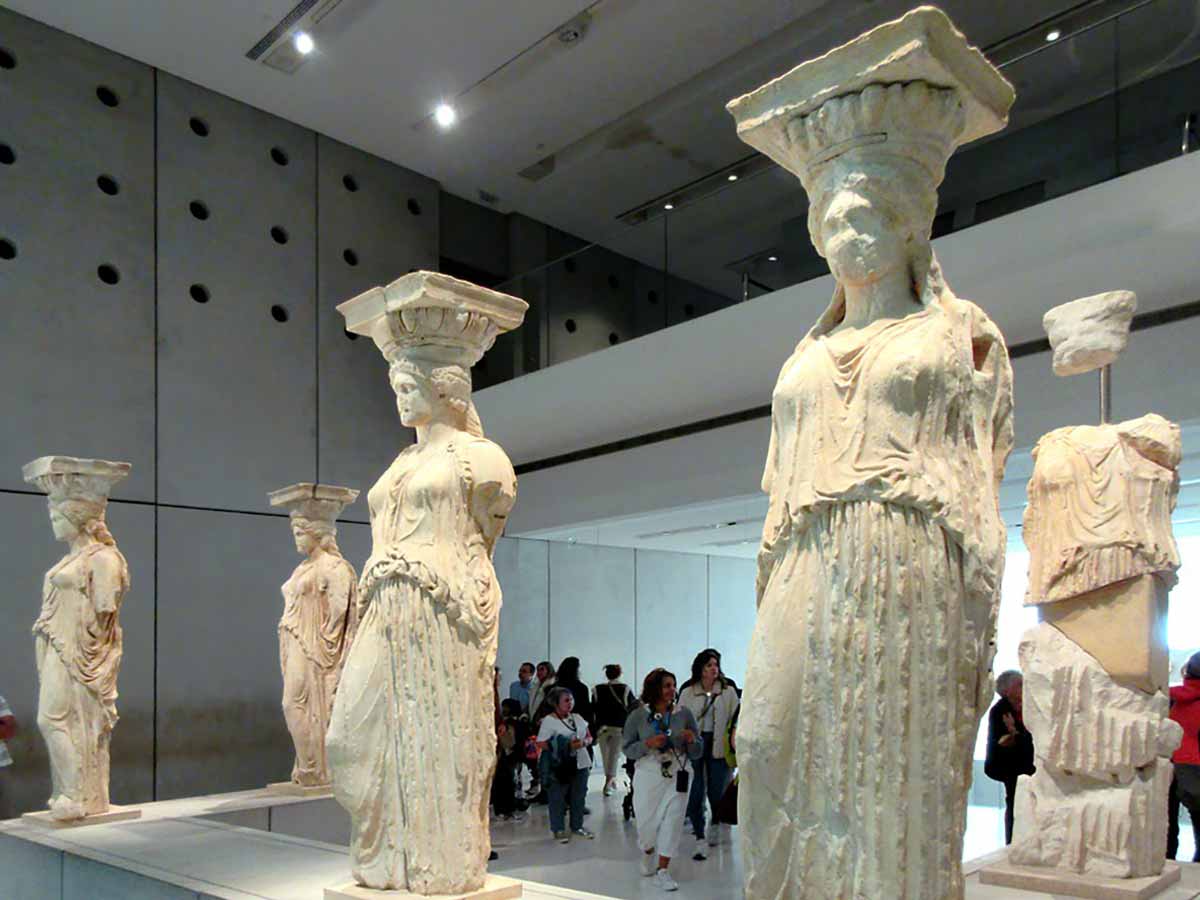
Opened in 2009, right at the foot of the Acropolis itself, the Acropolis Museum holds more than 3,000 artifacts unearthed on the sacred hill above and is a stunning architectural statement in its own right. Designed by Swiss-French architect Bernard Tschumi, the museum is all cool concrete, glass, and stainless steel, deliberately contrasting the warm honey-colored stone of the Acropolis just up the hill.
The top-floor Parthenon Gallery is the museum’s masterpiece, laid out in the exact dimensions and compass orientation of the actual Parthenon. It allows you to view the surviving frieze, metopes, and pediment sculptures while also seeing the real temple through floor-to-ceiling windows just a few hundred feet away. The empty gaps in the gallery, marked with stark white plaster casts, represent the sculptures still in the British Museum (the so-called “Elgin Marbles”), a not-so-subtle political statement about cultural restitution. Don’t miss the earlier galleries either, with their Archaic kouroi statues, the famed Caryatids from the Erechtheion porch, and the lovely Moschophoros (the Calf-Bearer) from around 570 BC.
2. National Archaeological Museum, Athens
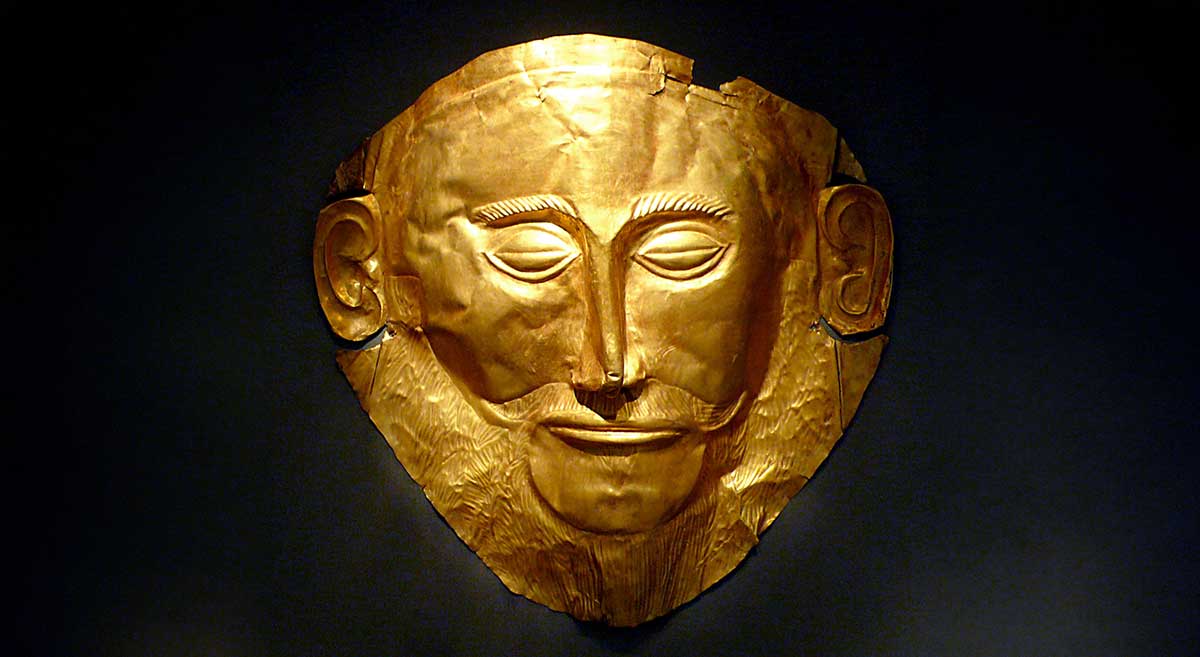
Housed in a gorgeous neoclassical building designed by Ludwig Lange and completed by Ernst Ziller, the National Archaeological Museum is Greece’s largest archaeological museum and one of the most important for antiquities. Unlike the Acropolis Museum, which is very site-specific, this collection is drawn from across the entire country, giving you a sweeping panorama of Greek prehistory and classical history under a single roof. If you visit only one of the best museums for Greek civilizations, make it this one.
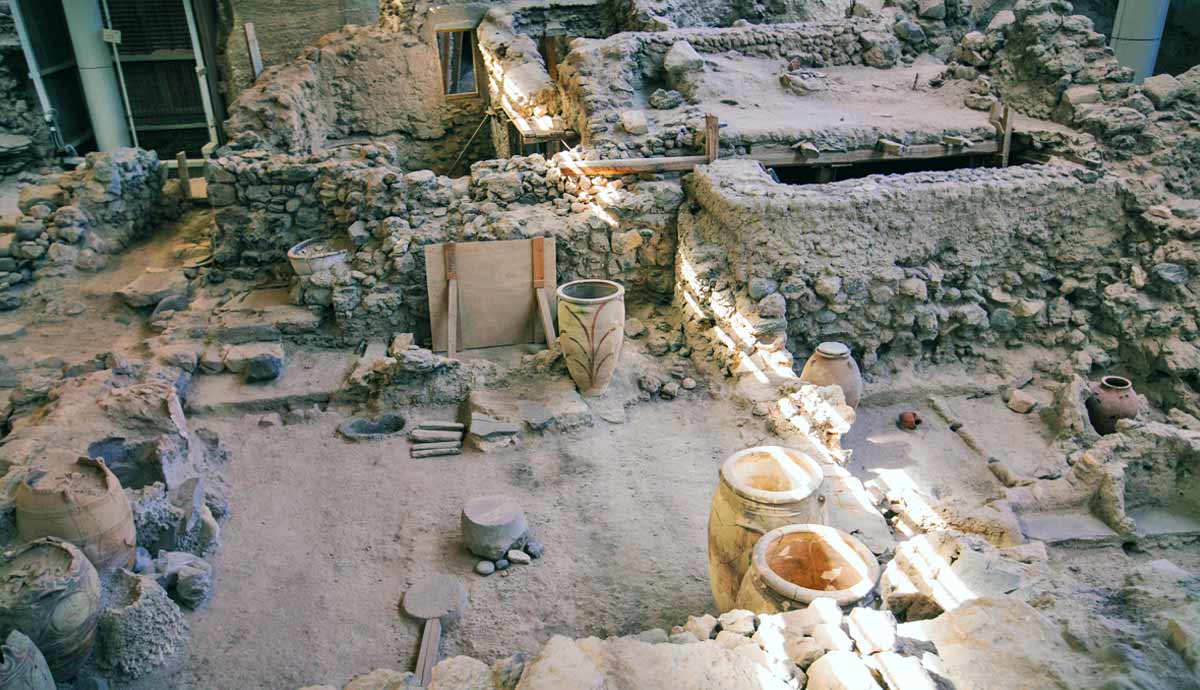
Headline acts include the famous Mask of Agamemnon from Mycenae, the magnificent Artemision Bronze (a larger-than-life statue of either Zeus or Poseidon, recovered from a Mediterranean shipwreck in 1926), and the legendary Antikythera Mechanism, a 2,000-year-old hand-cranked analog computer that still baffles modern engineers. The prehistoric collection holds spectacular frescoes from the Minoan settlement of Akrotiri on Santorini, preserved by volcanic ash (much like Pompeii) after the eruption of Thera around 1600 BC.
3. The British Museum, London
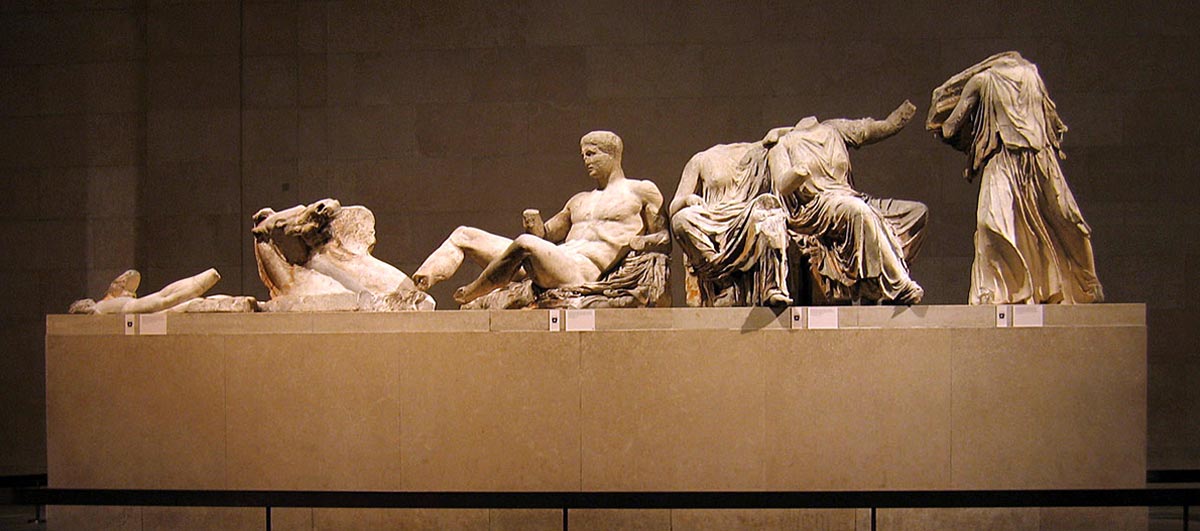
The British Museum’s Greek and Roman collections span the Bronze Age right through to Late Antiquity and include some of the most significant objects of Greek art anywhere in the world. The Parthenon sculptures, controversially brought to London by Lord Elgin between 1801 and 1812, are by far the most famous (and most contested) portion of the holdings. Elgin claimed Ottoman permission to remove them, but the original document has never been found, and the Greek government has been formally requesting their return for the last 40 years.
Beyond the Parthenon Gallery, the museum also holds masterpieces like the Nereid Monument (a fully reconstructed Lycian tomb dating to around 380 BC), spectacular sculptures from the Mausoleum at Halicarnassus (one of the original Seven Wonders of the Ancient World), the exquisite Portland Vase (a Roman cameo-glass masterpiece that inspired Wedgwood pottery), and the wonderful bronze Head of Apollo from Tamassos in Cyprus.
The ongoing debate over the Parthenon sculptures unavoidably hangs over any visit, but if you are happy to put that argument aside, you’ll find a visit here incredibly rewarding.
4. The Louvre, Paris
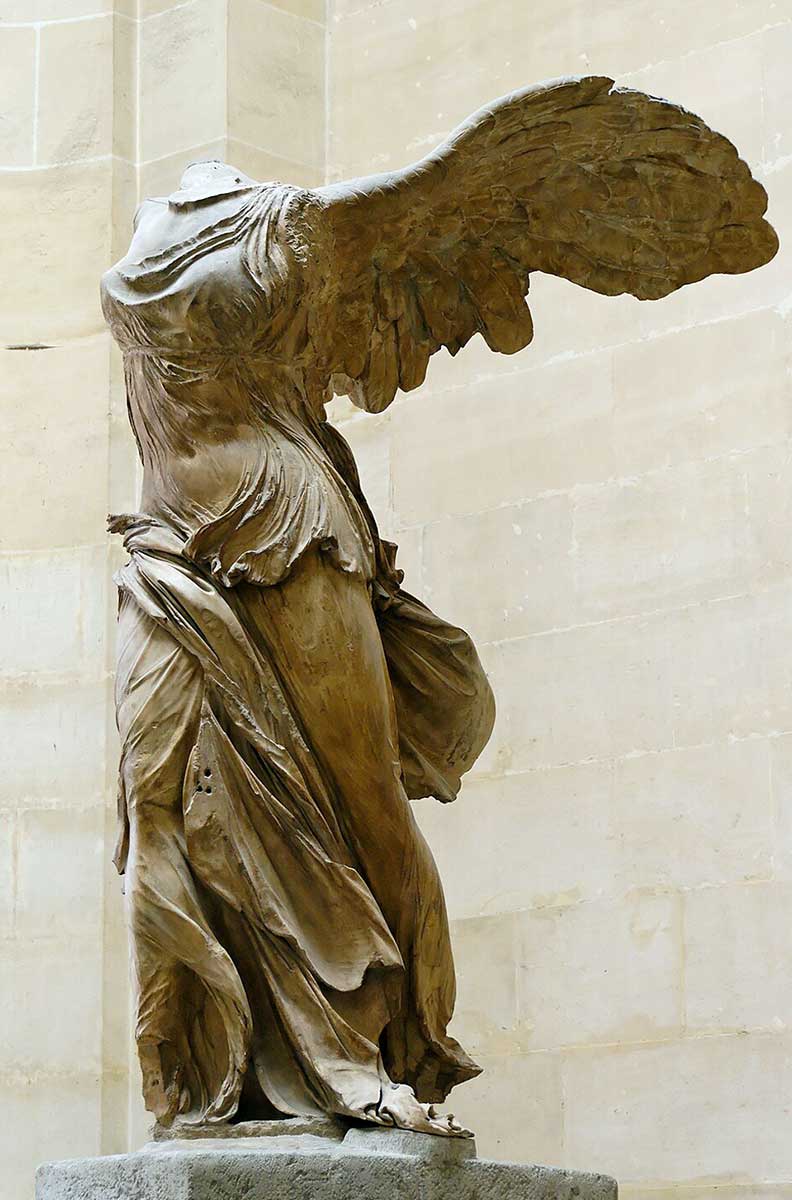
The Louvre’s Department of Greek, Etruscan, and Roman Antiquities holds roughly 45,000 objects, but really, two sculptures alone would more than justify the visit: the Venus de Milo and the Winged Victory of Samothrace. Both are displayed in spectacular settings that take full advantage of the museum’s grand 18th-century architecture.
The Winged Victory stands at the top of the sweeping Daru staircase, her vast wings unfurled and her marble robes appearing to ripple in an imagined sea breeze. Carved around 200 BC, she was originally commissioned to celebrate a great naval victory and was conceived as the centerpiece of an open-air fountain on the island of Samothrace.
The Venus de Milo, found by a farmer on the Aegean island of Milos in 1820, dates to roughly 100 BC and sits at the far end of a long Hellenistic gallery, drawing a non-stop flow of admirers. Beyond these two superstars, the Greek galleries also hold some lovely Archaic kouroi, red-figure Attic vases, and finely worked bronze pieces. Many of the museum’s visitors rush past the Greek exhibits in pursuit of the Mona Lisa, which means these galleries are often blissfully quiet.
5. Museum of Cycladic Art, Athens
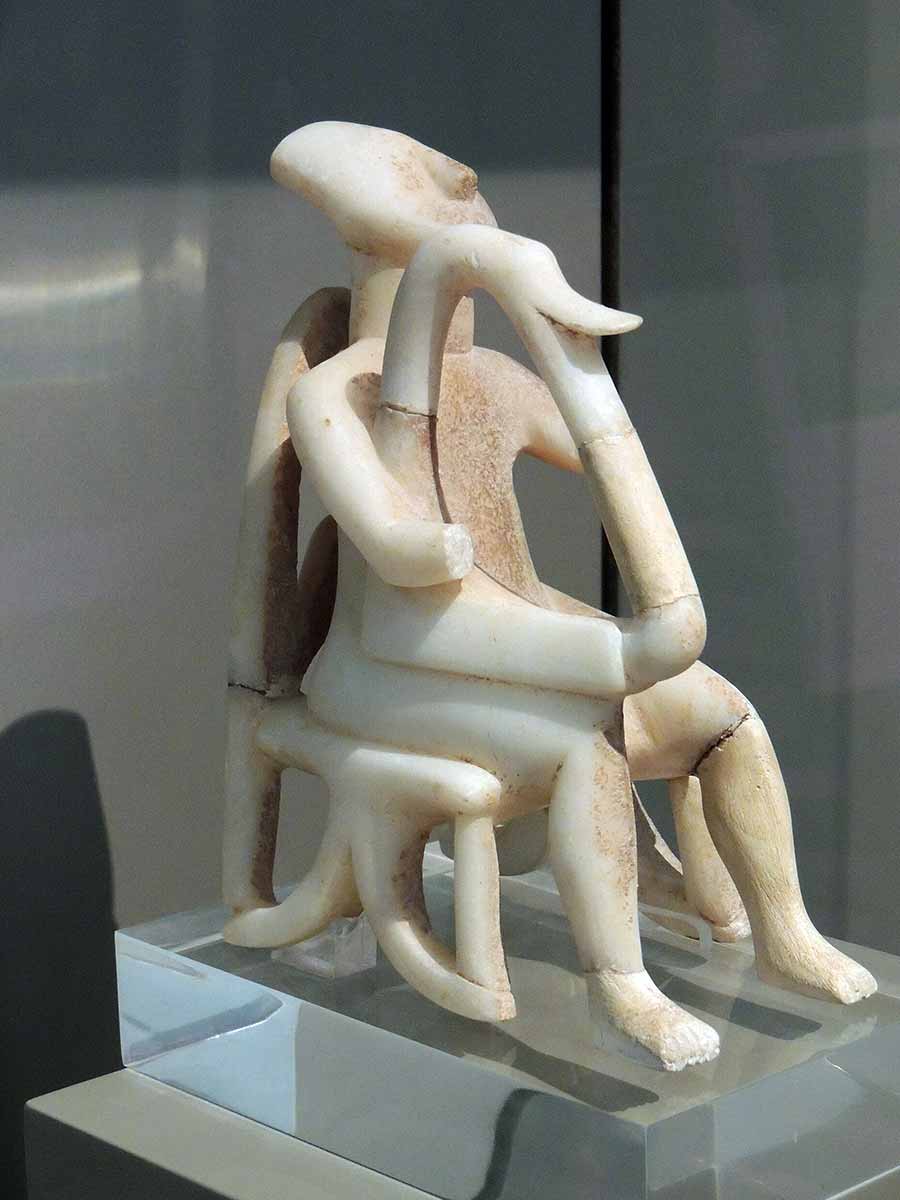
Founded in 1986, by Greek collectors Nikolaos and Dolly Goulandris, the Museum of Cycladic Art holds the world’s most comprehensive collection of Cycladic art, with more than 3,000 artifacts from the Bronze Age Aegean. The famous marble figurines from the Cyclades islands (roughly 3200 to 2000 BC) look startlingly modern, all clean planes, slight angles, and stripped-back faces.
Beyond the figurines, the museum also holds ancient Cypriot antiquities, exquisite Greek pottery, and an entire floor devoted to daily life in classical Athens, structured around the imagined biography of a fictional Athenian called Leon (a wonderful storytelling device that brings the era alive). The museum spans two connected buildings: a sleek modern gallery and the elegant 19th-century Stathatos Mansion next door.
Fun Fact: They might seem minimalist nowadays, but in their original Bronze Age form, these Greek figurines were brightly painted with eyes, jewelry, and intricate facial details in red, blue, and black pigment. But 5,000 years has a way of weathering details.
6. Archaeological Museum of Heraklion, Crete
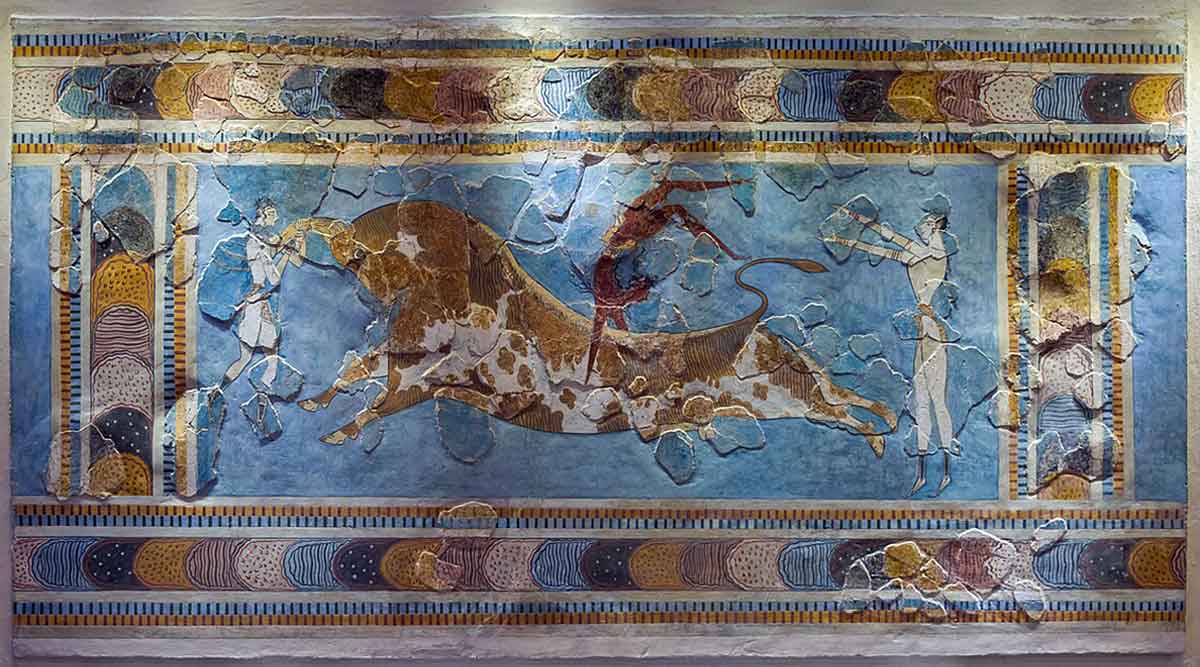
The Archaeological Museum of Heraklion on Crete holds the most comprehensive collection of Minoan civilization artifacts. The Minoans were the dazzling Bronze Age culture that flourished on the island from roughly 3000 to 1100 BC, predating mainland Greek civilization and producing some of the most beautiful art of the ancient Mediterranean. Almost every major Minoan object ever excavated, especially those from the famous palace of Knossos, lives here on Crete rather than in Athens or any of the European powerhouse museums.
Highlights include the still-mysterious Phaistos Disc (a clay tablet stamped with 241 symbols that has never been deciphered, despite over a century of scholarly effort), the famous Snake Goddess figurines holding writhing serpents in each hand, the Bull-Leaper fresco from Knossos, the beautifully carved Harvester Vase in serpentine stone, and the gold Bee Pendant from Malia, an exquisite piece of jewelry from around 1800 BC.
The museum reopened in 2014 after an extensive renovation that restored its 20 galleries to their original 1930s layout and made the exhibits much more accessible to non-specialists.
7. Delphi Archaeological Museum, Greece
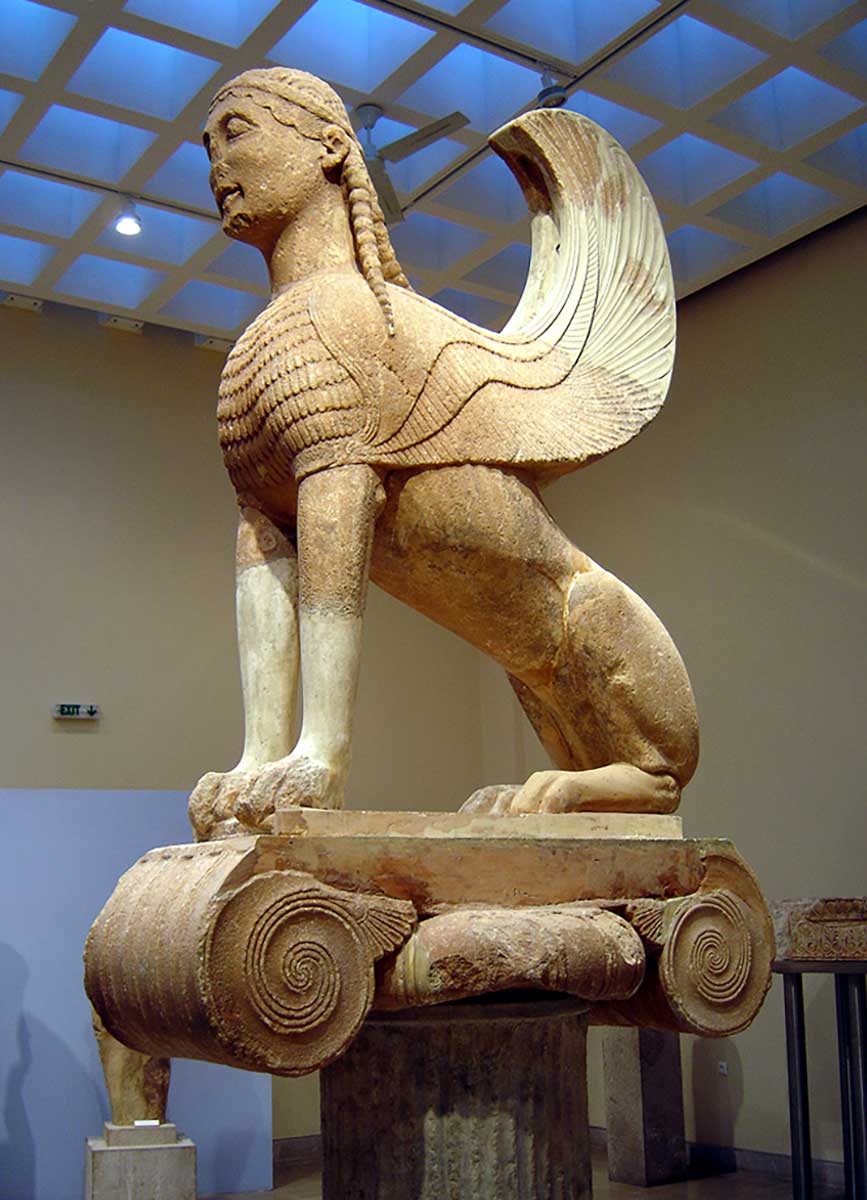
Sitting at the foot of Mount Parnassus beside the ancient sanctuary of Apollo, the Delphi Archaeological Museum holds artifacts from a site that the Greeks themselves once considered the literal center of the world. For nearly 1,000 years, pilgrims trekked here from across the Mediterranean to consult the famous Oracle of Apollo, and the small treasuries that lined the Sacred Way were filled with offerings from rival city-states, all hoping to curry divine favor.
The museum’s undisputed signature piece is the Charioteer of Delphi, cast in bronze around 478 BC to commemorate a chariot-racing victory at the Pythian Games. He’s one of the best-preserved large bronzes from antiquity, with his inlaid glass eyes and silver teeth still glinting in the gallery lights.
Other major highlights include the Sphinx of Naxos (pictured above), the Twins of Argos (a pair of striking archaic kouroi), and a remarkable silver-plated bull, the largest surviving example of its type from anywhere in the ancient Greek world.