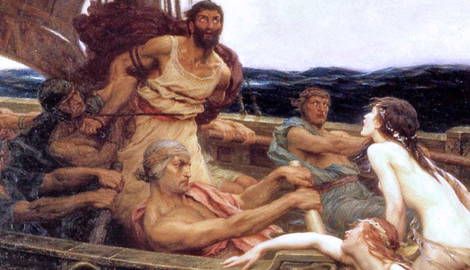

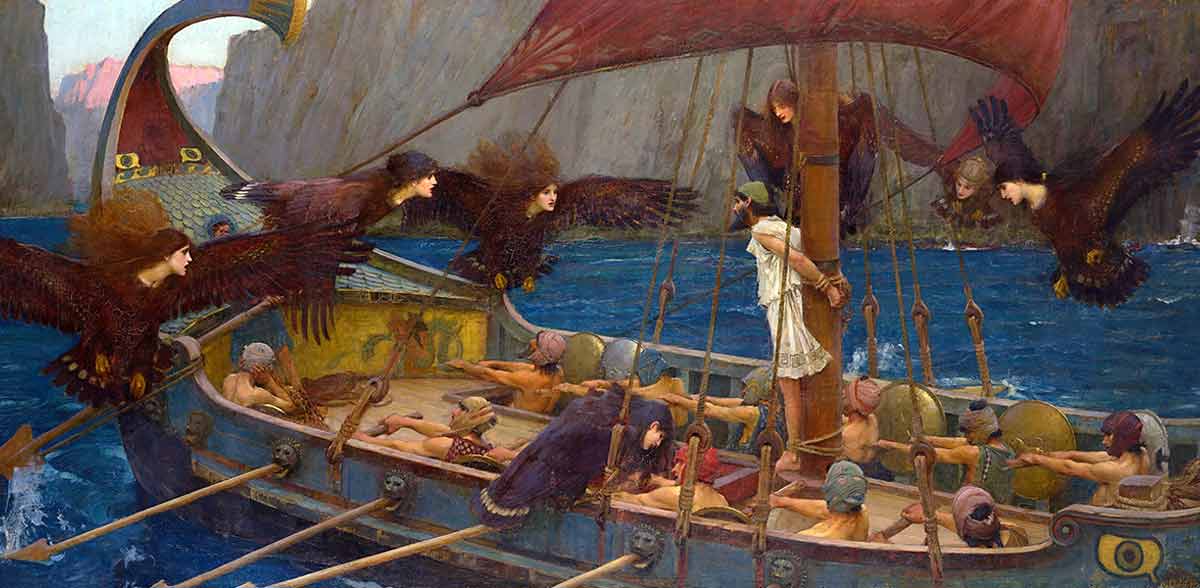
As the Sirens sang their irresistible song in Homer’s epic, Odysseus’s ship sailed past. With their ears stopped up with wax, the crew heard nothing. Odysseus, however, was in emotional pain. Tied to the mast, he was subject to the full effect of the Sirens’ music.
Despite his status, he decided to be powerless, but it wasn’t an act of weakness. It was a lesson in self-knowledge and a timeless model for decision-making. So why did Odysseus, the cleverest man in all of Greece, decide to do this?
Circe’s Warning of the Sirens
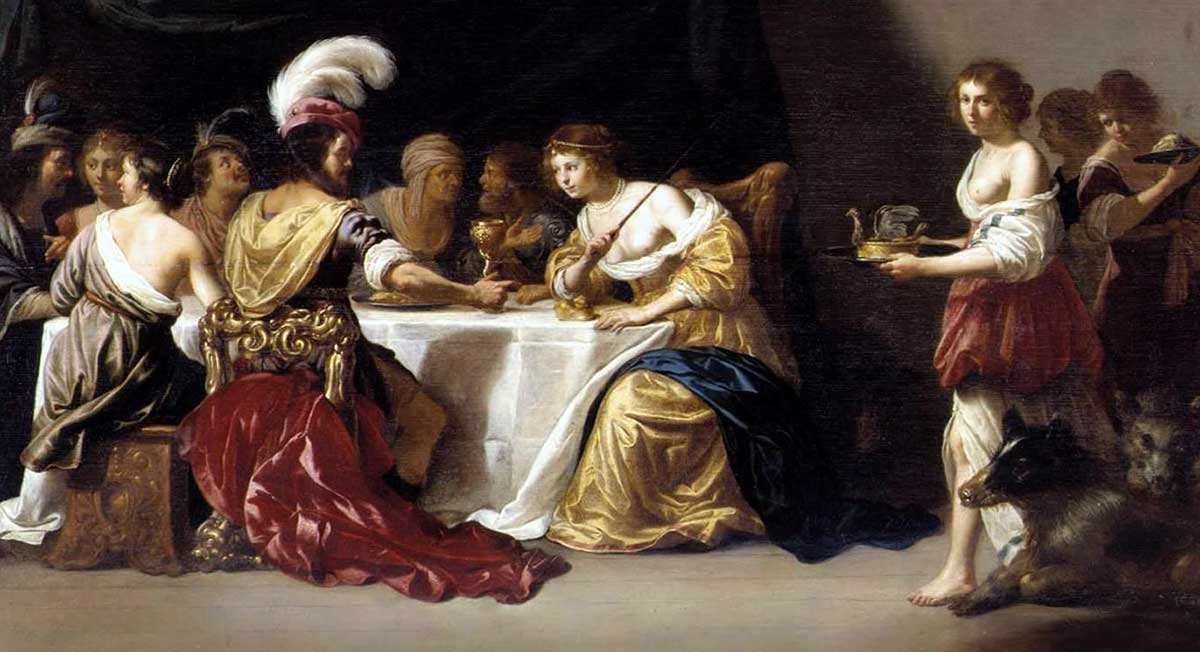
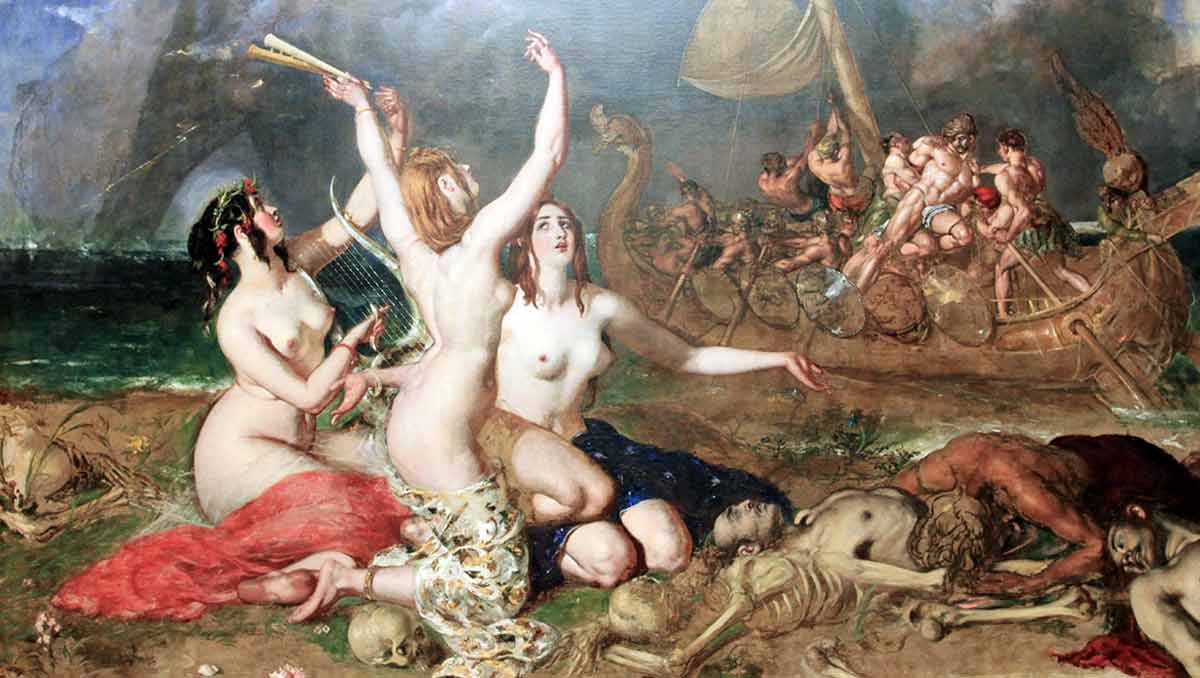
Critical to surviving Odysseus’ journey was the knowledge he was given before encountering many of the dangers. Odysseus first hears of the Sirens from Circe, who warns him of their treacherous, irresistible song. She describes how they sit in a meadow, while about them are the bones and withered bodies of their victims, drawn in by the Sirens’ beguilements.
In fact, Circe instructs Odysseus exactly how to deal with the Sirens. After surviving the tribulations brought forth by Circe, Odysseus becomes intimate with the enchantress, and she instructs him on the dangers that lie ahead. She tells the hero that to survive the Sirens, he would have to knead wax and have his crew stuff their ears, but if Odysseus wanted to hear the Sirens, he had to instruct his crew to tie him to the mast with ropes with instructions that if he demands his release, they must bind him tighter.
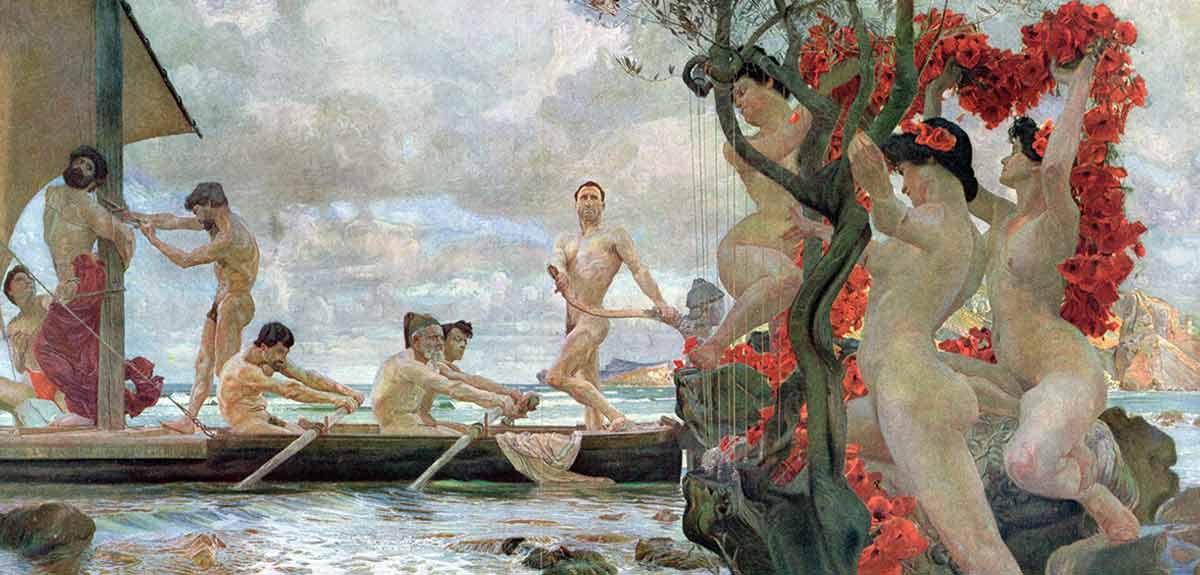
Odysseus leaves Circe’s island and proceeds on his journey, encountering the Sirens and following Circe’s instructions to the letter. The siren song entices Odysseus not with promises of sexual intimacy (despite most artistic depictions), but with knowledge, including that of the future, while their victims are strewn around them, corpses warbled to death.
This suggests that the Sirens’ promises are not hollow. They speak the truth. And their song of knowledge is so enticing that none can escape.
The Psychology of Odysseus’ Decision
“Hubris” is a recurring theme in Greek mythology, and is often misinterpreted in modern analyses. It is usually associated with pride, but older Greek interpretations differ. Aristotle explained that…
“…hubris is a form of slight. Hubris consists in doing or saying things that cause shame to the victim, not in order that anything may happen to you, nor because anything has happened to you, but merely for your own gratification.”
For Odysseus, his hubris is not pride, but his self-indulgent desire for knowledge. He wanted to hear the Siren song and survive. For his crew, wax and ignorance were their defense. For Odysseus, it was a rope.
Following Circe’s instructions, however, he knew exactly what would happen. He knew that once the Sirens were in earshot, his desire would be more powerful than his sense of preservation, yet he chose to listen to the Sirens anyway.
This involved a certain level of “precommitment” to protect himself from his future actions, as he foresaw his own weakness of will.
Precommitment as a Timeless Strategy
Introduced by American economists Thomas Schelling and R.H. Strotz in separate articles, the concept of “precommitment” is a labeled aspect of human psychology in which a person or an organization ensures their future actions do not derail their current preferences.
Norwegian philosopher and political theorist Jon Elster developed his theory of precommitment in 1979, with his work “Ulysses and the Sirens” taking the myth of Odysseus binding himself to the mast as a prime example.
There are many real-world examples of this kind of thinking, whereby we create constraints for ourselves that can’t be overwritten by future noncompliance. In medical and psychological terminology, it is even known as a “Ulysses Contract,” and it manifests in many ways, from putting money away in fixed savings accounts to putting an alarm clock across the room so we have to get up to turn it off. It can also manifest in reliance on others, like surrendering authority to a friend or a partner to police our diet or stop us from smoking when we are trying to quit.
Feeling the need to precommit is not a sign of weakness, but the acceptance of human limitations and the action of a rational mind. Odysseus knew when he was in control and knew when he wouldn’t be in control, and took the necessary actions to mitigate his future self’s lack of willpower.
Why Most People Do the Opposite
While Odysseus had a presence of mind that is not uncommon, he took actions that showed he was more forward-thinking and perhaps less confident in his own abilities than most. Research from the Kellogg School of Management, published in Psychological Science, shows that people generally believe that they have more restraint than they actually do. They succumb to greed and temptation, leading to poor decision-making. Obesity, addictions, and other unhealthy lifestyles are a result of this “restraint bias.”
Professor of Economics and Psychology, George Loewenstein, states that people in a “cold” state will generally miscalculate their preferences and behavior in a “hot” state, and when in a hot state, they will overestimate the stability of their current preferences.
Odysseus thus exists as an outlier, an exception to general human behavior that can be interpreted as putting him above the average person in terms of wisdom, making him a model of a central character and an archetypal hero.
The Deeper Philosophical Layer
The story of how Odysseus navigated through the episode with the Sirens is also one that is open to philosophical interpretations. Despite being bound to the mast, the rope actually represents freedom. The intuitive belief is that limiting options is a reduction of freedom, but there is another interpretation of what freedom actually is, which fits Homer’s narrative perfectly.
Kant argues that doing what you want to do is slavery to the lower self of sense. It is the higher self of intelligence that defines freedom. Freedom here is the ability to decide our own constraints, and that describes Odysseus’ actions in this case. Constraint, thus, is an exercise in freedom, rather than the opposite.
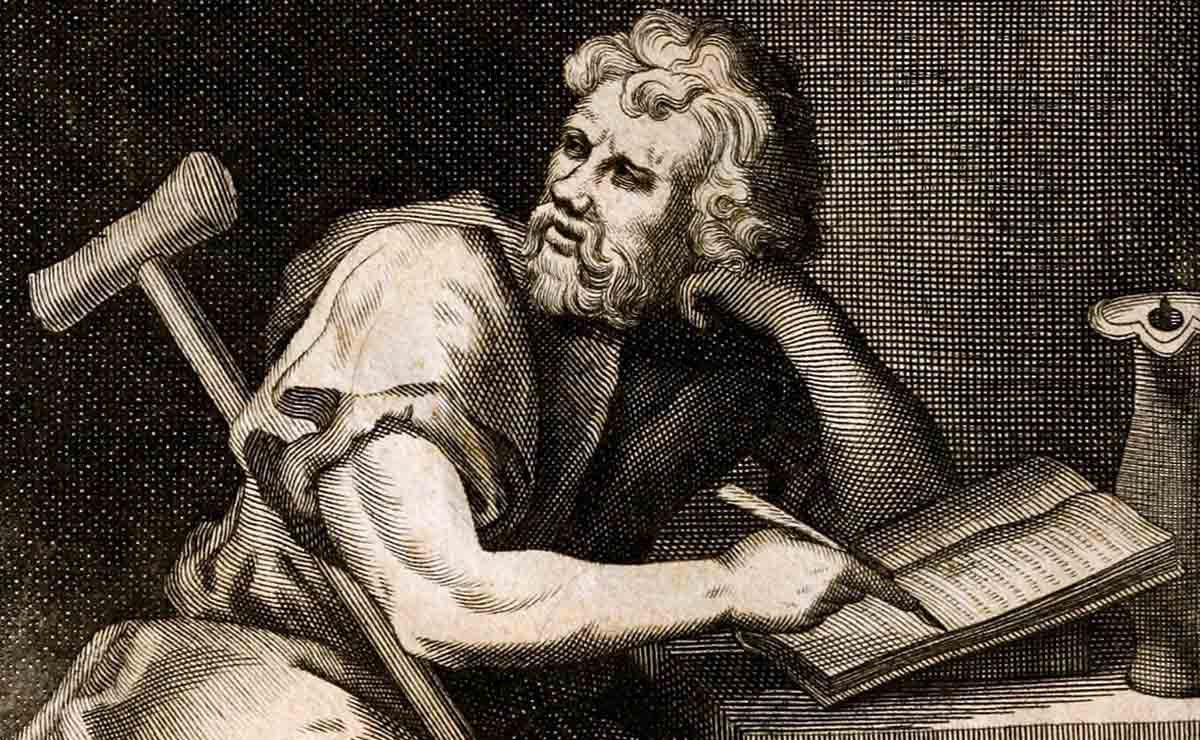
The Stoics echo this sentiment, as Epictetus declares, “He is free who lives as he wills, who is subject neither to compulsion, nor hindrance, nor force, whose choices are unhampered, whose desires attain their end, whose aversions do not fall into what they would avoid… for freedom is not acquired by satisfying yourself with what you desire, but by destroying your desire.”
By taking the decision to tie himself to the mast, Odysseus exercises control over his desire, thus symbolizing Stoic interpretations of freedom.
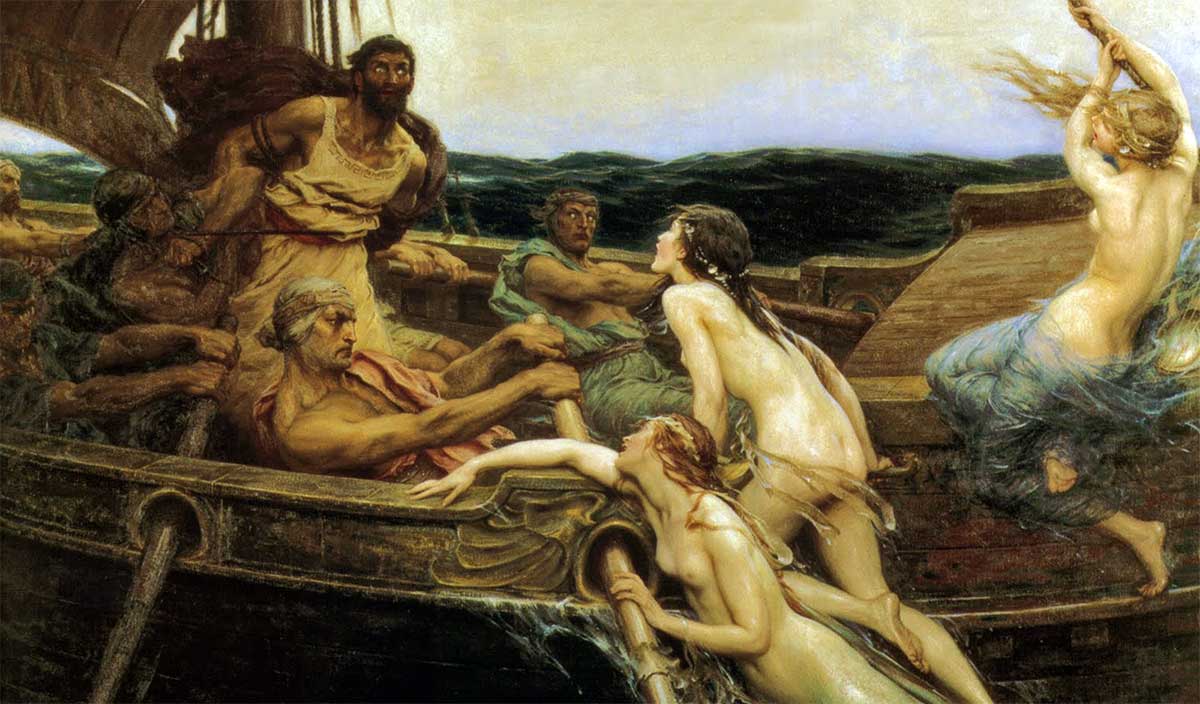
In many ways, the Sirens, the warnings, and the reactions to them are symbolic of a very real struggle of the human condition. Desire for dangerous things and the destruction they can wreak have been facets of human existence from the very beginning of human evolution.
Overcoming these tribulations is not always down to the strength of will that one possesses in the moment, but rather, having the wisdom to use the rope in advance, willingly binding oneself, knowing that it will protect oneself from the dangers of desire.
We know how the story with Odysseus ends. His wisdom pays off. His aforethought protects him, and he survives the ordeal, having heard the Sirens’ call. The lesson here is that wisdom is not the ability to conquer temptation in the moment, but knowing when to tie yourself to the mast.