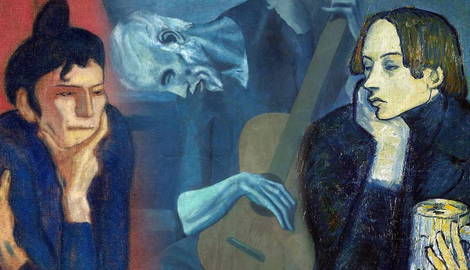

The term Blue Period in the art of Pablo Picasso refers to an artistic phase from 1901 to 1904 when the artist painted almost exclusively using blue and green tones. Characters’ stories, almost necessarily tragic, were at the center of each work. This somber period was triggered by the suicide of Picasso’s close friend and is considered the first distinctive expression of Picasso’s individual style. Read on to learn more about Pablo Picasso’s Blue Period.
Pablo Picasso & Carles Casagemas
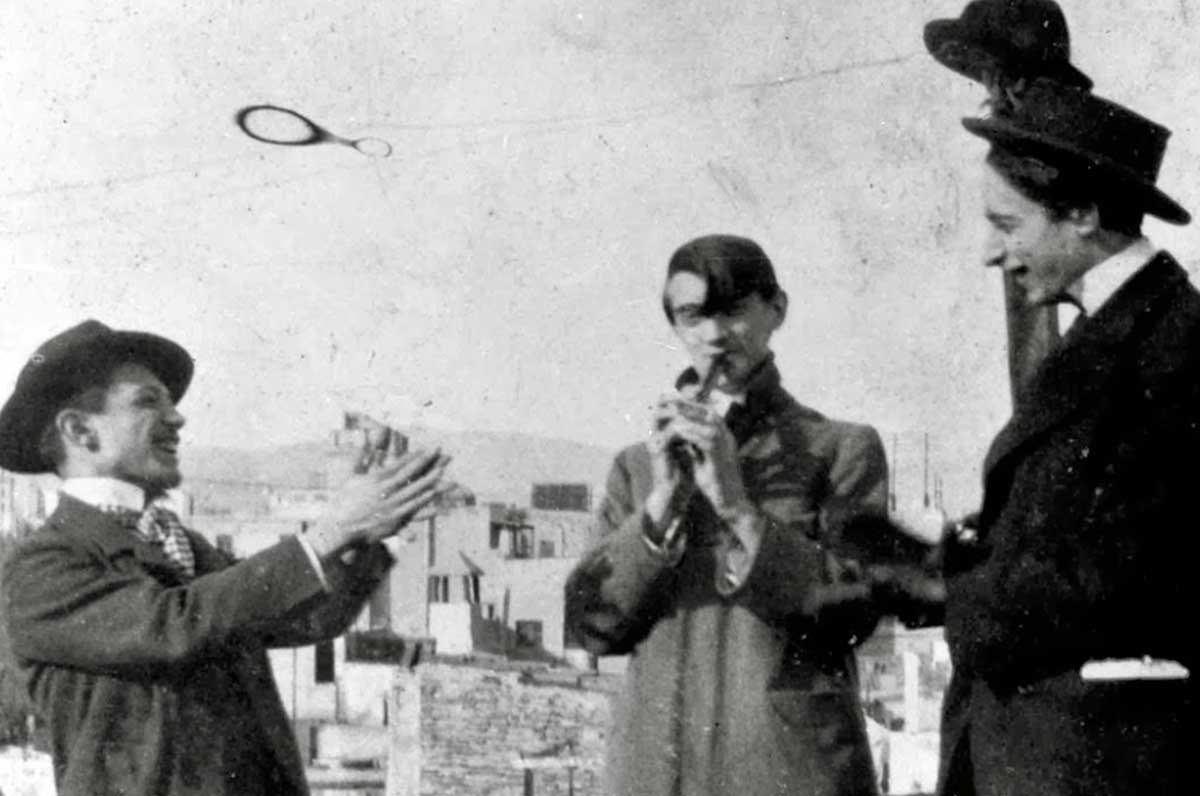
In 1900, an aspiring and yet unknown artist, Pablo Picasso, took a bold step and moved from his native Spain to France. Although he did not yet have a distinctive personal style, he already showed great talent and ambition. Picasso admired the works of El Greco, Toulouse-Lautrec, and Dante Gabriel Rossetti and developed his own version of modern art, partially inspired by Symbolism and the Old Masters.
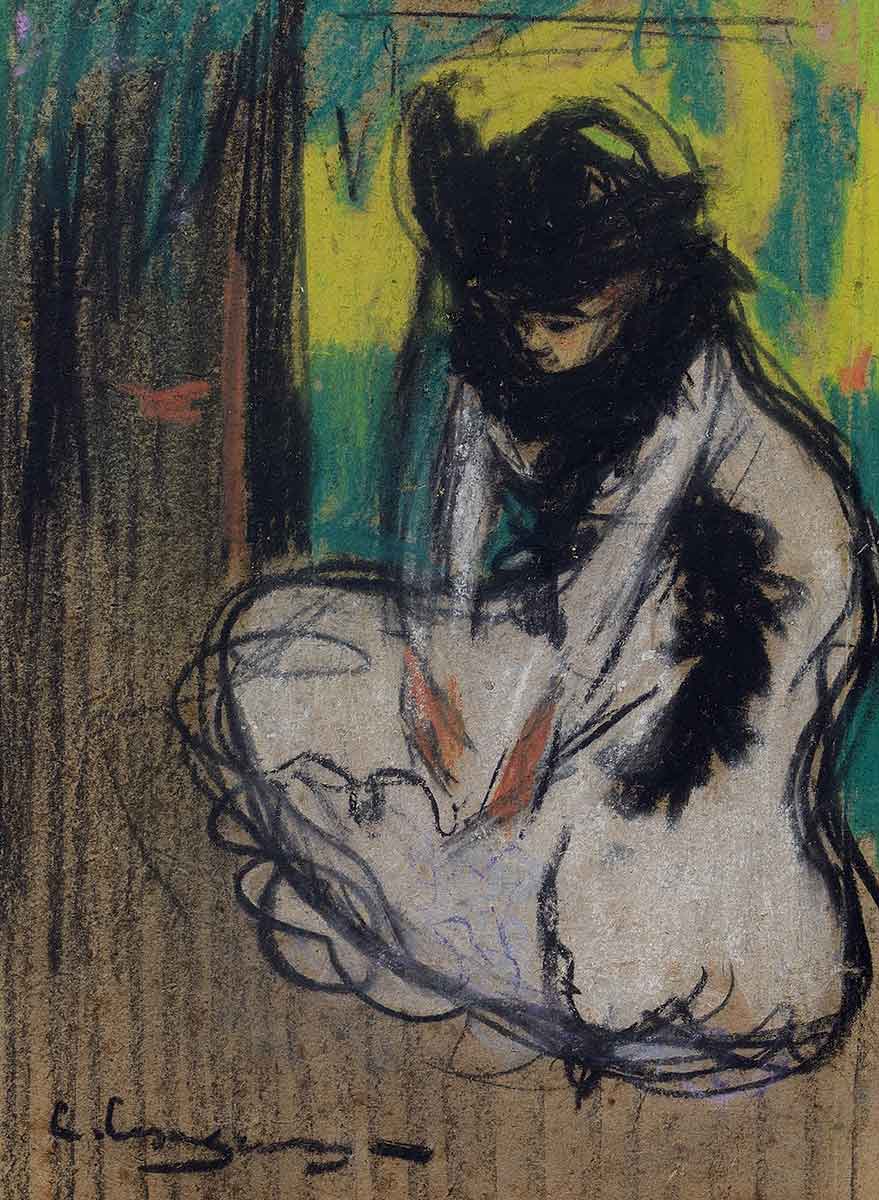
Picasso arrived in Paris with a close friend, Carles Casagemas, who was another Spanish painter. Casagemas painted human figures in a style similar to Toulouse-Lautrec’s, wrote poetry, and considered himself an anarchist. He did not live long enough to develop a mature artistic style. Casagemas was prone to emotional outbursts, drug use, and alcoholism. Still, he and Picasso were close enough to share a room in their early Parisian days. Their lives were rough, as none of them could speak French. Relying on the help of local Spaniards and occasional commissions. In his letters to friends, Casagemas complained that partying and drinking were too expensive in Paris, and they could barely afford cabaret performances, which they attended anyway.
Casagemas’ Trauma
However, the most traumatizing issue for Casagemas was not poverty but his impotence. Surrounded by sex workers and models and his new Parisian friends, Casagemas felt increasingly desperate and defective. He often had to wait for his friends inside brothels and became even more emotionally vulnerable, sinking into depression. Moreover, he desperately fell in love with a Moulin Rouge dancer called Germaine Pichot. The feelings were not mutual, and Germaine allegedly even mocked Casagemas for his sexual issues.
Distressed, Casagemas started drinking even more. He even started talking about killing himself. After an unsuccessful suicide attempt, Picasso decided to take his friend back to Spain in an attempt to help him recover. However, some art historians argue that Casagemas’ mental health was secondary to the story; the main reason both artists fled was the increasing attention the French government began to pay to those from anarchist circles. Both Picasso and Casagemas signed anarchist manifestos and were generally quite open about their affiliations. Still, a holiday at home did not last long enough to make a difference, nor did it bring joy to anyone involved. Soon after arriving in Picasso’s hometown of Malaga, Casagemas descended into binge drinking and behaved so disrespectfully towards Picasso’s family that the artist had to ask his friend to leave. Picasso’s uncle bought him a boat ticket to Barcelona and sent him away.
Farewell Party Gone Horribly Wrong
Desperate and unsupervised, Casagemas ran back to Paris and asked Germaine to move in with him. After yet another rejection, he announced to all his friends he had decided to go back to Spain. On February 17th, 1901, he invited everyone, including Germaine, to a farewell dinner at the cafe Hippodrome, frequented by artists. He appeared cheerful and more clear-headed than usual, fostering hope that his depression might be curable. It all changed instantly when, after many drinks and good wishes, he once again asked Germaine to marry him. The atmosphere grew tense, and after Germaine staunchly refused, Casagemas pulled out a pistol and shot at her. The first shot missed, but the second, aimed at his own temple, did not.
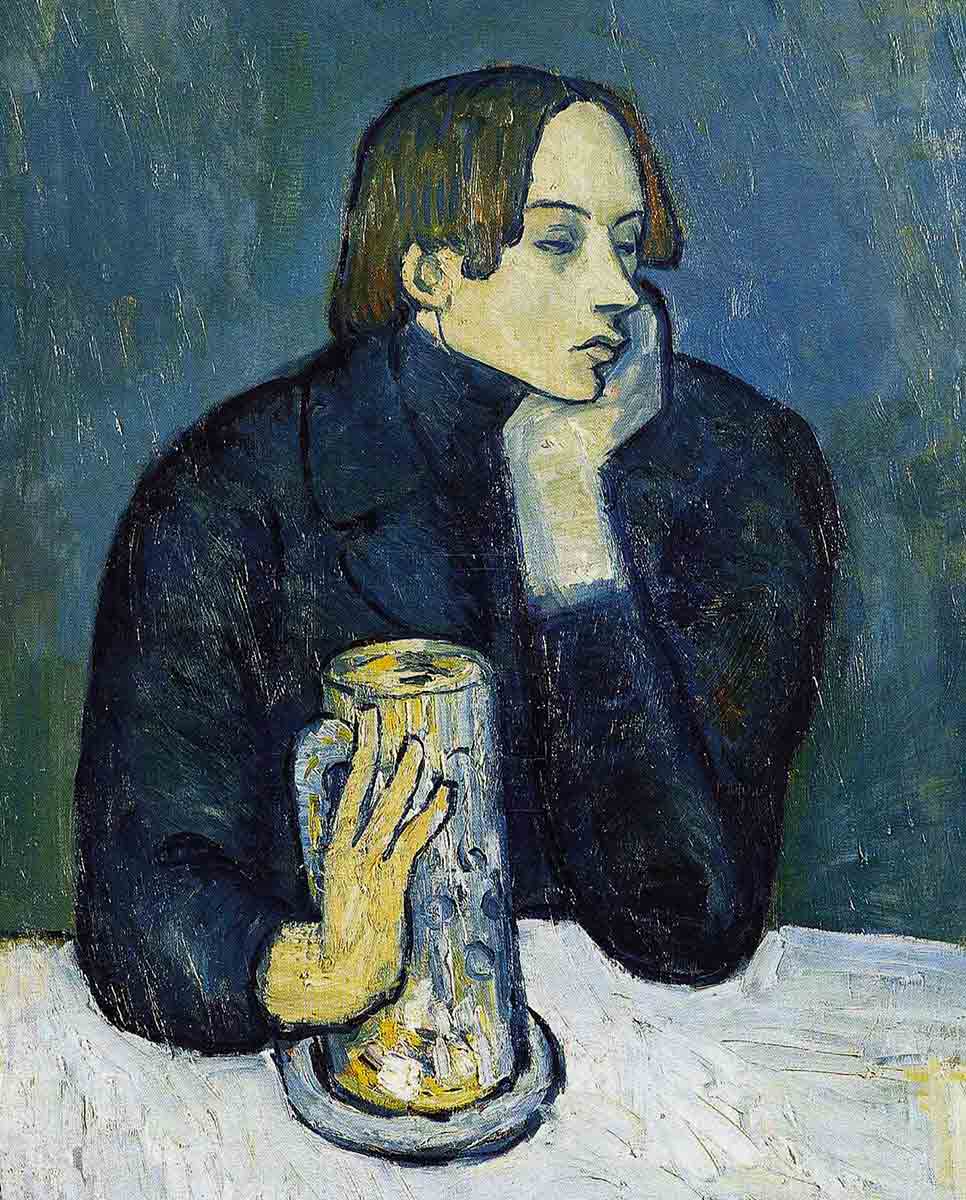
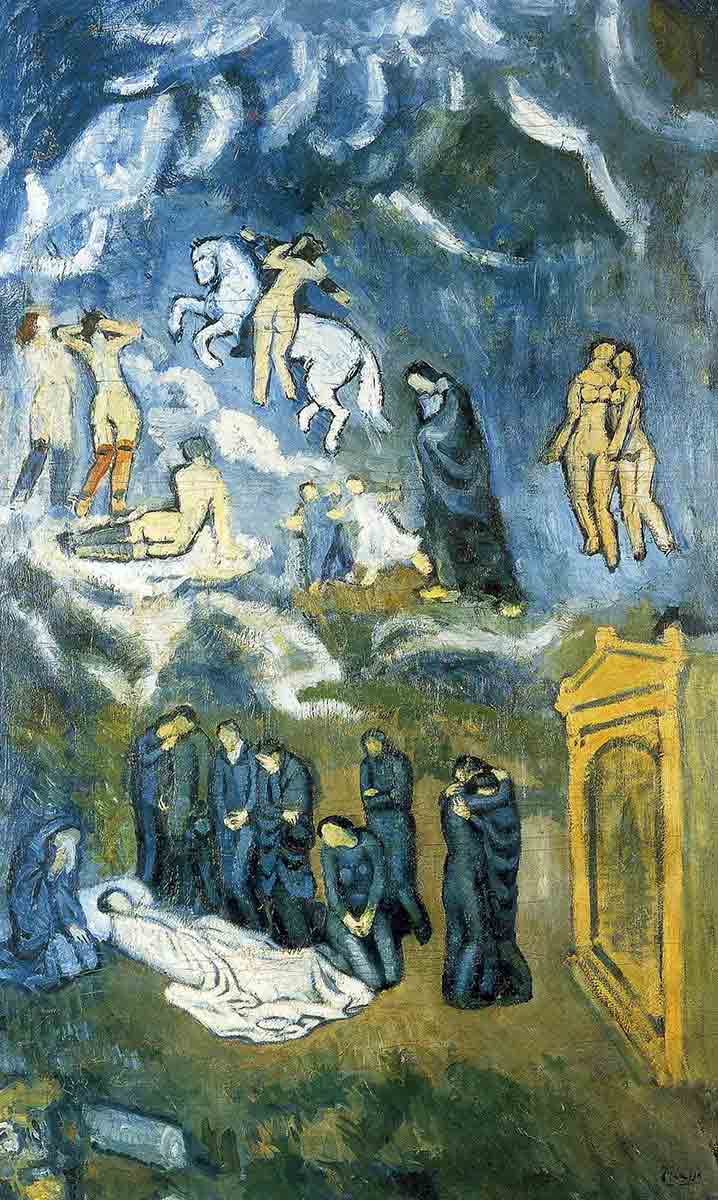
Picasso was still in Spain when he heard the news of his friend’s suicide. Distraught, he created several paintings of Casagemas’ death and burial. These events triggered a severe depression and made Picasso temporarily resort to gloomy, almost monochrome blue and green paintings. The grief did not stop him, however, from starting an affair with Germaine, who was obviously even more traumatized by the event. The romantic relationship did not last long, yet their friendship lasted until Germaine’s death in 1948.
The Death of Casagemas in Picasso’s Art
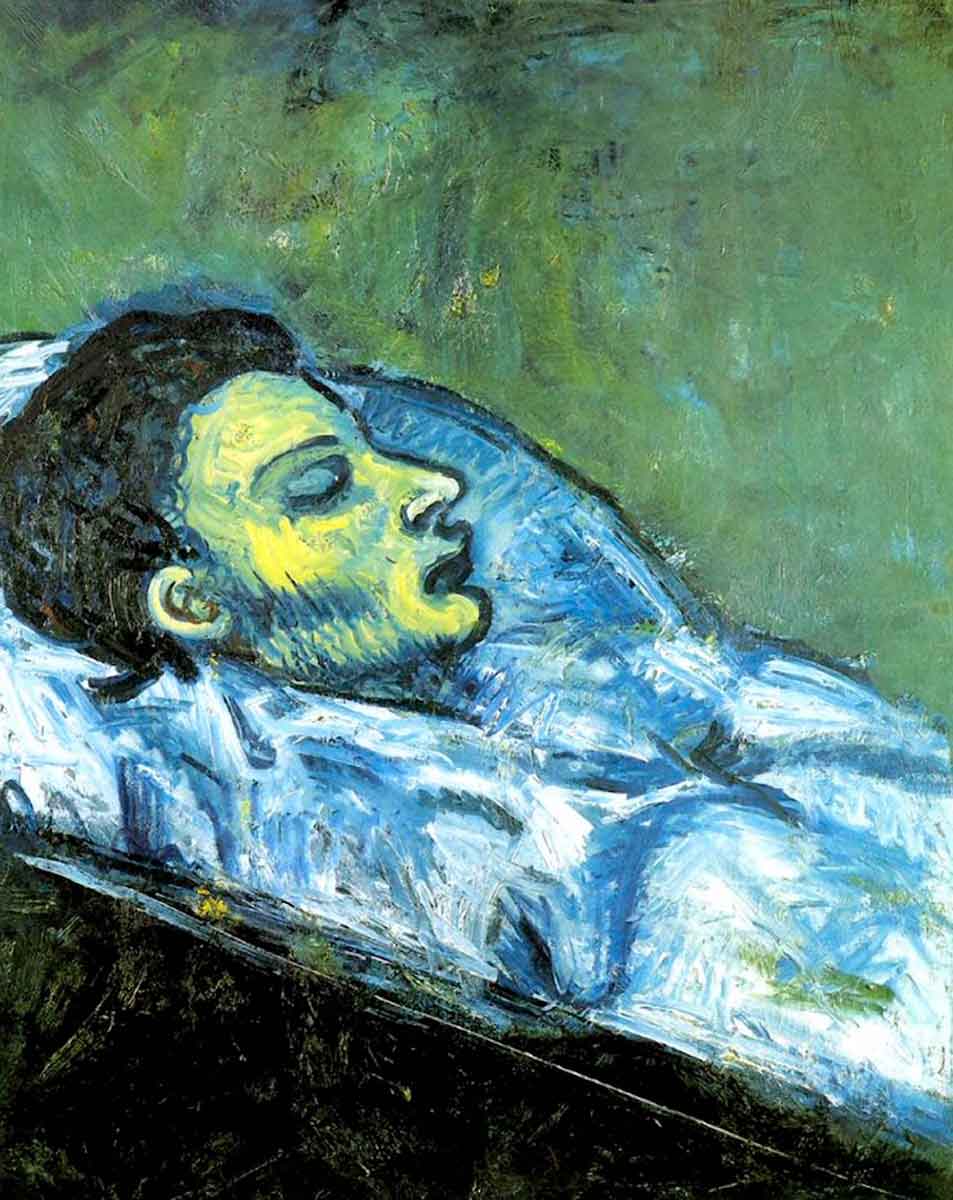
Picasso, shocked and distressed, was still in Spain and could not arrive on time to attend his friend’s funeral. Despite not being present, he created several paintings, imagining Casagemas in a coffin. These were the works through which he tried to reconcile himself with this sudden and tragic loss. What was uncanny was how accurate these paintings turned out to be. In some paintings, the dead Casagemas had a wound on his left temple that matched the real one. Picasso knew that his friend shot himself during the dinner but did not hear the details of it.
In May 1901, Pablo Picasso returned to Paris and settled in the same room he had shared with Casagemas. In the following years, he would travel back and forth from France to Spain, destitute and in crisis. Back then, his works did not interest art collectors, his home seemed too boring, and his Parisian friends reminded him of the tragedy.
The Life
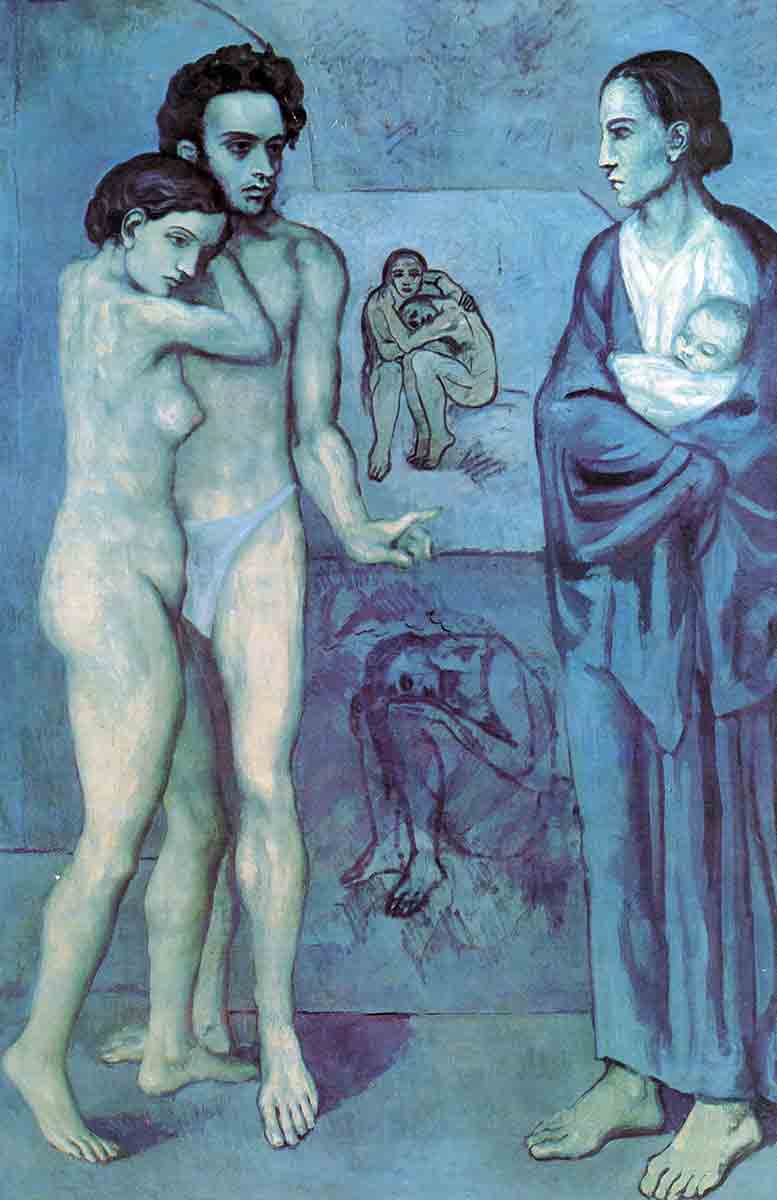
Picasso’s main masterpiece related to Casagemas’ suicide was the painting The Life, which illustrated the complexity of Picasso’s relationship with his deceased friend and the artist’s dire creative circumstances. The Life was painted over another work by Picasso, an 1899 canvas called The Last Moments, which he presented a few years prior at the Paris International Exhibition. At the time, Picasso was so poor he could not afford to buy new canvases and thus had to sacrifice older works to create something new. In a way, this sacrifice paid off, as Picasso sold the new work within weeks of its completion.
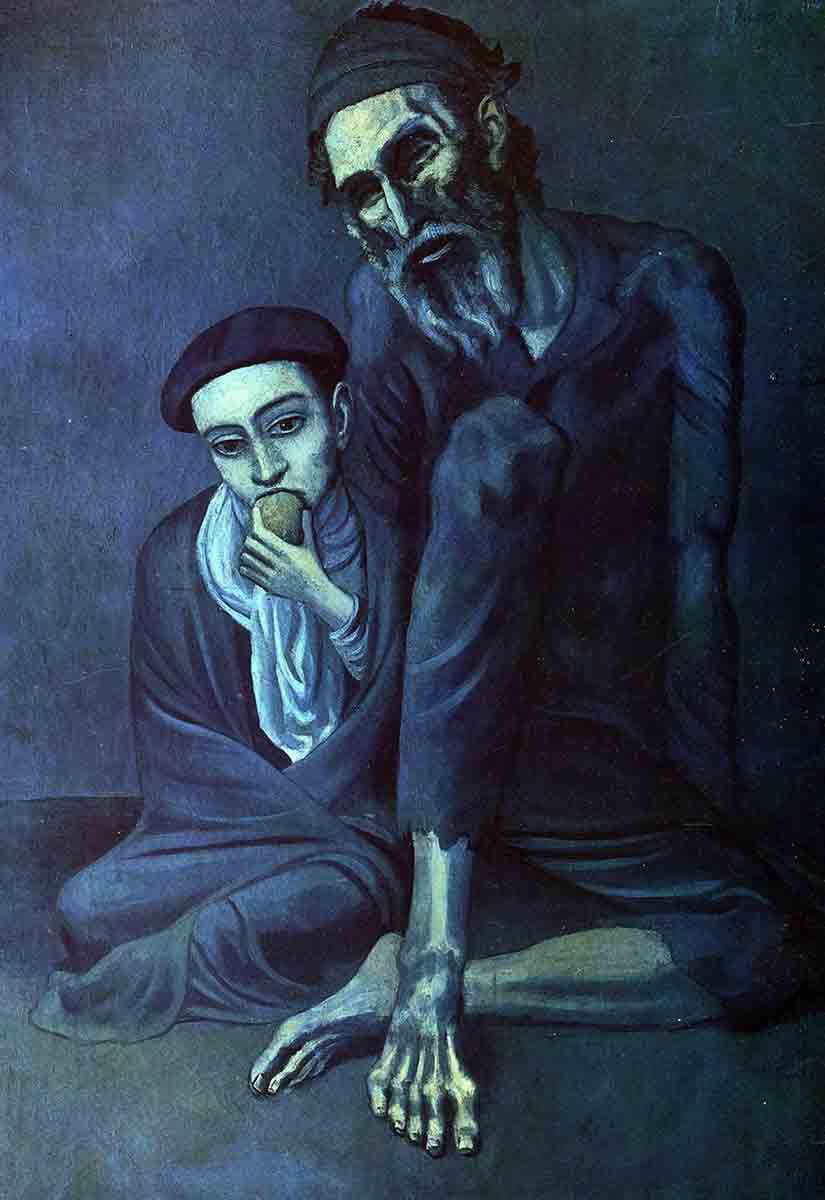
The Life represented an almost naked figure of Casagemas embraced by a nude woman while confronting another one, fully clothed, with a child in her arms. As some art historians interpreted it, the figure of a mother could be the personification of Casagemas’ early traumas that led to his physical and mental disturbances. However, after performing an X-ray scan of the work, researchers realized that behind the face of the dead poet was Picasso’s self-portrait. As it turned out, initially, he painted his own face before overpainting it and turning it into a tribute to his friend.
Pablo Picasso’s Blue Period: Drunks, Beggars, and Acrobats
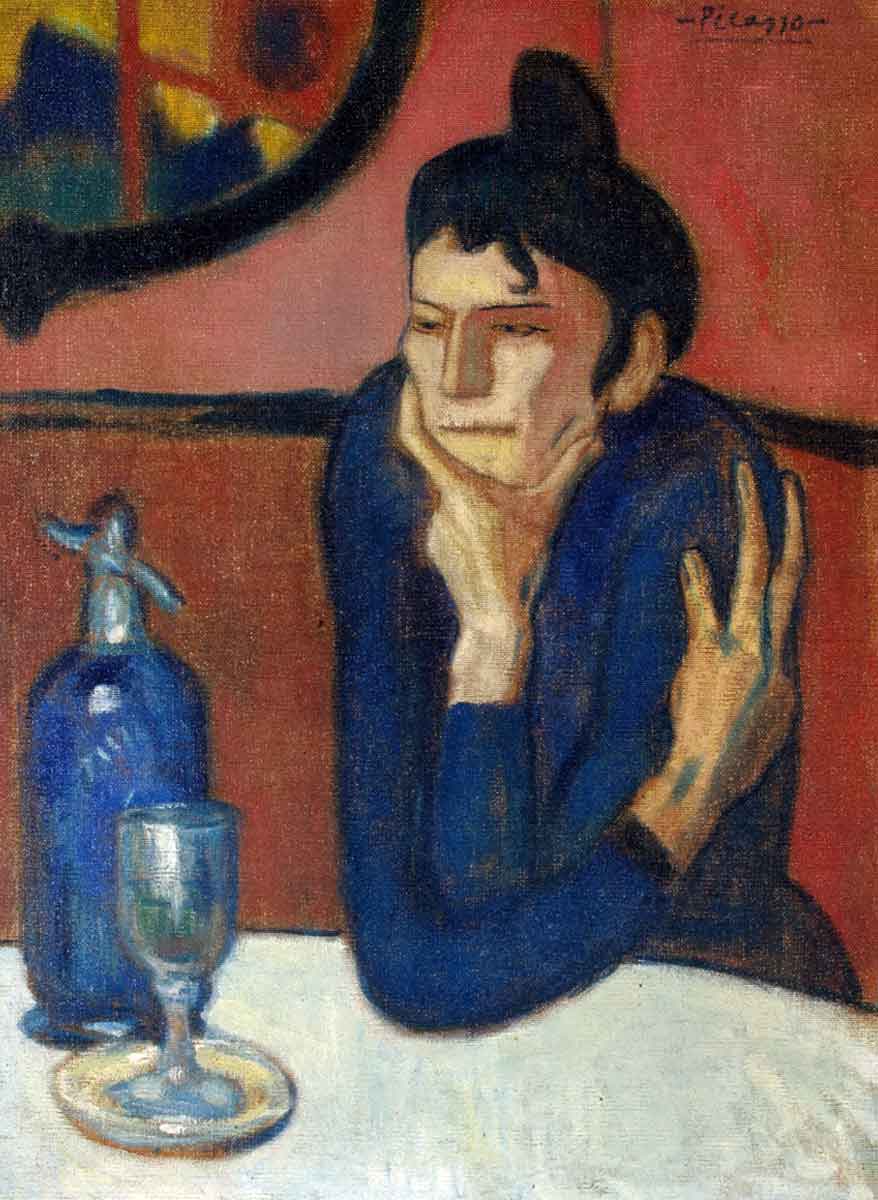
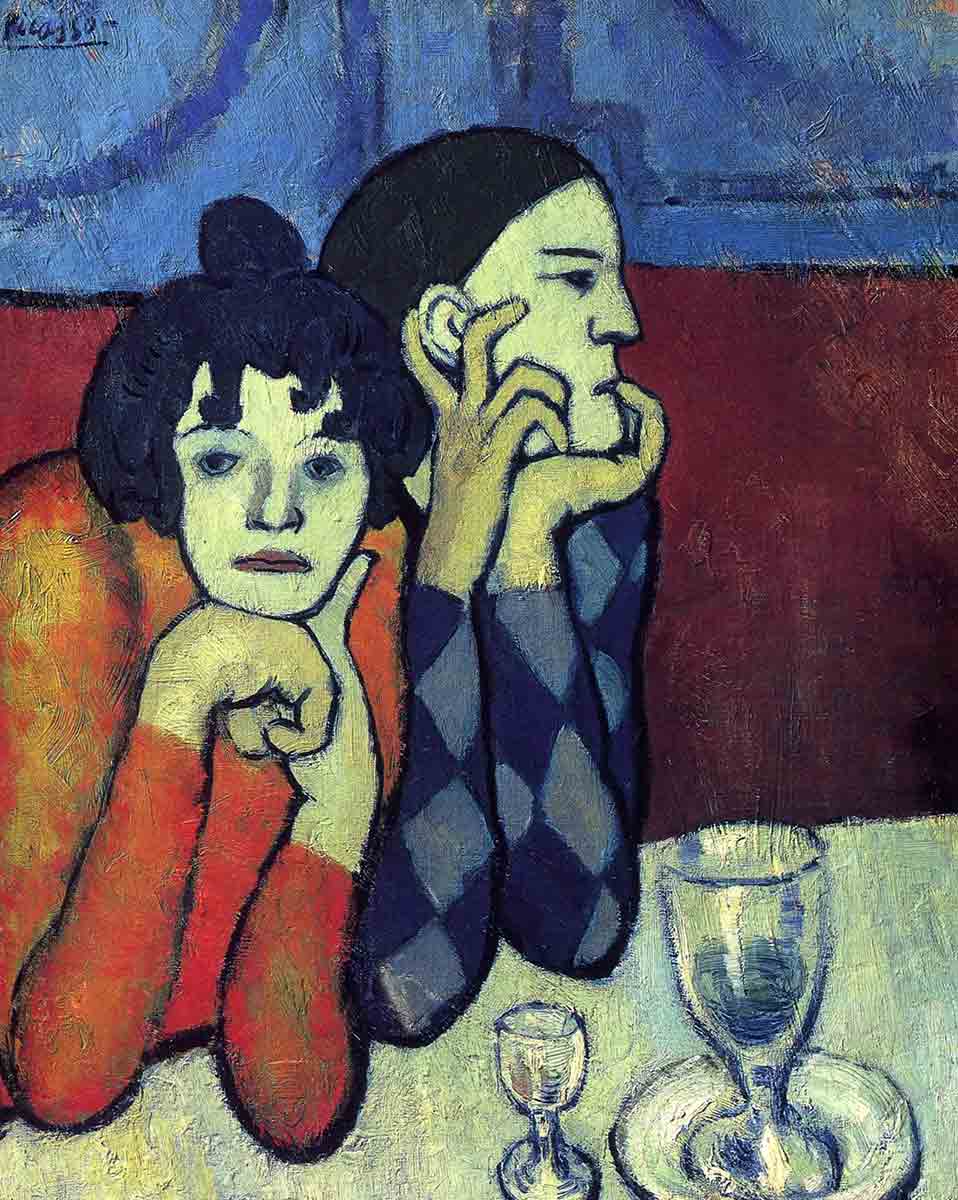
The Blue Period was the first instance in Picasso’s art that can truly be considered an expression of his creative individuality and independent development. Poor and depressed, he identified himself with other social outcasts like street musicians, blind beggars, and drunken decadents. This was also the time when he started to manipulate proportion for the sake of expressive power. One of the most famous works of the early Blue Period, The Absinthe Drinker, showed a sulking drunk woman at a bar table. Clearly a regular at the place, she nonetheless did not feel comfortable there, hugging herself with her unnaturally thin arms. Picasso painted these arms to look like pieces of wire—such compromise with physical reality highlighted the figure’s sharp angles, unhealthy thinness, and fragile mental state.
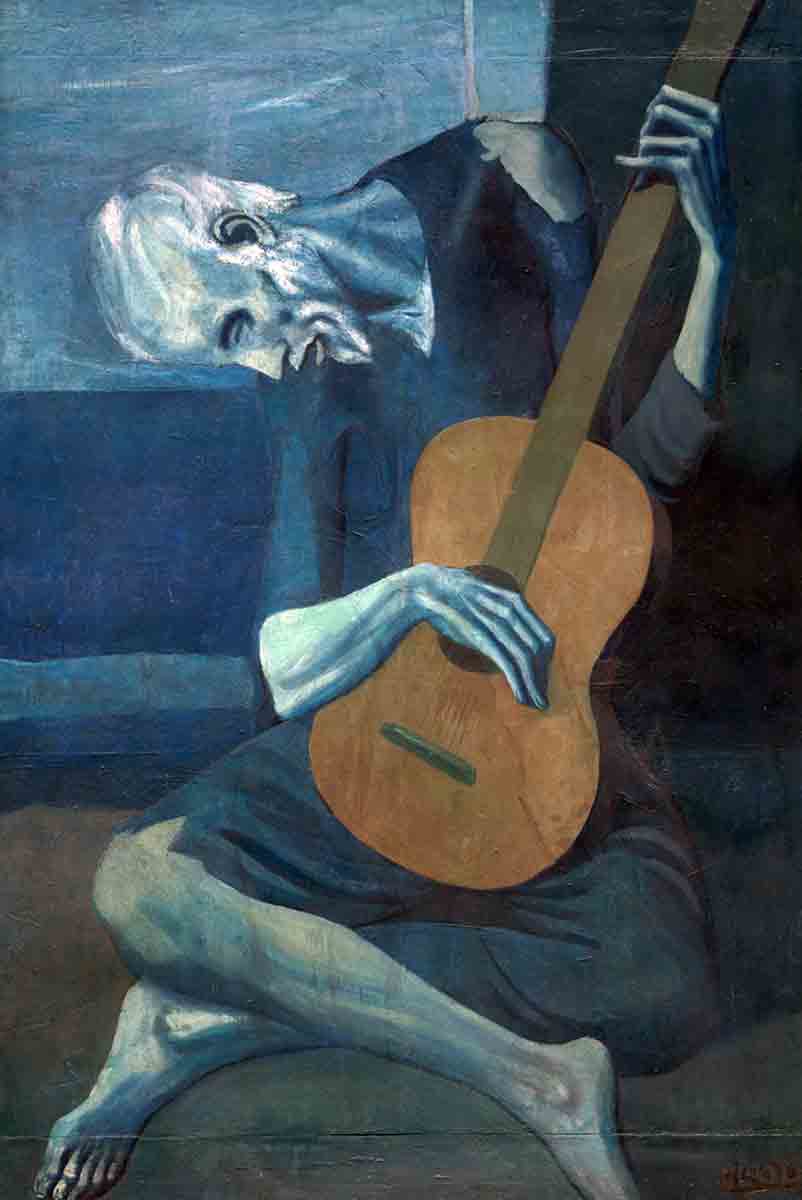
In Picasso’s works of that period, artistic talent seems to be a burden, dragging artists to poverty and substance abuse. Poets drown their loneliness in absinthe, circus acrobats switch the stage for a bar table, and blind singers are forced to beg passersby for a coin. By the spring of 1904, Picasso finally felt like he outlived the trauma and was ready to open a new chapter in his life. Once again, he moved to Paris and settled in the Montmartre artistic commune known as Bateau-Lavoir. His personal life also improved as he began a then-happy relationship with Fernande Olivier that lasted eight years. These changes led to the transformation of his artistic style, launching a new significant era in his art, the Rose Period.