What role should luck play in our moral judgments? For most of us, the answer is surely zero. Luck, by definition, is something we have no control over. It is unjust to blame a person for something over which they had no control. The problem of moral luck reveals that things over which we have no control may be more prevalent in our moral evaluations than is commonly believed. If this is the case, then much of our moral condemnation is unjust. In this article, we look to see if this is the case.
Moral Praise and Moral Blame

In his influential paper on moral luck, Thomas Nagel rightly observes: “So a clear absence of control, produced by involuntary movement, physical force, or ignorance of the circumstances, excuses what is done from moral judgment.” When it comes to morally praising or blaming someone for their actions, it seems right to say that luck ought not be involved.
If someone succeeds in obtaining something due to chance, we might be motivated to congratulate them and join in their celebrations, but we do not usually praise them for their actions. For example, suppose a friend buys a lottery ticket and wins the jackpot. We are happy for them and glad they had such a stroke of fortune. However, we cannot genuinely praise them for winning. Lottery wins are pure chance, and no skill is involved. Players have no control over their chances of winning. Just as we cannot blame people for acts over which they had no control, we cannot praise them either.
Suppose I am sitting by an open door in a busy office and a colleague complains of a cold draft. I lean over and push the door shut. Grateful, my colleague thanks me. This constitutes a small amount of praise and recognition because I chose to do something kind. In this circumstance, I was in control of my actions, I acted, and my action was recognized with an appropriate response.
Now, imagine that unbeknownst to me, there was a disgruntled former employee, armed and dangerous, on the other side of the door. And, that when I pushed the door shut, it hit him in the face and knocked him out. Here, everyone in the office could legitimately say that if it were not for my actions, there would have been a tragedy. But it would be absurd to praise me for knocking out the armed intruder. I had no idea that was what I was doing and therefore had no control over these events.
The Problem of Moral Luck
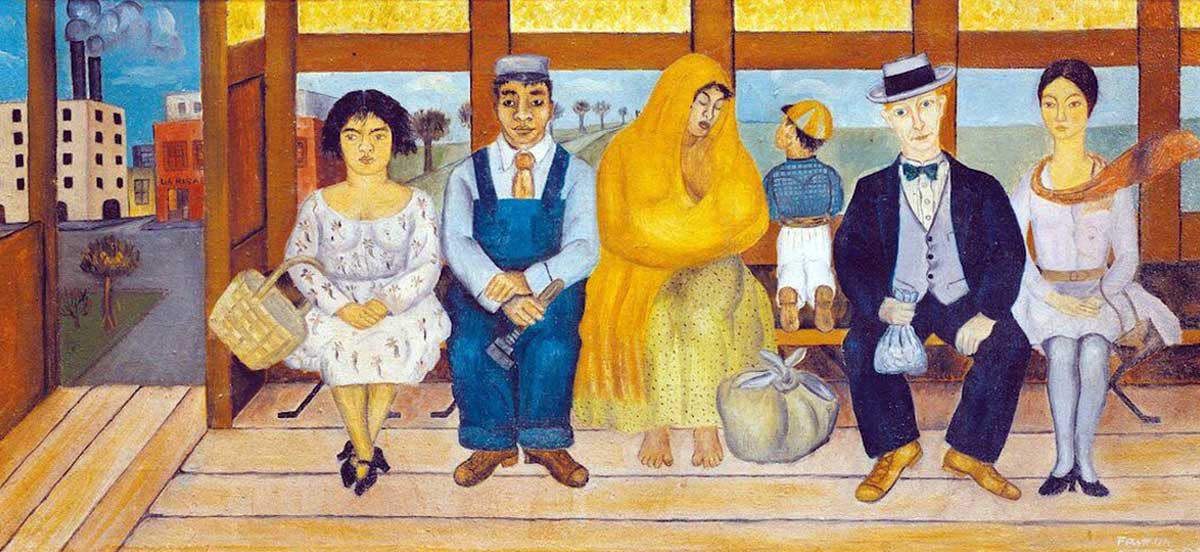
How does luck enter into our moral judgements? Let us imagine two bus drivers starting their shifts at bus depots twenty miles apart. We will call them Driver A and Driver B. Both drivers must conduct a brief safety check of the vehicle before leaving the depot and beginning their shift. These checks have never revealed a problem. Today, both drivers are running a few minutes late, and both choose to skip the safety check (as many drivers do when they are late leaving the depot).
Twenty minutes into A’s shift, something terrible happens: a pedestrian runs into the road, without looking, and A is forced to slam on the brakes. Unfortunately, the brakes fail, and tragedy ensues. An investigation reveals that A did not carry out the mandatory safety checks before setting out, and they are convicted of involuntary manslaughter. But what about Driver B?
Driver B also started a shift without doing mandatory safety checks on their vehicle. Suppose another bus driver saw B and reported them. Driver B did not have an accident, and let us say that there was found to be no problem with their brakes. But this was purely down to luck.
If we take luck into account, it seems that B is just as morally reprehensible as A. Would we feel comfortable with Driver B receiving the same blame and punishment as Driver A? It seems that A did something much worse than B, i.e., that A is a morally bad person. However, there is no problem of moral luck if we charge Driver A with involuntary manslaughter but separate this from moral blame.
Is Moral Luck Really a Problem?
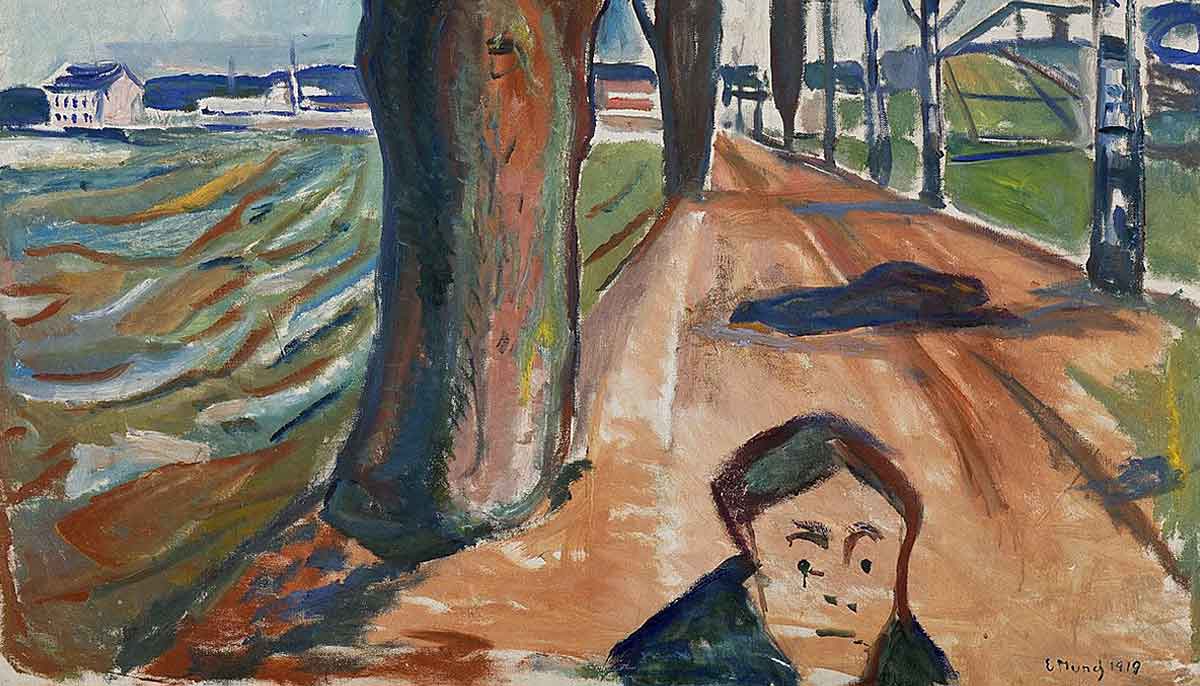
Suppose now that Driver B is a well-respected driver with years of experience, and that after their shift, they are called into the manager’s office and sacked for not doing the necessary safety checks. Here, we can imagine people being in uproar over “harsh treatment.” They might say that B did nothing other drivers have not done in similar situations and that nothing bad happened as a result. Rather than being sacked and labelled a bad person, they say B should have been issued a verbal warning.
Compare this with people finding out that a well-respected member of the community was run over and killed by Driver A, who failed to carry out basic security checks before setting off. There would be outrage if they learned that A was only given a verbal reprimand.
It is easy to imagine that these reactions might be the case if either of these scenarios were to happen in real life. And we can see luck undeniably plays a part in how much moral blame these drivers would receive for the same failing (not carrying out mandatory safety checks). This is especially clear in the second case.
How well loved the victim was should play no part in the moral judgment of the driver. To see this, imagine a different scenario in which the person killed on the road turned out to be a murderer on their way to attack a fresh victim. While Driver A could not reasonably be praised for saving the potential victim, many would be upset if A was punished and accused of being a morally bad person.
In all these scenarios, we are talking about emotional reactions to bad things happening and not reasoned thinking on the subject. This being the case, we might ask if moral luck really is a problem.
A Moral Problem Not Easily Solved

If the harm, in cases of moral luck, is actually blame and resentment arising from emotional responses to victims and perpetrators that obscures the crucial role played by luck in specific cases, then the problem does not lie with moral luck but with human emotions. The solution to the problem is to focus on the emotional response and not on moral luck.
In other words, there is no problem of moral luck as such but rather with our emotional need to blame people for their actions. Brynmore Browne championed this response to the problem in his 1992 article ‘A Solution to the Problem of Moral Luck.’
It might be thought that scenarios, such as the bus driver one, are too rare and contrived to be useful. Or that the problem has been exaggerated. That is, the example has been very carefully constructed to make Driver A as minimally morally responsible for the death of the pedestrian as possible, and the moral blame he receives in the example is far greater than they would get in real life. But, as we shall see, the problem of moral luck will not go away so easily.
Four Different Kinds of Luck
In his 1976 article on moral luck, Thomas Nagel identifies four different kinds of luck relevant to the discussion. These are constitutive luck, circumstantial luck, resultant luck, and causal luck. Let us familiarize ourselves with each of these kinds of luck to see how they fit into the problem of moral luck.
Constitutive luck concerns who you are and how you came to be. This is similar, in a way, to circumstantial luck, which concerns the situation you ended up in. To see the difference, suppose there is a Driver C who was brought up to be meticulously respectful of all rules. Such was their upbringing that it is unimaginable for them not to carry out the mandatory safety checks before starting their shift. Accordingly, they would never find themselves in the situation that Drivers A and B found themselves in.
Still, something is out of their control. They did not choose to be the way they are about rules. In this situation, we can also say that A and B were unlucky that they were not brought up the same way as C. When we look at the circumstances, we can see that if there were no mandatory safety checks, then Driver A would not have been considered morally bad. Even if, after the accident, the safety checks became mandatory because of this accident, A would still face no moral blame.
Resultant luck concerns what actually happened in the scenario. The results for Driver A were tragic, but not for B, and in this way, B got lucky. Causal luck involves the chain of events that occurred leading up to the act and its aftermath.

In moral luck cases, it seems unfair to put all the moral blame onto the person who is the last link in a long chain of causes and effects. Suppose in the bus driver scenario, Driver A was late starting their shift because their supervisor was inept and unnecessarily delayed assigning the routes. Suppose Driver B was delayed by an upset stomach brought on by eating a slice of birthday cake brought into work by someone without due care and concern for food hygiene. Perhaps the bus company has such a culture of managerial bullying that A and B were terrified of starting their shifts late. Here, we see multiple kinds and degrees of moral failure, but with all the moral blame being placed on the drivers.
When we take all the kinds of moral luck into account, attributing fair and reasonable blame in all moral cases seems complicated. How can we know all of the relevant details when we need to take into account constitutive, circumstantial, resultant, and causal luck?
Is There a Solution to the Problem of Moral Luck?

One solution to the problem, already suggested, is to change the way that we respond to people who are doing morally bad things. The difficulty in the cases we have been discussing results from attributing blame rather than judging something to be morally wrong. Is it possible to judge morally without attributing blame?
Emotions play a strong role in moral judgment, often overriding more reasoned responses. But so many different factors are involved when it comes to moral luck cases that a totally reasoned response appears impossible. It might also be undesirable.
Imagine a situation in which a driver has done nothing wrong but is involved in a fatal accident. If the driver blamed and tormented themselves, we would tell them that it was not their fault and that they are entirely blameless. However, there would be something uncomfortable and disconcerting if the driver felt no guilt or remorse whatsoever.
To feel guilty in this situation is irrational, but it is also a very human response. That is, it is human to blame oneself even if there was nothing one could do. But it is also human to blame others when bad things happen. Perhaps moral luck is simply an aspect of our humanity we must accept.
To solve the problem of moral luck, while still responding emotionally to moral problems, we will need to radically change our emotional responses to people and acts considered morally bad. Brynmore Browne suggested in his 1992 article that we should be more loving in our moral responses to others. This solution seems promising because we can still think and act emotionally, but without introducing further harm by blaming people for things over which they had no control. However, this also seems like a very radical change in human behavior and one not likely to happen any time soon.