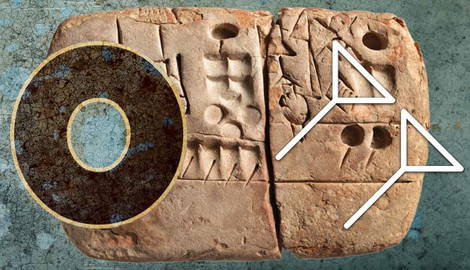

The Sumerians (c. 5500–1800 BC) were arguably the most prolific inventors of the ancient world. They are also credited with the first practical way of expressing the concept of “nothing,” or “zero.” It is surmised that Sumerian scribes were the first to use a blank space to denote the total absence of everything in their written numbers. While this is almost poetically logical (an empty space for emptiness) it could easily cause confusion depending on how accurate the rest of the scribe’s spacing was when numbers were combined with text. Eventually, the Sumerians (some say their successors, the Babylonians) used two leaning wedge-shaped lines to denote a space without a number.
Transmitting the Concept of Nothing
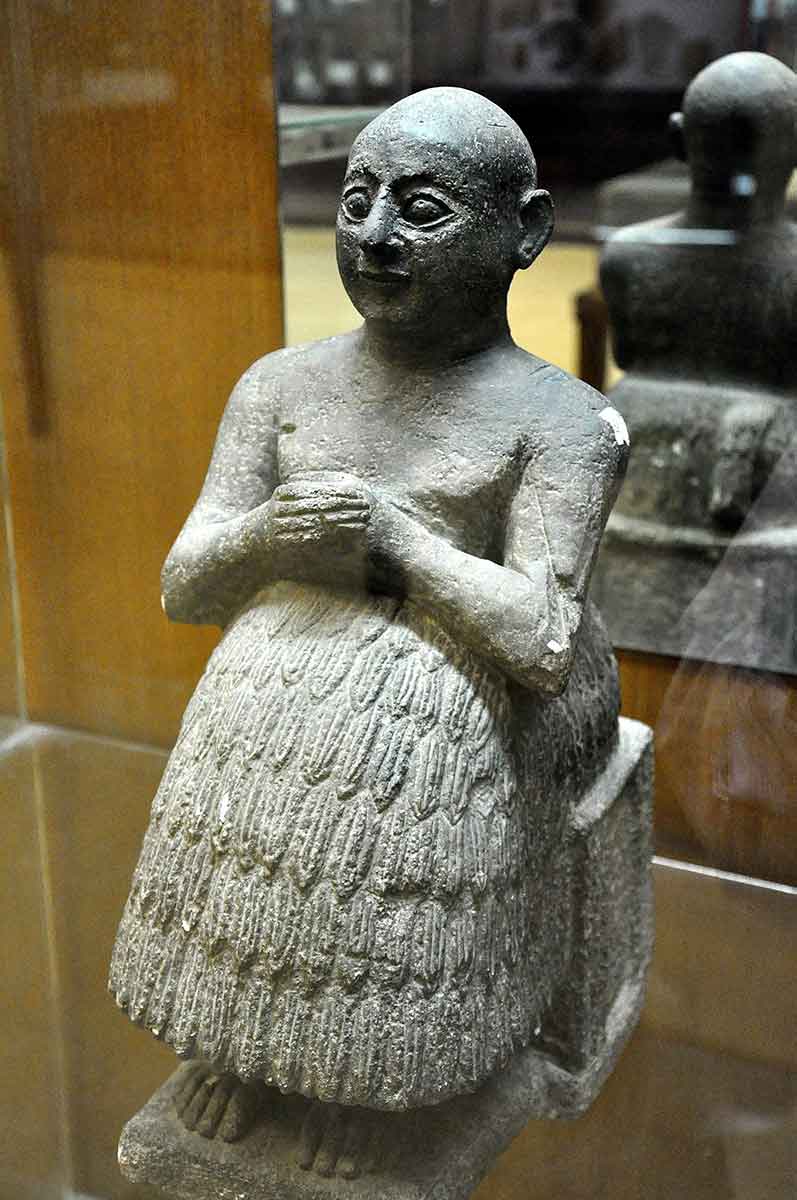
As the Sumerian settlements in Mesopotamia grew into numerous and complex urban societies, the need for record-keeping became a necessity for both the economic and administrative functions of their society and city-states. Farmers and manufacturers were already keeping private tallies by this time, but a more efficient and universal accounting system was needed to track the value of activities such as trading, food production, storage, and distribution.
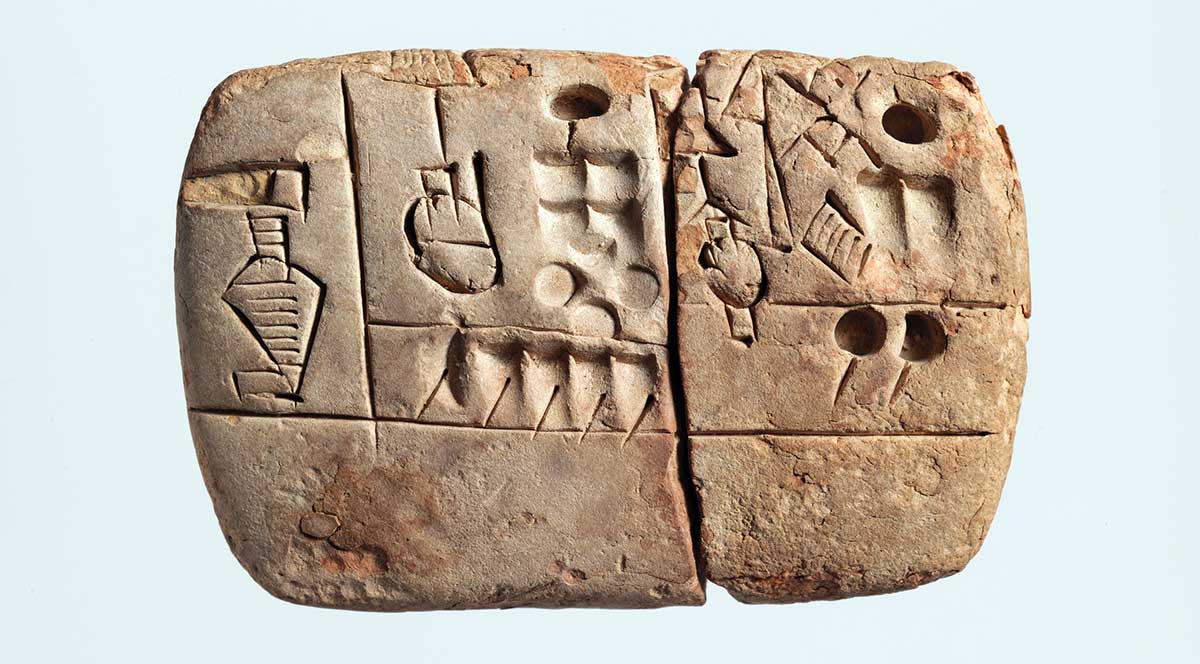
Before the use of wet clay tablets and a stylus, numbers were represented by simple marks on sticks, stones, and several other materials. These tally marks appeared in Mesopotamia from around 8000 BC, although there are scholars who have traced similar tally marks to even earlier times.
The invention of writing flowed from the invention of numerals to record transactions, agreements, stock, labor division, and more. From the simplest form of numerical record keeping, Sumerian accountants laid the groundwork for written language to annotate numbers.
The use of bullae, clay pockets with stones or other small objects inside, dates to around the same period. This method was especially handy in trading endeavors. It allowed the sender of goods to seal the bulla after placing a corresponding number of tokens as the objects inside the pocket. The recipient could then verify the exact number of goods on receipt thereof.
The bullae were often marked with a number sign on the outside, as well as a pictogram of the items represented by the number of objects inside it, like sheep or barley. Scholars do not always agree on all of these markings, as some appear to represent names or emblems of the owners or the recipients rather than the commodities.
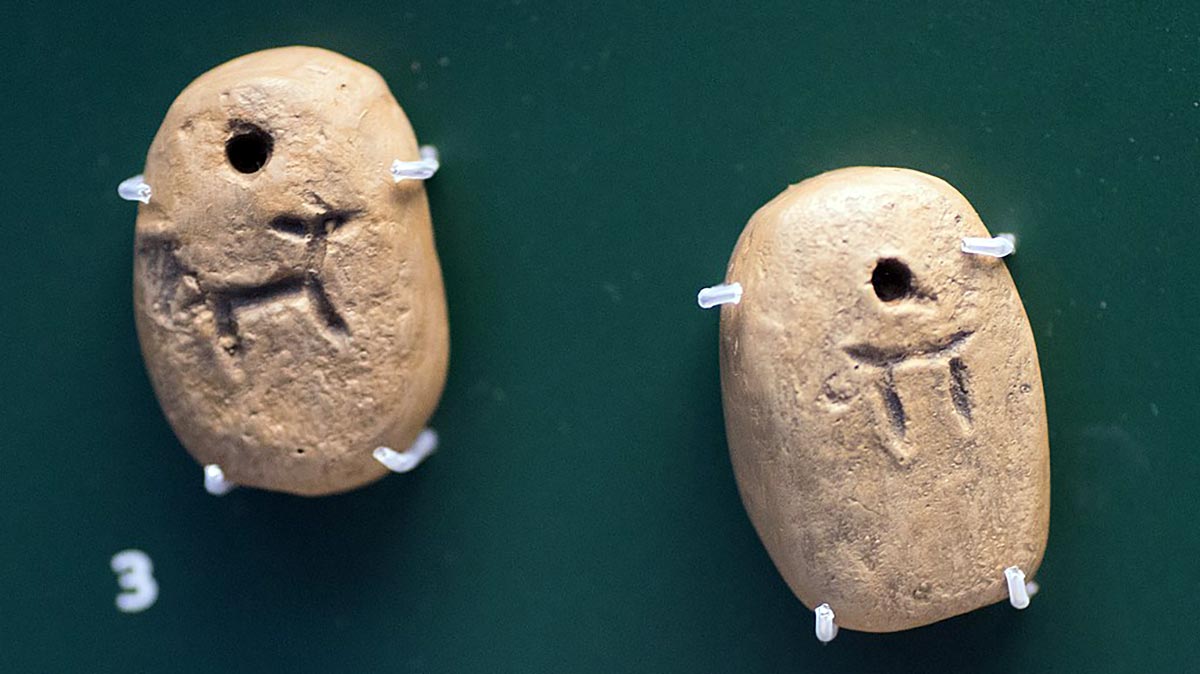
When quantities increased, symbols were invented to be used on tokens to indicate the relevant objects and their quantity, and were used in trade, labor division, food distribution, grain storage, and more. The symbols and token pictograms were adapted in accordance with the quantities of particular items.
According to Denise Schmandt-Besserat in “Before Writing, vol. 1” (1992, p. 152), tokens with complex markings replaced the millennia-old rudimentary tokens during the 4th millennium BC in the Uruk IV Period. The older tokens appear to have been used in an elementary accounting system from around ca. 8500 BC. Pictograms became more stylized over time, but the writing system was still in proto-cuneiform style.
The need for more accurate tracking of trade goods, manufactured stock, domestic animals, and food production and storage grew as the population, industries, and storage needs multiplied and flourished in urban centers. Originally, the tokens were tiny objects in the shape of particular items, like tiny breads, animals, etc. These artistically crafted tokens were later replaced with objects of various shapes, incised with numerical and pictographic representations.
Writing evolved further as needs changed, and it is interesting to note that representations (of numbers and objects) were even adapted for different types of the same items. For example, different signs were used for sheep, lambs, and ewes! This became Proto-cuneiform, which, over time, became the familiar wedge-shaped strokes on clay tablets that we recognize today as cuneiform.
The success of the Sumerian invention of cuneiform is confirmed by its legacy. The Akkadians took it over seamlessly to write Akkadian after they replaced the Sumerians. Through their vast empire, it spread across the Middle East, where it was adapted to write most of the languages throughout the nearly 3000 years that it was in use, until the 1st century AD. Cuneiform lost its grip gradually over its final few centuries when it was replaced by much easier alphabetic writing.
Sumerian Concept of Nothing Becomes a Placeholder
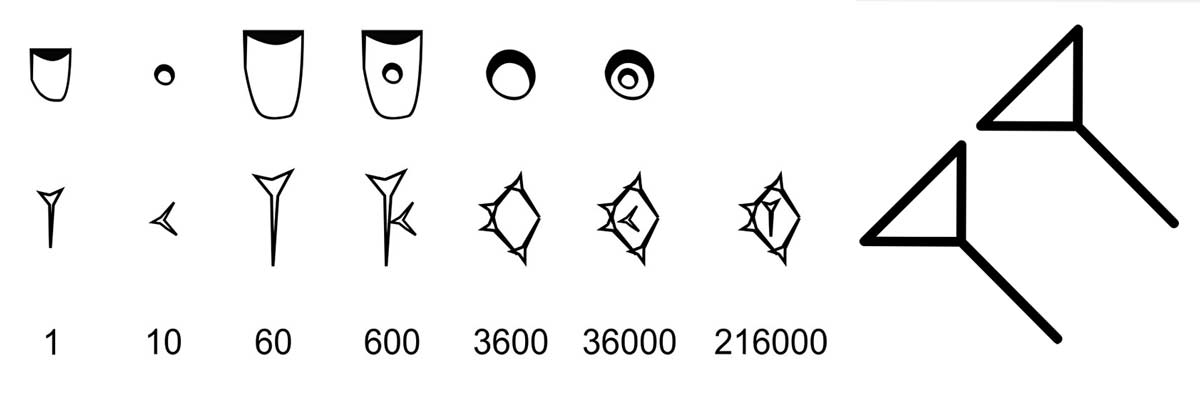
In the beginning, there was no need for a sign to denote zero. If there was nothing, then there was nothing to convey! A simple mark for each object that was present fulfilled the purpose of tracking goods adequately.
However, when volumes necessitated even larger units, it became necessary to invent a format that could limit the number of digits that were needed. An even bigger need was to be able to transmit the idea of depleted or missing goods, like an empty storage facility. The Sumerians decided on a placeholder to solve both these problems. They used the abstract concept of nothing as a placeholder in multi-digit numbers where a digit was empty, such as in 201, 360, and so on.
They used it similarly to how we still use hundreds, tens, and ones as value indicators for each number’s value in a number with three digits. The Sumerians did not create a character to indicate a zero value for this purpose, but simply left an empty space, which was later replaced by two diagonal lines, and still later by two slanted wedge-shaped lines.
Everything Starts From Nothing

Scholars differ on when and who first developed a practical expression for the concept of “nothing.” Archaeological discoveries and the deciphering of ancient scripts in the modern era brought an understanding of how astonishingly advanced some ancient civilizations really were. Until then, some scholars had wondered if ancient folks could even understand such an abstract concept!
The Sumerians’ use of an empty space proved problematic, especially as the same numbers and pictograms could often refer to several different objects, depending on the context in which they were used. Moreover, scribes were not uniform in their sizing of these gaps. According to some scholars, the first obvious and clear use of a definite space used for zero in calculations is from China c. 500 BC.
According to these scholars, an empty space as a placeholder in Mesopotamia is only provable in Babylonian mathematics long after the Sumerians, in around 400 BC (See Nieder (2016), p. 831). This meant that, despite their astronomical (literally and figuratively) progress in all manner of calculations, the successive Mesopotamians had to constantly remain vigilant that an empty space could be lurking betwixt their numbers!
When Nothing Became a Number
The story of zero migrated across the ancient world during the common era in no small way thanks to Arab traders and scholars. It was still without a name or value as a number. Arabic-speaking mathematicians and astronomers picked this idea of “nothing” up in India. They developed its use in their decimal system and spread it to their trading partners in the shape of a slanted “0” symbol.
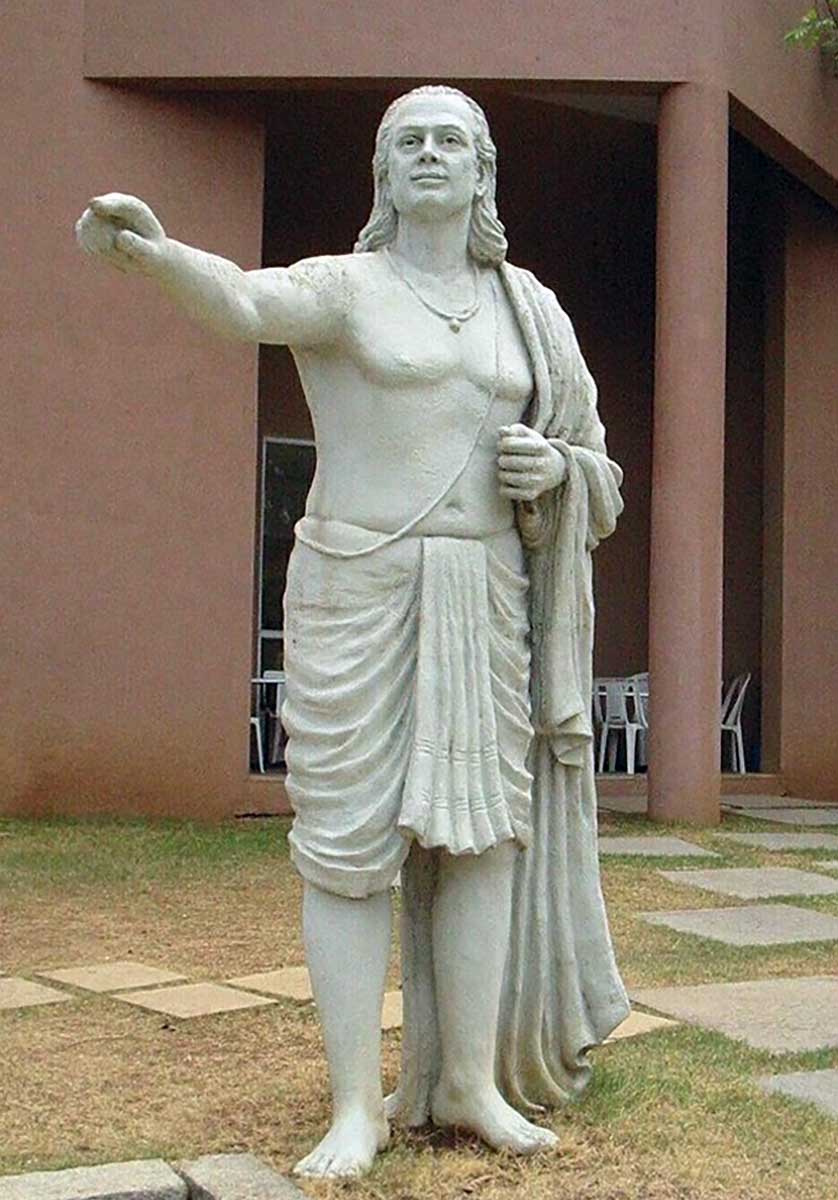
In India, a mathematician and astronomer Āryabhata wrote a treatise in 499 AD, in which he laid out mathematical rules for zero as a placeholder in the decimal system. He relied explicitly on the concept of zero when he needed to express large numbers. He named the placeholder space “kha,” but it was not yet a name for zero as a full-fledged number. It was named as a placeholder for the emptiness of value.
In some Indian philosophies and religions, a void, an emptiness of emotion, was accepted as part of life and culture. It is speculated that this well-known concept of an absence of anything and everything may have stimulated the application of it as a principle of the absence of a concrete numerical value in mathematics. It is confirmed by the first names given to zero by the Indian mathematicians, which were similar or the same as the philosophical void.
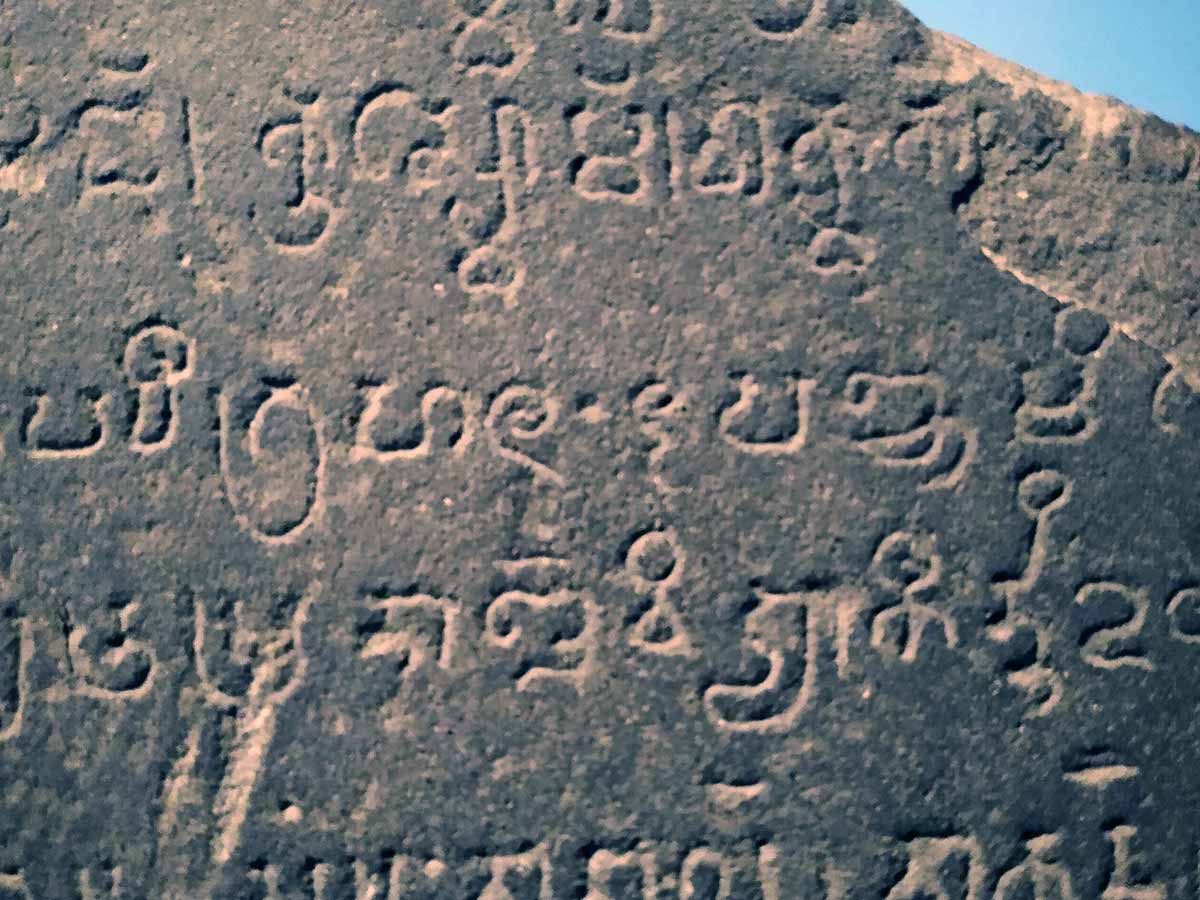
In 628 AD, another brilliant Indian mathematician and astronomer, Brahmagupta, authored a thesis, the Brāhmasphuṭasiddhānta, in which he laid out the rules for arithmetic involving zero. He called it śūnya, a Sanskrit word meaning “void” or “nothing.” He illustrated its use in addition, subtraction, and multiplication. In addition, he introduced negative numbers and illustrated zero on the number line. His work, at last, brought zero from a placeholder for the absence of a specific value to a number in its own right. Zero’s value on the number line was the true starting point, not one! Positive and negative numbers could be built out to infinity from a zero base.
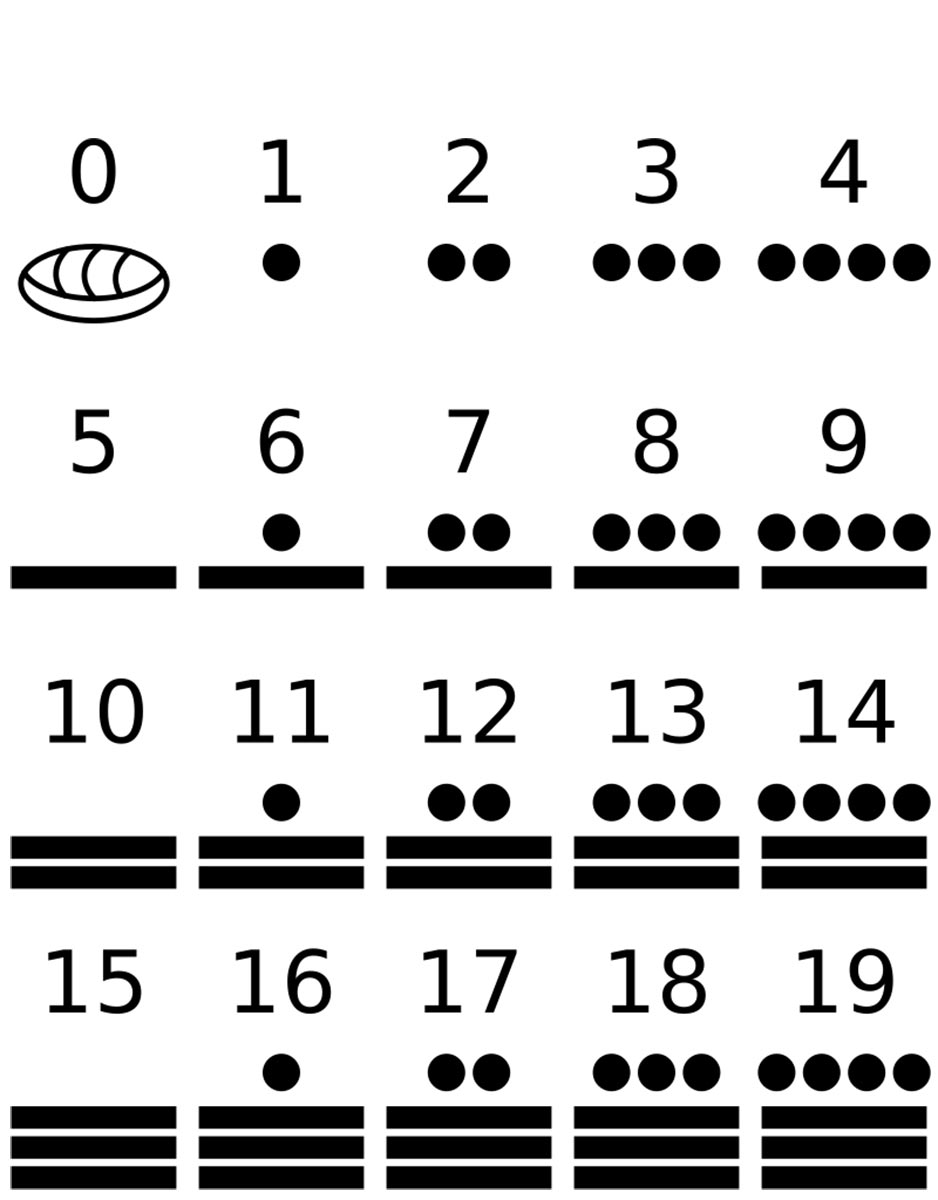
Two other civilizations recognized the concept of nothing and developed their own zeroes independently: the Chinese and the Maya. However, there is another school of thought that the Indus Valley Civilization, long before that, may also have recognized and used the concept of absence, emptiness, nothing in their advanced calculations.
Their near-perfect measurement systems in archaeological remains certainly leave no doubt of their highly developed proficiency in economic and administrative skills, but scholars are hampered in their research into this because the sparse extant IVC script has yet to be deciphered.
Despite these opinions, it is generally accepted that Sumerian accountants and scribes recognized the concept of nothing in accounting. They were already using a space as a placeholder for zero value by 2000 BC. They are, therefore, accepted as the first to recognize and use the concept of zero. But it was in India that zero became a real number. It took humanity several millennia from the recognition of the concept itself to understanding the true value and use of zero as a number.