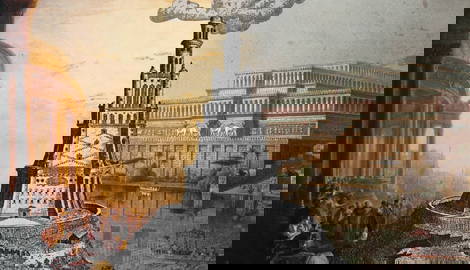

Urbanization was one of the catalysts for the rise of the great civilizations of the ancient world. Important cities became the beating hearts at the center of vast empires. Wealth flowed into their walls and allowed these cities to grow into megacities with grand temples, elaborate palaces, and monuments to conquest and culture. From the capital of Old Kingdom Egypt, to Greece’s culture hubs, to the grandness of imperial Rome, discover 12 of the greatest ancient cities that defined the classical world.
1. Why Did Memphis Remain the Sacred Administrative Heart of Ancient Egypt?
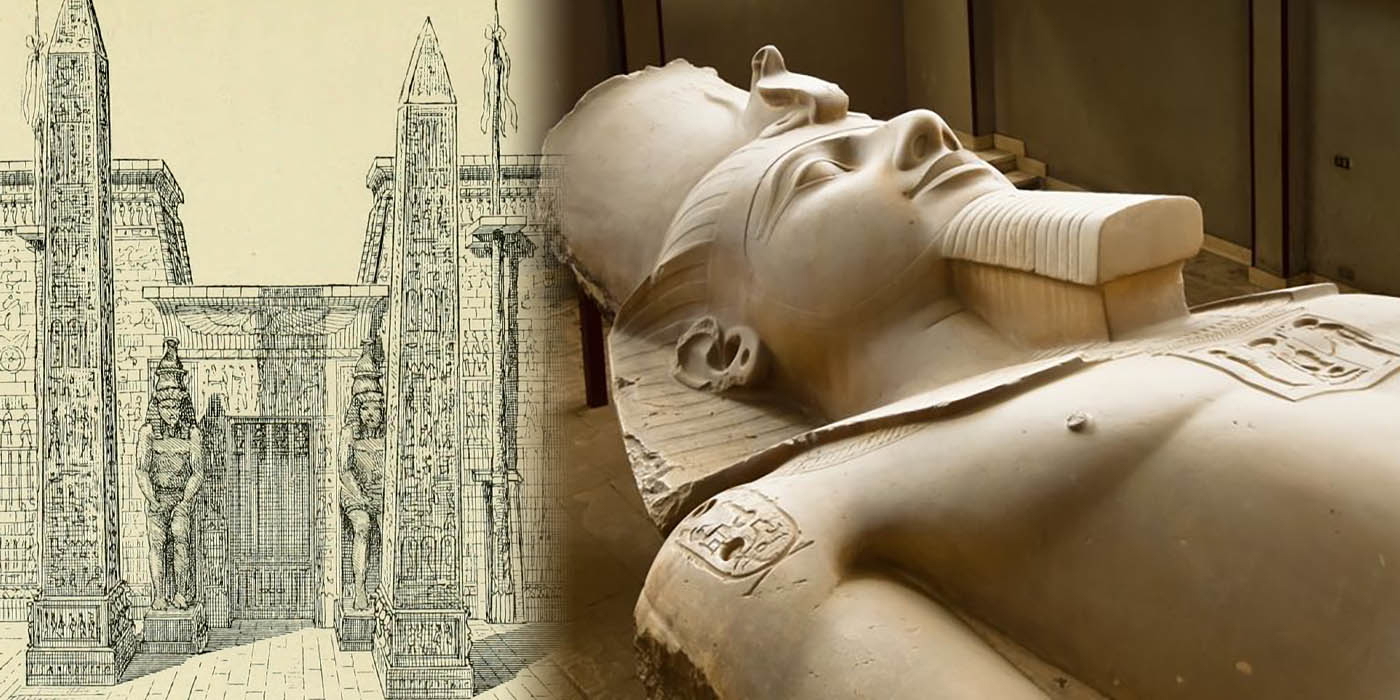
One of Egypt’s oldest and most important ancient cities, Memphis was the capital of the Old Kingdom (2686-2181 BC), the age of the pyramids. Memphis, occupying a prominent position where the Nile River opens into the Delta, was founded by Menes around 3100 BC to rule the newly unified Upper and Lower Egypt. It was one of several major cities expanded by the great Pharaoh Ramesses II in the 13th Century BC.
Although superseded as the capital during the First Intermediate Period, Memphis remained important throughout Egyptian history. When the Assyrians invaded Egypt in 671 BC, Memphis was razed twice. But the city was rapidly rebuilt due to its religious importance. In 525 BC, the Achaemenid Persian king Cambyses II captured Memphis, which became the capital of the Persian satrapy of Egypt.
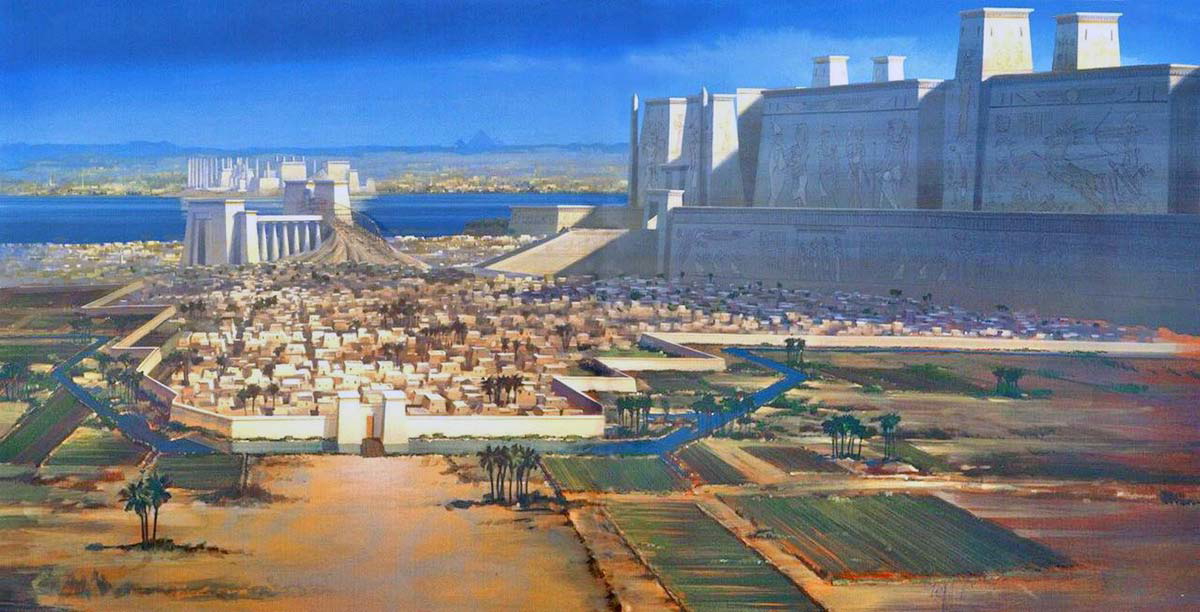
In 331 BC, Alexander the Great was crowned Pharaoh at Memphis after seizing Egypt from the Persians. After he died, Alexander was briefly entombed at Memphis, and one of his commanders, Ptolemy, established the Ptolemaic Dynasty. But the Ptolemies moved their capital to the new Delta city of Alexandria, which permanently shifted power further north.
2. Why Did Thebes Remain the Sacred Stronghold of Upper Egyptian Resistance?
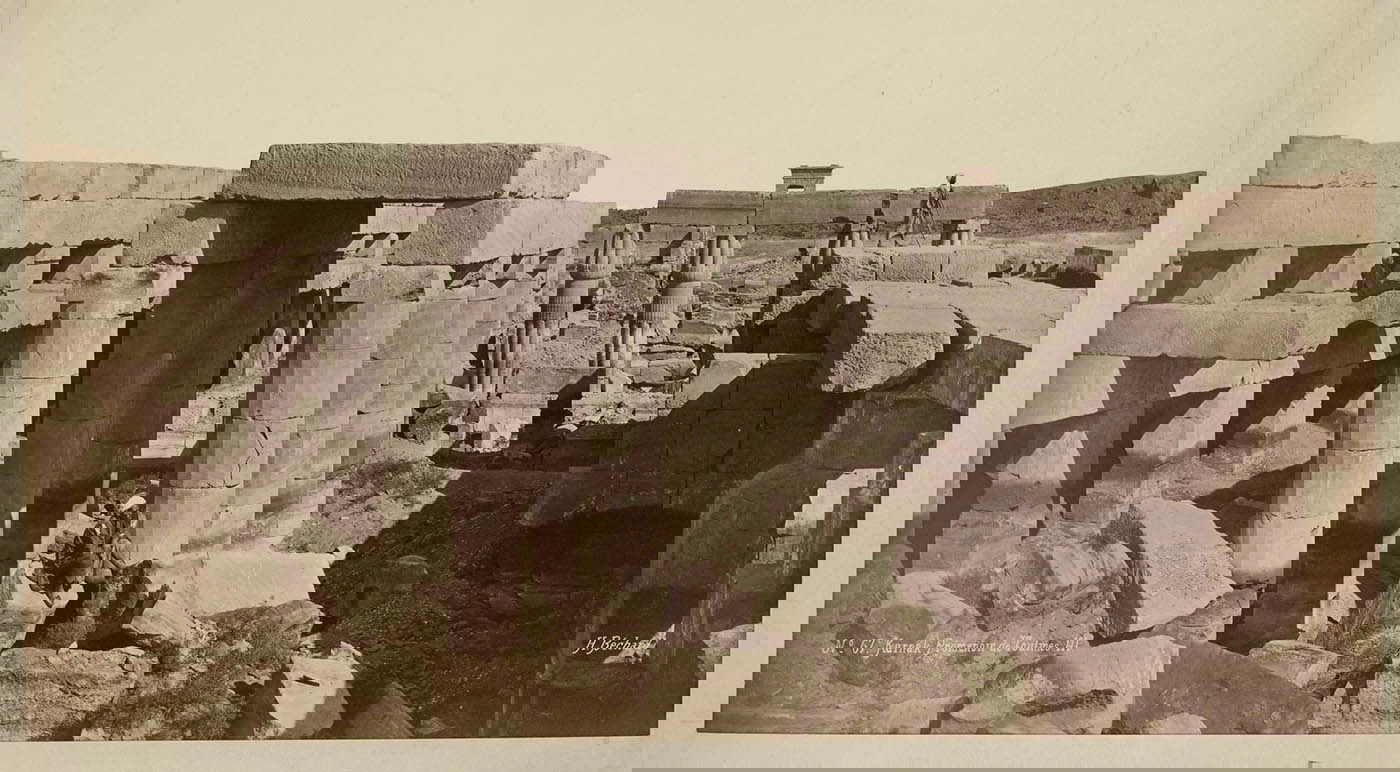
Thebes replaced Memphis as the capital of ancient Egypt during most of the Middle Kingdom and New Kingdom. It had been important since early times as the city of the god Amun. It was around 2055 BC that a Theban aristocrat named Mentuhotep II took power and moved the capital to Thebes. He significantly increased the grandeur of the city, which became home to the massive Temple of Karnak.
As Thebes became the center of the Egyptian world, the priesthood thrived and became extremely wealthy. Records reveal that by the end of the New Kingdom, it owned 10-15% of all arable land in Egypt. The legitimacy of the pharaoh also relied heavily on the approval of the priesthood, giving them significant political clout. The High-Priest of Amun was the second most powerful man in Egypt, behind the pharaoh. It was probably the increasing power of the priesthood that saw the controversial Pharaoh Akhenaten move the royal court to Amarna in 1345 BC, but Thebes was quickly restored by his famous son Tutankhamun.
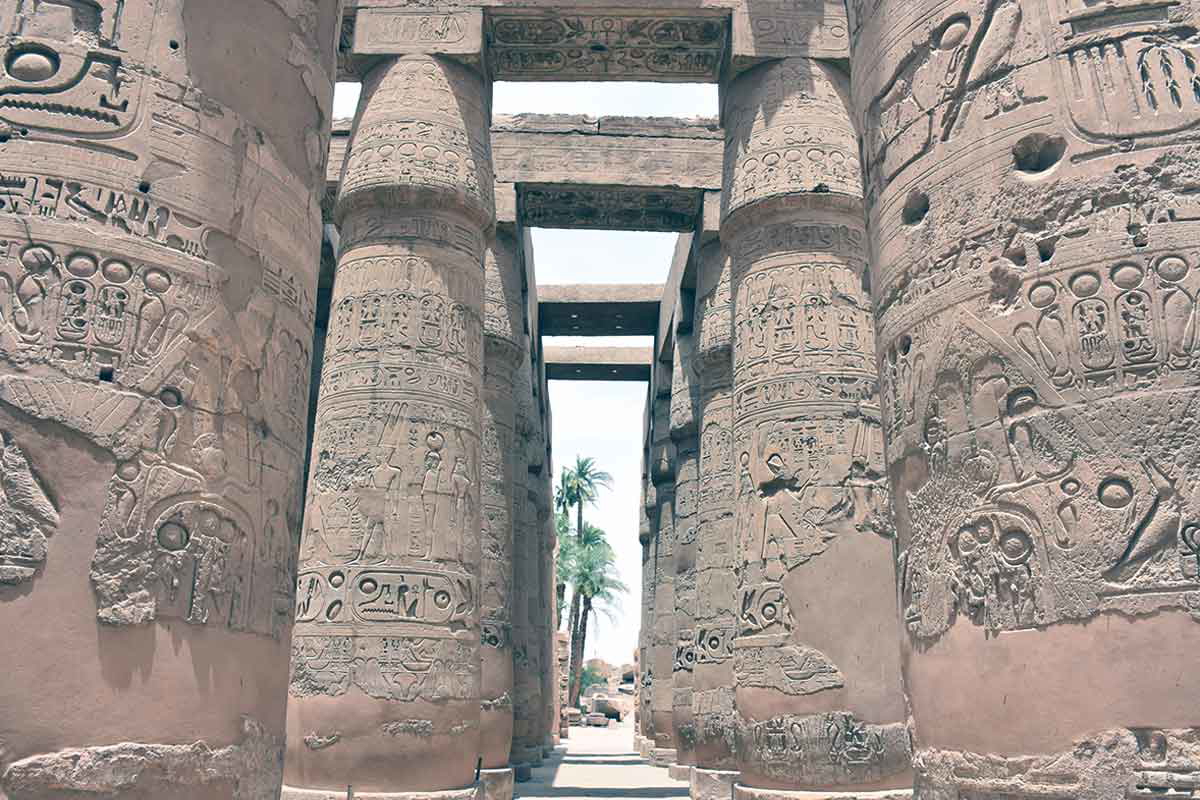
As some of Egypt’s greatest Pharaohs ruled from Thebes, a vast necropolis began to form on the western bank of the Nile, known as the Valley of the Kings. The mortuary complexes included those of Ramesses II as well as the huge mausoleum of Queen Hatshepsut. The city itself hugged the eastern bank, becoming famous for its beautiful buildings and temples. At its height, Thebes was probably home to around 80,000 people.
Thebes was sacked by the Assyrian king Ashurbanipal in 663 BC during his invasion of Egypt. He had the city rebuilt, and it continued to be one of Egypt’s most important cities. But in the 1st century AD, the Romans arrived and destroyed Thebes, leaving the once-great city a ruined husk.
3. How Did Nineveh Become the Palatial Capital of the Neo-Assyrian Empire?
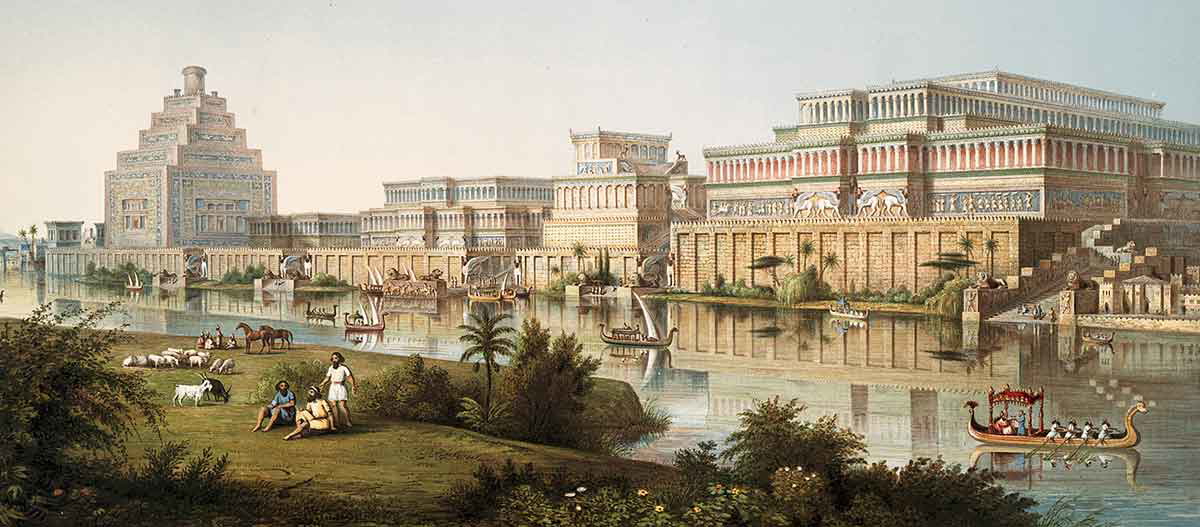
Under the Neo-Assyrian empire, Nineveh became one of the most famous ancient cities in Mesopotamia. During the early periods of Assyrian rule, the city sprawled across the east bank of the River Tigris and was a wealthy urban center. King Sennacherib made Nineveh the Assyrian capital in 705 BC and expanded the city. Fifteen monumental, fortified gates were built to protect the city, which also boasted advanced infrastructure such as aqueducts. As the empire reached its peak, wealth and slaves flooded into Nineveh.
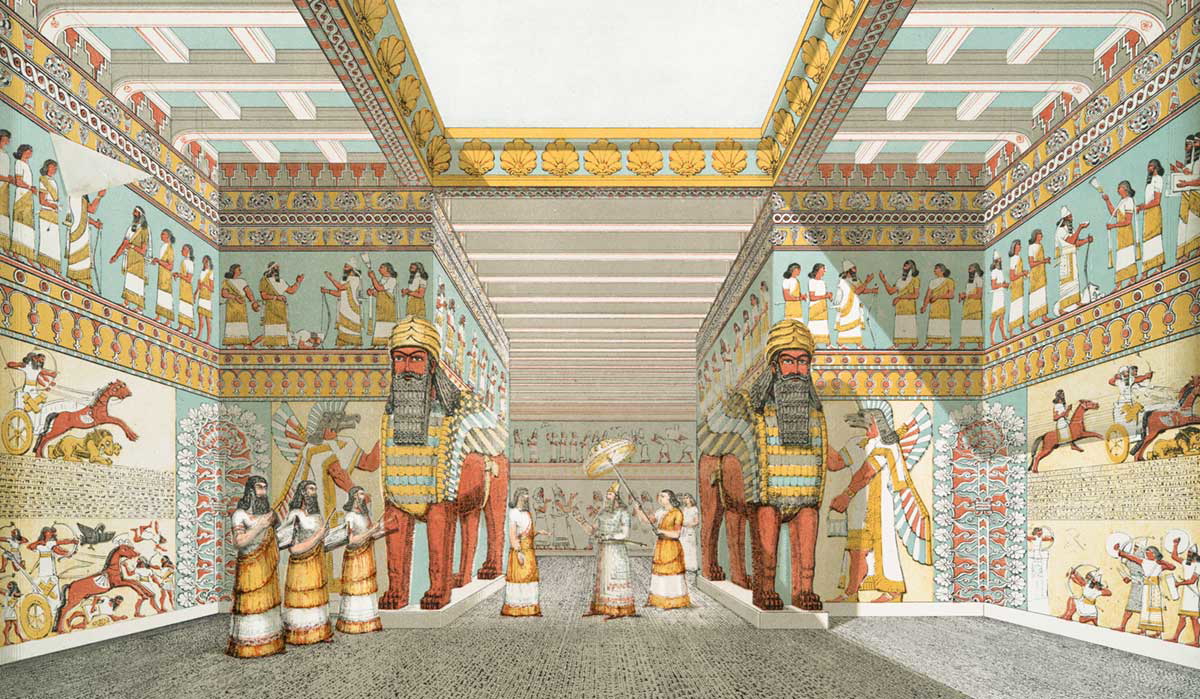
But the crown jewel of Nineveh is Sennacherib’s “Palace Without Rival”, also known as the Southwest Palace. Each of the palace’s 80 rooms was decorated with intricate carvings depicting Sennacherib’s triumphs and scenes illustrating Assyrian life. Statues of winged lions with human heads, known as “lamassu,” guarded the palace doorways.
Sennacherib’s grandson, Ashurbanipal, devoted even more attention to the city. He built an immense library complex, where he hoped to collate writings from across Mesopotamia. Scholars were sent to scour Assyrian lands, collecting various cuneiform texts for the library, which may have contained as many as 30,000 tablets. But after Ashurbanipal’s death, Assyria’s brutally oppressed subjects seized their chance. A coalition of Babylonians, Medes, and Persians destroyed Nineveh in 612 BC.
4. What Made Babylon the Enduring Symbol of Near Eastern Architectural Majesty?
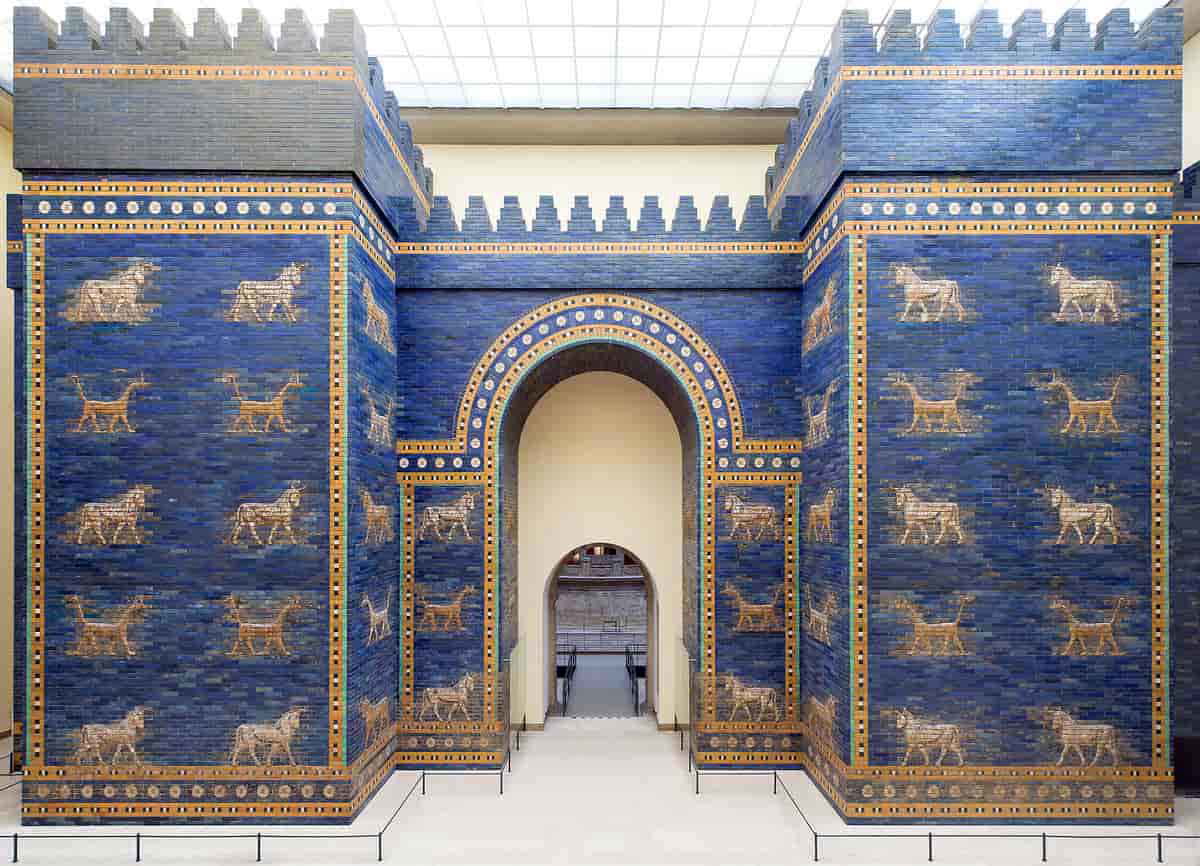
Straddling both banks of the Euphrates, Babylon was already legendary in ancient times. After centuries of harsh rule under the Assyrians, Babylon led a coalition that overthrew their brutal rulers in 612 BC. This heralded a golden age that saw Babylon’s greatest architect, Nebuchadnezzar II, turn the city into an almost mythical metropolis. At its height, Babylon’s monumental walls contained three square miles of urban sprawl. Nebuchadnezzar expanded these mighty fortifications and constructed the famous Ishtar Gate, a vibrant portal made from dazzling blue tiles.
The Hanging Gardens, one of the Seven Wonders of the Ancient World, are also believed to have been built during Nebuchadnezzar’s reign. Babylon’s mighty central ziggurat, the temple of the city’s patron god Marduk, may have inspired the Bible’s Tower of Babel.
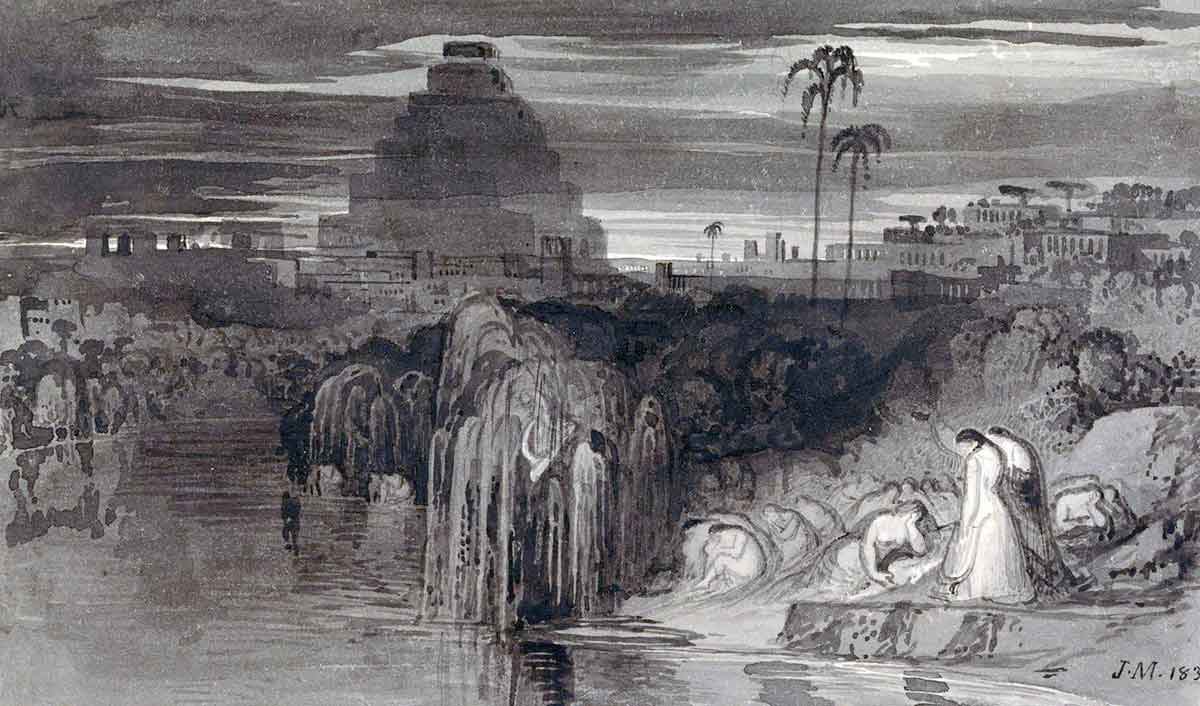
The city also hosted the raucous Akitu New Year festival every year to honor Marduk. The Persian ruler Cyrus the Great used the celebration as a distraction to conquer the city in 539 BC, but allowed Babylon to retain its prestige and treated the city with admiration. However, Xerxes I was not so respectful, razing Babylon in 485 BC as punishment for revolting against him. Some 150 years later, Alexander the Great brought the Achaemenid Empire to its knees and declared that Babylon was not to be harmed. The ancient city’s mystique outlived its physical presence.
5. What Made Classical Athens the Pioneer of Civic Design and Intellectual Life?
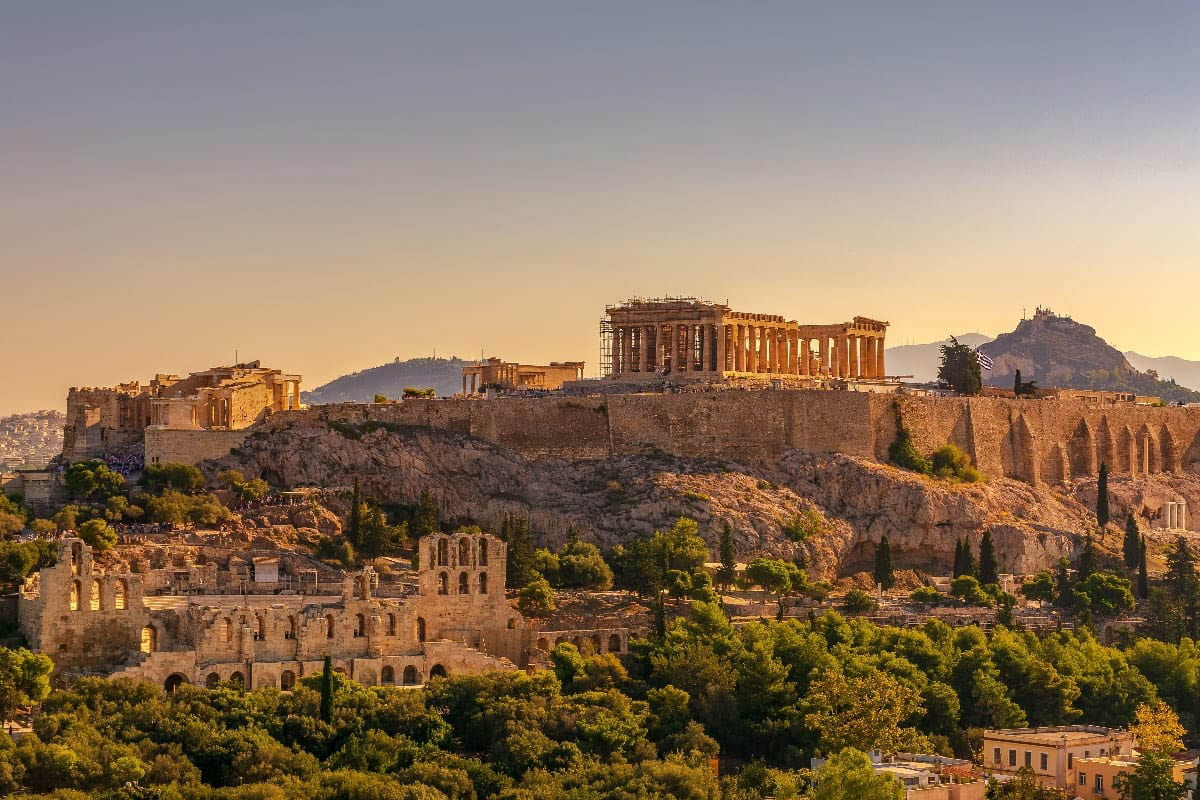
Athens is often called the birthplace of Western culture, as it was the home of democracy and Greece’s greatest philosophers. After being ruled by aristocrats and tyrants for centuries, the Athenians revolted in 510 BC. Led by the statesman Cleisthenes, the Athenians established the world’s earliest-known democracy. In theory, all free men of Athens had a say in the government of the city. Many of Greece’s best-known philosophers established their schools in Athens, including Plato, Aristotle, Zeno, and Epicurus.
Xerxes I razed Athens twice during his invasion of Greece in 480 BC, but was defeated by an alliance of Greek city-states led by Athens and Sparta. The great statesman Pericles then oversaw a grand rebuilding of the Acropolis on the rocky plateau overlooking the city, including the Parthenon, an impressive temple dedicated to Athena. The center of Athens was the Agora, a civic square and marketplace. Commodities such as silver, wine, and olives were abundant in Attica’s surrounding lands and powered Athens’ rise to prominence.
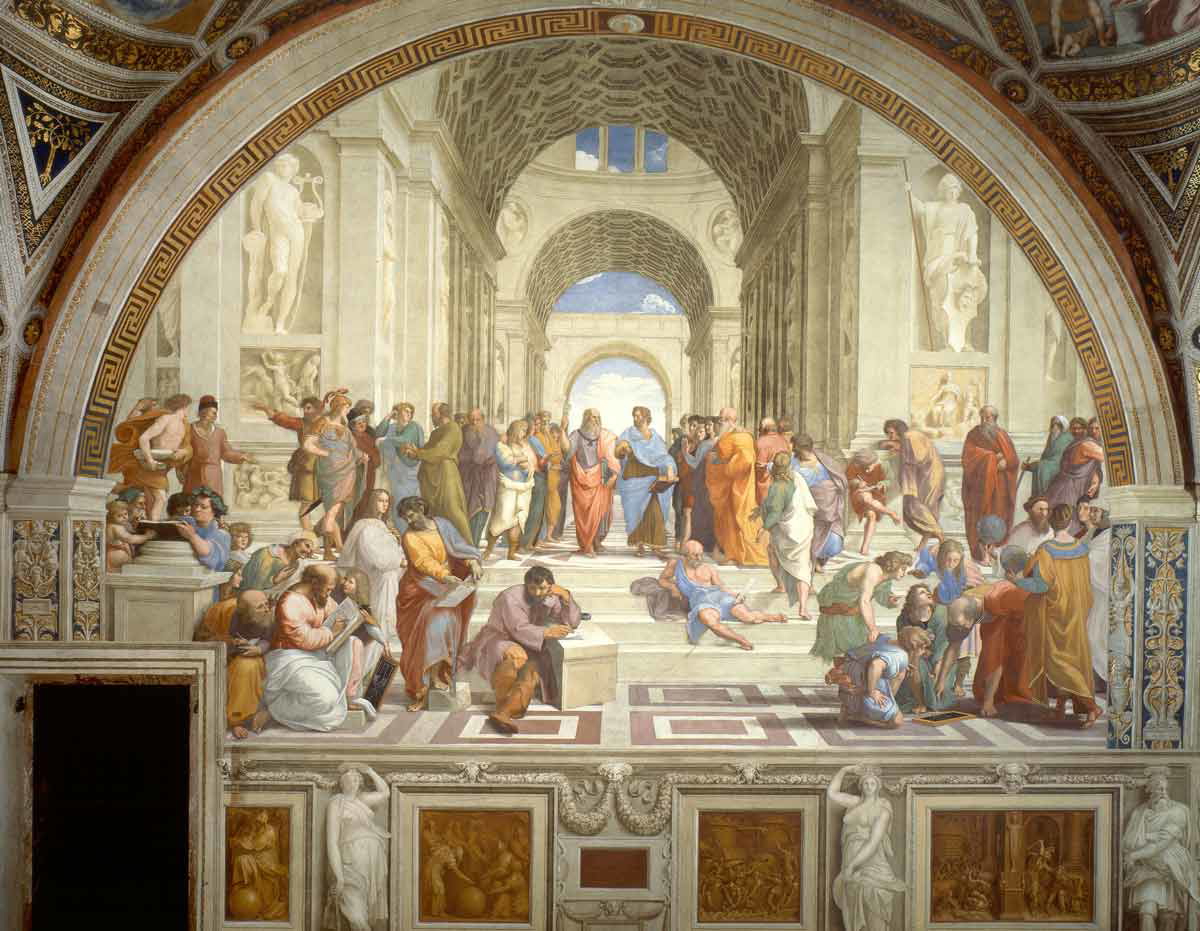
Athens then formed a coalition with several other city-states called the Delian League, which became a vessel for Athenian power for almost 75 years. But during the Peloponnesian War, Athens was toppled by Sparta, which became Greece’s dominant city-state. The two continued to vie for power until the Macedonians brought Greece under their dominion. Greece would then become part of the Roman Empire, with aristocratic Romans traveling to Athens as an essential part of a well-rounded education.
6. How Did Syracuse Launch a Massive Naval Challenge Against Classical Athens?
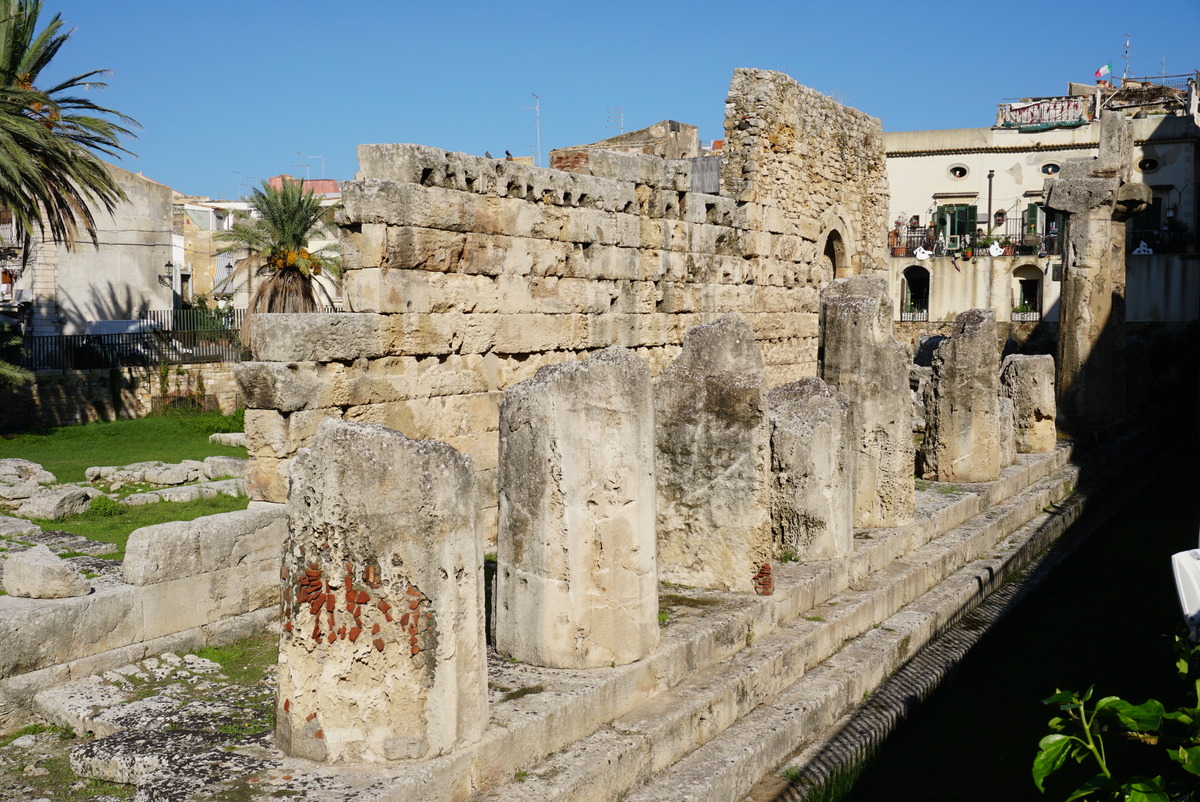
While Athens tends to get the most attention among classical Greek cities, Cicero described Syracuse, on the southeastern coast of Sicily, as the greatest and most beautiful Greek city. A colony founded by Corinthian colonists in 734 BC, Syracuse grew to become an important Mediterranean power that equaled Athens in population and surpassed it in wealth. In fact, it played an integral role in the downfall of Athens. During the Peloponnesian War, Athens launched a massive Sicilian Expedition in 415 BC, sending an armada to conquer Syracuse. The Syracusans annihilated the Athenian forces, which marked the beginning of the end of Athens’ golden age.
Syracuse was ruled by tyrants who prioritized a strong military. The tyrant Dionysus I constructed a massive defensive wall system around the city, anchored by the Euryalus Fortress, one of the most sophisticated military complexes of the ancient world, featuring complex moats, underground tunnels, and catapult towers. Its strong position in the middle of the Mediterranean allowed it to dominate maritime trade routes, which helped the city grow into a cultural center.
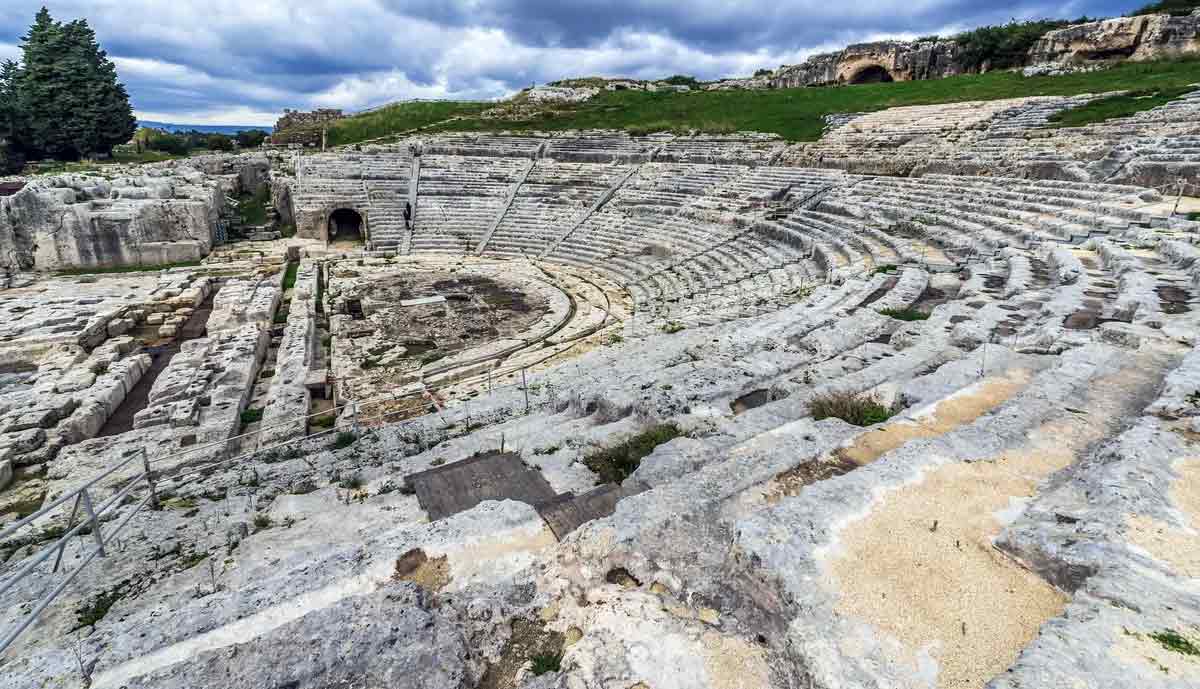
Syracuse’s strategic position made it a target of both Carthage and Rome. Syracuse’s conflict with the nearby city of Messana saw it look for support from both Rome and Carthage, which triggered the First Punic War. It allied with Rome and became Italy’s breadbasket. When the Second Punic War erupted, Syracuse was an opportunity to throw off Roman influence, but this led to the city being taken by Rome in 212 BC. It became the capital of Rome’s first official overseas province, Sicily.
7. Why Was Ephesus the Wealthiest Commercial Hub of Roman Asia Minor?
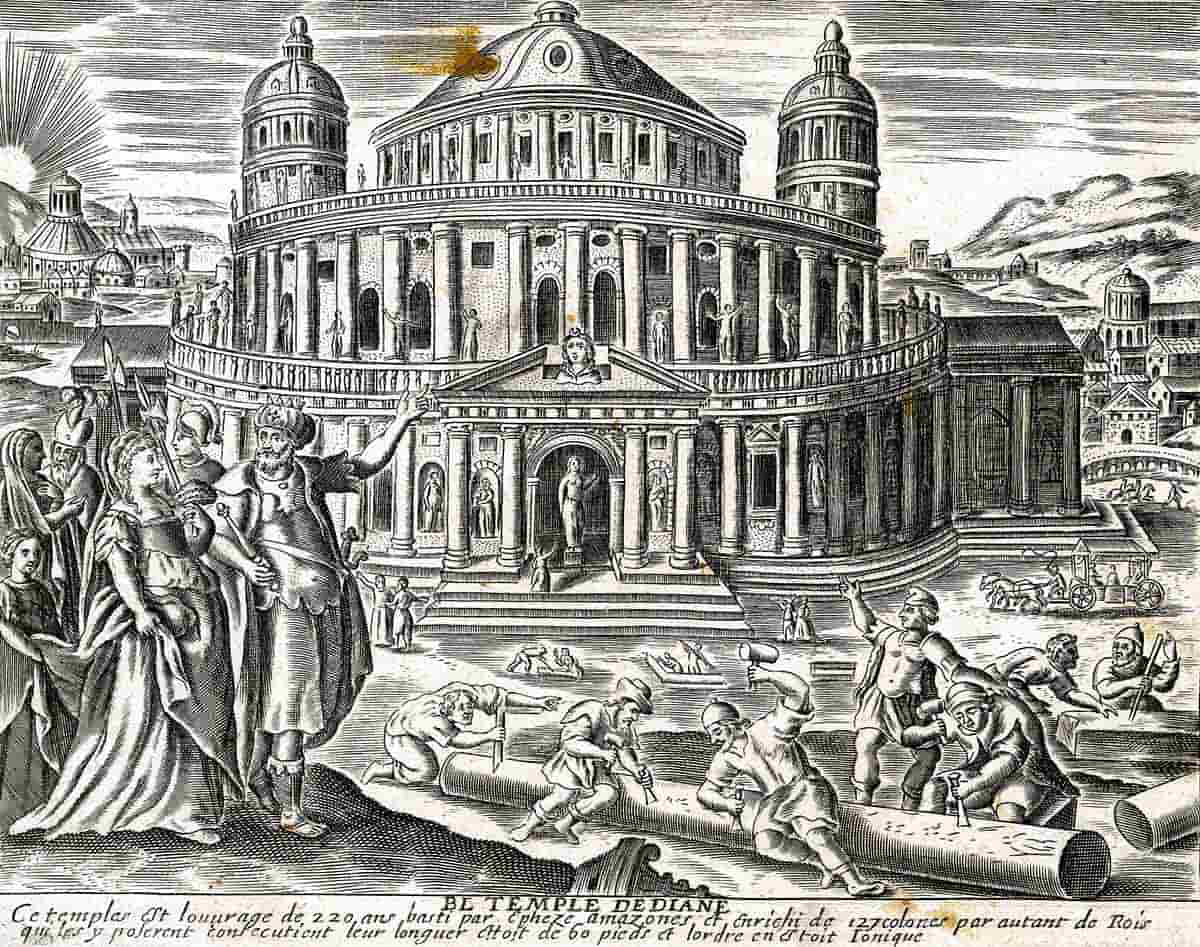
Ephesus, located on the west coast of Asia Minor, was a megacity in ancient times. Founded as an Ionian Greek colony, it sat on important trade routes between Europe and Asia and became a booming marketplace. When the region was conquered by Rome, Ephesus became the capital of the wealthy province of Asia. Its population grew to over 250,000 by the 2nd century AD, making it the second largest city in the Empire after Rome. It was considered a hub of luxury with advanced street lighting, massive public baths, and even heated public restrooms.
Ephesus’s ultimate claim to fame was as the home of the Temple of Artemis, considered one of the Seven Wonders of the Ancient World. It was four times larger than the Parthenon in Athens. As well as a religious center, it acted as a bank for kings, merchants, and foreign cities in the region, making the city wealthy and politically powerful. Later, a grand temple of the Roman imperial cult was built there under Domitian, giving the city another claim to fame. It included a 27-foot colossal statue of the emperor.

Ephesus also played an essential role in the spread of early Christianity. The Apostle Paul lived and preached in Ephesus for two years, sparking massive riots. It is also alleged that the Apostle John brought Mary, the mother of Jesus, to Ephesus in her later life. The church of Ephesus was important and was one of the Seven Churches of Asia in the Book of Revelations.
8. How Did Persepolis Materialize the Absolute Majesty of the Persian Empire?
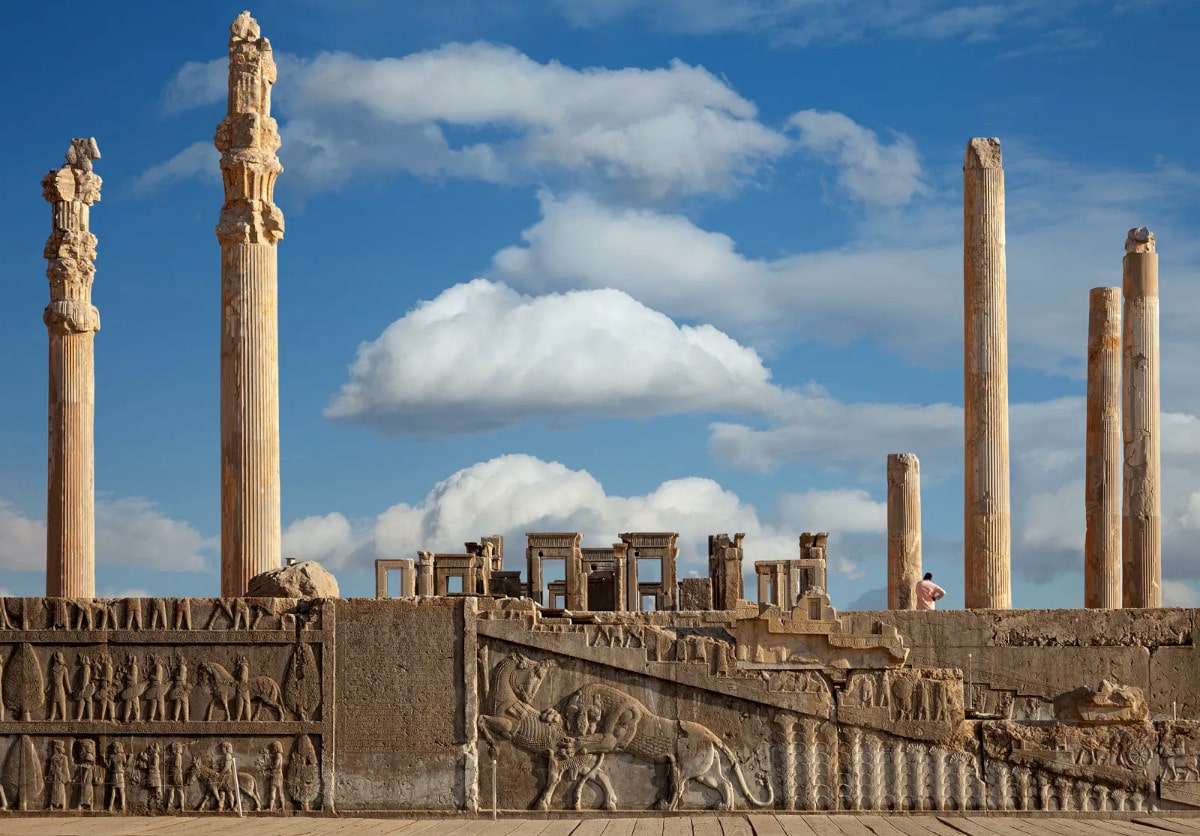
At its height, the Achaemenid Persian Empire was an immense superpower that dominated much of Mesopotamia and Asia Minor. To suit such a powerful civilization, the Persian king Darius the Great began construction on a new capital at Persepolis in 518 BC. While the vast Achaemenid administration continued to be run from other ancient cities such as Susa, Persepolis became the center of royal power. Darius constructed a new palace as well as a great apadana, an entrance hall used for hosting dignitaries. Bas-reliefs that still survive today depict visitors from across the empire arriving to pay homage to the King of Kings.
After Darius’ death, his successors added even more grand buildings to the complex. His son, Xerxes I, built his own palace, a treasury, and the famous Gate of All Nations. Around these impressive projects, fields spread out across the surrounding fertile land, while a bazaar sold goods gathered from across the empire.
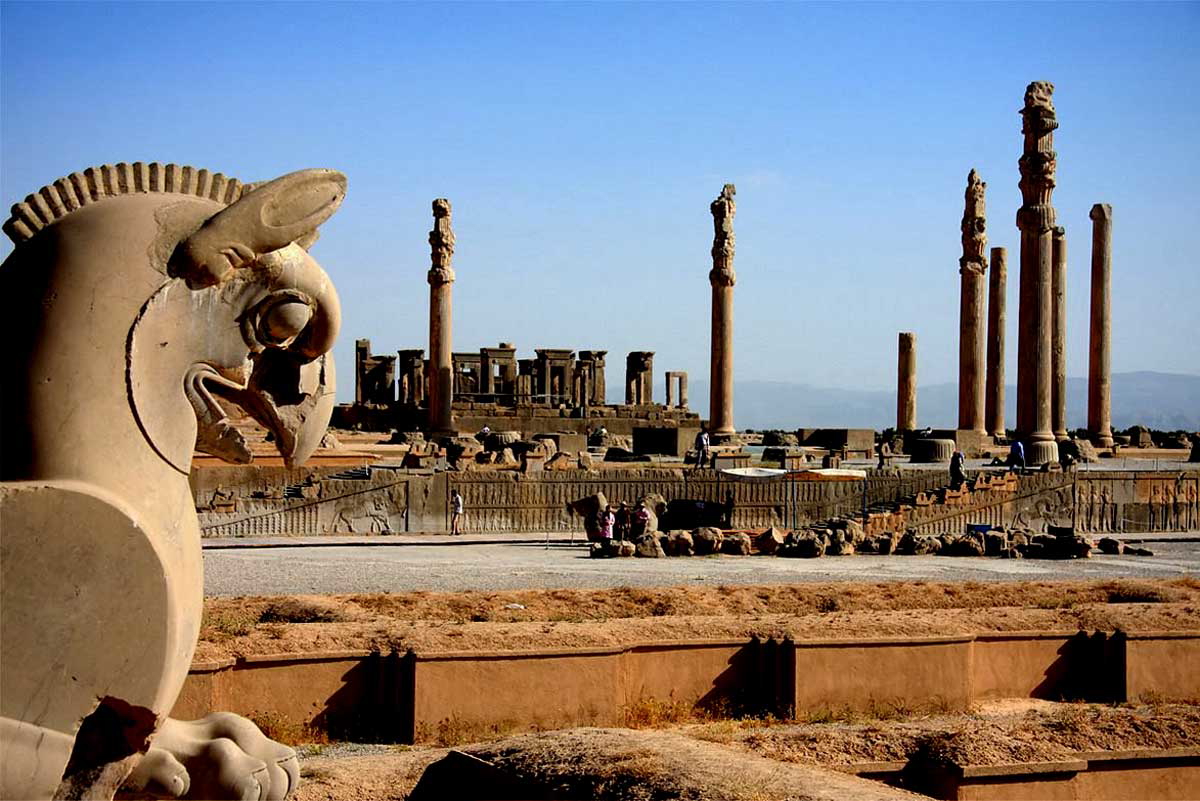
But Persepolis’ splendor was not to last. When Alexander the Great invaded the Achaemenid Empire in 331 BC, he defeated the Persian king Darius III. Alexander burned Persepolis to the ground, allegedly giving the order to ransack the city while drunk. The Achaemenid Empire died in the flames engulfing its greatest city.
9. Why Was Alexandria the Supreme Economic and Intellectual Hub of the Mediterranean?
In 331 BC, Alexander the Great invaded the Achaemenid Persian empire. After liberating Egypt, the young general founded a new city, Alexandria. He designed the plans for the city himself before leaving to continue his campaign. When Alexander died in 323 BC, Egypt was claimed by Ptolemy, and he and his successors built up Alexandria as a new Hellenistic capital.
The new city flourished, becoming the largest city in the world. Construction began on the Great Library of Alexandria, where hundreds of scholars collected knowledge from across the known world. Alexandria became a haven for scholars, and great minds like Archimedes, Euclid, and Heron are believed to have studied there. This jewel among ancient cities was also home to the towering Lighthouse of Alexandria, considered to be one of the Seven Wonders of the Ancient World. The lighthouse was finished sometime around 250 BC and stood for almost 1600 years. It may have been as tall as 140 meters, guiding ships safely into Alexandria’s harbor.
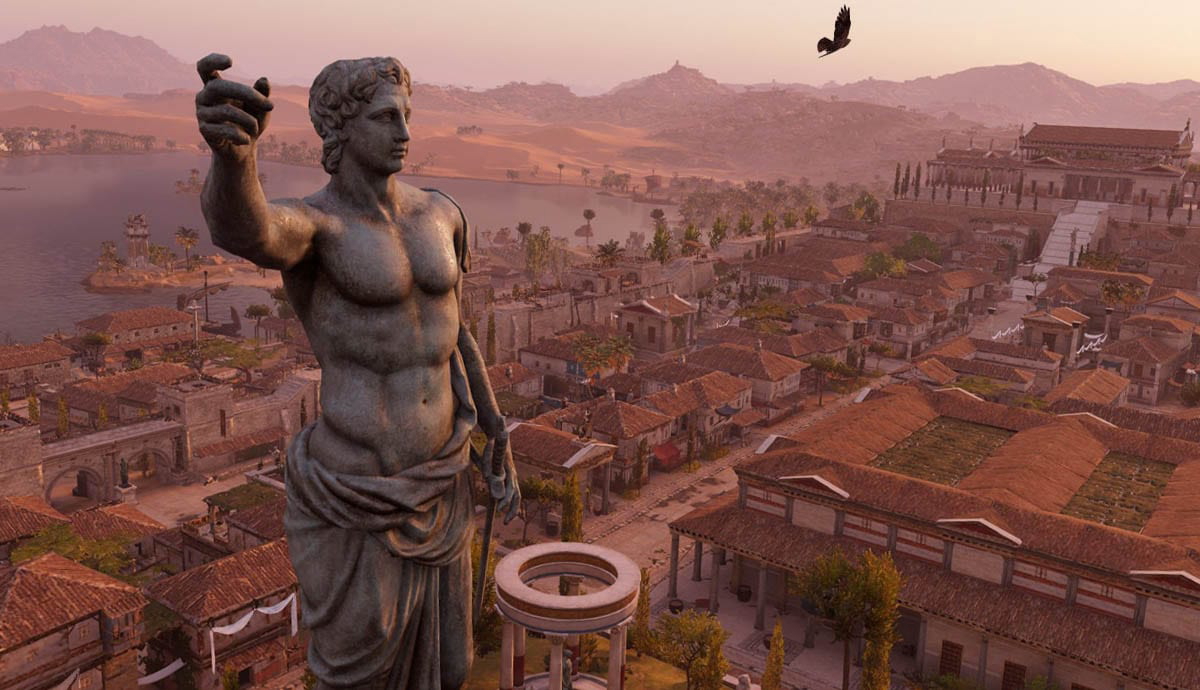
Alexandria continued as a prominent Mediterranean port until a series of Roman civil wars spread to Egypt. After the death of his rival Pompey, Julius Caesar declared martial law in Alexandria. He deposed Ptolemy XIII and installed Cleopatra on the throne. After Caesar was murdered in 44 BC, the Roman general Mark Antony ruled with Cleopatra as they opposed Caesar’s successor Octavian. Following the Battle of Actium, Anthony and Cleopatra committed suicide. Now ruling as Emperor Augustus, Octavian established Alexandria as the center of Roman power in Egypt.
10. How Did Carthage Dominate Western Mediterranean Maritime Commerce?
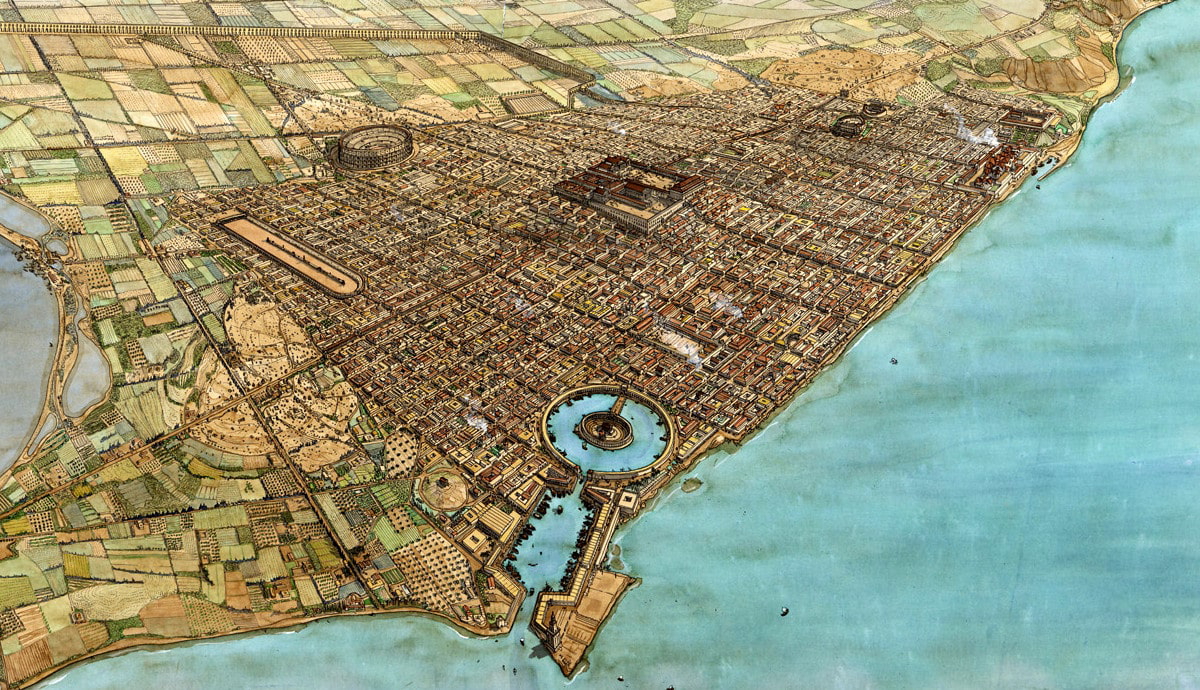
Before clashing with the Romans, Carthage was one of the wealthiest ancient cities in the Mediterranean and the center of a maritime trading empire. Phoenician sailors, likely from the powerful city-state of Tyre, founded the city in 814 BC. Carthaginian traders spread across the seas, establishing colonies in Sicily, Spain, and the rest of the North African coast. Ebony, ivory, and gold flowed through Carthage from the African interior. Carthaginian merchants also traded in salt, spices, furs, and expensive purple Phoenician dyes made from murex seashells.
Carthage’s status as a center of trade was made possible by its twin harbors. The rectangular outer harbor was used strictly for trading vessels, protected by a long sea wall. The circular inner harbor housed Carthage’s mighty navy, with berths for 220 warships. The Byrsa hill, which held an immense citadel, overlooked the harbor. The city’s residential neighborhoods were spread out below.
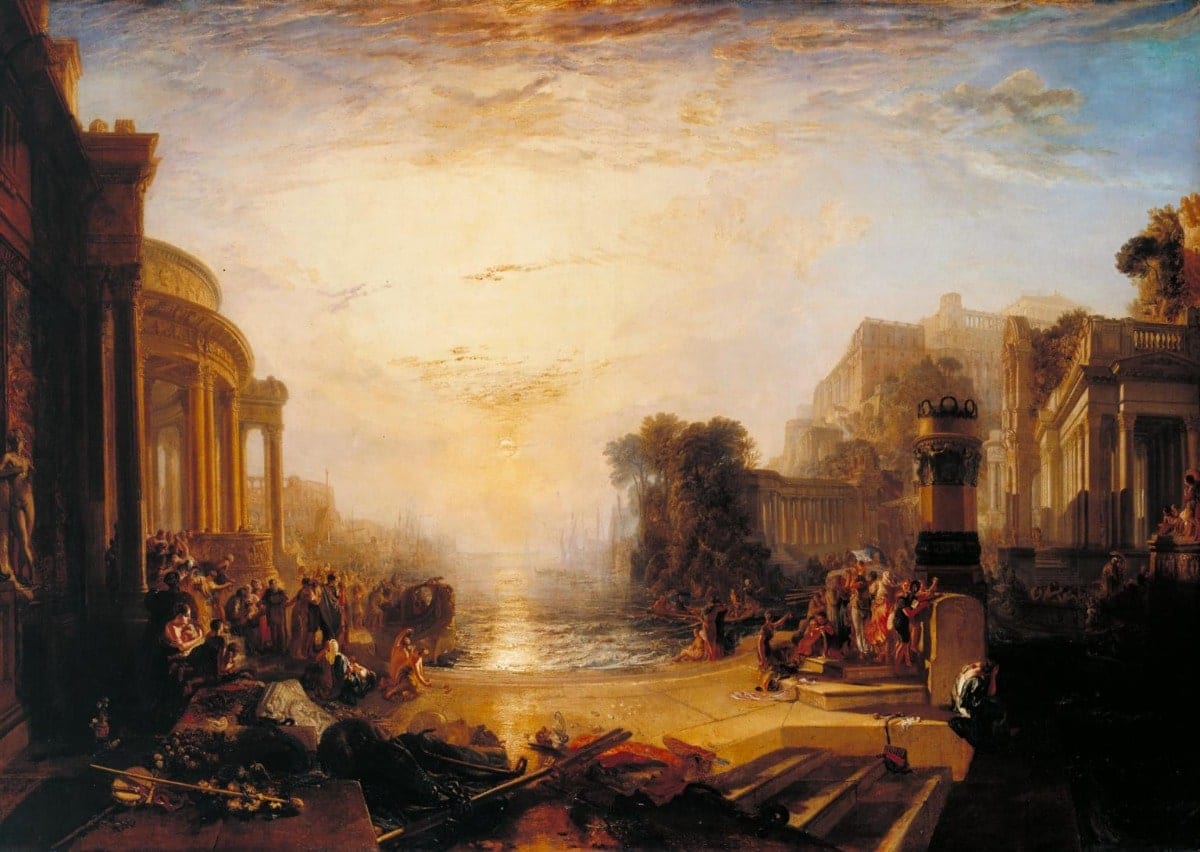
Carthage dominated the Mediterranean for centuries. But during the three Punic Wars, Carthage fought against the emerging might of Rome. After over a century of bitter fighting, the Romans besieged Carthage in 149 BC. After two years, the Romans finally broke through. They ransacked the city and massacred or enslaved the surviving civilians. Carthage was utterly destroyed, and Rome finally became the dominant power in the Mediterranean.
11. How Did Rome Become the First Megacity of Western Civilization?
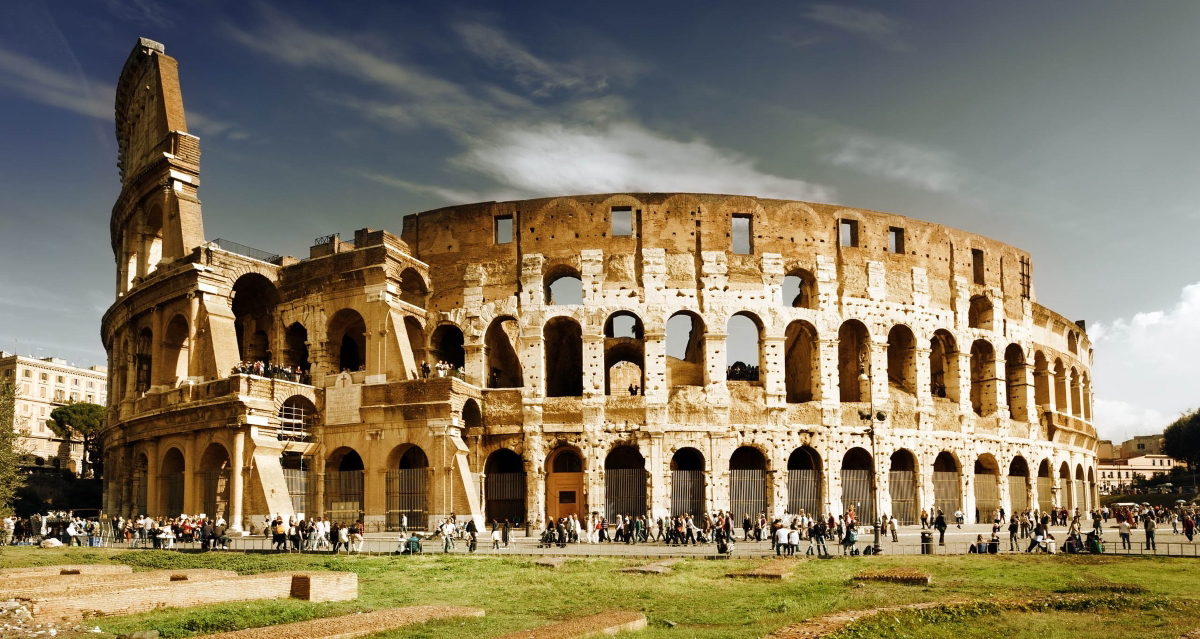
The seat of one of the greatest empires in history, Rome is arguably the most famous of all ancient cities. The city was founded in the 8th century BC and gradually expanded across the Seven Hills of Rome. Initially ruled by kings, Rome became a republic in 509 BC. Guided by the Senate, Rome expanded its territory for nearly 500 years. After a power struggle following Julius Caesar’s assassination in 44 BC, the Republic was replaced by the Roman Empire under the first emperor, Augustus. At its greatest extent in AD 117, the Roman Empire encompassed most of Europe, North Africa, Asia Minor, and Mesopotamia.
The Roman Forum was the civic center of the city, containing the Senate house and administrative buildings. To honor Rome’s military conquests, great generals received spectacular triumphs that marched down the Sacra Via. Gladiatorial contests were held in the iconic Colosseum, while 150,000 spectators could enjoy chariot racing at the Circus Maximus. At its height, Rome had around a million inhabitants, but with deep inequality between rich and poor. While the wealthy lounged in palatial villas, the poor lived in sprawling slums.
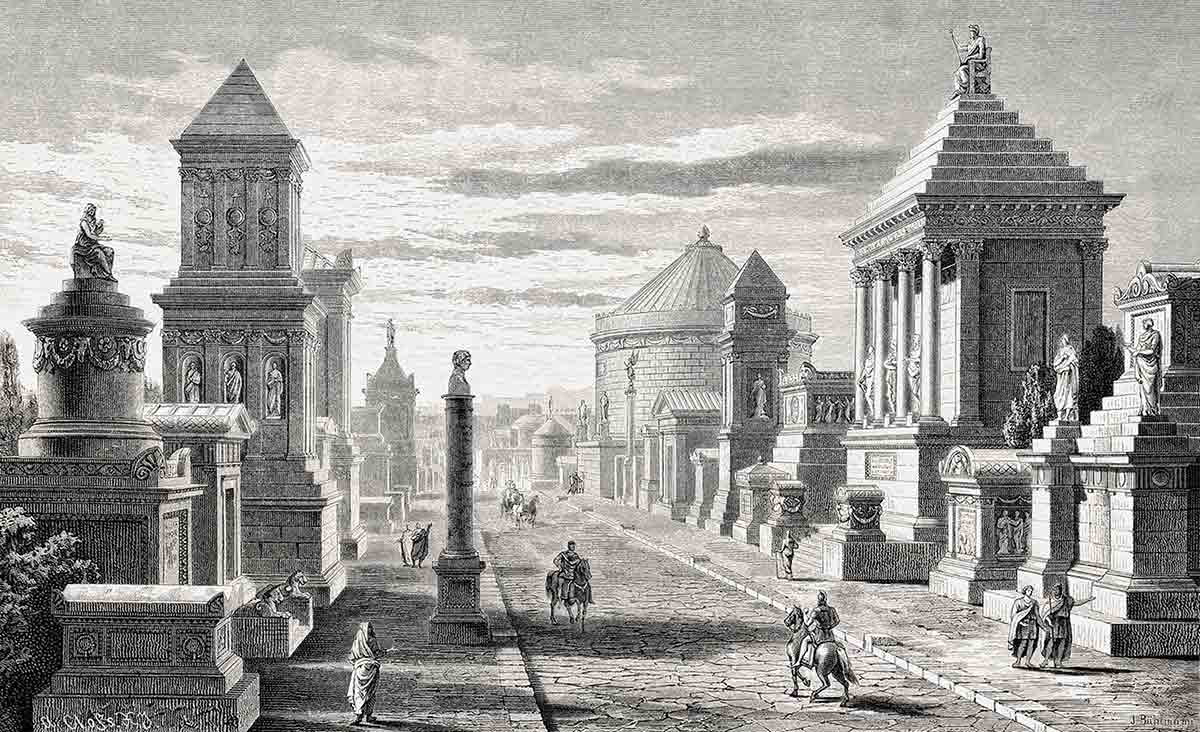
Throughout its long history, Rome endured civil wars, plagues, and other disasters. In AD 64, a great fire swept across Rome. Hundreds died, and ten of Rome’s 14 districts were destroyed. As its power declined in the 5th century AD, Rome was sacked by various barbarian groups and its population ebbed away. The Western Roman Empire collapsed in AD 476.
12. Why Was Constantinople Engineered to Be the Ultimate Imperial Fortress?
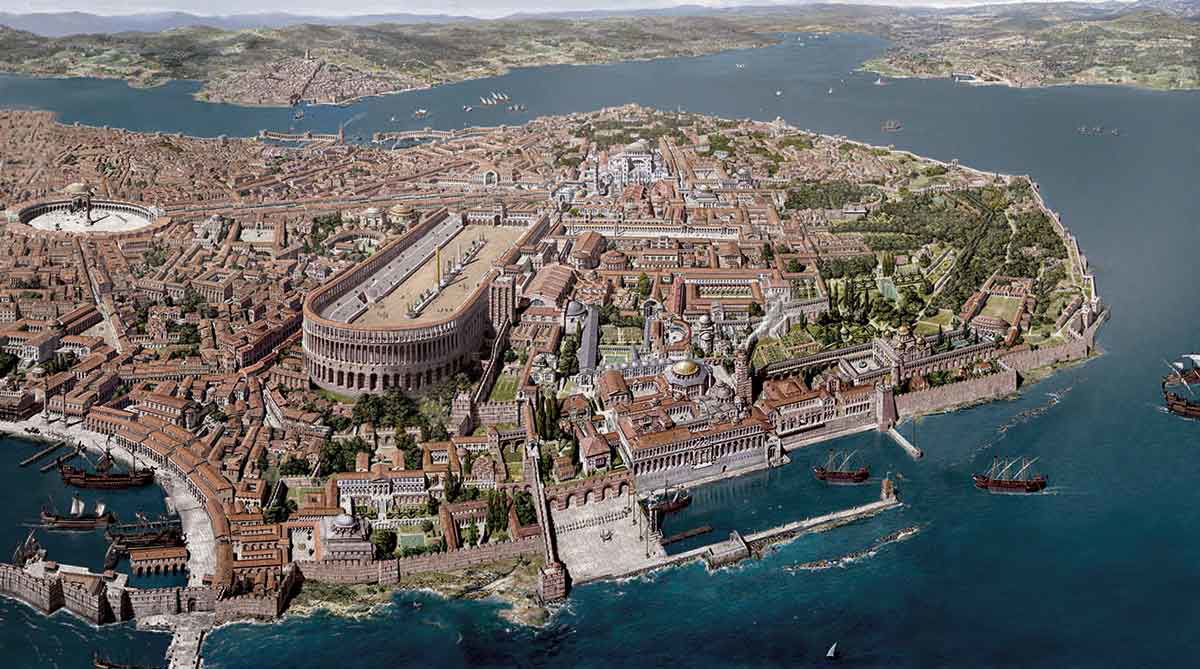
While in ancient times “all roads led to Rome,” it was not always the center of the Roman world. In the 4th century AD, it was displaced by a new eastern capital known as Constantinople as the seat of government for the Roman Empire. It quickly became a thriving city with more than half a million inhabitants in the 6th century AD.
When Constantine the Great established himself as the sole ruler of the Roman Empire in AD 324, he created New Rome, which became known as Constantinople. He expanded an existing small town called Byzantium. He offered new residents free food to move to his new city, and he offered aristocrats positions of power to join his new Senate. Constantine transferred monuments and statues from every corner of the Empire to add splendor to his new settlement. It quickly became the undisputed capital of the empire and continued to thrive after the fall of Rome.
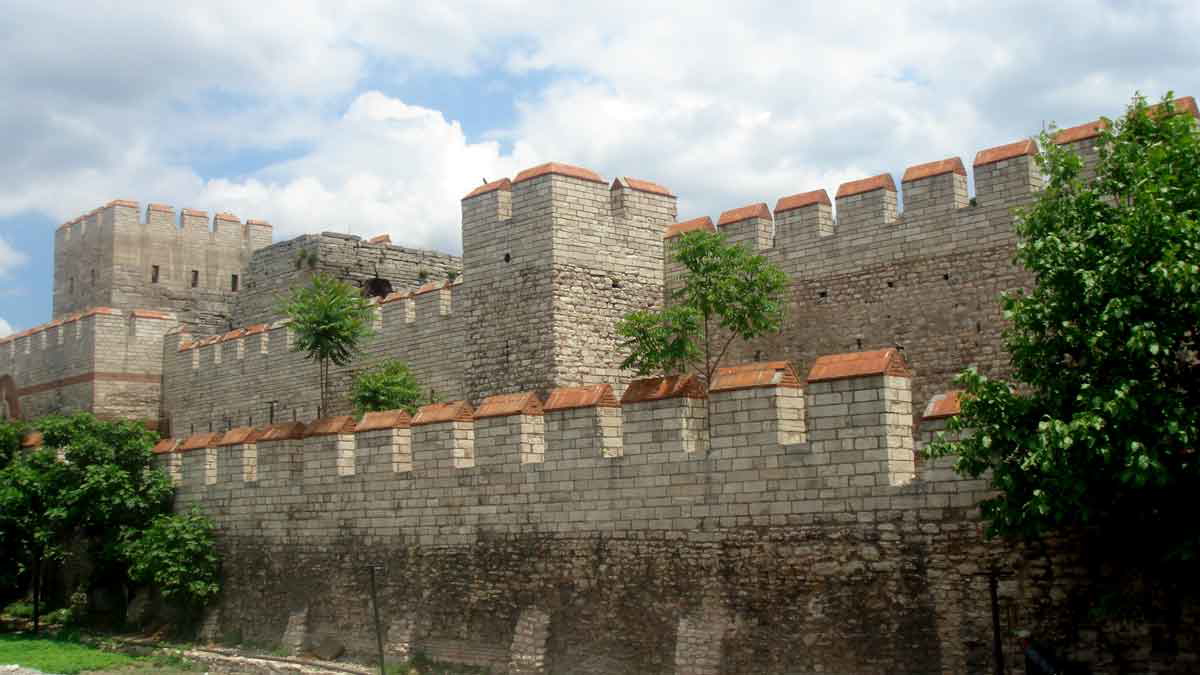
Many later emperors expanded and embellished the city. The Theodosian Walls and the Golden Gate were added in the 5th century AD, and the Hagia Sophia was constructed as the center of the rising Christian religion. Its natural harbor made it a trading hub, and its strong defenses, including naval “sea walls,” made the “Queen of Cities” all but impregnable. However, crusaders would sack the city during the Fourth Crusade, and it was then taken by the Ottomans in a siege in 1453. But Constantinople remained important as the new capital of the Ottoman Empire, making it an important city in both ancient and modern times.