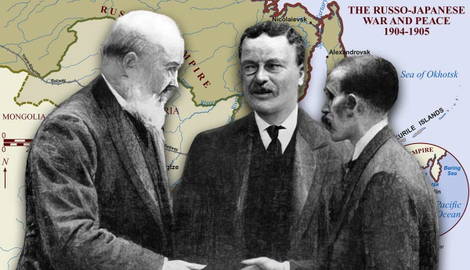

When President Theodore Roosevelt brokered the Treaty of Portsmouth between Russia and Japan in 1905, it established America and Japan as major actors in Asia. While Japan achieved most of its political objectives in the treaty, Roosevelt’s refusal to meet Japan’s demands for reparations from Russia fueled increased rivalry between Tokyo and Washington which led to conflict in the Pacific during the Second World War.
The Russo-Japanese War
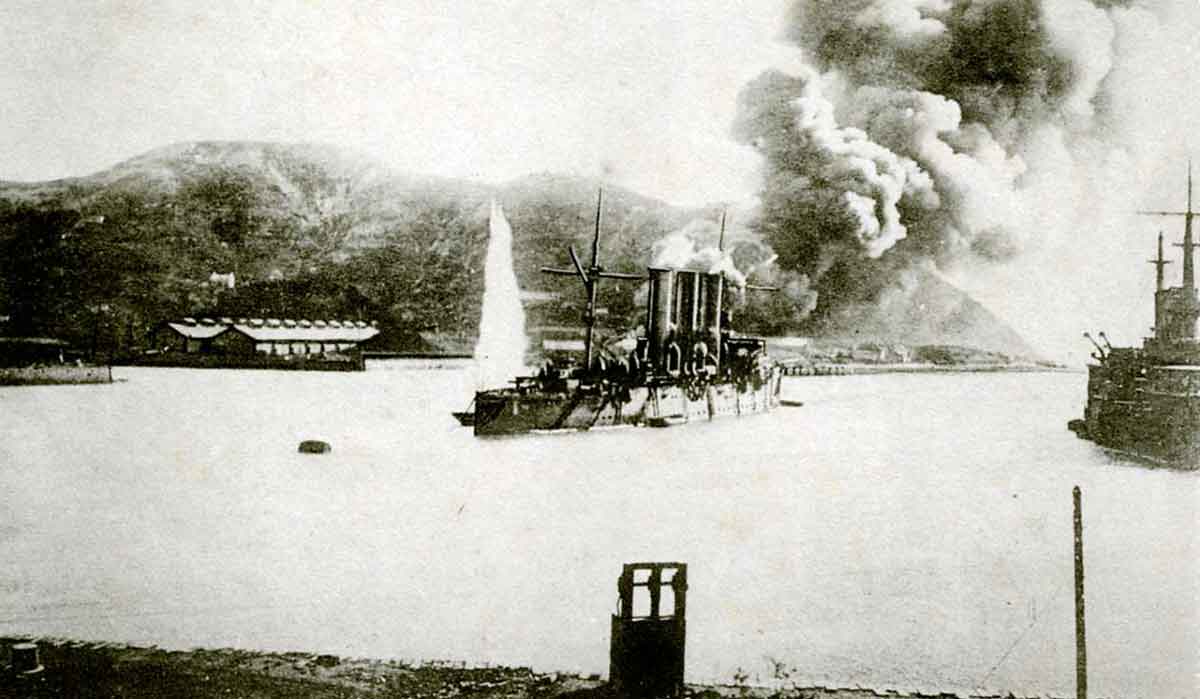
After years of competition over control of critical ports and waterways in Manchuria and Korea, the Russo-Japanese War broke out in February 1904. Russia believed that it was a superior power and that an Asian country like Japan was not capable of defeating a European power in battle. For the government in Tokyo, this war was about showing the world how Japan was a force to be reckoned with on the international stage. It started with a major naval attack on the port of Port Arthur, crippling the Russian Pacific Fleet before blockading it within the harbor.
Subsequently, Japanese forces landed in Manchuria or marched from their bases in Korea to assault Russian forces. Russia mobilized troops from garrisons throughout the empire to stop the Japanese advance. Notwithstanding Russia’s calls for assistance from other European empires, many of them had no problem with Japan defeating Russia. Russian forces were poorly led and less trained than their enemies, who modeled their army after the Prussians and their navy after the British. Steadily, the Japanese pushed Russian forces out of much of Manchuria.
After the defeat of the Russian army at Mukden (present-day Shenyang, Liaoning Province) and the capture of Port Arthur by Japan, Tsar Nicholas II played his last major card by ordering much of his Atlantic and Baltic fleets to the Far East to confront the Japanese navy in the Sea of Japan. Admiral Tōgō Heihachirō attacked and destroyed much of the Russian Fleet at the straits of Tsushima in May 1905, compelling the Russians to seek peace.
American Relations With Japan and Russia Before the War
The United States had long sought close ties with both Russia and Japan in its efforts to play a role in the future of East Asia. American policymakers were reluctant to enter into entanglements in Europe or Asia with any major actor but did seek to project American strength in the region. Both countries were seen as benevolent trading partners and friends of America’s interests in the region and enjoyed good relations with Washington on the eve of the war.
As a result of Russia’s support for the Union in the American Civil War and America’s support of Russia during the Crimean War, Moscow and Washington were amicable. Russia had been willing to sell Alaska to the United States in 1867 and did not yet see America as a major competitor to its interests. Both countries sought to be taken seriously on the world stage. However, ties became slightly strained as a result of Russia’s autocratic government and antisemitic pogroms against Jewish populations.
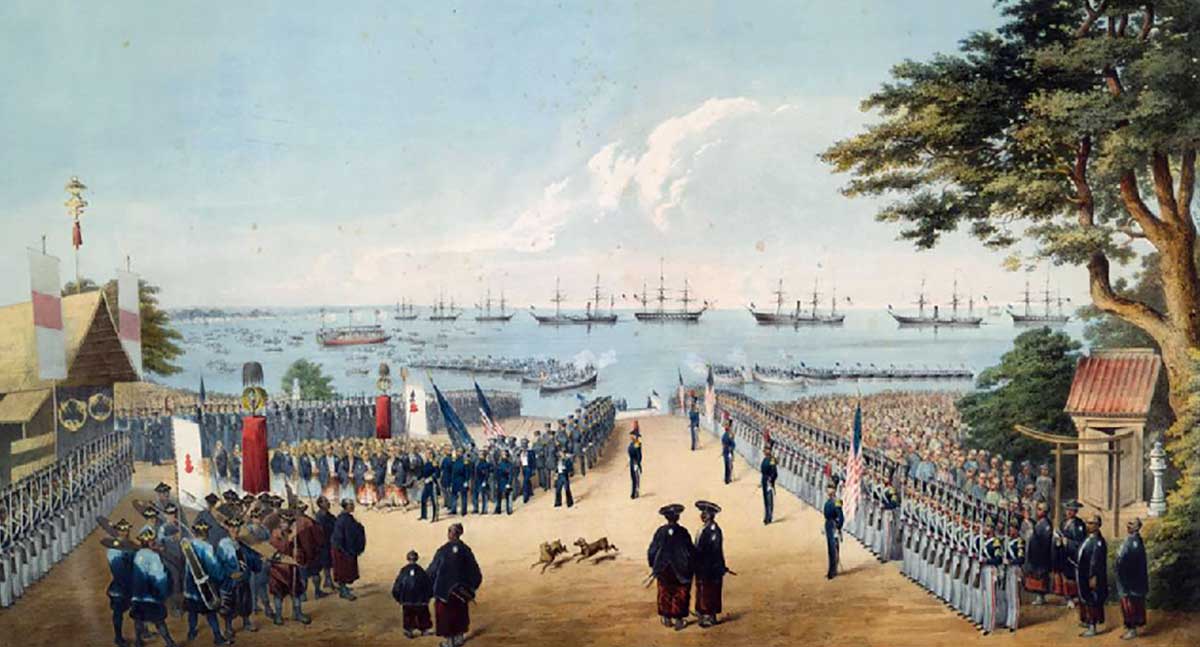
When US Navy Commodore Matthew Perry sailed into Japan to open the country to international trade in 1853-54, he helped turn Japan into a modernized empire. Many Japanese elites saw the United States as a role model. Theodore Roosevelt was impressed with the country’s modernization program and backed Tokyo’s territorial ambitions. During the war, the US officially remained neutral, but businessman Jacob Schiff gave Japan a wartime loan because of antisemitism in Russia. Tokyo, in turn, supported America’s land acquisitions in Asia until the Second World War broke out.
The US Government’s Interests in East Asia
As part of America’s efforts to become a world power, the United States began to undertake major military operations in East Asia in the late 19th century. After occupying Hawai’i and other islands in the Pacific, the US began expanding into Asia when it attacked the Spanish garrison in the Philippines in 1898. After defeating the Spaniards, the US military proceeded to fight a multi-year counterinsurgency against Philippine nationalists opposed to foreign rule. Both Japan and Russia backed America’s position at the time.
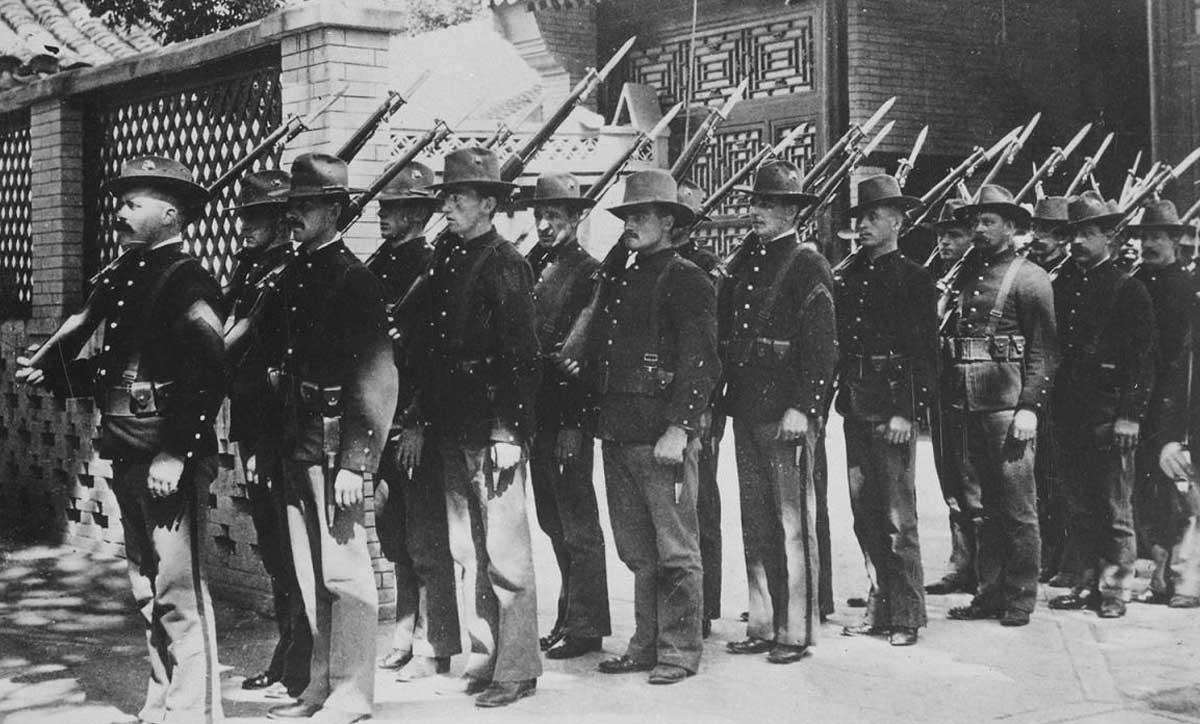
While America fought in the Philippines, US forces landed in China as part of an international force to lift the Siege of Peking. Boxer rebels, opposed to foreign involvement in China’s affairs, attacked foreign legations in the capital. After hard fighting and marching, the eight-nation coalition, which included both Russian and Japanese troops, arrived at the city in 1900. They successfully drove off the Boxers and saved the city. The American occupation forces remained in place for another year.
By undertaking actions like this, the United States showed itself to be an effective actor in the region that was willing to take risks to make itself a great power. Washington began to fear that its actions were making other powers jealous and therefore sought to safeguard its possessions by pursuing amicable relations with other regional actors. In accordance with his Big Stick Policy, President Roosevelt offered to mediate between the Russians and Japanese in 1905.
Starting the Peace Talks
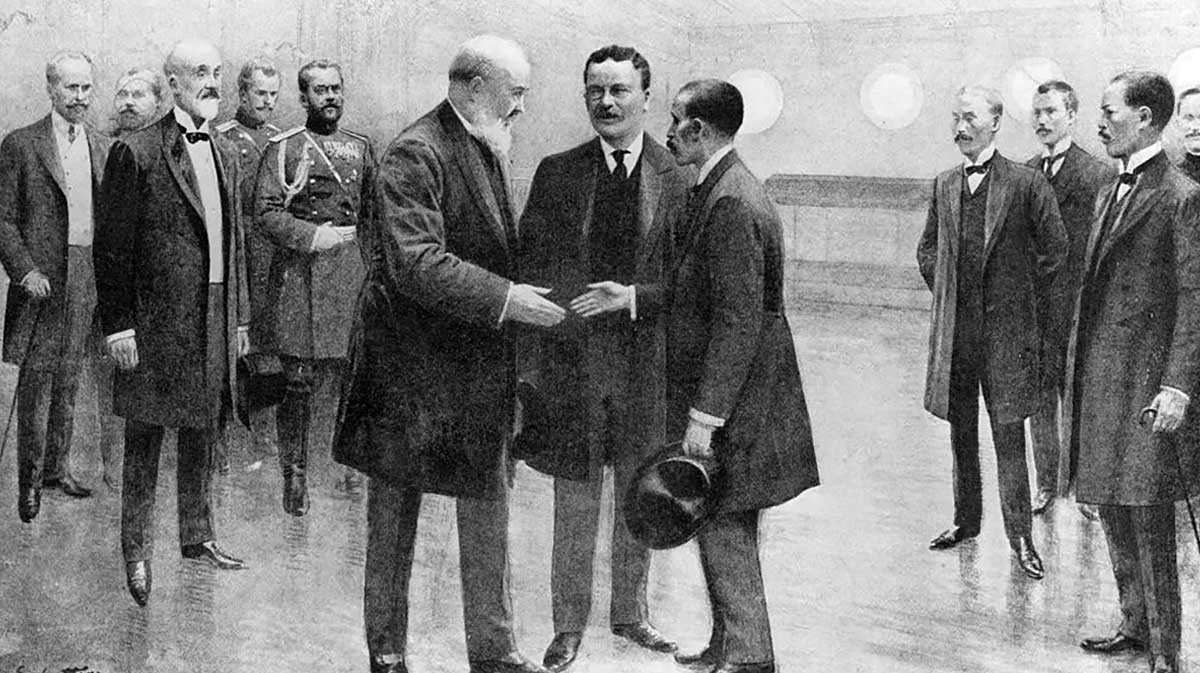
While the Russian army and navy had been crippled by the conflict, the war had been costly for Japan and the imperial treasury was close to bankruptcy. As a result, both Russia and Japan accepted Roosevelt’s offer of mediation in the summer of 1905. The Japanese sent Baron Kaneko Kentarō to meet with the Americans, while the Russians sent Count Sergei Witte, the veteran statesman and former finance minister. Both Witte and Kaneko met at Roosevelt’s private estate at Sagamore Hill.
Roosevelt was a practitioner of personal diplomacy and he sought to size up both men. Witte understood how dire Russia’s predicament was. He pushed the tsar to make significant territorial concessions so that Russian troops could be redeployed to suppress the Revolution of 1905 that had broken out in the wake of the disastrous war. Tokyo was struggling economically too but had the military advantage and enjoyed broader international support. Kaneko was able to use his longstanding friendship with Roosevelt and other American officials to his benefit.
After the initial round of talks at Sagamore Hill, the main conference moved to Portsmouth, Maine. This location ensured less media scrutiny than if the walks were conducted in Washington. At this point, Witte was joined by Baron Roman von Rosen while Japan was represented by Baron Jutaro Komura and Kogoro Takahira. The atmosphere was generally cordial and the US State Department played an important role in keeping both parties talking. However, several major issues proved difficult to negotiate.
Main Issues at Portsmouth
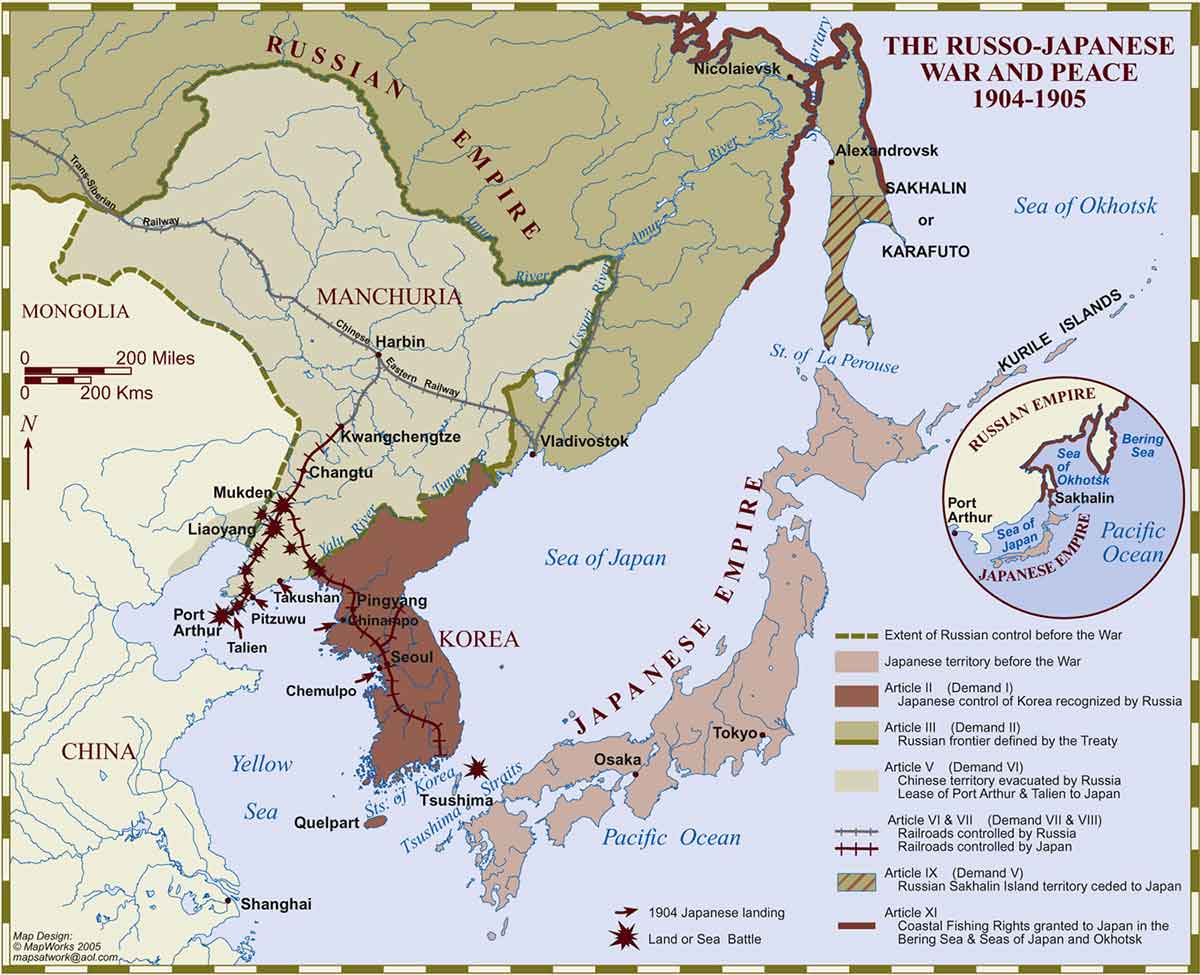
When both delegations presented their proposals around borders and control of Manchuria, several sticking points came up. Both Japan and Russia demanded sovereignty over Sakhalin island, which Japan had seized by force during the war. Even though the island did not feature much in Russia’s strategic planning, Witte still insisted that the island was Russian as a matter of pride. Japan asserted its right of conquest and argued that Russia did not need the island.
Additionally, Japan demanded that Russia pay an indemnity for the war in order to address the financial crisis at home. Japanese negotiators thought that the Japanese public would only accept an agreement if Russia agreed to pay. Russia, which was in no position to pay the indemnity that Japan was asking for, declined and insisted that they would not agree to a treaty with an indemnity clause.
These issues held up the status of the talks. Both countries feared major unrest in their home countries if they did not get a deal that was acceptable. The stubbornness of the negotiating teams on these issues caused Roosevelt’s team to fear that their mediation would fail. Therefore, they changed tactics. The president began to encourage Russia to accept territorial losses, which he knew Russia could not take back militarily. At the same time, he pushed Japan to drop its indemnity demands. This new push provided the momentum for the final agreement.
Final Agreement and Subsequent Developments
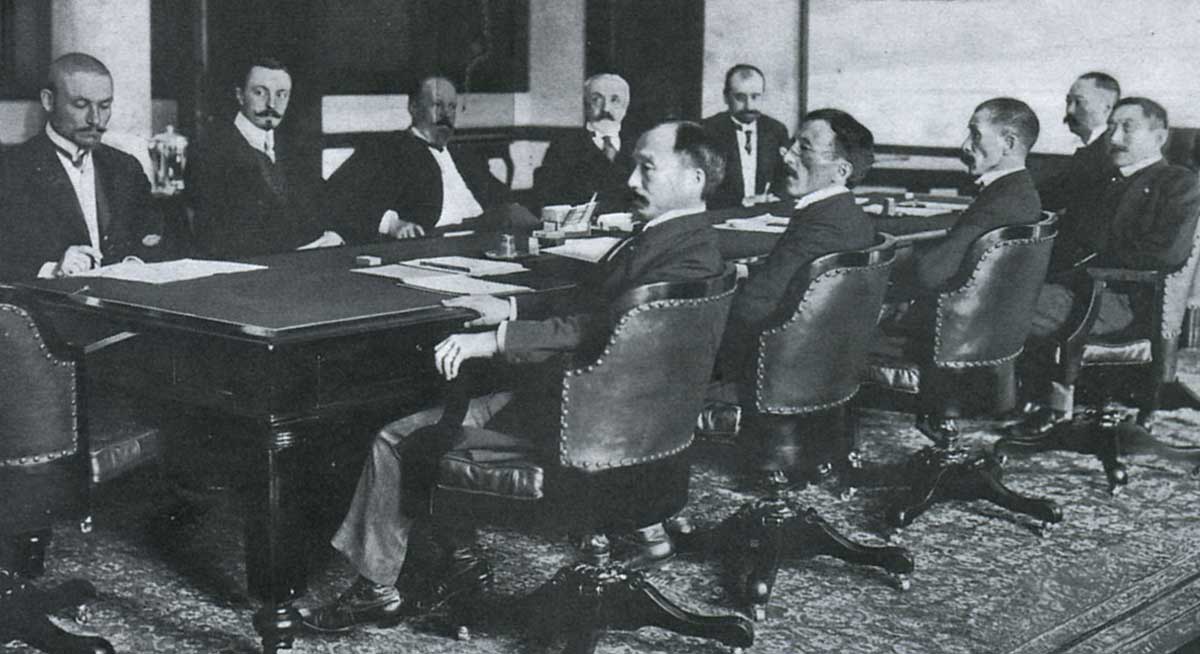
On September 5, 1905 Russia and Japan finally signed the Treaty of Portsmouth. In accordance with Roosevelt’s wishes, Tokyo gained control over the southern half of Sakhalin island and Port Arthur. Additionally, Russia recognized Japanese control over Korea and south Manchuria. In exchange, Russia was not forced to pay any war indemnity, and both countries agreed to withdraw their military forces from most of Manchuria.
Despite America’s resounding success in mediating the agreement, trouble arose soon after the signing of the treaty. In Japan, the heavy physical and economic toll led to much hardship and the lack of a Russian indemnity led to riots. Some Japanese militarists believed that they needed to continue the war and not worry about what Western countries thought about their position in the world. Japanese officials thought that America was a close friend and did not believe that Roosevelt supported them as sufficiently as they hoped. This caused a gradual worsening of relations in the lead-up to WWII.
The end of the Russo-Japanese War was not enough to put an end to the 1905 Revolution in Russia, and in October Witte encouraged Tsar Nicholas to announce political concessions. However, the return of Russian troops from the Far East did allow the government to pacify lesser disturbances the following year.
Tsar Nicholas resented Roosevelt’s sympathy with Japan and Russian mistrust of American intentions increased over time. Nonetheless, Roosevelt’s mediation demonstrated that the United States was a key player on the international stage, and his efforts in brokering the Treaty of Portsmouth earned him the 1906 Nobel Peace Prize.