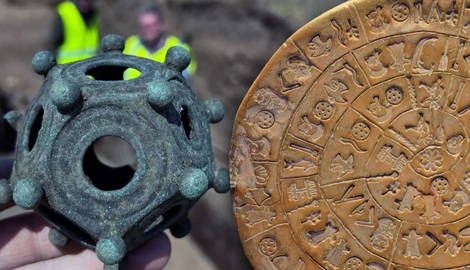

While we like to think we know a lot about history, especially with scientific advances in how we investigate the past, much of the past still refuses to give up its secrets. There are distinct “black holes” in our knowledge where we encounter things that we just can’t make sense of. These are the world’s oldest unsolved mysteries. Discover six of the world’s greatest mysteries, from lost languages to monolithic structures that should never have been built to technology that should never have existed.
1. The Phaistos Disc: The World’s Most Famous Cipher
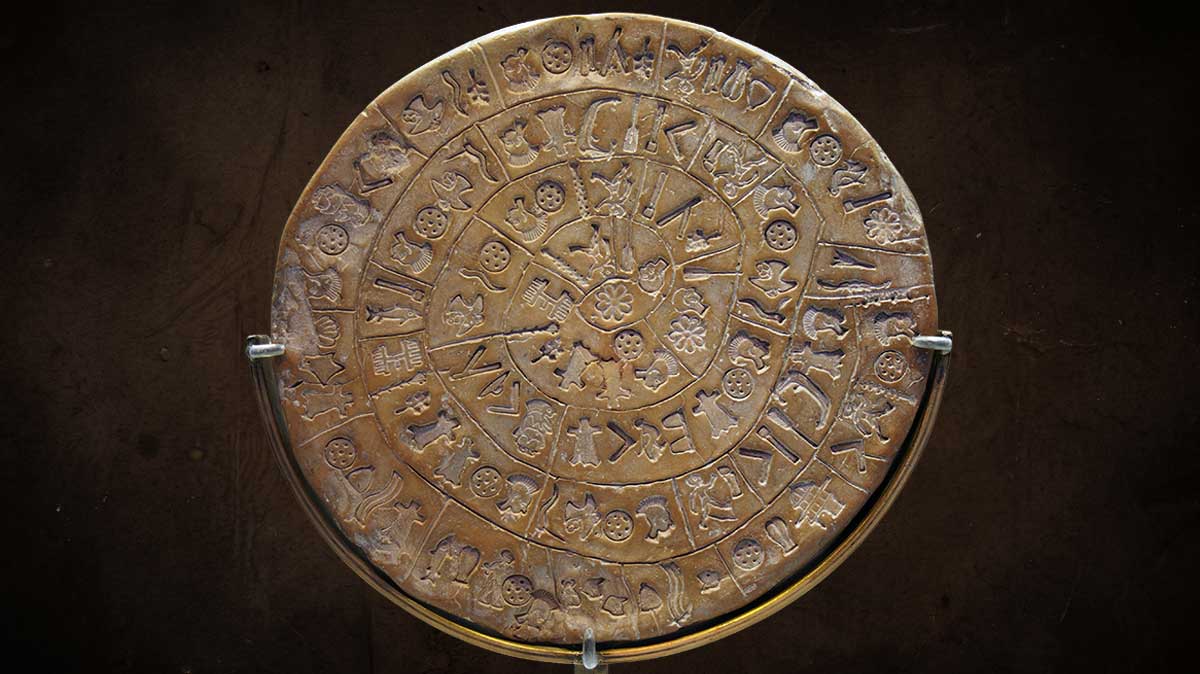
There are many undeciphered scripts from the ancient world. However, the Phaistos Disc is probably the single most famous example of a cipher which continues to evade understanding. This is an ancient, Bronze Age object found on Crete, dating to about the 17th century BC. It is a fired clay disc with 242 symbols stamped in a spiral pattern from the outer edge right through to the center.
Why has this posed such a problem for researchers? The key issue is that the symbols on the Phaistos Disc do not correspond to any other known script. Given that it comes from Bronze Age Crete, we might be forgiven for assuming that it was written in Linear A, the script of the Minoans, or Linear B, the script of the Mycenaean Greeks. However, examination of the symbols shows that it fits neither of those scripts. This makes it all the more mysterious.
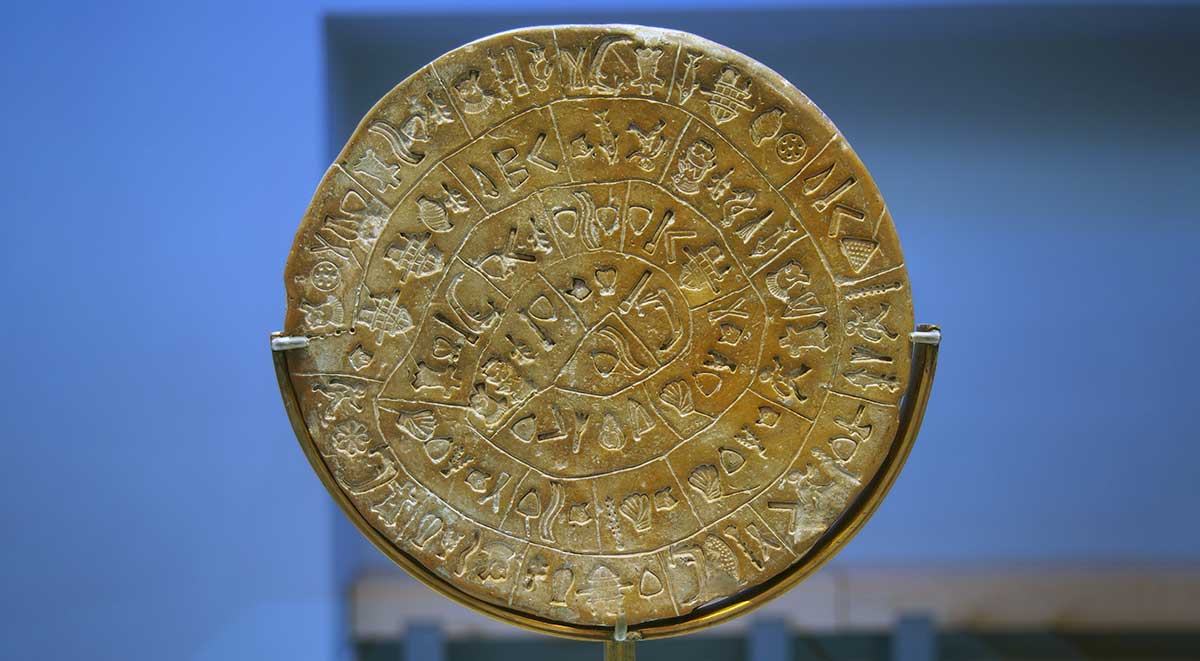
Beyond the simple fact that we cannot read it, this uniqueness adds to the mystery. Why is this the only artifact archaeologists have uncovered on Crete written in this script? Why was it not used elsewhere?
There are different theories about what the Phaistos Disc is and what it says. One theory is that it contains a prayer to a Minoan mother goddess. Another is that it was a solar calendar. This might explain why we do not see this script anywhere else. Another theory is that it is not a script at all, and that the disc is part of an ancient board game.
2. The Bronze Age Collapse: Why Did Everything Stop?
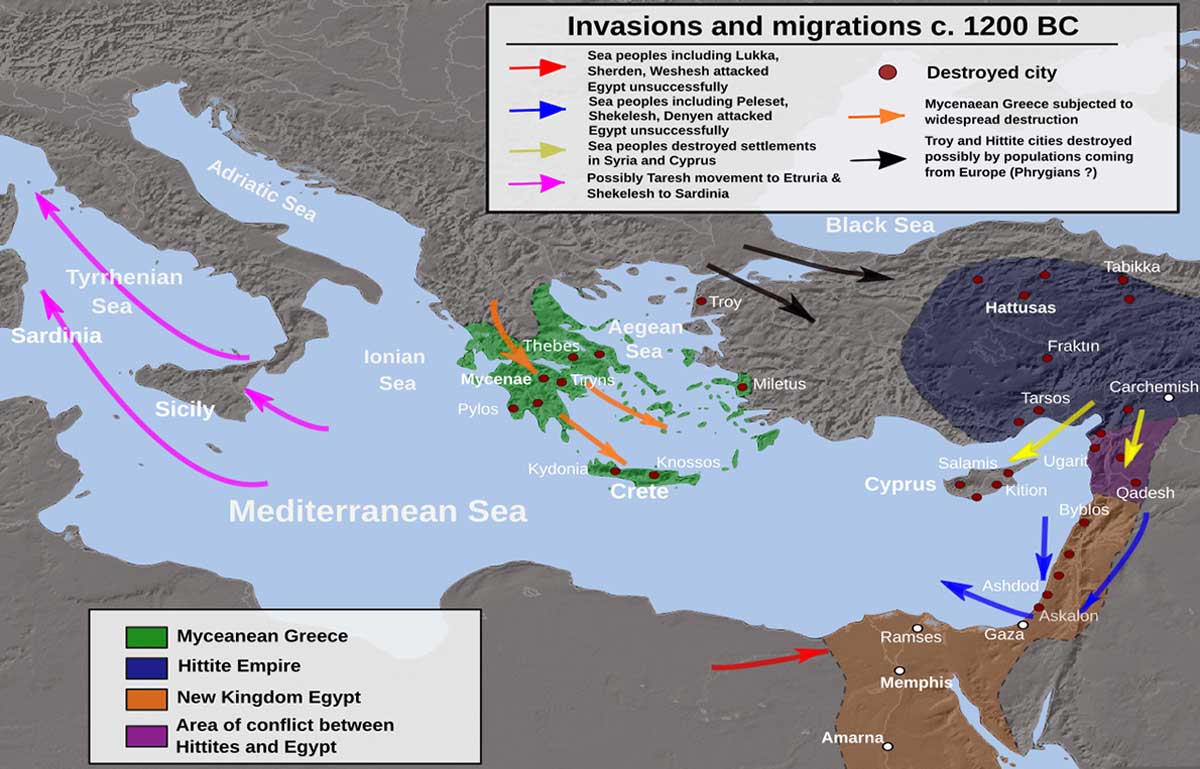
Undoubtedly one of the most famous mysteries of antiquity is the sudden and dramatic end of the Bronze Age. The Bronze Age Collapse, which occurred from around 1220 to 1170 BC, saw the simultaneous end or severe decline of several major civilizations around the Mediterranean. For example, the Hittite Empire collapsed, as did the Mycenaean Greek civilization. New Kingdom Egypt survived, but the extent of its domain contracted significantly over the next few generations. This widespread, simultaneous societal breakdown involved the end of literacy in ancient Greece, the burning of major power centers across the eastern Mediterranean, and the collapse of international trade.
To this day, no one knows what exactly caused the Bronze Age Collapse. How could there have been such a major societal collapse at the same time across the entire eastern Mediterranean? If it was caused by internal factors, such as rebellions and civil wars, then how could such things have occurred simultaneously in completely separate regions?
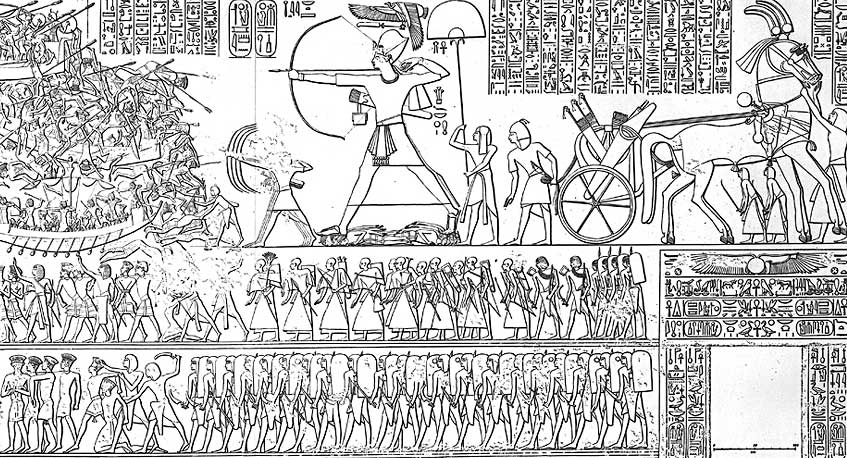
Many theories have been put forward to explain this mystery. Commonly, it is thought to have been caused by a perfect storm of multiple different factors. Internal uprisings might have been involved, but these may have been motivated by widespread environmental issues, such as famines, droughts, and even a series of major earthquakes. There is fierce debate over the role of the Sea Peoples in the disaster. These were people recorded by the Egyptians as causing havoc in the eastern Mediterranean at precisely the time of the Bronze Age Collapse. However, were they actually a cause, or just a symptom? Scholars continue to debate this.
3. Linear A: The Silent Language of the Minoans
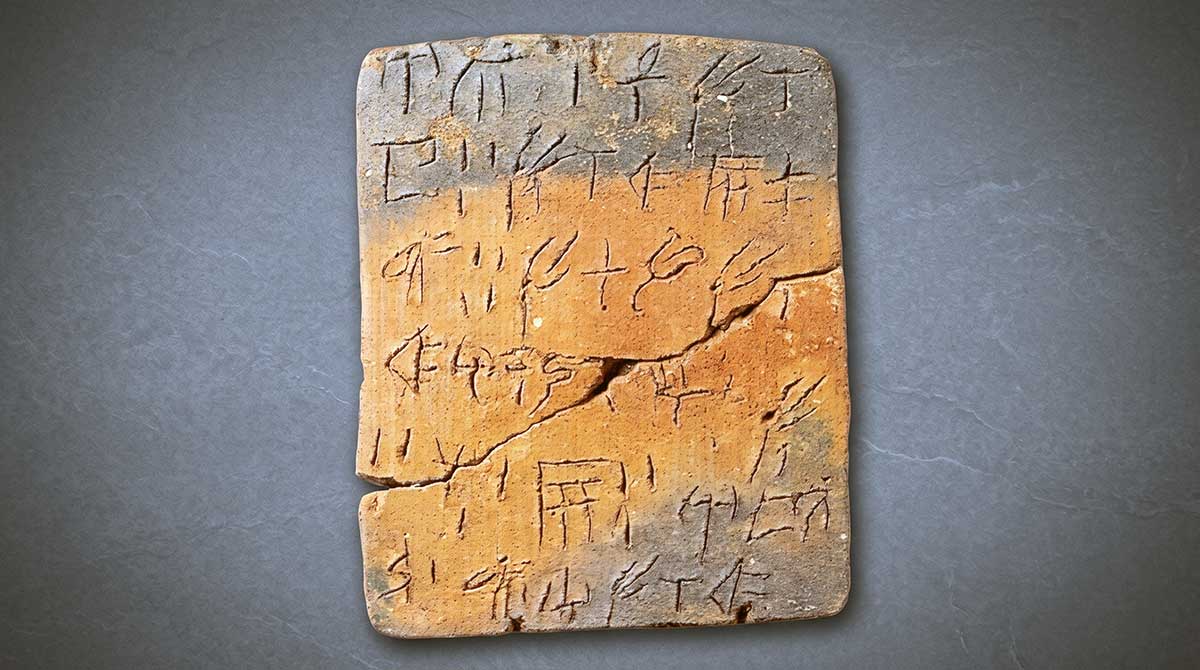
Another major Bronze Age mystery also involves the Minoans. As mentioned earlier, they used a script which we now call Linear A. This was in use from approximately 1800 BC to about 1450 BC. It ceased to be used when the Mycenaean Greeks conquered Crete, at which point it was replaced by their Linear B script.
The two scripts share significant similarities. In fact, scholars now understand that Linear B was actually an adaptation of Linear A. On the face of it, that might make it seem easy to decipher. After all, linguists have already deciphered Linear B, which was used to write an early form of Greek. Since one was directly based on the other, there are many symbols which are common to both Linear A and Linear B, albeit with stylistic differences. This means that we can read, in terms of identifying the phonetic value, much of Linear A.
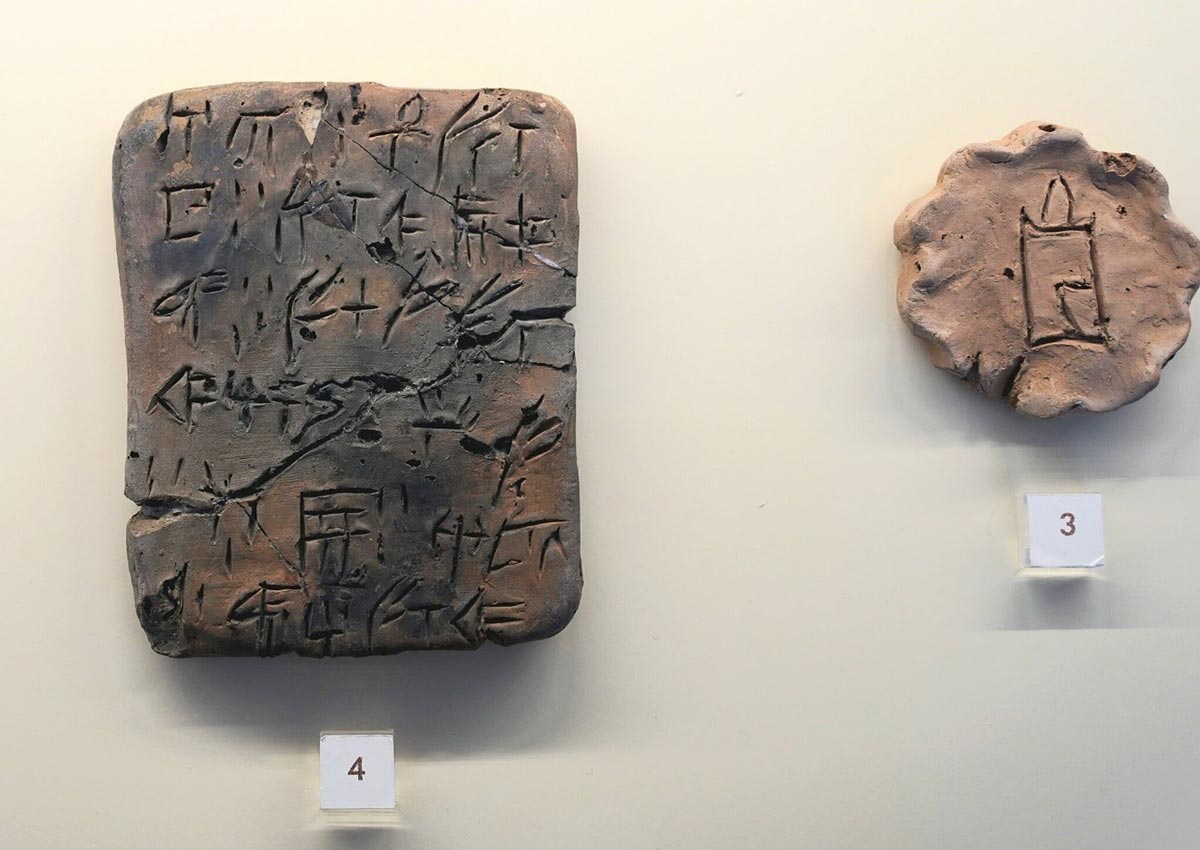
Unfortunately, this has not helped very much. For one thing, not all symbols in Minoan Linear A have equivalents in Greek Linear B. However, more significantly, we cannot understand the language of the Minoans. When linguists read Linear A inscriptions using the phonetic values revealed by Linear B, the resultant words and phrases do not correspond to any other known language family.
There are many theories as to what language Linear A was written in. Individual researchers have tried to link it to Egyptian, Tyrrhenian, Hittite, and various other languages, but none of them have proved convincing to the majority of experts. For now, the language of the Minoans is still a complete mystery.
4. Göbekli Tepe: The Temple Before the Farm
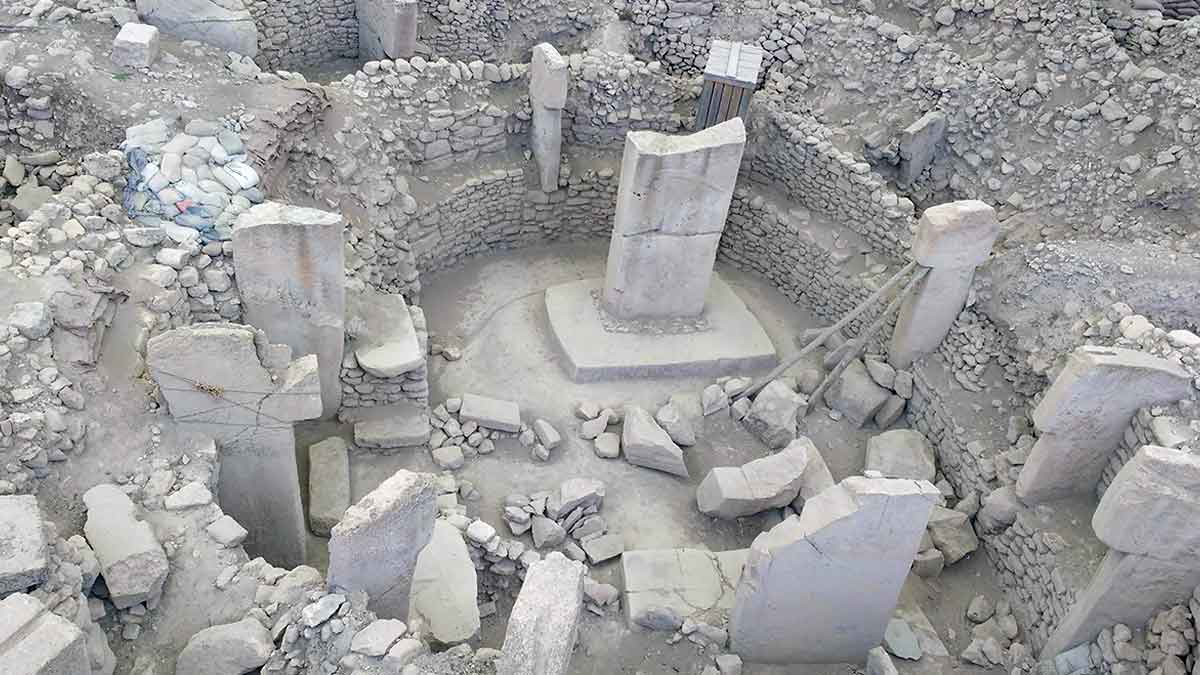
Göbekli Tepe is a different kind of mystery. This is a major archaeological site in Turkey, made up of numerous large stone structures. This site has captured the attention of researchers around the globe for the remarkable way in which it seems to contradict the established timeline of humanity. It was long described as the world’s first temple. Based on scientific dating methods, archaeologists believe that it was constructed some 12,000 years ago.
However, its significance goes beyond simply the fact that it is possibly the oldest temple ever discovered. What makes it especially significant is that the date archaeologists have assigned to it, 9000 BC, is earlier than the Neolithic Revolution. This is the name assigned to the period in which agriculture was first developed. Since 2015, however, excavators have found houses, hearths, workshops and rainwater cisterns, which suggests a settled community of hunter-gatherers that lived beside the monumental enclosures. It shows that people built on a monumental scale before farming took hold, though the old “temple before the town” idea is now disputed.
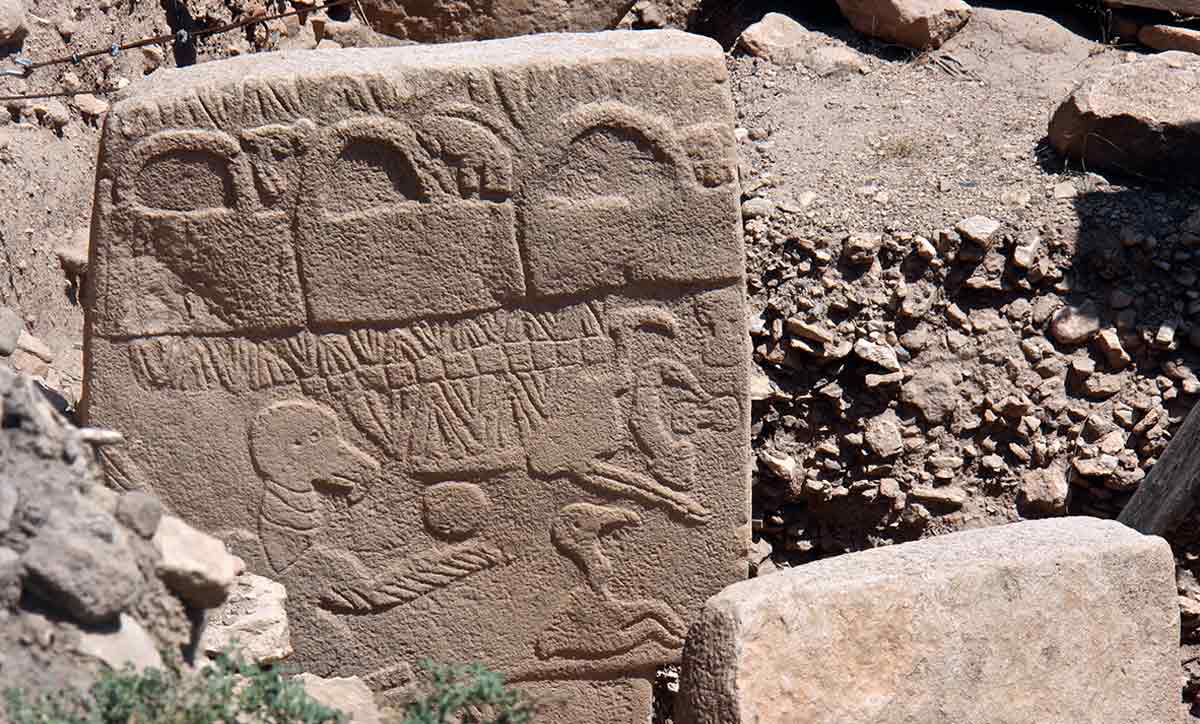
Another reason why this is so intriguing is that it raises the question of how a society of hunter-gatherers was physically able to build Göbekli Tepe. It would have required a high degree of coordination and effort to build. A massive labor force must have been necessary. How did a pre-agricultural society achieve this?
5. The Copper Scroll: A Map to Nowhere?
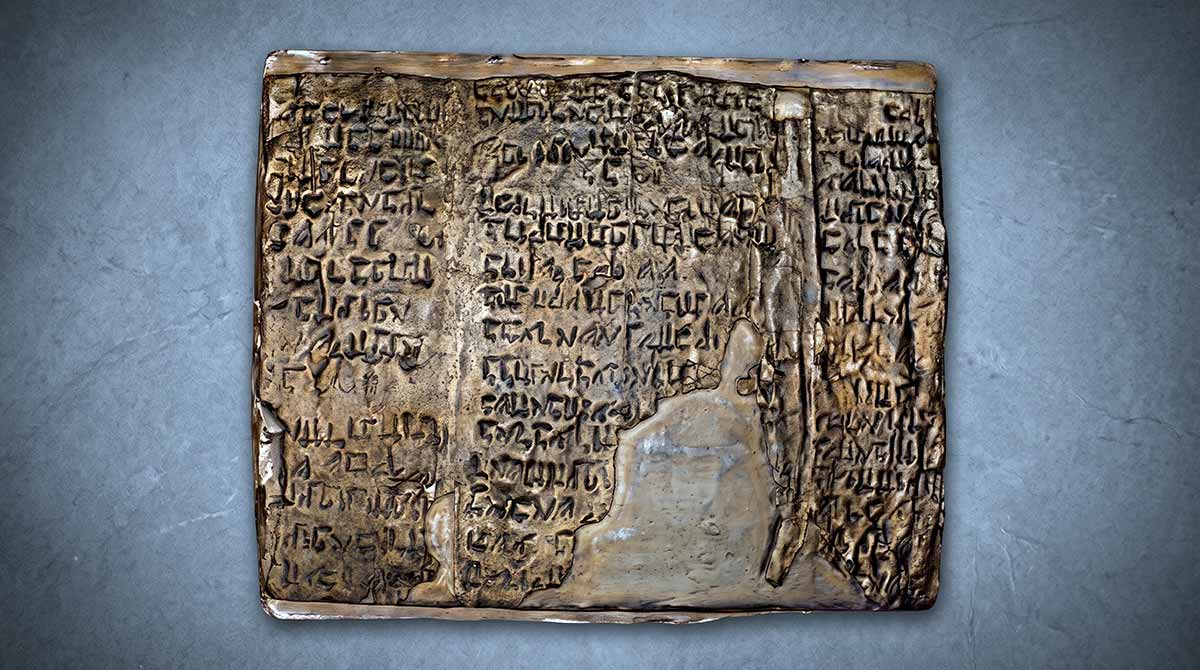
One of the greatest historical finds of the 20th century was undoubtedly the chance discovery of the Dead Sea Scrolls. These ancient scrolls from about 2,000 years ago have significantly increased historians’ understanding of ancient Jewish belief and the development of the Hebrew Scriptures. However, they have also raised a new mystery. One of the Dead Sea Scrolls, found in 1952, was made out of copper. This makes it unique among the scrolls. This Copper Scroll is fascinating not only because it was made from metal rather than parchment, but also because it contains an inventory of buried treasure.
In other words, the Copper Scroll appears to be a treasure map. It describes 64 different locations in which vast amounts of gold, silver, and other valuable items are supposedly hidden. It would be easy to dismiss this as a fictional literary work. However, there is reason for giving it serious consideration.
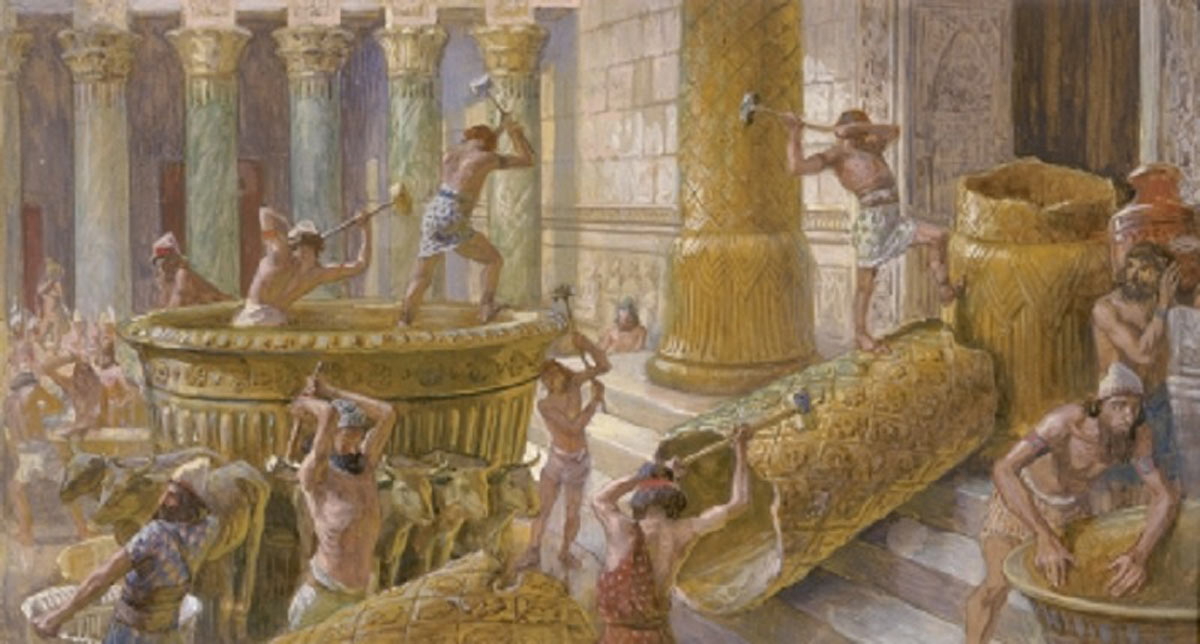
For one thing, the very fact that it was written on metal means that it would have been expensive, difficult, and time-consuming to produce. Would someone really go to such expensive lengths for a fiction? Perhaps, but it seems unlikely. Furthermore, the treasure itself has a perfectly plausible origin.
The Copper Scroll seems to originate from the first century AD. At that time, the nearby Temple of Jerusalem was immensely wealthy. Some of the specific items mentioned in the Copper Scroll’s inventory point to a priestly origin. This is consistent with the conclusion that the treasure came from the Temple. Additionally, the Romans attacked and ultimately destroyed Jerusalem in that same century, although not without plenty of warning. This provides a plausible historical reason for why the Temple’s riches would have been taken and hidden.
Yet, no one has ever been able to use the directions given in the Copper Scroll to actually find any of the treasure. So, the mystery continues.
6. The Roman Dodecahedrons: The Ancient “What-Is-It?”
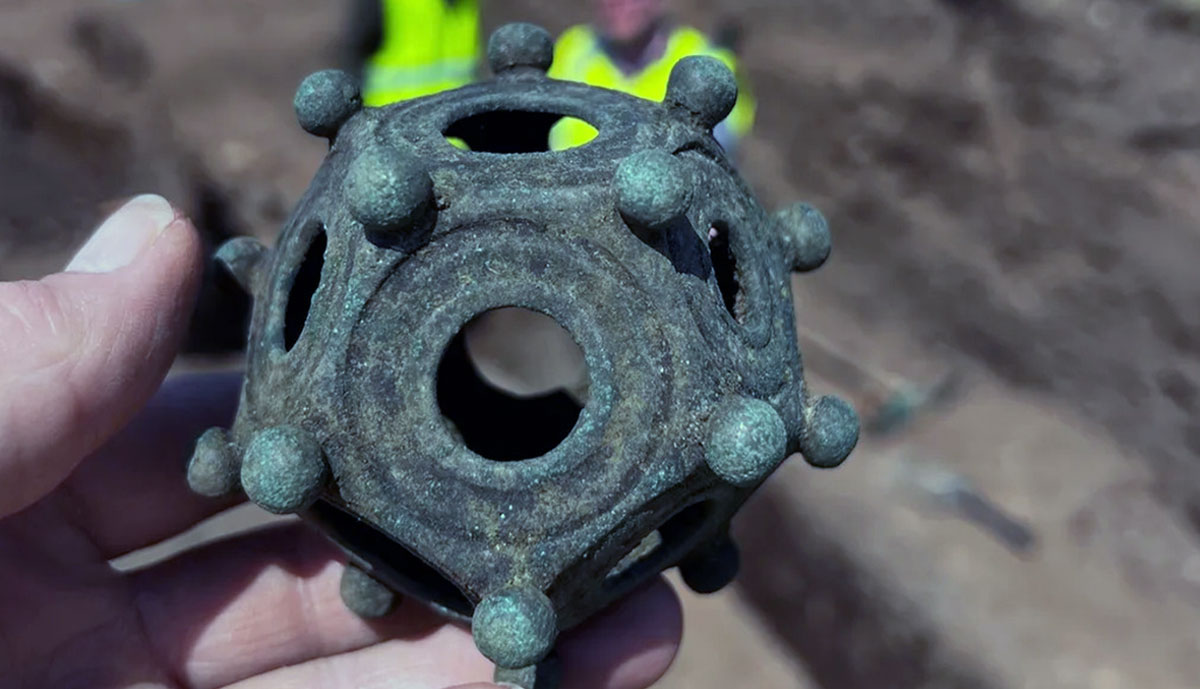
One final mystery from the ancient world is the mystery of the Roman Dodecahedrons. These are small metal objects, made from copper, in the shape of a dodecahedron with a small knob at each corner. They are hollow and have holes of varying sizes in their sides. They have mostly been found in Gaul, with others from Britain and the Rhine frontier, often in military or funerary contexts.
These unusual objects have no obvious purpose. They do not appear in any ancient art, nor are they mentioned in any ancient Roman texts. For this reason, it is a complete mystery as to what they were. All sorts of theories have been put forward. One theory is that they were designed to hold candles. Another is that they were used for estimating distances, although the lack of any markings on them argues against this. The suggestion that they were a child’s toy does not seem compatible with the military and funerary contexts in which many of them were found. A popular theory emerged online that they were used for spool knitting. However, the Roman dodecahedrons predate spool knitting by over 1,000 years, and they do not show wear marks around the knobs.
Many scholars believe that they had some kind of religious function. While this does seem like the best guess, this is not very specific. Their exact meaning and purpose are still heavily debated.
Why Some Mysteries Stay Unsolved
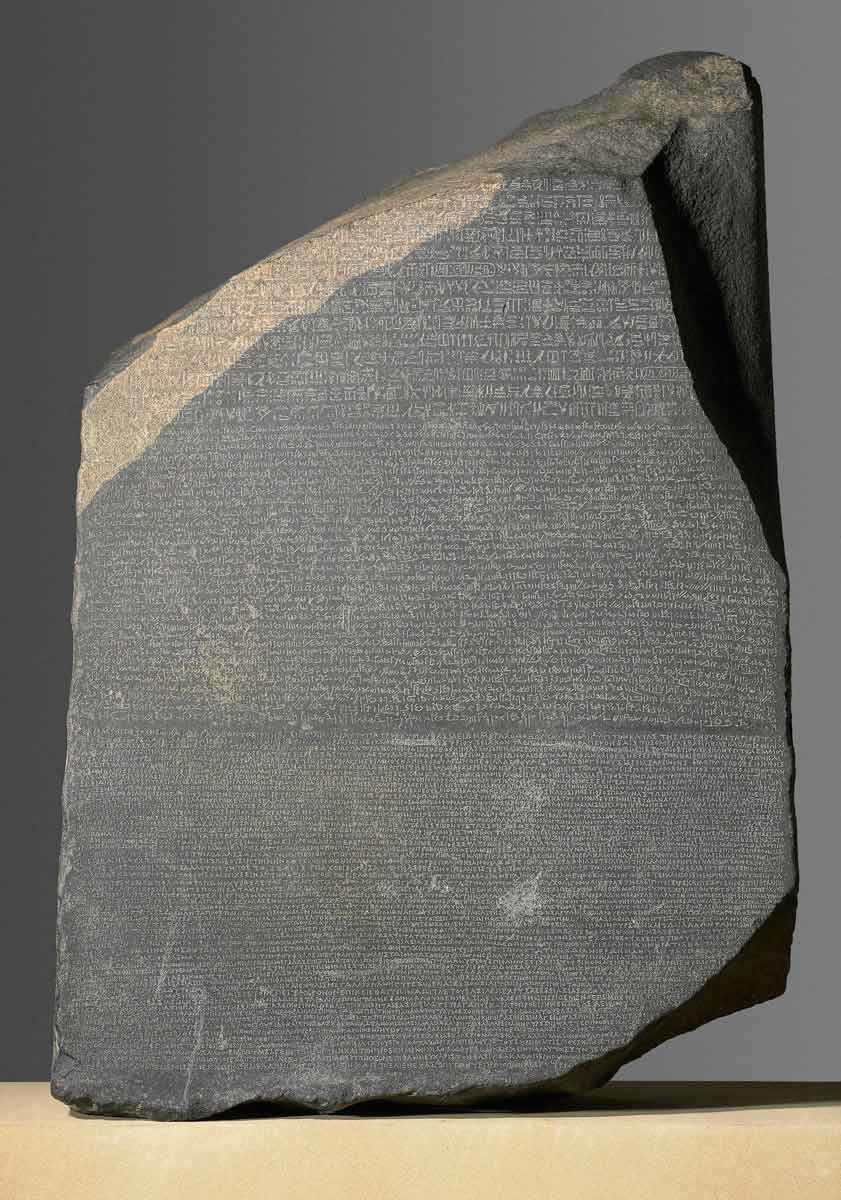
The Rosetta Stone facilitated the deciphering of Egyptian hieroglyphs, which revolutionized our understanding of ancient Egyptian history. What made this so singularly effective was that it was a bilingual stone inscription. This essentially provided the “key” to deciphering what was previously a mystery. This is what is missing in the case of mysteries like the Phaistos Disc and Linear A. We lack a Rosetta Stone to provide us the key to the cipher.
However, with the use of artificial intelligence, some undeciphered scripts may soon be demystified. This is because AI can be used to find patterns in scripts where humans might miss them. It remains to be seen just how effective this is.
Of course, history being full of mysteries is by no means a bad thing. An intriguing enigma excites the imagination and motivates further investigation. These mysteries ensure that history remains a living, breathing detective story.