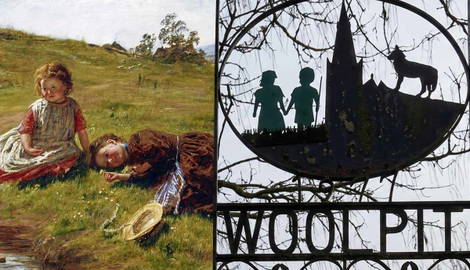

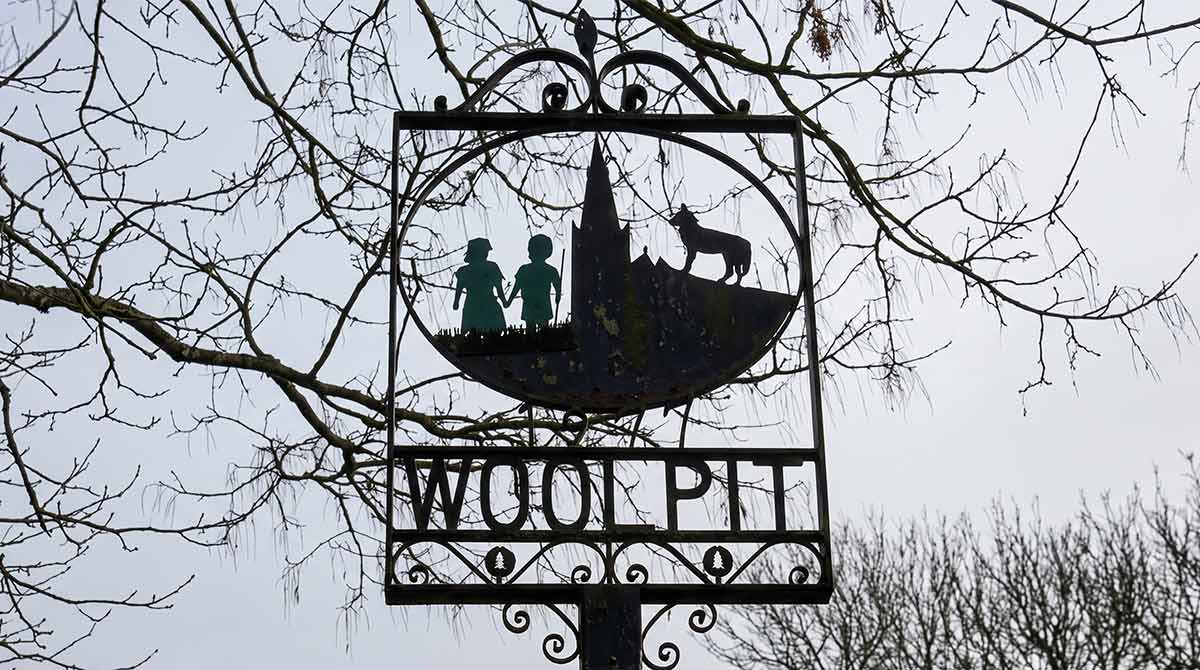
Sometime in the 12th century, possibly during the reign of King Stephen, farmers from the village of Woolpit, Suffolk, stumbled upon two truly unusual children. The brother and sister, visibly bewildered, spoke a language unknown to the farmers and, most interestingly, reportedly had green skin. The farmers decided to help the children, and their unusual appearance faded as they grew accustomed to the local diet. However, the explanation the children themselves gave regarding their origins was perhaps the most bizarre aspect of all.
The legend of the green children of Woolpit was recorded by two medieval chroniclers, William of Newburgh and Ralph of Coggeshall. Although they were not present at the scene, they recounted the event as an absolute fact rather than a folktale.
The Medieval Chroniclers Who Recorded the Mysterious Encounter
We have the story of the green children of Woolpit preserved thanks to two medieval chroniclers, William of Newburgh and Ralph of Coggeshall. William of Newburgh was an Augustinian canon from Yorkshire, and Ralph of Coggeshall was a Cistercian monk and later abbot of Coggeshall Abbey in Essex. Therefore, neither of them personally witnessed the events that they wrote down as fact. Their records were based on information that circulated immediately after the event.
William of Newburgh included the story in his work “Historia rerum Anglicarum,” or “History of England.” His record is found in the first book among a series of other unusual events that cannot be confirmed. However, William presents the story with caution but credulity, stating that he received information about the green children from several people. His monastery was quite a distance from Woolpit, and he did not claim to have witnessed the events himself.
Ralph of Coggeshall records the story in his “Chronicon Anglicanum.” Geographically, he was much closer to Suffolk, and he even names the man from whom he learned of the events. It was Richard de Calne, the man who took the two children into his home. Historian John Clark has suggested that Richard de Calne may have been the source for both writers.
The two accounts are very similar in structure. Both describe a green-skinned boy and girl who spoke an unintelligible language and could not eat ordinary food. They also record the boy’s death and the girl’s subsequent fate. However, Ralph’s version contains slightly more details.
The Story About Green Children in Woolpit
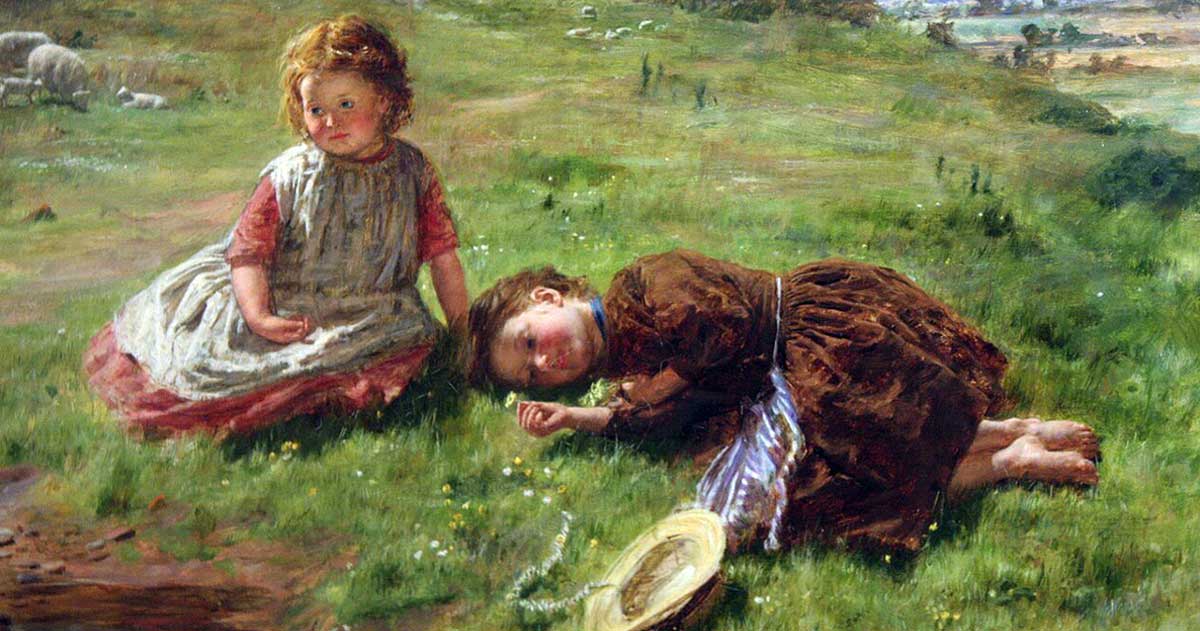
The story most likely took place during the reign of King Stephen of Blois (r. 1135–1154). Farmers from the village of Woolpit found two children near one of the wolf-trapping pits from which the village took its name. Their skin was green, they spoke an unknown language, and their clothing was unusual. Ralph of Coggeshall records that the children were subsequently taken into the home of a prominent local man, Richard de Calne.
At first, the children refused to eat until raw broad beans were placed before them at the table. They ate these greedily and then began to consume other foods as well. As they grew accustomed to the local diet, they gradually lost their green skin color. It was decided that the children should be baptized. However, the boy, who appeared to be the younger of the two, was sickly and died either before or shortly after the baptism.
After the surviving girl learned to speak English, she explained that she and her brother came from a land where the sun never shone. She called her home St Martin’s Land. She had no explanation for how she had ended up in Woolpit. William of Newburgh states that she remembered only a loud noise and then being found near the wolf pit. Ralph of Coggeshall, however, claims that the children became lost while following livestock into a cave and that, guided by the sound of bells, they eventually emerged into our world.
According to Ralph, the girl worked as a servant on Richard de Calne’s estate in the years that followed. She behaved in a very wild and insolent manner there. The last piece of information we have is that she married a man from King’s Lynn, a town 64 kilometers from Woolpit. The girl became completely accustomed to life in England.
Were the Green Children Flemish Refugees?
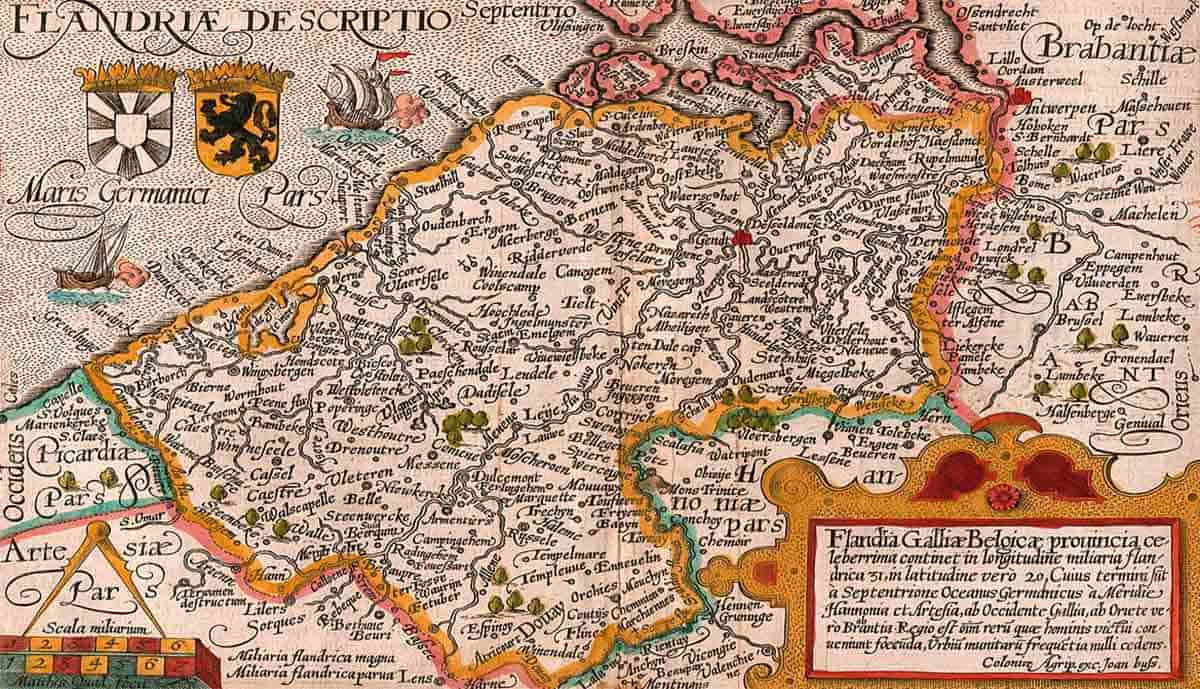
One of the most well-known modern attempts to interpret the legend of the two green children of Woolpit comes from historian Paul Harris. He elaborated on his theory in his 1998 essay, “The Green Children of Woolpit: A 12th Century Mystery and its Possible Solution,” published in Fortean Studies. His thesis was that the children might have been the offspring of Flemish settlers living in East Anglia and that their unusual appearance was the result of displacement, malnutrition, and an unfamiliar language.
The Flemings were the inhabitants of Flanders, a region that included parts of present-day Belgium, France, and the Netherlands. In the Middle Ages, Flanders was famous for producing woolen fabrics. Many Flemings left and settled parts of England because of the economic opportunities.
Harris hypothesized that St. Martin’s Land might refer to Fornham St Martin, where a Flemish community existed. He linked this possibility to the Battle of Fornham, fought on October 17, 1173, during the Great Revolt against Henry II. An army led by Robert de Beaumont, Earl of Leicester, had landed in Suffolk with a large contingent of Flemish mercenaries. The battle ended disastrously for the Flemings, as many were killed or drowned, while others were taken prisoner.
Certain historians have expressed skepticism about Paul Harris’s theory. The biggest argument against it appears to be the small probability that an educated man like Richard de Calne would not recognize the Flemish language if the children really spoke it. Furthermore, the Battle of Fornham took place after the reign of King Stephen, the period to which William of Newburgh and Ralph of Coggeshall attributed these events.
Could Malnutrition Have Turned Their Skin Green?
Since both medieval chroniclers recorded that the children had green skin, historians have speculated that the children were severely malnourished and anemic, rather than hailing from another dimension.
One of the proposed diagnoses is chlorosis, historically known as “green sickness.” This condition was described in medical literature for centuries and was eventually recognized as a form of iron-deficiency anemia, specifically hypochromic anemia. Patients were characteristically unusually pale, sometimes exhibiting a greenish or yellowish-green skin tone.
“The likely core of the matter is that these very small children, herding or following flocks, strayed from their forest village, spoke little, and (in modern terms) did not know their own home address. They were probably suffering from chlorosis, a deficiency disease which gives the skin a greenish tint, hence the term ‘green sickness.’ With a better diet it disappears.” (Derek Brewer, A Companion to the Gawain-Poet, 1997, page 182)
Historically, however, chlorosis was associated more with adolescents and women than with young children.
Interestingly, the children were drawn to raw beans, and in large quantities. Beans are rich in iron, a fact that might lend weight to the hypochromic anemia theory. However, the green skin color remains the greatest mystery. While severe malnutrition can cause extreme paleness and a loss of natural pigment, no known disease causes bright green skin. This raises the question of which shade of green the medieval accounts referred to, and whether it was even the kind of green skin we imagine.
Folklore May Have Transformed a Real Medieval Tragedy
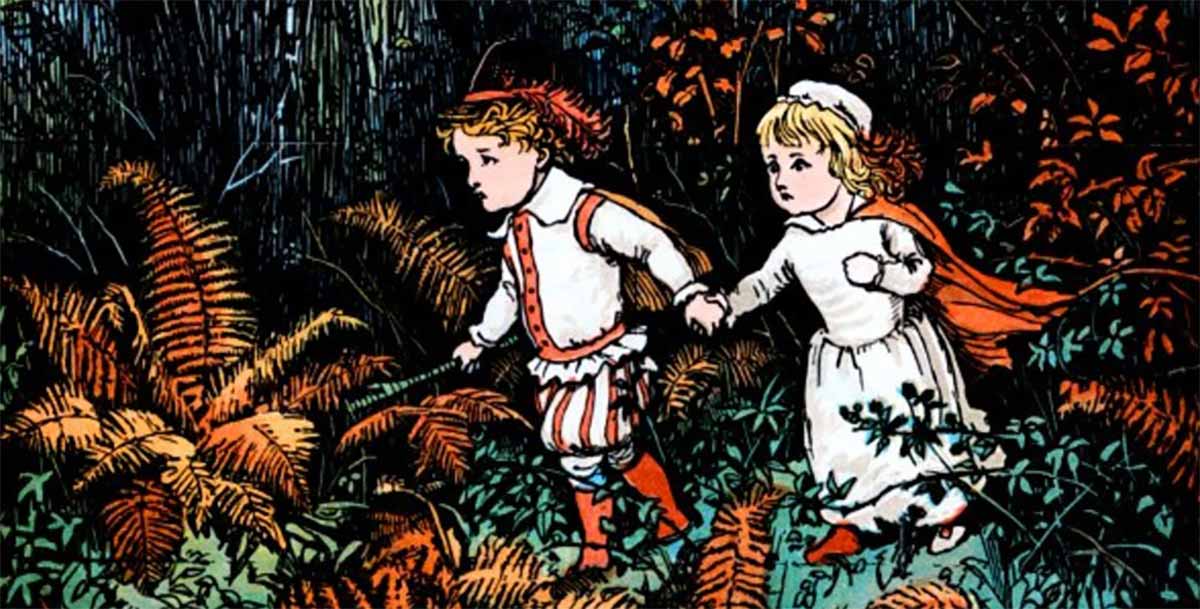
The story of the two green children of Woolpit contains elements reminiscent of medieval English tales about journeys to the “otherworld.” Consequently, most historians attribute the details of this story to folklore. But this does not necessarily mean the children did not exist or that their tragedy was not real. Later writers and folklorists such as Charles Oman increasingly linked this story of the green children to fairies and the realm of the fae.
Martin Walsh, a researcher of world folklore, describes the story of the green children as a kind of distorted depiction of an atavistic harvest ritual, during which animals were slaughtered to cull the herd before the winter. Walsh considers references to Saint Martin significant and views the story as evidence that the Feast of Saint Martin has roots in the ancient English past. The children’s green skin could represent the fertility of the land, and broad beans were often considered the food of the dead. The children following the sound of church bells through an underground cavern mirrored ritual pageants where symbolic earth spirits or seasonal mummers were “led out” from darkness into the sunlit harvest field.
Other modern theories link the story of the green children of Woolpit to the traditional English folktale “Babes in the Wood.” This story was first published in the 16th century. It tells of a boy and a girl who were abandoned in a forest, where they wandered, starving and frightened. The children eventually died of cold, and robins covered their bodies with green leaves.
Herbert Read’s “The Green Child” Reimagined the Medieval Legend
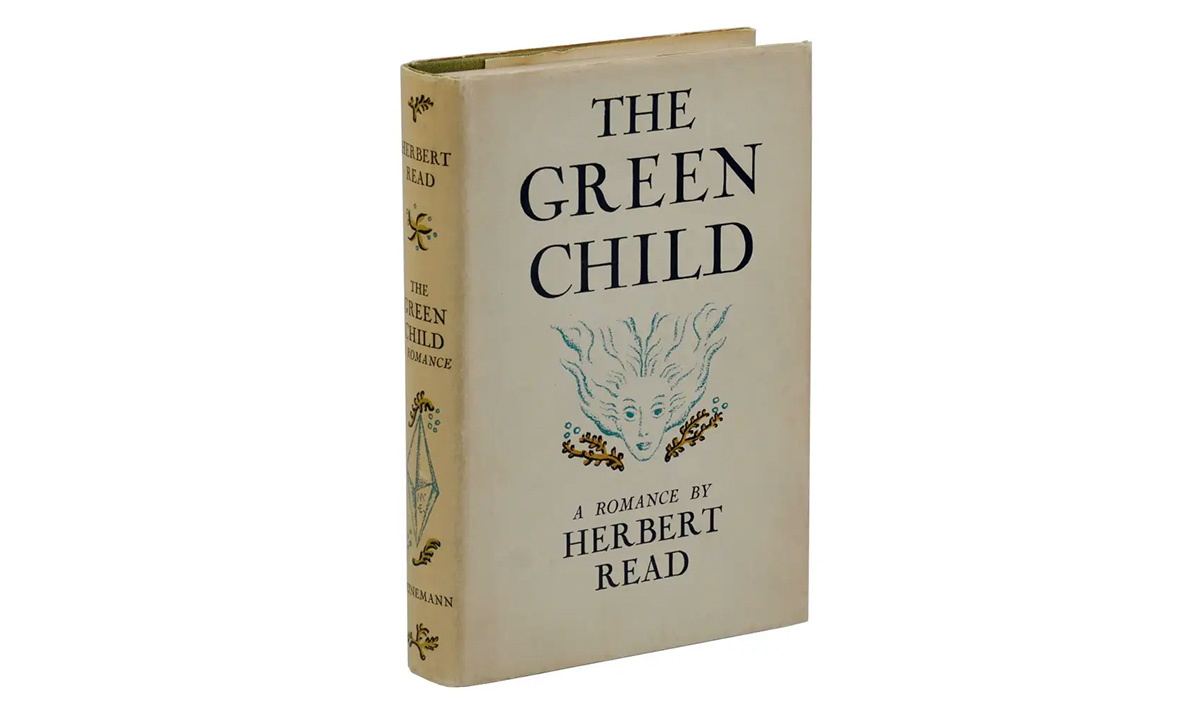
The legend of the green children from Woolpit still inspires writers, artists and musicians today. Perhaps the best example is the novel “The Green Child” by Herbert Read, published in 1935. The only novel by the famous English poet, it is directly inspired by the story of the two green children from Woolpit, which he says is “the norm to which all types of fantasy should conform.”
The novel follows the ex-South American dictator Oliviero, who returns to his native England, abandoning his previous life. In England, he meets an unusual green-skinned child and learns that this child is connected to a secret underground world where people live according to principles different from those in the world above.
Throughout the novel, Herbert explores the meaning of life and re-examines established notions of death, nature, and human existence.