
Often described as a world parallel to our own or as a place far beyond the bounds of the mortal realm, the Celtic Otherworld has many guises. It is a place of mists and mystery, and a home to gods and strange creatures from mythic fantasy.
Existing as a concept across Welsh, Irish, and Scottish traditions, the Otherworld is associated with the supernatural and encompasses both malevolent and benevolent forces. The duality of the Otherworld is as a realm of death as well as eternal life, youth, and beauty.
Herein lie the seductive and terrifying aspects of this fabled domain.
The Otherworlds and Their Names
The ancient Celts did not represent a unified group. They had different societies, languages, and cultures. Reflecting their diversity were the various beliefs surrounding the concept of the Otherworld.
In Irish, Scottish, and Manx mythology, Tìr na nÒg (Tìr nan Òg—Scottish, Cheer nyn Aeg—Manx) was an island paradise of eternal youth inhabited by the Tuatha Dé Danann, the ancient gods. The source of the gods’ eternal youth is the feast of Goibniu, a banquet held by Goibniu, the god of smithing, also associated with hospitality. The island is a joyful and wondrous place of abundance, full of poetry, music, and entertainment. Spoken of in various Irish tales, Tìr na nÒg can be reached through magical entrances found in burial mounds and caves.
Irish myth also speaks of a place known as Mag Mell, the Plain of Honey, which may be another name for Tìr na nÒg. It was believed to be located far to the west of Ireland, possibly under the ocean. Similar to Elysium in Greek mythology, it is inhabited by the souls of those who achieved glory in life.
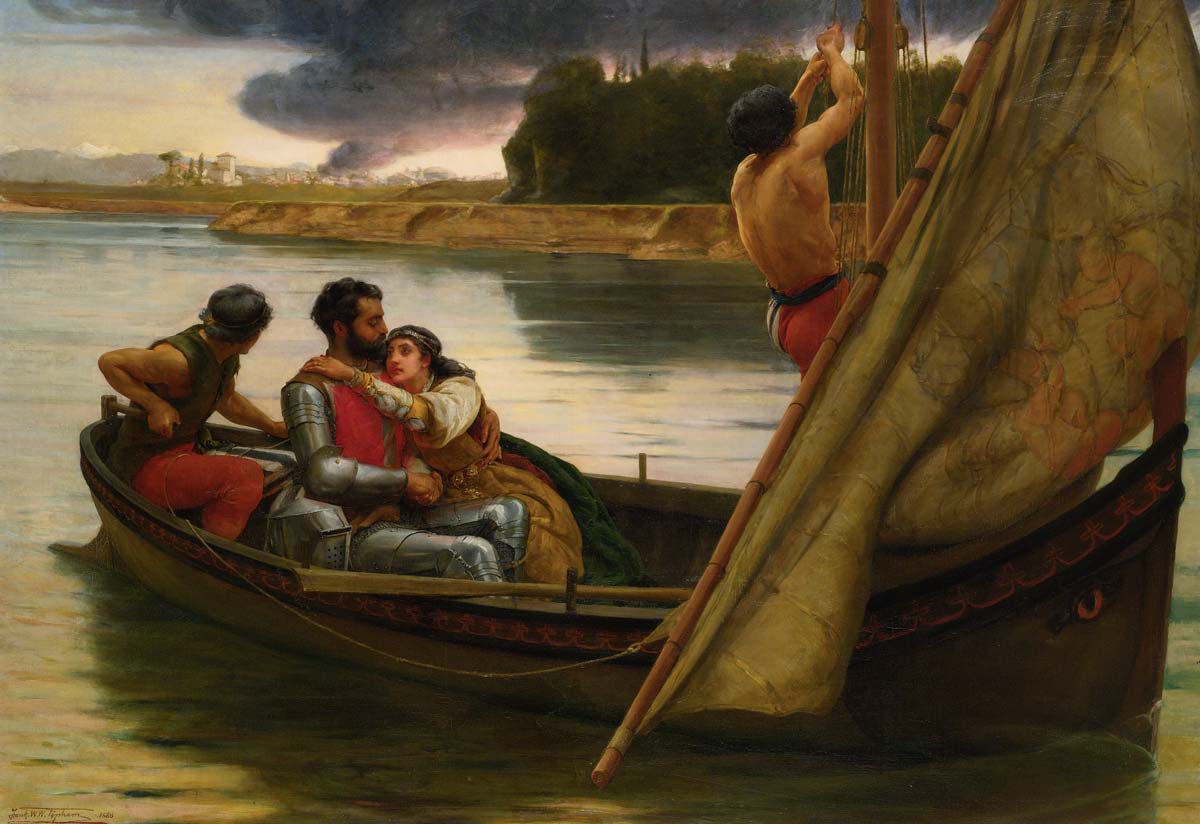
In Welsh mythology, the Otherworld is known as Annwn, and like its other Celtic analogs, it is a place of youth and abundance that exists either as an island in the ocean or under the earth. The name may be derived from ande-dubnos, a Gallo-Brittonic name which literally means “underworld.” Later Welsh tradition also speaks of an Otherworld place called Avalon, an island to which the wounded King Arthur was taken after his injuries at the Battle of Camlann.
Meanwhile, the Celts in France had their own beliefs. Procopius of Byzantium stated that the Continental Celts believed that the souls of the dead gathered in northwestern Gaul before they were ferried to the afterlife, which lay to the west of the British Isles. Breton folklore still refers to this ghostly procession of boats as Bag an Noz.
Fairies, Fae, and Powerful Gods
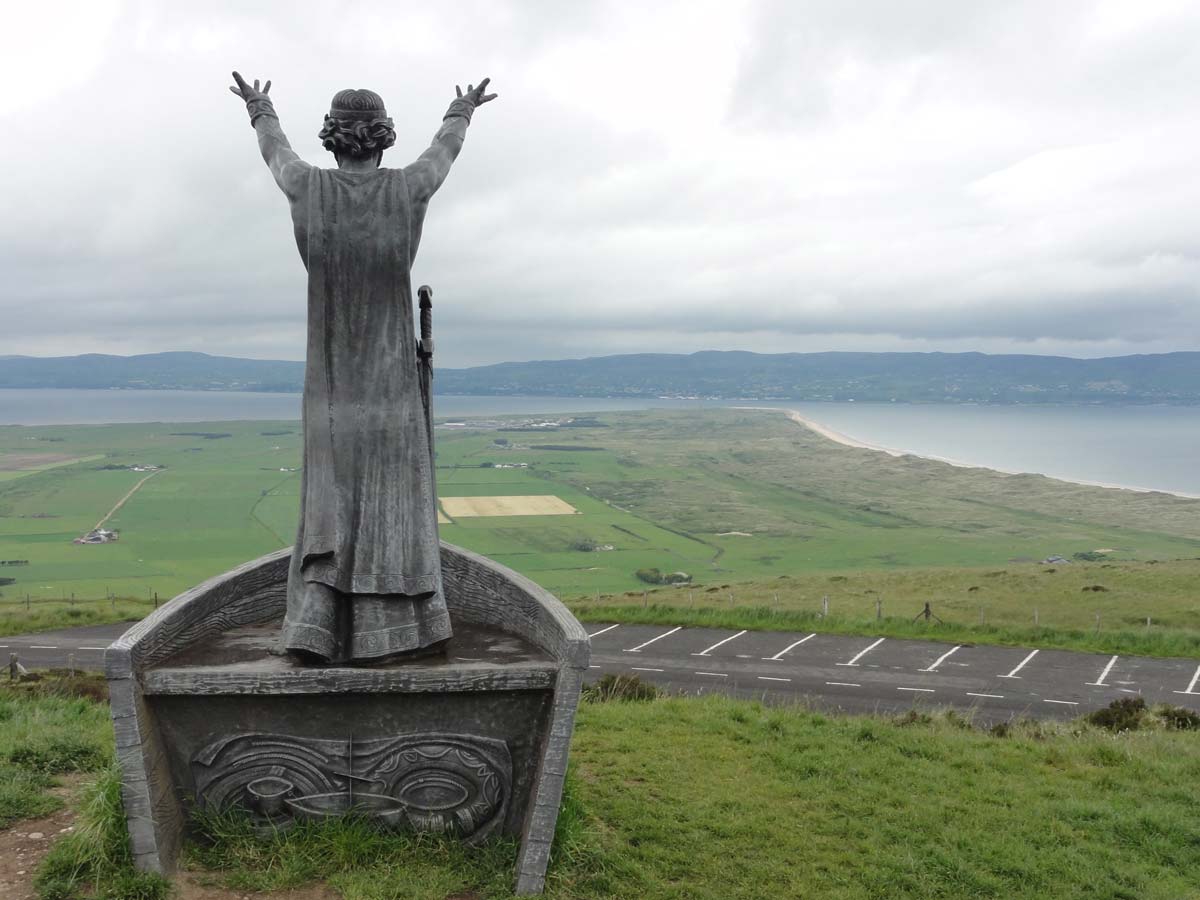
In Irish mythology, the Otherworld is inhabited by a host of supernatural creatures, among which are the Tuatha Dé Danann, the ancient race of gods who were believed to be the first inhabitants of Ireland, and who were displaced by mortals. Their enemies are the Fomorians, a race of supernatural, monstrous beings who were also enemies of Ireland’s first human settlers, named in the texts as the Milesians. The Tuatha Dé Danann’s war with the Fomorians has analogies in other cultures, such as the war between the Aesir and the Vanir in Norse mythology, and the war between the Olympians and the Titans in Greek mythology. Thus, the concept of a war between groups of godlike rulers is a common theme found across cultures.
Nevertheless, after their displacement by the Milesians, the Tuatha Dé Danann retreated into the sídhe—fairy mounds, or hollow hills that served as entrances to the Otherworld. In the modern era of Celtic Revivalism to the present, “sídhe” has been conflated with the mounds and the fairies who live within. The latter definition is a modern invention, while in older texts, “sídhe” refers only to the places where the otherworldly beings reside. These could be anything from simple residences to grand palaces.
They are also the dwelling places of the aos sí or áes sídhe (folk of the sídhe), a race of supernatural beings similar to the elves of Germanic folklore. They were viewed as earthly gods, and according to the 8th-century Fiacc’s Hymn, they were adored by mortals.
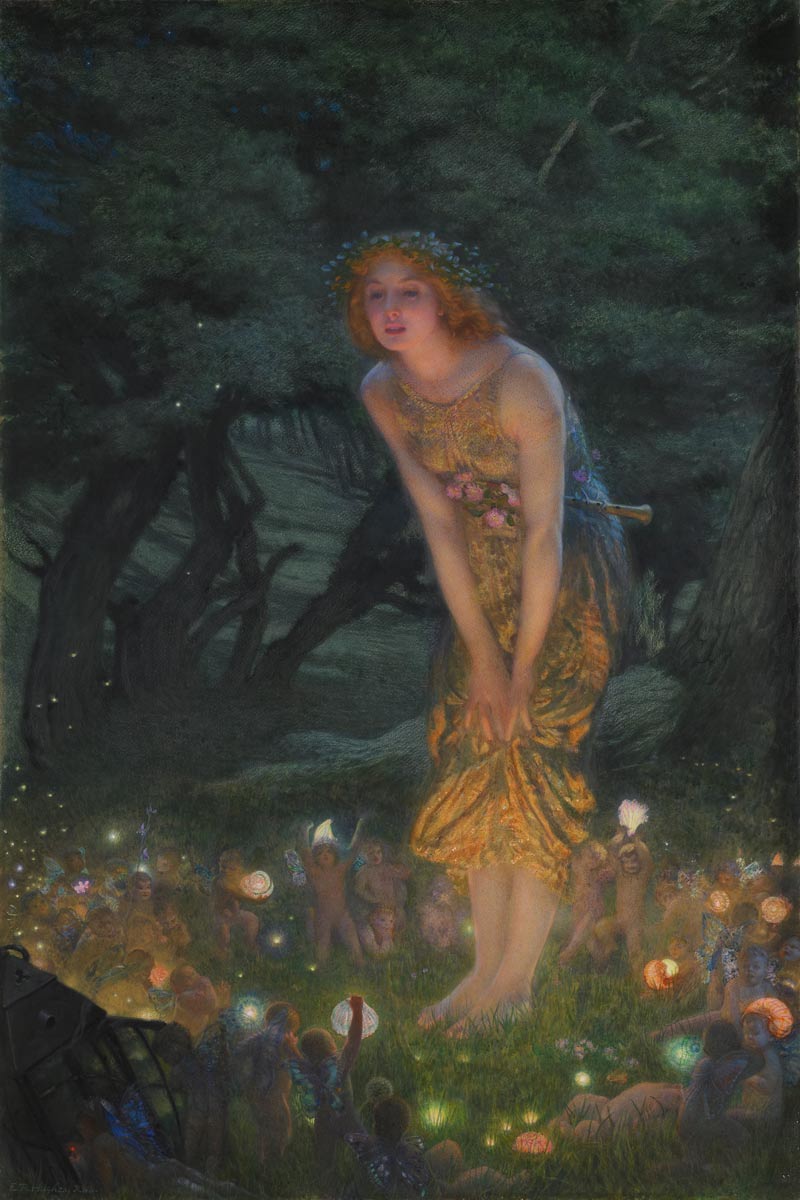
The supernatural beings of the Otherworld were certainly not confined there, and there are many mythic tales of such beings interacting with people from the mortal realm. A major example in the Irish legends is that of the hero Cú Chulainn, who encounters many gods throughout his adventures, including Lugh, his divine father (although Cú Chulainn is still a mortal), and all three forms of the Morrígan.
The Lure of Paradise and the Divine
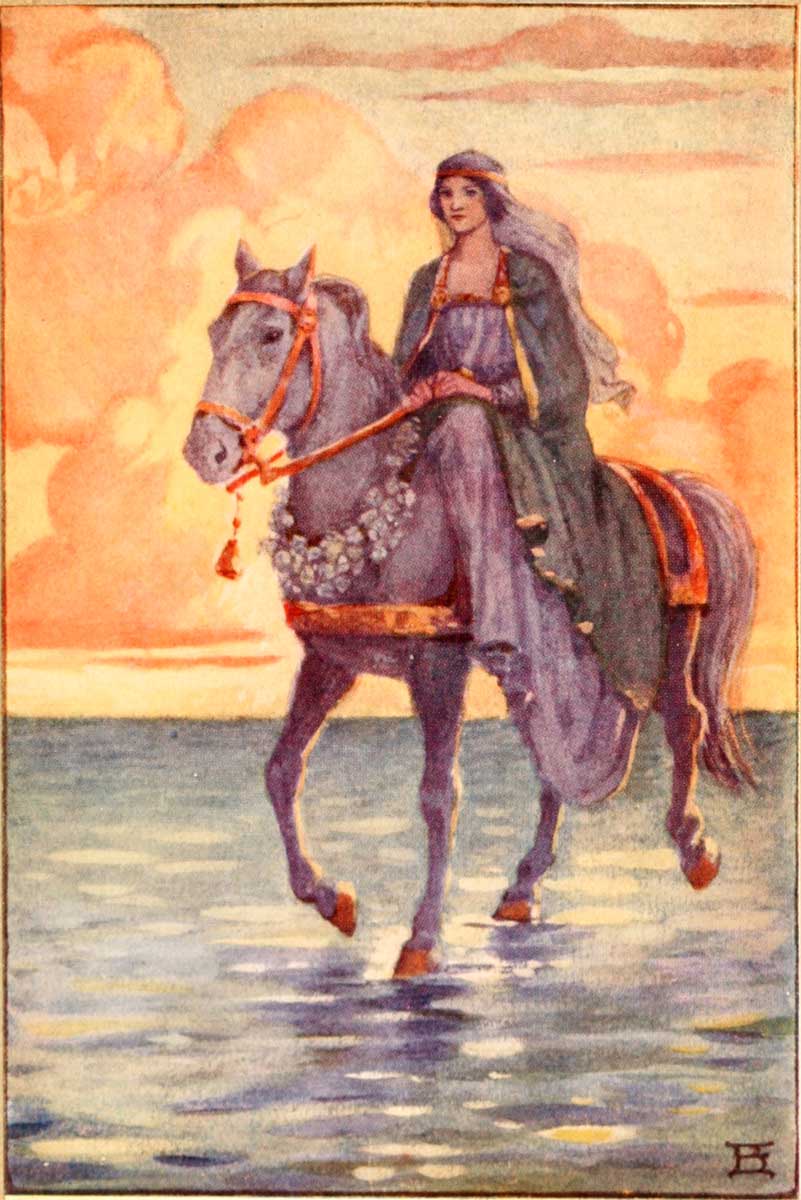
For the ordinary Celtic people of the ancient past, a belief in an Otherworld of eternal abundance, joy, and beauty was a reflection of hopes and dreams. It existed in stark contrast to the brutal and often very short lives of people who lived in a tumultuous and challenging time. The desire for freedom from suffering and death was (and still is) a primary driver in the creation of such mythical realms.
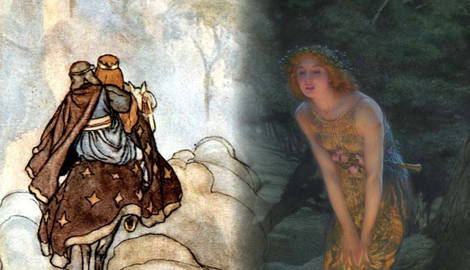
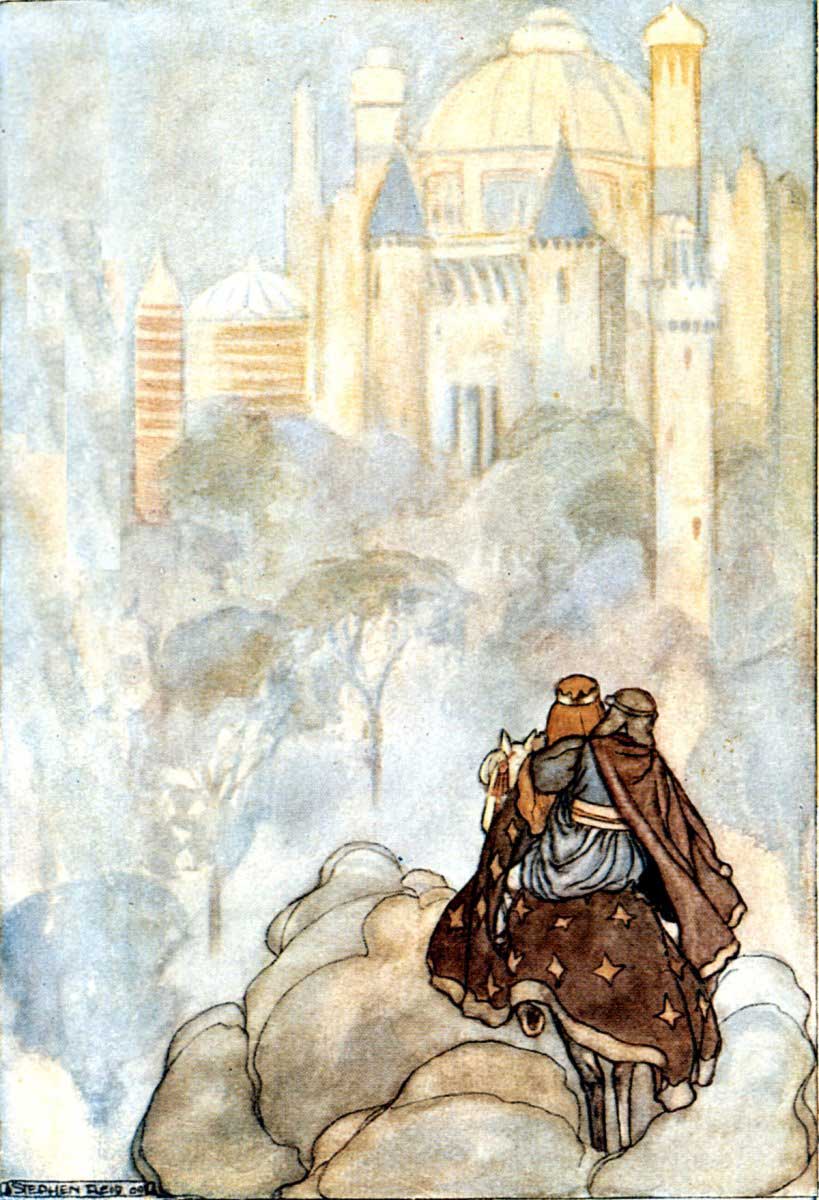
An exemplar of this is the tale of Oisín and his journey to Tír na nÓg with Niamh as recounted in the Fenian Cycle. In this story, Oisin, a member of the Fianna (and son of Finn MacCool), a band of legendary warriors, meets a beautiful woman named Niamh, who claims to be of the Tuatha Dé Danann in the land of Tír na nÓg. He goes with her and spends three years in the mystical realm, surrounded by paradise, but he longs to visit his home once again and tell his father of his experiences. Niamh warns him that if he goes, then he must not touch the ground or he will not be able to re-enter Tír na nÓg. Unfortunately, Oisin falls off his horse while in Ireland. Not only can he not return to Tír na nÓg, but 300 years have passed in his absence, and everyone he knew has died.

The dark end to this tale hints at what lies beneath the shimmering surface of the otherworld. Paradise came at a cost, and it was never something wholly benevolent. Celtic imagination provided light and darkness.
Hopes and dreams weren’t the only things reflected in the beliefs of the Otherworld. Fear also played a role, and it shaped darker aspects of the supernatural realm.
Darker Sides and Cautionary Tales
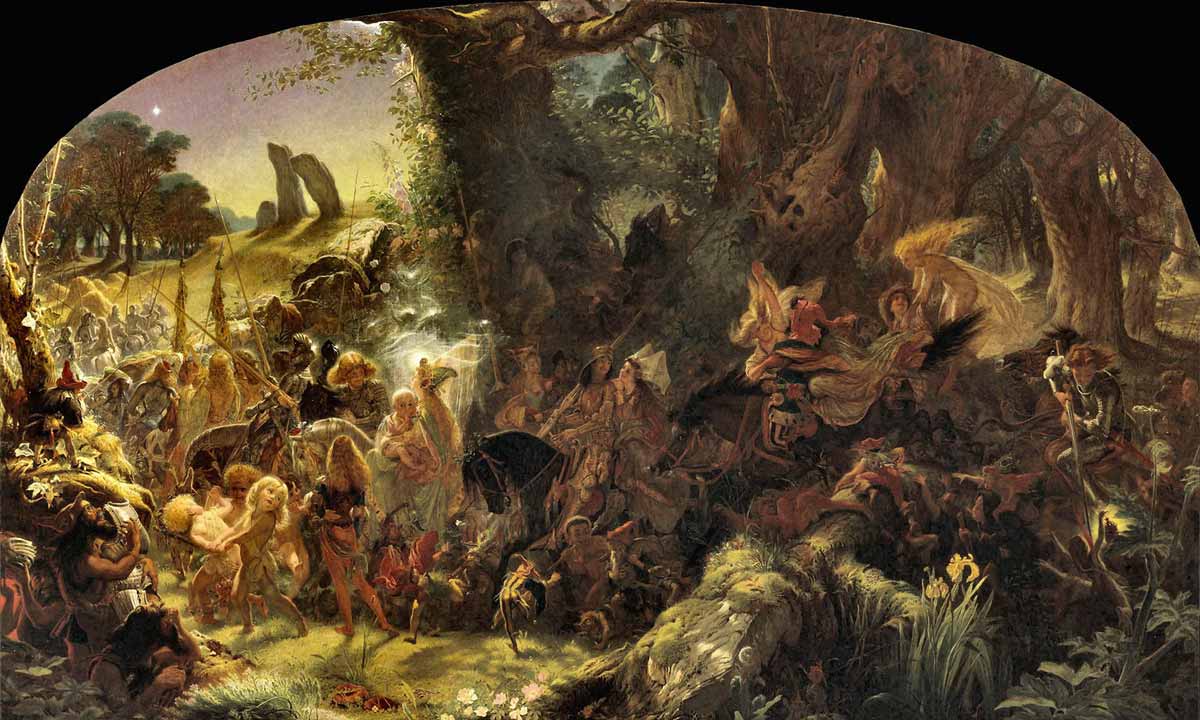
The tale of Oisín and Niamh is one that shows the dangers associated with the Otherworld. It is not the only such tale in Irish legend. In The Voyage of Bran, the eponymous character sets out with his crew to find the land of Emain, a land populated by women. They reach their destination and spend a year there, but one of the crewmen, Nechtán mac Collbrain, wishes to return home.
They sail back to Ireland, but when Nechtán mac Collbrain sets foot on shore, he is immediately turned to ash. The rest of the crew survives, only to realize 100 years have passed in Ireland, and it is no longer the home they knew. Unable to return to their former home, they set out to sea, never to be seen again. These two stories illustrate the danger of the Otherworld in that once it is reached, returning home is impossible.
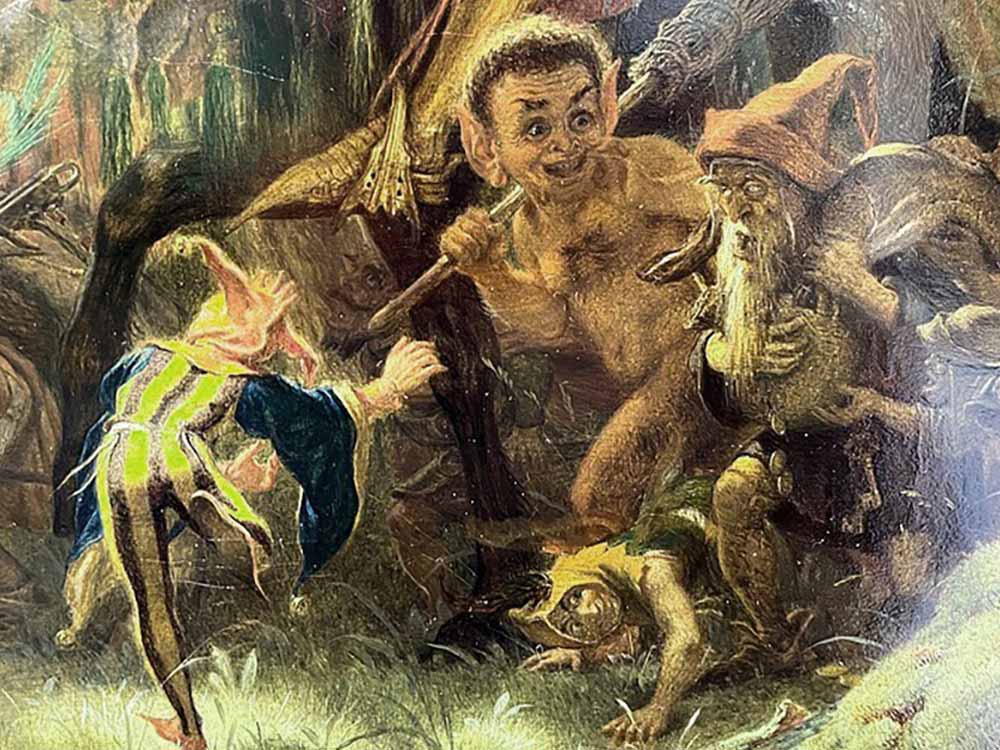
Apart from the geographic and temporal dangers, the Otherworld inhabitants are not always benevolent. Fairies were believed to abduct people and replace them with changelings—facsimiles of the abductee. This belief had real-world consequences in 1895 when a woman was tortured to death by her family, who believed she was a changeling.
In the story of Étaín and Midir, Étaín is a mortal woman and the target of the affection of Midir, who is of the Tuatha Dé Danann. Midir, however, is already married to Fúamnach, who is consumed with jealousy and turns Étaín into a pool of water, which dries up and turns into a worm (or a snake in some versions), which then transforms into a scarlet fly. Midir doesn’t know the fly is Étaín, yet falls in love with the creature anyway, prompting more jealousy from Fúamnach, who calls up a buffeting wind to blow Étaín away. Étaín is prevented from alighting for seven years by the wind. She falls into the hands of Óengus mac Óg, who keeps her safe. Midir rescues her, but once again, she is taken by the wind. Eventually, she lands in a cup of wine, gets swallowed by a woman, and is then reborn, many centuries after her first birth.
With no knowledge of her past life, she marries a mortal man, and Midir tries to win her back, returning her memories in the end.
These are just a fraction of the stories contained in the annals of Irish history. Many more exist, weaving tales of delight as well as suffering brought about by contact with the divine.
While there may always be the human desire for immortality, the Otherworld exists as lessons in finding the meaning in mortality, the safety of home, the dangers of the unknown, and the price of transcendence. Paradise isn’t always a paradise. It is a burden, and discovering it brings grave consequences.
Nevertheless, the Otherworld continues to exist in the imagination as a place of beauty and wonder. From the ancient myths to modern realizations in film and fantasy, it has found a precious place, entrenched in the consciousness of pop culture.