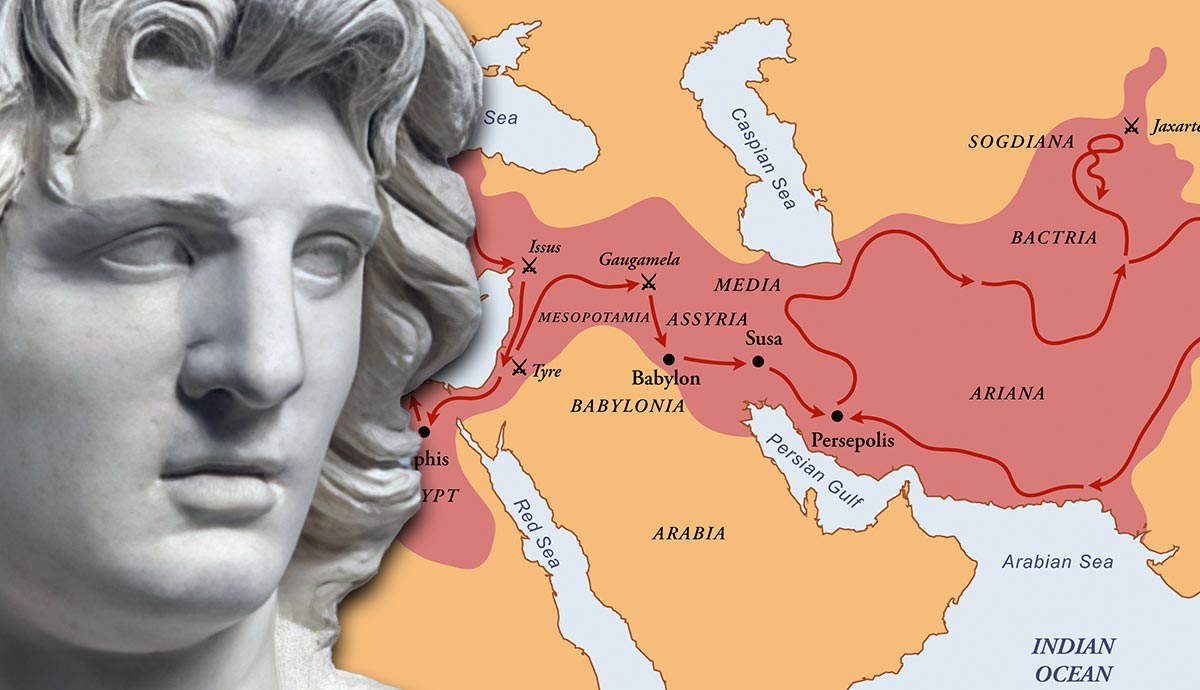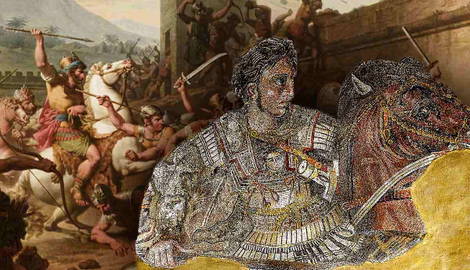

In the 4th century BC, Alexander of Macedon achieved the impossible. He conquered the largest empire the world had ever known, Persia, earning him the moniker “the Great.” Yet there were kingdoms further east, and Alexander had an insatiable desire to see the edge of the world. So he and his army marched on, beyond the Hindu Kush and into the Indus River Valley. He was opposed by local leaders and eventually challenged by King Porus. Alexander was victorious, reaching as far as the Hyphasis River. But he never crossed it. Instead, he turned south, marching home. Why did Alexander abandon his conquest of India?
Timeline of Alexander the Great in India
| Late 327 BC | The Hindu Kush Crossing | Alexander crosses the Hindu Kush mountains into the Kabul Valley, dividing his army into two forces to secure the region. |
| Winter 327–326 BC | Swat Valley Campaign | He fights fierce campaigns against the Aspasioi and Assakenoi tribes. Alexander is wounded while capturing the city of Massaga. |
| April 326 BC | Siege of Aornos (Mount Pir Sar) | Alexander successfully captures a legendary, supposedly impregnable mountain fortress, securing his rear and boosting his mythical status. |
| Spring 326 BC | Crossing of the Indus & Taxila | The army crosses the Indus River. King Omphis (Ambhi) of Taxila submits without a fight, offering reinforcements and supplies in exchange for an alliance. |
| May 326 BC | Battle of the Hydaspes River | Alexander faces King Porus across the Jhelum River. Despite Porus’s formidable war elephants, Alexander uses a brilliant night-crossing strategy to win a costly victory. Impressed by Porus’s bravery, Alexander restores his kingdom. |
| Mid-326 BC | March to the Hyphasis (Beas) River | The army continues east through heavy monsoon rains, conquering various local tribes and cities along the way. |
| September 326 BC | The Mutiny at the Hyphasis | Exhausted by years of campaigning, terrified by rumors of massive armies (the Nanda Empire) further east, and battered by the monsoons, Alexander’s men refuse to go any further. Alexander is forced to turn back. |
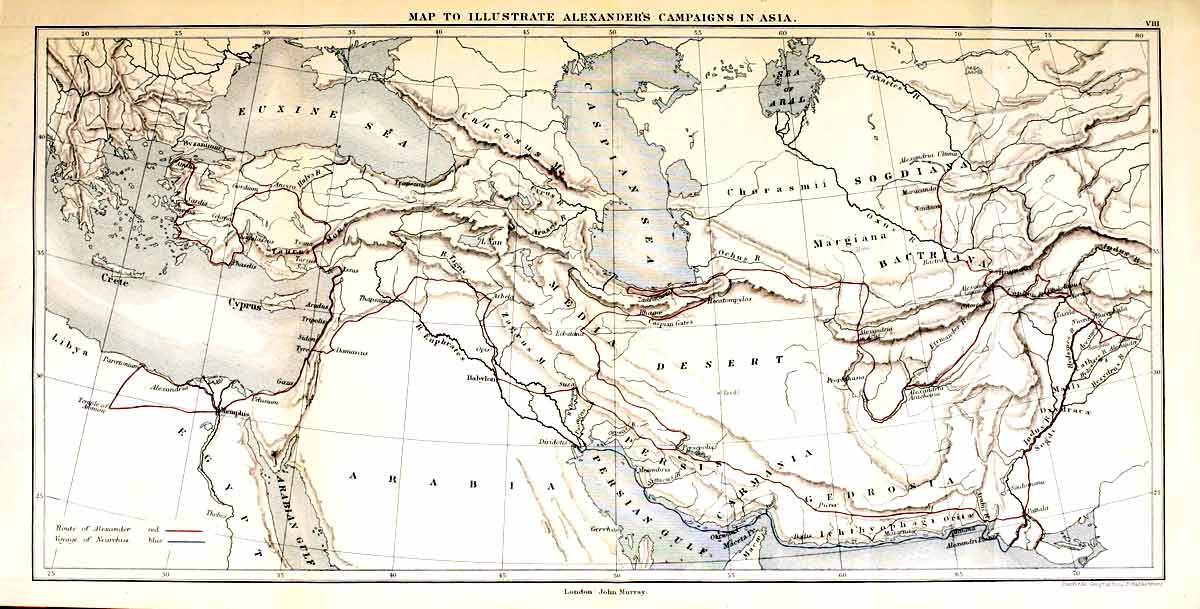
| November 326 BC | The Journey South Begins | Instead of retracing his steps, Alexander builds a fleet and travels south down the Hydaspes and Indus Rivers toward the Arabian Sea, fighting hostile tribes along the riverbanks. |
| Winter 326–325 BC | The Mallian Campaign | During the assault on a citadel of the Malli tribe (near modern Multan), Alexander is severely wounded by an arrow that pierces his lung, nearly dying. |
| July 325 BC | Reaching Pattala (Indus Delta) | The army reaches the mouth of the Indus River at the Arabian Sea. Alexander divides his forces for the return journey west. |
| September 325 BC | Departure from India | Admiral Nearchus takes the fleet by sea via the Persian Gulf, while Alexander leads the main army on a disastrous, deadly march through the brutal Gedrosian Desert (modern Pakistan/Iran). |
What Was “India” to Alexander?
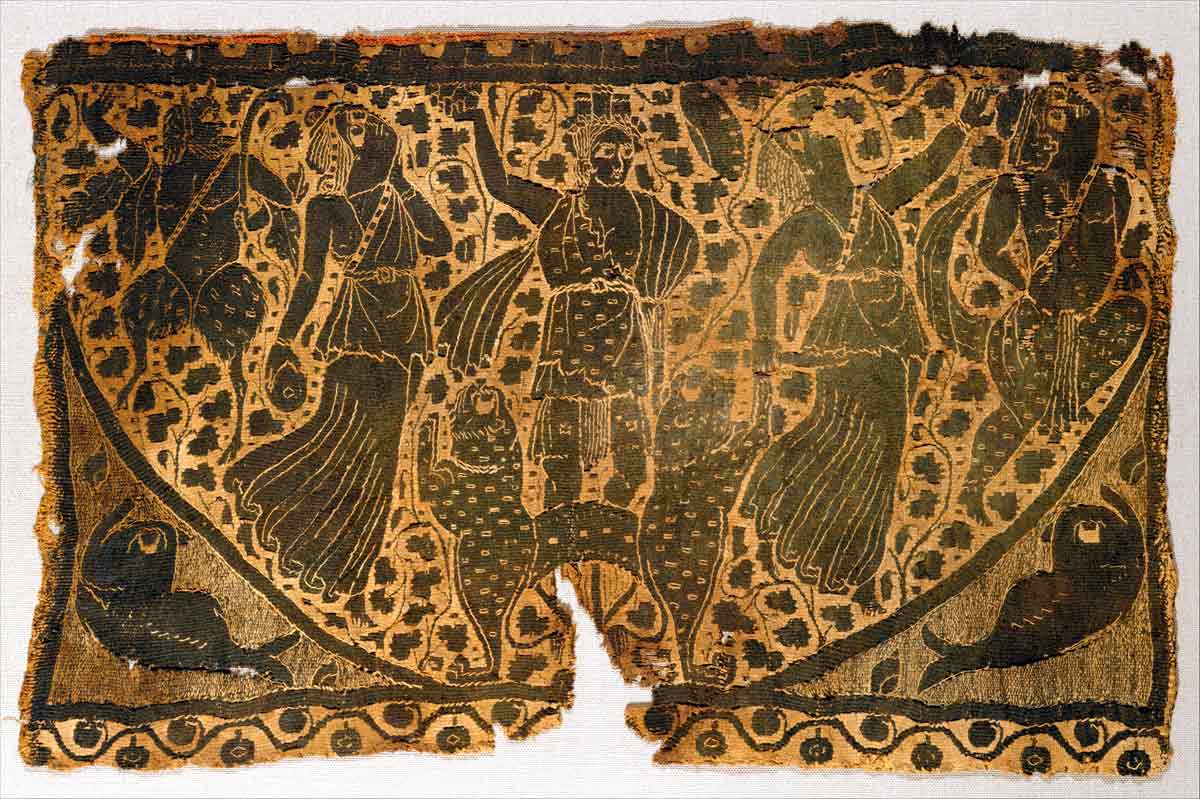
To the ancient Greeks and Macedonians, India was not a country, but a broad territory of independent tribes and kingdoms on the edge of the known world. It lay east of the Hindu Kush and focused on the Indus River and its tributaries. Their knowledge of the world beyond the Indus was often imprecise and secondhand. Alexander reached the Hyphasis River, a tributary of the Indus, before turning back.
Looking at modern India, Alexander only crossed the northwestern edge, spending most of his time in modern Pakistan. All the river crossings through Indian territory described by the author Arrian took place in what is today Pakistan. The Hyphasis River, which is the modern Beas River, is in modern India, but Alexander never crossed it. Depending on how one wants to consider Alexander’s conquests, he never crossed into India.
What were the principal factors that kept Alexander from crossing the Hyphasis and continuing his expansionist campaigns into India?
Monsoons and Mud: Nature’s Unyielding Wall
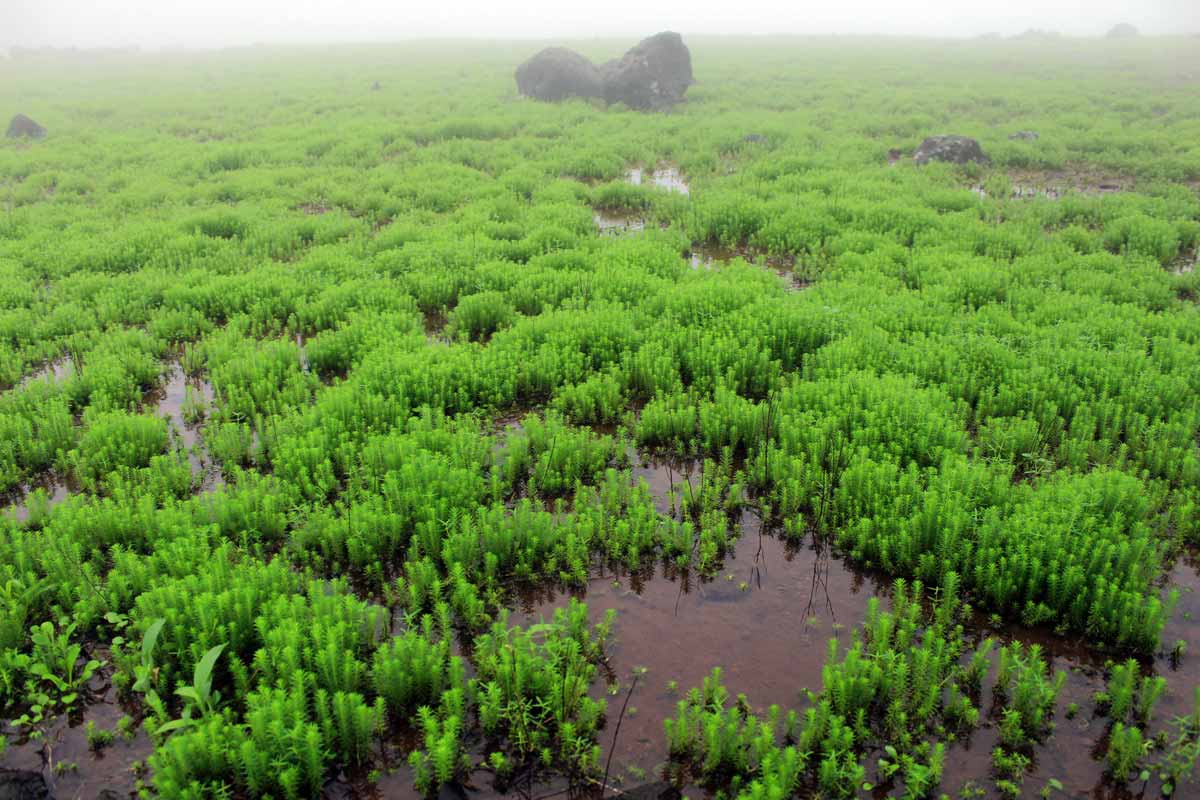
The most difficult enemy that Alexander and his army had to contend with was the weather. There was constant rain and no roads, making the terrain nearly impassable. Arrian describes in his Anabasis of Alexander how they had to build a road in advance of the army so that they could pass.
River crossings were no easier. During the season of Alexander’s campaign, the Indus river and its tributaries were swollen from the constant rains and the currents were dangerous. With each new river they reached, the army had to build bridges or pontoons to cross. Trees had to be cut down and transported for each crossing, delaying the army at every turn. At times they even had to tear down the newly constructed bridge and transport it to the new crossing. All of these tasks were done by the army itself, making the entire march feel like a never-ending trial of endurance.
The Elephant in the Room: A Wall of Tusks
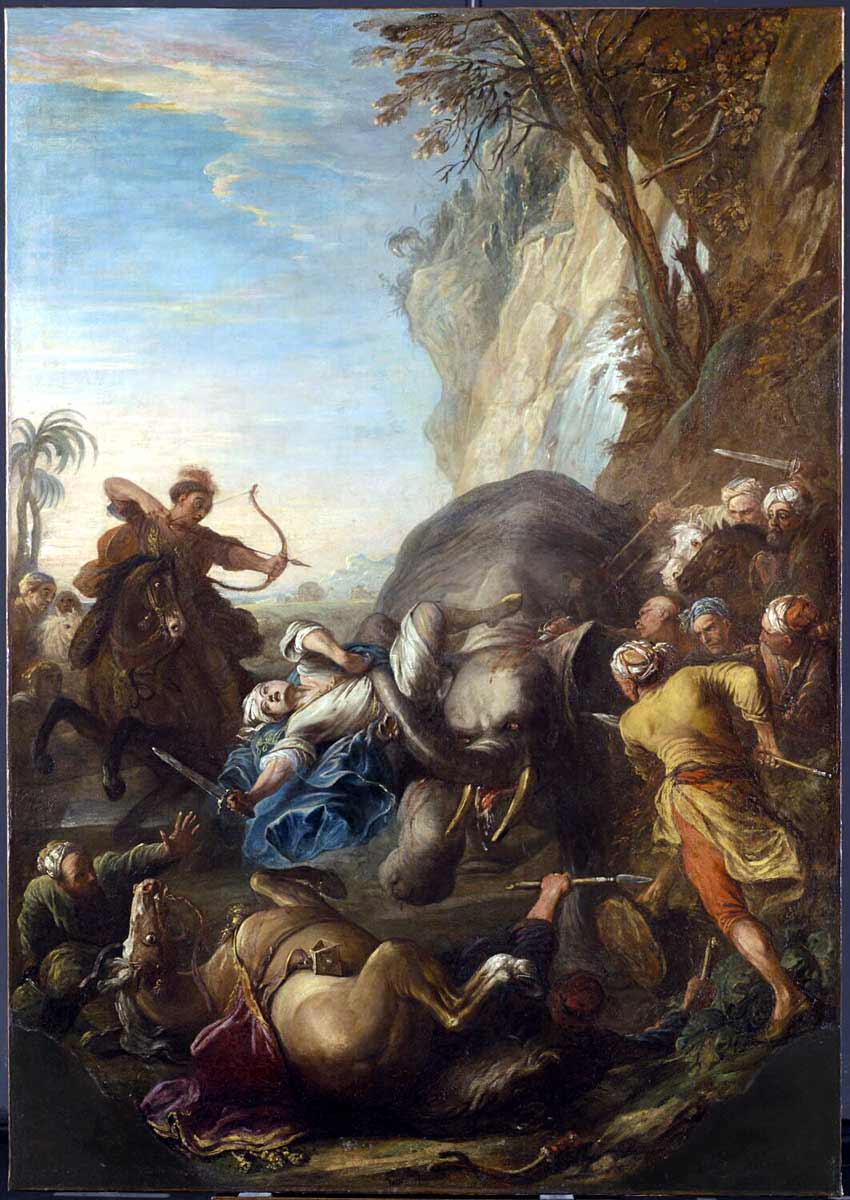
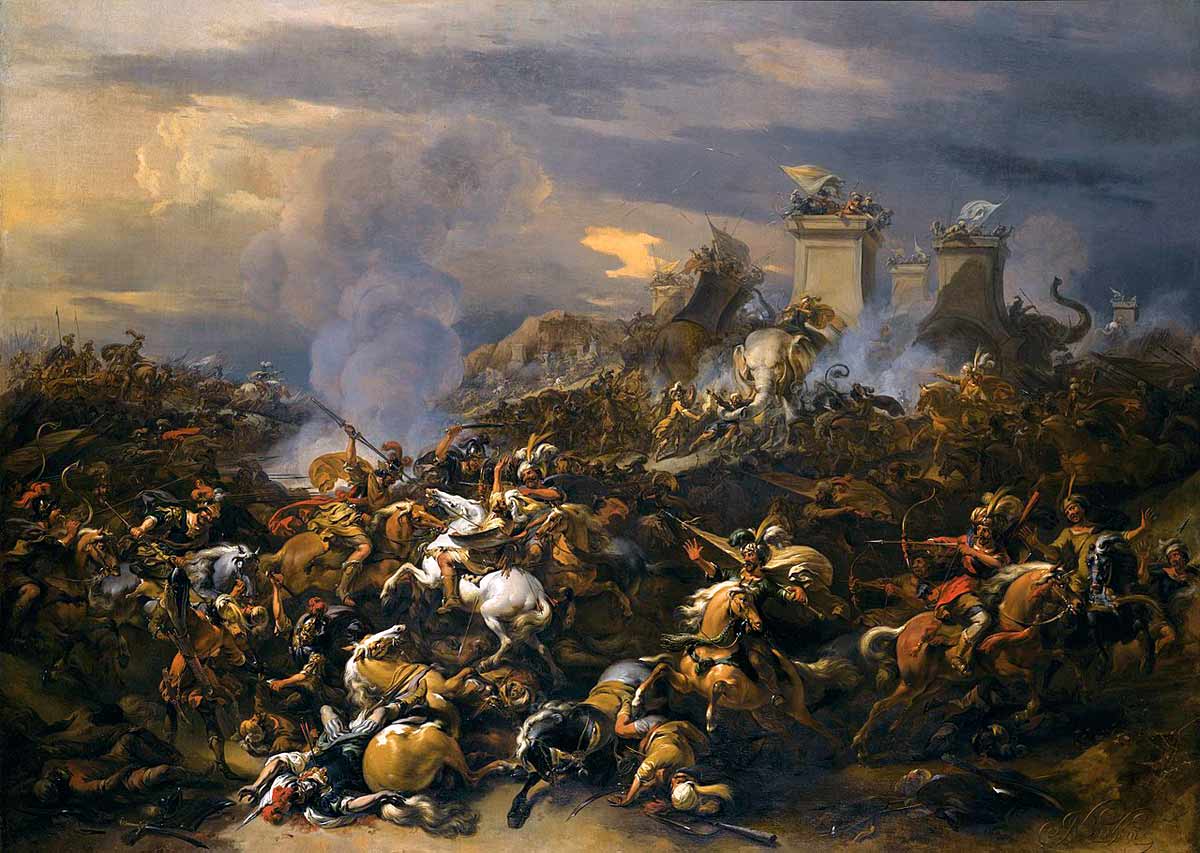
India was also a land of elephants. Alexander had encountered war elephants before, but never on the scale to which they were employed in Indian armies. Elephants were now a constant threat, and their mere presence meant that every victory came at a significantly higher cost. When Alexander was confronted by King Porus, the line of enemy elephants was as wide as Alexander’s phalanx. Elephants were like living tanks, effectively countering cavalry by terrifying horses and breaking up infantry formations with their sheer strength and bulk.
The main threat of elephants was that they were unpredictable. A panicked horse might kick or flee, but it can be wrangled back under control. Elephants are different beasts. When they panicked, they trampled friendly and enemy forces alike. They were so dangerous that Alexander wisely refused to engage them on their terms, given the option.
Against Porus he had no such option, so his plan was to use the very chaos the elephants created against their handlers. He had his cavalry charge the flanks, forcing the enemy army to fight on three sides. His plan was successful and the elephants panicked, but also cost the lives of his own soldiers.
Logistical Problems in Hostile Territory
The combination of the hostile environment, new threats, and distance from his empire created several logistical problems for Alexander and his army. We’ve already discussed the difficulty of traversing the terrain, meaning that receiving supplies and reinforcements became more difficult the further afield the army went.
This made the Macedonian Army more dependent on local alliances and garrisoning captured cities. The first was unreliable and depended on Alexander’s continued victories. The second reduced the overall fighting force of the army with each new city. With each new victory, battles became more difficult.
The Nanda Empire: A Superpower in the Shadows
Alexander’s desire to continue east was in part sparked by his desire to see and conquer the powerful dynasty that lay beyond the Hyphasis River. Arrian described them as good agriculturalists and valorous warriors. The land was fertile and the cities were large. This meant that they were better supplied and could field a larger army than King Porus. Not only that, but they were said to have even more elephants. These people were never named by Arrian, but at this time, the area beyond the Hyphasis, centered on the Ganges River and surrounding plains, was ruled by the Nanda dynasty.
According to Plutarch, they were able to field eighty thousand cavalry, two hundred thousand infantry, eight thousand chariots, and six thousand elephants. While Plutarch no doubt inflated these numbers, in comparison with Porus, whom they had just faced, the Nanda army was reportedly ten times larger. Where with Porus they faced hundreds of elephants, soon they would be facing thousands. All this excited Alexander, but it had the opposite effect on his army.
The Mutiny at the Hyphasis: A Rational Choice
All these conditions led to a breaking point for Alexander’s army. On the banks of the Hyphasis River, Alexander’s army, which had come with him from Greece and crossed continents on his orders, mutinied and refused to march any further.
Alexander called a meeting of officers to address the growing dissatisfaction in the ranks. He tried to appeal to the men’s sense of glory and valor, urging them forward to greater glories. He compared their labors to those of Herakles, saying that their achievements would make them immortal. But his officers stayed silent. They did not want to deny their king, but they also did not want to agree to continue further.
One man, Coenus, built up the courage to speak for the army. He told Alexander that the army was tired, both physically and mentally. Those who had joined him from Greece became fewer and fewer in number. Some were left behind in new cities, some were wounded, or died from combat or disease. Those who were left wanted to see their families again and wanted to enjoy the spoils that the glory Alexander described. Coenus suggested that they return home and attend to matters in Greece and Macedon. If Alexander wanted to mount another invasion of India in the future, he could do so with younger, fresher, more enthusiastic men.
The other officers cheered after Coenus’ speech, but Alexander was furious. The next day he summoned the officers again and told them that he was going to continue his advance. Any Macedonian who wished to return home was free to do so and carry the message that they deserted their king. Alexander then went back into his tent and sulked for three days, hoping that the soldiers would change their minds. But they did not. He made sacrifices to the gods to cross the river, but the signs were unfavorable. With all signs pointing to the need to return, Alexander conceded and announced that they were going home.
The Disastrous Return
Alexander decided to return to Macedon by sailing down the Indus River until they reached the Great Sea, which the Greeks believed surrounded the world and connected all waters. From there he could follow the coast home. Their trip down the Indus River did not go uncontested.
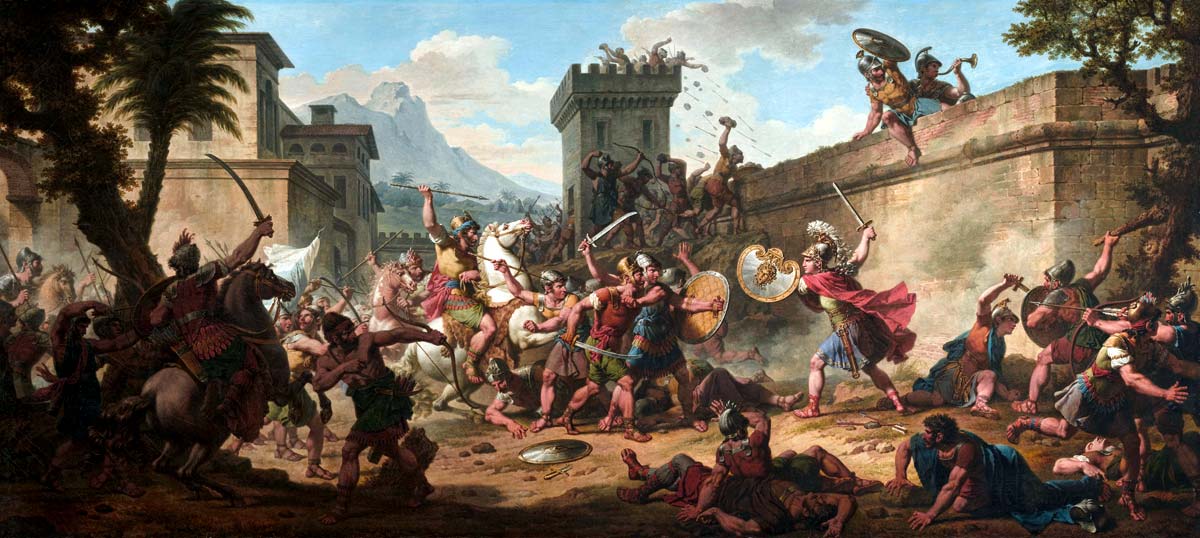
Against the Mallians, Alexander recklessly scaled the city walls alone and took an arrow to the chest. Rumor spread among his army that he had died, and the army lost all morale and direction. Lest there be a revolution among his men, Alexander was forced to show himself before he was fully healed to calm the situation.
Alexander and his army sailed down the river, subduing and negotiating with local tribes until they finally reached the sea. This solved one problem, but the upcoming journey took them through the Gedrosian Desert. The army quickly ran out of supplies and was forced to ration drinking water and to eat their own pack animals. While traveling through a dry riverbed, part of the army and baggage train was washed away by a flash flood. Even in the desert, water proved to be a danger. When they did find drinking water, men and animals would crowd around it, unable to contain their desperation for it, many of them dying from drinking in excess.
The Victory That Looked Like a Retreat
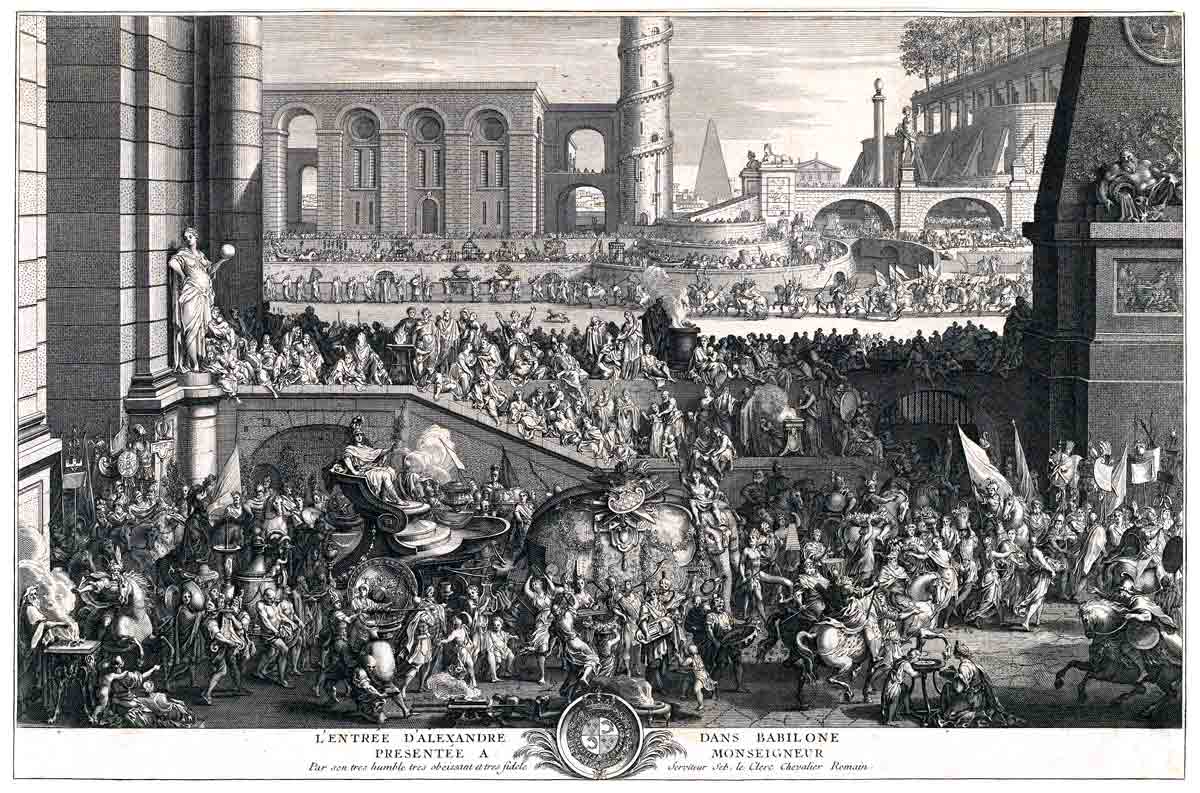
Alexander and his army made it out of the Gedrosian Desert and back into the Iranian heartland, but at a great cost. Still, the crossing of the desert was something that few people had ever done, adding another achievement to Alexander’s already long list. He stopped in Carmania to celebrate escaping the desert and a successful conquest, then made his way back to Babylon.
While his campaign through India didn’t result in a massive addition of territory like his conquest of Persia, Alexander was nonetheless victorious in all his battles and subjugated all the tribes he encountered. To the soldiers who had come so far and achieved the impossible, their return was a triumph worthy of eternal remembrance. The Indian campaigns can only be considered a failure when compared with Alexander’s bottomless ambition.