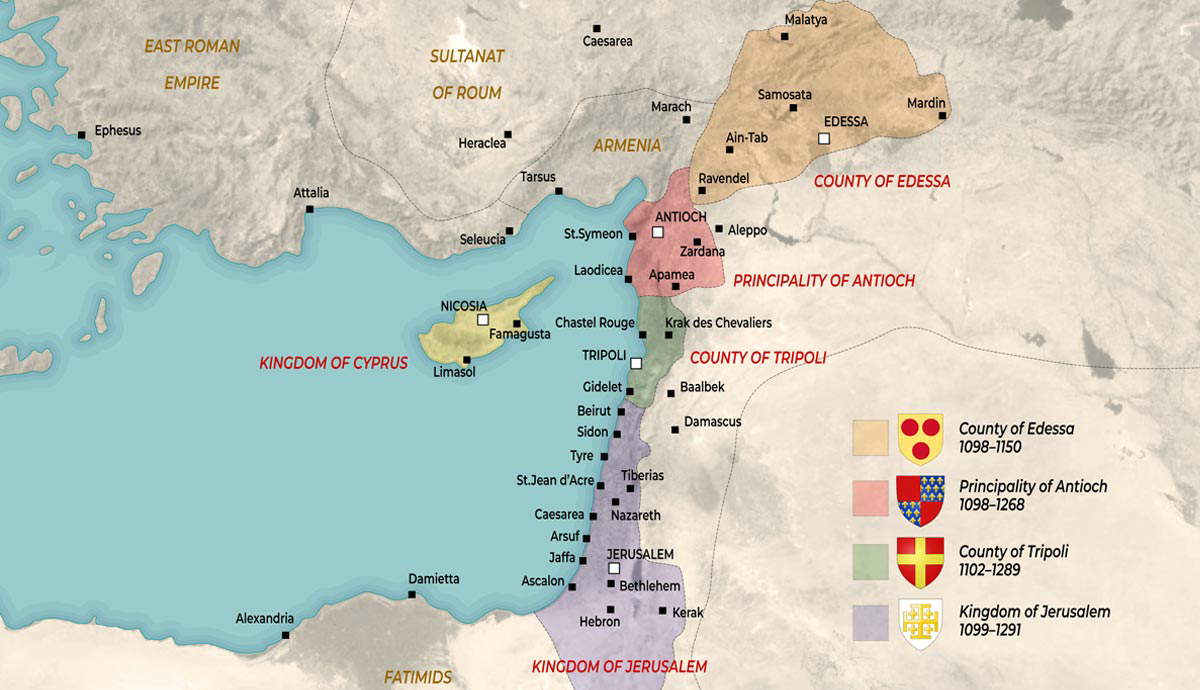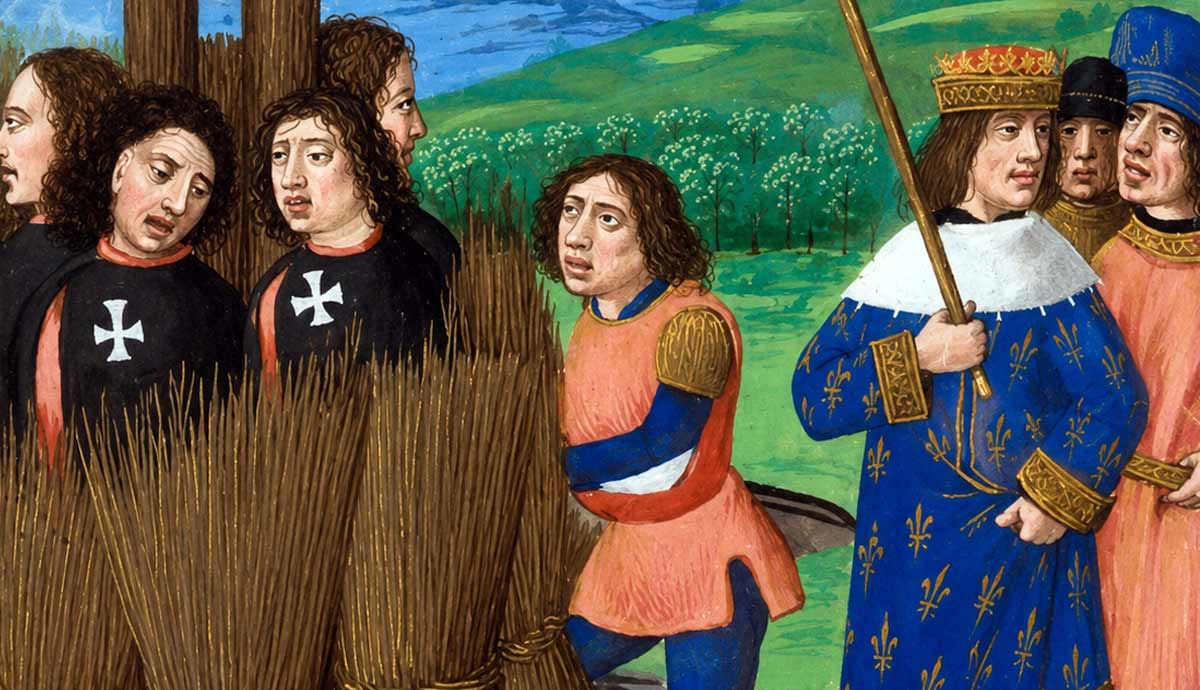

Established in 1119 after the First Crusade, which was a military expedition to recover the Holy Land of the Levant from Muslim control, the Knights Templar began as a group of warriors resolute in protecting pilgrims heading to Jerusalem.
By 1300, the Order had grown to become one of the most powerful religious organizations in Europe and the Middle East. However, King Philip IV of France, also known as Philip the Fair (Philippe le Bel), destroyed the medieval Catholic military order.
How the Knights Templar Built a Powerful Transnational Banking System

The Templars’ immense power in Europe came from several sources. One of them was their nearly 1,000 commanderies, which were rural estates and centers used to transfer money across Europe and the Mediterranean. The centers provided financial services through an early transnational banking system. Depositors could leave their money with a Templar center in one country and draw the currency in another center using a letter of credit, which acted as a form of secure transfer.
Because of this, the Order accumulated a lot of wealth within a very short period of time. Their power and influence also grew rapidly due to being granted complete papal immunity from local laws and taxes, essentially operating as a privileged institution where they answered only to the pope.
Why Financial Crises Forced King Philip IV to Target the Templars
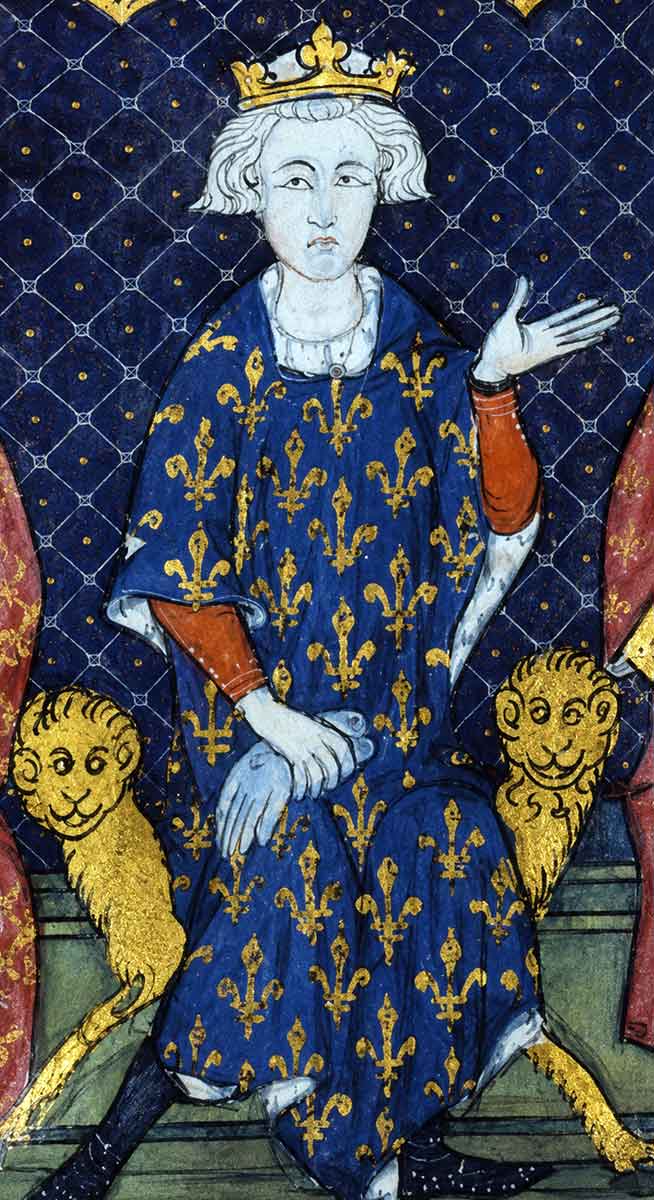
When King Philip IV of France inherited the throne in 1285, he had grand ambitions of turning France into a powerful centralized monarchy where the king held total control. However, he assumed power at a time when the nation was facing severe financial difficulties.
Unfortunately, from 1294 to 1303, he waged war against England as well as the rebellious County of Flanders. To be able to pay for these wars, Philip started to reduce the amount of silver in French coins, a process called debasement that made the currency lose its value.
The desperation led to a severe cash shortage by the summer, which prompted Philip to expel the Jews from the royal domain in July 1306 in a bid to take their wealth. Their properties were confiscated, and all debts owed to them by French citizens were collected by the Crown. However, Philip was still left in massive debt to the Knights Templar. Serving in roles related to royal finances up until this point, the Templars had managed many of Philip’s treasury operations and were now holding the receipts for the massive loans that he owed.
How King Philip IV Executed the Mass Arrest of the Knights Templar
It is estimated that by November 1306, the debt to the Templars had reached the equivalent of 8 tonnes of silver, or about 17 percent of annual government revenue at the time. Even with the alternative of paying them back, King Philip would have still faced challenges settling his financial obligations because the royal treasury was almost bankrupt.
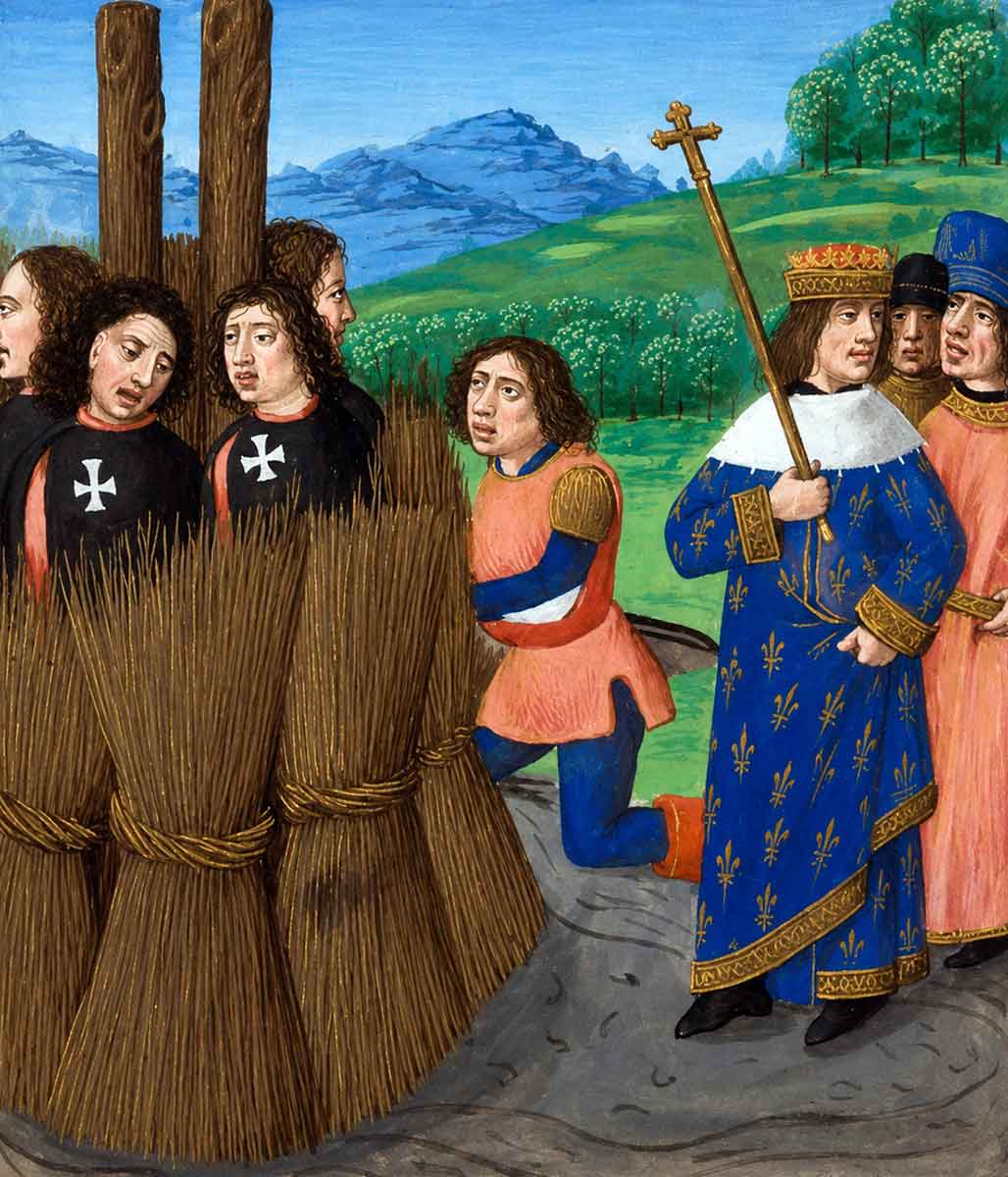
Soon, Philip realized that if he accused the Knights Templar of heresy and seized their land, he could both erase his debt and obtain more wealth. Heresy was a serious offense, as when a man denied his savior, he was likely to face prosecution. And so Philip claimed that the Order engaged in idol worship, corruption, secret rituals, and denying Christ, among other accusations.
And so on Sept. 14, 1307, sealed letters were dispatched to royal administrators throughout France, ordering all officials to detain every Templar in France before dawn on October 13 and hand them over to the Inquisition. Templars were arrested in their beds before they could gather their things or defend themselves. Grand Master Jacques de Molay, the supreme leader of the Knights Templar, was arrested at the Temple, effectively disrupting the top line of command.
Why Pope Clement V Officially Dissolved the Knights Templar
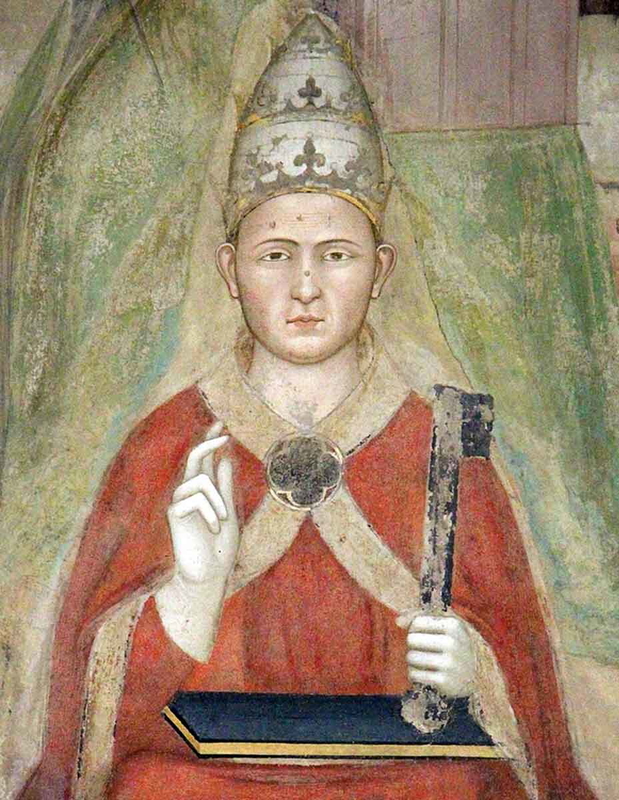
Pope Clement V was cautious and began to look deeper into the truth of these charges, but faced pressure and eventually conceded, ordering all Templars to confess. Unfortunately, many Templars had already been physically tortured and forced to “confess” as well.
On March 22, 1312, Clement V released Vox in excelso, a public decree from the pope that suppressed the Knights Templar. It was made at the request of Philip IV of France. Another decree, Ad providam, also transferred Templar property to the rival group, the Knights Hospitaller. Following the declarations, the Knights Hospitaller received the bulk of the Templars’ property, though Philip managed to extract significant wealth to cover government expenditure.