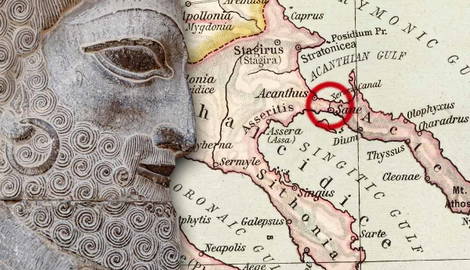

On the eastern shores of Chalkidiki in Greece lie the remnants of a massive canal that cut through the Athos Peninsula and linked the Ierissos Gulf in the north with the Singitic Gulf in the south.
Constructed on the order of King Xerxes of the Persians, it stood as a testament to the engineering skill of the powerful empire. Its use, however, was short-lived. The Persians were defeated, and the canal was left to silt up. The water stopped flowing, but before it disappeared, Herodotus had recorded it.
So incredible was the claim of its existence that it was believed for over two millennia to be nothing more than a fanciful tale cooked up by the ancient Greek historian.
But modern science proved he wasn’t lying.
The Deadly Shipwreck That Terrified the Persian Court
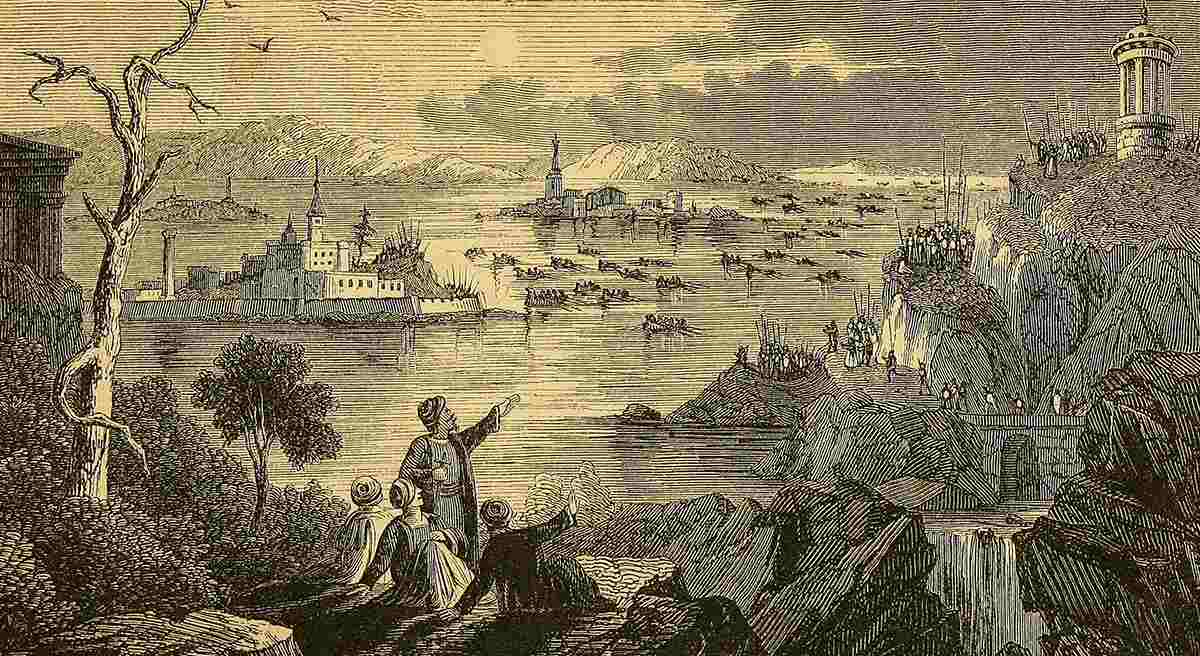
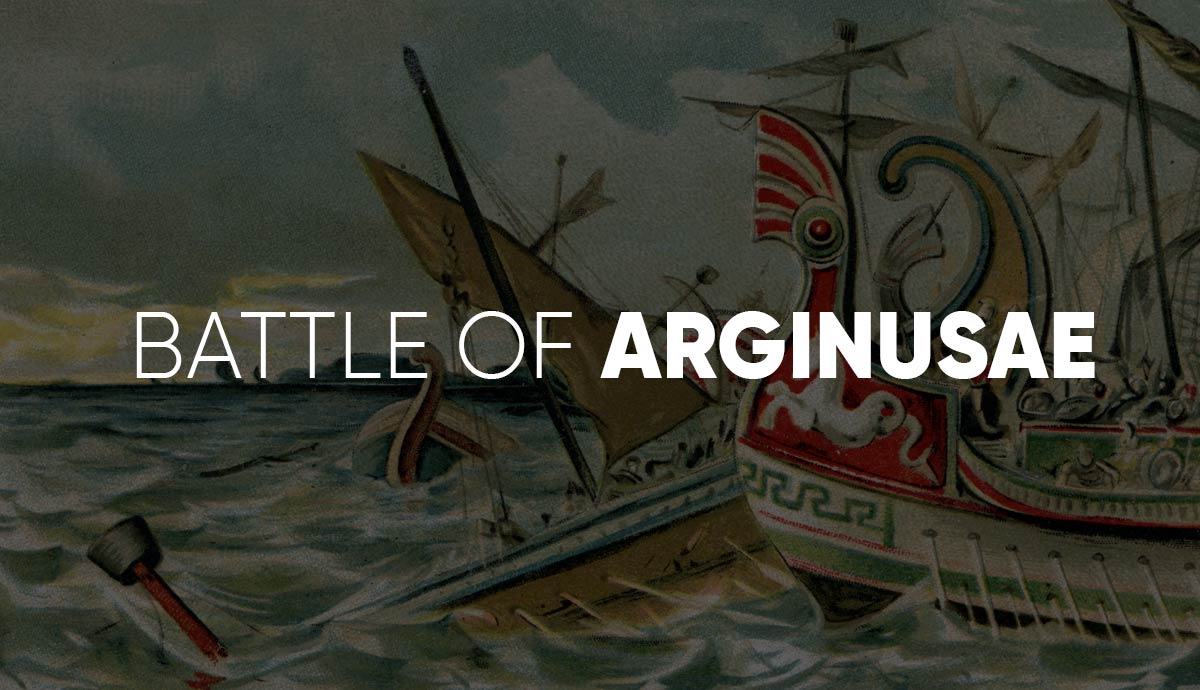
Invading Greece was never easy for the Achaemenid Persians. The weather played a part just as much as the resilient defiance of the Greeks. In 492 BC, under the reign of Darius the Great, Mardonius led an army in the first invasion of Greece, but his fleet was wrecked off the coast of Athos, spelling doom for the campaign. According to Herodotus, the Persians lost 300 ships and 20,000 men when a violent storm whipped up and destroyed any hope of success. Ships were dashed against the rocks, men drowned, while others perished from the cold.
A decade later, under Xerxes, the Persians launched a second, bigger invasion of Greece. This time, they were intent on avoiding the tragedy that had befallen the previous attempt. In 483 BC, Xerxes ordered the building of a canal to avoid the dangerous waters surrounding Mount Athos.
How Persian Engineers Carved Across Two Kilometers of Rocky Isthmus
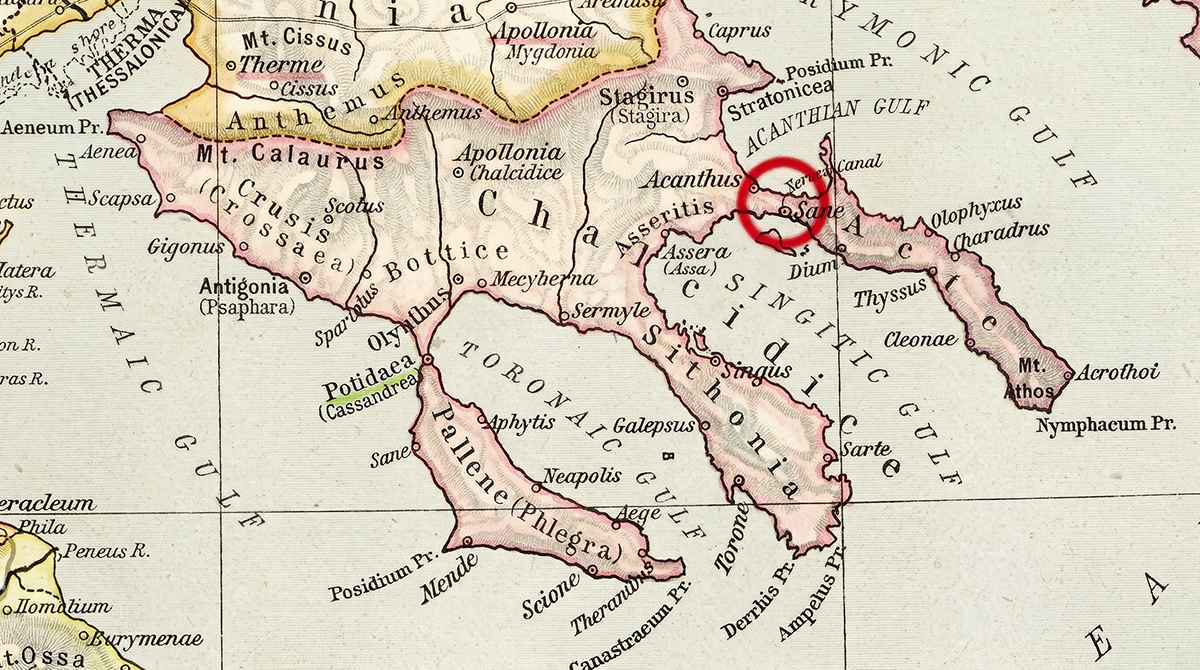
Bridging the two bodies of water on either side of the isthmus was a monumental task that required hard labor and engineering expertise. Two Persian engineers, Bubares and Artachaees, led the project, which involved thousands of laborers. Phoenicians and Egyptians from the Persian Empire provided manpower, supported by forcibly recruited locals.
Lessons from digging previous canals had been learned by the engineers, and for this canal, the top was twice as wide as the bottom, thus preventing the sides from caving in. According to Herodotus, by Xerxes’ orders, the canal was to be wide enough for two triremes to sail abreast with their oars extended. After three years, the canal was finally finished. It measured 12 stadia or 6,200 feet (1,900 meters), and was capped at either end by a dike to prevent it from being clogged by the surf.
Logistics and Supply Lines for an Unprecedented Invasion Force
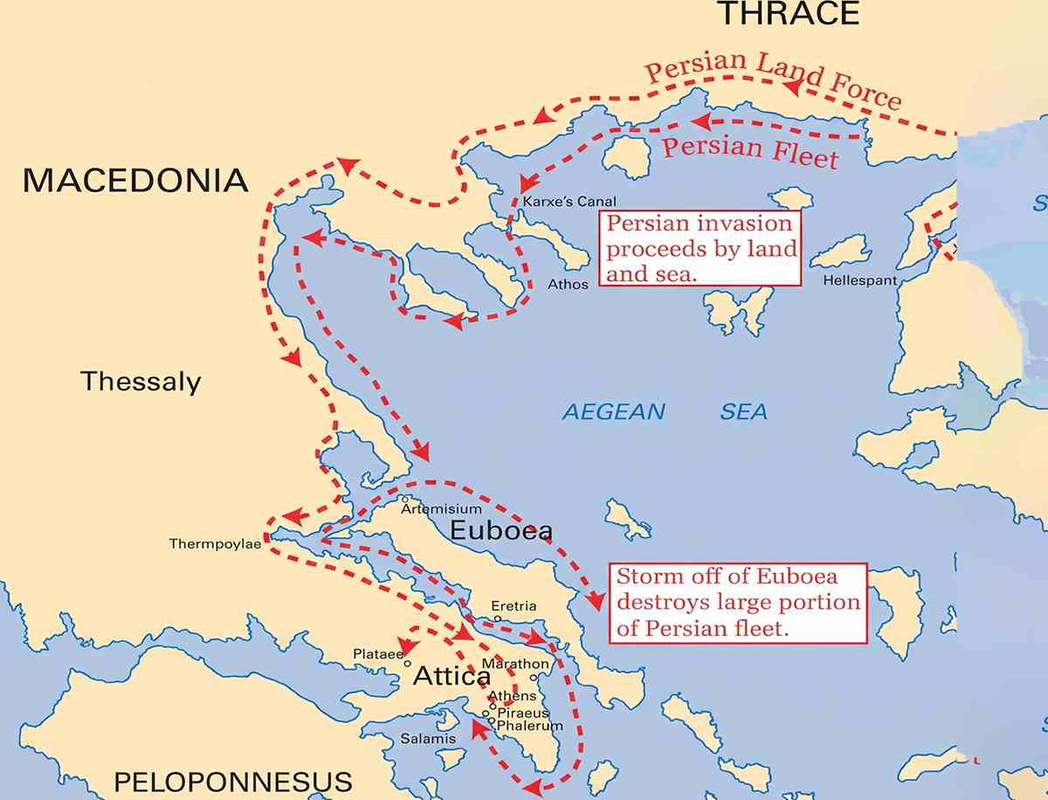
With hundreds of thousands of soldiers, Xerxes’ invasion of Greece was unprecedented in scale in the ancient world of Europe and the Near East. The canal wasn’t just used to ferry troops across to the other side. It formed a part of the logistical chain, along with the bridge across the Hellespont, to supply the army. Along the route from Persia, supply depots were established, and provisions were ferried to an army far too big to live off the land alone.
Such an engineering feat was tangible evidence of the Persian ability to overcome natural barriers. It was a psychological blow to the Greeks long before a single blade had even been drawn. It symbolized intent and the real power behind it. Unlike many other monuments, this was no monument to hubris. It served a vital purpose and was a masterclass in risk management.
Why Roman Skeptics and Historians Thought Herodotus Lied
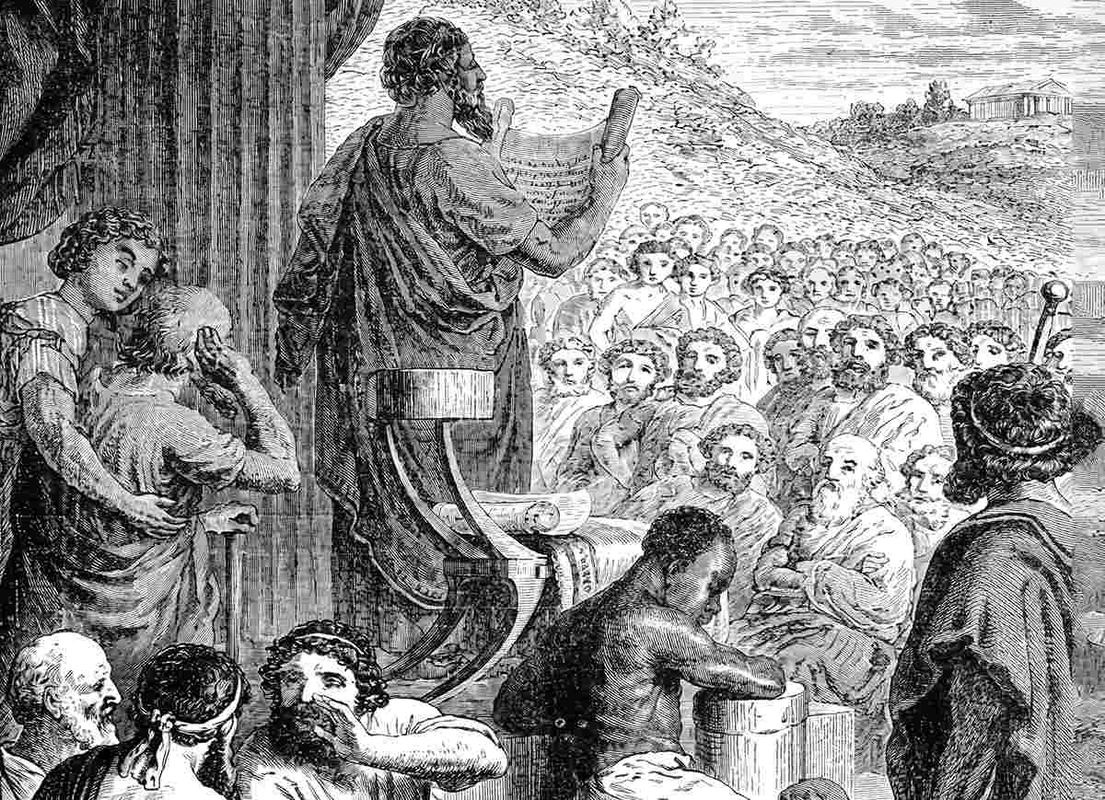
The primary written source for Xerxes’ Canal comes from Herodotus’ Histories. Reading the passage in which the events are explained, it is easy to see why many assumed it was a fanciful tale:
“…for as this sea which is about Athos is very full of sea monsters, some were seized by these and so perished…”
From a modern perspective, this is obviously not true, even if Herodotus believed it so. In so doing, the whole passage detailing the events is discredited. But before the modern era, when beliefs around sea monsters were still prevalent and accepted, Herodotus’ story still had its detractors.
The canal itself filled up with sand and detritus after the events in 480 BC, leaving the physical evidence of its existence largely hidden. By the time Roman authors addressed the question, it was already treated as fact by some and myth by others. Juvenal, in particular, casts famous doubt upon it with the words, “We have heard how ships once sailed through Mount Athos, and all the lying tales of Grecian history.”
Almost two millennia later, the academic consensus was in line with Juvenal’s belief. At least from an historical perspective. People, however, did not stop looking for evidence. George Grote in 1851 noted the writings of Lieutenant-Colonel William Martin Leake (1777–1860), who spoke of physical evidence of the canal existing, and that its disappearance could easily be attributed to the surrounding elements.
How Modern Geophysics Finally Proved the Canal Was Real
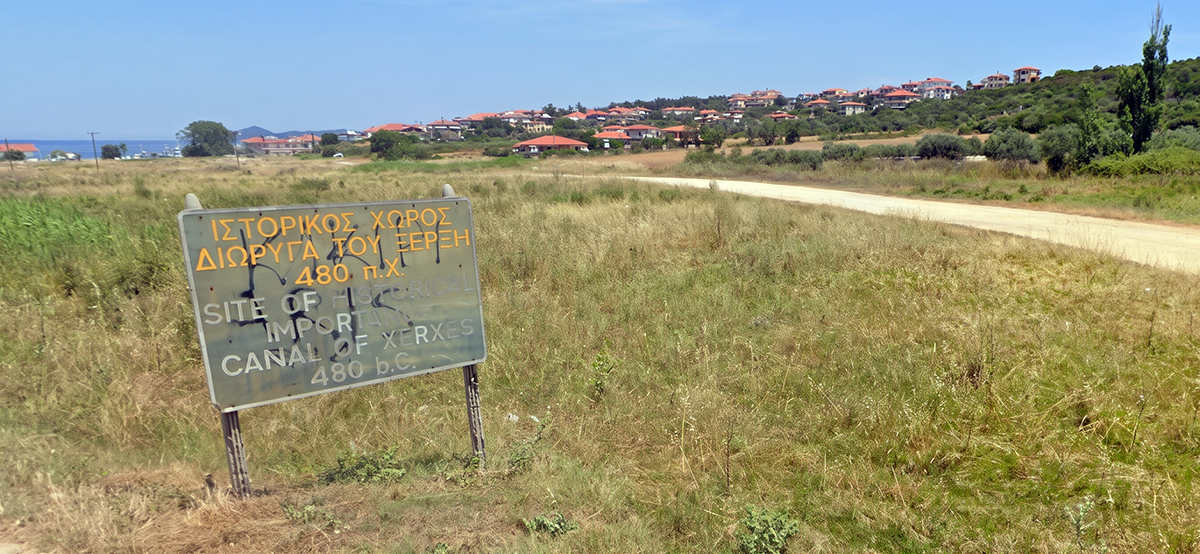
Despite the academic skepticism, archaeology in modern times did support the canal’s existence. A land survey as early as the late 18th century, led by M. Choiseul-Gouffier, provided evidence of the canal. This was followed by a survey in 1838, and another in 1901, both of which verified the claims of Herodotus.
In the 1990s, these reports were confirmed with seismic surveys and sediment analysis that showed the canal traversed the entire length of the isthmus. Any denial of Herodotus’ account had finally been debunked after more than 2000 years.
Despite the engineering marvels of the Persian Empire in its war of conquest, the end result was a complete disaster. By decisively winning major battles at Salamis and Plataea, the Greeks triumphed over the Persians, and the canal was abandoned.