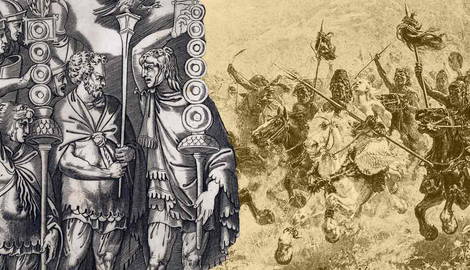

Even today, mobilizing hundreds of thousands of warriors requires unprecedented state power, agricultural surpluses, and bureaucratic discipline. Long before industrialization, ancient empires fielded war machines capable of reshaping entire continents. From the million-man forces of imperial China to the formidable legions of Rome and the war elephants of ancient India, these eight ancient armies represented the absolute pinnacle of ancient manpower, logistical brilliance, and lethal military organization.
| Empire | Peak Era | Estimated Troop Strength |
Primary Military Focus
|
| Qin Dynasty (China) | 3rd Century BC | Up to 1,000,000 |
Mass Conscript Infantry
|
| Han Dynasty (China) | 141-87 BC | 600,000-700,000 |
Standing Army and Reserves
|
| Mauryan Empire (India) | 322-185 BC | 600,000+ |
War Elephants and Infantry
|
| Gupta Empire (India) | 3rd-6th Century AD | 500,000+ |
Heavy Cavalry and Naval Force
|
| Roman Empire (Mediterranean) | 2nd-3rd Century AD | 450,000-500,000 |
Professional Legions and Auxiliaries
|
| Achaemenid Persian Empire (Middle East) | 5th-4th Century BC | 120,000-300,000 |
Immortal Guard and Cavalry
|
| Nanda Empire (India) | 4th Century BC | 225,000+ |
Elephant Warfare and Infantry
|
| Hunnic Empire (Eurasia) | 5th Century AD | 100,000+ |
Nomad Horse Archers
|
1. The Qin Dynasty Mobilized Imperial China Through Conscription
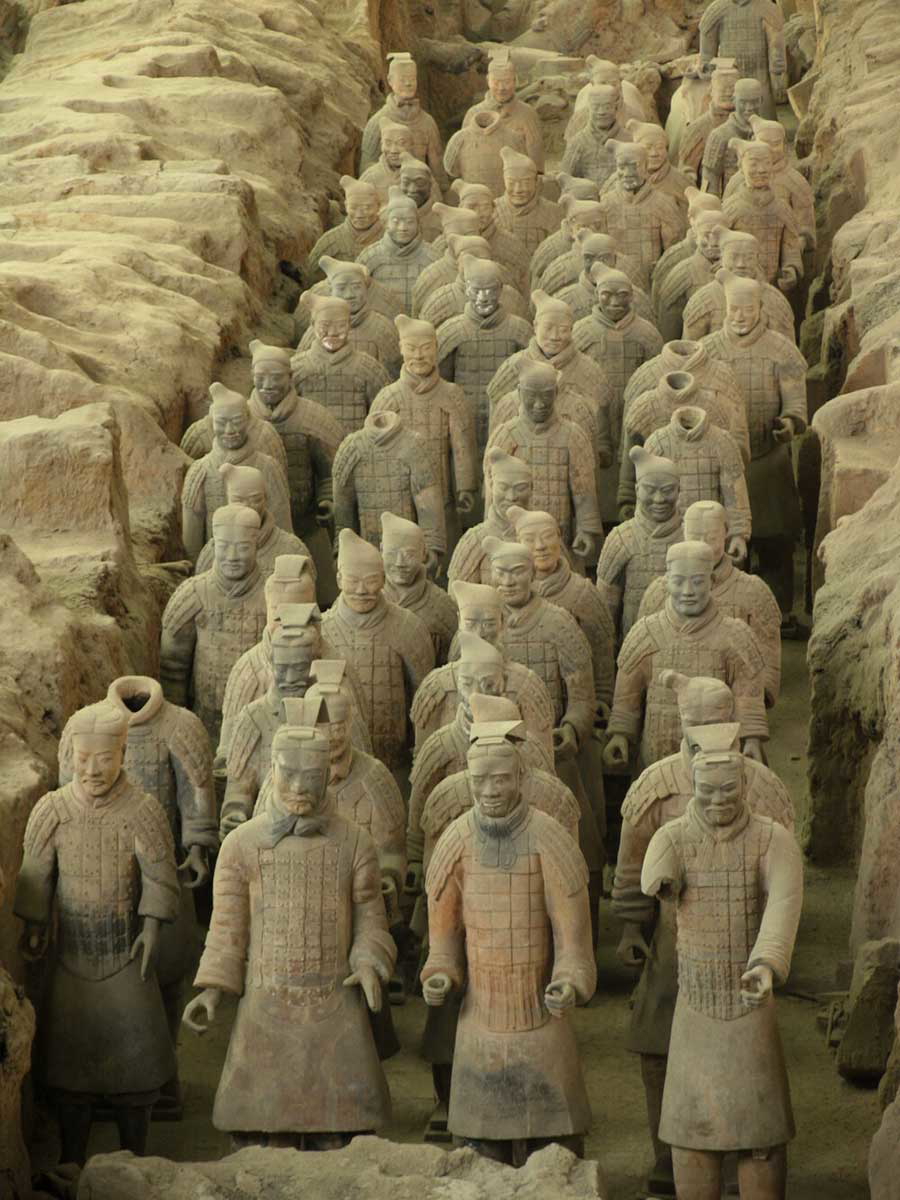
During the unification of China, Qin Shi Huang, the ruthless and formidable First Qin Emperor, raised a sizable army to expand and consolidate his empire. During the 3rd century BC, Qin forces marched eastwards to conquer rival warring states and managed to reach the Yellow Sea. The Qin relied principally on a force of infantry and maintained large garrisons to pacify conquered territory.
While accounts are not fully clear on how large his forces were, it is estimated that the Qin Emperor had as many as a million men under his command. The legalist system he developed prioritized military service and enforced conscription. The emperor discarded noble birthrights in favor of a strict 20-rank merit system based entirely on battlefield performance. Soldiers earned promotions, land, titles, and tax exemptions by collecting the severed heads of enemy soldiers.
The state also developed assembly-line manufacturing for standardized weaponry. For example, crossbow triggers were made of bronze components cast with such precise tolerances that parts were interchangeable. If a trigger broke on the battlefield, a soldier could replace the damaged component with a spare from a fallen comrade.
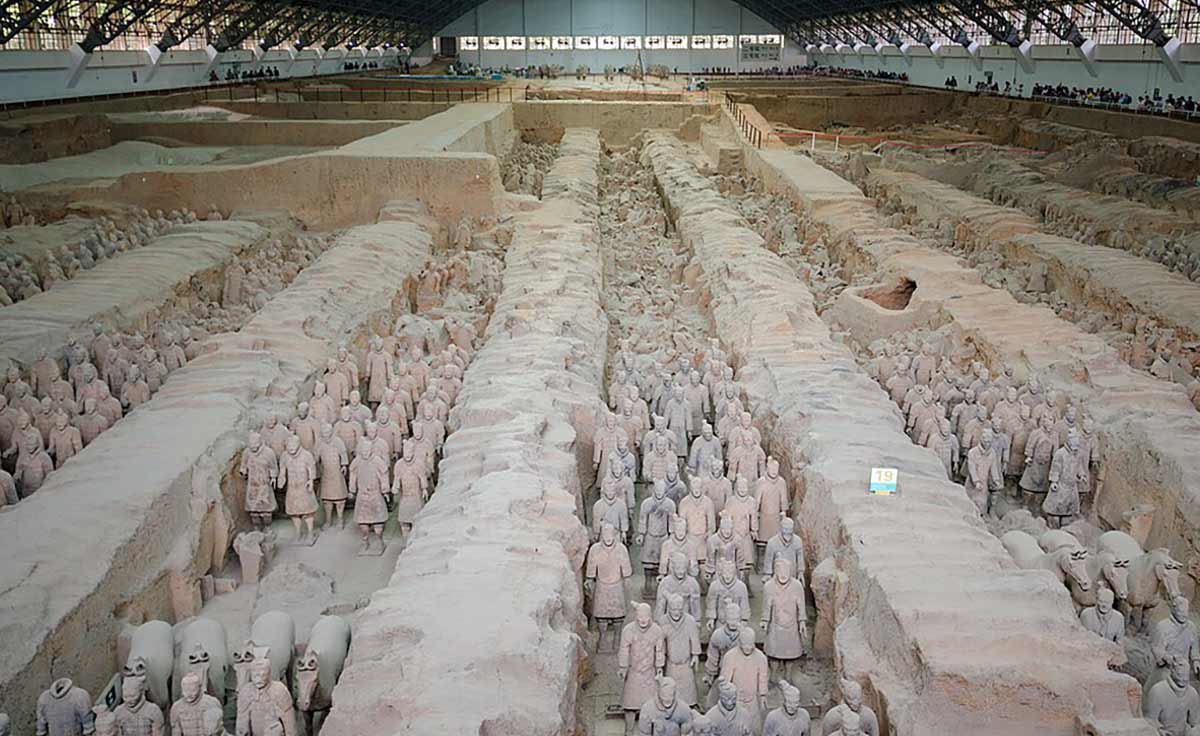
The Win emperor was so impressed by military might that he ordered the creation of the famous Terracotta Warriors in his tomb complex to guard him in the afterlife. His army was massive for its time, but it exemplified the willingness of Chinese emperors to prioritize quantity over quality in recruitment.
2. The Han Dynasty Refined China’s Military Might Through Reserves
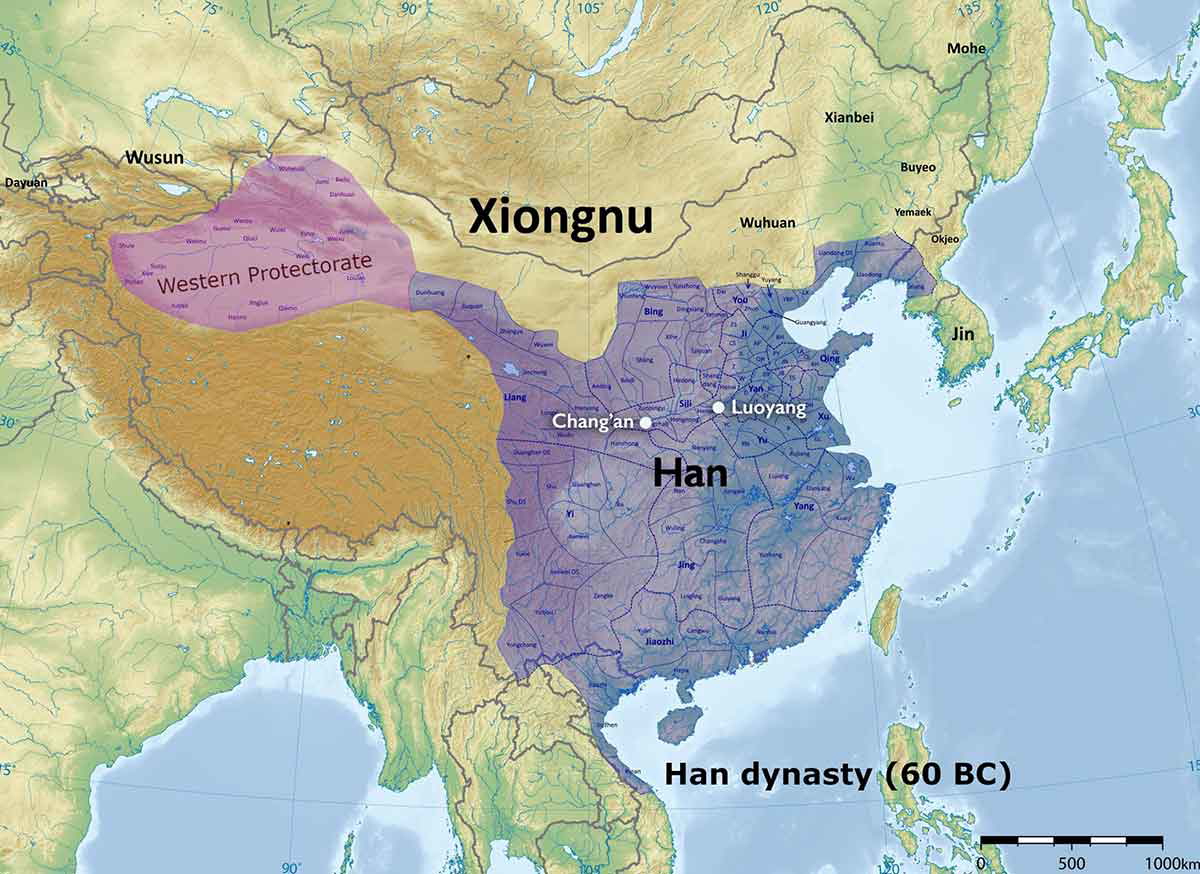
While not as large as the Qin Dynasty’s army, the Han Dynasty maintained a formidable force at the same time the Romans dominated Europe and the Levant. At its peak under Wudi (the Martial Emperor), who reigned between 141 and 87 BC, the Han Empire had between 600,000 and 700,000 men at its disposal.
Men were conscripted for two years of service, except for men linked to the royal court. After their active service, they were assigned reserve duty, meaning that they could be mobilized after their formal service was completed. To avoid the massive expense of hauling grain across deserts, the Han established military agricultural colonies where soldiers farmed their own plots during peacetime, making frontier garrisons self-sustaining.
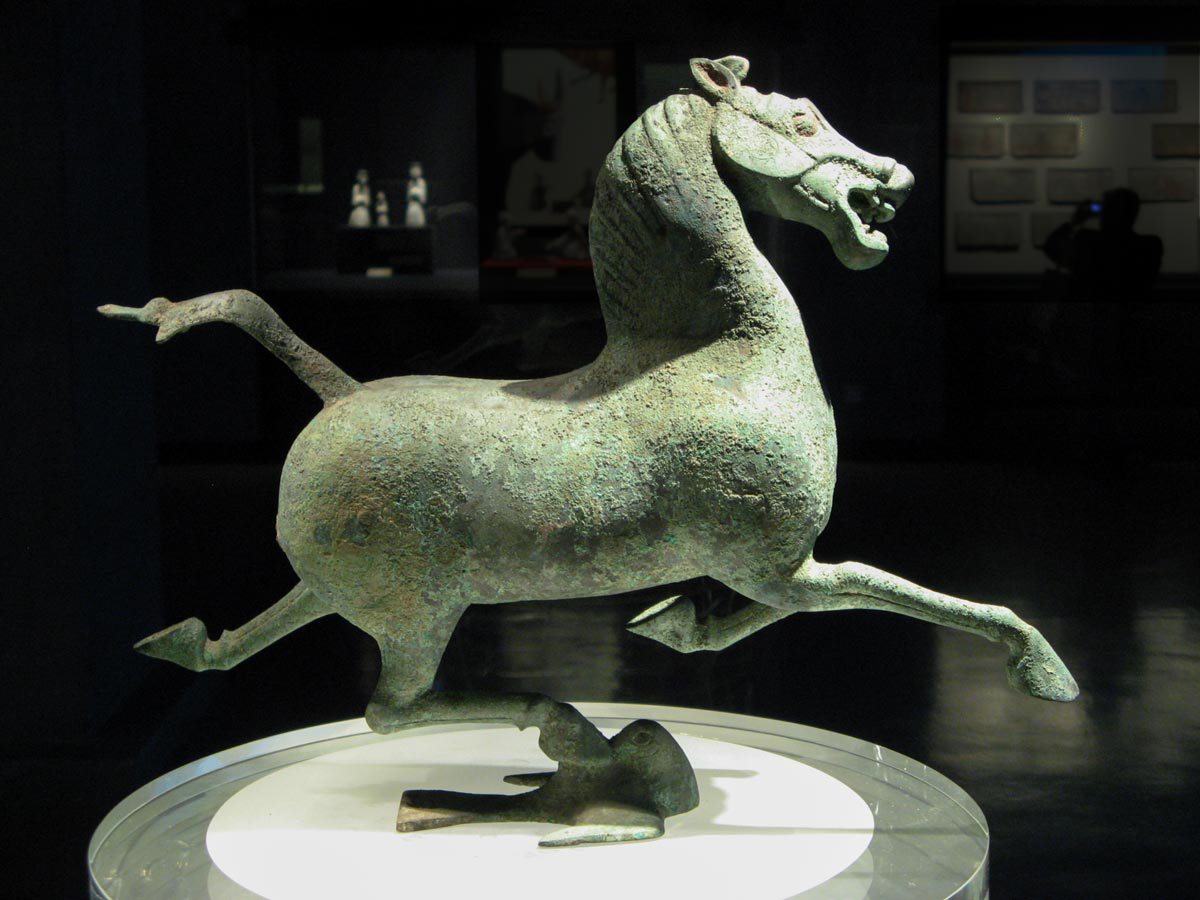
To counter the hit-and-run tactics of the nomadic Xiongnu confederation to the north, the Han military abandoned heavy war chariots in favor of cavalry. But without suitable horses native to the region, the army launched military expeditions all the way to Ferghana (modern-day Uzbekistan) to secure powerful, agile horses, which were crossbred to create superior cavalry mounts.
Over time, the Han made a similar evolution to other Chinese dynasties. It started to rely on professional soldiers and mercenaries. This cut costs and increased the force’s standards, but made it difficult to garrison every part of the empire. During this period, the Han Dynasty was considered one of the most formidable military powers on Earth.
3. The Mauryan Empire Combined Elephant War Units and Infantry
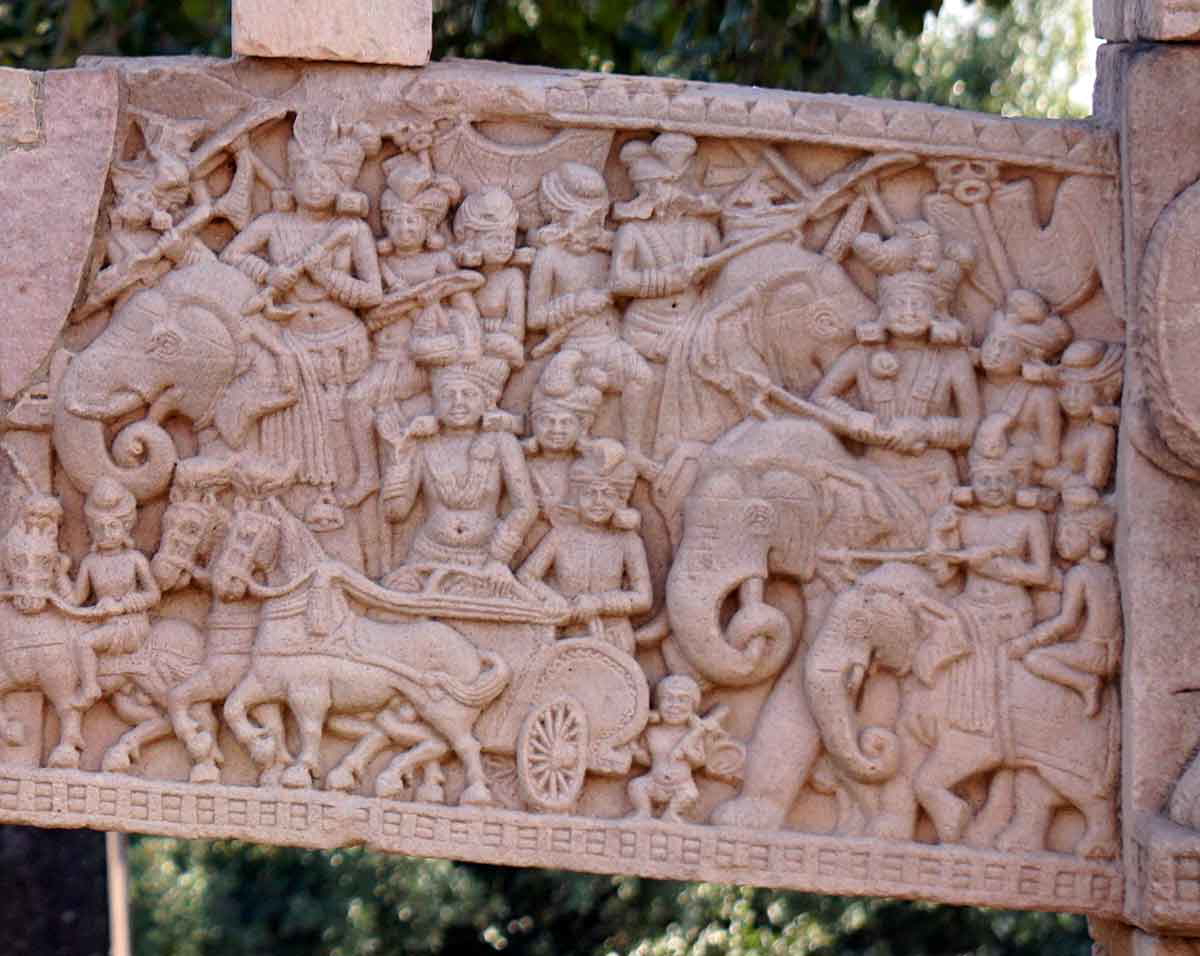
The Greek historian Megasthenes, who served as an ambassador to the Mauryan Empire in India, estimated the Mauryan army’s size to be 600,000 infantry, 30,000 cavalry, 9,000 chariots, and 8,000 war elephants. While his numbers were contested by other historians, his account is the most detailed about the number of men that Mauryan rulers could bring to bear. It relied heavily on levied conscript infantry to take and hold territory, while using cavalry to outmaneuver its enemies on the battlefield.
The Mauryan Empire dominated the majority of the territory of the Indian subcontinent and even had a War Office dedicated to supervising the organization of its military. In addition to native Indians, it relied on foreign mercenaries to bolster its forces. For 136 years, it proved to be one of the most formidable forces in Asia until its replacement by the Shunga Dynasty.
4. The Gupta Empire Dominated India with Heavy Cavalry
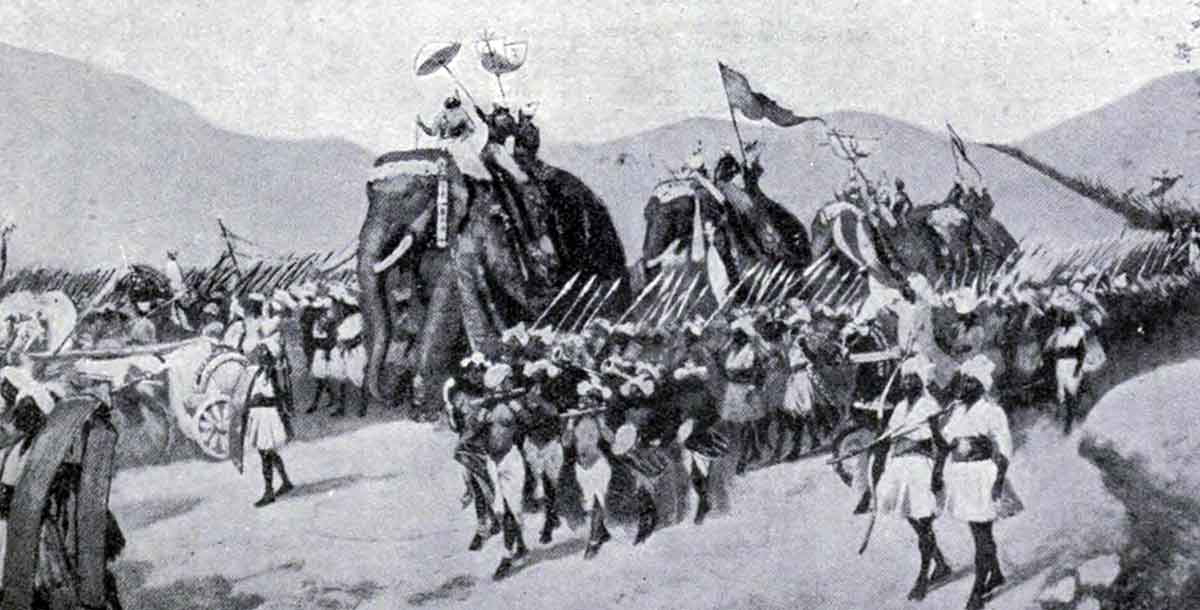
From the 3rd century to the 6th century AD, the Gupta Empire dominated parts of northern and eastern India. Its peak came during the reign of Chandragupta II and was considered one of the most effective Indian kingdoms in the history of the subcontinent. Part of this was due to the effectiveness of its large military, which enabled it to defend its territory. It had a formidable force composed of infantry, cavalry, and war elephants that could go on both offense and defense.
Contemporary sources reported that the Guptas had around 500,000 infantrymen, 50,000 cavalry, and 10,000 war elephants. Their battle experiences taught them how to use heavy cavalry as a force to devastate their enemies. At sea, the empire had a naval force that protected trade ships from its ports, which was stronger than any other regional navy. The Guptas proved to be a capable military that the Indian army emulates to this day.
5. The Roman Empire Built an Unmatched Professional Legion System
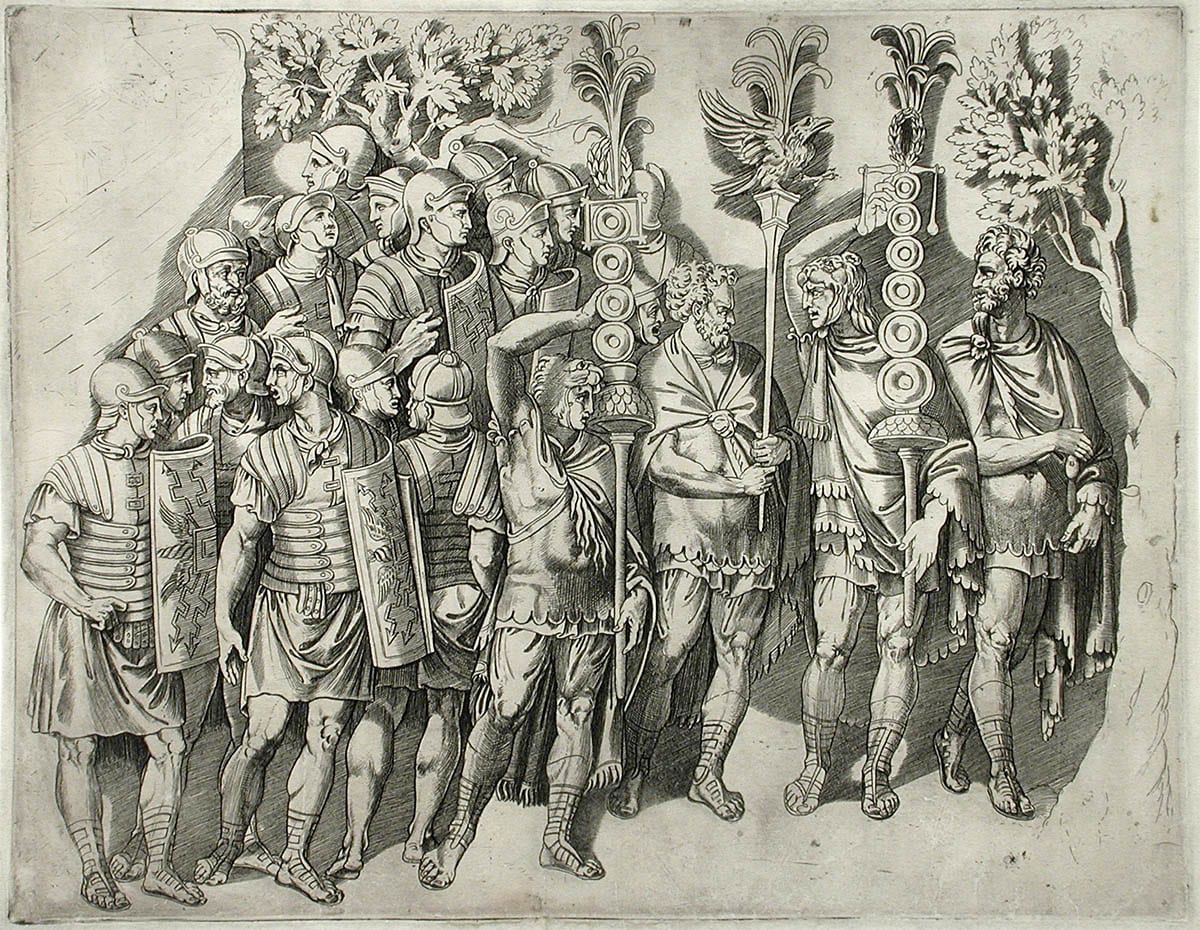
During its evolution from a Republic to an Empire, the Roman army grew massively in size. Originally recruiting only landowning citizens, in the 1st century BC, following reforms by the general Gaius Marius, the Romans began recruiting landless citizens into a more professional army, allowing it to grow significantly in size.
The army also recruited local levies from all around the empire into auxiliary units that supported the citizen core. The elite units of the empire, the Legionaries, were still recruited from the Italian heartland. The Praetorian Guard, formed to personally protect the emperor, was composed of 20,000 men, the best trained in the empire.
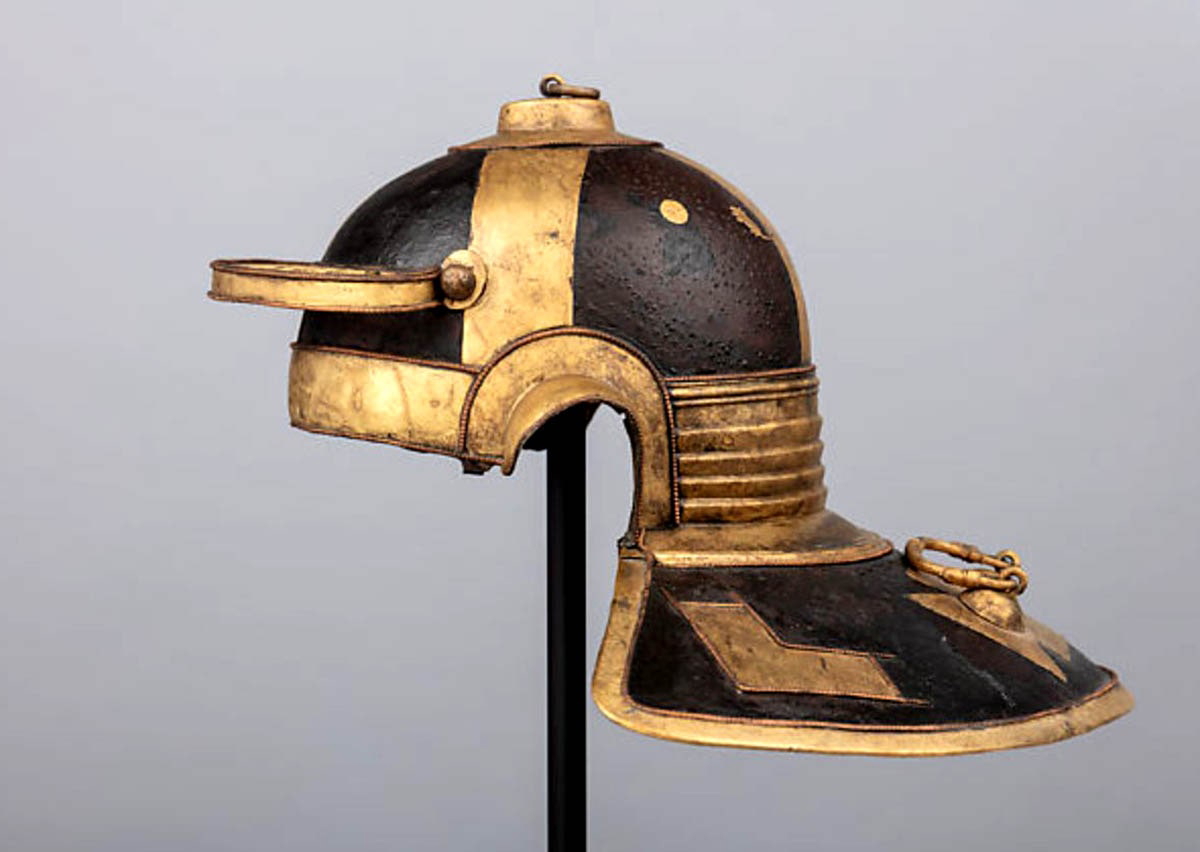
Historians consider the height of the Roman Empire to be during the reign of Emperor Septimius Severus in the late 2nd-early 3rd centuries AD. It is estimated that between 450,000 and 500,000 men served in the Roman military across the Empire. They garrisoned population centers, fought off rebellions, and conquered adversaries. The organization and tactics used by the Roman army inspired states that sought to emulate its power centuries after the fall of the Western Empire.
6. The Achaemenid Empire Deployed the Elite Persian Immortal Guard
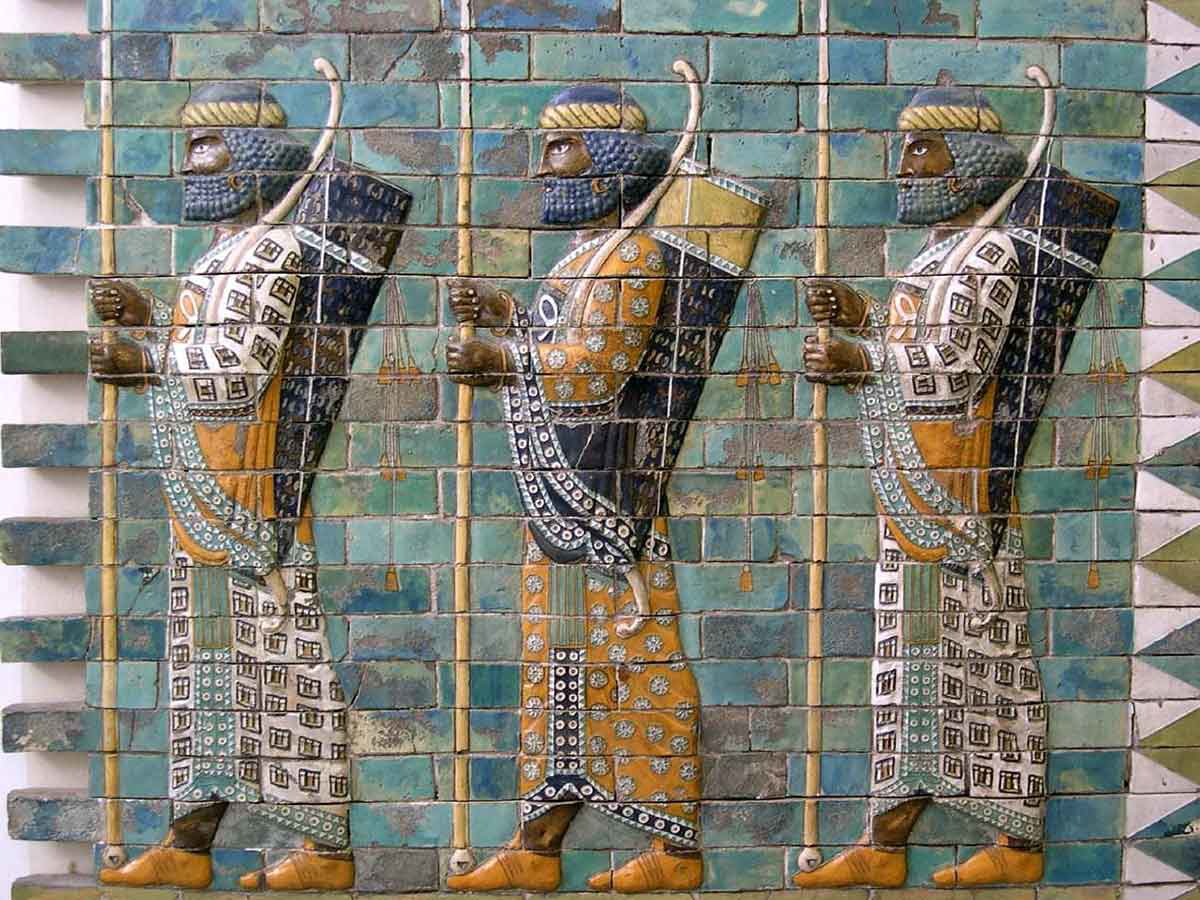
With its heartland in Persia, the Achaemenid Empire stretched from the Balkans to India at the height of its power. It battled armies in the east and west, including the forces of several Greek city-states. It was composed of an elite corps called the Immortal Guard, provincial levies from around the empire, mercenaries, and light cavalry. Greek historians such as Herodotus and Thucydides claimed that they had a million men, though that is now considered an exaggeration.
Modern historians estimate the size of the Persian army at between 120,000 and 300,000 men when Xerxes I marched on Greece, including non-combatants. Across its entire empire, the Persians could have mobilized just over 300,000 men. When Alexander the Great marched to battle the Persians, they still had hundreds of thousands of warriors available across the empire to contest the Macedonian advance.
7. The Nanda Empire Deterred Alexander the Great in India
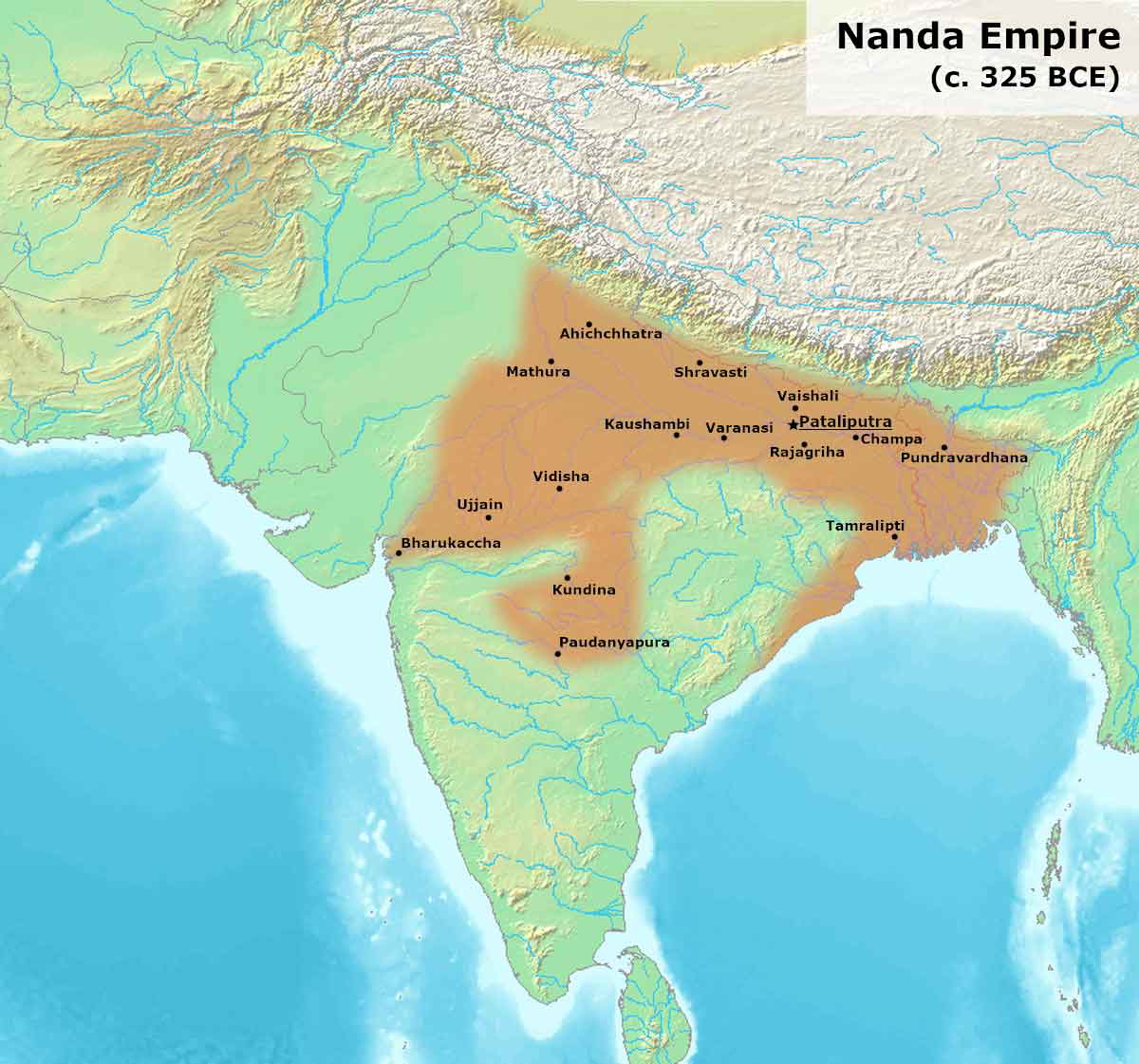
When the Macedonians marched through the Middle East and Central Asia, they found themselves battling the forces of the Nanda Empire in India. Historians argue that Alexander decided to withdraw because of the sheer size of the Nanda army. They are estimated to have controlled much of what is today central and eastern India and had a very professional military force.
Historians estimate that the Nanda army had 200,000 infantrymen, 20,000 cavalrymen, 2,000 war chariots, and 3,000 war elephants. The empire had a strong financial base of support, ensuring that it could maintain a large army. Their use of elephants apparently concerned Alexander, who was alarmed at the prospect of fighting them. Future Indian empires emulated the Nanda Empire’s battle tactics and organization.
8. The Hunnic Empire Ravaged Europe with Nomadic Cavalry
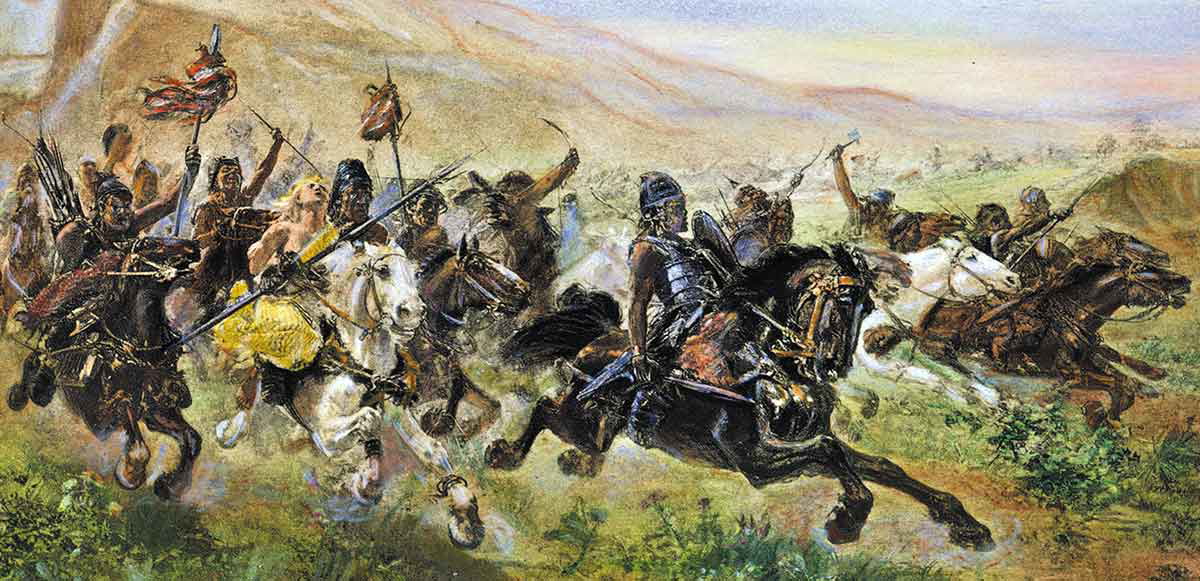
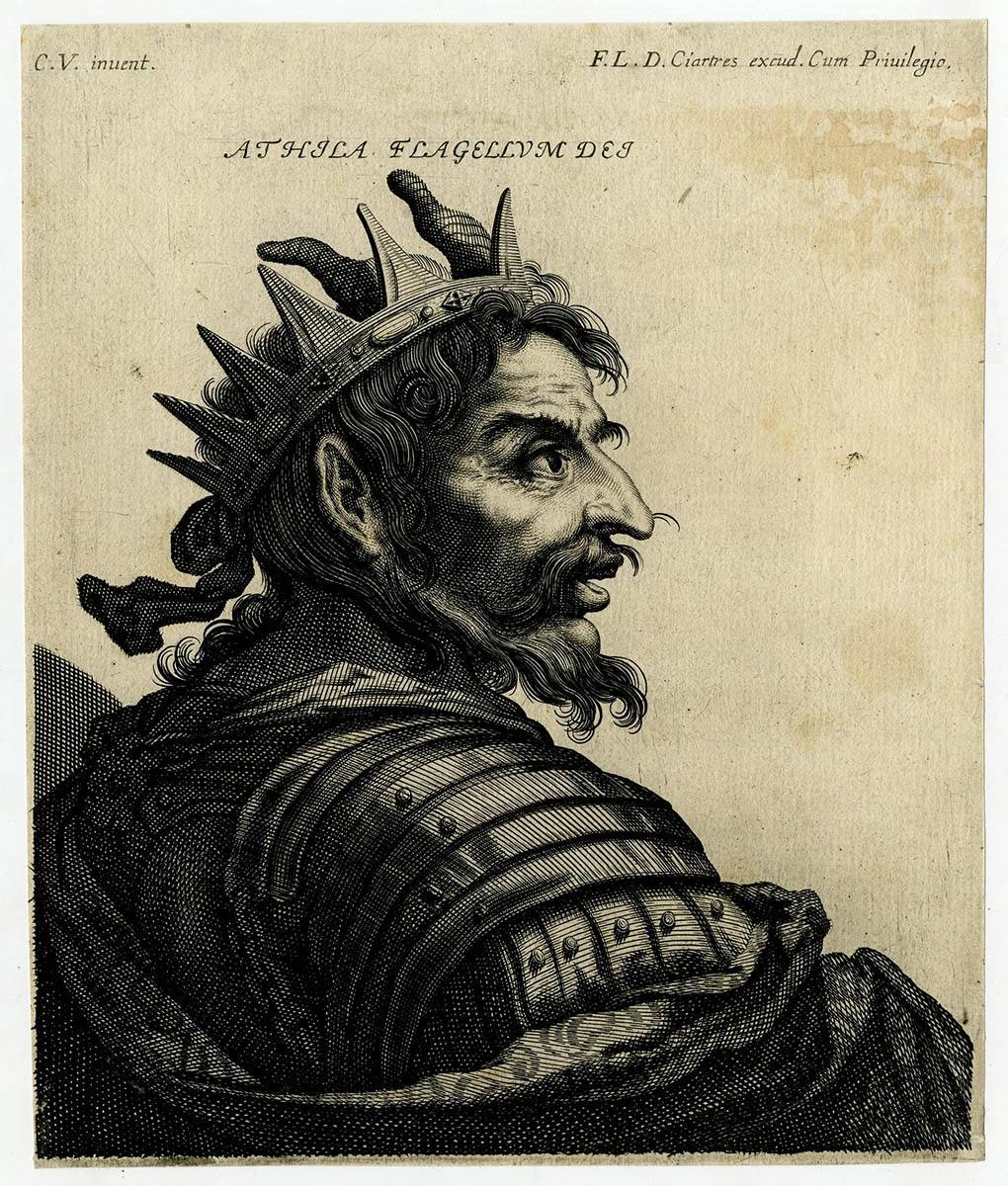
On the march from Central Asia, the nomadic leader Attila the Hun created a formidable army of Central Asian nomads, Germanic tribesmen, and other peoples from the Eastern European steppe. After initially being employed as mercenaries to defend the Roman frontier, Attila’s Huns launched aggressive attacks with swift cavalry units to ravage Europe and cause fear and chaos, making his name synonymous with the term barbarian.
Historians have struggled to come up with a clear estimate of how many men Attila commanded. When he arrived in Europe, he likely had 100,000 men under his command. However, it is possible that he had more troops stationed in his rear to guard the garrisons he had set up and to protect his subjects.
In recent years, some historians have suggested a link between the Huns of Central Asia and the Xiongnu people of the Eurasian steppe. In AD 91, the Xiongnu fled the victorious Han Chinese army and arrived in Central Asia. Their arrival coincided with the first records of Hunnic activity in Europe. Subsequent DNA analysis established a genetic link between the two peoples, suggesting that the Huns were the first Asian invaders of continental Europe. The historian Hyun Jun Kim argues that Attila’s Huns were part of a much larger Hunnic Empire which may have had hundreds of thousands of warriors under arms.