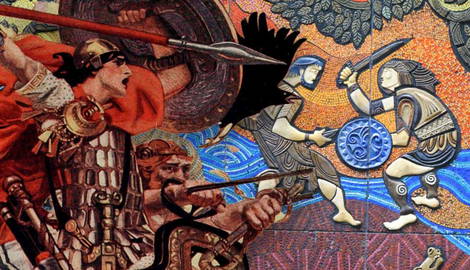

So fearsome a warrior was Cú Chulainn that before he perished in battle, he bound himself to a rock so that he could die standing up. Indomitable and unyielding, he was one of the great embodiments of Celtic heroes. Larger than life, champions such as Cú Chulainn filled the heroic epics with deeds of powerful wonder, striking fear into their enemies and inspiring awe from those who listened to the tales.
The Irish cycles and the Welsh Mabinogion represent the enduring pillars of Celtic mythological tradition, and they are replete with grand stories of heroes, villains, spectacular places, and legendary deeds.
Cú Chulainn: Ireland’s Greatest Hero
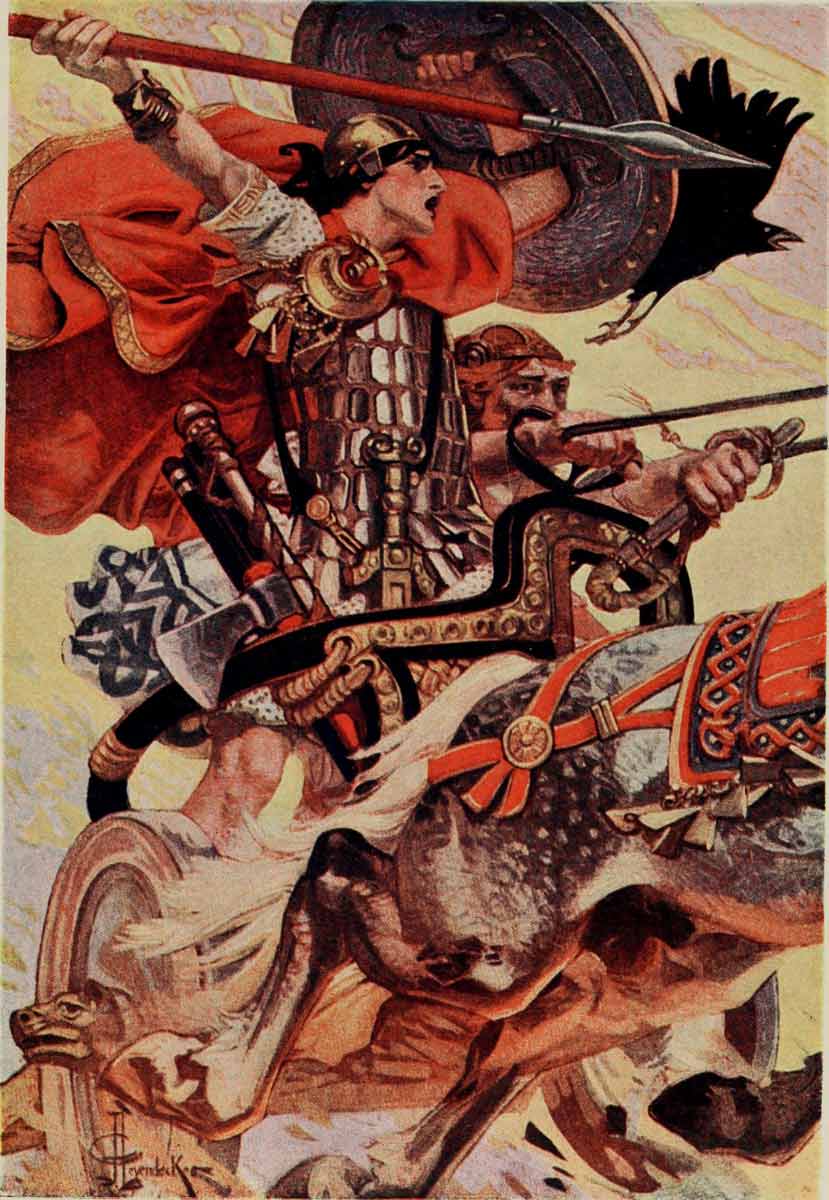
The story of Cú Chulainn represents the height of Irish warrior legends, and the tales of his life are many. His legends come from the Ulster Cycle, which tells of the heroic age of the Ulaid in northeastern Ireland, traditionally placed in the 1st century AD.
Cú Chulainn was the son of the god Lugh and Dechtire, the sister of King Conor. He was said to have seven fingers on each hand, seven toes on each foot, and as many as seven pupils in each eye. Even as a child, he was strong and was given the name “Sétante.” His more well-known name comes from the legend of how he killed a dog that attacked him. The dog’s owner, Culann, was ultimately left without the protection of his faithful friend, and in the animal’s place, Sétante vowed to protect Culann. From that day on, Sétante was known as Cú Chulainn, “Culann’s hound.”
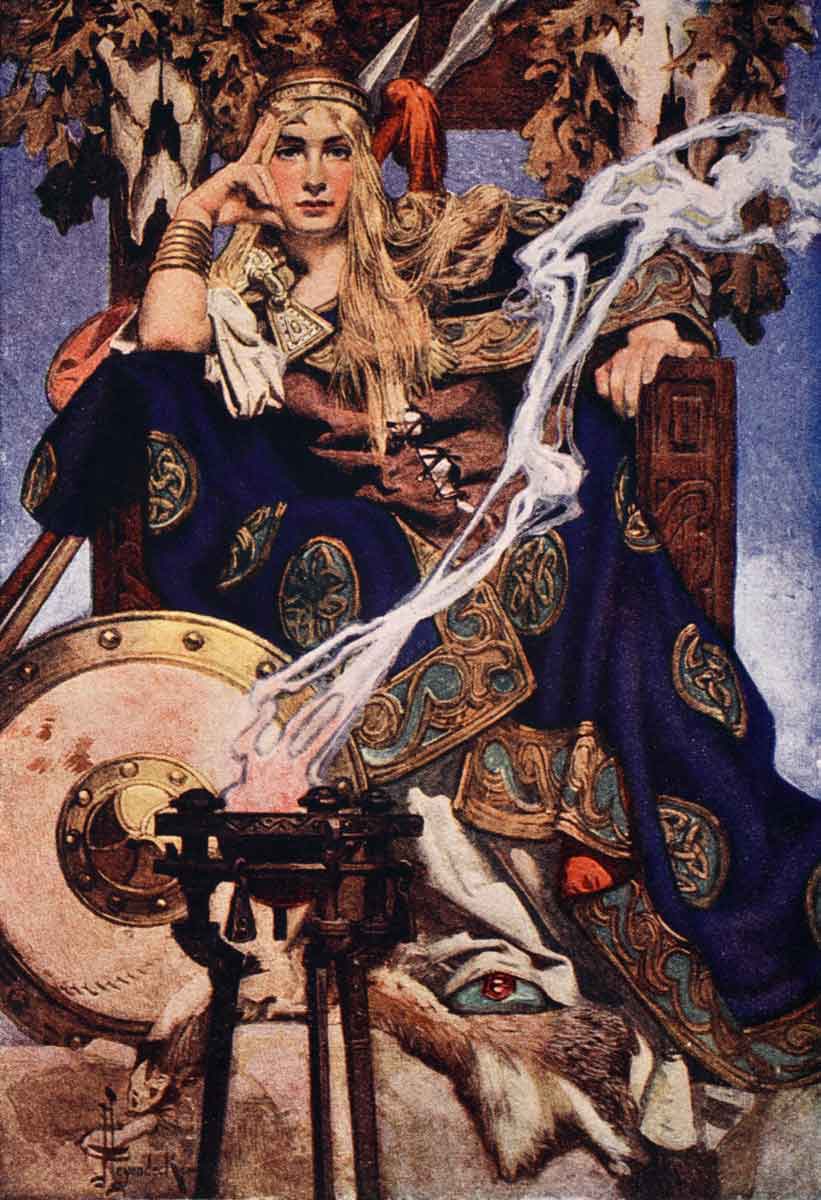
He grew to become a powerful and feared warrior of great prowess. In the story of the Cattle Raid of Cooley, the warrior Queen of Connaught, Medb (Maeve), has a disagreement with her husband, Ailill, over how much wealth they each possess. The white bull owned by Ailill is the prize of his fortune, and Medb determines she must have the most famous brown bull of Cooley from the Ulstermen. So she orders the Connaught army to march on Ulster.
At this time, the Ulstermen are struck by a strange affliction known as the Curse of Macha and become immobile with all their strength sapped, and in pain like that of childbirth. Cú Chulainn, the Ulster champion, is unaffected and remains as Ulster’s lone defender. Nevertheless, he holds off the Connaughtmen in a series of one-on-one combat.
Cú Chulainn fights for several days, culminating in an epic struggle between him and Fer Díad, his friend and foster brother, who is duty-bound to fight for Connaught. Eventually, the curse plaguing the Ulstermen lifts, and they join Cú Chulainn, routing the Connaught army. Despite the retreat, the Connaught army still manages to take the brown bull and deliver it to Medb. It defeats Ailill’s white-horned bull, and in the aftermath, peace is secured between Connaught and Ulster.
Like so many of the mythic tales, Cú Chulainn’s stories are also filled with immense tragedy. Far from being a perfect being, Cú Chulainn is flawed and very human in this regard. While in Scotland, he meets a woman named Aife and has relations with her, but Cú Chulainn returns to Ireland and marries a woman named Emer. Many years later, a young boy arrives on the coast of Ireland and disposes of the local warriors. When Cú Chulainn confronts him, the two fight, and surprisingly, the young boy is almost able to overcome Cú Chulainn, who resorts to using his magical spear to kill the boy. Upon inspecting the body, he finds the boy wearing a ring that Cú Chulainn had entrusted to Aife. It dawns on Cú Chulainn that he just killed his own unknown son.
The Death of Cú Chulainn
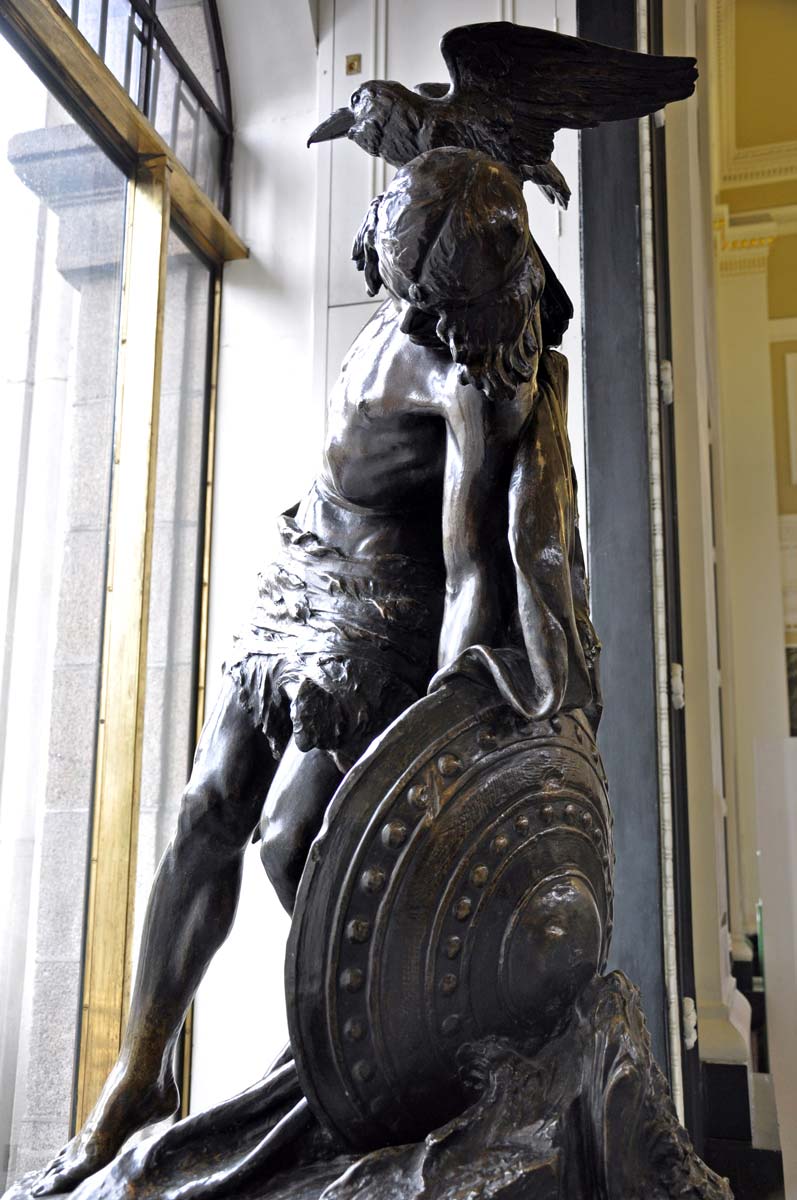
Perhaps the most heroic part of Cú Chulainn’s life was the manner of his death. He made many enemies during his life. Among them was Queen Medb, who sought revenge. She recruited the help of the three daughters of Calatin, a sorcerer who had been slain by Cú Chulainn, along with 27 of his sons.
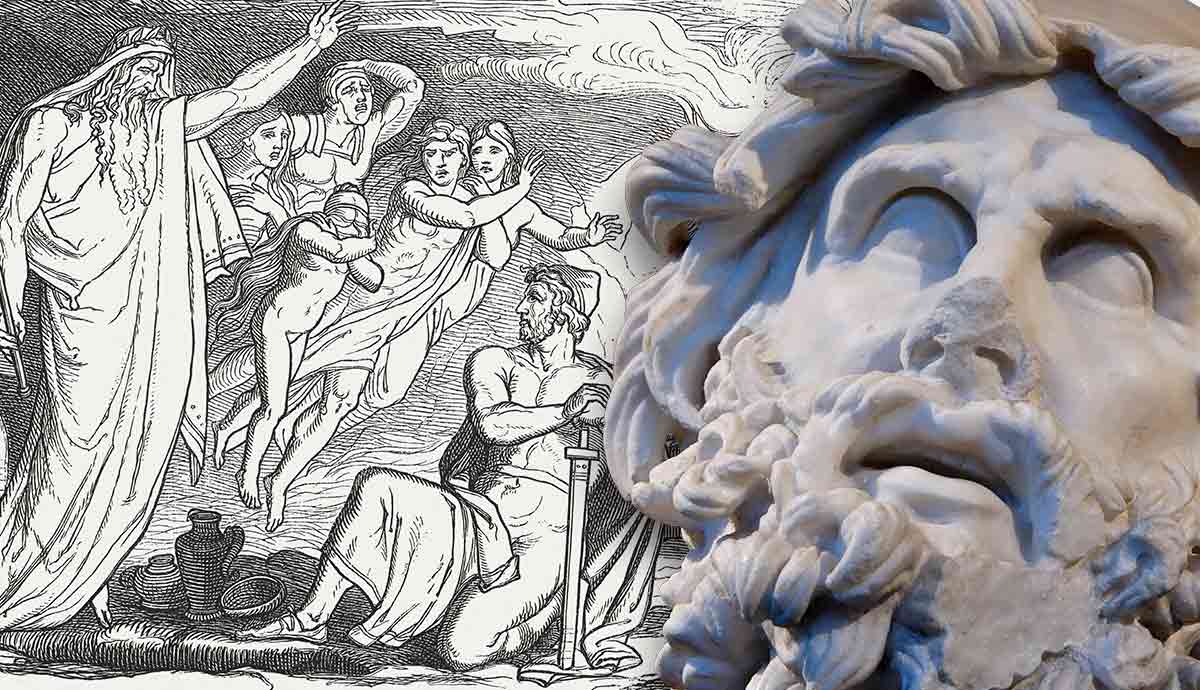
Medb sent the three daughters far and wide so they could learn the arts of sorcery, and when they returned, they besieged the Ulstermen with illusions of entire armies in an attempt to draw out Cú Chulainn. Twice, Cú Chulainn had to be talked out of attacking, but on the third attempt, Medb conjured the image of Niamh, a close friend of Cú Chulainn, and the warrior could not hold back. He rode out upon his chariot to meet the foe, but many things stood in his path before he could find his enemies.
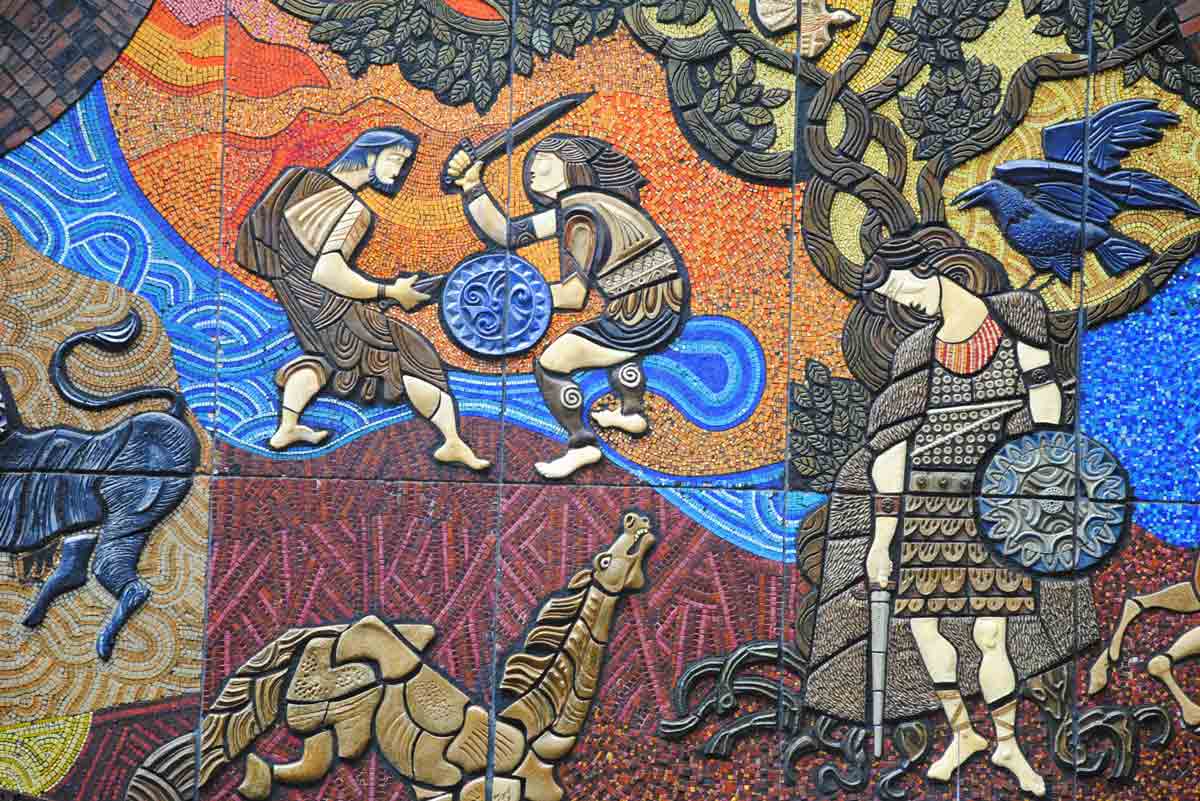
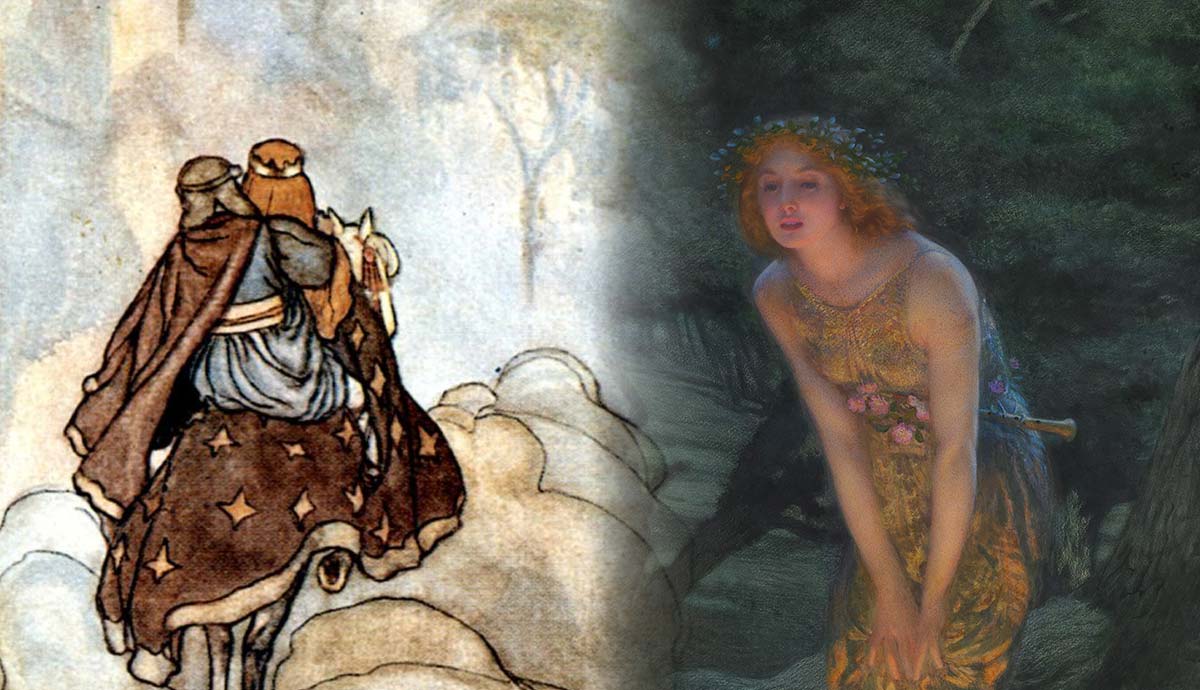
His mother tried to give him wine, but it turned to blood in his mouth. He happened upon Badb of the Sidhe, an old woman washing bloody clothes in a river, and keening, or wailing, to herself. When Cú Chulainn asked whose clothes they were, she replied that they were his. Badb thus fulfilled the myth of the banshee, foretelling death. Cú Chulainn then met three old crones who tricked him into eating dog meat, which was against his sacred vow. This magically sapped his strength. These hags were the embodiment of the Morrigan, a powerful goddess looking for revenge against Cú Chulainn for being spurned.
Contact with Medb’s soldiers resulted in a back-and-forth of spears being thrown. A warrior named Lugaid, whose father had been killed by Cú Chulainn, threw the spear that mortally wounded Cú Chulainn, spilling his intestines, and as the great warrior’s life evaporated, he tied himself to a pillar so that he could die standing up. So fearful were Lugaid and the other soldiers that it was only when a crow alighted on Cú Chulainn’s body that they knew that he was truly dead.
Many Great Irish Warriors
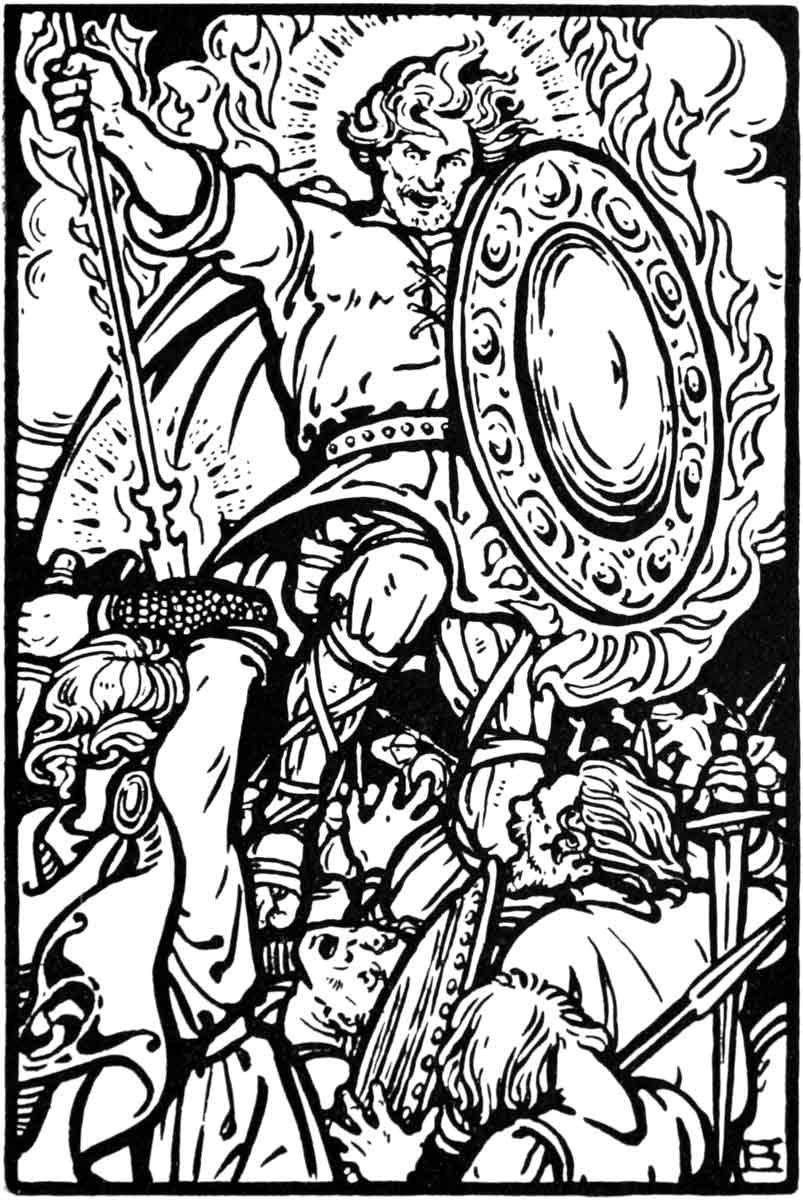
Of course, Cú Chulainn was not the only warrior of Irish myth and legend. Fionn mac Cumhaill, or “Finn McCool,” was another such warrior. He was the famed leader of a band of hunter-warriors known as the Fianna, and was said to have a magical thumb that granted him great wisdom. At the age of 10, he defeated Áillen, a fire-breathing man of the Tuatha Dé Danann, the race of godlike immortals that dwelt in the Celtic Otherworld. According to legend, Fionn never died, but sleeps in a cave surrounded by the Fianna. It is said that in the time of Ireland’s greatest need, he will wake and defend the Emerald Isle.
The contexts of heroes are not confined to the realm of mortals. Gods could also be considered heroes, and such was certainly the case for Lugh of the Long Arm. He was the grandson of Balor of the Evil Eye, the leader of the Fomorians, a race of monstrous beings at war with the Tuatha Dé Danann. At the Second Battle of Mag Tuireadh between the two races of godlike beings, Lugh faces Balor and, with a sling-stone, shoots Balor’s eye out the back of his head, causing destruction to the Fomorian army behind.
Tales of the Mabinogion
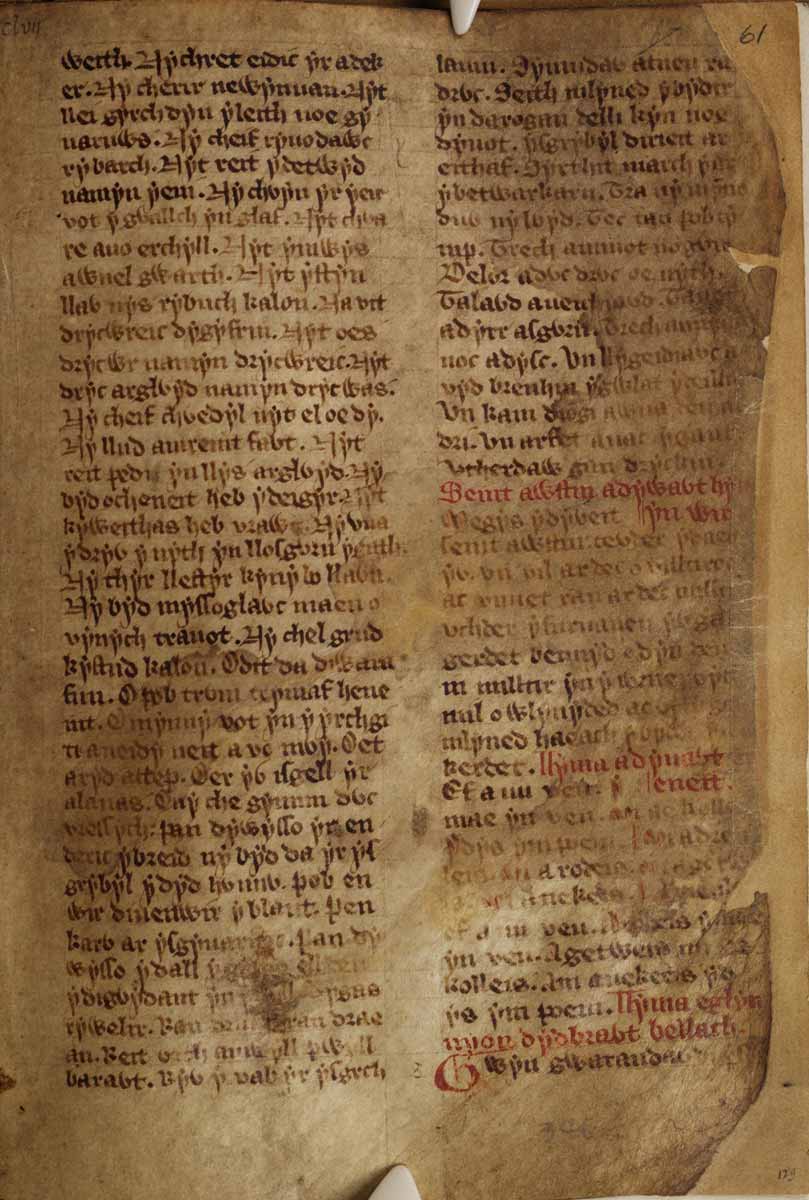
Like the heroic epics of the Irish, the Welsh have many tales of great warriors. These come from the Mabinogion, a collection of eleven stories compiled in the 12th–13th centuries from oral traditions.
One of the heroes is Pwyll, prince and later king of Dyfed, a mortal who exchanges places with Arawn, the ruler of the Otherworld realm of Annwn, and rules justly, resisting the advances of Arawn’s wife. While there, he defeats Arawn’s rival and unites Annwn under Arawn’s rule. Gaining praise and respect, he marries Rhiannon, a woman associated with being (although not explicitly stated in the Mabinogion) a goddess from the Otherworld. Their son Pryderi also becomes a heroic warrior, fighting many battles and succeeding his father as king of Dyfed.
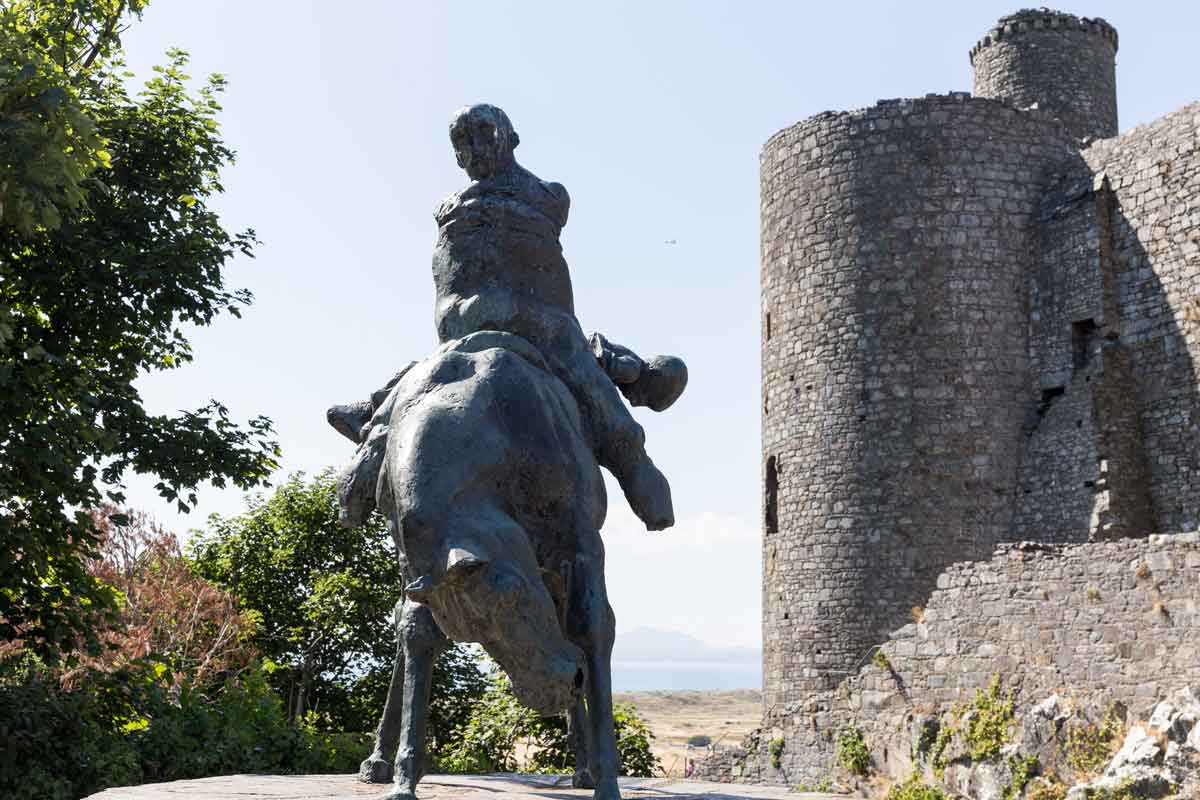
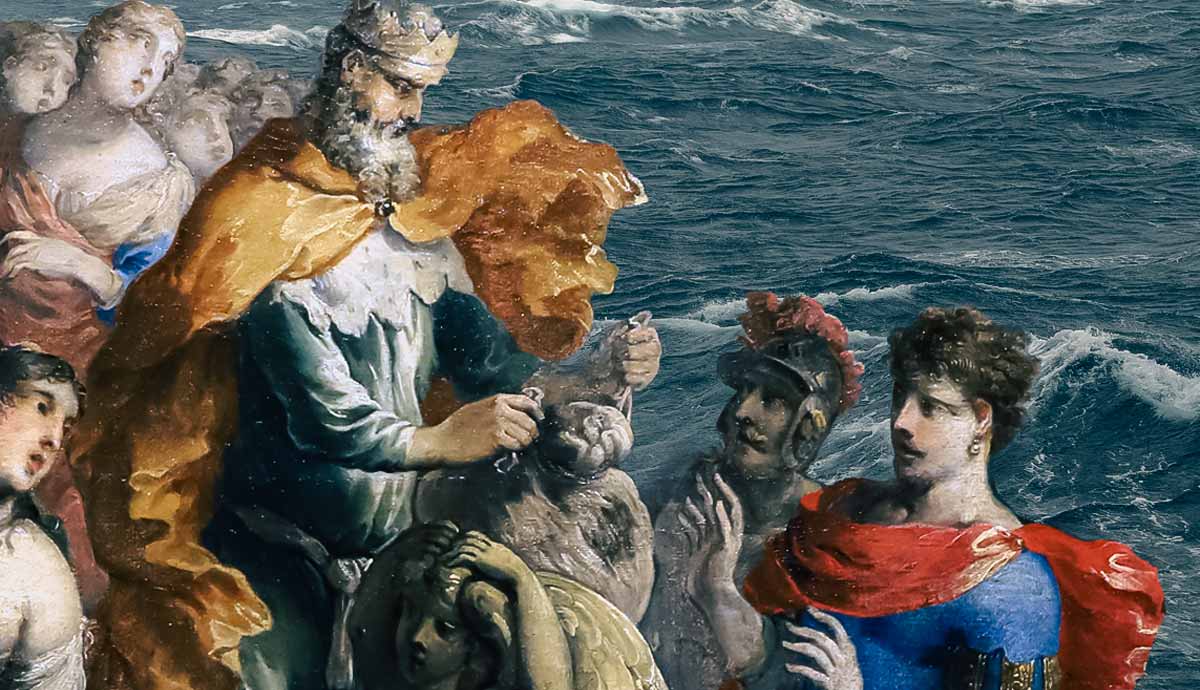
His tale coincides with the tale of Brân the Blessed, a giant and the king of Britain. In the Mabinogion, Irish king Matholwch travels to Wales and asks for the hand of Branwen, the sister of Brân. Slighted at not being consulted, their half-brother, Efnysien, mutilates Matholwch’s horses. In response, Brân gives Matholwch a magic cauldron that can revive the dead. Matholwch and Branwen are wed and reign together in Ireland. Branwen, however, is treated badly and beaten daily. She sends a message across the Irish Sea, and Brân musters an army to rescue his sister. So large is Brân that he wades across the sea while his army has to sail.
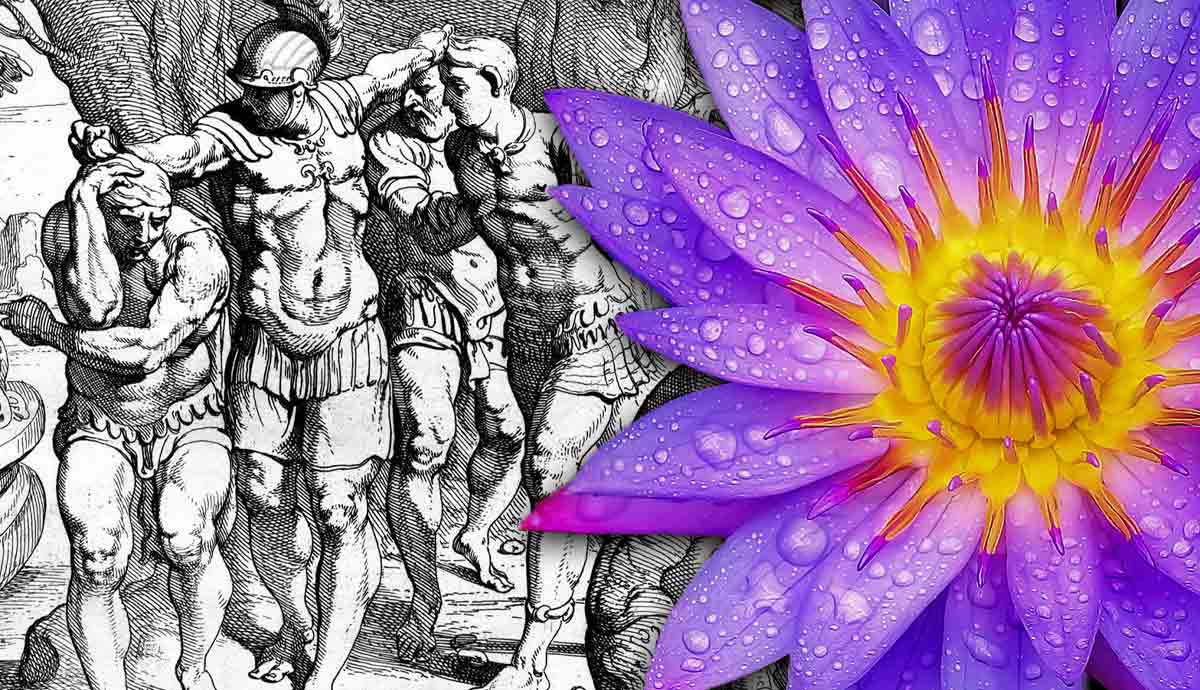
The Irish offer peace and build a hall large enough to entertain Brân and his men, but inside, they hang bags containing Irish warriors, ready to murder their guests. Efnysien, however, discovers the plot and crushes the warriors’ skulls. Later, at the feast, he murders Gwern, the son of Matholwch and Branwen, by tossing him into the fire. A massive battle breaks out with many casualties on both sides.
The Irish, however, are able to revive their dead using the cauldron, so Efnysien hides in the pile of Irish bodies and is thrown into the cauldron. He destroys it from the inside and sacrifices himself in the process. Brân the Blessed is mortally wounded, and his head is cut off and taken back to Wales. Only seven men survive the battle, of which Pryderi is one. Branwen dies from a broken heart. The survivors spend seven years in Harlech, accompanied by Brân’s head, which frequently talks to them.

Brân’s brother, Manawydan, is famous in his own right and also survived the battle. He marries Pryderi’s widowed mother, Rhiannon, and plays an important part in combating an enchantment that is placed over Pryderi’s realm. The land becomes desolate, and Pryderi and Rhiannon are imprisoned by a man seeking revenge. Manawydan figures out who imposed the curse and outwits him, convincing him to lift it.
Of course, there are many more tales of heroic deeds, but unlike the Irish legends, which often emphasize might and strength, the Welsh tales tend to focus more on guile and defeating enemies through clever thought.
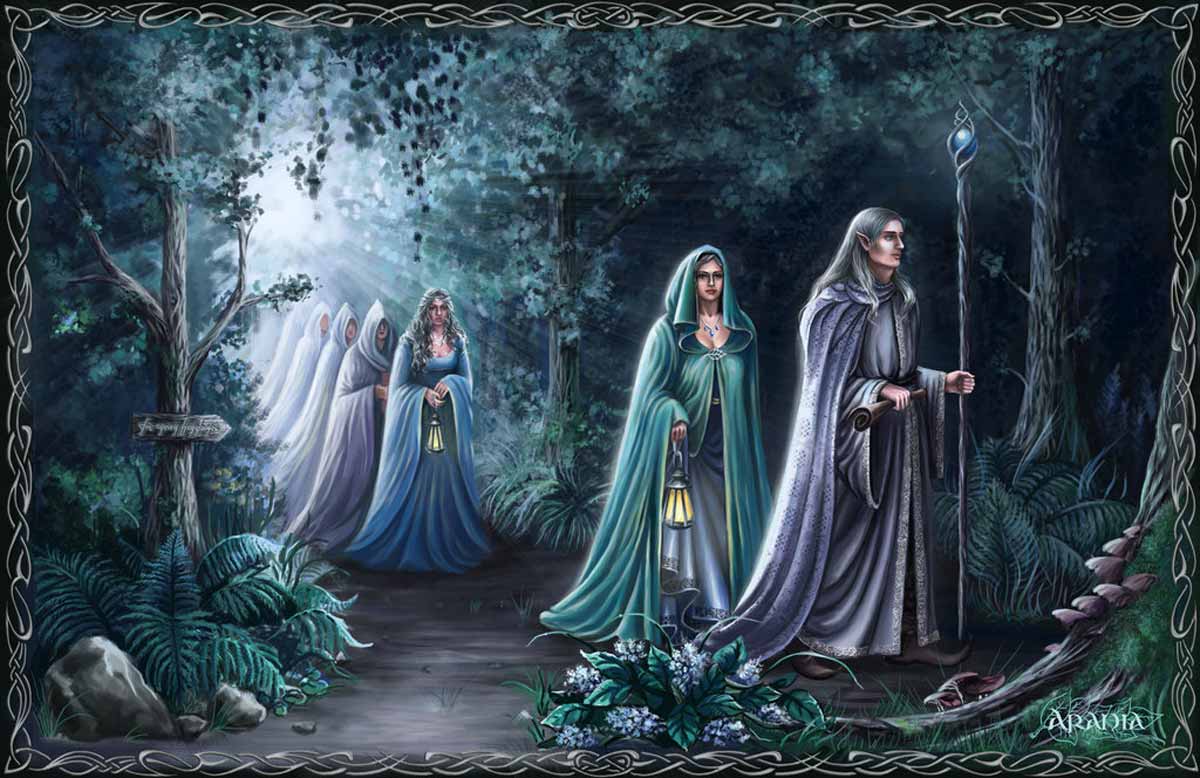
Existing in the background of society for many centuries, Irish and Welsh tales were preserved by Christian monks long after the pre-Christian societies of Celtic myth had evolved into a new era. They became prominent once again during the Celtic Revival movement of the 19th and early 20th centuries, when interest in the old Celtic cultures and “race” exploded in the socio-political scenes of the British Isles.
Reinvigorated and transformed to fit modern interpretations, these traditions have found a strong foundation in current media. Not only are their tales repeated, but they have formed a staple of influence for the fantasy genre, with Celtic tropes featuring heavily in the works of J.R.R. Tolkien and beyond.