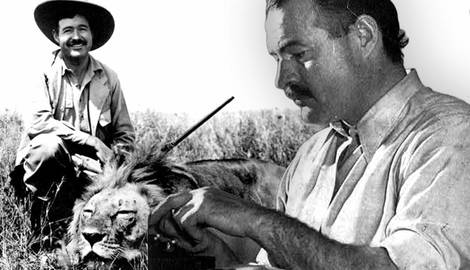

Ernest Hemingway was both an ambulance driver for the American Red Cross Ambulance Service in Italy during World War I and a foreign correspondent who became captivated by bullfighting. He had a naturally adventurous spirit and was well-traveled. His father taught him to hunt and fish from an early age, which later developed into a love for game hunting. Despite marrying four different women in his life, perhaps his greatest love was Cuba, where he lived longer than anywhere else. Hemingway’s memorable experiences found their way into his works.
Ernest Hemingway and the Iceberg Theory
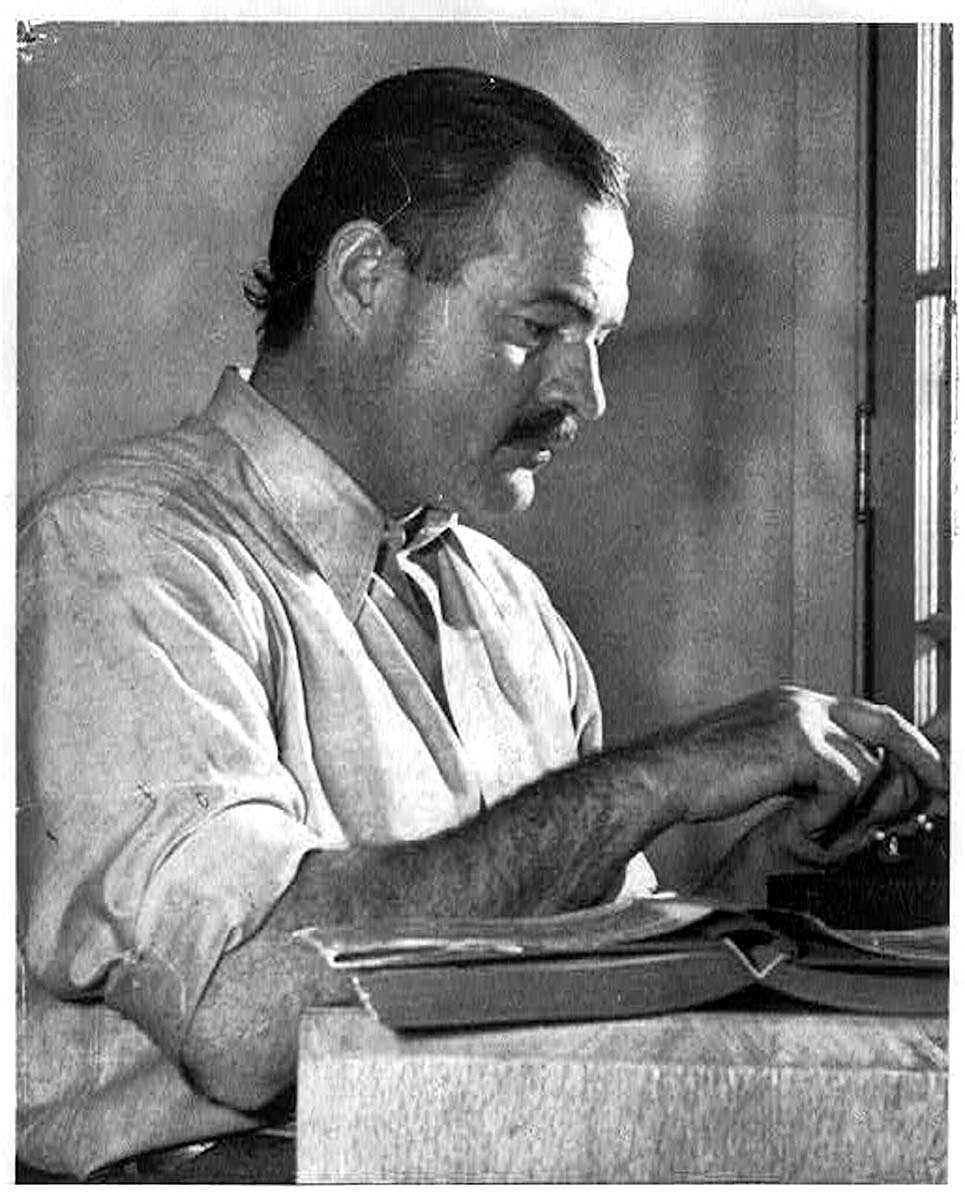
The Iceberg Theory, or the Theory of Omission, is a writing technique coined by Ernest Hemingway. Hemingway believed that by omitting seven-eighths of a story, or by leaving it underwater, it would, in turn, strengthen the story by allowing readers to infer hidden meanings in the text. Hemingway developed this style of minimalism during his time as a reporter for The Kansas City Star, where he worked after high school, and as a foreign correspondent for the Toronto Star after he moved to Paris in 1921.
Since Hemingway believed authentic emotion was universally recognizable, a writer should therefore know enough about what they are writing about and be able to omit details. This will, in turn, reveal more about the story and its characters in the mind of the reader. For Hemingway, this could only be achieved if a writer selected the right details from their own lived experiences.
Hemingway in World War I and “A Farewell to Arms”
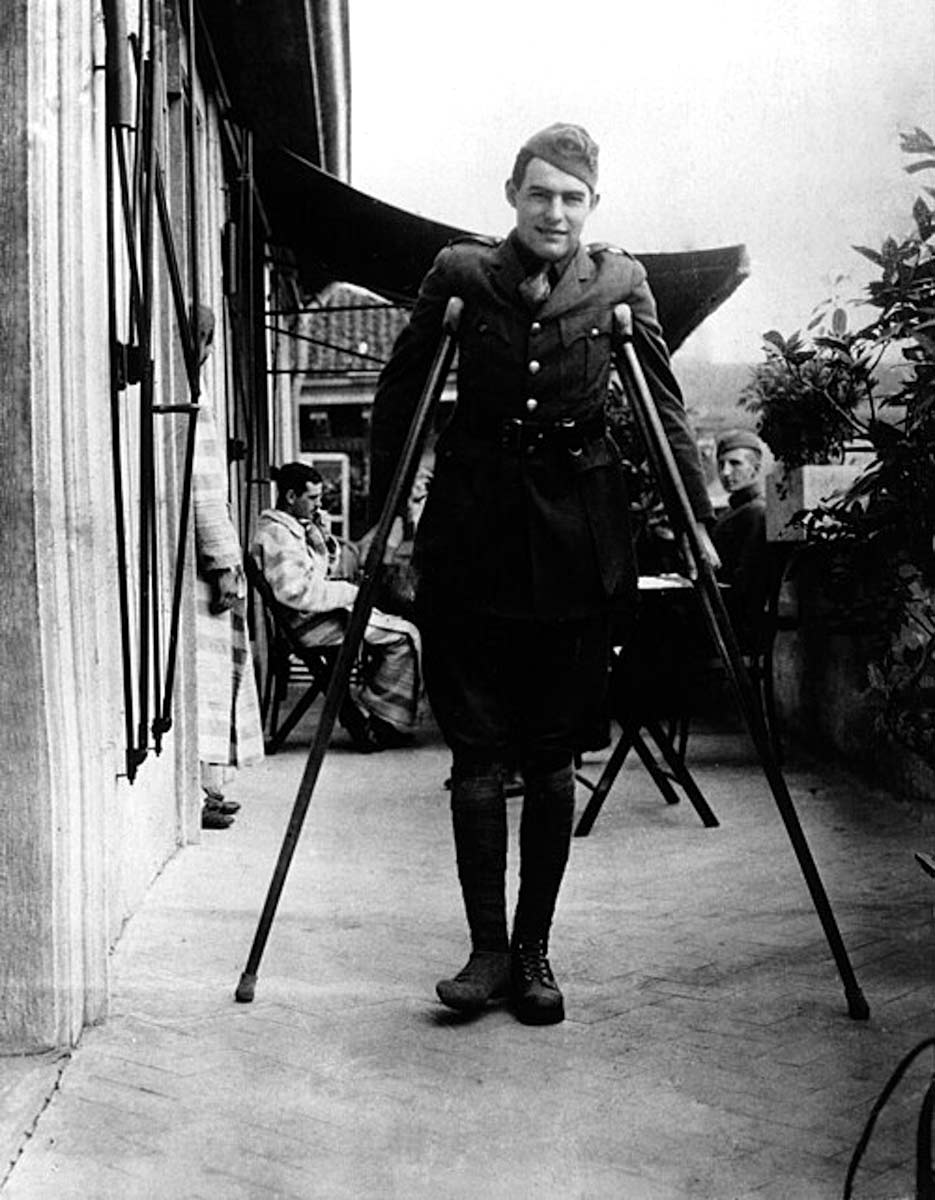
In 1917, when the United States entered World War I, an eager seventeen-year-old Ernest Hemingway was denied the opportunity to enlist due to poor eyesight. Determined to reach the front lines regardless, he volunteered with the American Red Cross Motor Corps and was sent to Italy as an ambulance driver, arriving in Milan in May 1918.
Hemingway’s daily duties involved delivering items like coffee, chocolate, cigarettes, and postcards to soldiers in the trenches. On July 8, 1918, while he was carrying out his duties near the Piave River, an Austrian mortar shell landed beside him. Despite sustaining shrapnel wounds to his legs and suffering a concussion, he still picked up a wounded Italian soldier and carried him out of the dugout. For his actions, he was awarded the Italian War Merit Cross and the Italian Silver Medal of Military Valor.
Hemingway spent much of the remainder of the war recovering in the American Red Cross Hospital in Milan. He was cared for by Agnes von Kurowsky, an American Red Cross Nurse, with whom he had a brief romance. Kurowsky later served as the inspiration for Catherine Barkley in his 1929 novel, A Farewell to Arms, with Hemingway himself taking on the role of Frederic Henry. The novel draws many parallels between his own experiences during World War I, including being wounded by mortar fire and developing a relationship with the nurse who cared for him.
In reality, Kurowsky was transferred to a hospital in Florence. While they continued exchanging letters and discussing marriage, Kurowsky ultimately broke off the relationship, leaving Hemingway devastated after his return to the United States. In the book, Catherine gets pregnant, gives birth to a stillborn child, and dies during childbirth, immortalizing Hemingway’s pain from his split with Kurowksy.
The Festival of San Fermín and “The Sun Also Rises”
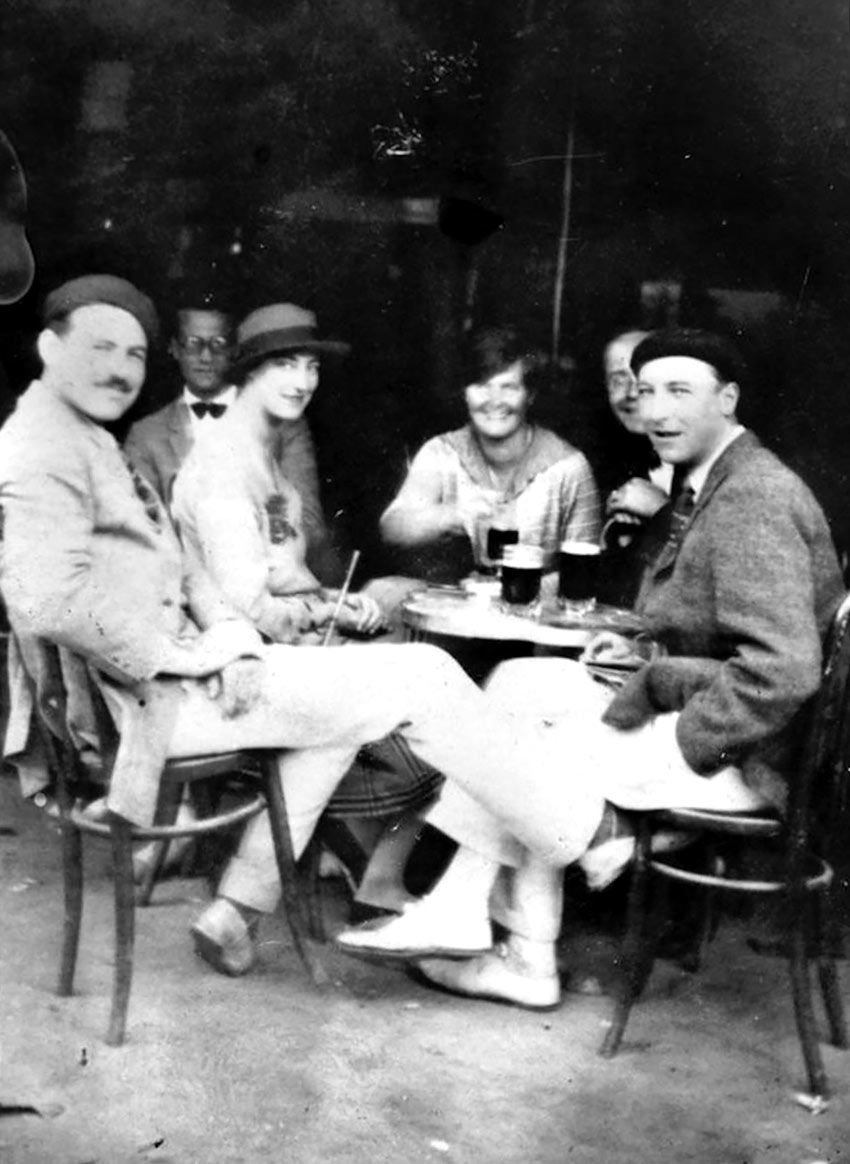
The Fiesta de San Fermín is an annual festival held in Pamplona, Spain, that honors the city’s first bishop and patron saint, Saint Fermín. The festival begins at noon on July 6 and ends at midnight on July 14. A key highlight of the festival is the daily running of the bulls, an aspect that Hemingway was fascinated by upon his first attendance of the festival in 1923. Hemingway attended the festival with his first wife, Hadley Richardson, returning the following year in 1924, and again in 1925. Shortly after the festival ended in 1925, Hemingway began working on what would become his first novel, The Sun Also Rises, completing it in only eight weeks.
The core group who attended the festival in 1925 were Hemingway, Lady Duff Twysden, Harold Loeb, and Pat Guthrie. They were fictionalized in the novel as Jake Barnes, Lady Brett Ashley, Robert Cohn, and Mike Campbell, respectively. Much like in the novel, tension arose in real life, with Lady Duff Twysden at the center of it. Although she was traveling with Pat Guthrie, she had begun an affair with Harold Loeb. The heavy drinking and tension in the book were real-life occurrences. Loeb became possessive of Twysden, which isolated him from the rest of the group. Altercations broke out between Loeb, Hemingway, and Guthrie.
Although Hemingway sustained injuries from World War I, they did not leave him unable to have sex like Jake Barnes in the novel. Jake’s impotence reflects the Lost Generation’s psychological wounds from World War I. Men who returned from war struggled to reclaim traditional ideas of masculinity, heroism, and purpose. Instead, they were left without meaning in a world transformed by violence and disillusionment.
This symbolism is further emphasized through the Spanish matador, Cayetano Ordóñez, who, in the novel, is known as Pedro Romero. Unlike the moral decay of the foreign visitors, Romero represents discipline, courage, and a clear sense of identity, untouched by the confusion that defined the postwar Lost Generation.
Kilimanjaro’s Frozen Leopard and “The Snows of Kilimanjaro”
The opening of Hemingway’s 1936 short story, The Snows of Kilimanjaro, references a frozen leopard on Mount Kilimanjaro’s western summit. In 1926, a Lutheran pastor named Richard Reusch discovered a mummified frozen leopard with its paws curled up in the snow along the crater rim of Kibo Peak, Kilimanjaro’s highest volcanic cone. The remains of a goat were found a few hundred feet away from the leopard. Reusch speculated that the leopard pursued a goat up Kilimanjaro before succumbing to environmental conditions. Reusch returned the following year and removed one of the leopard’s ears to keep as a memento. Upon Reusch’s later return, however, the leopard was nowhere to be found with no explanation to follow. Despite its unexplained disappearance, it has been epitomized in Hemingway’s story.
The Snows of Kilimanjaro follows Harry, a writer dying of gangrene, who is stranded on safari in Africa with his wife Helen. Hemingway and his second wife, Pauline Pfeiffer, went on a ten-week-long safari to Kenya in December of 1933. They departed from Marseille and sailed for two weeks before arriving in Mombasa. From there, they visited Nairobi and Machakos in Kenya, then moved on to the Serengeti and the Lake Manyara region in what was then known as the Tanganyika Territory, now Tanzania.
In January 1934, Hemingway fell seriously ill due to amoebic dysentery, which caused a prolapsed intestine. Unlike Harry in The Snows of Kilimanjaro, Hemingway was evacuated by plane to Nairobi for medical treatment. By mid-January, Hemingway had recovered enough to return to Tanganyika Territory to commence hunting. This ten-week-long trip to Africa provided Hemingway with enough material to write his second work of nonfiction, Green Hills of Africa, as well as two of his most famous short stories, The Snows of Kilimanjaro and The Short Happy Life of Francis Macomber.
Game Hunting and “The Short Happy Life of Francis Macomber”
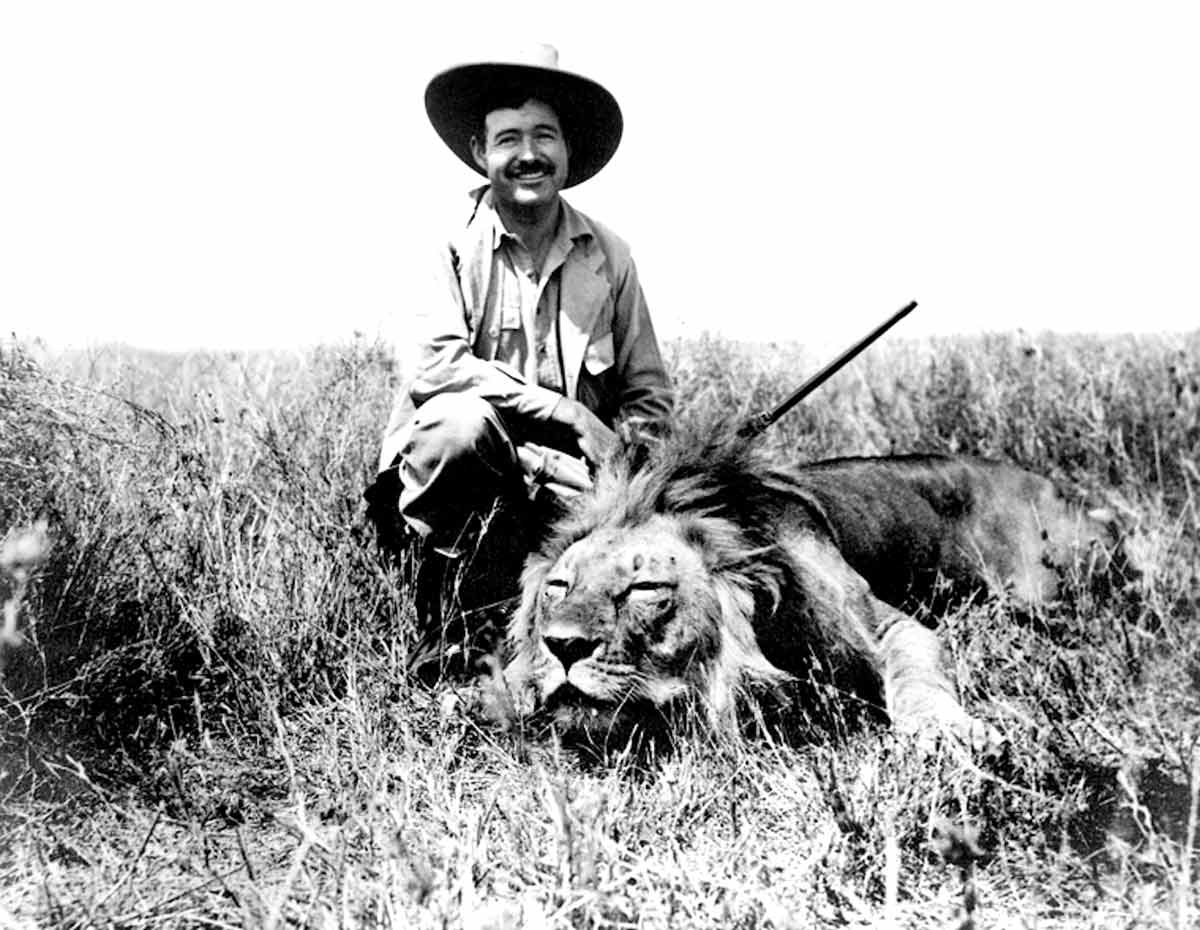
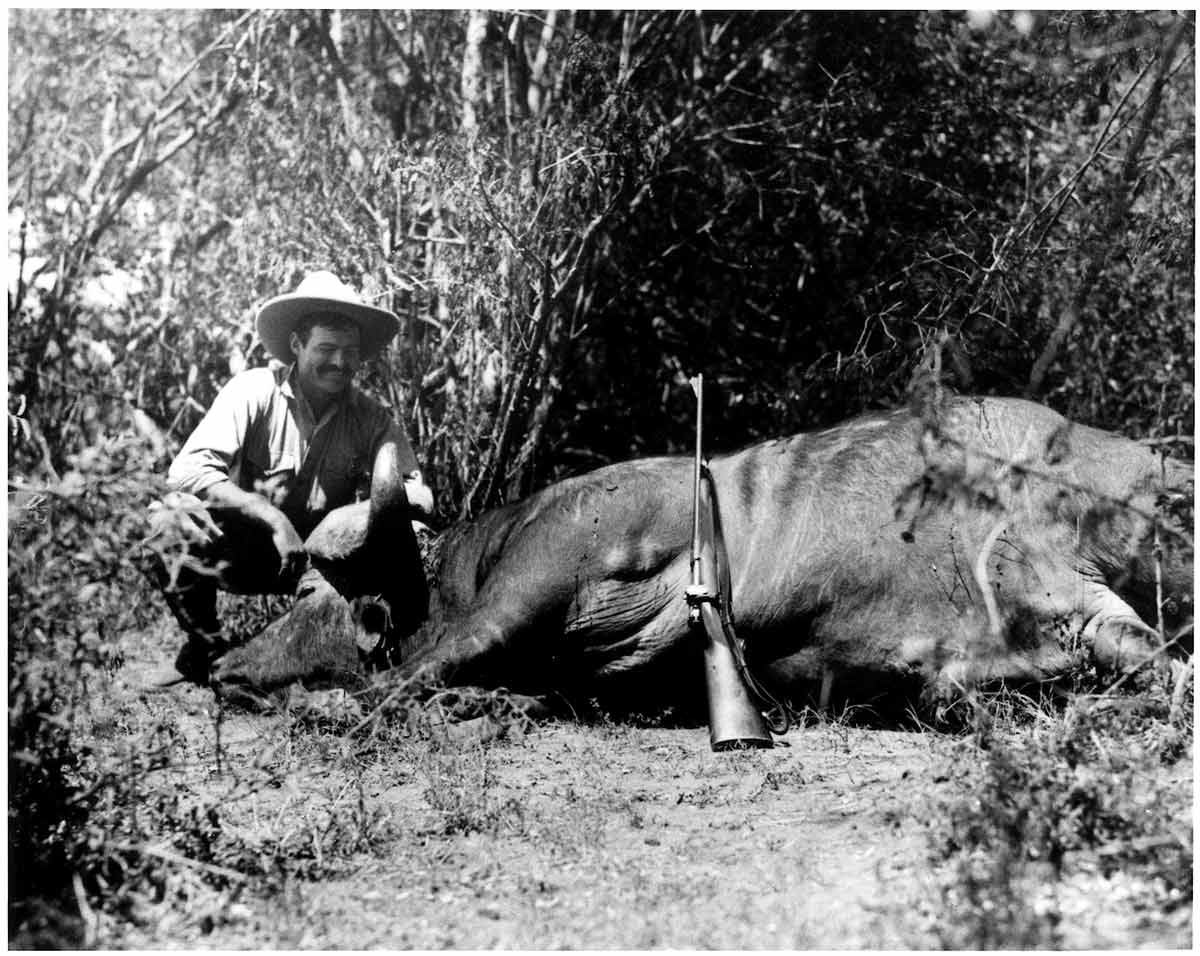
Game hunting in Africa during the 1930s was a luxurious and elite pastime catered to wealthy Westerners. These hunting safaris were usually orchestrated by professional “white hunters” of European descent. Typically, these hunters made local arrangements, gathered and packed supplies, and hired workers of African descent to take on the roles of porters, tent attendants, armed guards, and horse trainers.
Former United States President Theodore Roosevelt helped popularize African big game hunting after embarking on a widely publicized safari in 1909. This expedition would later influence Hemingway to travel to Africa himself for the same purpose.
Philip Percival was a famous English-born white hunter who worked as an assistant on Roosevelt’s 1909 safari. As he got older and more experienced, he went on to guide Hemingway during his first safari. Percival and Hemingway developed a strong friendship. Percival also accompanied Hemingway on his second safari in 1953.
Hemingway based the character of Robert Wilson after Percival in his short story, The Short Happy Life of Francis Macomber. The story follows wealthy American Francis Macomber and his wife, Margot, on safari in Africa, under Robert Wilson’s guidance. The story culminates with Margot shooting at a charging buffalo, but she instead shoots and kills Francis. Whether this was intentional or not remains a mystery.
During their time in Africa, Percival recounted a scandalous 1909 safari incident involving the white hunter J.H. Patterson. While guiding British soldier Audley Blyth and his wife, Ethel, Blyth died from a gunshot wound under mysterious circumstances. Though it was never determined whether his death was suicide or murder, rumors quickly spread that Patterson and Ethel were having an affair. No charges were ever brought against Patterson, but this event permanently damaged his reputation in Africa.
Ernest Hemingway’s Cuban Experience and “The Old Man and the Sea”
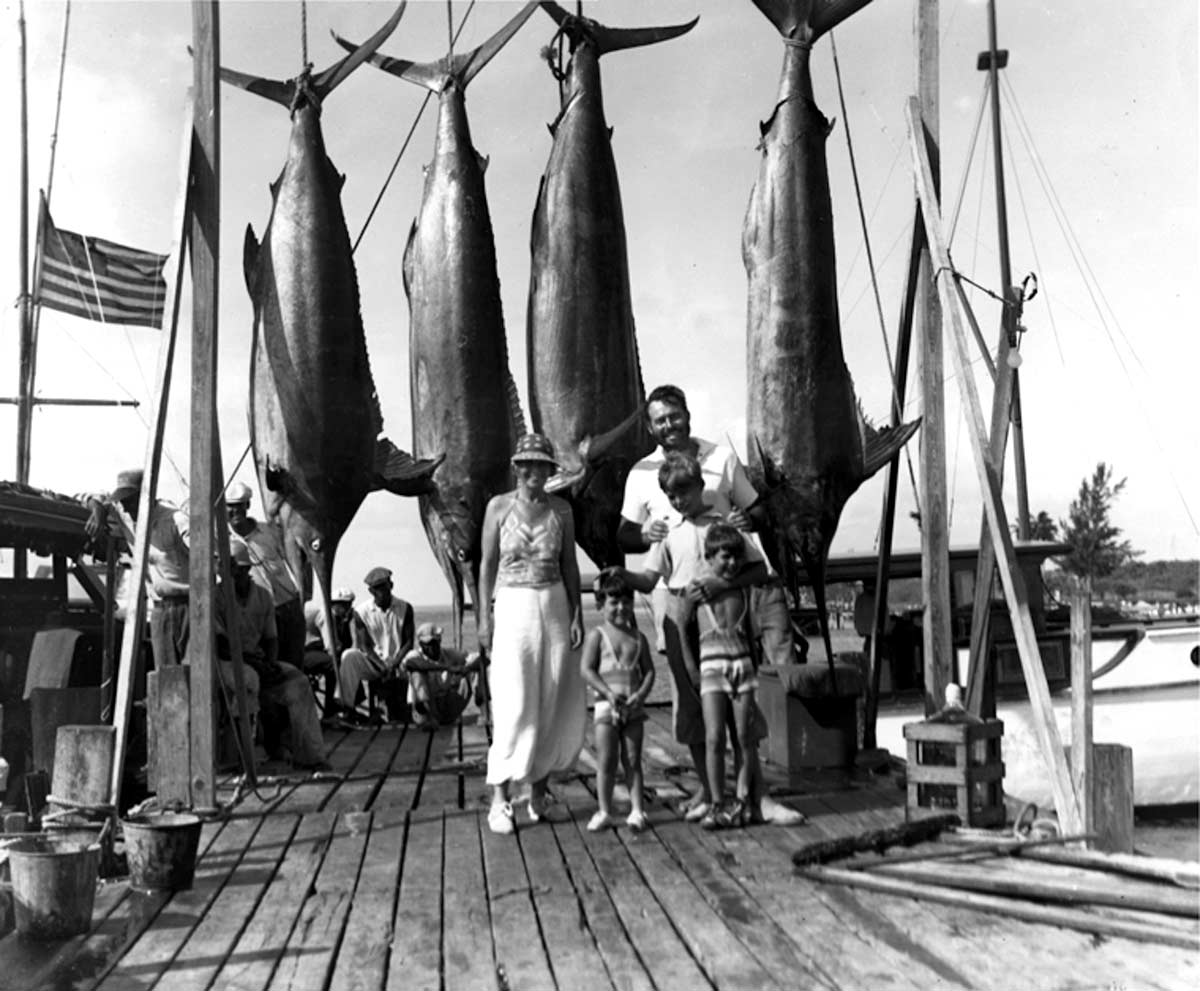
Ernest Hemingway first visited Cuba in 1928, on a layover to Spain. He visited the island throughout the years, including 1932, when he brought two friends with him so they could fish for Marlin on the Gulf Coast. Hemingway and his third wife, Martha Gellhorn, married and purchased Finca Vigia, or “Lookout Farm,” on the outskirts of Havana.
Hemingway fell in love with Cuba, calling it home for the last third of his life. He spent over twenty years in Cuba, which was longer than he had lived anywhere else in the world. He integrated himself into Cuban life, drinking mojitos at La Bodeguita del Medio, daiquiris at El Floridita, and forming relationships with Cuban fishermen in the village of Cojímar.
During the 1930s, a Cuban fisherman by the name of Carlos Gutiérrez told a story about an old man and a giant marlin to Hemingway. This would later be the basis for Hemingway’s 1952 novella The Old Man and the Sea.
While living in Cuba, Hemingway kept his fishing boat, the Pilar, docked in Cojímar, where he and Gutiérrez would venture out into the Gulf Stream in search of Marlin. The novella’s depiction of deep-sea fishing was rooted in Hemingway’s firsthand experience in Cuba and Bimini. When fishermen hauled harpooned marlin onto the boat, they sometimes recovered only the head, tail, and backbone on account of being “apple-cored” by sharks. Hemingway’s solution for dealing with sharks feasting on his catches was to shoot at the sharks. On one instance, however, he shot himself in both of his calves.