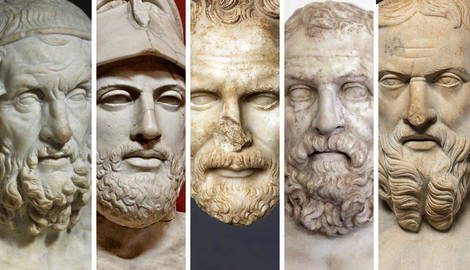
Ancient Greece was the site of many revolutionary ideas and the home of important thinkers who shaped Western thought. It was the cradle of Western civilization, producing famous statesmen, artists, playwrights, and philosophers who are still relevant today. Of the many names that have survived the millennia, meet ten of the most famous ancient Greeks you should know.
1. Homer
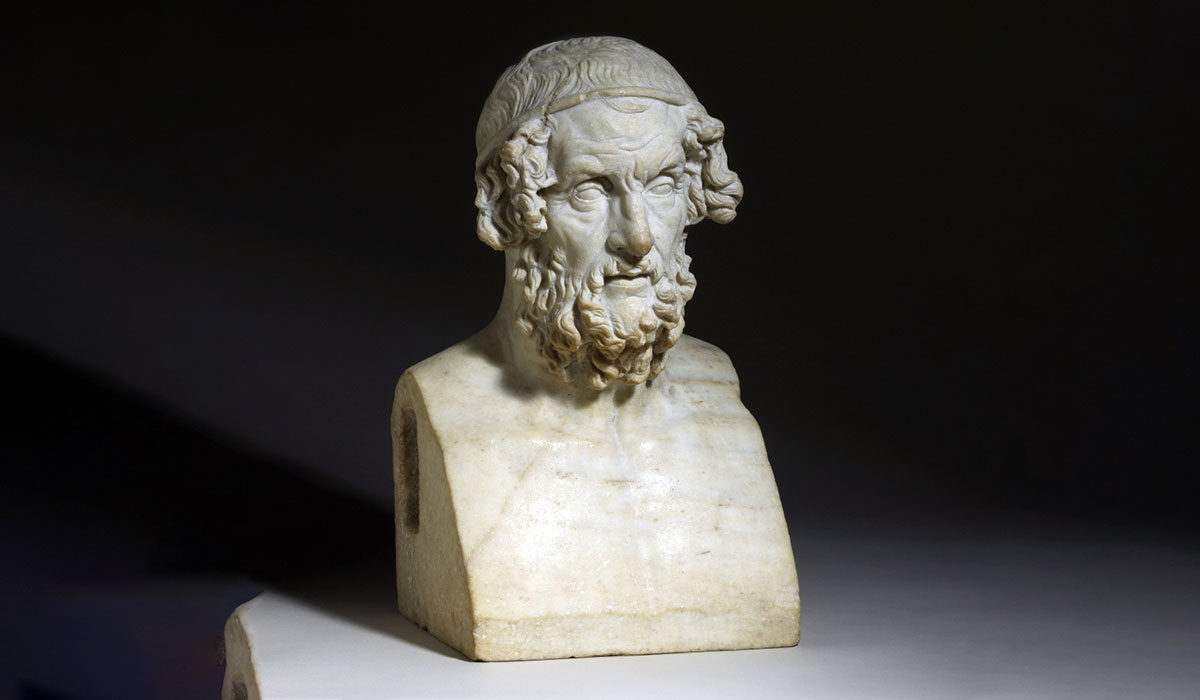
Ancient Greece can hardly be discussed without mentioning Homer, the renowned poet who is credited with writing the Iliad and the Odyssey. While scholars now debate whether Homer was a singular man or a collective of poets, the ancient Greeks believed him to be a single individual, likely born on the island of Chios, based on the dialect of his writings.
His poems date from the 8th or 7th century BCE, but they are set in the Bronze Age and recount the events of the Trojan War. Homer’s works became the central canon of Greek mythological history and would go on to inspire other poets throughout the ages, from Virgil’s Aeneid in the 1st century BCE to James Joyce’s Ulysses in the early 20th century.
2. Hesiod
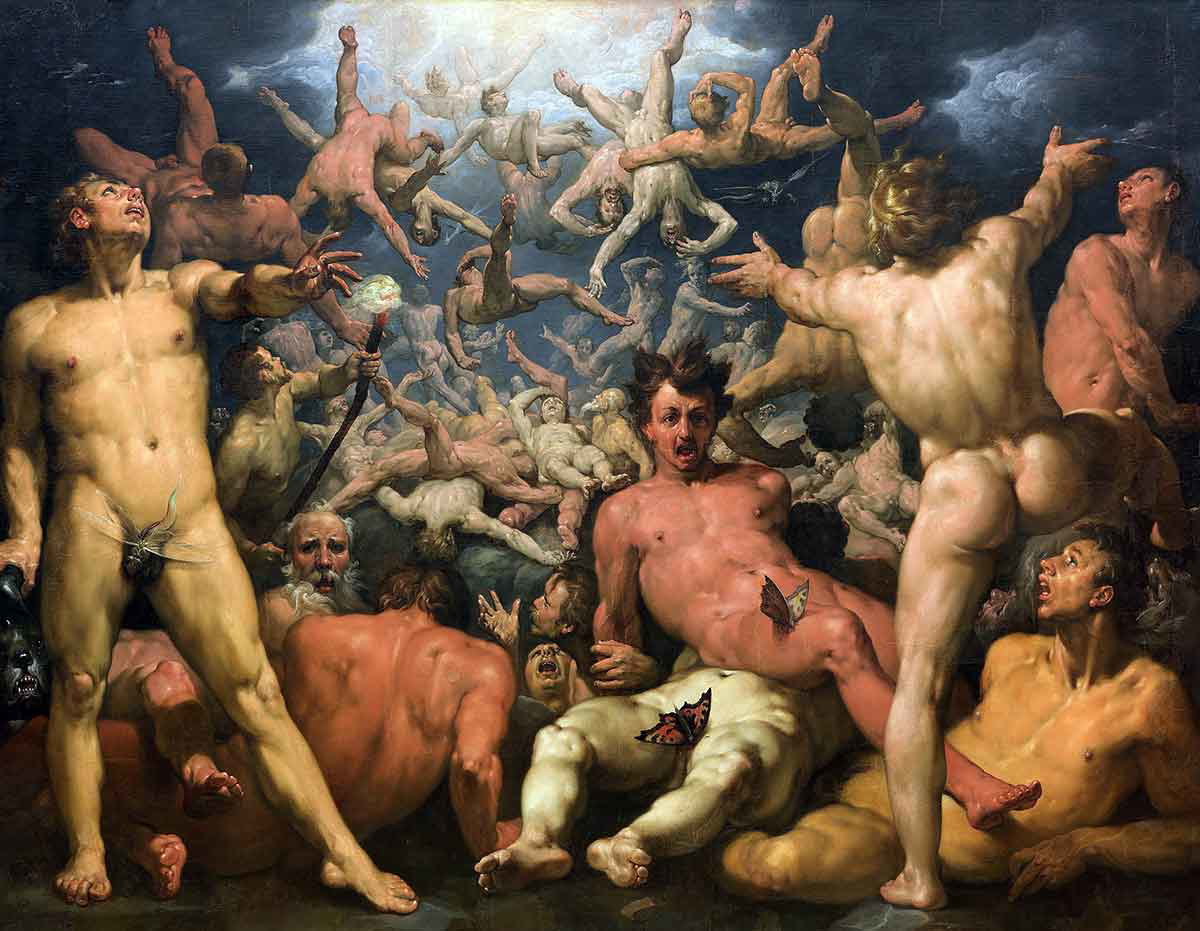
Like Homer, Hesiod is a critical source for Greek mythology. He wrote his Theogony, which recounts the birth of the universe and Zeus’ rise to power as king of the gods. He also wrote didactic poetry about the human condition in the Archaic period. He lived around the years 750-650 BCE, making him a contemporary of Homer, but precise dating is difficult. Some ancient scholars have argued that Hesiod was older than Homer, and others that he was several centuries younger. There was a famous story about a song contest between the two legendary poets, in which Hesiod was apparently the victor. True or not, this story seems to confirm the ancient belief that Homer and Hesiod lived in the same era.
What is known of Hesiod’s life comes from his own work titled Works and Days. In it, he describes the hardships of life as a farmer and also chastises his brother, Perses, for stealing part of Hesiod’s inheritance and then squandering the money.
3. Solon
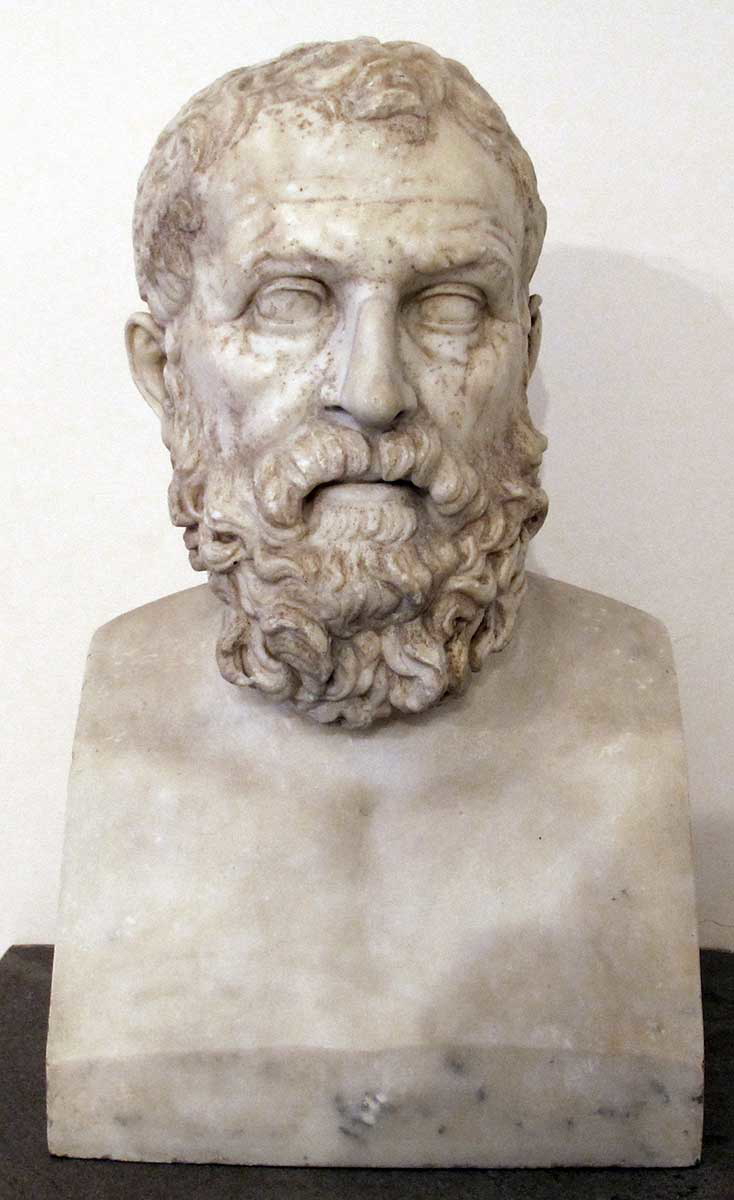
Solon was an Athenian statesman from the 6th century BCE and considered one of the Seven Sages of ancient Greece. He rose to prominence in Athens during a time of political unrest when Athens and Megara were in conflict over the island of Salamis. Solon was a leading general in the war and led Athens to victory, earning him great respect and renown from his fellow Athenians.
Athens at the time was rife with political factionalism and economic disparity. Common citizens were becoming increasingly indebted to the wealthy elite and forced to sell off their property or themselves to cover their debts. None could agree on how best to govern the city, and things seemed ready to boil over.
Solon was trusted by both the poor and the rich alike and was therefore voted archon of the city. He immediately began a program of political and economic reform. He canceled debts and instituted new laws that opened up political offices based on wealth rather than birth, and increased the power of assemblies and juries. His laws would become the basis for the reforms of Cleisthenes, who is styled as the father of democracy.
4. Leonidas
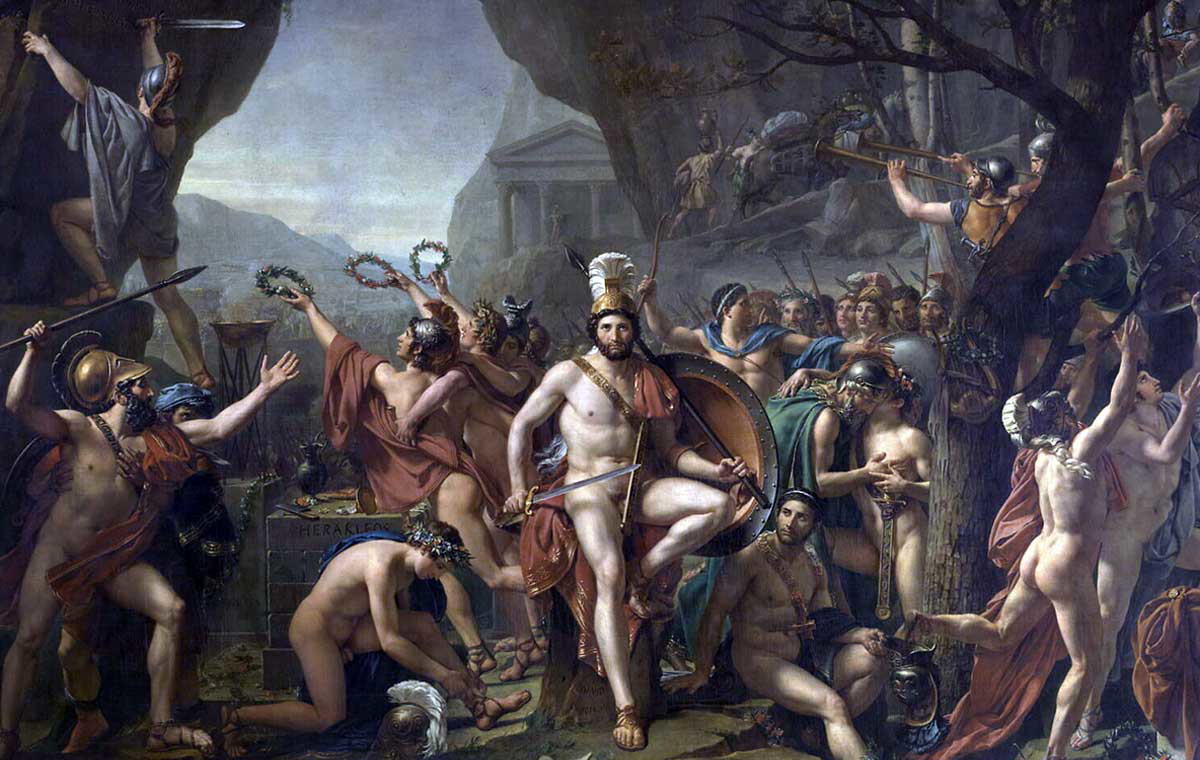
A name almost as recognizable as Homer to modern audiences is Leonidas, the Agiad king of Sparta. He was never supposed to be king, but his brother, Cleomenes I, died without an heir, so the kingship passed to Leonidas. He assumed the throne in 489 BCE and married his niece, Gorgo.
Most of what is known of Leonidas’ life comes from later sources, as none of his speeches or own writings, if there were any, survive. His claim to fame comes from his actions during the Persian king Xerxes’ invasion of Greece. Leonidas, along with three hundred Spartans and three thousand Thebans and Peloponnesians, held back the Persian advance at Thermopylae.
The forces arrayed against them are often exaggerated, but they were still heavily outnumbered by at least ten to one. For days, they blocked the Persian advance until they were betrayed, and the Persians were led through a goat path in the mountains that came out behind the Greek forces. Leonidas dismissed all the other Greeks except for the Spartans, who stayed and defended the retreat, dying to a man and earning them eternal fame in the process.
5. Aeschylus
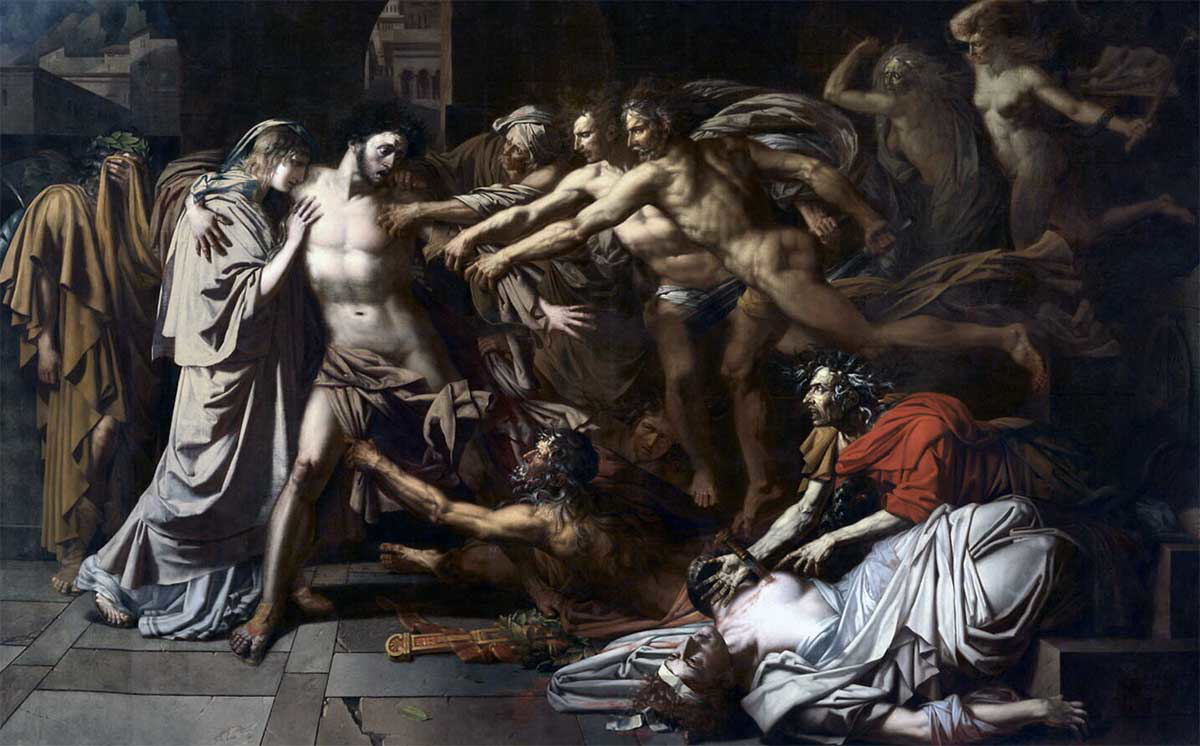
Known as the “Father of Tragedy,” Aeschylus was an Athenian playwright who wrote such famous tragedies as the Oresteia trilogy and Prometheus Bound. He was born in 525 BCE in Eleusis and served in both Persian wars, fighting at Marathon and at Salamis. He was initiated in the Eleusinian Mysteries, secret religious rites to Demeter and Persephone, and was accused of impiety for revealing some of those secrets in a play. At his trial, he pleaded ignorance, and he was acquitted due to the jury’s sympathy for his military service against the Persians.
He was a prolific playwright, often winning first place at the yearly Dionysia, a theater contest in honor of Dionysus. He won his first victory in 484 BCE and was a favorite for decades. In 458 BCE, Aeschylus went to Sicily, where he died three years later. A story about his death circulated that when he was young, an oracle told him that he would die from something falling on his head. This came to pass in 455 BCE when a tortoise fell on his head, dropped by an eagle that was trying to break open the shell.
6. Herodotus
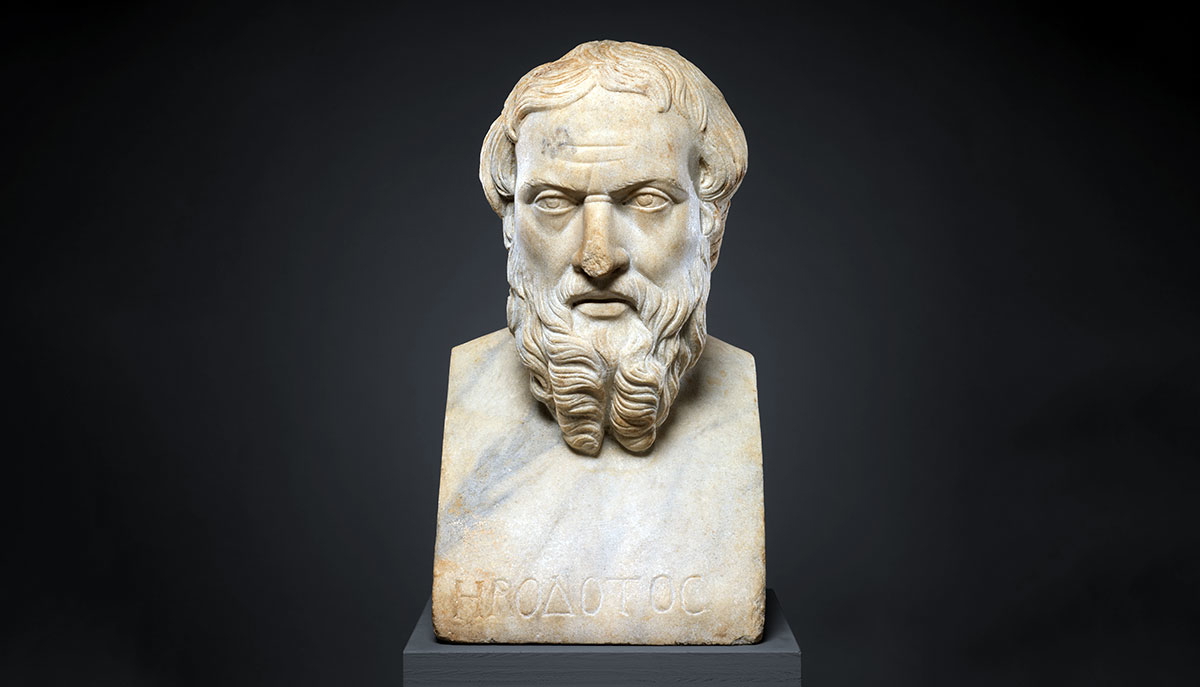
Herodotus was born around 485 BCE in Halicarnassus, a Greek city in Anatolia under Persian rule. He spent many years traveling the Mediterranean world, from Egypt to Babylon to Magna Graecia, and wrote an account of his travels as well as the local histories of the places he visited. His book, titled Historiai or The Histories, was the first historical work of its kind and earned him the moniker “Father of History.”
Herodotus’ approach, unlike Thucydides and later historians, was not to critically examine the sources and present factual truth, but to present what he was told in a cohesive narrative. His inclusion of mythical stories in his Histories is why some have called him “Father of Lies.”
7. Pericles
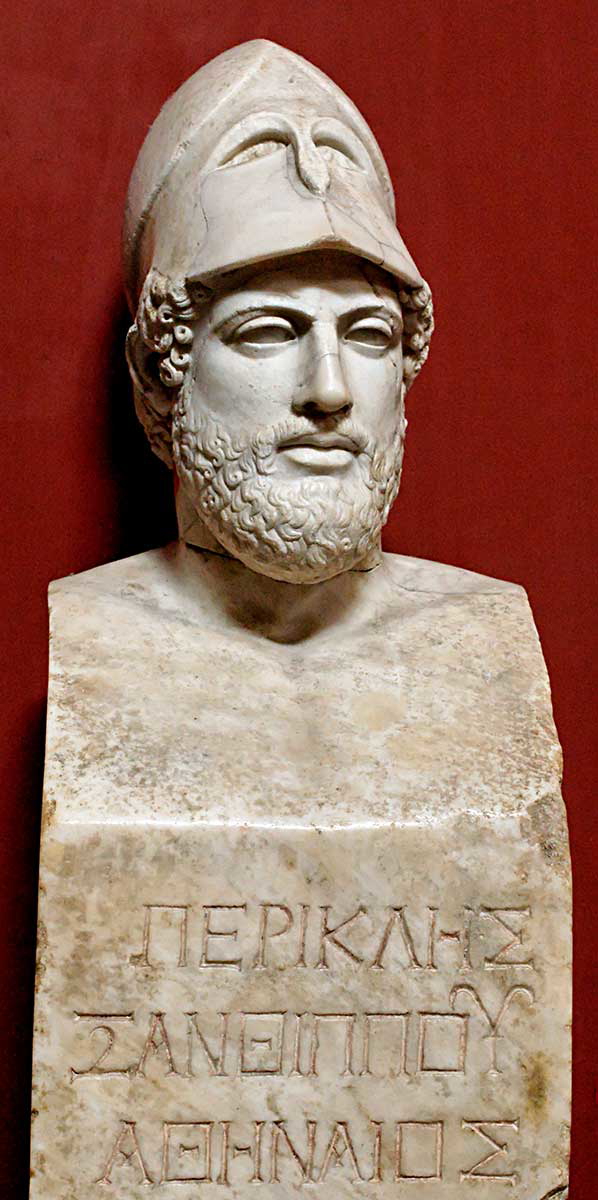
Pericles was an Athenian statesman who rose to prominence in the aftermath of the Persian Wars. He was the leader of Athens and the Delian League from 461 to 429 BCE. This period is referred to as the Golden Age of Athens due to the artistic and economic flourishing that resulted from Athens’ political domination over the Aegean. He oversaw plans for the reconstruction of the Acropolis after the Persians had destroyed it during their first invasion of Greece, funding it with the treasury from the Delian League. This earned him much criticism from his rivals and from member states of the league.
Pericles was the leading man in Athens at the outbreak of the Peloponnesian War. He knew that the Spartans were dominant in ground warfare, so he determined that it was wiser not to confront them in the field. He convinced the population of Attica to evacuate to the cities. Athens would fight to its strengths and use its superiority at sea to raid the Peloponnesian coast. This strategy was not popular with the citizens, as they watched their land get pillaged. The increase in population and density in the urban centers contributed to outbreaks of plague. Pericles died of the plague in 429 BCE.
8. Socrates
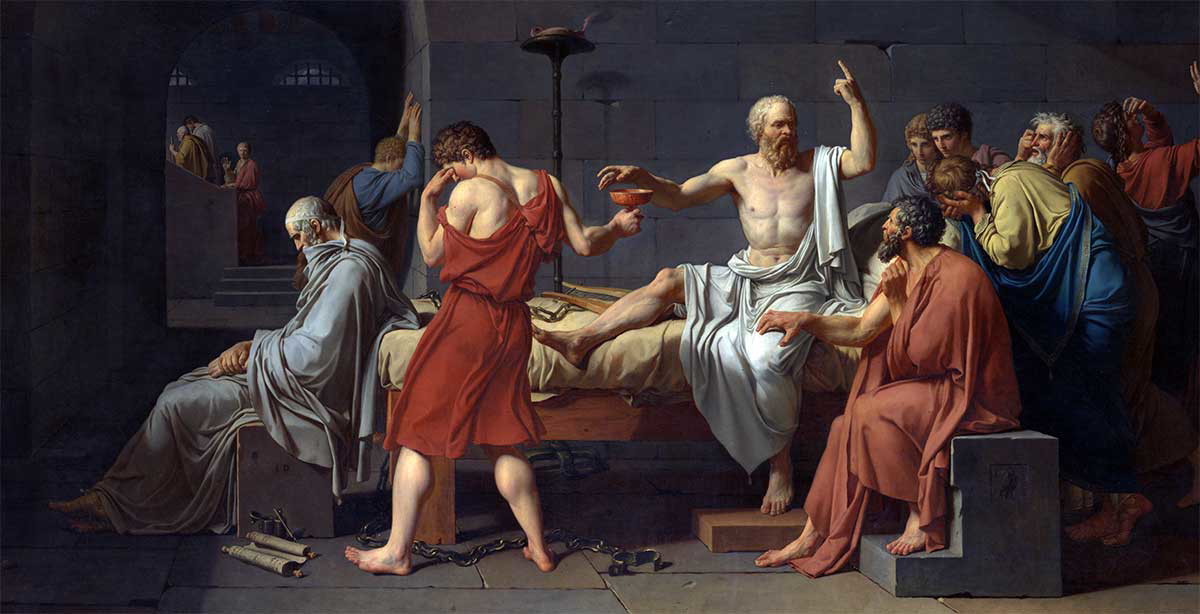
Socrates was an Athenian citizen and philosopher who lived from 469 to 399 BCE. He is credited as the father of Western philosophy and was Plato‘s teacher. Unfortunately, Socrates did not write any texts. Everything we know about him comes from Plato’s writings, specifically the Dialogues. He used Socrates as the primary character to drive discussions on justice and what it means to be good.
Socrates was a notorious figure in Athens. He had a flat nose, a large belly, and walked around barefoot, questioning people about their beliefs. He developed what became known as the Socratic Method of inquiry, in which one takes an initial view and asks a series of probing questions to expose a contradiction in the idea.
This earned Socrates a certain reputation in Athens, and he was eventually accused of corrupting the youth and of impiety. He was taken to trial, where he was found guilty and sentenced to death. While imprisoned, his friends offered him a chance to escape, which Socrates declined. He spent his last days in prison and died by voluntarily drinking a cup of hemlock.
9. Demosthenes
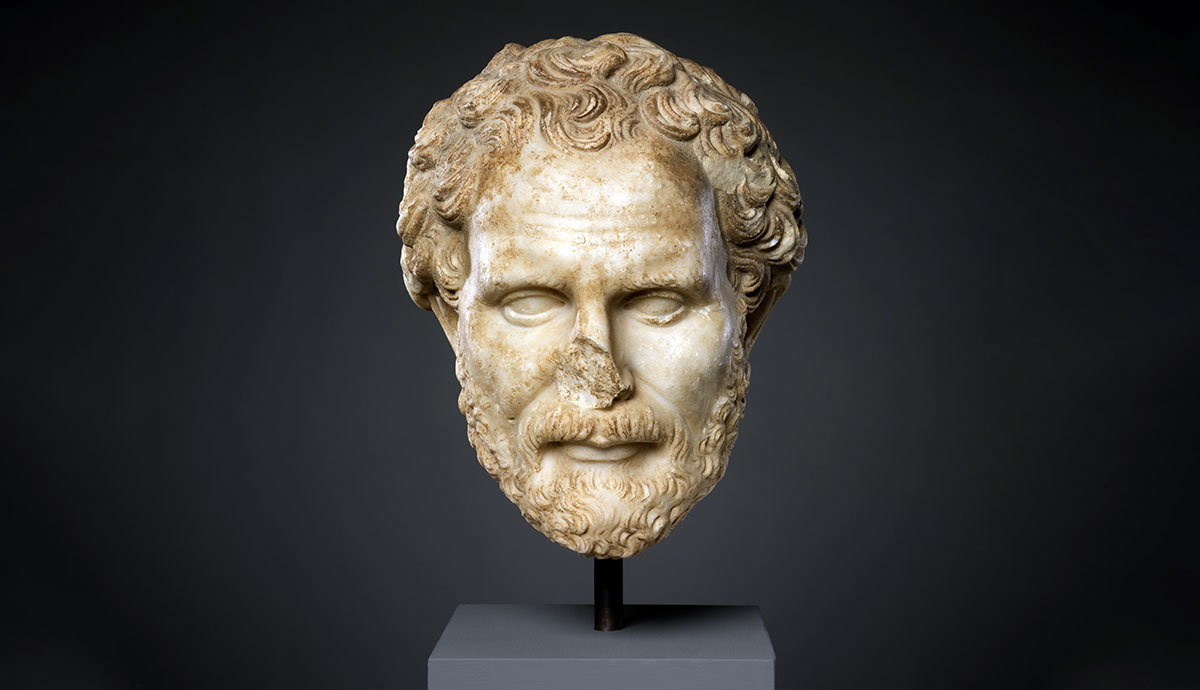
Demosthenes was an Athenian orator who lived from 384 to 322 BCE. He was born to wealthy parents, but was orphaned at a young age and brought under the care of three legal guardians. His guardians mishandled the inheritance his father left for him, so he learned rhetoric to sue them and recover the stolen funds. At the age of 20, he successfully sued his guardians and recovered 10 talents of silver, a substantial amount of money, yet still only a portion of his full inheritance.
He was an outspoken opponent of the Macedonian king, Philip II, whose growing power in Greece posed a threat to Athens and other states. After Philip’s assassination in 336 BCE and the ascension of his son, Alexander, Demosthenes helped to convince Athens to rebel against Macedon. Alexander took swift action, razing the city of Thebes to the ground. However, he imposed no punishment on Athens, except for demanding the exile of all anti-Macedonian politicians, primarily Demosthenes.
After the death of Alexander, his successor to the throne of Macedon demanded that Demosthenes be handed over to him. Demosthenes escaped to the island of Kalaureia, but was eventually discovered. He died by suicide before being captured.
10. Diagoras of Rhodes
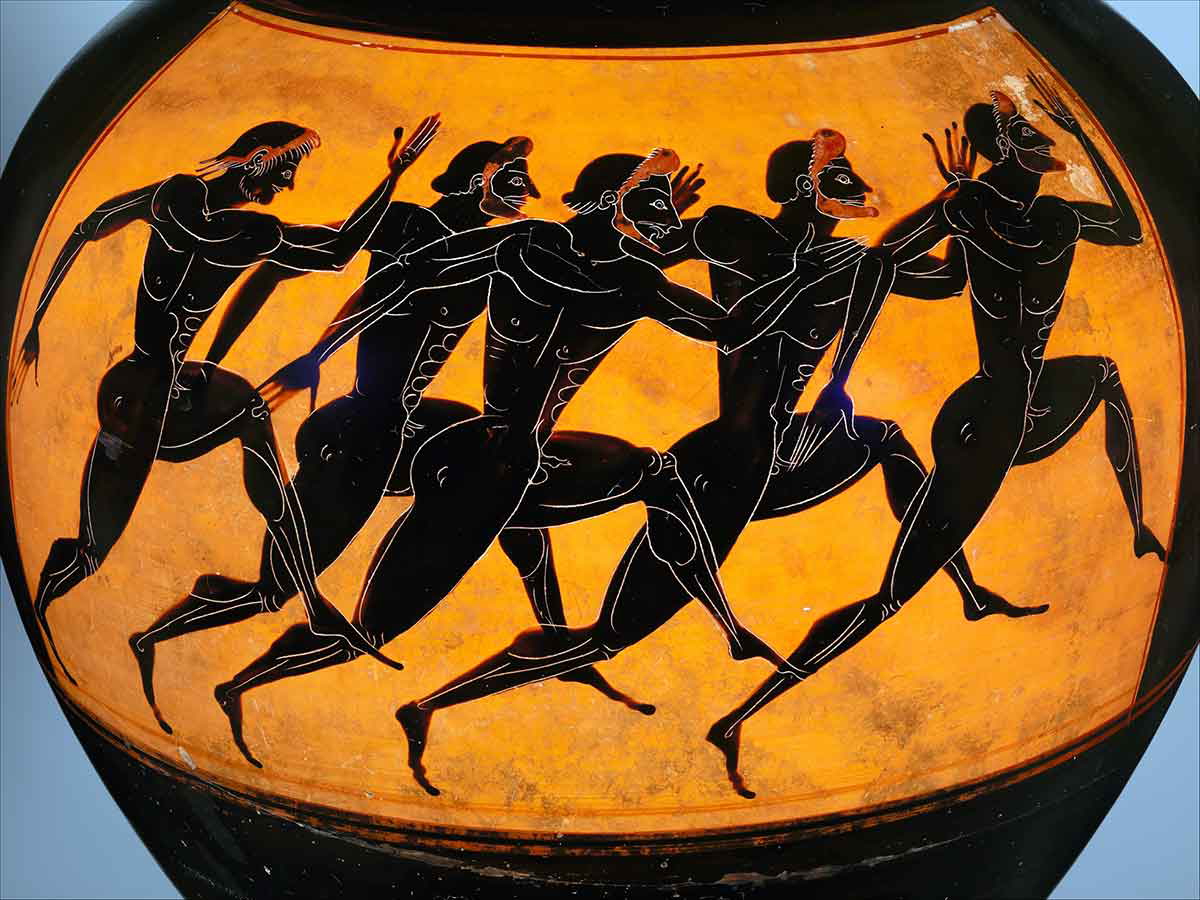
While most people today would not recognize the name Diagoras, in his own time, he was a celebrity. Diagoras was a boxer who won multiple Panhellenic games, and his sons were also Olympic victors. He is credited with victories at the Isthmian Games, the Nemean Games, the Pythian Games, and the Olympic Games, and won prizes in Argos, Arcadia, and Megara. His athletic accomplishments were such that he was immortalized in Pindar’s 7th Olympian Ode. Pindar called upon Zeus to grant honor to Diagoras so that both citizens and strangers should know his excellence.