
Sometimes Outsider artists see art as a hobby, and sometimes, in the case of psychiatric institution patients and prisoners, as a therapeutic practice. Outsider art was promoted and elevated by the famous French artist Jean Dubuffet, who amassed a vast collection of such works. Read on to learn more about Outsider art and famous artists like Horace Pippin who represent it.
1. Jean Dubuffet, The Great Promoter of Outsider Artists (1901-1985)
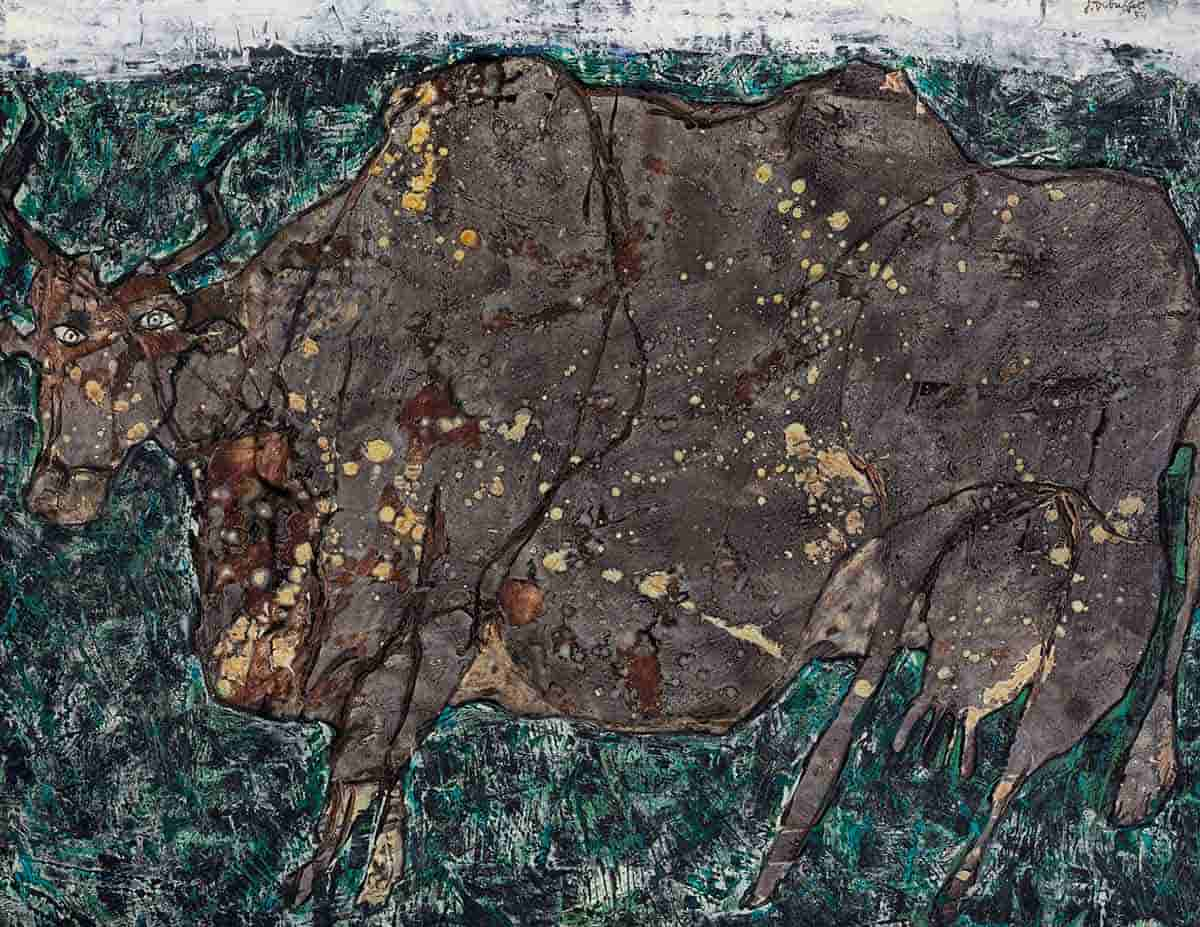
The term Outsider art, also known as Art Brut, relates to artworks created by untrained artists with little to no contact with the conventional art world. These artists were often institutionalized, imprisoned, or lived in isolation due to religious or health reasons.
Jean Dubuffet was not one of them. He was a conventionally trained artist who studied in a prestigious art academy and was friends with famous creatives of his time. However, he became famous as a promoter and collector of Outsider art. He claimed that the conventions of the art world ruined the expressive power of images by fitting them into strict frameworks. Dubuffet amassed a large collection of Outsider art and organized public displays of it. He became an advocate and promoter of this type of art and personally created works inspired by his collection.
2. Anna Zemankova (1908-1986)
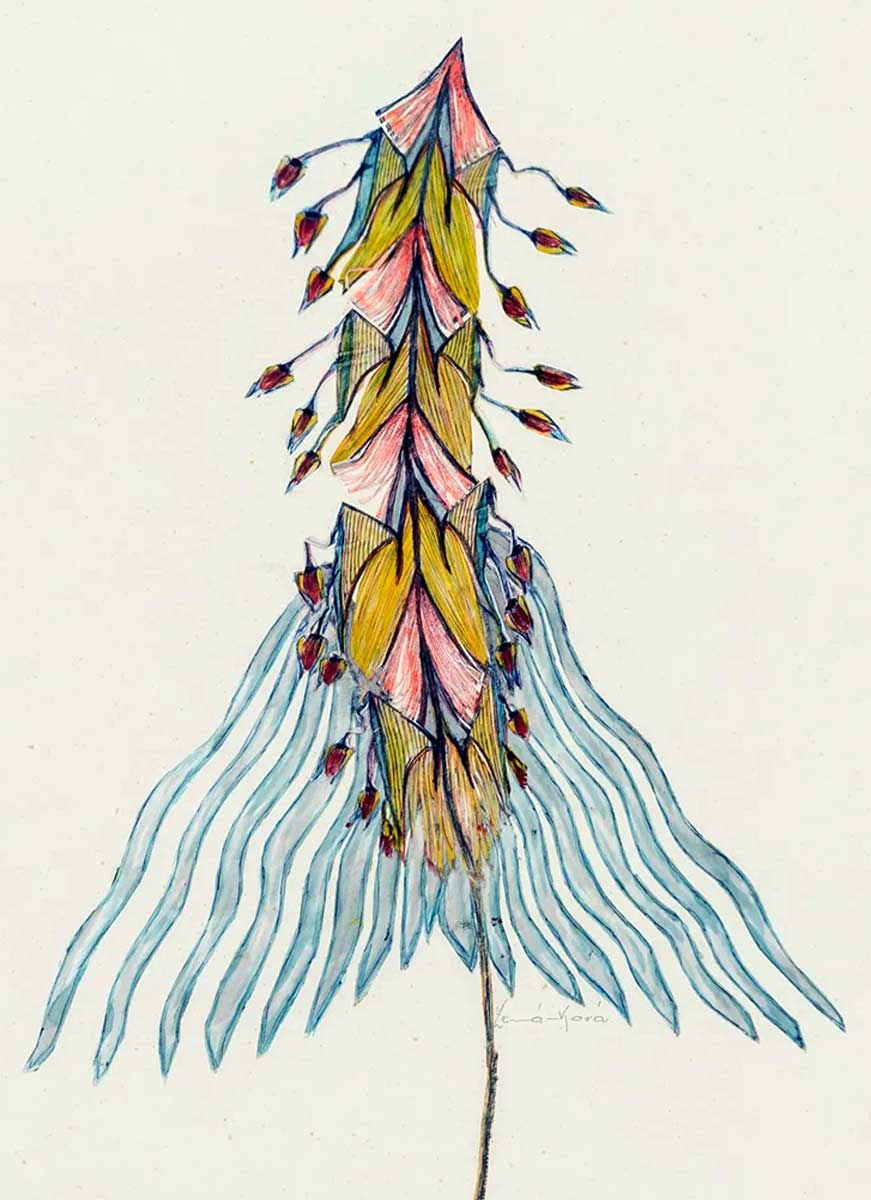
Anna Zemankova was a Czech dentist who always perceived art as a hobby. For many years, she was busy creating toys, inventing fairytales, and designing costumes for her three children, but when they grew up, she faced depression, afraid she lost her only interest apart from work. Zemankova’s adult sons convinced her to continue experimenting, and her art soon attracted the attention of Jean Dubuffet, who purchased several of her works.
Zemankova mostly worked with organic motives, gathering non-existent flowers from pieces of fabric, thread, or paper and painting them with pastel or tempera. The fantastic forms and variety of her flowers led some researchers to compare Zemankova’s work to the organic abstractions of Hilma af Klint. However, Zemankova rejected all associations with spiritualism and insisted that the experience of motherhood was the principal inspiration for her work.
3. Horace Pippin (1888-1946)
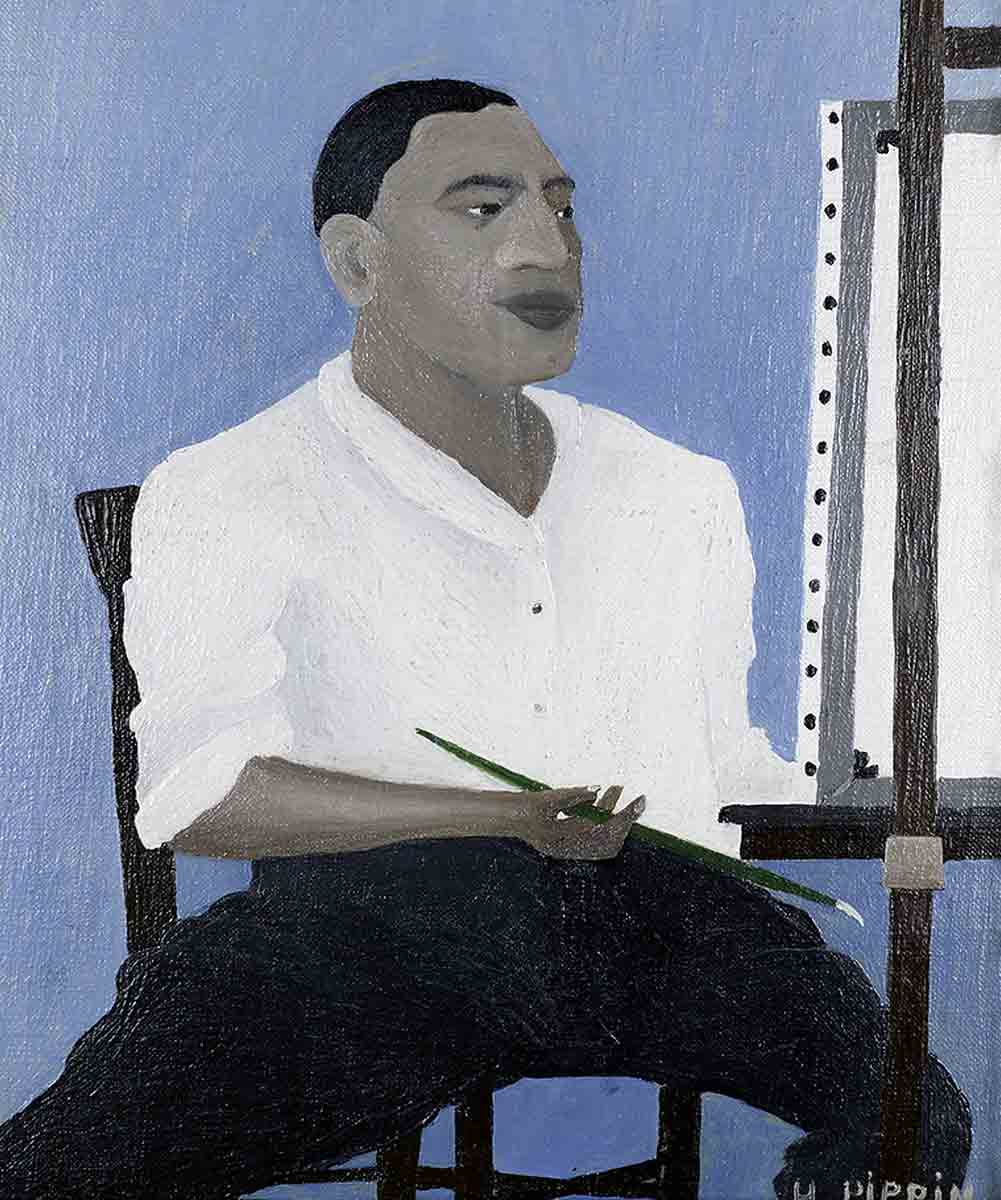
Horace Pippin was one of the most important Black American artists who worked during the era of racial segregation. As a child, he won a box of crayons in a drawing contest arranged by a local company and has not stopped painting ever since. However, Pippin’s recognition happened only after he returned from World War I with a disability that affected his right hand. As a disabled Black veteran, he had issues adapting back to the post-war realities and returned to art as a form of rehabilitation. In the 1930s, he began painting with oil and soon received recognition. The subject matter of his paintings often was centered around the history of slavery and segregation in the US, as well as Pippin’s wartime experiences.
Horace Pippin also painted several self-portraits, declaring and accepting his status as a successful and prominent artist. Unlike many other Outsider artists, Pippin had a chance to experience his fame personally. During his lifetime, several American galleries and museums arranged Pippin’s solo shows, and private collectors eagerly purchased works from his studio.
4. Aloise Corbaz (1886-1964)
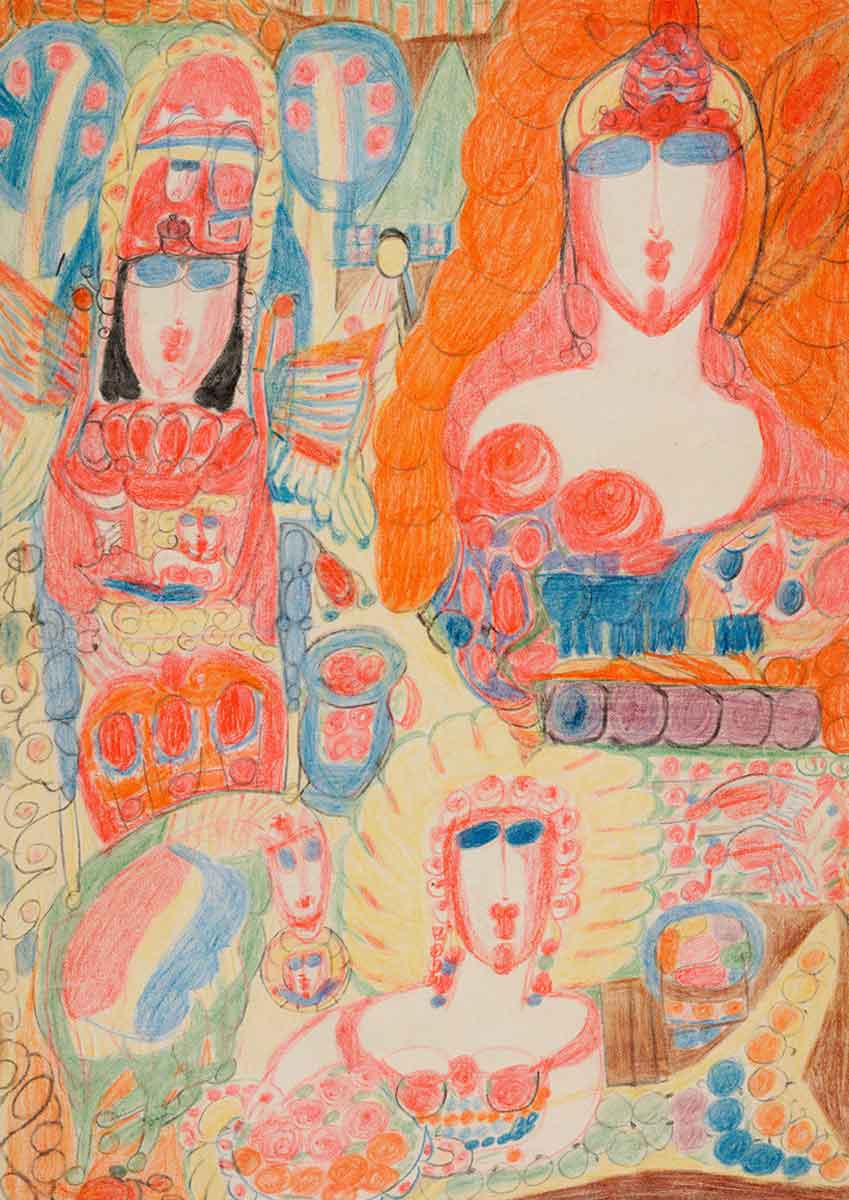
One of the stars of the recent Venice Biennale, Aloise Corbaz, was a regular Swiss teacher and seamstress until her mental health collapsed in her early thirties. While working as a governess in the court of the German Kaiser, she developed an unhealthy romantic obsession with him. Returning home after the outbreak of World War I, Corbaz began experiencing hallucinations and fits of paranoia. Diagnosed with schizophrenia, Corbaz spent 46 years in a Swiss mental asylum.
Aloise Corbaz first began drawing in secret, using toothpaste, plants, and occasionally pencils. She also used wrapping paper or cardboard fragments. However, after the hospital staff discovered her interest, they provided her with more materials. Corbaz often painted women performing on stage (as a child, she wanted to become a singer) and romantic encounters of curly-haired women and their lovers in military uniforms. She turned her illness, delusions, and sorrows into painted work that helped her stabilize her condition.
5. Adolf Wölfli (1864-1930)
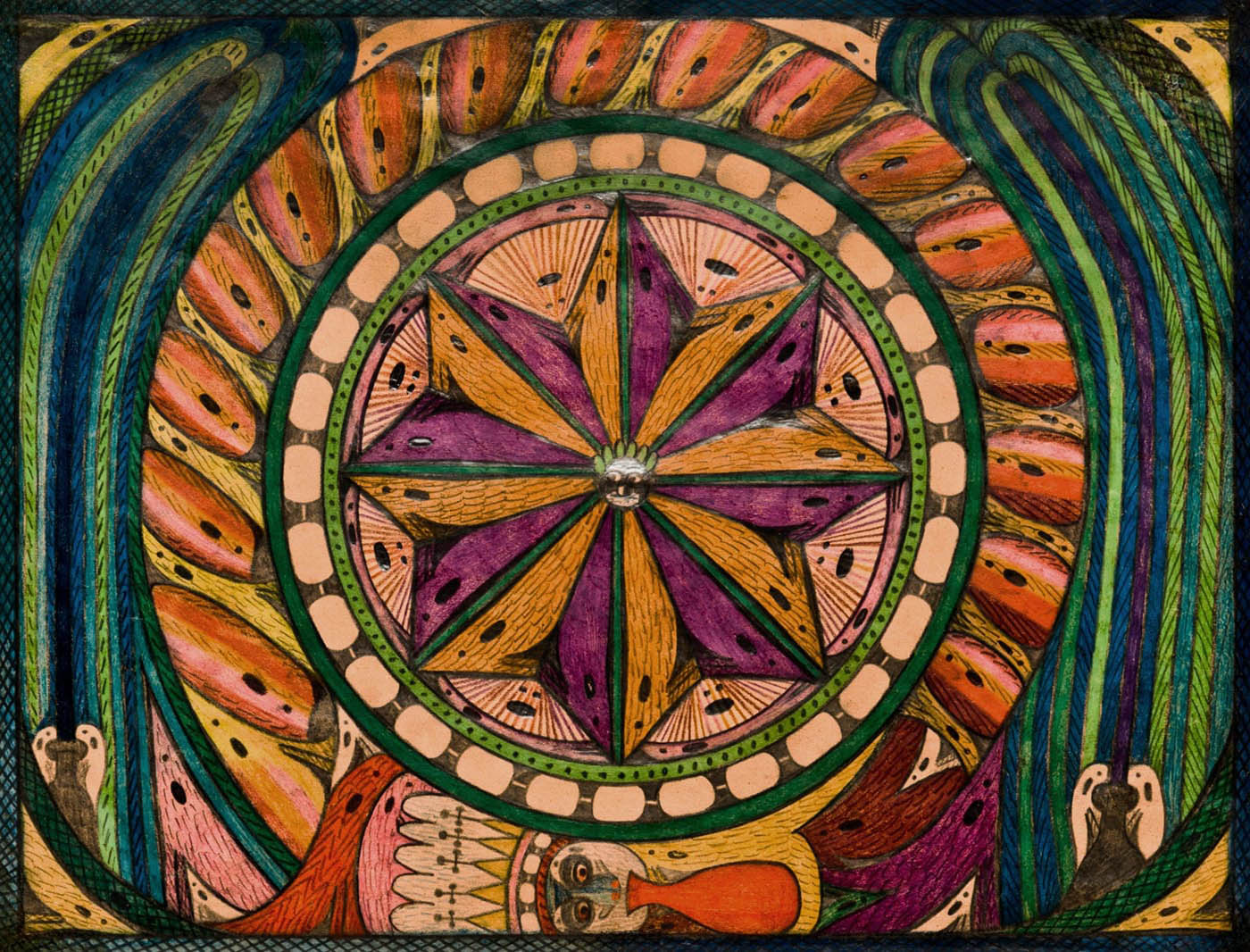
Adolf Wölfli was a Swiss laborer and one of the most famous patients of the Bern Psychiatric Hospital. As a child, he experienced systematic physical and sexual abuse, and, growing up, he shifted from being a victim of violence to becoming its perpetrator. He was imprisoned for attempted abuse of minors and later admitted to a psychiatric institution. He was violent and unstable but found solace in drawing. He drew incessantly, using up an entire pencil in just two days. His detailed works launched a series of studies on institutionalized artists.
Wolfli’s work represented a concept of horror vacui, or the fear of empty spaces, which is typical for artists with mental illnesses. Unnerved by clear spaces on their drawing surfaces, such artists leave as little of them as possible, filling them with minuscule details.
6. Henry Darger (1892-1973)

Henry Darger was born in Chicago, and for the first decade of his life, he was known as an intellectually gifted child. However, the death of his parents, as well as the constant bullying from both teachers and students in his school, destabilized Darger, and he was sent to an asylum for children with mental disabilities. At the age of 17, Darger escaped and devoted the rest of his life to working as a nurse and advocating for better adoption regulation to ensure orphaned children were placed in loving families.
Only after Darger’s death did his landlord discover a 15,000-page manuscript filled with text and illustrations. The main part of the manuscript was a fantasy novel titled The Story of the Vivian Girls, in What is Known as the Realms of the Unreal, of the Glandeco-Angelinian War Storm Caused by the Child Slave Rebellion. Darger described an imaginary world where children rebelled against adults who imposed slavery upon them.
7. Richard Dadd (1817-1886)
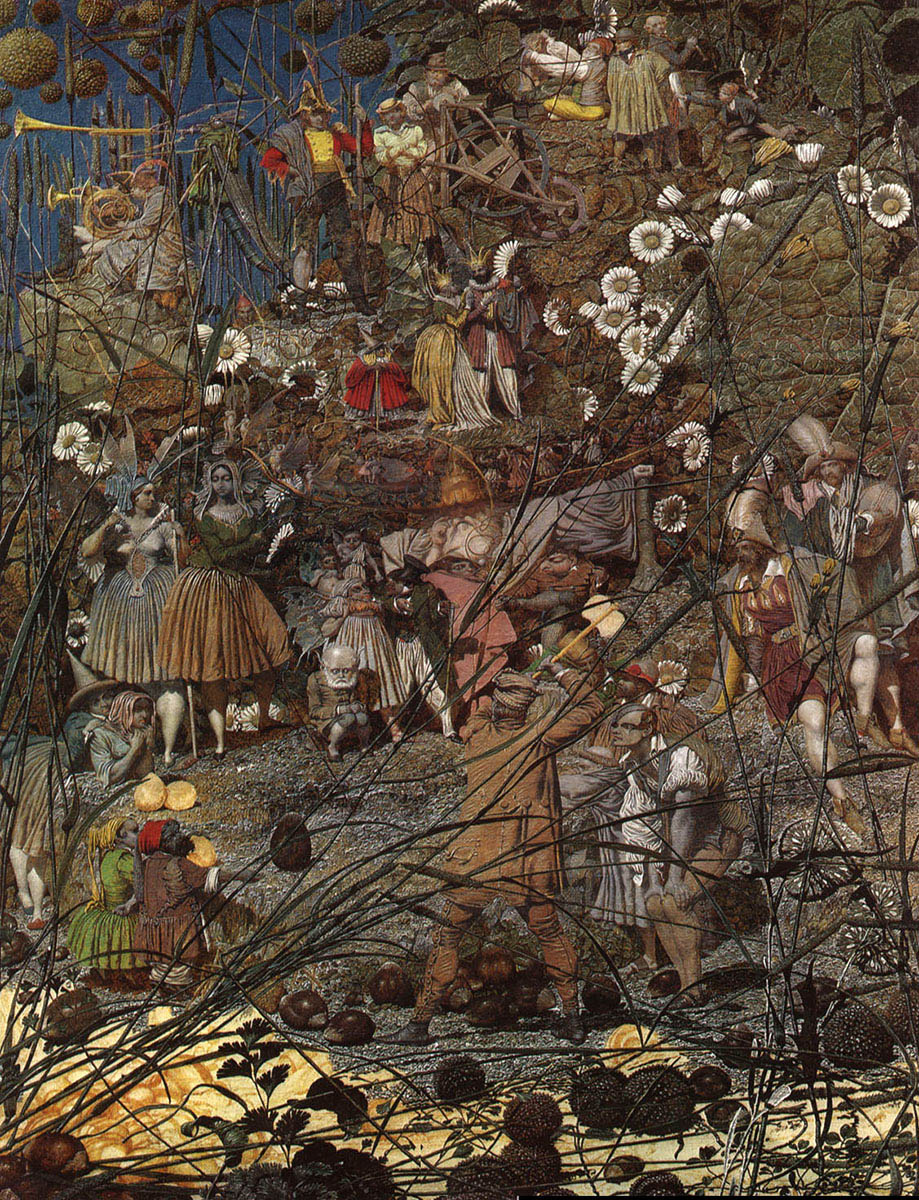
Technically, Richard Dadd falls out of the category of Outsider art since, at some point in his life, he had conventional training and a proper artistic career. It all changed during his trip to Egypt, during which he developed delusions, convincing he was possessed by the god Osiris. Upon returning home to England, Dadd murdered his father, believing he was Satan. Most likely, he had paranoid schizophrenia, which two of his siblings were also diagnosed with. After being admitted to a mental asylum, he stopped painting for several years. After the break, however, he began producing strange paintings of dancing fairies and magical creatures, also characterized by the horror vacui concept.
8. Emma Kunz (1892-1963)
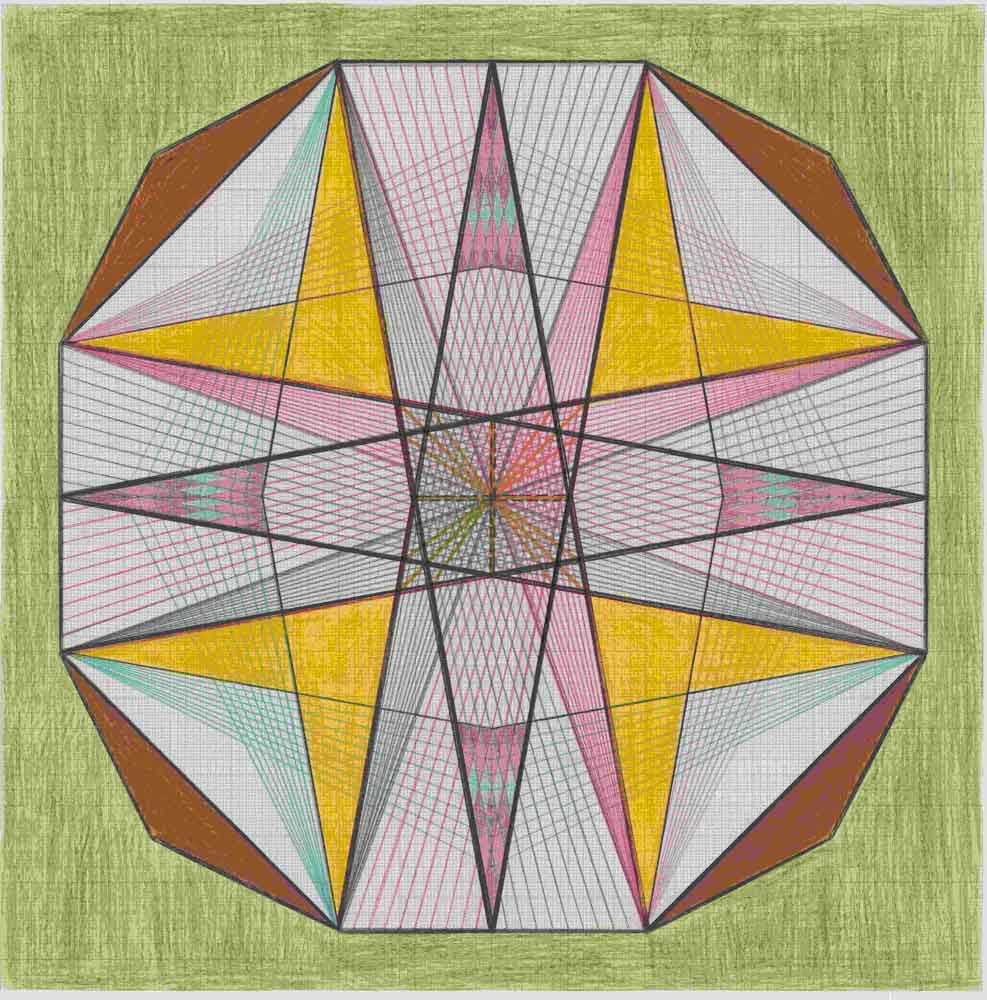
Emma Kunz was a healer who spent most of her life in rural Switzerland. For generations, her family’s women were weavers. Although she had no formal training and limited education (she stated she read only three books in her life, one of which was her grandmother’s self-made book on healing plants), she was described as surprisingly knowledgeable. She claimed to be a telepath and receive all information from nature.
As part of her healing practice, Kunz created diagrams using a silver pendulum and colored pencils. In her vision, these were not drawings but instruments that transformed harmful energies into healing ones. She also heavily rejected any association with magical practices and insisted that her work was the result of thorough study and experimentation. Conceptually, Emma Kunz’s works were similar to Hilma af Klint’s period of geometric abstractions and to later developments in kinetic art.
9. Outsider Artist Madge Gill (1882-1961)
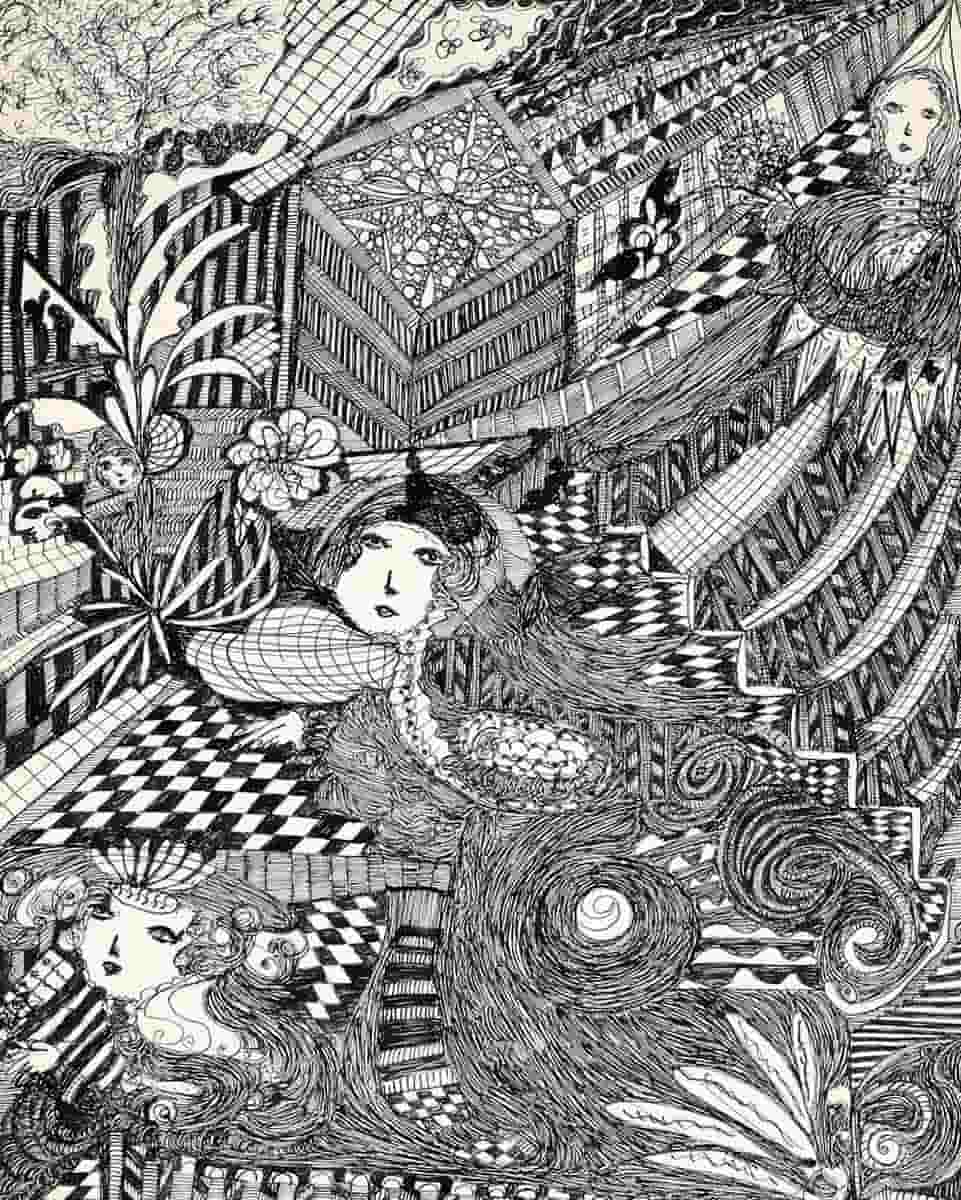
Madge Gill was born in London as an illegitimate child and lived the first decade of her life in isolation, as her mother was too embarrassed to let anyone know she gave birth out of wedlock. In 1892, she gave Madge away to an orphanage and ensured the girl was sent to Canada. Gill worked as a domestic servant and remained close to her aunt, who introduced her to spiritualism.
Gill’s interest in art occurred suddenly. In 1920, she was confined to bed after giving birth to a stillborn girl. She became seriously ill and even lost sight in her left eye. During long days of pain, she claimed to be visited by a spirit, Myrninerest, who guided her hand over paper. She produced dozens of images daily, most of which featured a figure of a young woman (possibly her or her lost daughter) surrounded by complex architectural structures. Gills’ works were discovered only after her death, as she was afraid to share her work and upset the spirit.