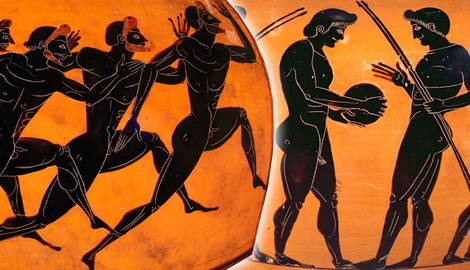
The Greek gymnasium, derived from the word gymnos, meaning naked, was an athletic complex where citizens of a city gathered to exercise. As the name of the institution would suggest, they did this completely naked. But it was more than a place for physical training. They were also educational centers where boys were trained to be productive citizens and lead fulfilling lives. Boys and men of all ages gathered and learned rhetoric, philosophy, music, and artistry. The gymnasium became a focal point of Greek identity, a symbol of the athletic, intellectual, and moral excellence of Greek culture.
Origins of the Gymnasium
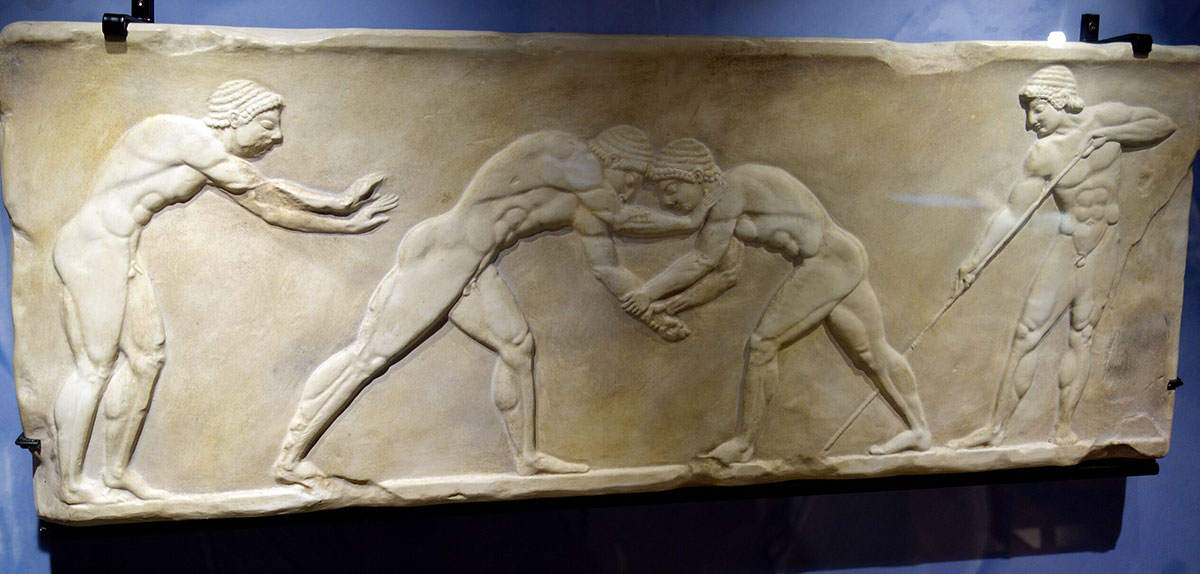
It is thought that the gymnasium originated as a space where boys and men could train skills required in warfare. We see some of these activities in Homer’s Iliad, in Book 23. At the funeral games of Patroclus, the Greek heroes participate in chariot racing, spear throwing, wrestling, and a foot race. Though in Homeric times-both the time Homer’s poems were set as well as in the 8th century BC when Homer likely lived-there was no institution called a “gymnasium.” All the events that would take place during festivals could be practiced outside with enough space. It was only with the rise of city life that the need for a dedicated space for physical training emerged.
The institution of the gymnasium began in the 6th century BC as a place where men could gather to compete against each other in sporting events, like races or wrestling. In Athens, the three most prestigious gymnasia complexes, the Academy of Plato, the Lyceum, and the Cynosarges, were all located and developed out of sacred groves outside the city walls. These gymnasia likely still only consisted of a shaded area where citizens could exercise in relative comfort.
Structure and Layout
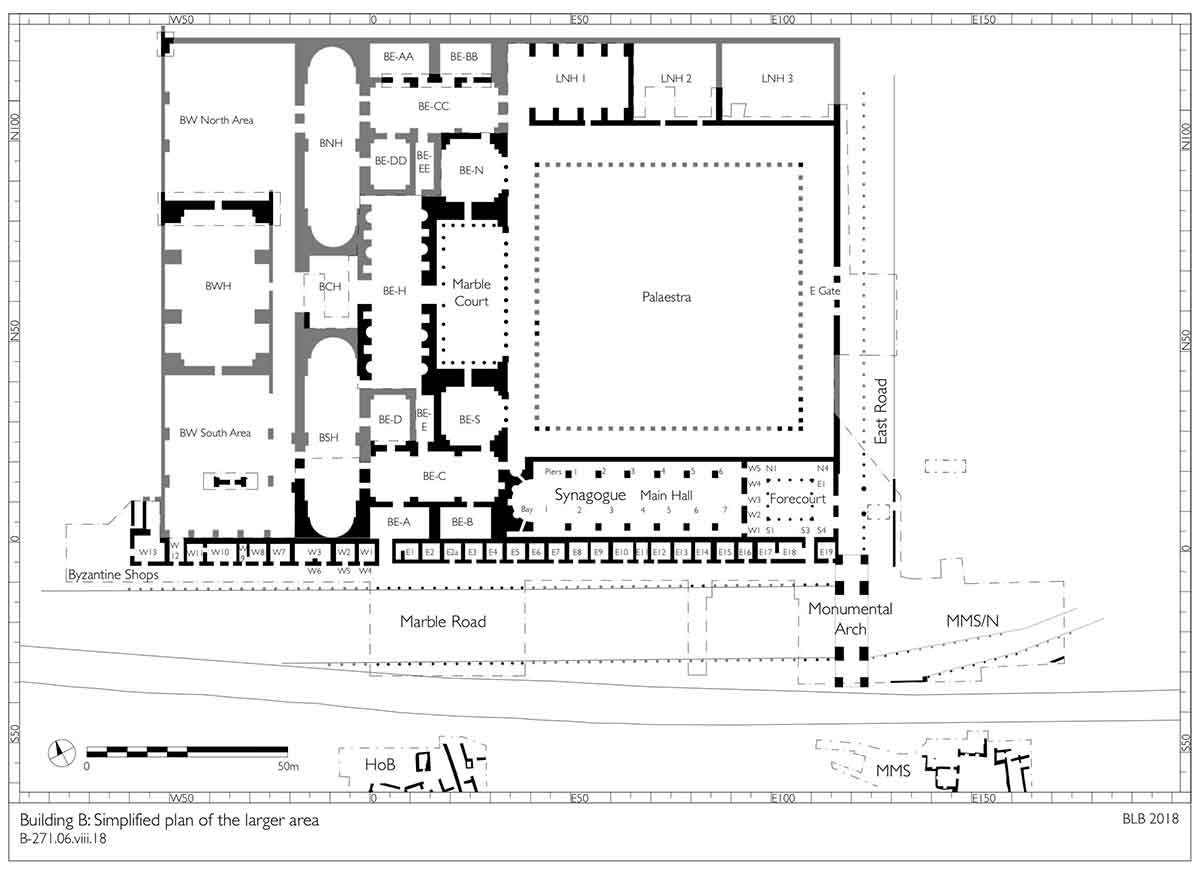
Most gymnasia consisted of two buildings, the gymnasium and the palaestra, though the two were so interconnected in function that either word came to refer to the entire complex. The palaestra, derived from the word pale, meaning wrestling, was an enclosed peristyle courtyard with sand pits for wrestling and boxing. The earliest example of the type of gymnasium, that would become standardized over the Greek world, can be found at Delphi. It had two running tracks, one open air and one roofed, a palaestra, bathing areas, as well as changing and storage areas.
Vitruvius, an architect and architectural historian from Augustan Rome, described the ideal palaestra in his On Architecture. He wrote that the ideal palaestra should be a wide courtyard, the circuit around which is two stades in length. It should be open to the sky and surrounded by a peristyle colonnade on all sides, and on the south side should be a double row of columns. On the north, east, and west sides, there should be recesses behind the colonnade with seats where philosophers and rhetoricians can gather and converse. On the south side, behind the double colonnade, should be another recessed area with ample seating where young men could receive their civic education. Beside this area would be a punching bag room, dust or powder room, and cold and hot baths. There should also be rooms for anointing oneself in oil, dressing rooms, and storage rooms.
Vitruvius also described the ideal gymnasium as a complex adjoining the palaestra with a colonnade along the outside wall and two covered colonnades, called xystoi, perpendicular to the first, each a stade long. Here athletes could run, even in poor weather. Around the xystoi were sunken paths where people could walk without interfering with those who were exercising. One side of the gymnasium should be open to the public. The large courtyard between the colonnades was likely used for discus and javelin throwing. Vitruvius ended his description by writing that behind the xystoi should be a stadium set up so people could watch athletic competitions.
Administration and Staff
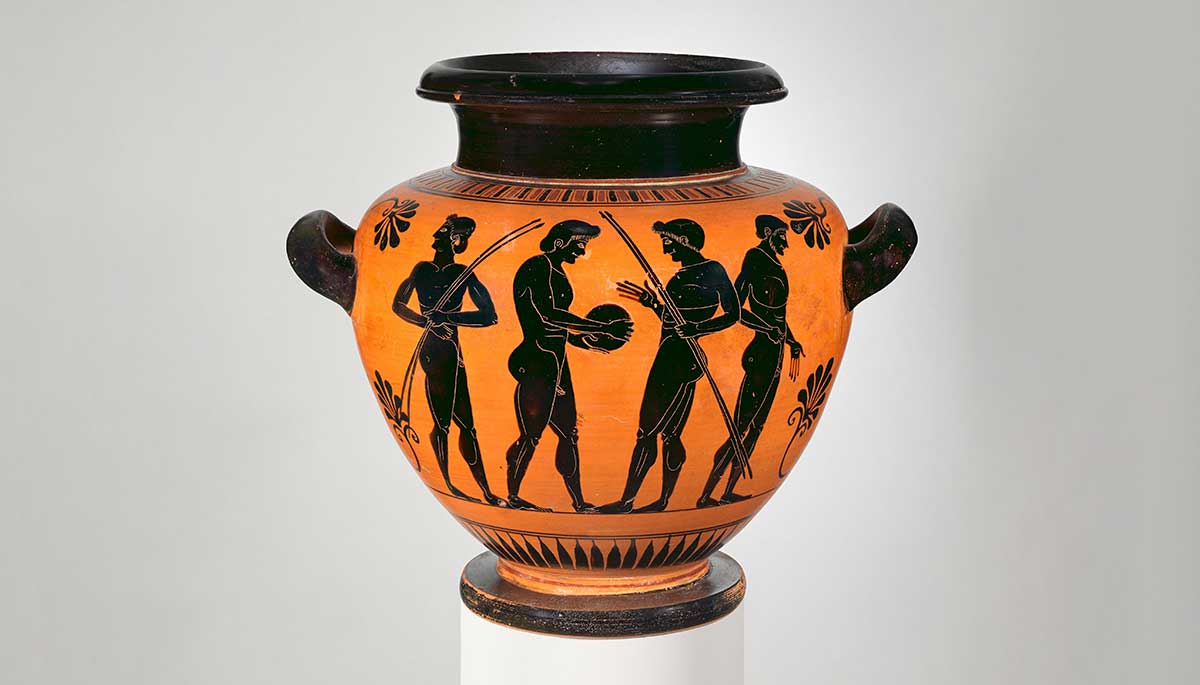
Gymnasiums were overseen by a public official known as the gymnasiarch. They were elected every year and had to be between the ages of 40 and 60. They were in charge of the building, staff, and training programs. Based on inscriptions, the gymnasiarch also organized competitions and performed sacrifices for the well-being of those under his authority.
The gymnasiarch was assisted by the paidonomos, a man over 40 who was appointed to the position. They aided in choosing staff and in settling disputes among instructors. They also decided who had completed their studies and could progress to the next year’s lessons. Teaching staff depended on the size of the city and the local priorities for the education of young men. There were grammarians, physical trainers, music teachers, and various military instructors.
An inscription from the island of Teos shows that different emphasis was placed on certain subjects, based on their place in the inscription as well as their listed salaries. It suggests that reading and writing were necessary skills and were taught to both the boys and the girls. As such the grammarian was the first teacher to be hired and possessed a higher salary than most other teachers. The next teacher was the physical trainer, followed by the music teacher. Even though less of a priority than the physical trainer, the music teacher commanded a higher salary than all the other instructors. Last were the military instructors, who were paid the least and only taught for two months out of the year. This is likely due to military training being only given to older students who were preparing to become full citizens.
The Pursuit of Excellence
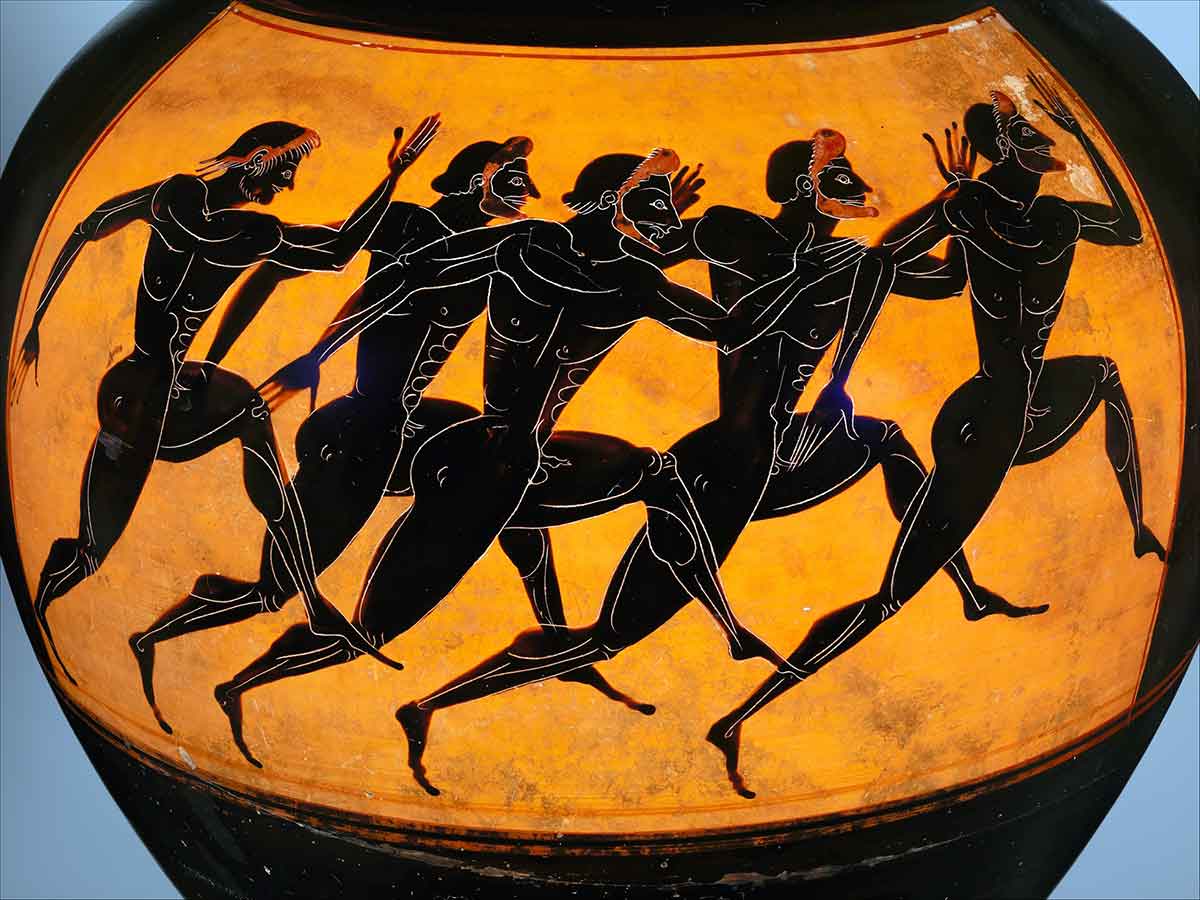
Therefore, the gymnasium was not only a place to train the body, but also the mind. We might closely relate it with a university, though this would not be a perfect comparison. In the Classical period, the gymnasium was a place for the formation of young men to become full citizens, but also a gathering place where men of all ages could socialize. Given their central place in civic formation, the gymnasium became a regular place where philosophers like Socrates and Plato could acquire new students. It is no surprise that some of Plato’s Dialogues were set in a gymnasium.
The formation of a fit body as well as a fit mind was a component in what the Greeks called arete, meaning excellence or virtue. Aristotle suggested that the proper education of young men should focus on training them to lead a virtuous life, both in body and spirit. The pursuit of arete consisted of training the body to be functional in life and in war, training the mind to be critical and rational, and training the spirit to be noble.
Hellenistic Gymnasia
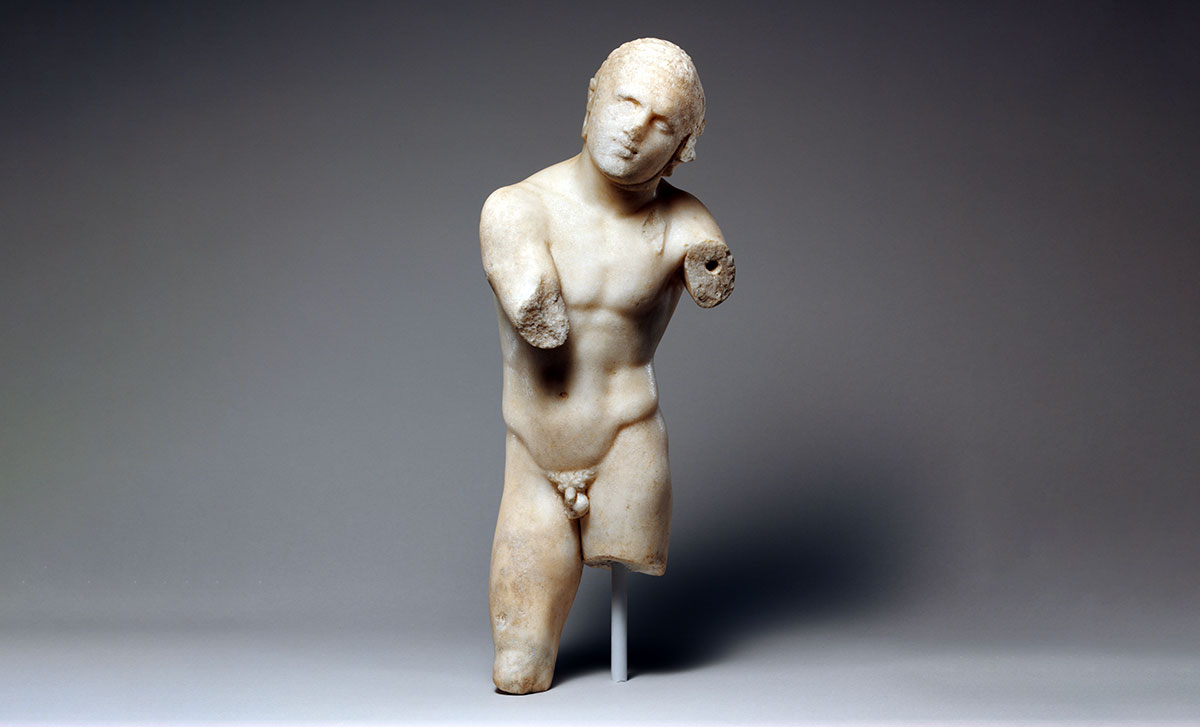
By the Hellenistic period, following the death of Alexander the Great, gymnasiums became a typical feature of “civilized” cities. In Rome, in the age of Augustus, Diodorus Siculus described the gymnasium as a place that contributed to the happiness of human life. Pausanias also wrote that the Phocidian community of Phanoteus was not a city because it did not possess the civic buildings, theaters, fountains, or a gymnasium that were typical of Hellenistic cities. Most archaeological evidence for gymnasia comes from the Hellenistic period. This suggests that it was only around the 4th century BC that gymnasia developed a distinct architectural style that could be recognized. Before this time, most evidence comes from literary sources.
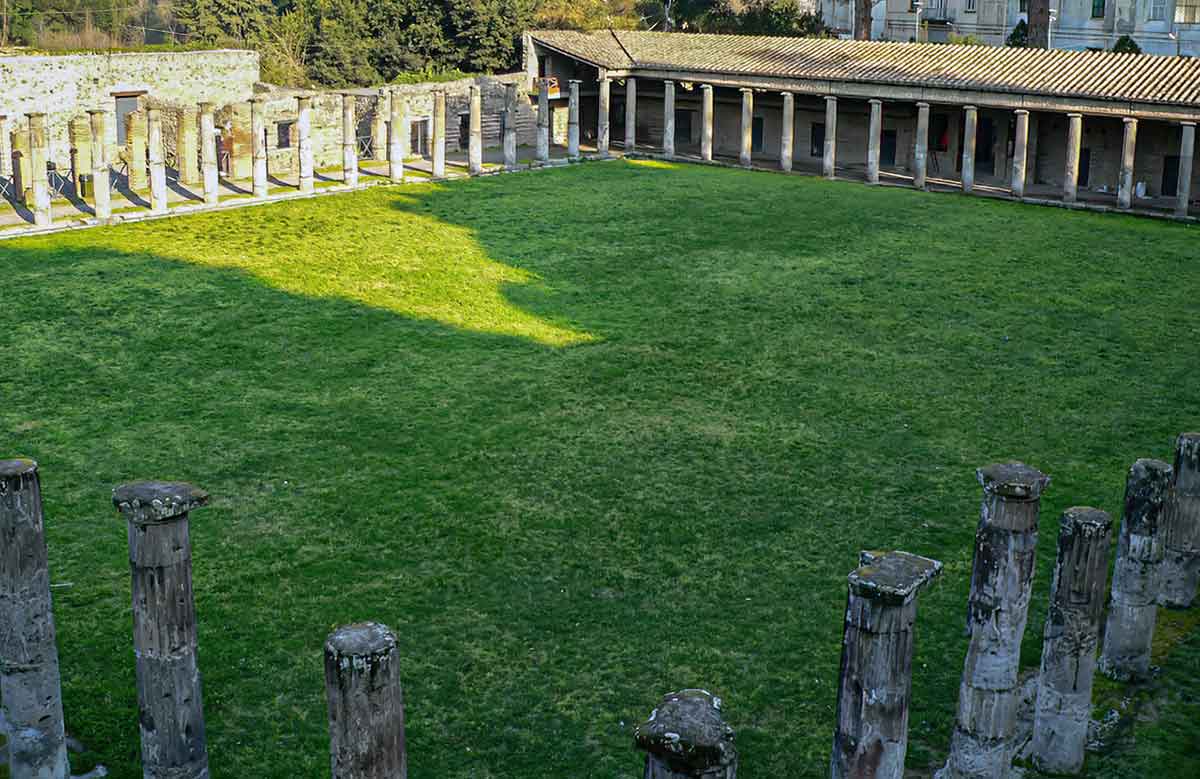
The Romans further modified the layout of the gymnasium by adding Roman style baths to the palaestra. Athletics in Rome never possessed the same appeal as it did in Greece. The Romans were more interested in the practical skills taught by sports rather than victory in competition. The athletic world of the Panhellenic Games was dominated by professional athletes, whose training made them useless as soldiers. What had traditionally been an institution to produce fit citizens and competitions to bring glory to oneself and one’s city, had become corrupted by professionals competing for the glory and support of wealthy patrons.
Decline and Legacy
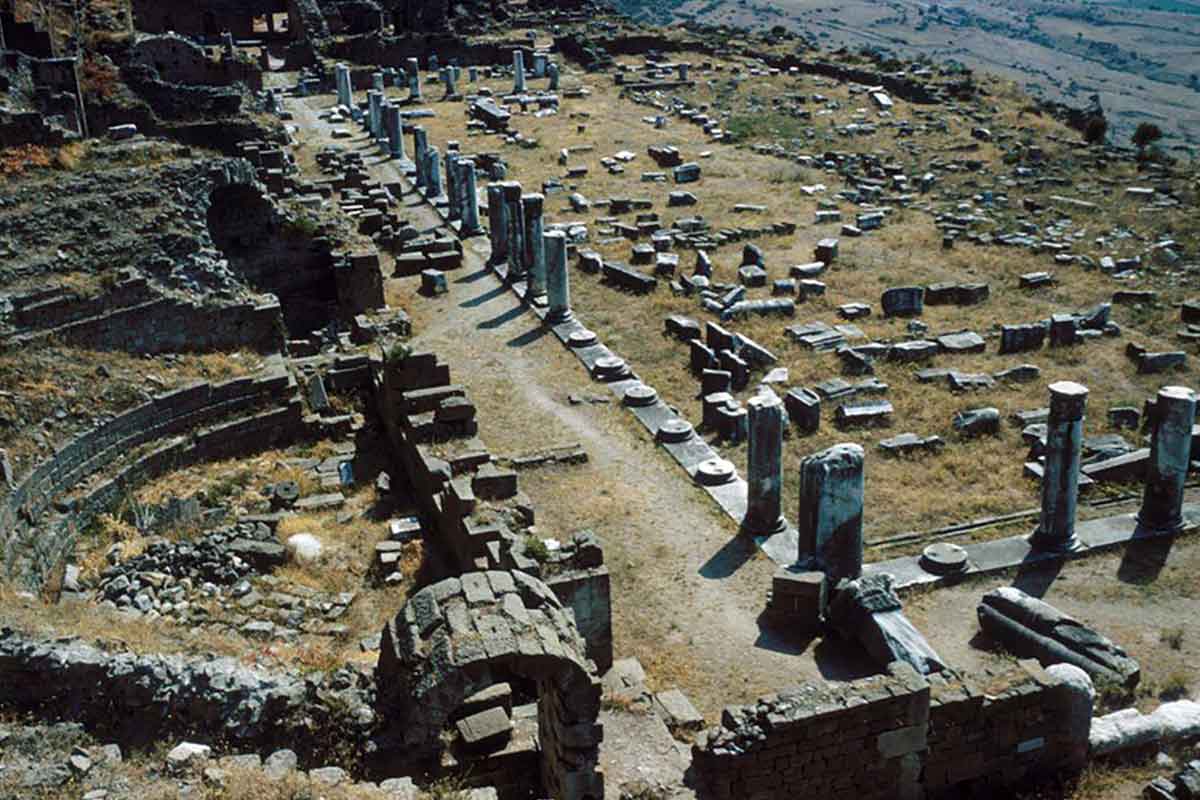
During the Hellenistic period, the city gradually became less involved in the institution of the gymnasia and palaestra, shifting the financial burden onto individuals. As Greek culture spread into the East, and then with the domination of the Romans, membership to the gymnasium was no longer restricted to Greek citizens.
As private individuals became the owners and managers of gymnasia, access became more expensive and membership became a status symbol for the wealthy elite. With the rise of Christianity, public nudity and mixed bathing became increasingly criticized, and the moral pressure began to outweigh the cultural prestige of the institution. By the 5th and 6th centuries AD, many gymnasia were closed or repurposed as churches. Though the institution and many of its functions were lost, the original function still remains in today’s gymnasiums, as a place to gather and train for physical fitness.
Sources
- Forbes, C. A. (1945). “Expanded Uses of the Greek Gymnasium.” Classical Philology, 40(1), 32–42.
- Gardiner, E.N. (2019). The History of Ancient Greek Sports and Athletic Festivals. Musaicum Books.
- Gauthier, P. & Lianou, M. (2013). “Notes on the Role of the Gymnasion in the Hellenistic City.” In J. König (ed.), Greek Athletics (pp. 87–102). Edinburgh University Press.
- Miller, S. G. (2004). Ancient Greek Athletics. Yale University Press.
- Reid, H. L. (2020). “Plato’s Gymnastic Dialogues.” In Reid, H.L., Ralkowski, M. & Zoller, C.P. (eds.), Athletics, Gymnastics, and Agon in Plato (pp. 15–30). Parnassos Press – Fonte Aretusa. https://doi.org/10.2307/j.ctv1fkgc3p.6