
Despite having no formal training, Henri Rousseau quit his job as a toll worker in 1893 and began pursuing a career in the art world. His forms lacked the precise study of anatomy expected in the art world at the time, and his paintings drew derision.
But what drew such mockery was eventually recognized as having a valuable quality of its own, and eventually the art world accepted his style and lauded Rousseau as a pioneer and an absolute master of what would be described as naive art.
Defining Naive Art Beyond Lack of Academic Training
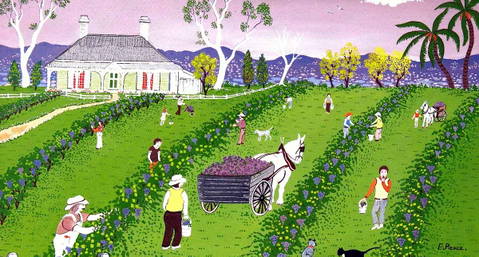
Naive art is a visual category that transcends simplistic reductions of “lack of academic training.” Such training creates skills of perspective, modeling, composition, light, and anatomical proportion, among other things. But it does not mean that without it a work cannot be sophisticated. Human beings have creativity and means of expression outside of formal education. There is still intention, intelligence, discipline, and personal vision.
Visual Characteristics That Define the Naive Aesthetic
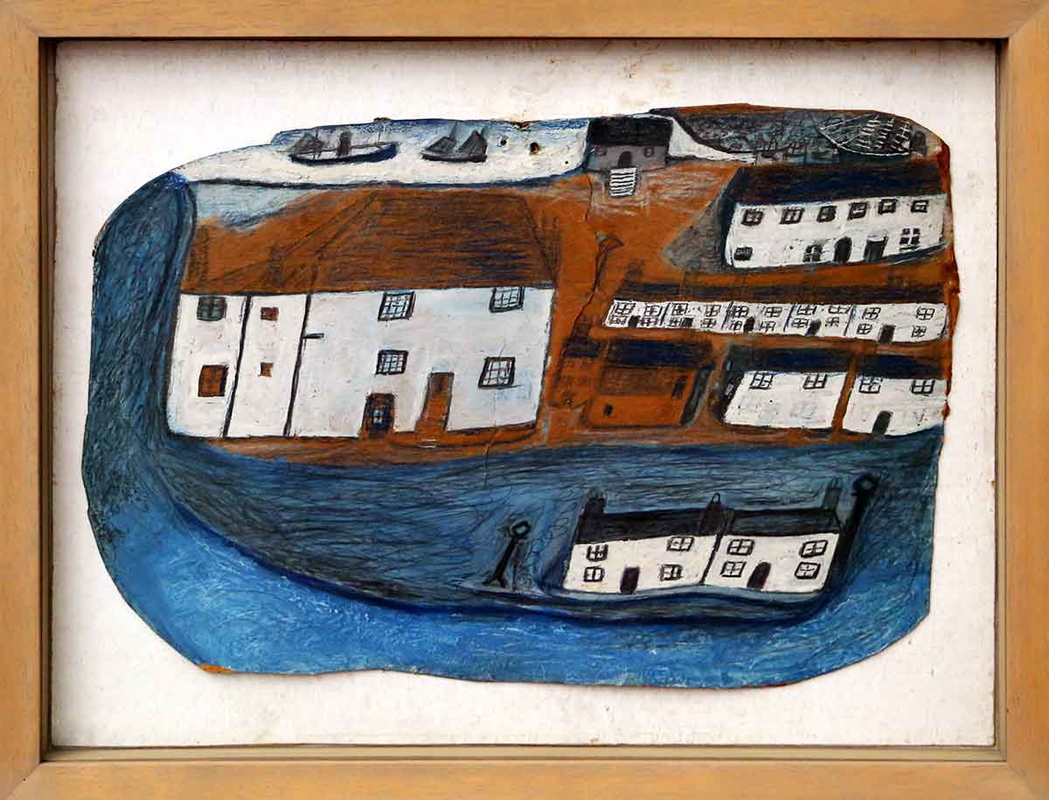
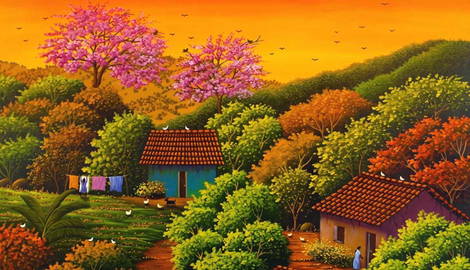
The characteristics of naive art are defined by the lack of academic form, where perspective is flattened, colors are unmixed, and complex lighting is omitted. Here, there is no realistic realization of depth or proportion, resulting in imagery that has been described as “childlike,” “awkward,” or “innocent.” Nevertheless, this style of art often produces complex detail with dense, intricate compositions. This is because there is no use of the formal methods that create the illusion of detail.
How Henri Rousseau Bridged Sunday Painting and the Avant-Garde
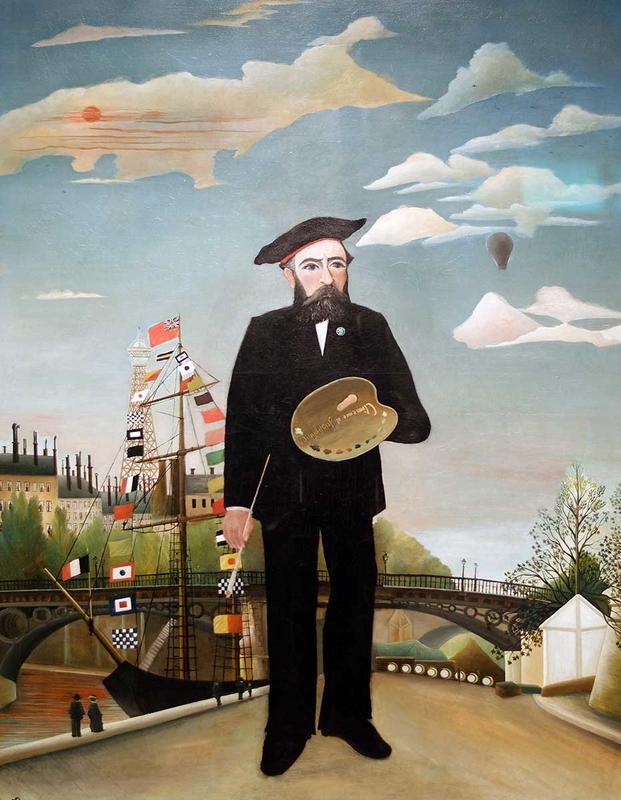
Considered the archetypal example of a naive artist, Henri Rousseau was responsible for laying the foundation for the naive art movement. His lack of training was apparent in his paintings; he and his art were ridiculed in their day. One Parisian art critic even stated, “Monsieur Rousseau paints with his feet with his eyes closed.” Apocryphal stories even suggest Rousseau’s entry into the art world was the result of a prank or a wager.
As an artist, Rousseau had a late start, picking up the brush in his early forties, and quitting his job as a toll and tax collector at the age of 49 to take up his passion full-time. He first displayed his work in 1886 at the Salon des Indépendants, and despite disparaging remarks, he continued to paint and exhibit until his death in 1910.
Such naivety in art was eventually accepted, and Rousseau rose to critical acclaim, drawing support from the likes of Pablo Picasso and Wassily Kandinsky, the latter of whom wrote, “In Rousseau’s pictures is the only indispensable means of expression for the voice of spirit.”
Although he received positive recognition during his lifetime, much of it arose after his tragic death from a gangrenous leg. His work continued to influence avant-garde artists and surrealism and set the stage for other self-taught artists to shine in the spotlight of international attention.
Distinguishing Naive Art From Primitivism
Naive art hinges on the lack of formal training. Those with formal training can produce the style, but it can be argued that their work cannot be classified as naive art because they achieve the style by rejecting professional methods they already understand. This formal training can be ignored, but it cannot be erased or completely forgotten. If considered as such, the result is “pseudo-naive” art. A perfect example of this is Frida Kahlo, who incorporated a naive style into her art.
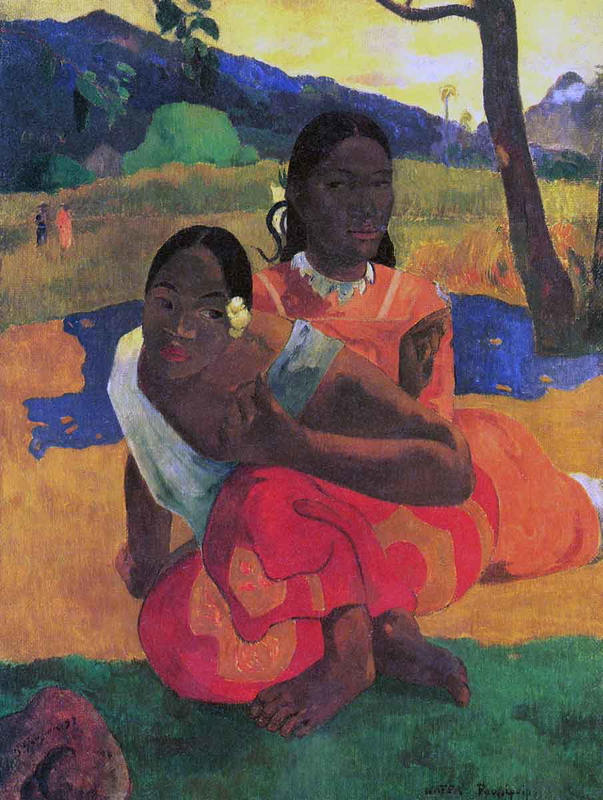
Some people may call it “primitivism”, although this term is falling out of use due to its perceived condescension. This is the movement in which artists draw from cultures regarded as “primitive.” And while it may seem to share aesthetic qualities, these styles or approaches to art are quite distinct, although they overlap significantly and are often conflated due to a messy evolution of the terminology.
Of note are the paintings of Paul Gauguin from his time in Tahiti, where he sought to capture the exotic forms of Polynesian daily life in a manner that is often described as primitivist.
How Self-Taught Painters Transformed 20th-Century Art
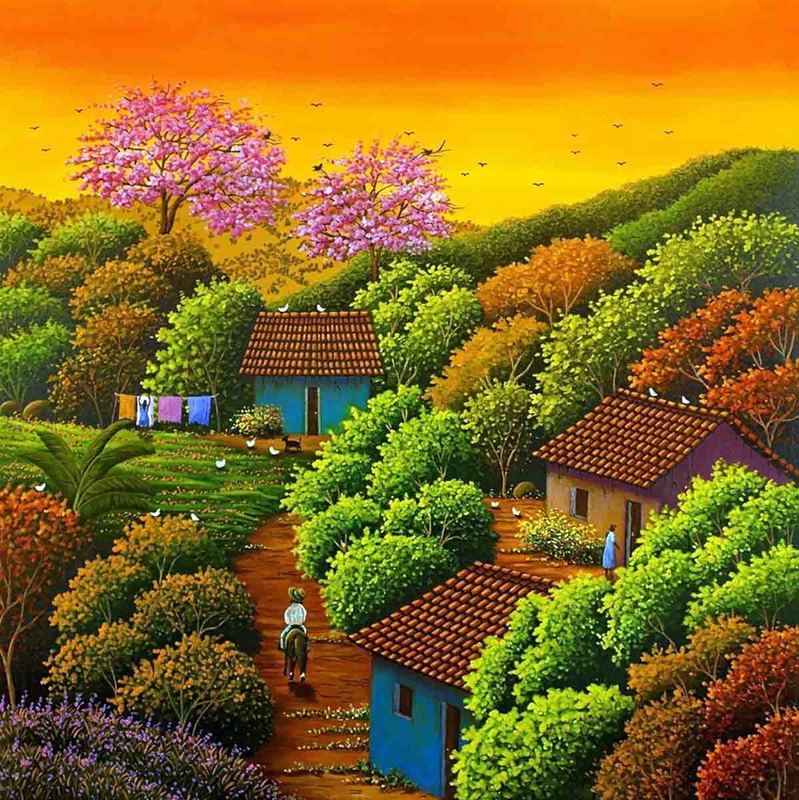
The 20th century saw a blossoming of naive art, as self-taught artists became more widely accepted. Institutions like the Museum of Modern Art started displaying the works of naive artists under the description of being “self-taught.” Such efforts continue today, with some galleries even being dedicated to the style.
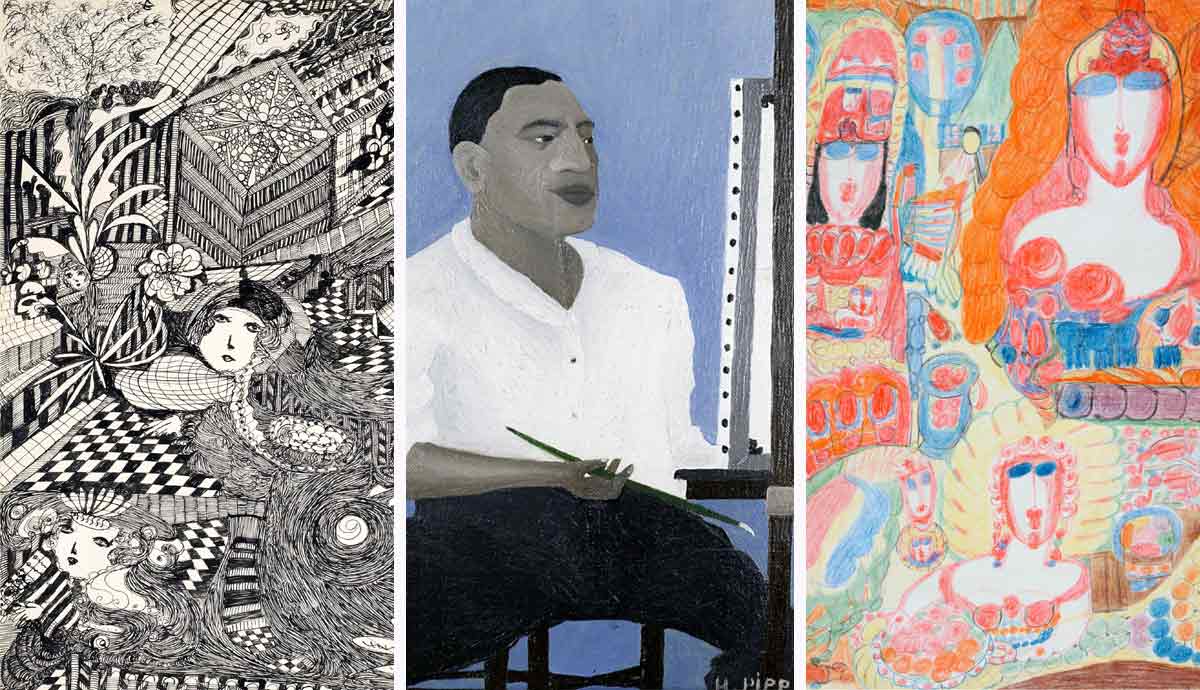
The list of examples of self-taught artists is long and includes famous names such as Grandma Moses, Ivan Generalić, Séraphine Louis, Nikos Pirosmani, and Alfred Wallis, to name just a few. Without the need for formal training, anybody can have their work recognized and praised, and as such, naive art has produced and continues to produce many of the world’s contemporary artists, from painters to sculptors and even architects.