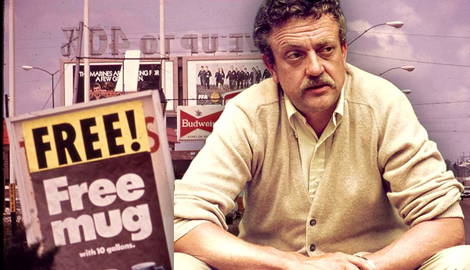

Like many veterans, Kurt Vonnegut was disillusioned by his experiences in World War II. The firebombing of Dresden in 1945 proved particularly influential on Vonnegut’s writing. He could no longer rely on traditional literature to adequately explain modern life. Instead, he filled his novels with time-traveling veterans, lethal futuristic inventions, and indifferent alien races to critique modern life. Across some of his most famous works, such as Slaughterhouse-Five, Cat’s Cradle, Player Piano, and Breakfast of Champions, Vonnegut used science fiction not as escapism from society, but as a means of critiquing its contradictions and absurdities.
Why Absurdity Served as the Ultimate Weapon Against Post-War Conformity
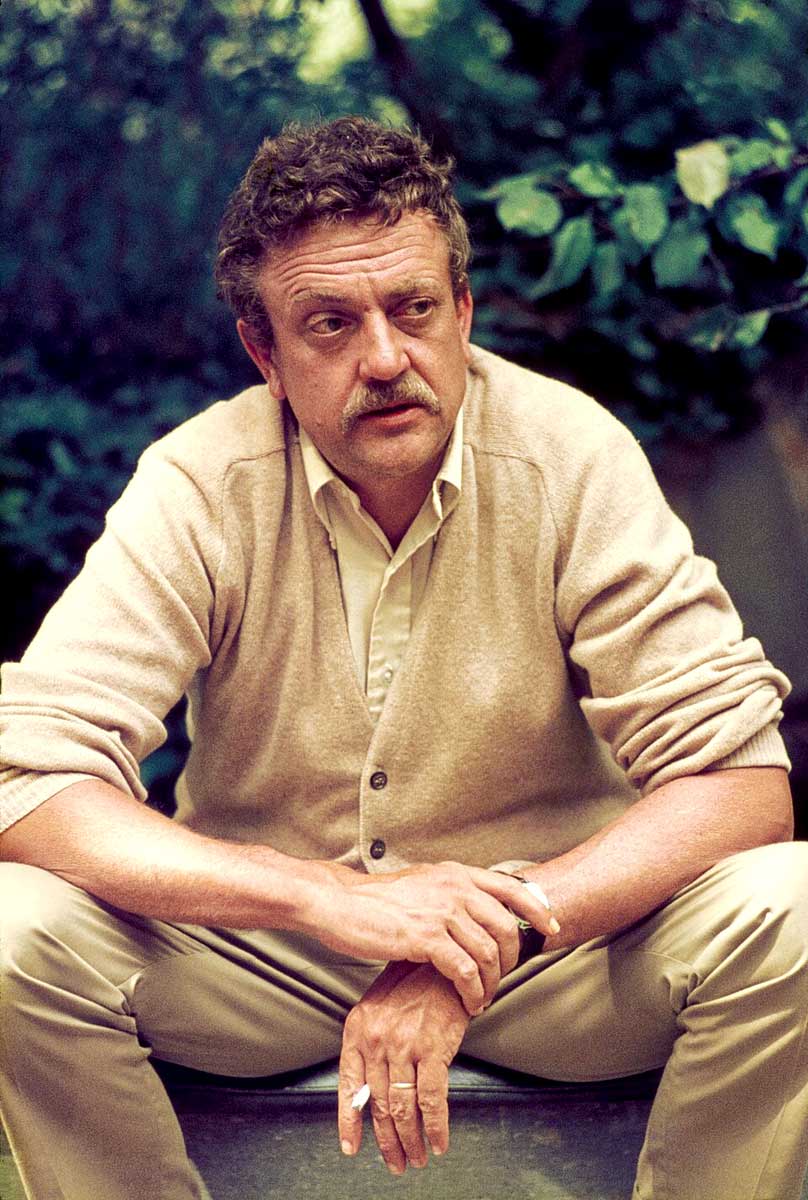
The economic prosperity of post-World War II America in the 1950s encouraged Americans to embrace consumer culture, pursue a romanticized suburban lifestyle, and put their faith in institutions. Meanwhile, the Cold War loomed in the background with the threat of nuclear war. A society that claimed technology could improve life via consumer appliances, cars, television, and space exploration could also create the possibility of destroying civilization. Rather than search for explanations or moral certainty in a culture that celebrated individual freedom while encouraging conformity, Vonnegut embraced a worldview in which the universe was indifferent to human concerns. His fiction was punctuated by catastrophic events, acts of random suffering, and cosmic indifference, all blended with dark humor. Vonnegut was not merely expressing hopelessness, but creating a coping mechanism.
Through absurdism, Vonnegut enabled readers to confront bleak realities without succumbing to despair. Traditional literary realism failed at this. The horrors of World War II, the atomic bomb, and a bureaucratic system responsible for mass destruction challenged conventional assumptions about human progress and rationality. These topics could not be translated with traditional literary techniques, like a linear narrative, chronological timeline, and coherent protagonist. Realism had the capacity to detail events. Yet, it failed to capture their true absurdity. Vonnegut turned to science fiction and speculative storytelling techniques. Time travel. Alien races. Imagined technologies. All of these topics permitted Vonnegut to explore truths around war, conformity, and human behavior that traditional literary realism alone was unable to fully express.
“Slaughterhouse-Five” Weaponized Alien Abduction to Process Real Wartime Trauma
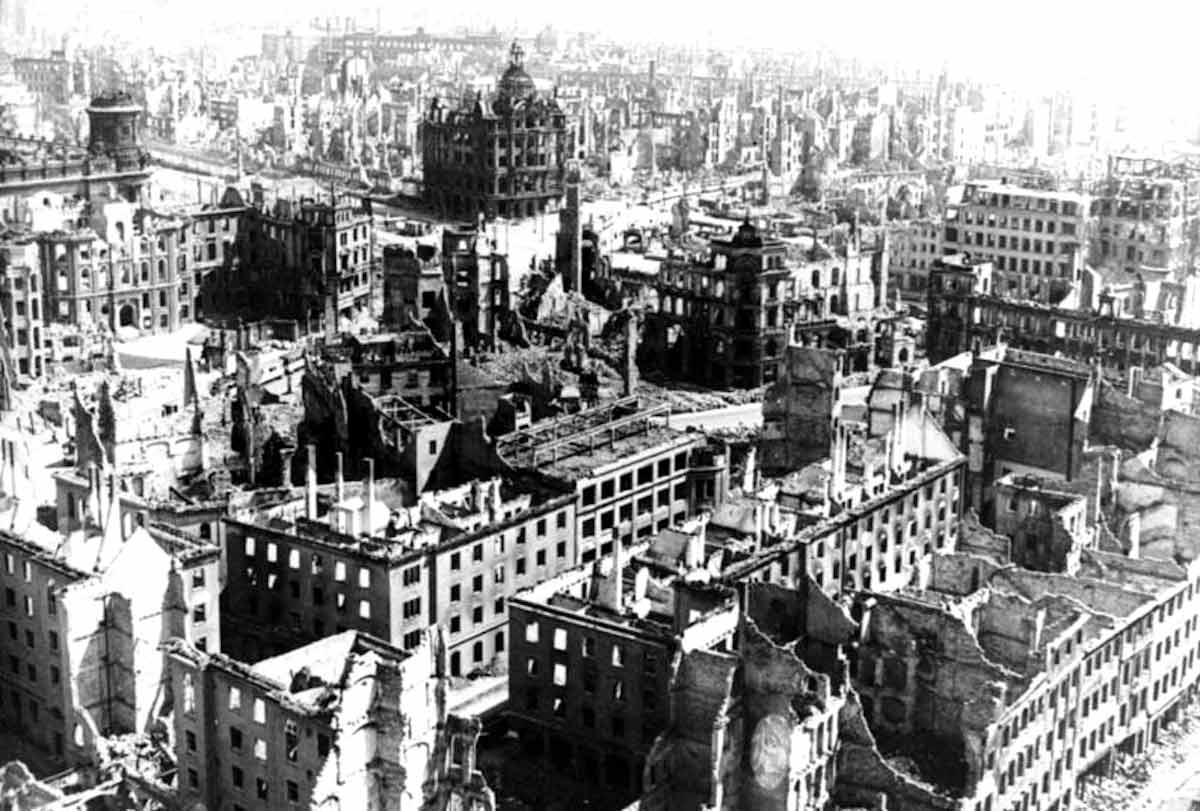
Drawing inspiration from his personal experiences as a prisoner of war following the firebombing of Dresden in 1945 during World War II, Slaughterhouse-Five follows the life of Billy Pilgrim, a fatalistic American soldier and chaplain’s assistant. In the novel, Billy becomes “unstuck in time,” moving unpredictably through time between moments from his past, present, and future.
The Tralfamadorians are central to the novel. They are an alien species from the planet Tralfamadore who possess the power to see in four dimensions, simultaneously viewing all moments in the space-time continuum. They universally adopt a fatalistic worldview. Death means nothing to them. It is not an end, but merely a fixed moment rendering them emotionally neutral. This philosophy is encapsulated in the repetitive phrase “so it goes,” which follows every mention of death in the novel.
The Tralfamadorians function as a metaphor reflective of Post-Traumatic Stress Disorder (PTSD). Billy Pilgrim’s distorted perception of time is representative of a mind trapped in the past and present, unable to fully escape trauma. This is much like the experiences of soldiers returning from war who involuntarily re-experience violent or distressing memories outside of chronological order. By imagining a perspective in which all events are predetermined and equally insignificant, Vonnegut uses the Tralfamadorians to undermine religious and philosophical narratives that seek to justify the horrors of war.
In Slaughterhouse-Five, soldiers are not portrayed as disciplined heroes, but as frightened and confused individuals caught in systems beyond their control. Vonnegut critiques both the experience of combat and the systems that romanticize it afterward. The novel opposes traditional narratives and patriotic rhetoric by presenting war as chaotic and arbitrary, where instances of bravery are accidental or ultimately insignificant.
“Cat’s Cradle” Exposed the Deadly Hubris of Unchecked Scientific Progress
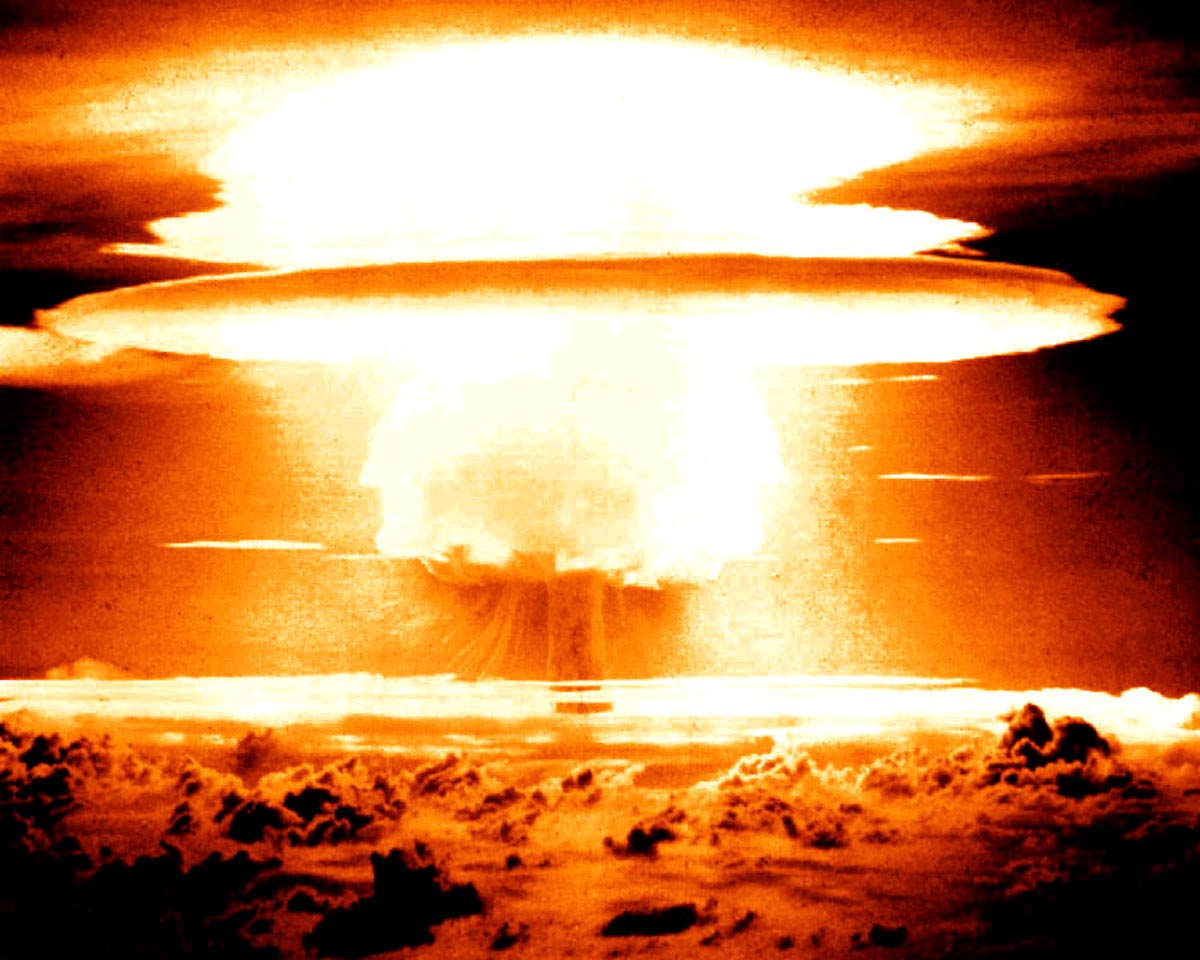
Vonnegut extends his critique by satirizing the ethical responsibility of the scientific community during the nuclear arms race in his novel, Cat’s Cradle. The novel suggests that scientific progress operates independently of moral responsibility, with technological advancements operating with little regard for human survival.
Ice-Nine is a fictitious substance capable of freezing any liquid water it comes into contact with. It was created by Felix Hoenikker, a Nobel Prize-winning physicist who was depicted as amoral and detached towards anything other than his own research. Ice-Nine is therefore a symbol of technological advancements devoid of ethical constraints. After an airplane crash causes a palace cliff to collapse, the frozen body of dictator Papa Monzano—who had committed suicide by ingesting Ice-Nine—falls into the ocean, instantly freezing the world’s waters.
Similarly, Ice-Nine functions as an absurdist extension of the threat of the Cold War and anxieties revolving around nuclear weapons. Like the atomic bomb, Ice-Nine represented a point of no return. The novel’s bleak conclusion is representative of Vonnegut’s concerns that scientific detachment and institutional competition could inadvertently cause global annihilation without deliberate intent.
Other than critiquing the scientific community, Vonnegut introduces a fictional religion known as Bokononism, the native religion on the island of San Lorenzo. It is based on the ideology of enjoying life through the belief in harmless untruths. Followers of Bokononism therefore find comfort in narratives that provide meaning and structure in an otherwise chaotic world.
This invented faith allows Vonnegut to satirize both institutional religion and political ideology. In doing so, Vonnegut raises a broader question throughout the novel: are the scientific, religious, and political systems constructed by humans a tool for understanding reality, or simply mechanisms that help them survive reality?
Dismantling the American Dream Through Techno-Pessimism in “Player Piano”
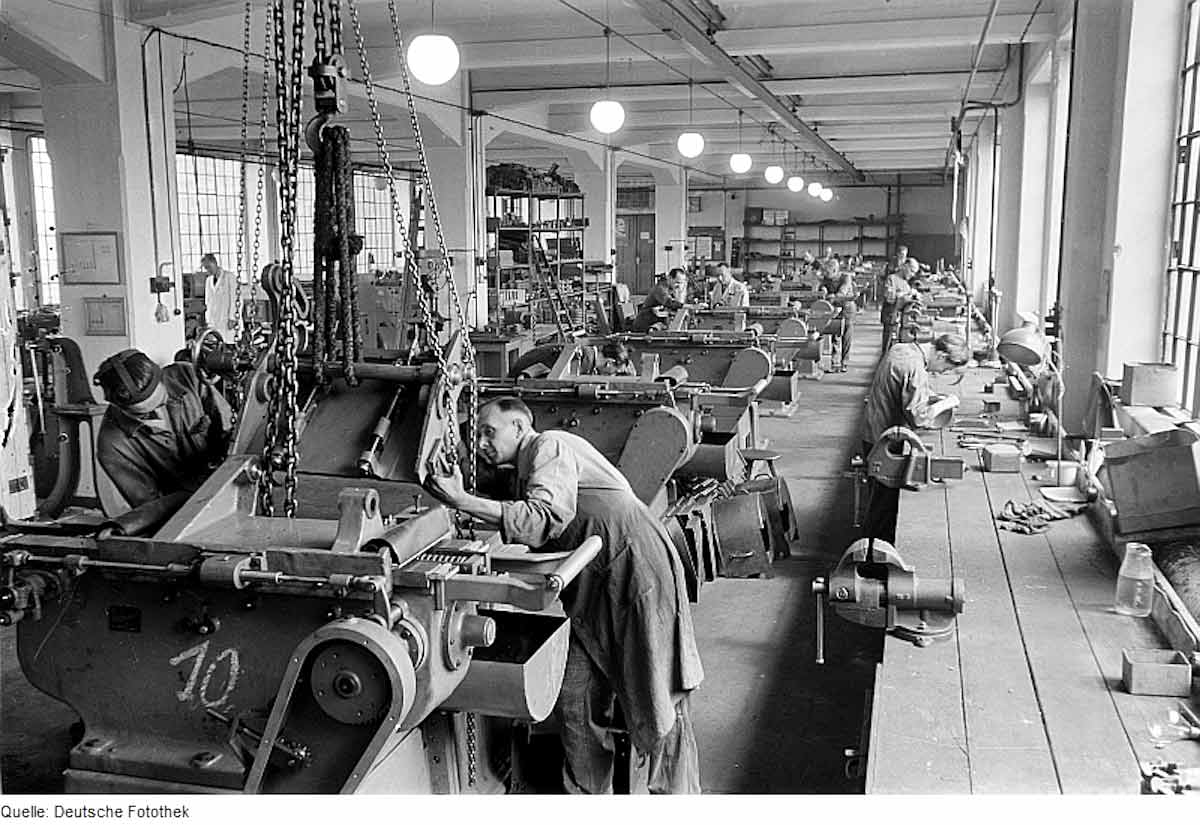
Unlike later critiques of war and scientific advancements, Vonnegut’s debut novel, Player Piano, critiques the structure of industrial capitalism. The novel is set in a dystopia in which automation systems have allowed factories to operate with only a few human laborers. This creates a divide between the upper class, engineers, and managers who keep society afloat, and the lower class, who have been replaced by machines.
While automation is presented as a means of improving productivity and reducing human effort, Vonnegut critiques its social consequences. The novel’s protagonist, Dr. Paul Proteus, is the manager of Ilium Works, a highly automated manufacturing complex in the fictional city of Ilium, New York. Despite his status, Paul becomes increasingly dissatisfied with a system that measures human worth according to technical usefulness, leaving large numbers of the population redundant or reassigned to meaningless roles. The dissatisfaction Paul experiences is heightened when he visits the “Homestead” section of Ilium, where workers replaced by machines live out their lives in mass-produced houses without purpose, dignity, or class mobility.
Contemporary anxieties revolving around artificial intelligence and the devaluation of human worth mimic the concerns Vonnegut raised in Player Piano decades prior. Consequently, a society that worships efficiency risks eliminating the very human value it claims to enhance. This danger is embodied in Paul, who, despite holding a high status, becomes increasingly alienated, ultimately leading to his arrest and trial. Vonnegut illustrates how a society centered around machines treats dissent as a threat. This suggests that technological progress alone is unable to provide meaning and that a civilization valuing efficiency over everything else risks reducing human beings to expendable components in a larger system.
“Breakfast of Champions” Targeted Commercialism and Mental Illness in Free Markets
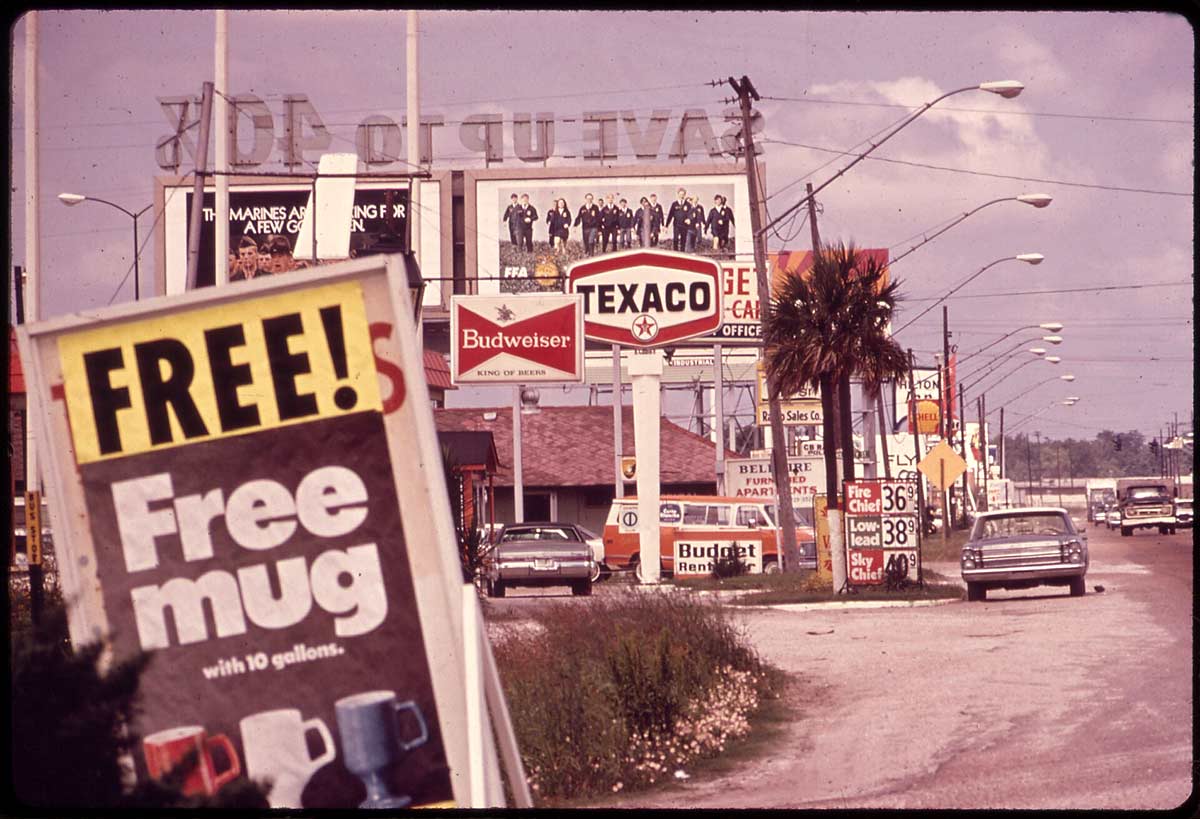
By the time Vonnegut published Breakfast of Champions, his critique of modern society had expanded beyond war, science, and automation to encompass American consumer culture itself. Throughout the novel, Vonnegut inserts himself into the narrative, includes his own illustrations, and repeatedly draws attention to the artificiality of fiction by referencing his other works.
The novel follows the lives of Dwayne Hoover and Kilgore Trout, a car salesman and struggling science fiction writer, respectively. Trout is widely considered Vonnegut’s literary alter ego. Despite publishing hundreds of novels and short stories, Trout believes himself to be a largely unknown writer, making a living from installing aluminum storm windows. Trout is representative of Vonnegut’s beliefs that ideas and messages are often overlooked because of the medium through which they are delivered. This emphasizes how capitalism devalues creative human labor. Trout is so alienated from his own work that he is completely unaware that anyone reads or values his stories.
Dwayne Hoover, however, is a wealthy business owner. Despite the idea of success Hoover possesses, he is left mentally unstable because of how capitalism has decimated his sense of purpose. After meeting Trout, Hoover reads one of his novels, believing it to be reality. He becomes convinced he is the only being in the universe with free will and that everyone else is a robot. This belief turns Hoover violent, causing him to injure his son, secretary, and Kilgore Trout. Hoover’s deteriorating mental health suggests that prosperity alone cannot provide fulfillment, particularly within a culture that prioritizes consumption over human connection.
Therefore, Breakfast of Champions ultimately stresses that the greatest threats to humanity are not alien invasions or futuristic technologies, but the destructive impulses embedded in everyday society. Vonnegut’s absurdist science fiction was never about predicting the future as much as it was about exposing the flaws of the present for readers to confront before they became impossible to ignore.