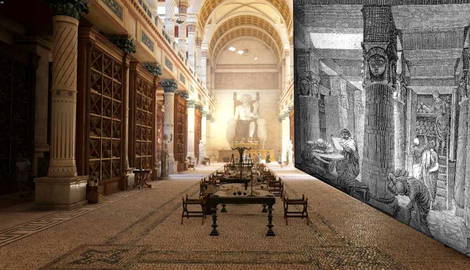

When one thinks back on the literary and scientific wealth of the ancient world, the Great Library of Alexandria immediately comes to mind, provoking awe at its sheer size and the magnitude of its archives, and sorrow at the knowledge that was lost with its destruction. A myth of a kind has been woven around it, which obscures the reality of its grand archives as well as that of its long decline, rather than a single, epic obliteration. This article will examine these two poles of its history and separate the truth from the myth.
The Myth of the Single Fire
A key part of the library’s myth is that of its destruction. It is built up in our historical imagination, so that it may be spectacularly torn down, in a conflagration of tragic proportions. Let us see exactly how.
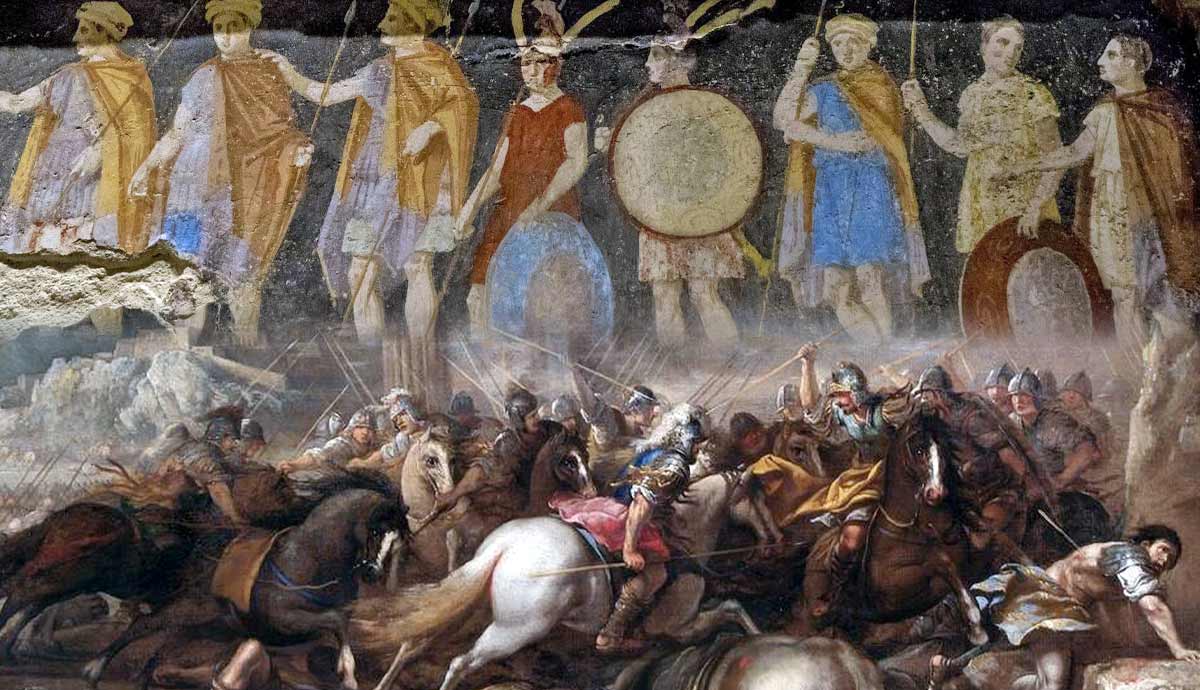
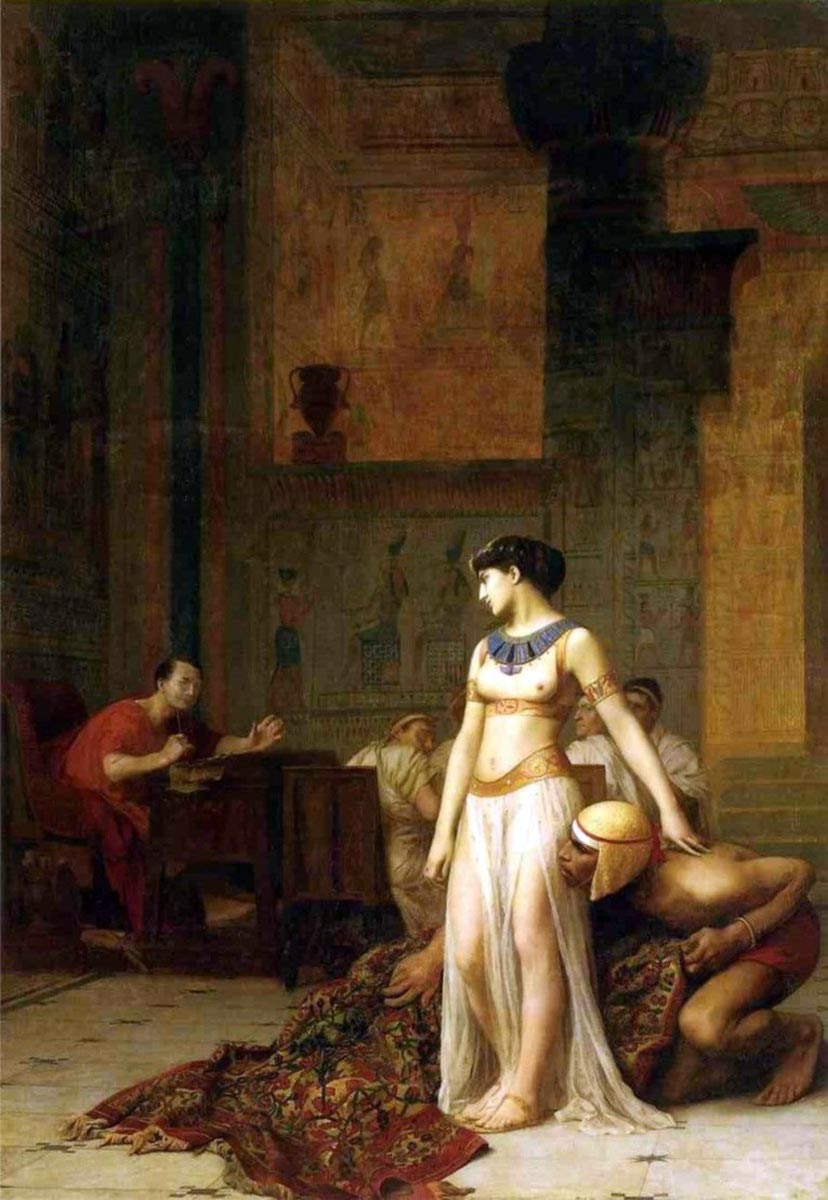
It is 48 BC, and the Roman Republic was engulfed by the first of many civil wars that would break out between its powerful men, first among them, Julius Caesar. Having defeated his rival, Pompey the Great in Greece, he pursued him to Alexandria, the capital of the Ptolemaic kingdom of Egypt. It was experiencing its own civil strife, between Cleopatra VII (the famous Cleopatra) and her brother, Ptolemy XIII.
Pompey had sought asylum in the court of Ptolemy but had found death instead, his head delivered to a horrified Caesar, who immediately sought to resolve the chaotic situation in Egypt. He wished to collect the debt the young Greek ruler owed him from years past and pay the legions that had delivered him his victory.
Factions within the Egyptian court, hostile to this foreign interloper, summoned the Ptolemaic army to Alexandria and surrounded Caesar and his men in the Royal Quarter. His only hope was to escape to his ships and flee, but the Ptolemaic fleet threatened to blockade the harbor. In an act of desperation, Caesar ordered his soldiers to set fire to the Egyptian ships.
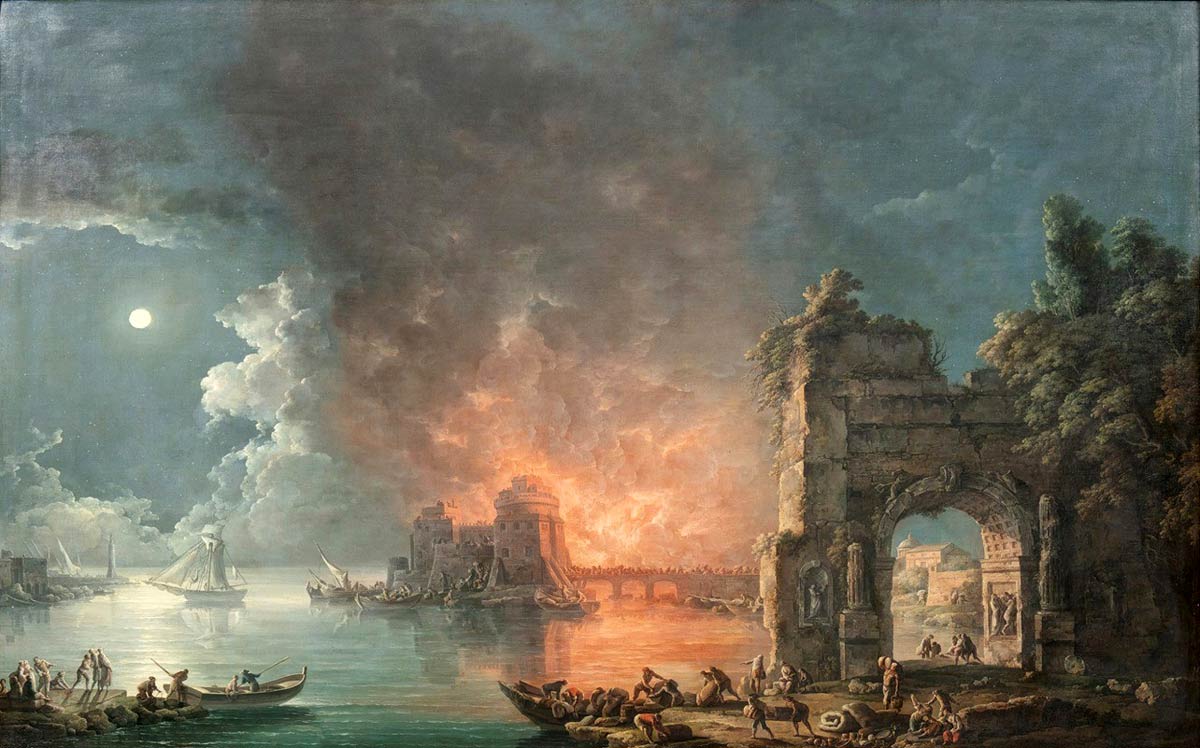
The fire spread among the ships of the fleet (possibly aided by powerful winds), and we can perhaps imagine the terrified expressions of the Greeks of Alexandria and the Ptolemaic court, as the flames jumped from trireme to trireme, until they finally reached the harbor warehouses and the Royal Quarter itself! That is where the Library was located; it is assumed that it did not take long for it to be engulfed in the flames.
The source of our exaggerated impressions of this first disaster, such as Seneca (quoting Livy) and Aulus Gellius, claims that 40,000 or 700,000 scrolls are lost (Seneca, On the Tranquility of the Mind, 9.5; Aulus Gellius, Attic Nights, 7.17). Another historian, Cassius Dio, mentions the harbor warehouses burning specifically, as well as a “library whose volumes […] were of the greatest number and excellence” (Roman History, 42.36). While 40,000 was certainly a loss, it does not compare to the tragic 700,000 figure given. The true number of the book lot eludes us.
Despite all of this, the scale of the destruction appears limited. The Greek geographer Strabo visited Alexandria 30 years after Caesar’s fire, in 20 BC, and described the Mouseion, the Great Library complex, as still operating and flourishing as a research hub, under the Caesars (Geographica, 17.8). Moreover, later emperors such as Claudius (Suetonius, Life of Claudius, 42.2) and Hadrian (Historia Augusta, Life of Hadrian, 20.2) would visit and expand the library, which was still around, even centuries later. This is a far cry from the definitive deathblow we are imagining.
What Was the Great Library?
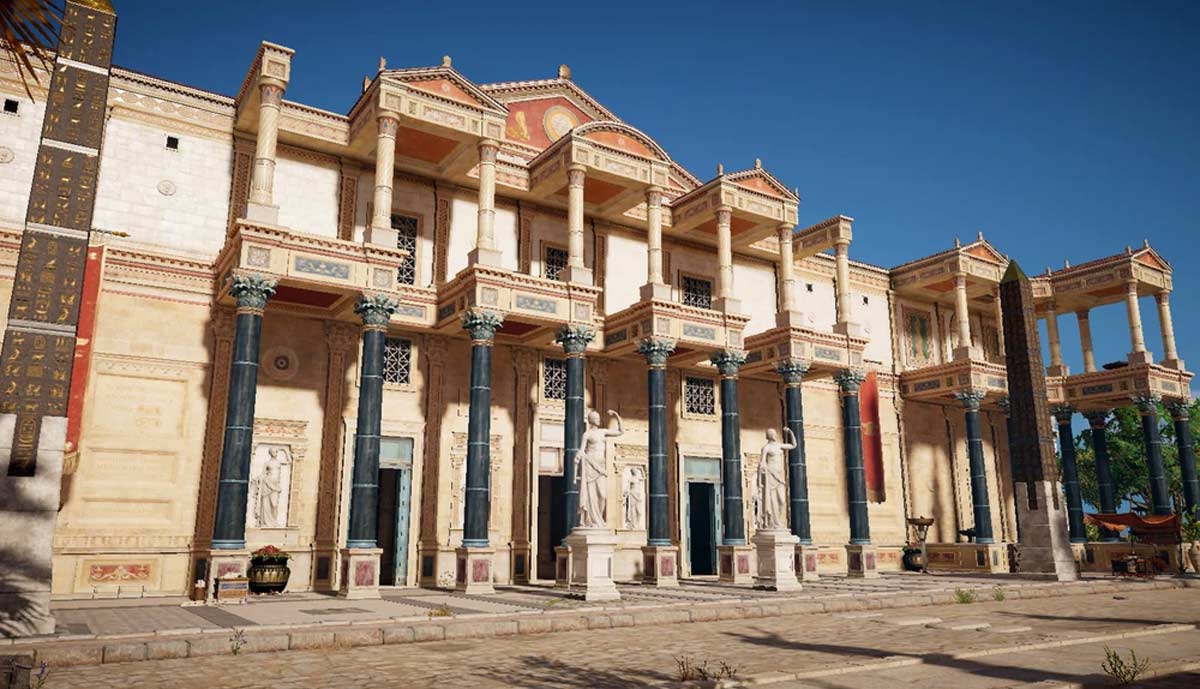
The library was therefore not lost in 48 BC, not altogether nor all at once, as we saw and will see below, but it was eventually destroyed. To get a better idea of what vanished, we must understand what was there in the first place and how it came to be.
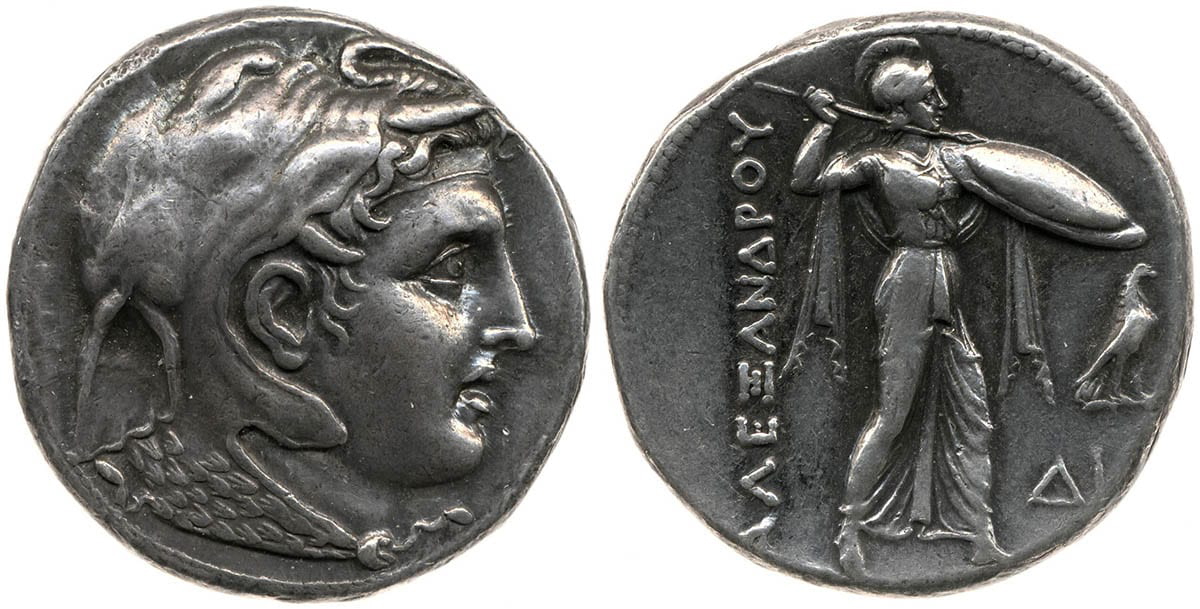
Almost three centuries before Caesar, Ptolemy I, one of the successors of Alexander and founder of the Ptolemaic kingdom of Egypt, began the construction of what would become the Great Library. His motivations for this were certainly multifaceted. He might have had a personal connection to the valuing of knowledge, having been a student of the great Aristotle, alongside Alexander, as a youth in Macedonia. Equally, he might have endeavored to earn himself and his new kingdom prestige by accumulating knowledge and attracting a multitude of scholars to his new capital. As the Greek world had been expanded from Greece to India, a new intellectual and cultural hub on a much larger scale than what Athens had been would have to be founded, and Egypt would be the place for it.
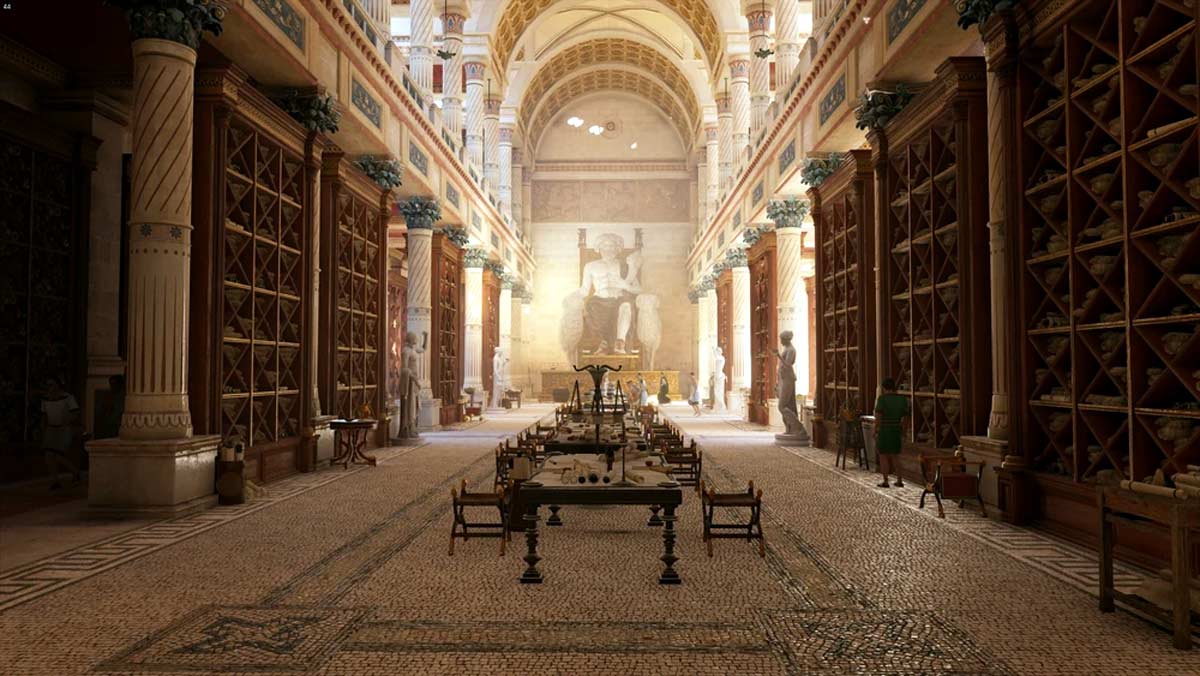
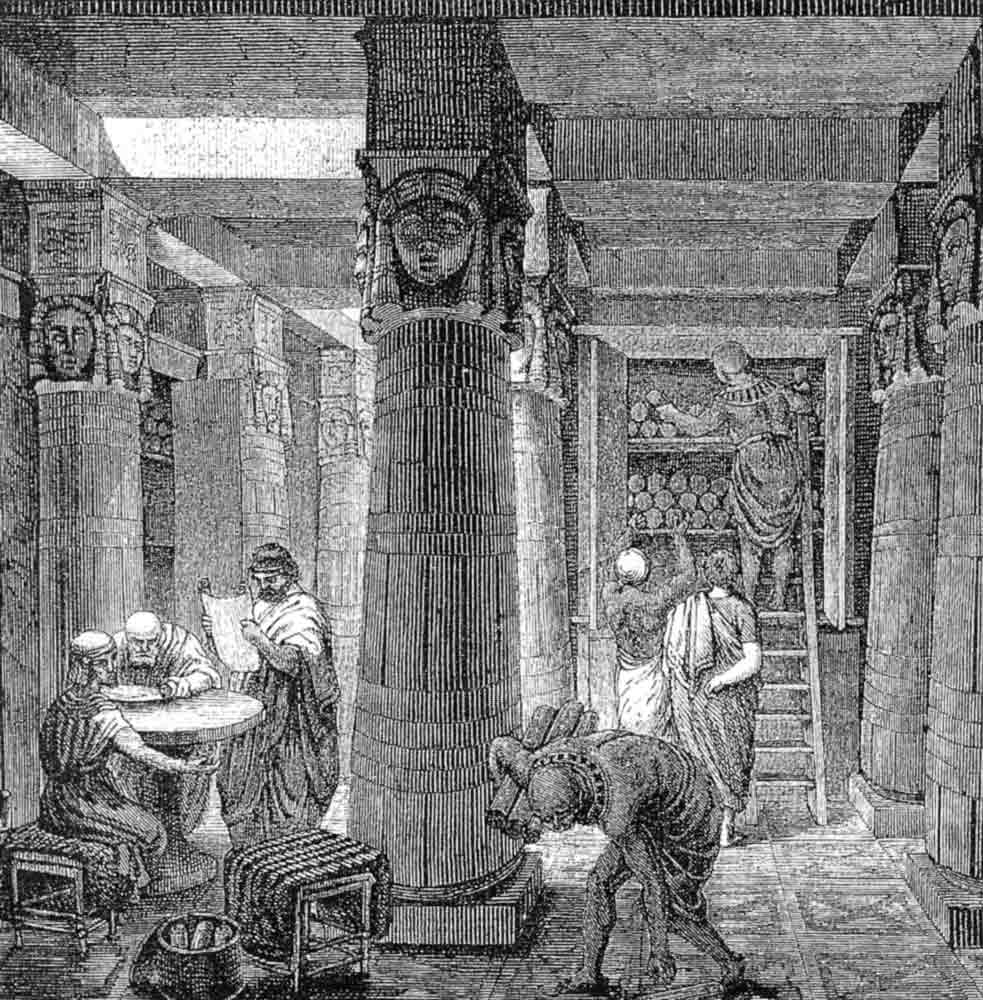
After 283 BC, his son, Ptolemy II Philadelphos, continued this work and made the library into what it became known for, an intellectual powerhouse. The complex where it was housed was named the Mouseion, the dwelling of the Muses, patron-goddesses of the arts and sciences. There, scholars could expect to find free housing and meals, high salaries, and exemption from various taxes. Immediately, mathematicians, philosophers, poets, astronomers, historians, and many more flocked to Alexandria to pursue their vocations under the auspices of Ptolemy’s benefaction.
The library itself was very quickly filled with books, acquired through a process of confiscation. Ships arriving at the port would be searched not just for regular contraband, but for any scrolls as well. If any were found, they were taken to the library for rapid copying. Then, the copy would be given back to the owner and the original kept for the library…
Beyond this, the Library would be empowered with funds to purchase the valuable contents of other libraries around the Mediterranean and bring them to Alexandria. Aside from copies, many texts, such as the Hebrew Septuagint, would be translated from their native language to Greek, ensuring their survival and dissemination.
By the time of Callimachus, a famous Greek poet and scholar (310-240 BC), the library had already grown to an immense size, and its sprawling contents were disorganized. To solve this, Callimachus devised the Pinakes (“Tables” or “Lists”), the first 120-volume-long library catalog, to facilitate the tracking down of the valuable papyri.
While its contents are lost to us, we know that it was divided into these categories: Poetry, History, Philosophy, Oratory, Law, and Miscellanea (including Medicine and Science). Within each category, authors were alphabetized, given a short biography, and a summary of each of their works.
Over the years, the library kept growing, and a sister institution had to be founded, this time under Ptolemy III, to house the ever-increasing number of books. This was built inside the Serapeion, the great temple of the Greco-Egyptian god, Serapis. Being away from the harbor, on a high hill in the city, we can be certain its contents were untouched by Caesar’s fire.
Lost Science and the Stalled Industrial Revolution
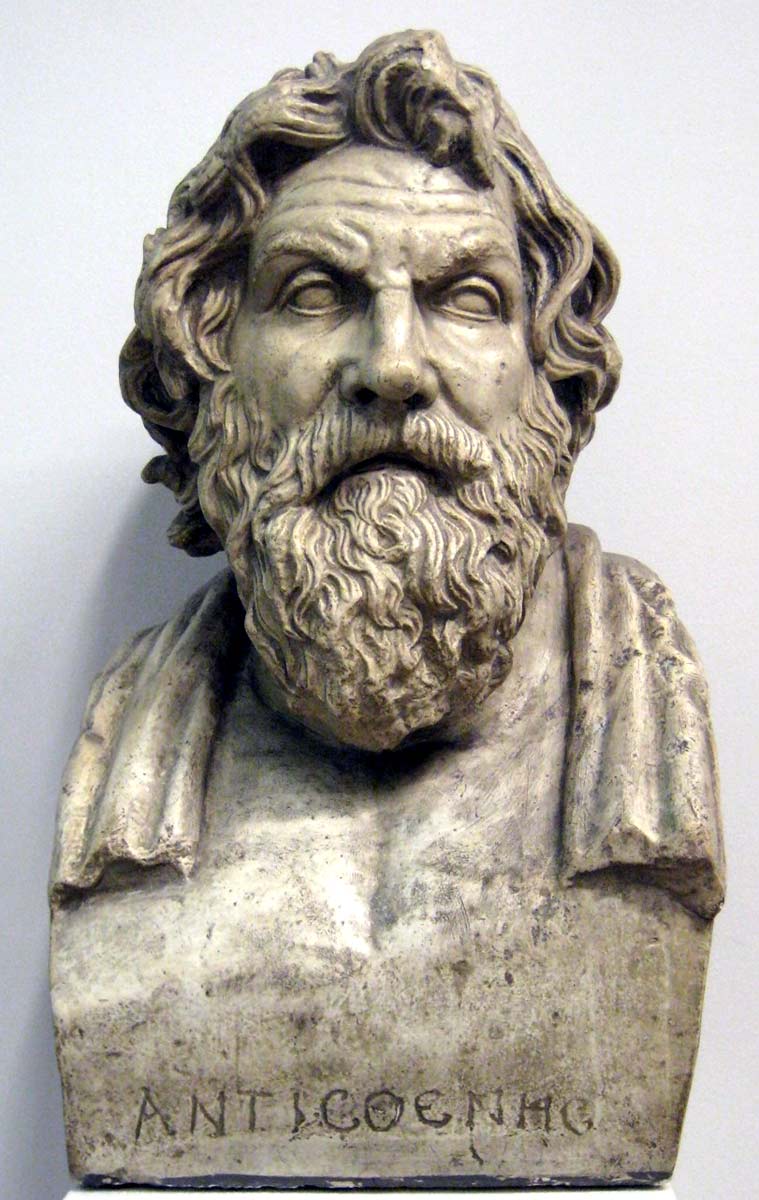
At its peak, the library contained around 700,000 scrolls and 100,000-120,000 unique titles across its collection; an absolutely staggering accumulation of knowledge that cannot be overstated. Let us examine some of its most important contents to better understand the loss.
First was the work of Aristarchus of Samos (310-230 BC), who developed the heliocentric model, whereby the Earth and other planets revolved around the sun. What is known of his work—the measuring of the sizes of and distances between the sun and moon—has survived only in references in other works. Due to its loss, scholars would favor the geocentric model, which placed the Earth at the center of the cosmos. It was not until almost two millennia later, when Copernicus, Galileo, and Kepler disproved this model and re-established the heliocentric one.
A more controversial figure was Herophilos of Chalcedon (c. 335-280 BC), the “Father of Anatomy,” who worked in the library, under the patronage of Ptolemies I and II. There, he performed the first public and scientifically recorded dissections of the human body, in a period when this was considered an extreme taboo. Before him, the human body was understood through guesswork and the dissection of animals, but Herophilos revolutionized this by cutting straight to the point. Other scholars, such as Celsus and Erasistratus, accused Herophilos of performing vivisections on live animals, but this might have been slander.
Either way, Herophilos made great advances in mapping the nervous and circulatory systems, the brain, the sensory organs, and the stomach. His entire eleven-volume work was lost. During the Middle Ages, guesswork and superstition characterized medicine, while Herophilos had been on the cusp of Victorian surgical science.
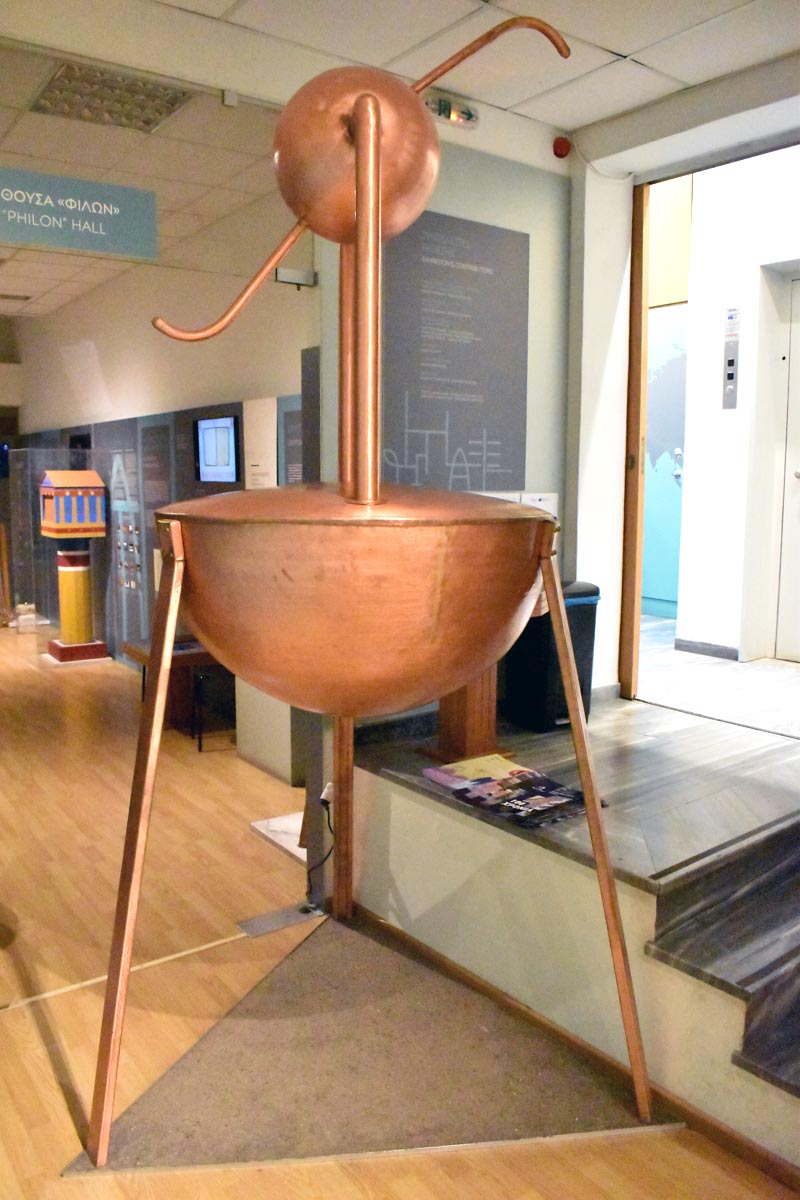
Lastly, scholars such as Ktesibios (285-222 BC) and Heron of Alexandria (c. AD 10-70), worked extensively on the science of hydraulics and pneumatics, harnessing steam to power small-scale machines, pumps, and even musical organs! Heron’s “Aeolipile” is widely considered the first steam engine! It must be pointed out that these were small machines, many of them for aesthetic use or entertainment, but had the scholars’ work survived, we might have seen engineering advancements comparable to the early Industrial era!
Thus, it is no wonder that in popular imagination, the loss of the library’s works put humanity’s scientific development back by millennia, until the Industrial Revolution. However, unlike the exigencies of that period, the ancient world lacked the incentives to pursue such avenues. Slavery, the main driver of ancient economies, provided cheap manual labor, bypassing the need for great engines, and the harnessing of the metal needed for the making of such machines, namely steel, would not be perfected until much later. Finally, ancient scholars had not yet developed the scientific method and were mainly confined to very astute observations of the world around them and its functions, without the practice of repeated experiments that came with the Enlightenment.
However, that is not to say that such advancements might not have come about much, much earlier, and the Industrial Revolution could have taken place in the AD 1000s rather than the 1800s, for example, provided things had gone differently. The library’s contents would have provided the crucial foundations for later advancements, and their loss meant they had to be rediscovered, centuries to millennia later.
The Vanished Masterpieces of Literature and Drama
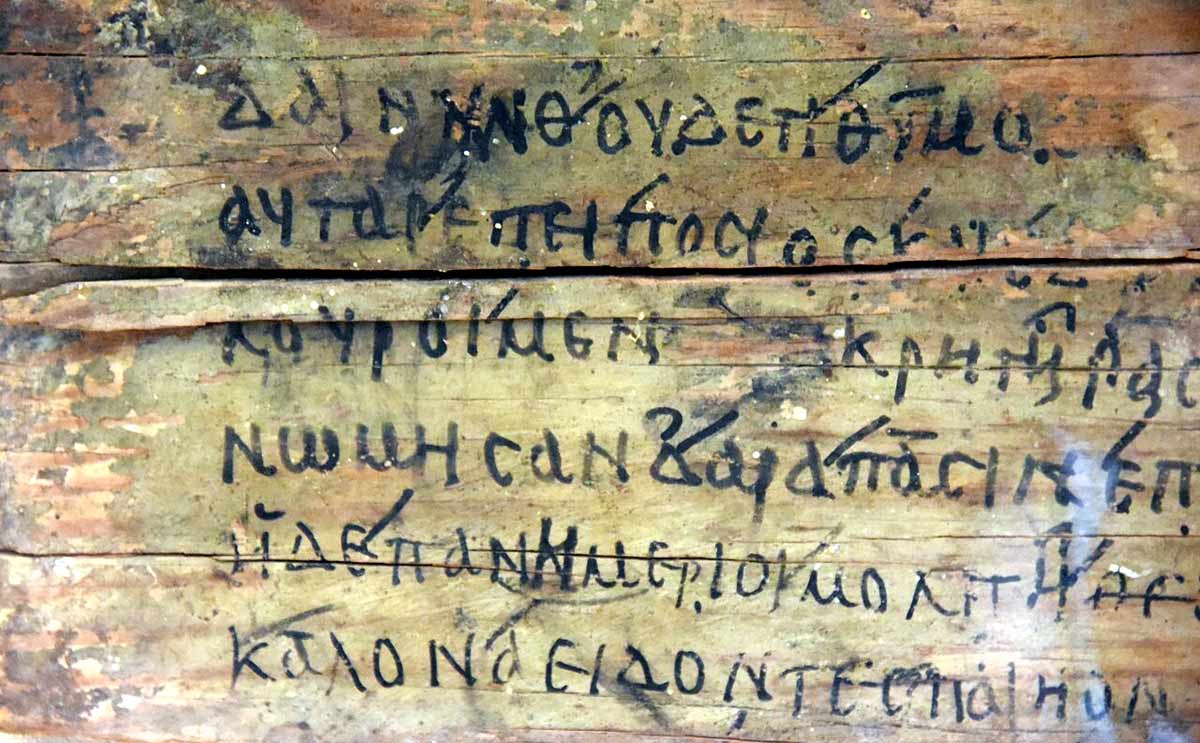
Just as tragic was the eventual loss of significant swathes of ancient literature and drama. As the library prided itself on holding the originals of ancient works, this meant that many were lost forever, never having been copied in the first place, or their copies eventually vanished across the ancient world. Gone were not just the scientific achievements of antiquity, and the what-could-have-been’s, but also the literary heart and soul of the Greco-Roman world.
To get an idea of the loss, we need only look at what survives from the great tragedians. From Sophocles’s approximately 120 plays, only seven survive, possibly not even his greatest works. From Aeschylus’s 90 plays, we also have seven, and from Euripides’s 92 plays, 18 survive. As for poetry, what remains of perhaps one of the most famous poets of antiquity, Sappho, is one poem and a series of fragments.
Finally, while the Iliad and the Odyssey survived, the vast majority of other works set within the same Epic (Trojan) Cycle were lost. These included works discussing the lead-up to the war itself (the Cypria), the death of Achilles (Aethiopis), and the sack of Troy (Iliou Persis). These were essential events of the overall story that are only known to us by fragmentary references and implication. We should perhaps count ourselves lucky for what survived, but the awareness of the extent of the library’s archive and thus, of its loss, adds a deeply bitter aftertaste.
The Slow Death of an Institution
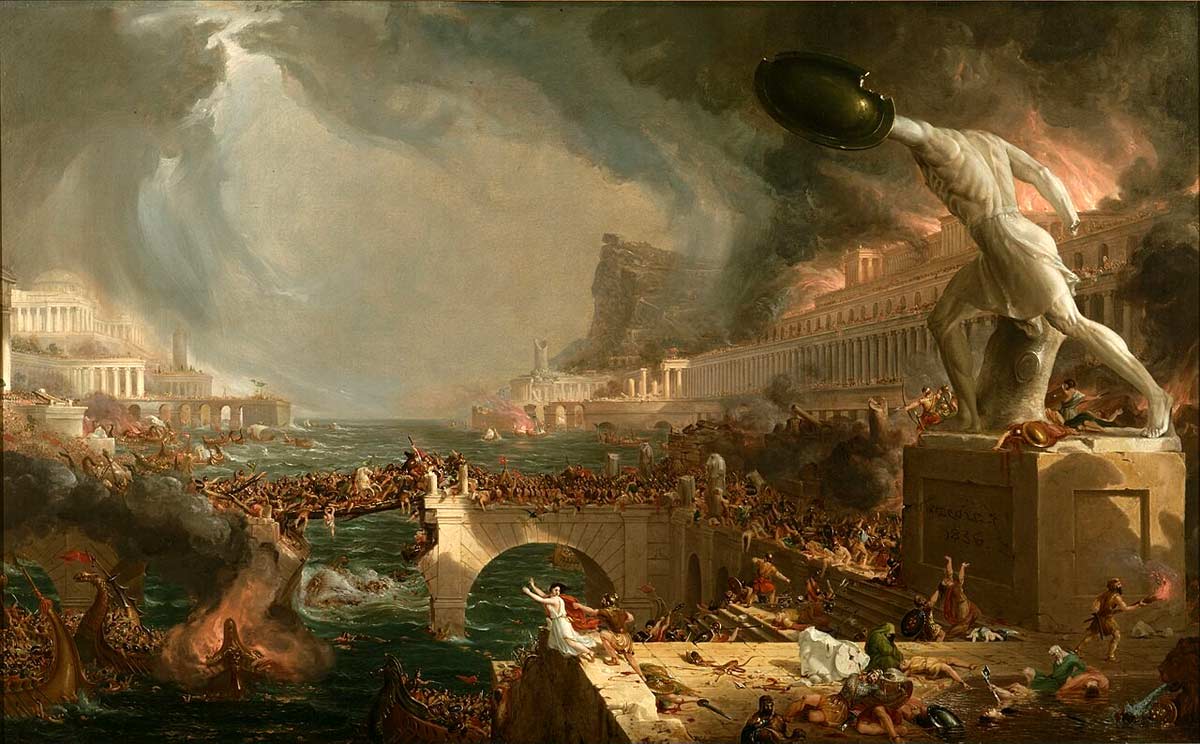
As with many other historical processes, there is no single moment, event, or “villain” to pinpoint for the loss of the library. Instead, we can perhaps trace key moments in its history that contributed to its eventual fall. The famous 48 BC Caesar fire was arguably the least important, least deleterious to its contents, but it is associated with a key figure of Roman history, and thus, in public consciousness, remains with us.
Beyond it, however, we may look to another Roman ruler, centuries later, between AD 270 and 272. The Roman Empire had by then fragmented into rival empires, and Egypt had fallen under Queen Zenobia of Palmyra’s control. Aurelian, a soldier-emperor from the north, reconquered the wayward provinces and restored them to the empire, capturing Zenobia.
During his reconquest of Egypt, he besieged Zenobia’s loyalists in the most fortified part of Alexandria, where Caesar himself had sought refuge: the Royal Quarter, which of course housed the library too. Aurelian used a hammer, not a scalpel, and instead of engaging in a lengthy siege, battered the Royal Quarter with artillery (catapults) and fire, until almost nothing was left. His motives were of a purely military nature, but the result was an undoubtedly devastating loss of knowledge.
Ammianus Marcellinus’s account (Res Gestae, 22.16.15) suggests that it was at this point that the Library of Alexandria met its end as the institution it had been for four centuries. Many books were certainly moved to the sister-library at the Serapeion, but the Library of Alexandria, as we know it, met its end at the hands of Aurelian. Thereafter, when we refer to the library, we are talking about the Serapeion.
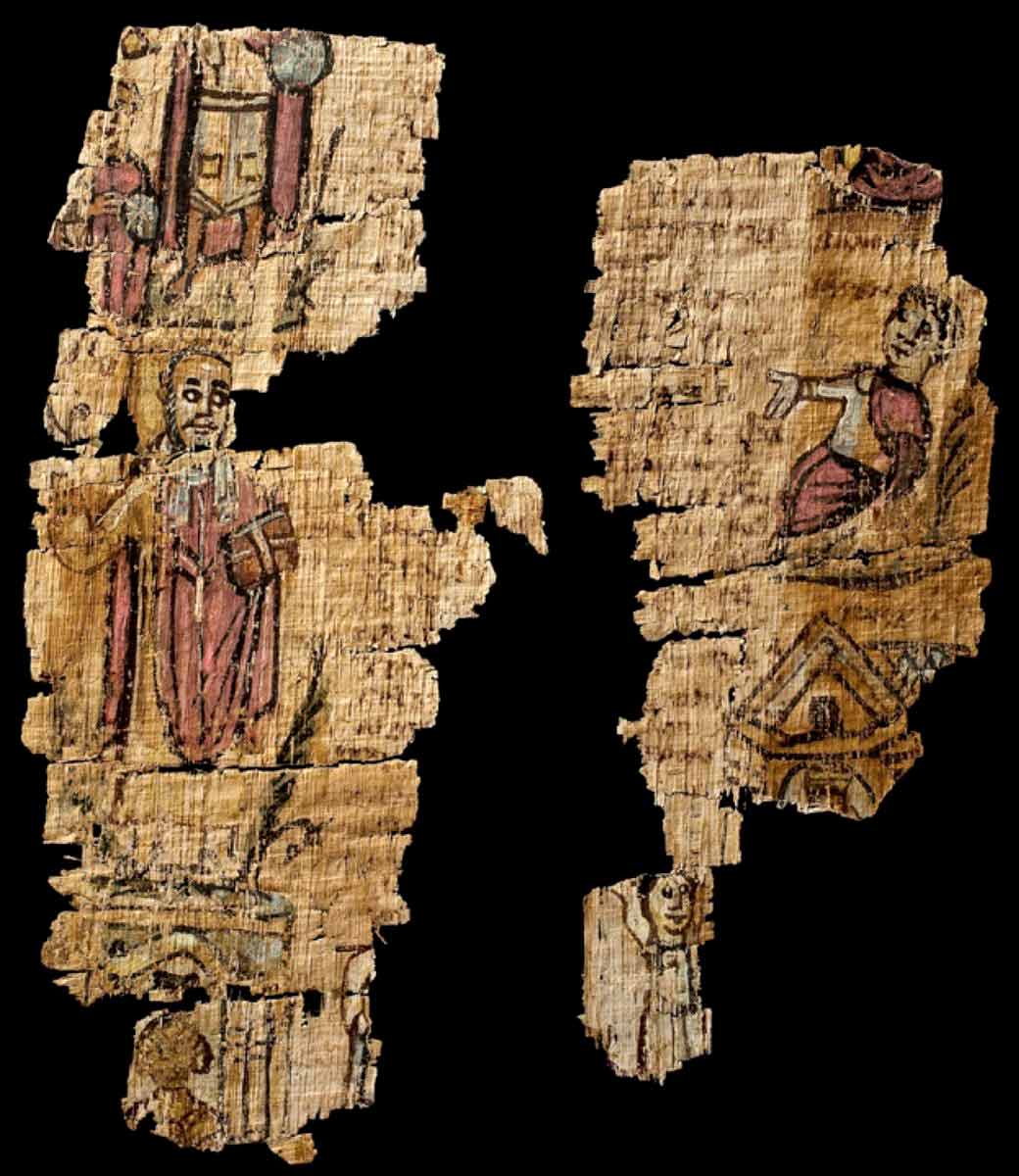
About a century later, the Roman Empire was undergoing profound changes, especially in the religious field. Christianity had gone from a persecuted religion to becoming the faith of emperors, starting with Constantine the Great. In AD 380, Emperor Theodosius made Christianity the official faith of the empire, and by 391, he was determined to crack down on the enduring polytheist faiths. He issued the Theodosian Decrees, effectively ordering the closure of many temples and polytheist institutions, and banning the worship of the gods in the public sphere.
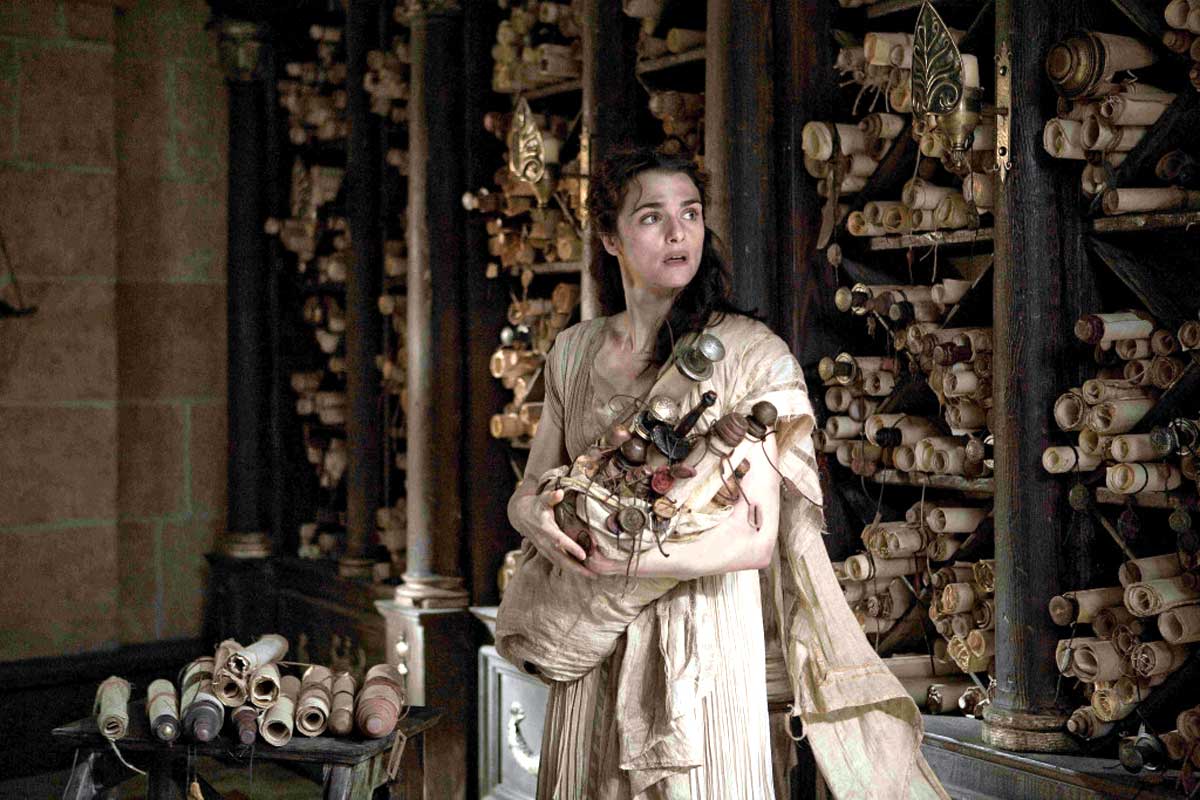
Alexandria was at the heart of these religious conflicts between the old and the new order, and the Serapeion had become the seat of power for polytheism in the city. As such, when riots broke out between the pagans, the Christians, and the Jews in the city, the Serapeion was specifically targeted. A Christian mob, headed by Theophilus, bishop of Alexandria, attacked the Serapeion. The temple of Serapis was demolished, and the majority of the books contained in the Library were undoubtedly burned or discarded. A church was built on top of the Serapeion, as was the case with most of the polytheist structures of the city.
During these troubled days, the philosopher-astronomer Hypatia of Alexandria was murdered by Christians as well, marking, alongside the destruction of the library, the end of Alexandria as the intellectual and cultural hub it had once been, and signaling the dawn of a new era, where religion held importance above all else.
If we are to trust much later sources (Gregory Bar Hebraeus, Historia Compendiosa Dynastiarum, 1650), what was left of the Library’s vast intellectual wealth, perhaps stowed away in some palace or governor’s seat, was destroyed at the hands of more religious fundamentalists, of a different faith.
In AD 642, during the Arab conquests, Muslim forces under Amr ibn al-As captured the city from the Romans. Supposedly, the Muslim commander was approached by a scholar, asking him to spare the books still stored in some treasury or other. Amr wrote to Caliph Omar for instructions, and he famously replied that:
“If these books agree with the Quran, they are useless and need not be preserved; if they disagree, they are pernicious and ought to be destroyed.”
Thus, the books were distributed to 4,000 public baths in Alexandria, to be burned as fuel, lasting for six months. This is, of course, an exaggeration, as very little would have survived Aurelian and Theodosius, in the first place, but a grain of truth can perhaps still be found in this final blow. As Christians and Muslims fought for dominance of the Near East, they had unknowingly found common ground in their treatment of intellectual material that contradicted their respective dogmas.
Conclusion
If the story of Alexandria’s Great Library can teach us something, it is this: first, that the accumulation and preservation of knowledge is intrinsically tied to the advancement of humanity; when it is lost, humanity suffers, as it undoubtedly did, with the loss of the library’s contents.
Secondly, it is not necessarily a single villain, authority, or disaster that leads to such massive losses of knowledge and cultural heritage, but centuries upon centuries of neglect, conflict, and the rise of fundamentalism and anti-intellectualism, all of which we are witnessing in our own time.
Finally, such projects, be they like the library back then, or vast digital archives such as the Internet Archive, are as important as they are fragile. They are treated with hostility by many different actors and powers-that-be, as they can arm the populace with effective intellectual defenses against ignorance and oppression. Therefore, perhaps instead of lamenting the loss of the Library of Alexandria, we should direct our energies to preserving and protecting the libraries of our time, both physical and digital, from suffering the same fate.