
A popular view of Meursault is that he is cold, indifferent, and incapable of reflection and emotion. The problem with this view is that the actual text of Camus’ novel The Stranger provides very little support for it. Indeed, there is much to suggest that this view is wildly inaccurate. Here, we test the most extreme characterizations of Meursault from the scholarly literature against the source material.
Getting Acquainted With The Stranger
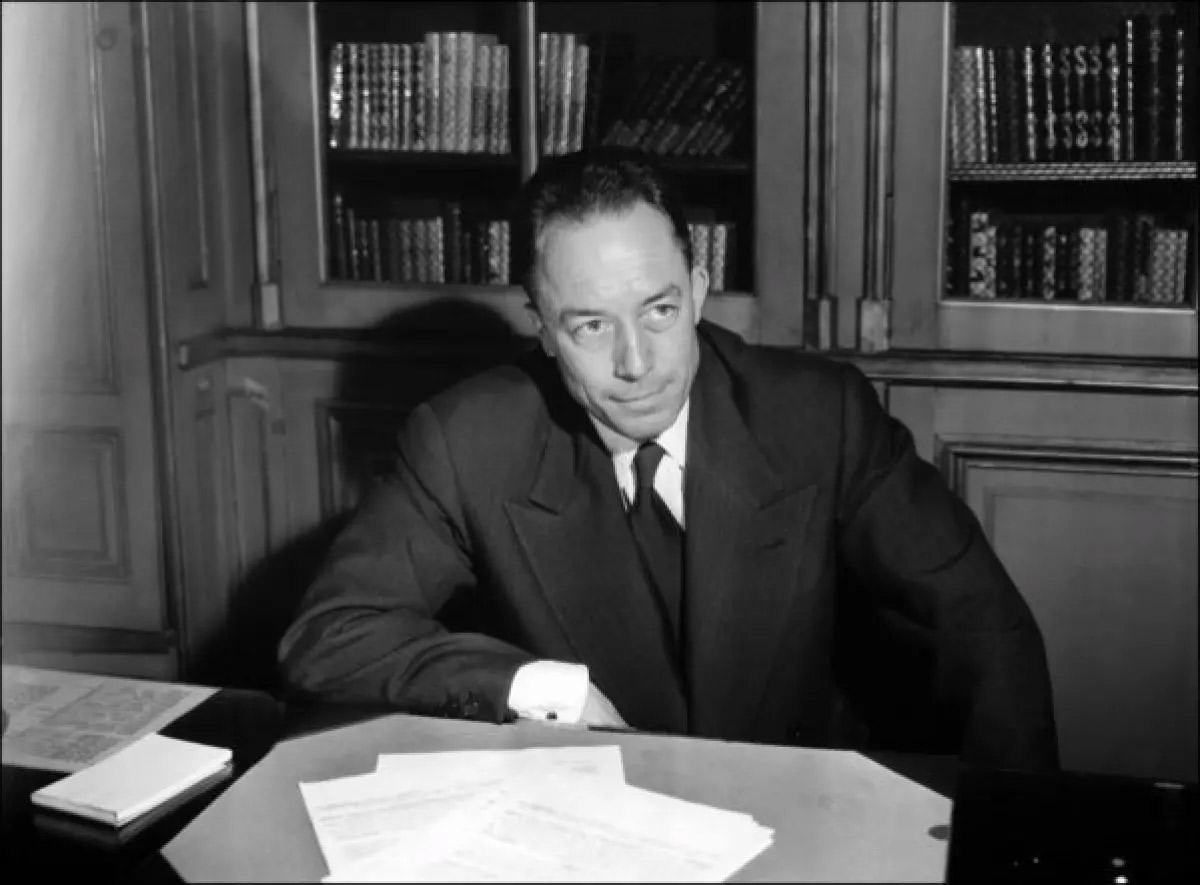
Albert Camus’ The Stranger (1942) is written in two parts. In part one, the hero, Meursault, goes to his mother’s funeral and, after returning home, has dinner with a neighbor, Raymond. Raymond is aggrieved over the actions of his mistress, an Arab woman, and is seeking revenge. Meursault agrees to help by writing a deceitful letter on Raymond’s behalf.
Days later, Meursault and his new girlfriend, Marie, accompany Raymond on a day out at the beach. Two Arabs, one of whom is the brother of Raymond’s now former mistress, follow them. There are several altercations, including one in which Raymond is slashed in the face. Meursault later encounters the Arab knifeman and ends up shooting him dead.
The second half of the novel concerns Meursault’s arrest and trial. The prosecutor argues that Raymond was a pimp and his ‘mistress’ was one of his prostitutes. He also claims that Meursault is an underworld enforcer who killed the Arab to send the message that Raymond is not a man to be trifled with. None of this is true.
We will focus solely on the first half of The Stranger. Here, Meursault is shown living his day-to-day life among friends, colleagues, and strangers. We want to know how he sees himself and, in terms of this investigation, how he is seen by others.
In much of the scholarly literature on The Stranger, Meursault is characterized as intellectually and emotionally stunted. At the extreme end of this view, we see the idea that he is incapable of thought and reflection, leaving him socially inept. This is the view we will be challenging.
It is important to note that we are not interested here in passing judgments on Meursault’s actions or moral character. We are concerned solely with assessing his intellectual and emotional capabilities.
Does Meursault Lack Intellectual and Emotional Understanding?

Philosopher Robert Solomon, in his text Dark Feelings, Grim Thoughts: Experience and Reflection in Camus and Sartre (2006), argues that Meursault is barely capable of thought or feeling.
Solomon’s account, however, is not without its problems. The biggest problem for Solomon is that The Stranger is written in the first person. That is, the text is Meursault’s own account of events. There is no way a person incapable of thought or social understanding could be narrating this text.
A second problem is that everyone who knows him takes Meursault to be an educated ‘man of the world’. Furthermore, he comes across as immensely likable. How can a man with no social understanding or emotional intelligence be viewed so favorably by his peers?
In fact, a great deal of the text must be ignored if we are to get anywhere close to accepting Solomon’s account of Meursault. Let us first look at how Meursault is received by the other characters in the text, and then at the complication (for Solomon) of his serving as the narrator of the story.
Meursault: Barely Capable of Thought or an Educated “Man of the World”?

In the first half of the novel, we see that Meursault is not only well-liked by those around him but also well respected and considered intelligent. People come to Meursault when they need advice. At work, his boss singles him out for a promotion and a coveted position in Paris. Even if we ignore the fact that Meursault is seen as a suitable candidate for promotion, the fact that he manages to hold down a white-collar clerical job is something those like Solomon, who want to say he is incapable of thought, cannot satisfactorily explain.
Let us now look at the incident that sets everything in motion: Meursault’s decision to write a letter on behalf of Raymond. If Meursault is incapable of thought and socially and emotionally inept, why would Raymond ask him to write a letter on his behalf? Raymond explicitly says he wants Meursault to help him because he knows Meursault is capable of doing a good job. Everyone seems to know that Meursault is an educated man.
Just how educated is Meursault? We know he went to university and did some undergraduate studies. He says that he had to give up his studies to look after his mother. “When I was a student, I was very ambitious about having a career. But when I had to give up my studies, I realized quite soon that none of that kind of thing mattered very much.” This passage presents major problems for those like Solomon who want to claim that (a) Meursault is incapable of ambition and (b) that he is incapable of reflection.
Meursault as Narrator

The Stranger is narrated by Meursault, which is a major problem for those who claim he is incapable of thought and reflection. His account of events is too well expressed to have been written by the kind of intellectually and emotionally limited human being commentators like Solomon take him to be.
Solomon’s rather desperate solution is to suggest there are two Meursaults: Meursault the narrator and Meursault the narrated. That is, there is an intellectual Meursault telling the story of another Meursault that does not think, never reflects, and “rarely even speaks.” But where is this second Meursault? Not in the text, that is for sure. As we shall see, Meursault thinks, talks, and reflects a great deal.
It is true that Meursault undergoes a profound change in his worldview at the end of the novel. But his intellectual powers and emotional understanding are unaffected. He has the same level of cognitive ability from the first page of the novel to the last. Solomon, who wants to make a philosophical point using Meursault as an example, simply ignores the character found in the text.
Solomon is far from alone in talking about a Meursault not found in the novel. For example, in his On Camus (2002), Richard Kamber, to make a point about existential indifference, claims that Meursault put his mother in a home and immediately forgot about her. However, the text states that Meursault traveled for hours to visit her every Sunday for two years. However, we will pay more attention to David Sherman’s view.
Meursault and Reflection in The Stranger
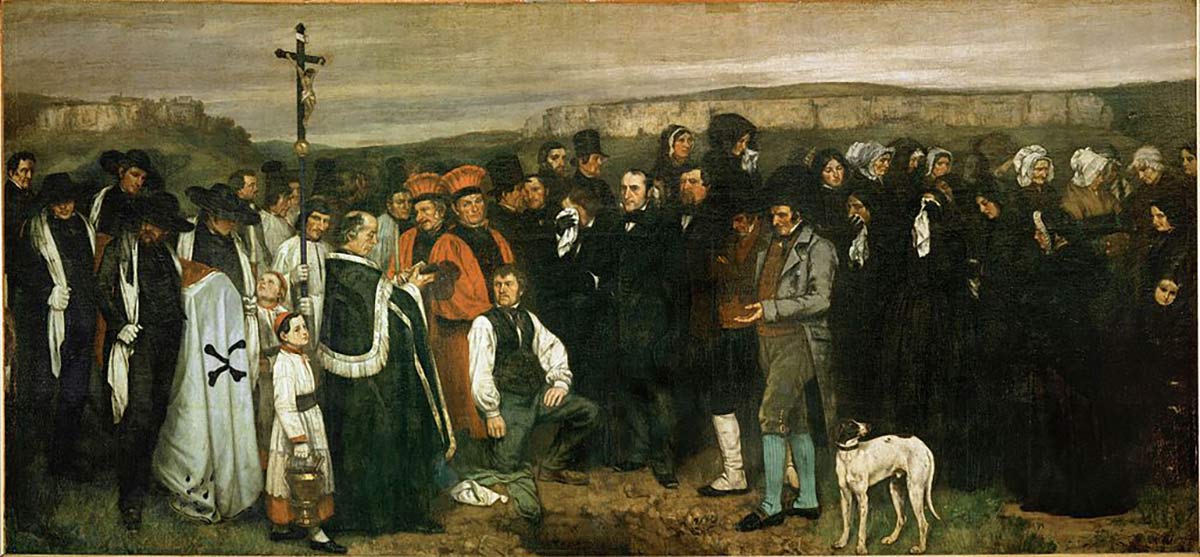
David Sherman, in Camus (2008), ignores every explanation Meursault offers for his actions to fit his Sartrean interpretation of the novel. Sartrean bad faith involves self-deception regarding our freedom to choose. Sherman argues that Meursault deliberately refuses to reflect upon his actions and choices to such an extent that he is a profound example of bad faith.
In fact, Meursault often engages in reflection; indeed, probably more so than the average person. For example, when Meursault agrees to write Raymond’s letter, he reflects on his free choice to do so. He does not try to convince himself that he must do so because Raymond is a friend.
The problem here is that Sherman ignores anything in the text that shows Meursault engaging in reflection. As we shall see, in order to make his claims of Meursault living in Sartrean bad faith, Sherman must rewrite the story of The Stranger to fit his own narrative. Consider the following chapter by the end of the first book.
Three Altercations on the Beach Resulting in Murder
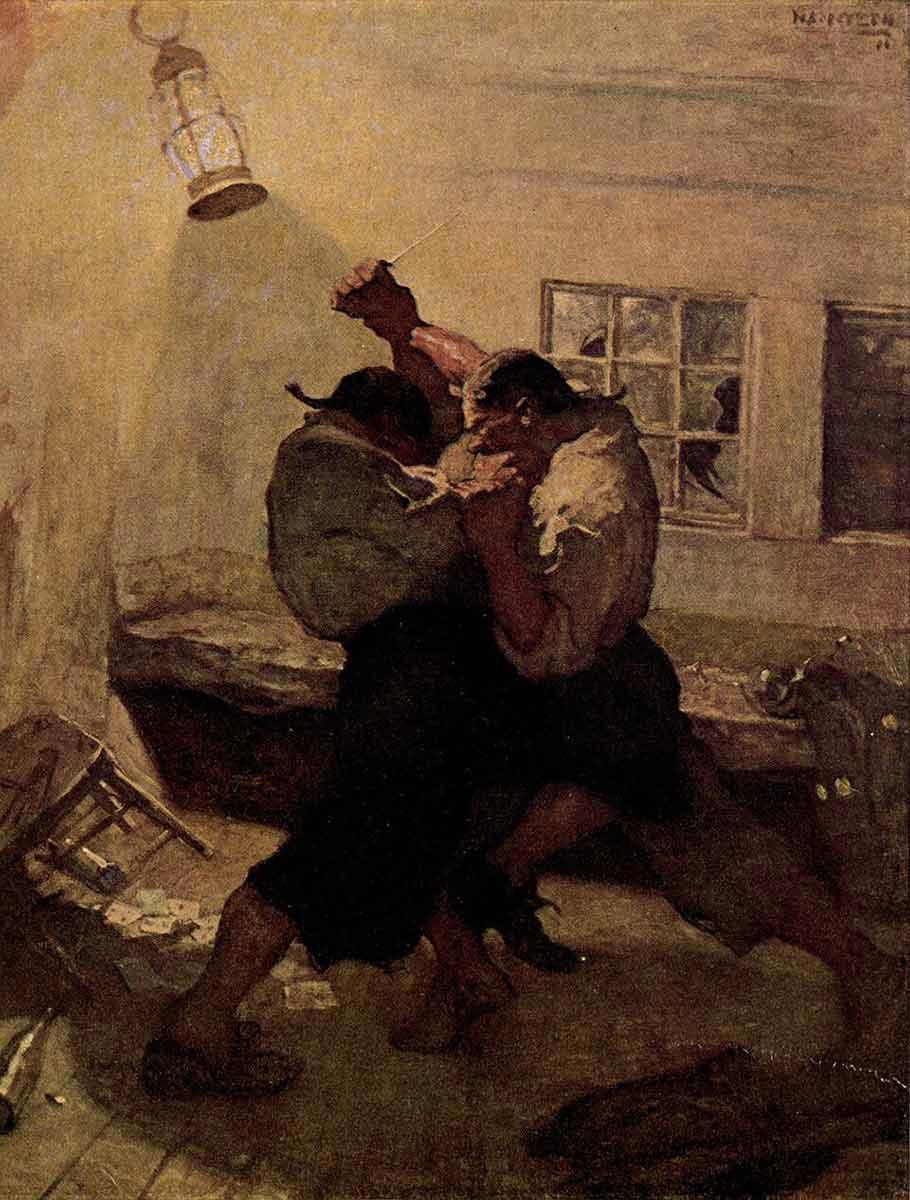
By the end of the first part of the book, Raymond invites Meursault and Marie to join him one Sunday at a beach chalet owned by his friend Masson and his wife. Meursault is warned that the brother of Raymond’s mistress has been stalking him and is out for revenge.
Meursault, Raymond, and his friend Masson go for a walk on the beach and encounter two Arabs. One of whom is the man stalking Raymond. There is a fight. The Arabs lose, and Raymond starts showing off to Meursault. At this point, the brother of his mistress draws a knife and slashes Raymond’s face. Masson and Raymond go off to find a doctor, leaving Meursault to explain everything to Masson’s wife and Marie, who are both distraught. We can call this “altercation one.”
When Raymond returns, he is seething with rage and storms out onto the beach. Meursault correctly guesses that his friend is looking for the Arab and is planning something stupid. He follows Raymond, and when they come across the Arab, Raymond produces a gun.
Meursault, knowing that telling Raymond not to shoot will only provoke him into shooting, cleverly persuades him to hand over the gun. He says that he will fire if the Arab tries anything dirty. Raymond insults the man who, wisely (considering Meursault has a gun trained upon him), says nothing. This is “altercation two.”
Raymond, now appeased, is in good spirits. He and Meursault go back to the chalet, but at the steps to the entrance, Meursault hesitates. He does not want to deal with the distraught women again. So he heads back out onto the beach. Here, he bumps into the Arab, who draws his knife. Meursault fires the gun and kills him. This is “altercation three.”
Where Sherman’s Account Goes Wrong

For a man supposedly bereft of intellectual and emotional intelligence, Meursault’s handling of Raymond is remarkable. He knows that any attempt to tell Raymond not to shoot will only make him more determined. So Meursault asks for the gun and tells him he will shoot. On the spot, he devises a face-saving scheme in which Raymond can hand over the gun and still get revenge.
Although Raymond is now happy, Meursault is not. He does not want to go back to the chalet and “deal with the women again.” There is no point just standing on the steps of the chalet, so Meursault walks back out on the beach where he will have altercation three. So far, his behavior seems perfectly reasonable. However, Sherman sees things differently.
In Camus (2008), Sherman omits altercation two from his account of The Stranger. The way he tells it, Meursault goes back to the chalet after the altercation one, stops, and heads back out alone. If we ignore altercation two, then there are no distraught women, and Meursault does not disarm Raymond. Instead, Meursault, who in this version of events must be carrying his own gun, heads back out onto the beach rather than going into the chalet.
Sherman’s claim is that Meursault secretly wants to kill the Arab but will not admit this even to himself. Sherman says that Meursault walks off with apparently no specific destination in mind, with the feeble excuse that it is just as hot standing outside the chalet as it would be to walk down the beach.
For Sherman, Meursault is in bad faith when he says that he met the Arab and shot him by chance. That is, Meursault denies responsibility for his choices and blames everything on bad luck.
Two Meursaults: One in the Text, Another in the Commentaries

We saw earlier Solomon’s strange idea that there are two “Meursaults,” one the narrator and the other the narrated. This idea simply does not work.
However, while he may misremember, exaggerate, or downright lie, Meursault cannot be both an intelligent and effective storyteller, recounting a story of an educated and well-liked man, and also be a man barely capable of thought and understanding of the world around him, unable to reflect on their actions.
This “second Meursault,” who is blank, unimaginable, and not found anywhere in the novel, is located only in certain texts found in the scholarly literature on The Stranger. And here his “nothingness” serves a useful purpose. The character of Meursault is wiped clean and then re-imagined according to whatever story the commentator wants to tell. Accordingly, Meursault becomes the exemplar of the unexamined life for Solomon and a paradigm of bad faith for Sherman.
The irony is that in the text, this is exactly the approach taken by the prosecutor. Solomon, Sherman, and the prosecutor paint a picture of Meursault that is not supported by anything found in the text. If we are interested in Camus’ philosophy, it is the text itself that merits our close attention.