From the Blitzkrieg of 1940 to the vast tank battle at Kursk in 1943 to Patton’s ‘flying columns’ in 1945, the tank was one of the dominant weapons of World War II. The criteria for vehicles in this list are those that had a substantial impact on a particular campaign or influenced tank design significantly. It is not a list of the best tanks, in terms of pure fighting ability. Rather, it is those that were the most significant to the overall conduct of this conflict.
1. Panzerkampfwagen IV (Germany)
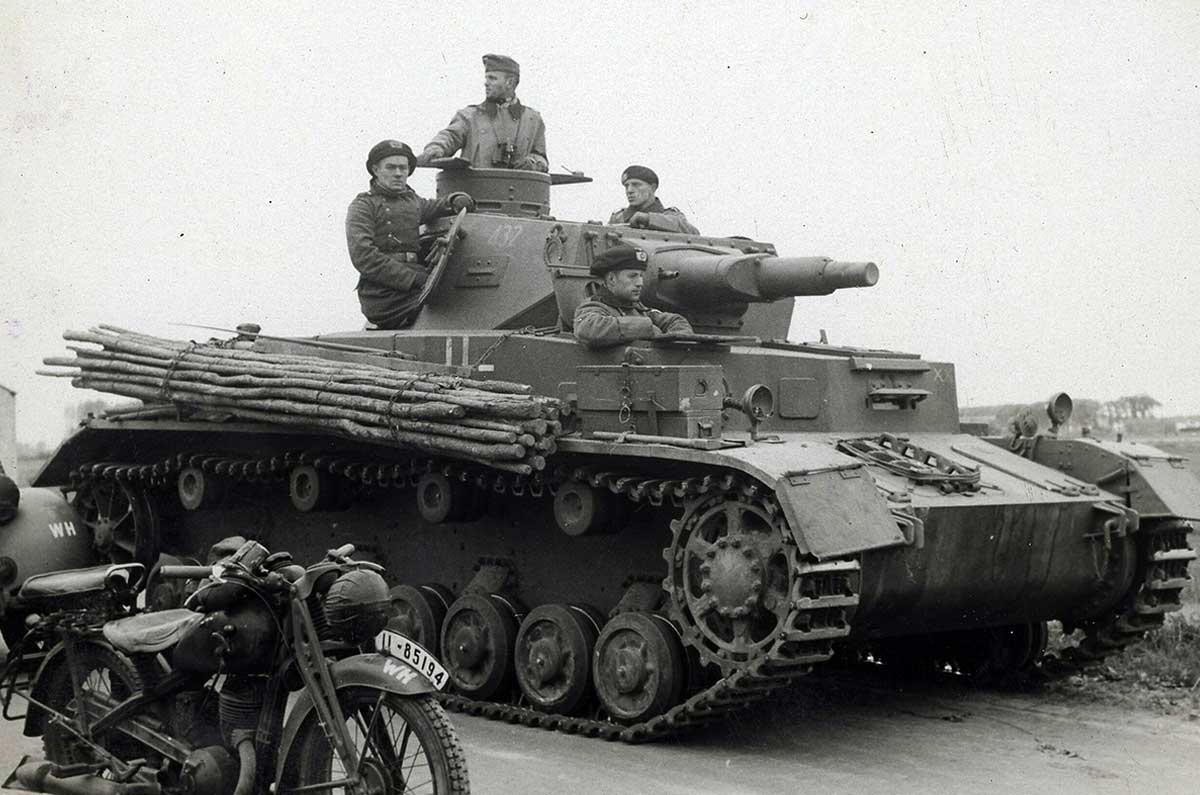
The Panzer IV was the only tank engaged in combat for the entire duration of the war in Europe. Production started in 1936 and continued until the closing months of the war, at which time it was still an effective weapon. In the early campaigns, it was armed with a short-barreled 7.5cm gun and used in a support role for the more numerous lighter tanks. Its lack of a powerful armor-piercing gun was exposed initially by its performance against the British Matildas in 1940 and, more decisively, the Soviet T-34s in 1941.
After encountering the T-34, the Panzer IV had its armament and armor progressively increased. By mid-1942, it had frontal protection of 80mm, and it also carried the long-barreled 7.5cm gun. It was now at least a match for the T-34/76 and the 75mm-armed Sherman, with a gun that was superior to both. By the end of the war, it was still the most numerous German tank, with a total of approximately 8,500 being manufactured. This number is telling when compared with the vast number of Soviet and US tanks produced, discussed below.
2. Matilda, Infantry Tank Mark II, A12 (UK)
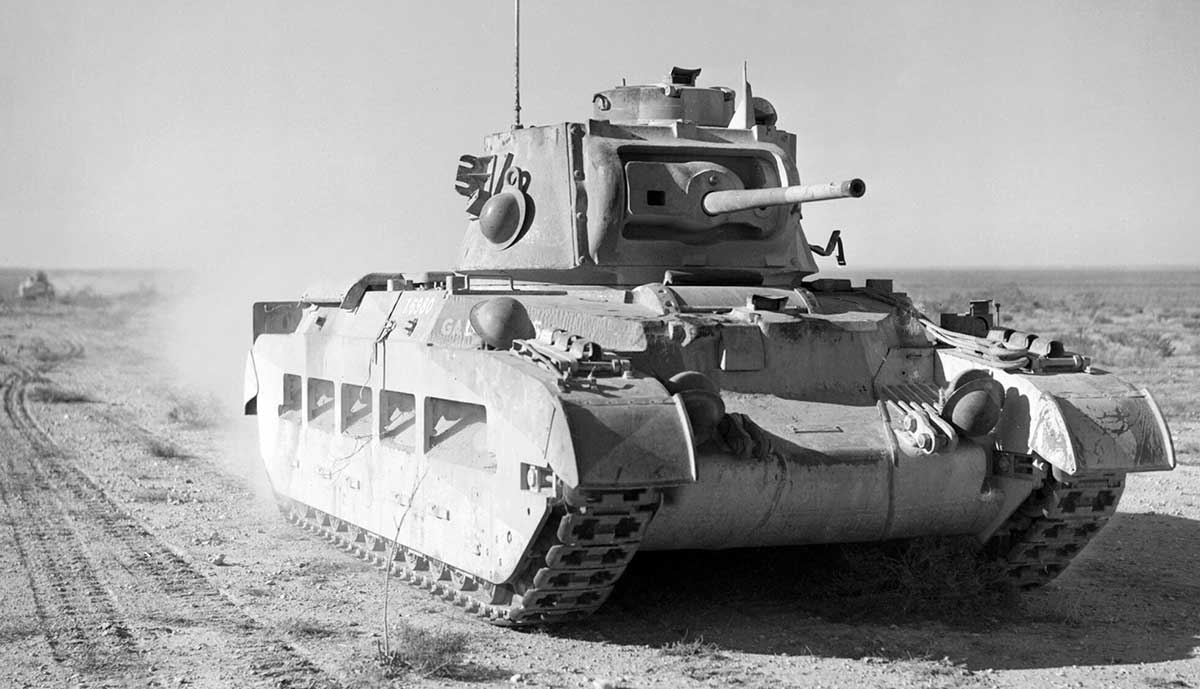
The Matilda was slow, poorly armed, unreliable, and produced in limited numbers. It was, however, extremely well armored for the period 1939-40, with a maximum armor thickness of 78mm. It was this attribute that helped give it a place in history.
On May 21, 1940, during the invasion of France, the Germans had broken through the Allied lines and were driving toward the coast. A British tank brigade, with belated infantry and artillery support, counter-attacked south from Arras and engaged the 7th Panzer (commanded by Rommel) and Totenkopf divisions. The tank contingent of the British force had just 16 Matildas and 58 Mark 1 Infantry Tanks (less well armored and armed than the Matilda). The attack caused mayhem and panic among the German troops. Their tank and anti-tank guns were of little use against the British tanks, with one Matilda taking 14 hits and remaining fully functional. It was only when 8.8cm anti-aircraft guns were deployed along with intervention from the Luftwaffe that the attack was stemmed.
The attack was exaggerated by the 7th Panzer’s war diary when it stated that “…heavy battle against hundreds of enemy tanks…” (cited by D. Orgill, 1970). This reverberated all the way up the chain of command to the Führer, and on the 24th, the tank offensive was halted. Although it resumed two days later, the delay allowed Allied troops to withdraw toward Dunkirk, from where the majority were evacuated in Operation Dynamo.
3. T-34 (USSR)
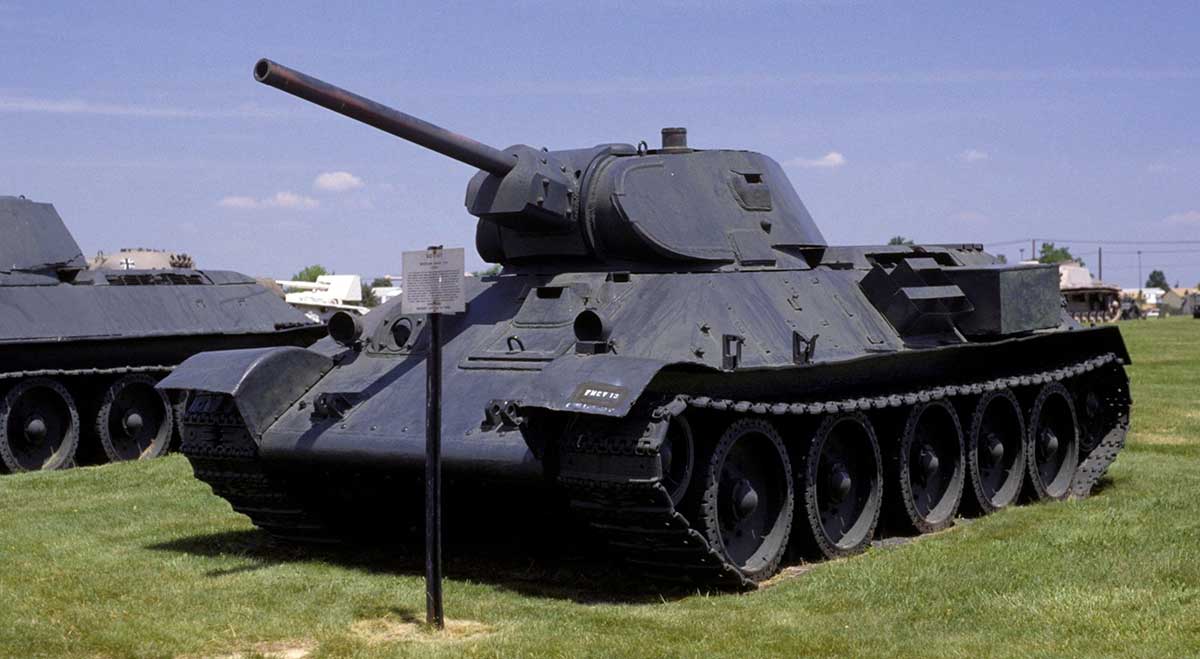
The history of the T-34 is that of an excellent, innovative design that produced a tank that fought throughout the Soviet-German war. This design, linked to overwhelming mass production, made it one of the strategic weapons of World War II and a huge influence on tank development. First produced in 1940, no other tank in the world carried as powerful a gun as the 76mm, and no other tank of its size could match it for speed, especially over mud or snow. Its armor was especially hard and superior to all other tanks except for British infantry tanks. It had faults, but these were rectified over time.
When it was encountered by the Germans at the start of Operation Barbarossa in 1941, it was a complete shock. German Panzer generals, like Guderian, admitted that the T-34 was superior to all their tanks and anti-tank guns. There was chaos when, on several occasions, it and the heavy KV-1s broke through the German lines. This was like the situation at Arras but on a larger scale.
Tank design became a leapfrog-like process between the two protagonists, with the Germans eventually matching and, in some cases, producing better individual designs. However, the Soviets produced approximately 58,000 T-34s, including 23,000 of the up-gunned T-34/85s. When compared to the Panzer IV figures (above), it is easy to understand how the T-34 became a war-winning weapon.
4. M3 Medium, Lee and Grant (USA)
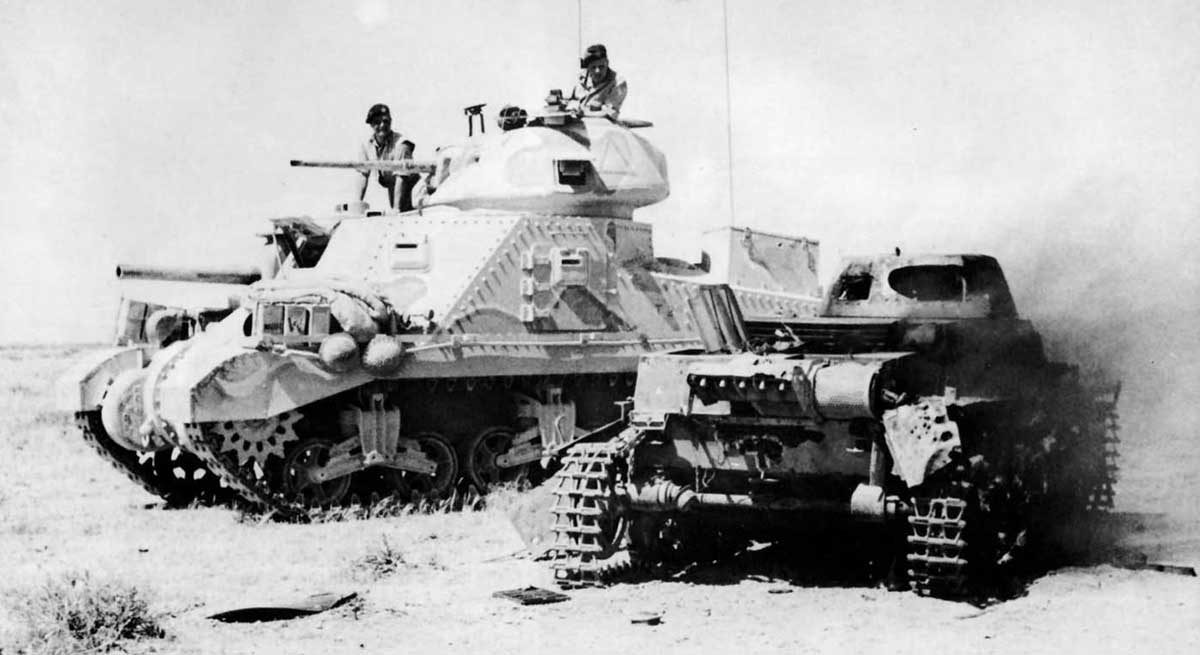
The M3 looked like a throwback to the 1930s, with its hull-mounted main armament, high silhouette, and riveted construction. Nevertheless, its shipment to the 8th Army in early 1942 helped stem the advance of the Axis forces toward Egypt at the Battle of Gazala. The M3 mounted a 75mm gun in the hull and a 37mm gun in the turret. It was well armored for its day, as fast as the German mediums, and was more reliable than the British tanks at the time. The 75mm gun could fire effective armor-piercing and high-explosive rounds—the first Western Allied tank to do so.
The M3 was produced as the Lee and Grant, the latter modified to British specifications, which included heavier armor, the radio moved to the turret, and a slightly lower height. Both types served with the British army, although the Grant was predominant. It was superior to all but a few of the Axis tanks or anti-tank guns at the time of the Gazala battles and was available in ever-increasing numbers. It remained the backbone of British armor until the Sherman began to arrive in September 1942.
5. Churchill, Infantry Tank Mark IV, A22 (UK)
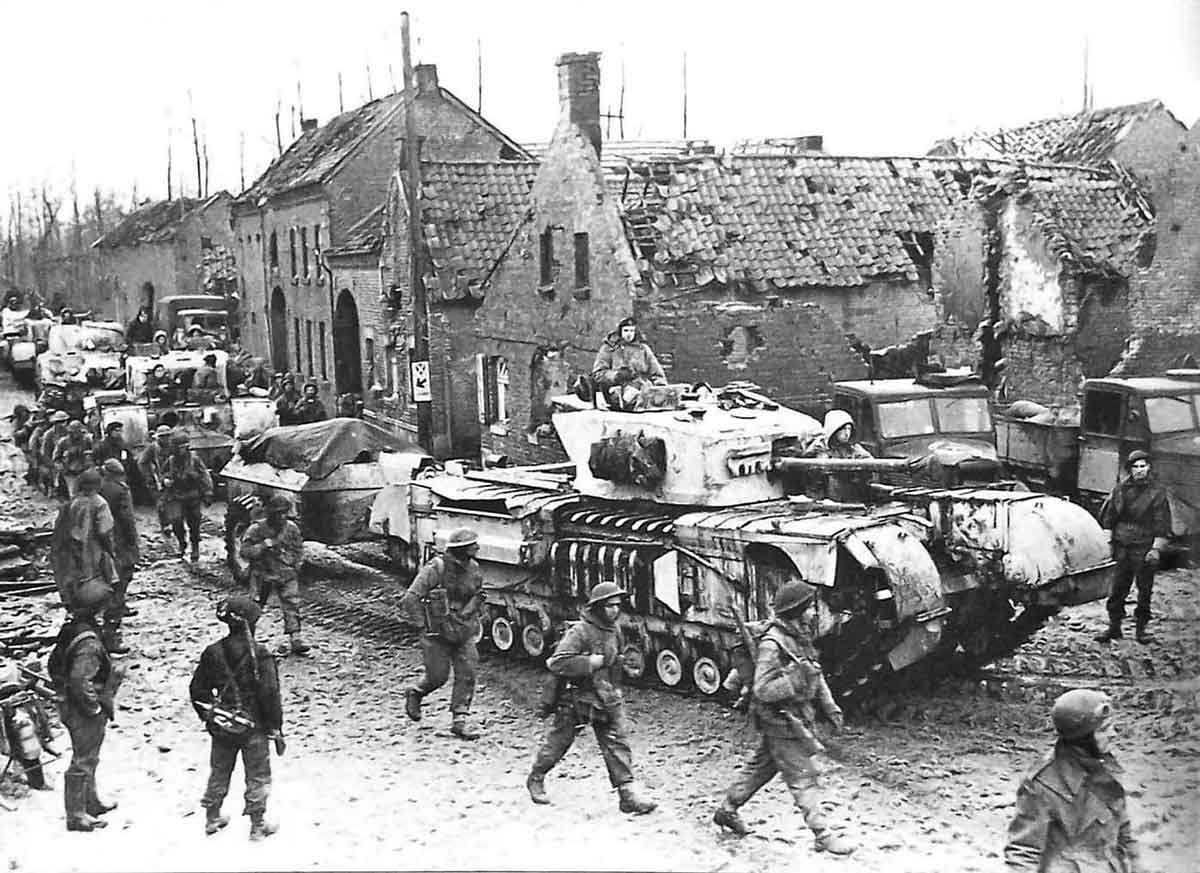
The Churchill is included because of the contribution it made as the basis for the “Funnies,” which were specialist armored vehicles developed to assist Allied assault troops. After the Dieppe raid in 1942, the British army decided that specialist vehicles would be needed to ensure the success of the Normandy landings. The Churchill was not the only tank modified for these roles, but its combination of excellent armor (up to 152mm) and good cross-country ability made it ideal as an assault vehicle.
The Churchill was modified to be:
- The Crocodile flame-throwing tank, with a range of 150 yards and flame fuel in a trailer.
- Bridge laying and bridge carrying vehicles.
- Armored recovery vehicles, to salvage damaged tanks.
- The Assault Vehicle Royal Engineers, able to fire a 40-pound mortar bomb a short distance.
- As above, but also carrying a large bundle of logs (fascine), able to fill a ditch or fortification.
- A flail tank, which detonated mines with rotating chains ahead of the tank.
- The Kangaroo, a turretless personnel carrier.
6. Sherman, M4 Medium (USA)
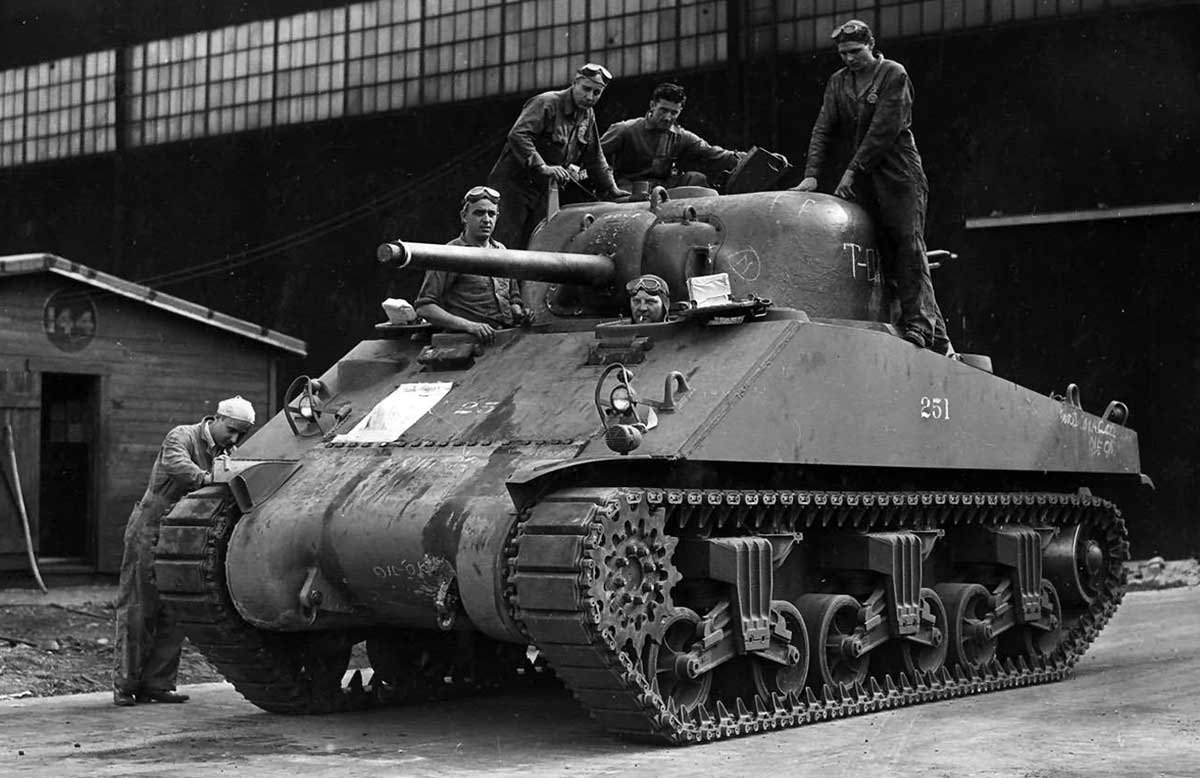
The M4 Sherman to the British was the mainstay of the western Allied tank force from September 1942 until the end of the war. When introduced, it combined a good general-purpose 75mm gun, adequate armor, satisfactory mobility, and excellent reliability. Although with too high a profile and with a tendency to catch fire when hit, it still outclassed all but a handful of German tanks when introduced.
Over 49,000 were produced, and 17,000 of these were supplied to Britain. It was the dominant tank for both the USA and the UK. Like the T-34, it was designed for mass production, ease of maintenance, and mobility. Also like the T-34, it was relatively easy to upgrade, and later variants carried more armor and eventually a better tank-fighting gun. At the time of the Allied invasion of France, the majority of M4s still carried the 75mm gun, and even with the better 76mm or 17-pounder guns, it never matched the Tiger or Panther in a one-on-one duel. However, there were always far more M4s than German tanks, and the Allies adapted their tactics to use this advantage. Along with air superiority, the sheer numbers of M4s were enough to defeat the German Panzers.
7. Tiger 1, Panzerkampfwagen VI (Germany)
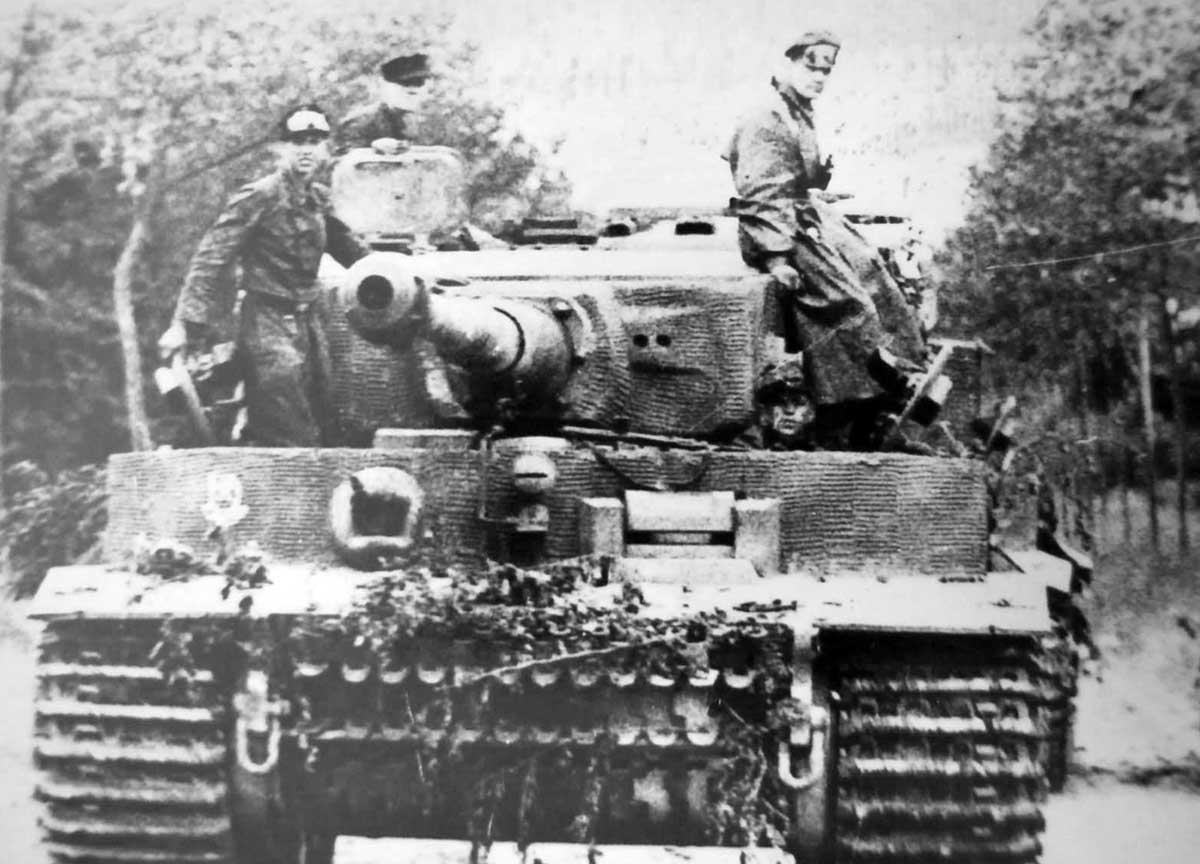
The Tiger was one of the legendary tanks of the war and had an impact out of proportion to the low production of 1,350 vehicles. The development of a German heavy tank was sped up when the Soviet KV-1 was encountered in June 1941. The Tiger first appeared in September 1942, at which time it was the largest, most heavily armored tank in the world. It was also the best armed, mounting the dreaded 8.8cm gun. In addition, it had good cross-country performance due to its wide tracks and powerful engine.
In action, it acquired a fearsome reputation, and in the campaign in north-west Europe, there were many cases of ‘Tiger Fright’ among the Allied troops. This was partly due to an action in Normandy where one Tiger destroyed an entire column of five Cromwell tanks and twenty other vehicles, with the German tank being unscathed despite several hits from the Cromwells’ 75mm guns. Its primary faults were reliability and complexity, but the Tiger 1 remained a powerful weapon until the end of the war.
8. Panther, Panzerkampfwagen V (Germany)
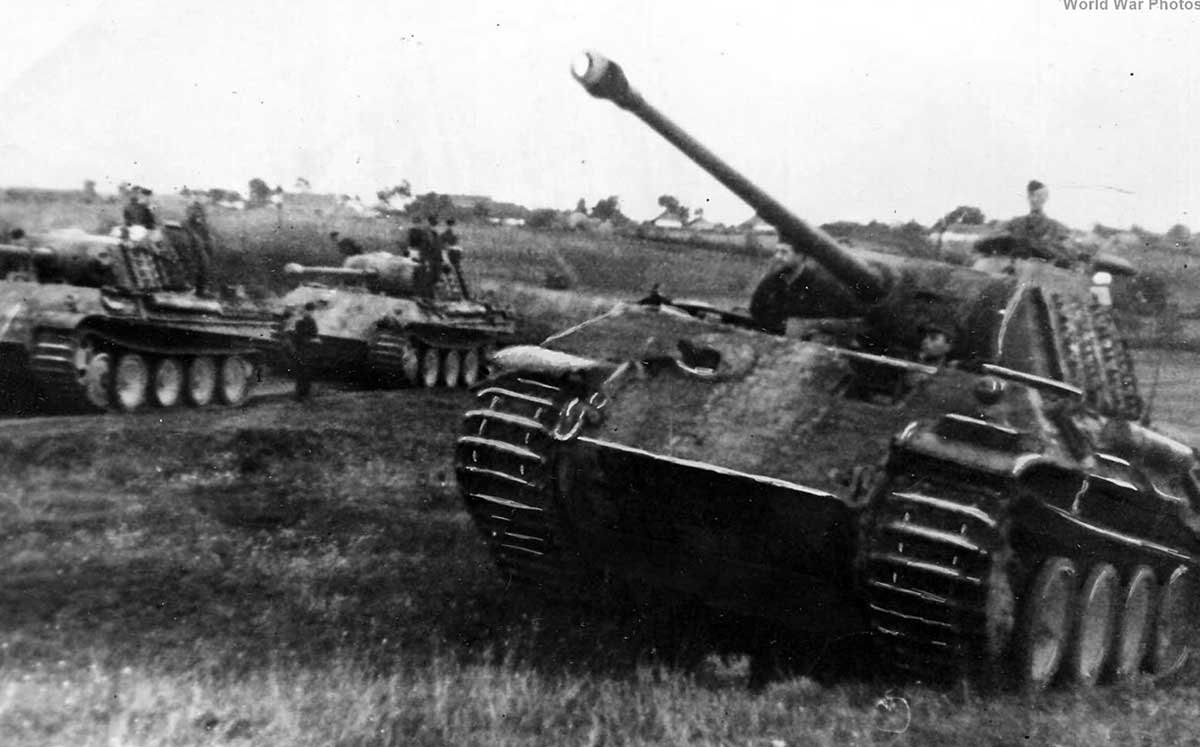
The Panther was the finest individual tank of the war. It was developed in response to the German army’s encounter with the T-34 in 1941 and featured similar sloping armor, with especially good frontal protection. Mobility was excellent on and off-road, despite being very heavy for a medium tank. This was due to the large engine and wide tracks. Its most outstanding feature was the extremely high-velocity and accurate 7.5cm gun, which at the time was the best armor-piercing gun carried by a tank. The Panther was introduced in July 1943, and it was more powerful than any Western Allied or Soviet tank at the time.
When first used in the Kursk offensive, it suffered severely from reliability issues, but these were ironed out. Like the Tiger, it was at its best in open country where it could pick off Allied tanks at long range. Normandy hedgerows or urban areas made it too vulnerable to close-range combat from the weaker but more numerous Allied tanks. As with most German tanks, the problem was not the individual unit but total output, with only about 5,500 being made.
9. IS-2 (USSR)
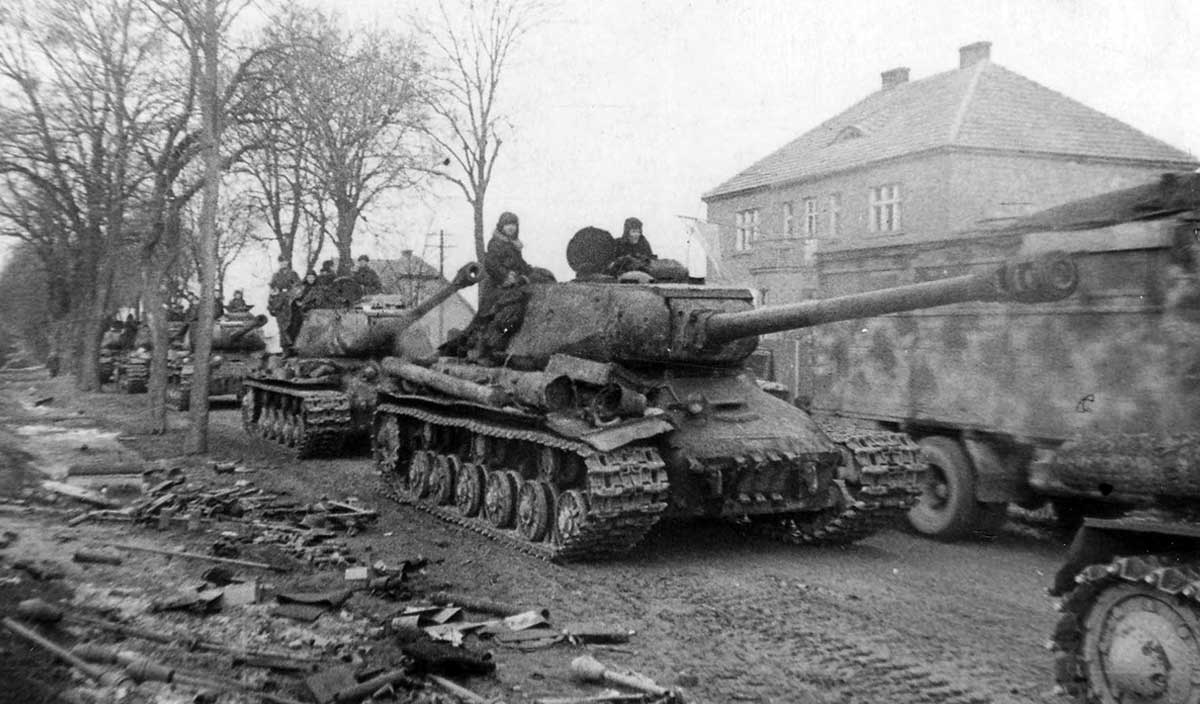
The IS-2 was the first tank that could engage the Tiger 1 or Panther on equal terms. Developed in response to the Tiger, it was ten tons lighter, had slightly better armor protection, was a little slower, and carried an excellent 122mm gun. Its main faults were the small magazine (only 28 rounds) and slow rate of fire due to separate charges and shells. As well as being able to match the German tanks mentioned above, the 122mm fired a massive HE round. It proved highly effective against fortifications, anti-tank guns, and infantry.
It first appeared in combat in early 1944 and was usually deployed as a breakthrough or assault tank. Its large gun was superb for this role, and its relatively low speed was less important. Its qualitative equivalence was also backed up by quantity, with over 3,800 built, more than twice as many as both Tiger 1 and Tiger 2 combined.
10. T-34/85 (USSR)
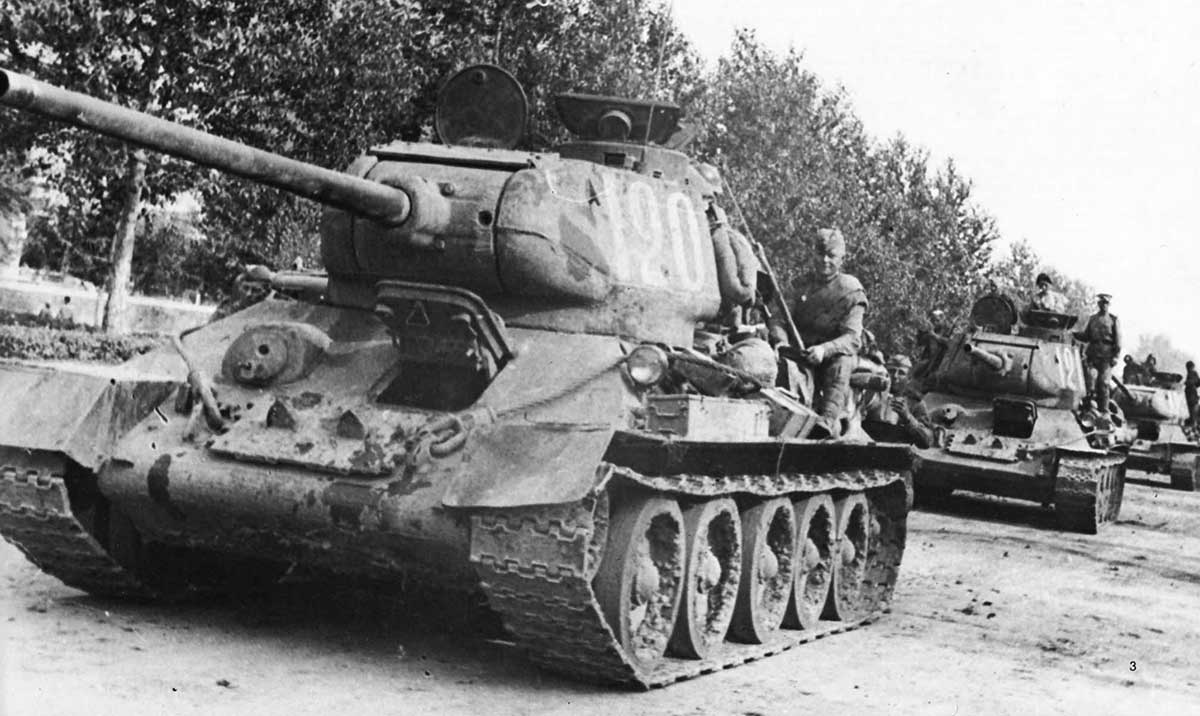
The Battle of Kursk had shown the need for an up-gunned T-34 to take on the new generation of German tanks. The result was the T34/85, which mounted an 85mm gun in a larger, more heavily armored turret. Although four tons heavier than the original model, it was almost as fast and maneuverable as its predecessor. The T-34/85 was first used in battle in February 1944 and was superior to the final version of the Panzer IV. However, in terms of firepower and armor, it was slightly inferior to the Tiger or Panther.
Later in 1944, better armor-piercing ammunition became available, enabling the T-34/85 to take on the Panther and Tiger 1 frontally. In 1944, 63% of T-34 production was this model, rising to 100% by 1945, allowing the Red Army to continue to have a top-quality tank in greater numbers. The T-34/85 was the dominant tank of the Soviet armored forces at the end of the war. It was the precursor to the “main battle tank” of the post-war decades, where one tank fulfills all the roles previously carried out by different types.
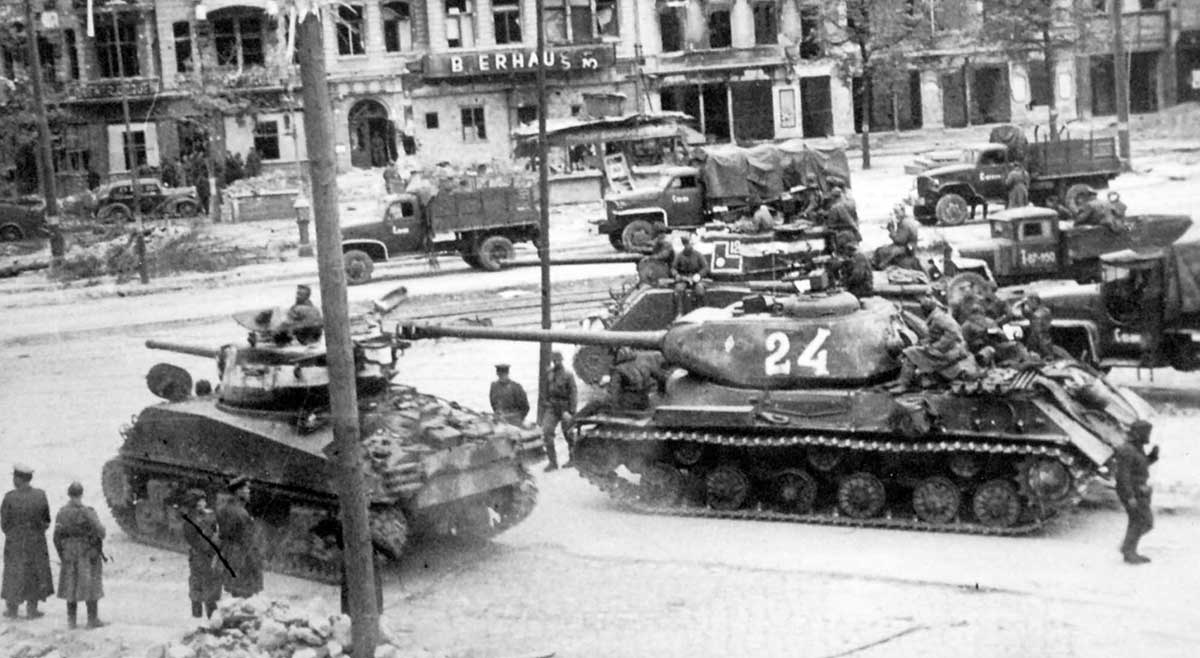
Some of the tanks on this list influenced the course of the war for only a relatively short time, like the M3 in North Africa in 1942. Others did so by expanding the concept of the tank, such as the Churchill, as the basis for the Funnies. A further group, like the T-34 or Tiger, was designed to higher specifications than any existing tank, to try and dominate the battlefield. All the tanks on this list made a significant contribution to the course of World War II.