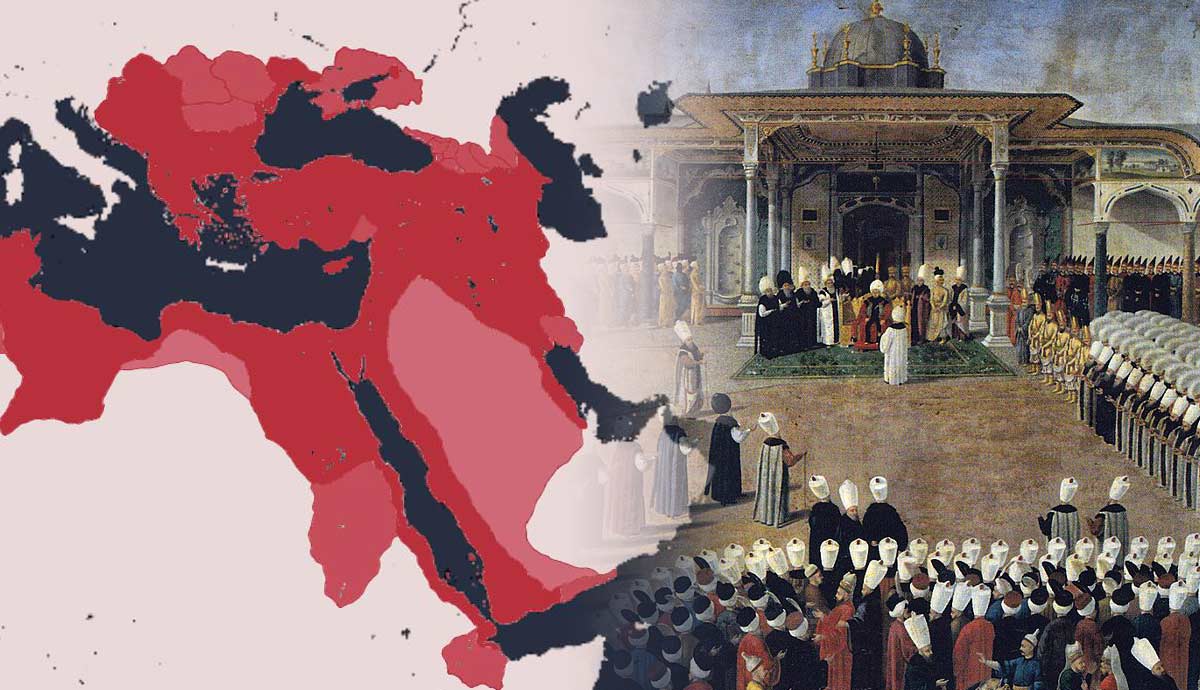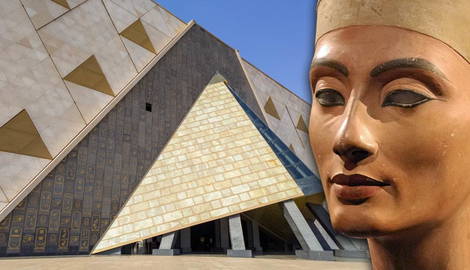
For decades, the world’s elite museums housing ancient Egyptian objects had a standard defense against the return of Egypt’s cultural heritage: “Wouldn’t more people see these objects in their current home, and beyond that, where would you even put them?” But with the November 2025 official opening of the state-of-the-art, billion-dollar Grand Egyptian Museum (GEM), that excuse has officially crumbled. From the halls of London’s British Museum to the Louvre in Paris, here are the seven priceless antiquities worthy of consideration for repatriation to Egypt.
1. The Rosetta Stone
Objects defined as integral to the cultural heritage of a particular place have been seized, returned, and the subject of controversy across many historical periods. Ancient Egyptian antiquities, including the Rosetta Stone, are no exception.
Most of the objects discussed here are currently exhibited in Britain, France, and Germany. Museum collections in these countries are at the center of many current debates and controversies over cultural property or patrimony, and whether these objects should remain in place or be returned to their respective countries of origin.
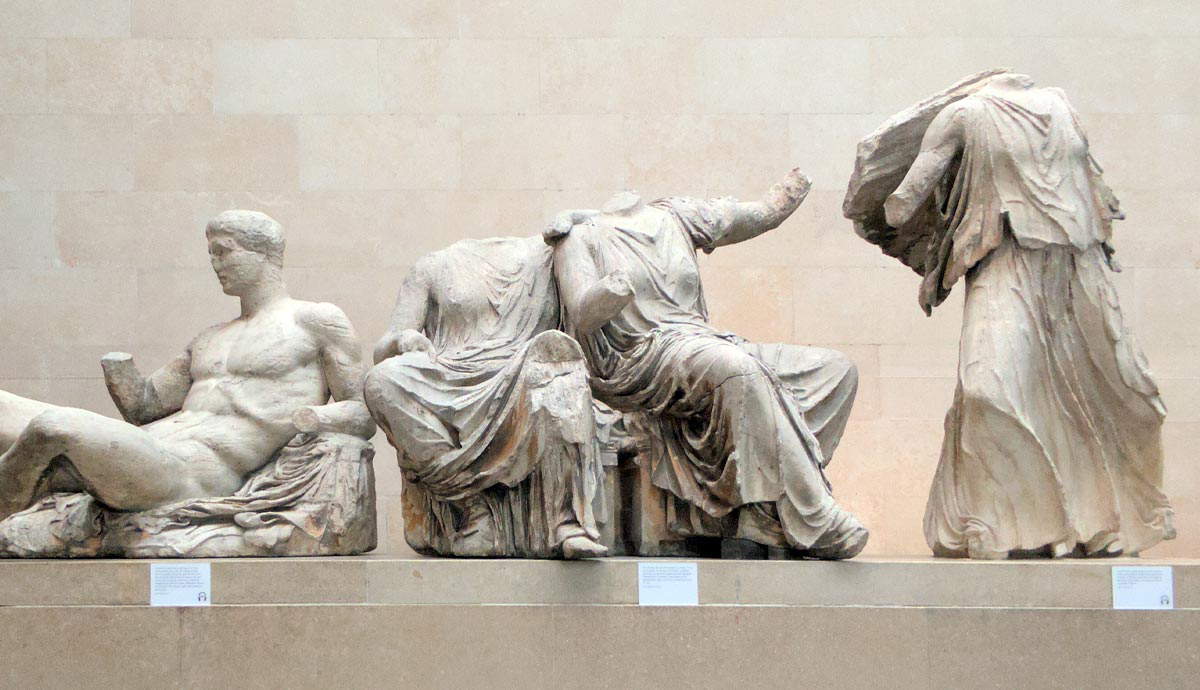
For example, media attention often centers around arguments to return the Parthenon Marbles to Greece from London’s British Museum.
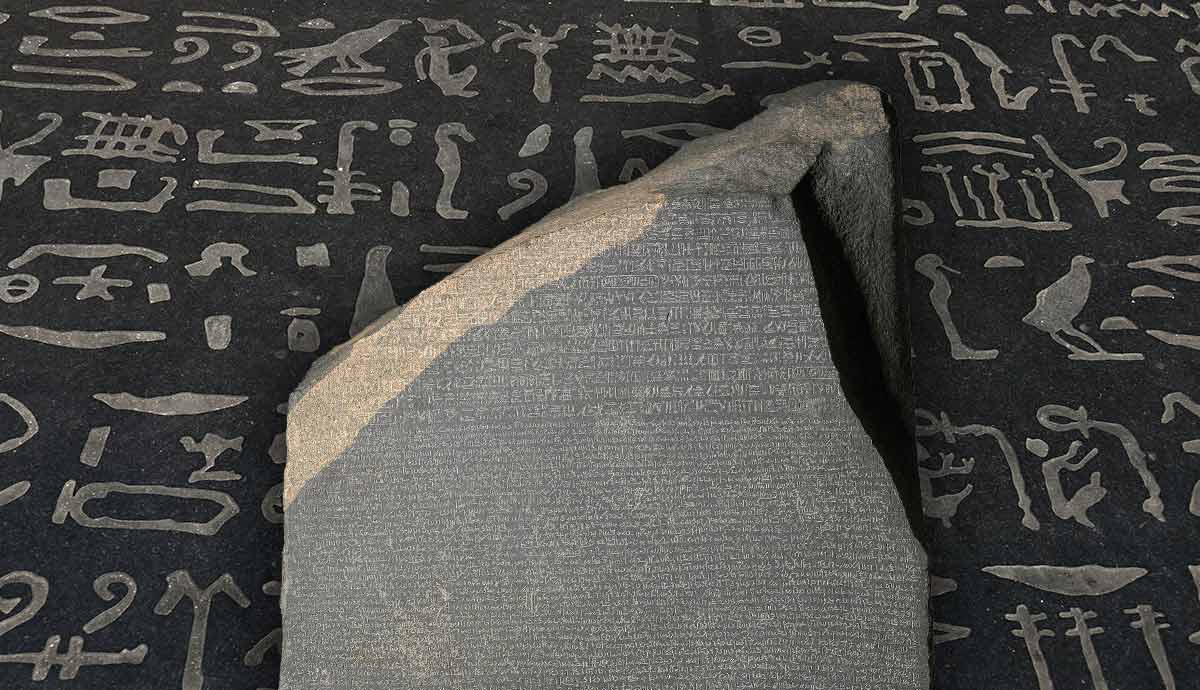
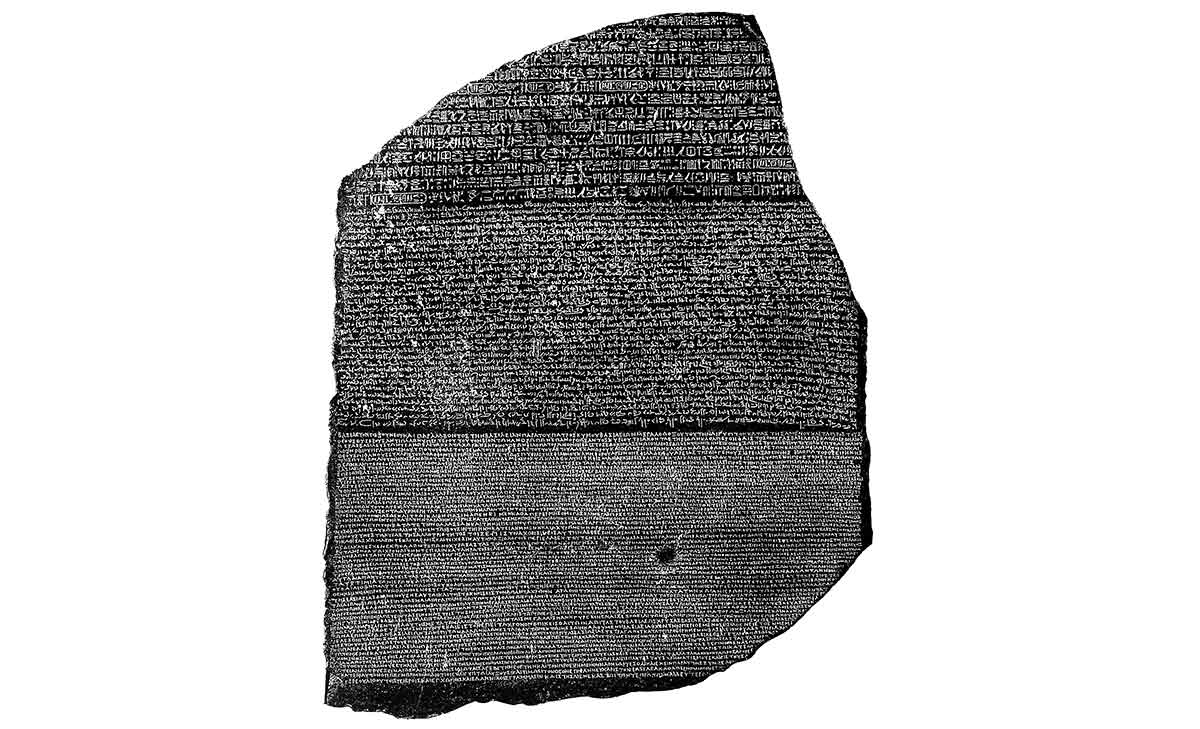
Today, the Rosetta Stone is another centerpiece of the British Museum’s collection. The Rosetta Stone is certainly a contender for history’s most famous rock, thanks to its role in helping decipher Egyptian hieroglyphs.
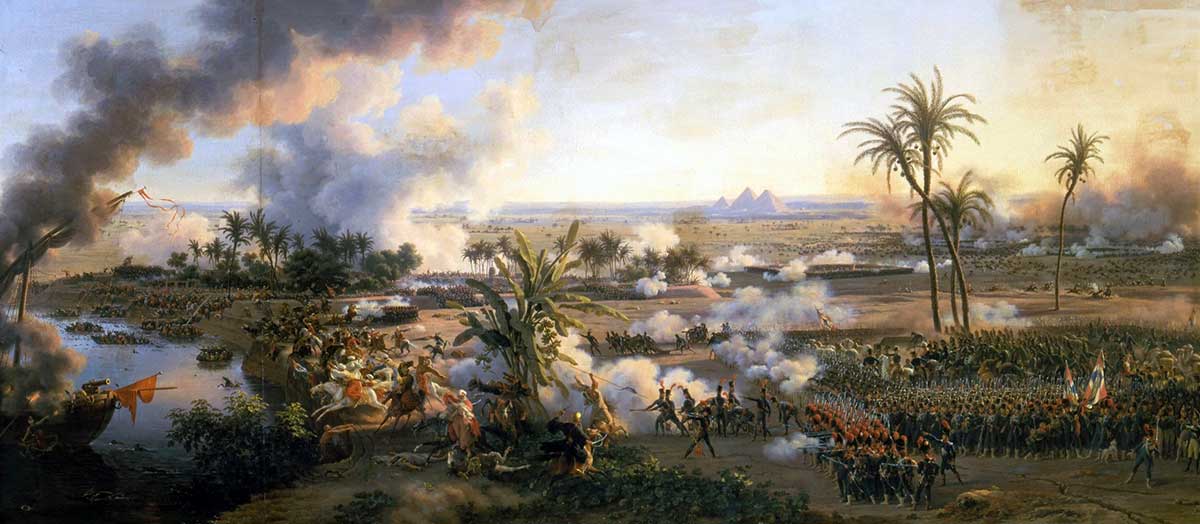
In 1798, a French expedition under Napoleon invaded the Ottoman province of Egypt. Napoleon’s troops ultimately met defeat in Egypt, but not before playing a role in one of history’s most important archaeological finds, the discovery of the Rosetta Stone.
French engineer Pierre-François Bouchard stumbled upon the stone while working on fortifications near Rashid (Rosetta) in 1799. According to Jonathan Downs (2020), the British demanded the Rosetta Stone as a condition for the French surrender of Egypt to Anglo-Ottoman forces in 1801. The Rosetta Stone arrived in England in 1802, where it has been ever since.
The slab’s trio of inscriptions in two ancient languages (Egyptian and Greek) provided the material for Jean-François Champollion and Thomas Young to unlock knowledge of three millennia of Egyptian civilization. Champollion’s work is credited with founding modern Egyptology.
2. The Dendera Zodiac
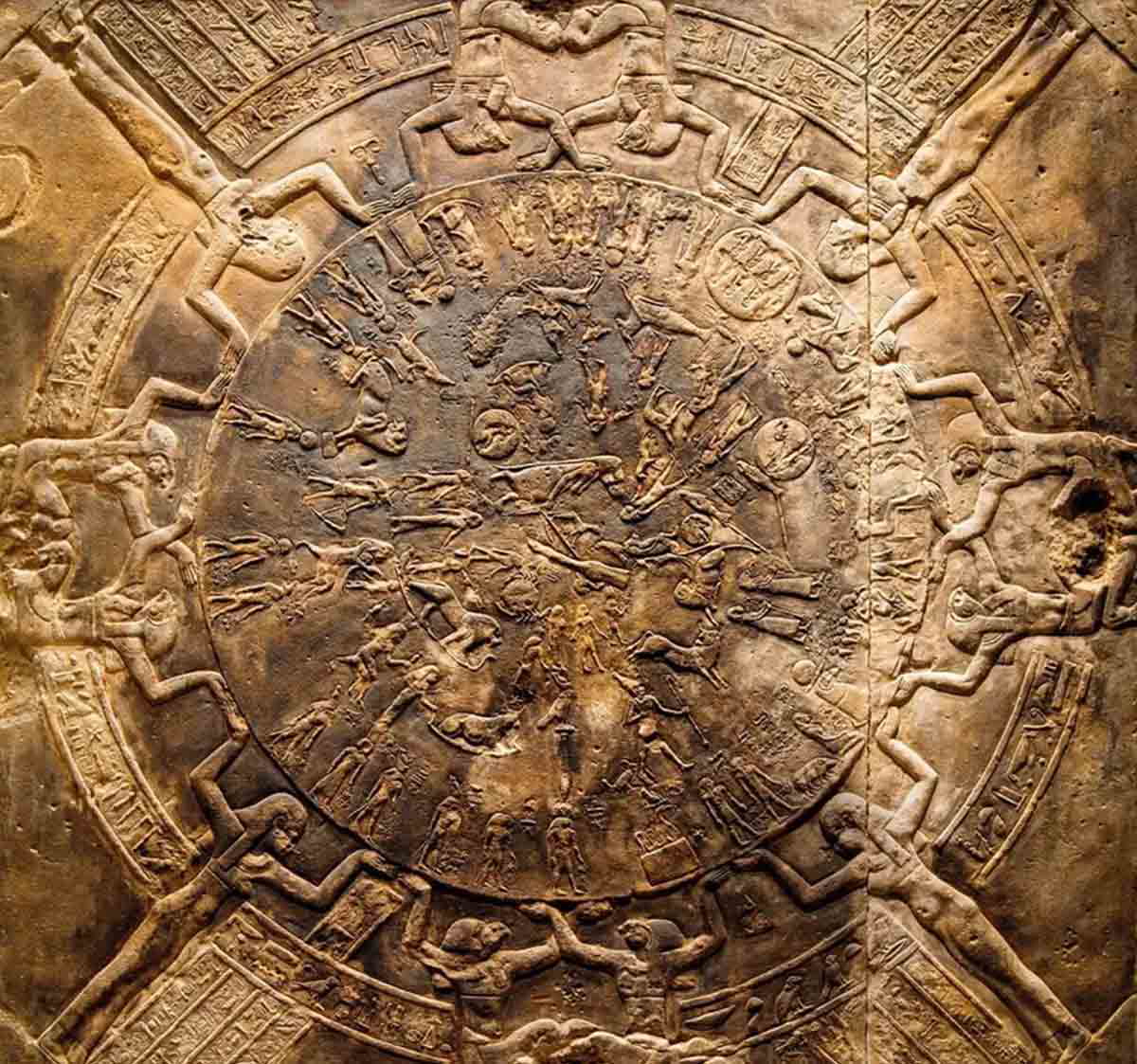
The Dendera Zodiac is a massive sandstone bas-relief depicting the constellations of the zodiac. It was another discovery made by French forces during Napoleon’s Egyptian campaign in 1799. Unlike the Rosetta Stone, the Dendera Zodiac reached France in the early 19th century.
Scholars consider this among the best-preserved ancient depictions of the observable stars. It dates from the Ptolemaic period around 50 BC. This round zodiac blends ancient Egyptian images and Greek representations of zodiacal signs.
Gyula Priskin explains that some scholars view the Dendera Zodiac as the Rosetta Stone for understanding ancient Egyptian astronomical knowledge. However, Priskin notes that this view is far from achieving consensus (2015, 134-135).
The Louvre Museum in Paris currently exhibits the Dendera Zodiac. A detailed replica is located at the original site at the Temple of Hathor in Dendera.
3. The Tarkhan Dress
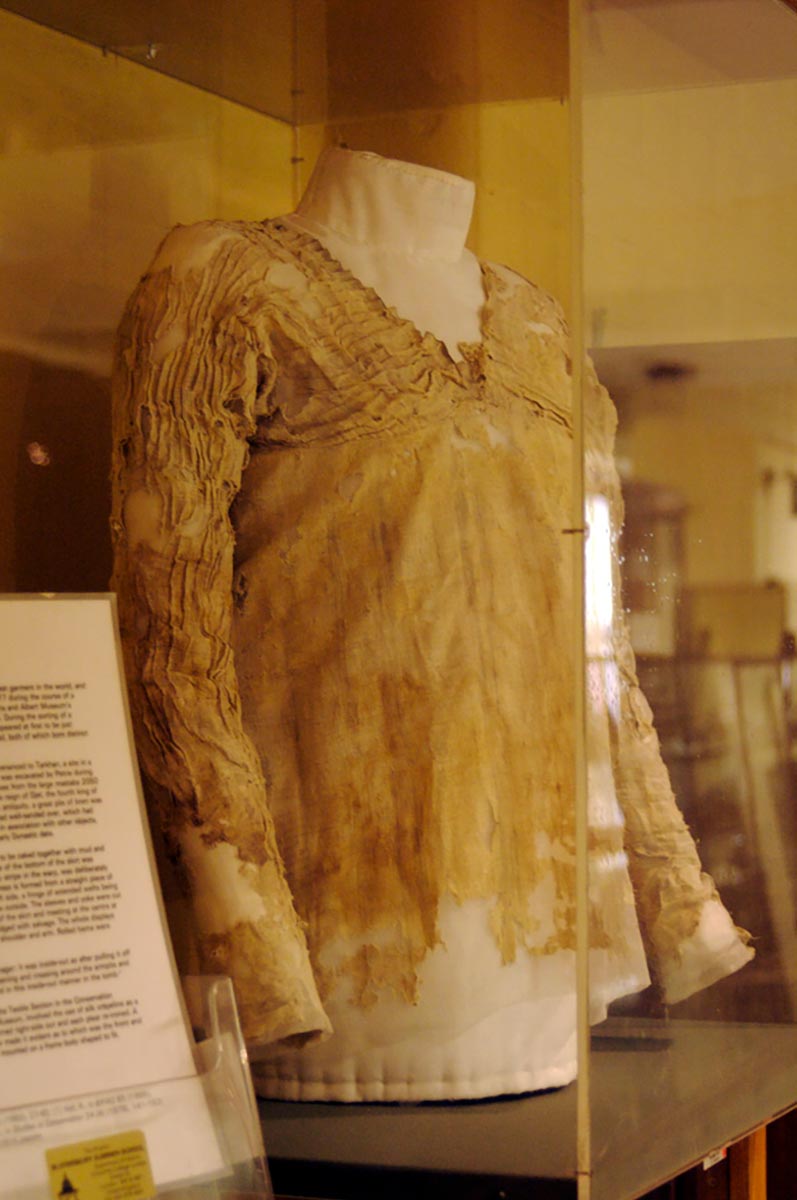
The Tarkhan Dress is no ordinary article of clothing. In fact, scholars believe this to be the oldest surviving woven piece of clothing in the world. Indeed, this linen garment is more than 5,000 years old.
The legendary archaeologist Flinders Petrie excavated this piece at a tomb in Tarkhan, south of Cairo, in 1913. However, experts did not recognize its value until the 1970s.
Before we continue, let’s briefly discuss the debates about repatriating antiquities. Much of the debate and controversy centers on supporters or opponents of cultural nationalism. According to scholar Aisha Y. Salem (2005), cultural nationalists argue that any object originating from a country belongs to that particular country. In other words, since the Rosetta Stone and each of these objects discussed here originate from Egypt, they deserve to be displayed in Egyptian museums.
Opponents of this view argue that these objects have been displayed in a museum abroad for so long that they are arguably equally, if not more, part of both the museum and that country’s history. Moreover, Maxwell Anderson points out that another related claim is that original countries have changed so much over history that they possess no greater claim to the antiquities than any foreign country where the objects may currently be exhibited (2019, 52-53).
While many other factors are at play, including legal and moral ones, much of the current debate across the media landscape centers on cultural nationalism.
Today, you’ll find the Tarkhan Dress at London’s Petrie Museum of Egyptian and Sudanese Archaeology.
4. Bust of Ankhhaf
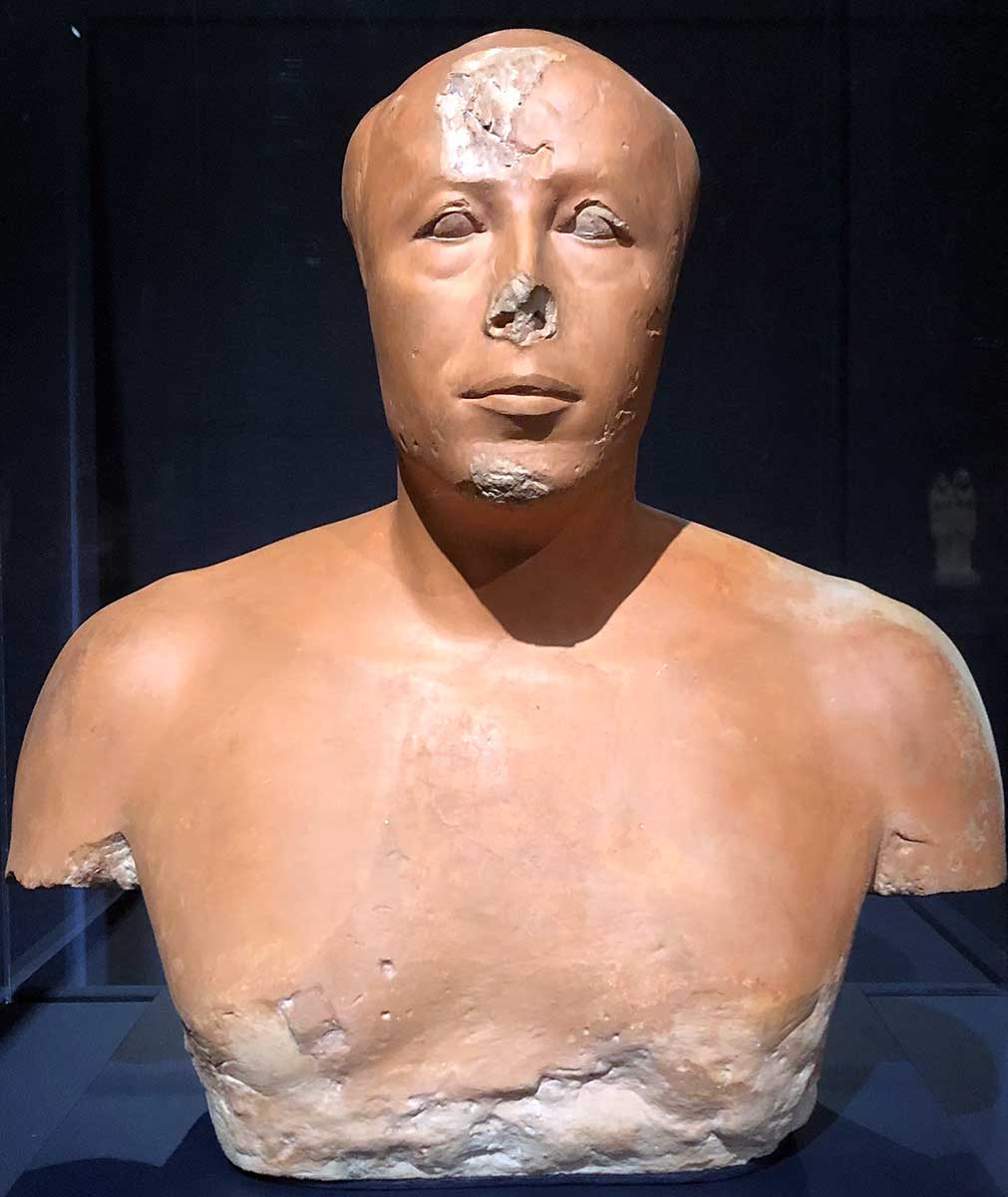
Prince Ankhhaf is a murky figure in Egyptian history, though it is clear he was a significant personality during the Old Kingdom. Scholars tend to believe he was the half-brother of Pharaoh Khufu (Cheops). Andrey Bolshakov (1991) explains that Prince Ankhhaf was a prominent figure during the Fourth Dynasty in the reign of Khufu’s son, King Khafre (ca. 2590-2570 BC).
This bust, considered one of the finest surviving examples of ancient Egyptian art, was discovered by a Harvard University-Museum of Fine Arts archaeological team excavating a cemetery at Giza in 1925. In 1927, Egyptian archaeological authorities in King Fuad I’s government gifted the bust to Boston’s Museum of Fine Arts in recognition of the archaeological expedition’s services to the Egyptian Museum in Cairo.
According to Andrey Bolshakov, this bust is “a life-size sculpted portrait in limestone, painted in a red ocher wash, representing a mature man with an intelligent gaze, aging features, bags under the eyes, and a receding hairline” (1991, 5).
Visitors to the Museum of Fine Arts, Boston, will find the bust in the museum’s collection of Egyptian antiquities.
Although this object was gifted to the museum by a previous Egyptian government, it has remained part of the ongoing debate over the repatriation of antiquities.
Distinguished archaeologist and former Egyptian Minister of Antiquities, Dr. Zahi Hawass, has included the Bust of Ankhhaf in his public petitions regarding the repatriation of major Egyptian antiquities, including the Rosetta Stone, Nefertiti’s Bust, and the Dendera Zodiac.
5. Sarcophagus of Seti I
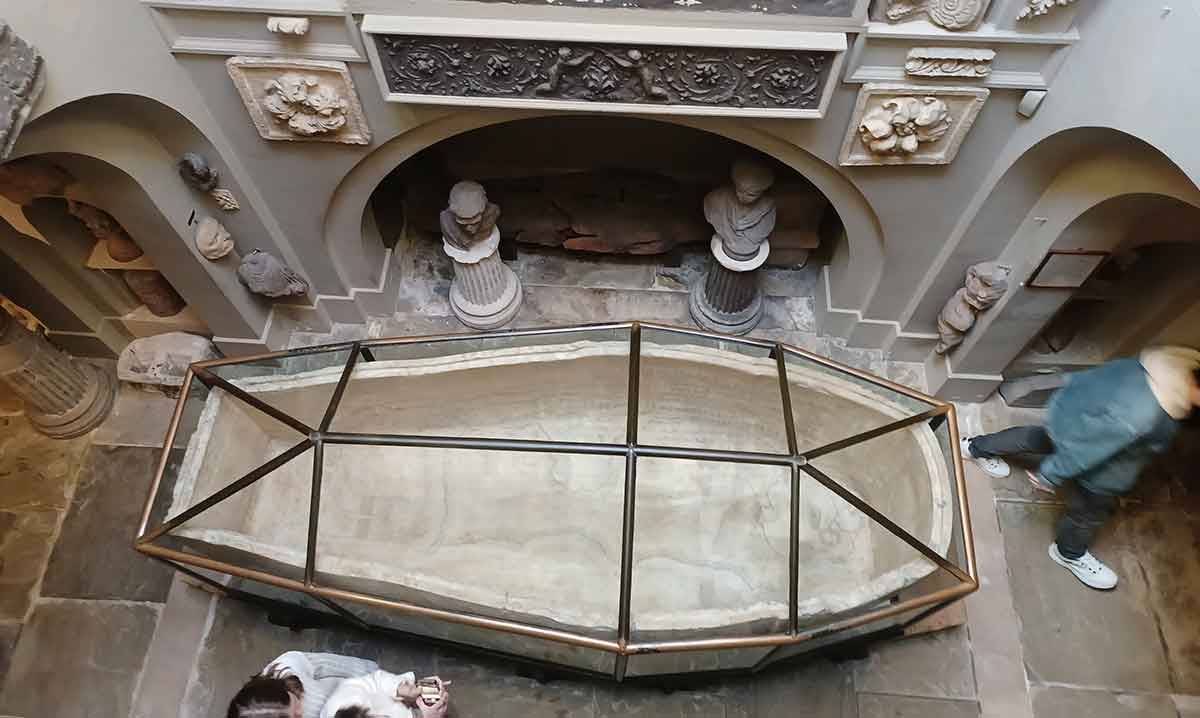
Located in the basement of London’s Sir John Soane’s Museum, the large sarcophagus was built to entomb Seti I.
Seti I is a well-known pharaoh in popular culture, depicted in films like The Ten Commandments (1956), The Prince of Egypt (1998), and The Mummy (1999).
The historical Seti was the son of Rameses I and a ruler from Egypt’s Nineteenth Dynasty. Military campaigns and Egyptian successes marked Seti’s reign from 1290 to 1279 BC. His son and successor, Rameses II, one of the most famous pharaohs, is remembered in part for victories over the Hittite Empire.
Italian engineer, circus strongman, and explorer Giovanni Belzoni discovered the sarcophagus in the Valley of the Kings in 1817. Belzoni initially aimed to sell his discovery to the British Museum. However, this never materialized, opening the door for Sir John Soane to acquire this storied object.
6. Statue of Hemiunu
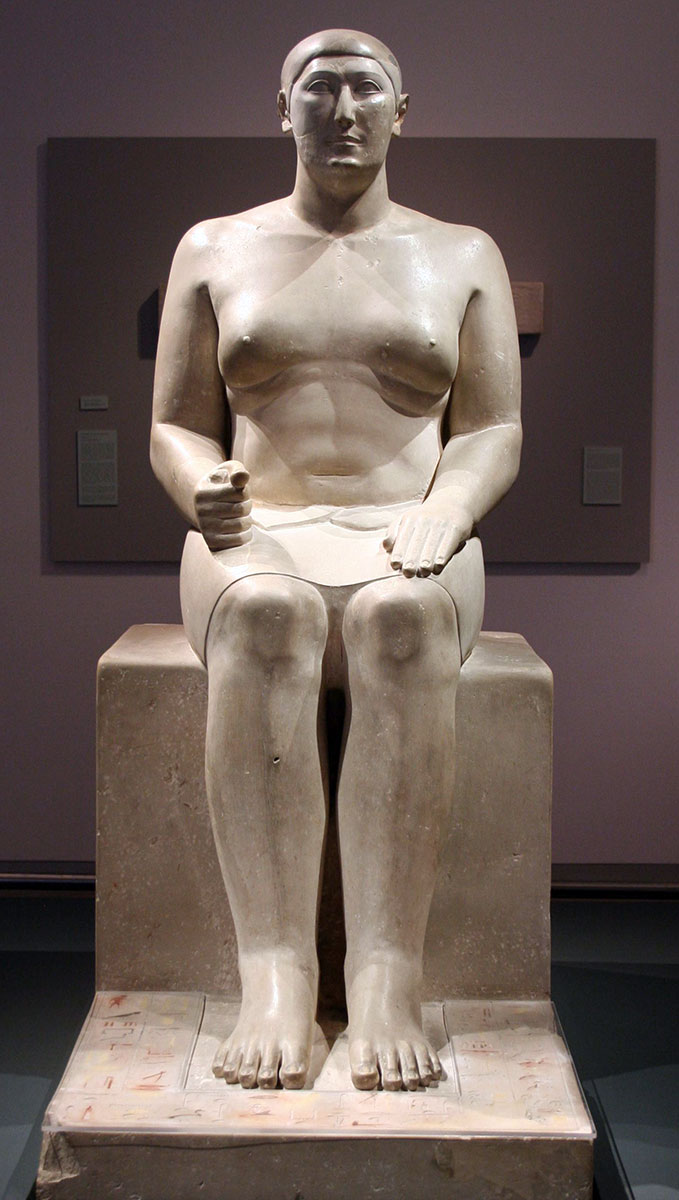
This statue depicts an important figure of Egypt’s Pyramid Age. Prince Hemiunu was the son of Nefertmaat and Itet, grandson of King Sneferu, and nephew of King Khufu (Cheops).
Scholars believe he was an important administrative official, tasked with maintaining major royal works of his era, including Khufu’s Great Pyramid at Giza.
An archaeological team led by German Egyptologist Hans Junker excavated Hemiunu’s tomb and found the damaged statue in 1912. Despite finding the statue decapitated, the archaeologists were fortunate to find much of the material within the tomb, which allowed for a painstaking reconstruction.
Today, you can find the statue at the Roemer-und-Pelizaeus-Museum in Hildesheim, Germany.
7. Bust of Nefertiti
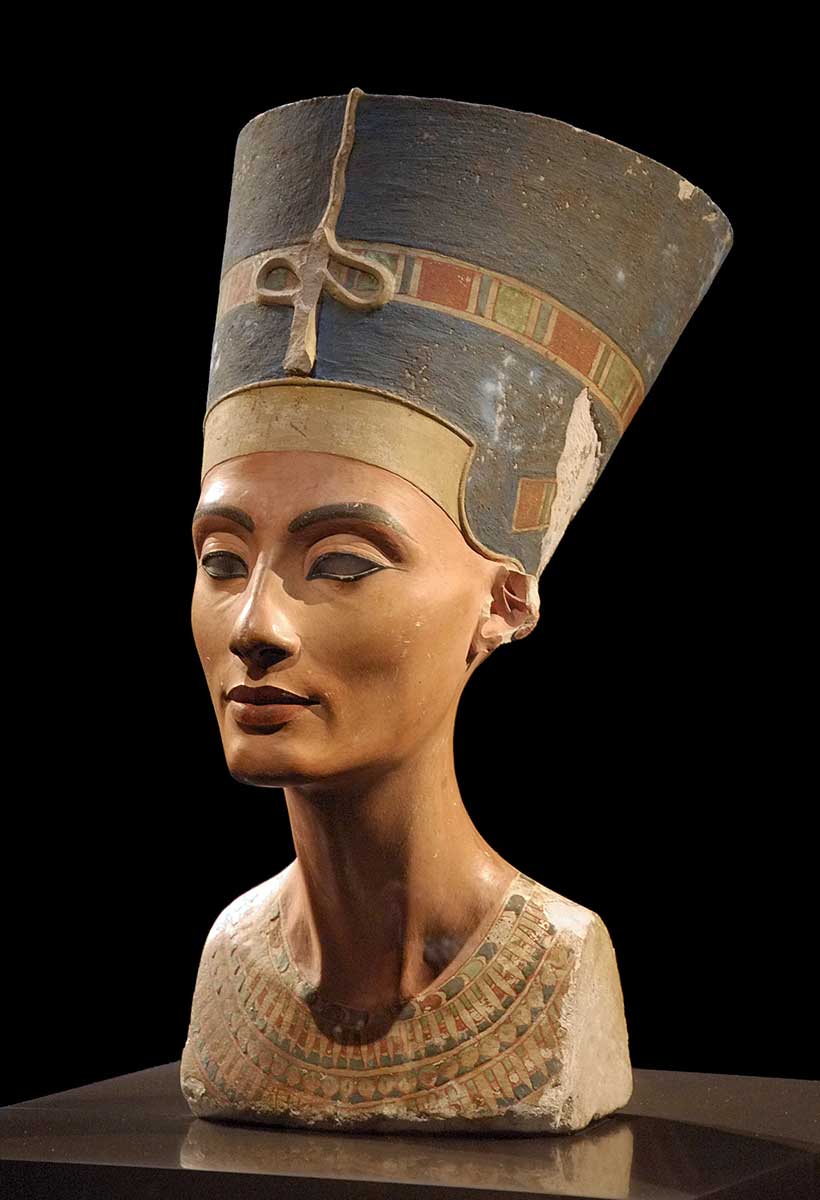
Except for the Rosetta Stone, there is likely no more recognizable artifact from ancient Egypt located outside of the country today than this bust of Nefertiti. Much like the Rosetta Stone, the bust of Nefertiti has been a focal point for activists calling for the repatriation of priceless objects from Egypt’s past.
The story of how this priceless treasure came to Berlin’s Neues Museum has long sparked controversy about whether it should be returned to Egypt.
According to author and journalist Peter Hessler, the bust was removed under an old system that divided artifacts between the archaeological teams and the Egyptian government. Although this was done legally at the time, Hessler explains that the “Egyptian” official overseeing the transfer to Germany was in fact French (2019, 255).
The fate of the bust of Nefertiti has also influenced current laws surrounding archaeological excavations in Egypt, namely that any object excavated today must remain in the country.
Peter Hessler notes that it remains a mystery how this bust of Nefertiti remained in such pristine condition (2019, 255). This is even more impressive given the tumultuous modern history of preserving this priceless object of Egypt’s past.
During World War II, Nefertiti’s bust, along with many other works from German museums, was transported to safety. Thankfully, this piece survived Allied bombing raids. However, sadly, many other antiquities and works of art were destroyed. Hessler notes that there is a word for this in German, Kriegsverlust, “war loss” (2019, 255).
Multiple official requests from the Egyptian government, including from King Farouk in 1946, have called for German authorities to return the bust. Dr. Zahi Hawass has also led a campaign to return the bust to Egypt.
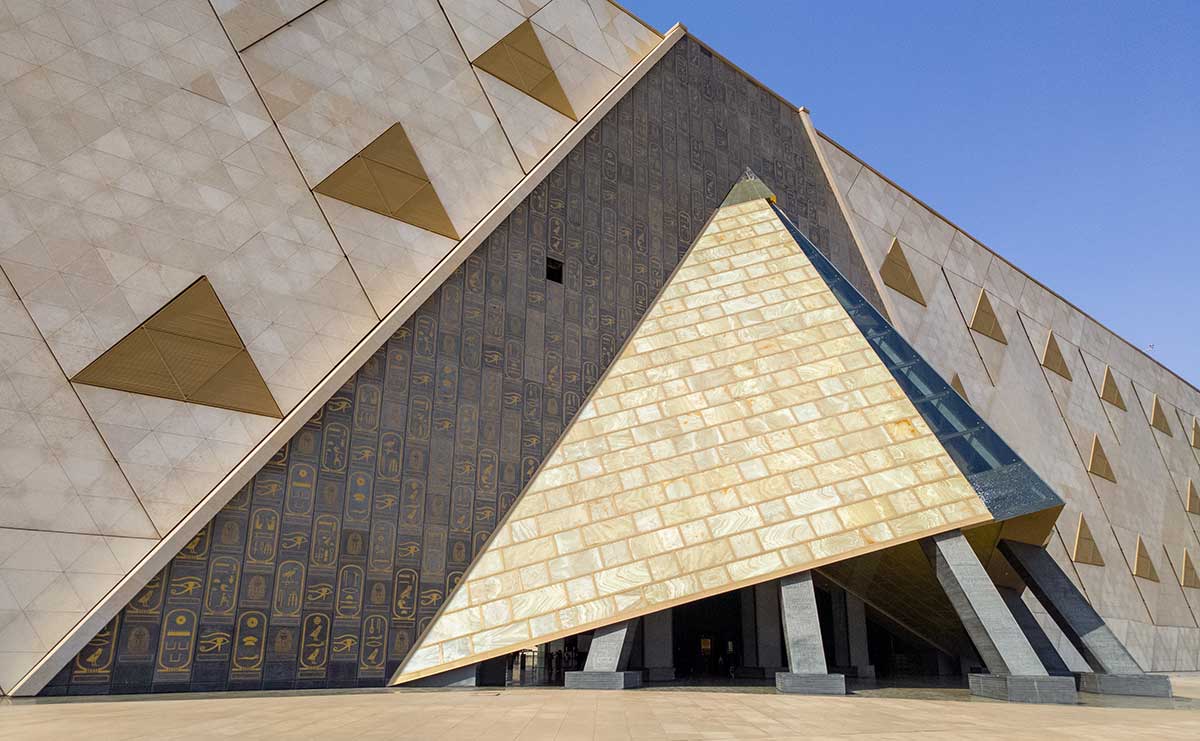
Several recent repatriations of ancient Egyptian objects from private collections and museums in the United States, the Netherlands, and Greece suggest that debates over the return of legendary pieces like the Rosetta Stone and the Bust of Nefertiti will continue.
The rising popularity of the Grand Egyptian Museum (GEM) will certainly only further increase demands to repatriate iconic pieces of Egypt’s cultural heritage.
Sources
- Anderson, M.L. (2017). Antiquities: What Everyone Needs to Know. Oxford University Press.
- Bolshakov, A. (1991). What Did the Bust of Ankh-Haf Originally Look like? Journal of the Museum of Fine Arts, Boston, Vol. 3. https://doi.org/10.2307/20519734
- Downs, J. (2020). Discovery at Rosetta: Revealing Ancient Egypt. The American University in Cairo Press.
- Hessler, P. (2019). The Buried: An Archaeology of the Egyptian Revolution. Penguin.
- Priskin, G. (2015). The Dendera zodiacs as narratives of the myth of Osiris, Isis, and the child Horus. Égypte nilotique et méditerranéenne. ENiM 8, p. 133-185.
- Salem, A. Y. (2005). Finders Keepers? The Repatriation of Egyptian Art, Journal of Technology Law & Policy Volume 10. https://scholarship.law.ufl.edu/jtlp/vol10/iss1/6