
The existence of political parties is taken for granted in modern democracies because all democratic countries allow political parties. Countries in which they are banned include monarchies, such as Kuwait and Saudi Arabia, as well as theocracies like Afghanistan and Iran. Weil calls for the abolition of political parties, but she is not among those who are opposed to democracy. Her argument is that non-independent politicians must always prioritize the needs of their party. This means that in a choice between the truth and the pursuit of political gains, party members must always choose the latter.
Who Was Simone Weil?

Simone Weil was born in France in 1909. As a child, she suffered from appendicitis that left her struggling with poor health for the rest of her life. Weil’s childhood was not only marked by physical illness, but she also had an obsession with cleanliness and issues with her physical appearance. In addition to these problems, Weil was extremely distressed by her father’s absence due to the First World War. The young Weil exhibited the kind of altruistic attitude that would be prominent in her adult life. Any sweets or chocolate she had, for example, would be given to soldiers on the front line. She also joined striking workers in singing the Internationale.
Extremely gifted academically, Weil could read Ancient Greek and Sanskrit and put these languages to use, devouring ancient texts in the original. At the prestigious École Normale Supérieure, Weil briefly studied alongside Simone de Beauvoir (who came second to her in the exam for the certificate of “General Philosophy and Logic”). In 1931, she was awarded her diplôme d’études supérieures (something akin to today’s bachelor of arts) for her thesis on Descartes.
Weil went into teaching, where her political activities often got her into trouble. She took a year out to work in factories in order to bring her closer to the working class. When civil war broke out in Spain in 1936, however, Weil volunteered to fight with an anarchist unit. An accident occurred in which she was burnt, and Weil was forced to leave.
After the German occupation of France, Weil and her family relocated to Marseilles, where she took on a dangerous role in the Resistance. In 1942, the family moved again, this time to the United States. However, Weil travelled to England in the hope of joining the French Resistance. There, she died of complications due to tuberculosis and malnutrition in 1943.
Simone Weil’s Religious Background

Simone Weil was born into a Jewish family. Her father was agnostic, and the family did not practice Judaism. In 1935, she had the first of three religious experiences that would lead her to Christianity. Whilst in Portugal, she stumbled in the street as she watched a procession of villagers singing hymns. This brought about in her the revelation that Christianity was the religion of slaves and that all slaves, including herself, must belong to it.
A couple of years later, whilst in Assisi, Weil experienced a moment of religious ecstasy in the same church where St. Francis would pray. This led her to pray for the first time in her life.
Her final revelation came the following year, after reading the poem “Love III” by the English orator and priest George Herbert (1593-1633). On reading these words, Weil felt that Christ himself had taken possession of her. From this moment on, her works took on a mystical and religious tone.
Goodness and Evil

Simone Weil believed that God is found behind all facts. She argued that we should love all facts not because of their consequences but because of God’s presence within them. For her, there is something sacred about the truth. To deliberately mislead someone is for Weil to draw them away from facts and truth, and to steer them away from God. When Weil talks about ‘the evils’ of political parties, she is referring in this context to diversions from the truth in favor of the needs of the party.
To express Weil’s view simply, we can use Matthew 6:24:
“No man can serve two masters: for either he will hate the one, and love the other; or else he will hold to the one, and despise the other. Ye cannot serve God and mammon.”
The idea here is that people can either love and serve God or mammon (money, material wealth, the pursuit of gain) but not both. For Weil, in the context of political parties, one can either serve the truth (and God) or the Party. Politicians and activists, she argues, must always serve the party or political cause and pursue gains with these in mind.
We will look at her arguments for this position shortly, but first, it is worth noting that she is not talking about corrupt politicians and activists who misuse politics to acquire personal wealth, fame, and status. We can all agree that these individuals are bad. However, when we do so, it is not the political parties or causes that we think are bad but the corrupt politicians and activists themselves. Weil’s argument is against political parties. For her, all political parties are bad.
The Evil of Political Parties
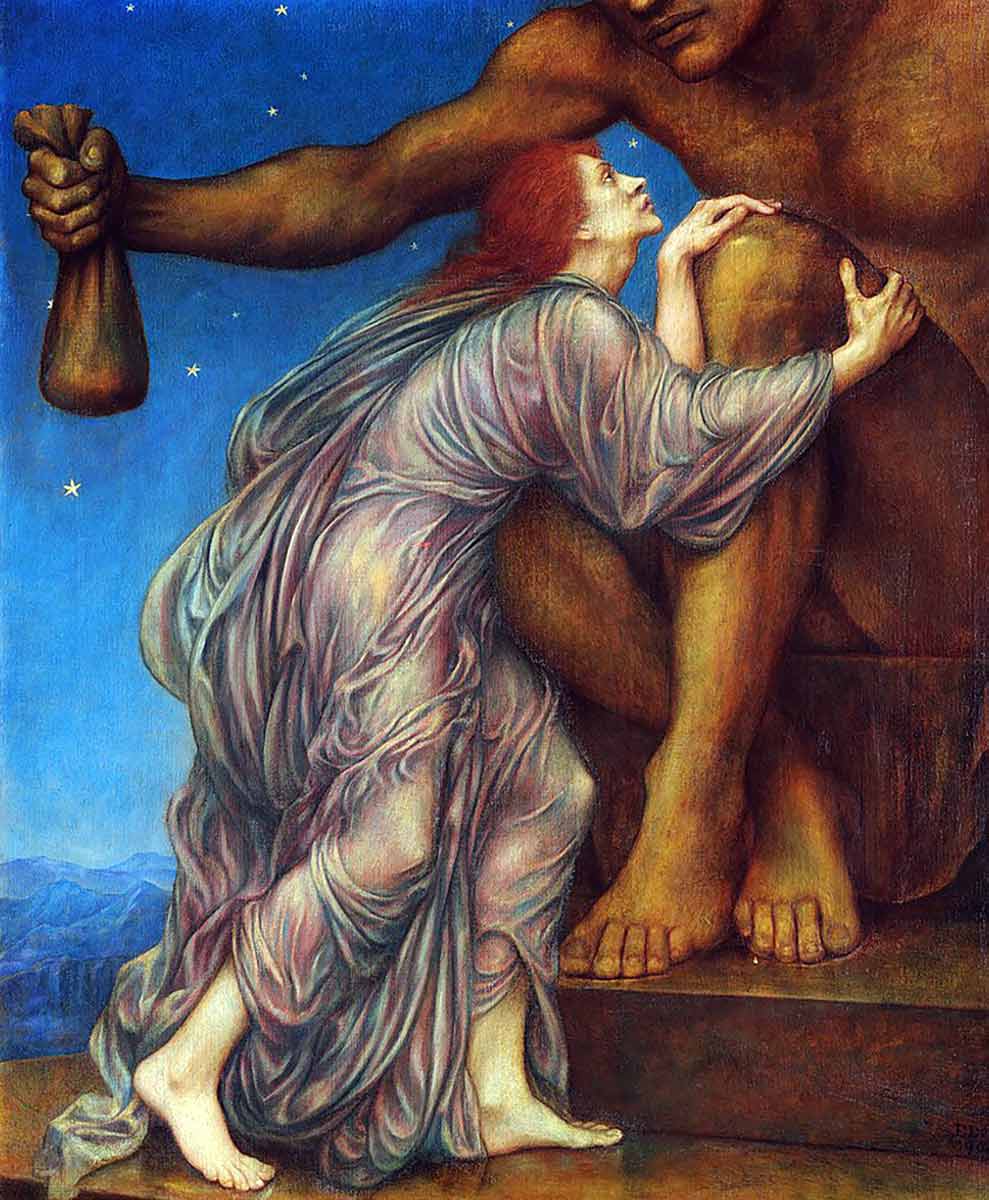
In On the Abolition of All Political Parties (1943), Weil begins by straight out questioning whether political parties do “the slightest bit of good.” And she suggests that they are, in fact, pure or nearly pure evil. Her attention immediately turns to the idea of democracy. This, she says, is not something good in and of itself.
Referencing Jean-Jacques Rousseau (1712-1778), she reiterates his observation that the unjust will of an entire nation is by no means superior to the unjust will of a single individual. This does not mean that Weil is anti-democracy. Rather, she is warning against the blind acceptance of democracy as something good in and of itself. We can remember here that Hitler and the Nazi Party were voted into power.
Weil stipulates two important conditions for democracy to be good:
- The people must be aware of their own intentions and express them. They must not be in the thrall of any collective passion.
- The people should express their will regarding the problems of public life and not merely choose individuals or organizations to think and act on their behalf.
When Weil talks about “passion,” she means crime and mendacity. We might think of passion as being moved to serve mammon rather than God. That is, what motivates a person moved by passion is the pursuit of personal gain. The pursuit of personal gain runs counter to the pursuit of truth and is unjust. A collective passion occurs when a people as a whole is motivated by the pursuit of injustice. Again, we can think of the election of the Nazi Party in Germany as a result of collective passion rather than the pursuit of truth and a desire to get closer to God.
The Problem With Political Parties

In the second of Weil’s conditions for a good democracy, we see that she does not allow people to hand over the responsibility to others. In other words, for her, truth and justice are not served by democracy if this means simply voting for a political party and hoping they will do the right thing. Why does Weil think this will not work?
Weil offers three characteristics of all political parties:
- They are all machines to generate collective passions.
- They are all designed to exert collective pressure on all individual members.
- The goal is always growth without limit.
We saw earlier that by “passions” Weil means something like the pursuit of gain rather than truth. The point of (1) is that “collective passions” are a pursuit of gain en masse. But what if someone joins a party and believes that everything the party stands for is the truth and therefore best serves the public interest and justice?
Weil’s response to this objection is that people often join a party because they are moved by its propaganda, and a number of things they propose sound good. However, no one can know all the party’s positions, now or in the future. And even if someone grows concerned about the path the party takes, that person would be pressured to conform.
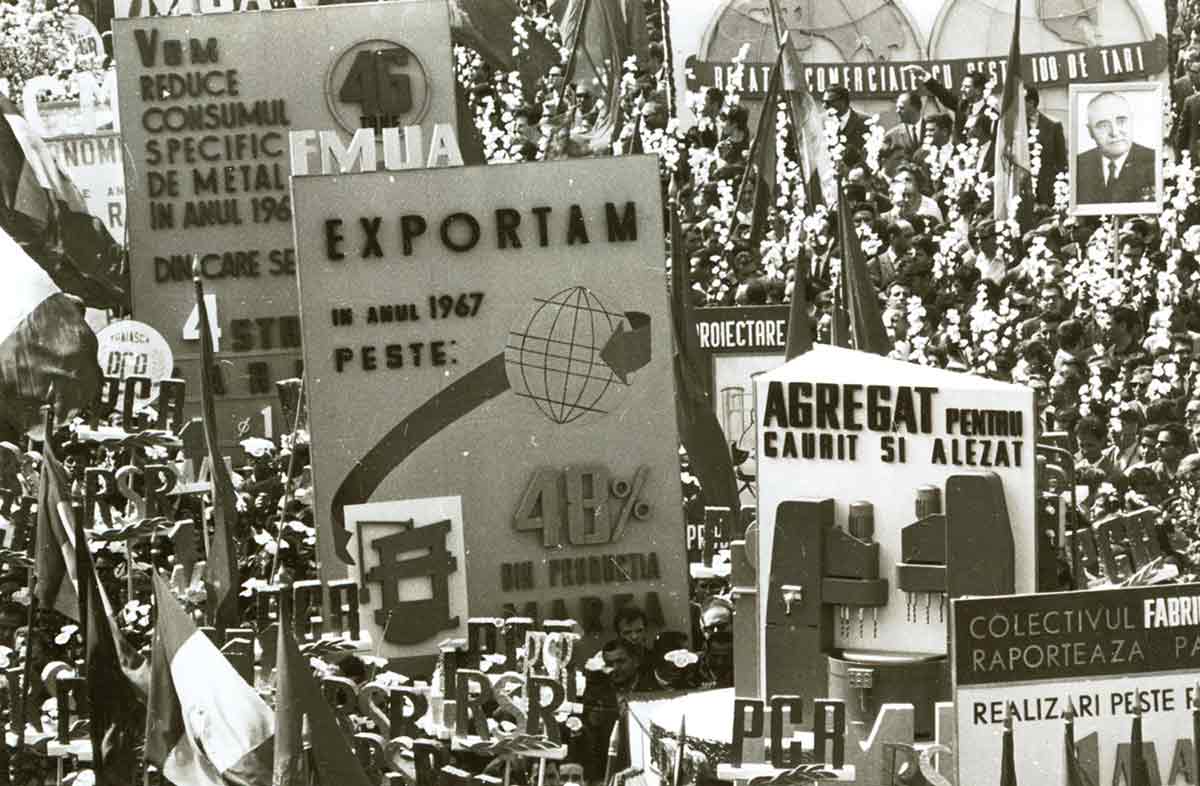
Finally, let us look at (3). Weil argues that political parties are always motivated by their own gain. That is, parties have only one goal: to grow and expand. Weil argues that even though individual activists and politicians might not think about it, all political parties are totalitarian in nature. This is because all parties endlessly pursue power. The ideal situation for an individual party would be to win every seat in an election. That is, total support by the people and no opposition parties. With no opposition at home, the only limit on the party’s power comes from parties in other countries. Since all parties seek as much power as possible, Weil argues that ultimately all parties would like the rest of the world to hand power over to them. In other words, for Weil, all political parties seek world domination!
Is Weil’s Political Thought Utopian and Naïve?

Weil’s ideas on the abolition of political parties have been criticized for being utopian or even naïve. However, this is no refutation of her arguments. On the charge of naivety, that would only really apply if she thought political parties would relinquish power without a fight or that the general public would be immediately persuaded to seek their abolition. Indeed, it is hard to understand how this would even be possible.
In On the Abolition of Political Parties, Weil is not making predictions about the fate of these institutions or outlining a possible program for abolition. Rather, she is putting forward some arguments that those for whom political parties are seen as a force for good must answer if they have any pretensions of preserving the truth.
In the charge of utopian thinking, Weil is advancing a decidedly religious and Christian account of the good. Christians pray daily for God’s will to be done and His Kingdom to come. One might argue that Christianity is an unapologetically utopian religion.
There is an undeniable truth to Weil’s claims about political parties and their desire for power. Most would probably say that while winning every seat in an election is the theoretical goal, in practice, everyone knows this would never happen. Many would probably also welcome an opposition party as a corrective measure and as healthy for democracy. However, the idea that “what is good for the Party, is the good to be pursued” is all too clearly seen in many, if not all, political parties.