
At the height of the Cold War, a new class of submarine took to the seas and struck fear into the hearts of its adversaries. Designated Project 941 Akula (“Shark”) by the Soviets and Typhoon by NATO, they were the largest submarines ever built, 175 meters (574 feet) long and an extraordinary 23 meters (75 feet) wide. Confusingly, NATO later used the name “Akula” for a different Soviet design, the Project 971 attack submarine. The name is often traced to a 1974 speech by Soviet leader Leonid Brezhnev, who used the word ‘typhoon’ to describe a new missile submarine. The reason for their immense size lay in the enormous missiles they were built to carry.
Cold War Rivalry and the Need for Arctic Deterrence
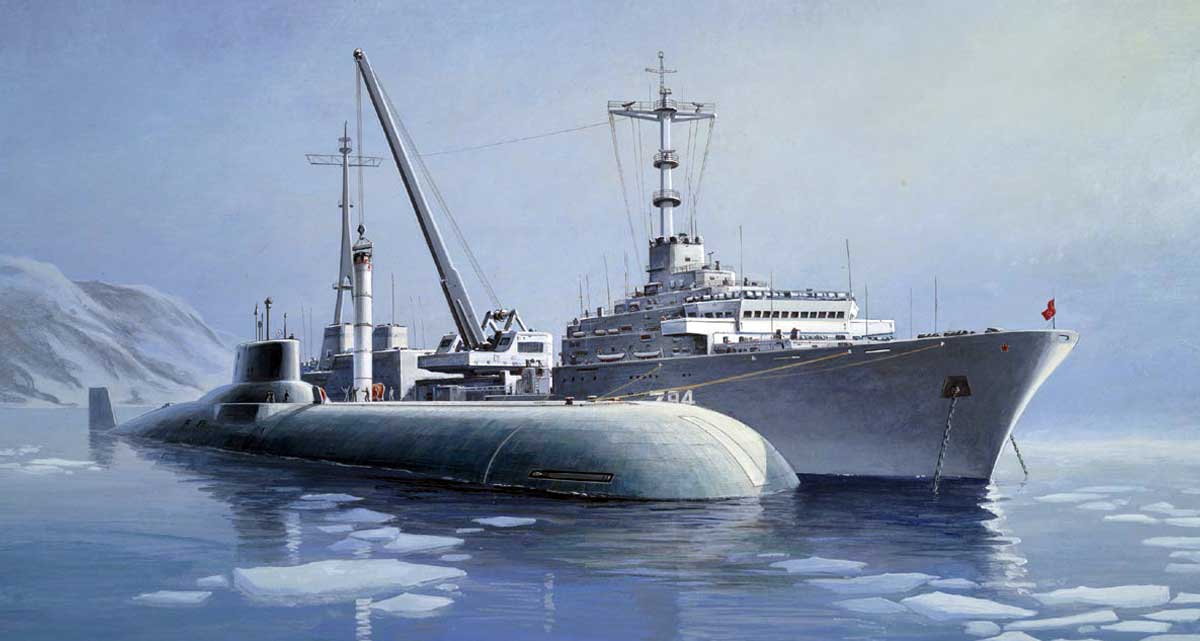
A significant part of the Cold War was the strategic game of chess waged under the waves. A major flashpoint was the Arctic, where the Soviets planned to hide their missile submarines under the ice in heavily defended “bastions,” ready to strike at a moment’s notice.
The ice protected submarines from detection and counterattacks, but it didn’t trap them. The subs did, however, need to be strong enough to surface through the ice, and the Typhoon’s reinforced sail and huge reserve buoyancy let it smash through ice up to about 2.5 meters (8 feet) thick. Soviet scientists and engineers set to work designing a submarine that could meet the demands of this new era of naval warfare.
How Enormous Missiles Forced a Multi-Hull Design

Despite displacing a massive 48,000 tons submerged, the Typhoon was not an exercise in psychological warfare and hubris. It was designed to carry 20 R-39 (NATO: SS-N-20 Sturgeon) ballistic missiles, each weighing about 84 tons. Each missile in turn carried up to 10 multiple independently targetable reentry vehicles (MIRVs). In other words, each missile had ten warheads, each of which could strike a separate target after the missile carried them into space. This means that each Typhoon submarine actually carried 200 nuclear warheads. Each warhead had a blast yield of 100 to 200 kilotons.
To put that into perspective, each Typhoon submarine carried the nuclear firepower of roughly 1,300 to 2,700 Hiroshima bombs. That combined yield approaches the Soviet Union’s Tsar Bomba, the most powerful bomb ever detonated.
To accommodate its massive armaments, the submarine was built like a catamaran, with two main pressure hulls side by side inside a single outer hull. Three smaller pressure hulls, for the torpedo room at the bow, the control room under the sail, and the steering gear at the stern, sat between and above them. Unusually, the 20 launch tubes sat in the forward section, ahead of the sail, between the two main hulls. Such a design created space and stability.
Life Aboard a Submerged City Built for Long Patrols
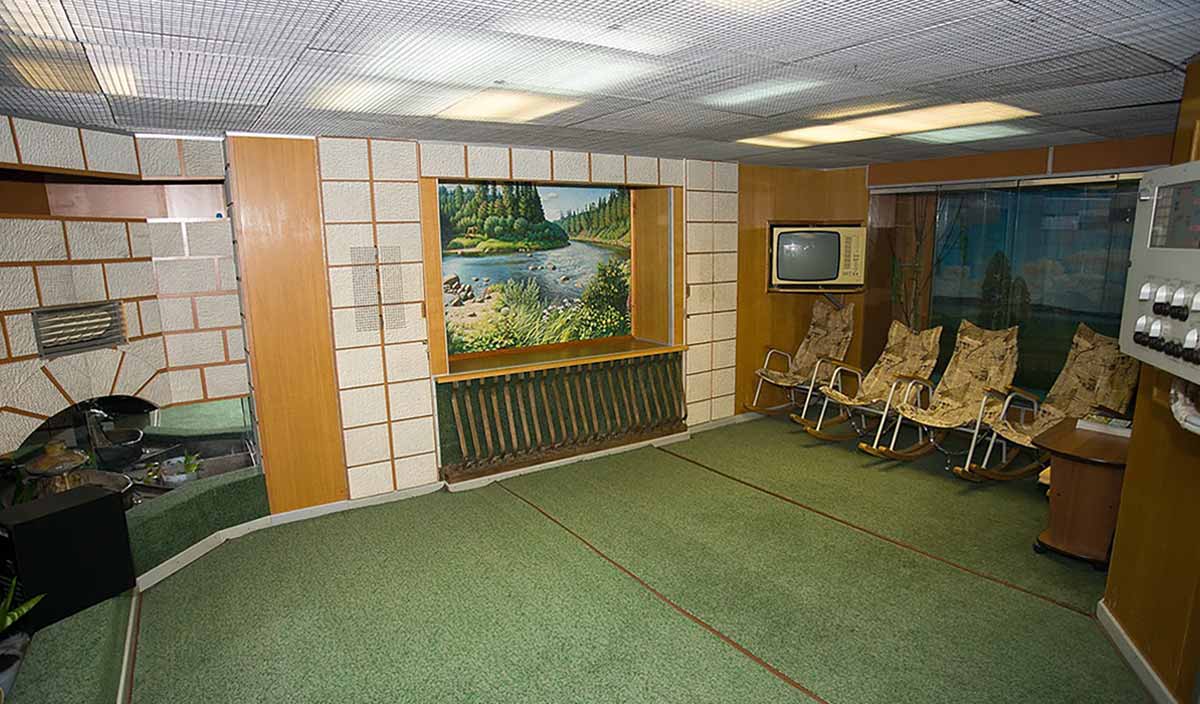
Originally intended to counter the US Ohio-class submarine, the Typhoon ended up being more than twice the size in terms of displacement, yet had a similar crew complement. The Typhoon housed 160 crewmen, while the Ohio had 155 in less than half the space. As such, life on board a Typhoon was considerably less cramped and boasted some unexpected luxuries. The class gained worldwide fame through Tom Clancy’s The Hunt for Red October, whose fictional rogue submarine was a modified Typhoon.
Each sub had a small heated swimming pool, about 4 by 2 meters, and an oak-lined sauna, while the lounge outside the sauna had tiled walls, carpeted floors, and painted forest landscapes. Nearby, there was also a small gym and even a solarium, which earned the boats the nickname “floating Hilton.”
Amenities like this might seem misplaced on a submarine, but a Typhoon could stay submerged for up to 120 days, and such things were important for crew morale.
Has Anything Ever Topped the Typhoon?
Russia’s special-mission submarine Belgorod, commissioned in 2022 to carry the nuclear-armed Poseidon underwater drone, is actually longer, at about 178 to 184 meters. At roughly 30,000 tons submerged, however, it displaces far less than the Typhoon. Its newer sister, Khabarovsk, launched in November 2025, is much smaller still, at around 10,000 tons. By weight, the Typhoon remains the biggest submarine ever built.
The Collapse of the Soviet Union and the End of the Giants
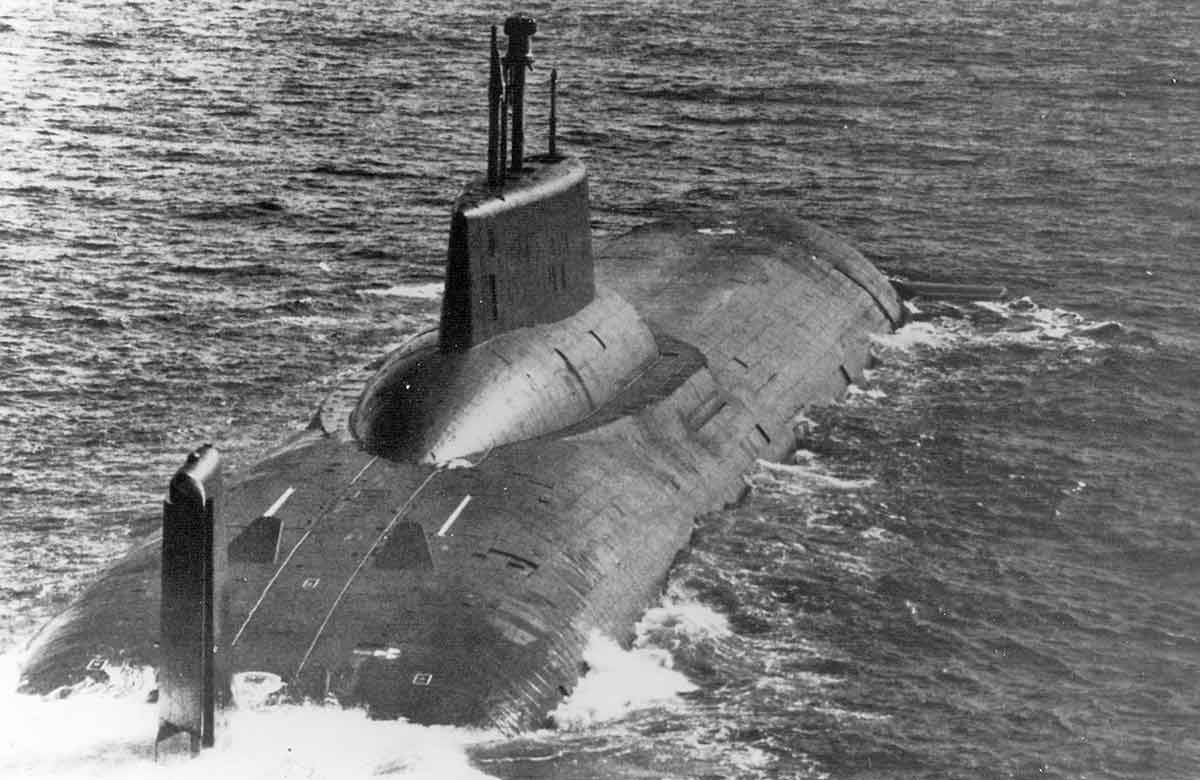
Between 1976 and 1989, six of these beasts were built, and a seventh was scrapped unfinished on the slipway in 1990. After the dissolution of the Soviet Union, all six passed to Russia, but three were laid up in the 1990s and scrapped between 2005 and 2009, with the United States and Canada paying most of the cost. Economic woes, however, made the maintenance and upgrading of the submarines difficult. Meanwhile, the Typhoons were being superseded by the newer Borei class, which was smaller and more advanced, and in 2012 the navy scrapped plans to modernize the survivors, saying one upgrade would cost as much as two new Boreis. By February 2023, all the Typhoon-class submarines had been decommissioned.
The last was the Dmitry Donskoy, the lead submarine of the class, which spent its final two decades as a test platform for Russia’s new Bulava missile. The ship has not been scrapped, and in March 2025, after years of lobbying by navy veterans, Russia announced that it would become a museum ship at the Central Naval Museum in Saint Petersburg. The conversion requires removing the spent nuclear fuel and cutting out the reactor compartments, at an estimated cost of tens of billions of rubles. It is likely to take several years to complete.