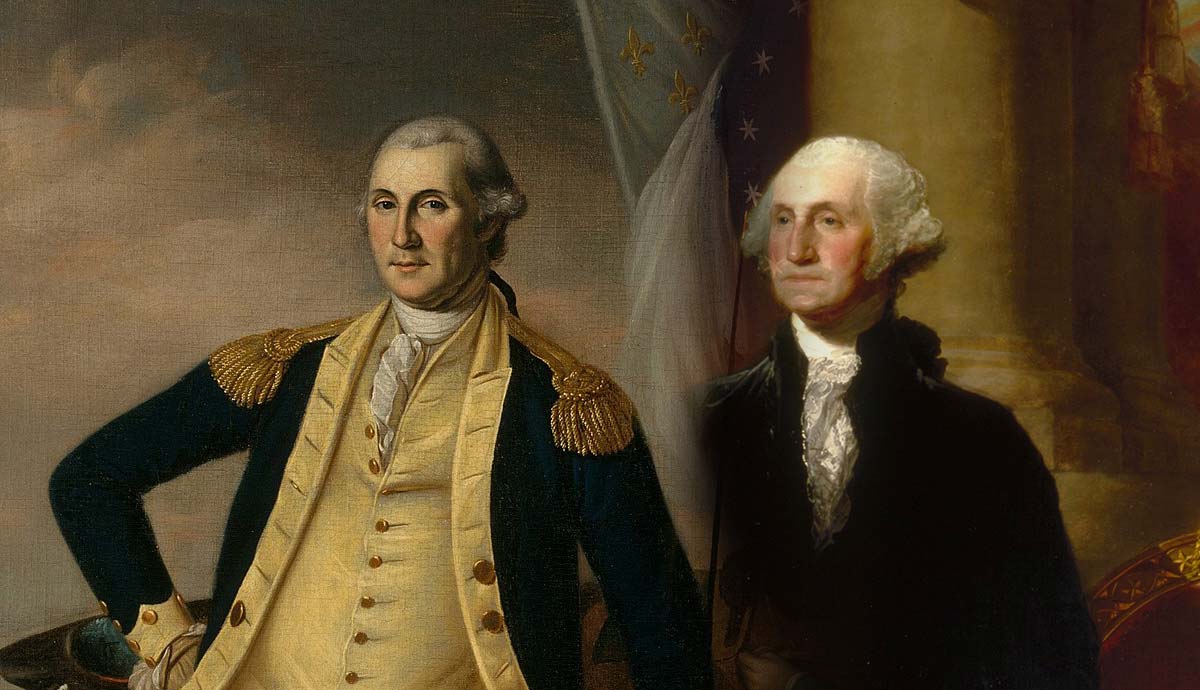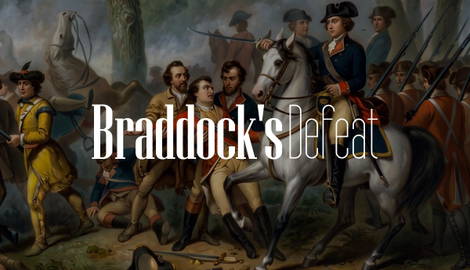

In the summer of 1755, General Edward Braddock led a large British and colonial force deep into the Pennsylvania wilderness, intent on seizing Fort Duquesne from the French. What followed was a stunning defeat for the British forces, a chaotic battle that routed Braddock’s army and left him mortally wounded. Among the survivors was a young George Washington, whose composure under fire helped forge his early military reputation. The disaster left the British frontier increasingly exposed and became one of the best-known encounters of the French and Indian War.
The Seven Years’ War in North America
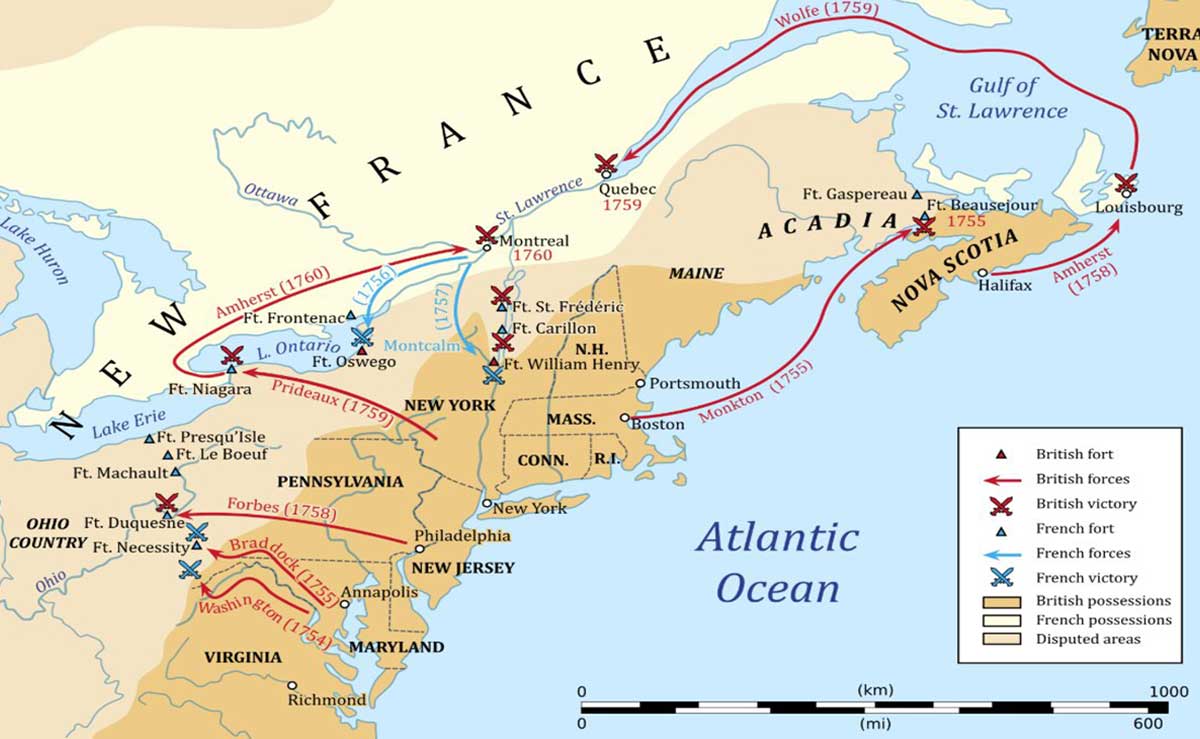
By 1755, escalating tensions between Britain and France over control of the Ohio Country had broken into open conflict, as both empires claimed the strategic fork of the Ohio River at the point the Allegheny and Monongahela met. This was the site of Fort Duquesne, an outpost constructed by the French in 1754 to assert control over the contested territory.
In 1755 General Edward Braddock was sent from Britain with two regiments of British regular infantry. Appointed commander-in-chief in North America, he was tasked with attacking several French positions simultaneously. Fort Duquesne was deemed an important objective so he took personal command of the attack.
If Braddock captured the fort, the British would control the contested area and further weaken the French in the Ohio Country. Many of the colonial authorities were also panicking about the security of their western frontiers. Braddock gathered roughly 2,100 men, a combination of British regulars, artillery crews, and provincial troops from colonies such as Virginia, Maryland, the Carolinas, and New York, while Pennsylvania supplied some 150 wagons through Benjamin Franklin. George Washington joined the expedition as an unpaid volunteer aide-de-camp to Braddock, hoping to gain experience with the regular British army. The expedition set out from Fort Cumberland in late May and early June 1755, heavily burdened with artillery and supply wagons. This quickly became an issue as the army entered the mountains.
The British March Against Fort Duquesne
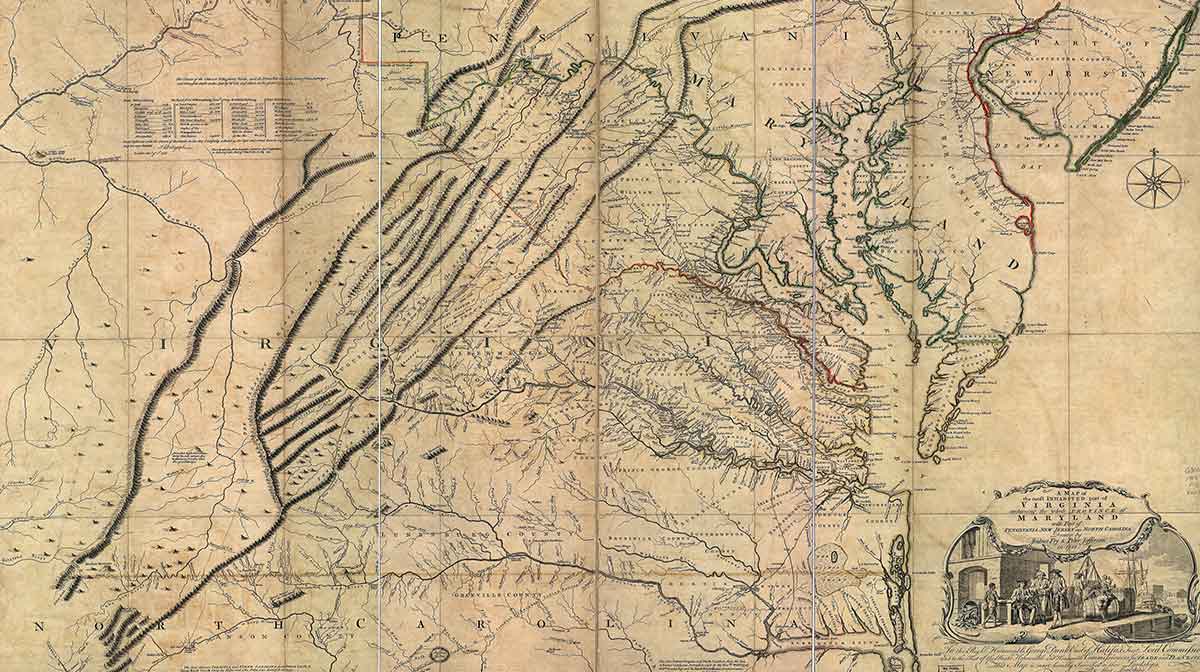
Beyond Fort Cumberland there was no proper road toward Fort Duquesne, only trails and tracks. Soldiers struggled to widen these into a 12-foot road, later known as Braddock’s Road, to accommodate their artillery train and supply wagons. Progress was anything but rapid, amounting to a few miles a day on rough terrain. At Little Meadows, partly on Washington’s advice, Braddock divided his force, pushing ahead with about 1,300 picked men while Colonel Thomas Dunbar followed with the heavy baggage and roughly 850 men.
This “flying column” numbered roughly 1,300 men but was still encumbered with equipment. The march dragged on, giving ample time for the French and their indigenous allies to prepare. French and Native scouts tracked the column’s progress, and on July 8 they warned the fort that Braddock was nearly at the Monongahela. Not willing to sit and wait, Captain Daniel de Beaujeu led a mixed force to intercept the British on July 9. This force of about 900 comprised 108 French colonial regulars (troupes de la marine), 146 Canadian militiamen, and 637 Native warriors, mostly Odawa, Ojibwe, Potawatomi, and other Great Lakes nations.
The Climactic Battle of the Monongahela
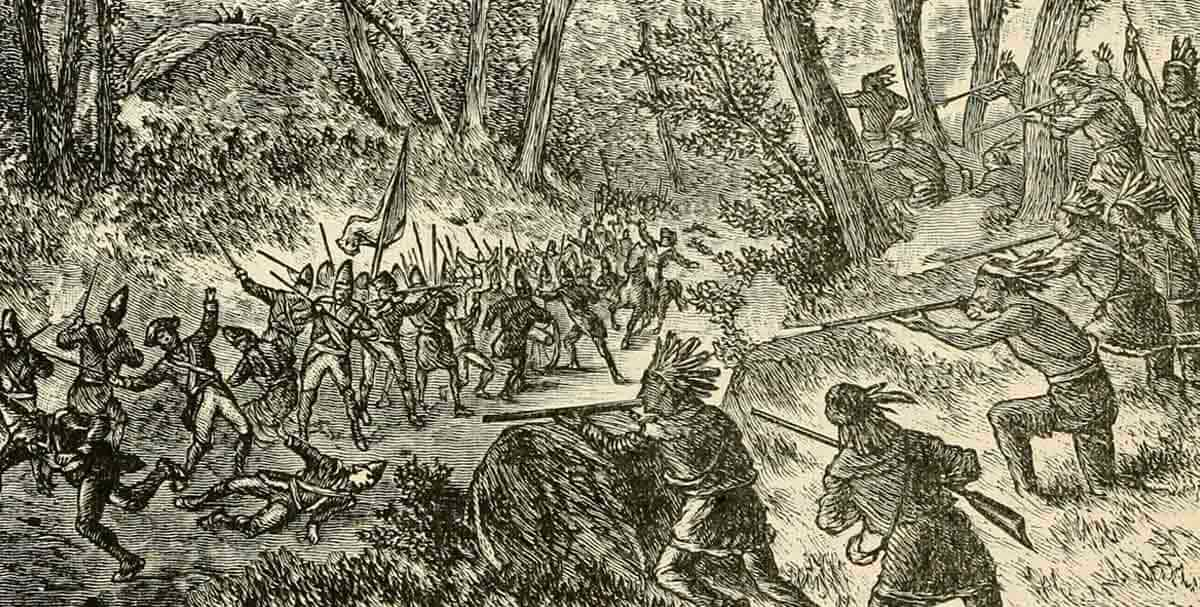
Braddock’s column crossed the Monongahela on July 9, continuing towards Fort Duquesne. Beaujeu had hoped to ambush the British at the river crossing but arrived too late, so the two forces blundered into each other just beyond the ford. The British vanguard under Lieutenant Colonel Thomas Gage killed Beaujeu in its opening volleys, and many Canadian militiamen fled, but Captain Jean-Daniel Dumas took command and rallied the rest. The terrain suited the Native warriors, who fanned out along both flanks of the column and onto a hill to its right, using cover and concealment to their advantage.
The British forces went on the defensive, sticking to tight formations that were easy targets for the French and their allies. Braddock had five horses shot from under him as he rode among his men trying to restore order and push forward.
British regulars had been trained for open fields where success lay in holding ranks and firing in disciplined volley. They struggled to fight an enemy they could barely see as the French militia and indigenous troops skirmished through the trees. French regulars meanwhile pushed along the road to drive the British back. At times British forces fired on each other, such was the confusion in the forest battle. The fighting dragged on for roughly two to three hours before Braddock himself was shot.
The British Retreat Into Chaos
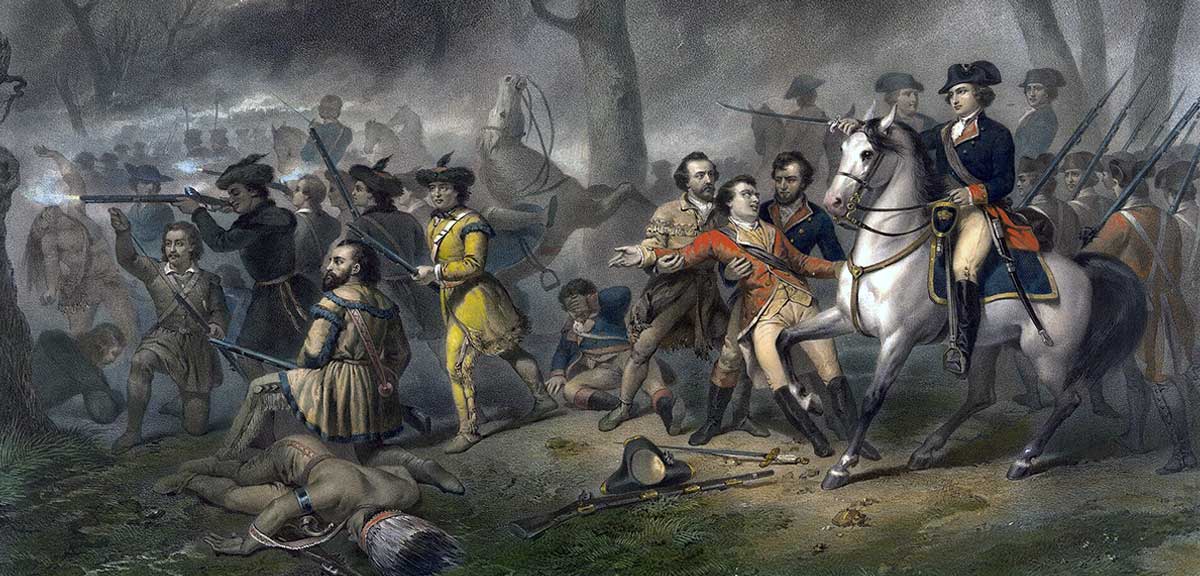
Braddock had stubbornly insisted on sticking to doctrine even as the battle turned against him. He believed discipline and steady fire would win the day even when the French had outflanked his column and fired on them from three sides. It was mainly the colonial troops, especially the Virginians, who broke ranks to fight from behind trees, and some were shot by British regulars who mistook them for the enemy.
Many British officers were killed by enemy marksmen, targeted deliberately to sap British morale and ruin cohesion. Even so, the regulars held together for hours, firing volleys blindly into the treeline. Braddock finally ordered a retreat and was shot moments later, and with most of his officers dead or wounded, the withdrawal quickly collapsed into a panicked rout.
Sensing their opportunity, Native warriors charged with tomahawks and chased the fleeing soldiers back to the Monongahela ford, where many were cut down as they tried to cross. Here Washington distinguished himself, helping carry the wounded Braddock from the field and organize the retreat before riding through the night to bring help from Dunbar’s camp.
Braddock’s Death and Washington’s Personal Conduct
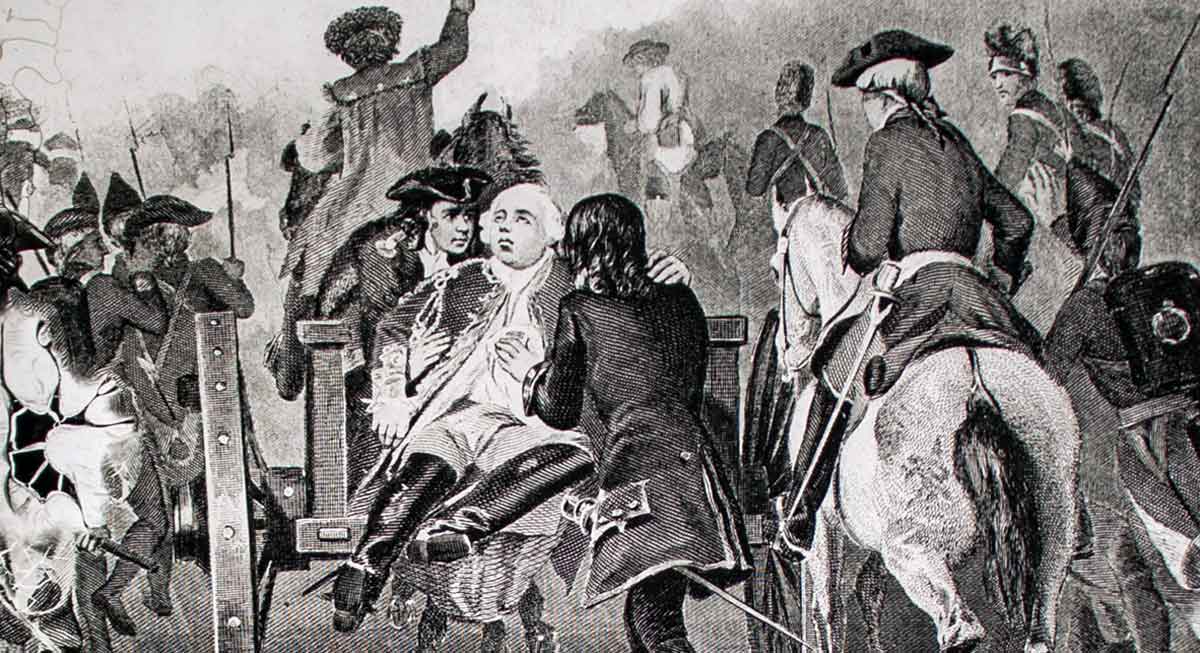
Nearly 500 of Braddock’s roughly 1,300 soldiers were killed and another 400 to 500 wounded, about two-thirds of the column, while the French and their allies lost only about 30 killed and 57 wounded. Braddock survived another four days before dying on July 13, and Washington read the burial service as the general was buried in the middle of the road so his grave could not be found. Colonel Dunbar took command of the survivors and abandoned the expedition. Fearing a French and Native attack, he had the wagons, artillery, ammunition, and some 16,000 pounds of gunpowder destroyed. Fortunately for the British forces, the French did not have the strength for an organized pursuit so the expedition was able to withdraw without further bloodshed.
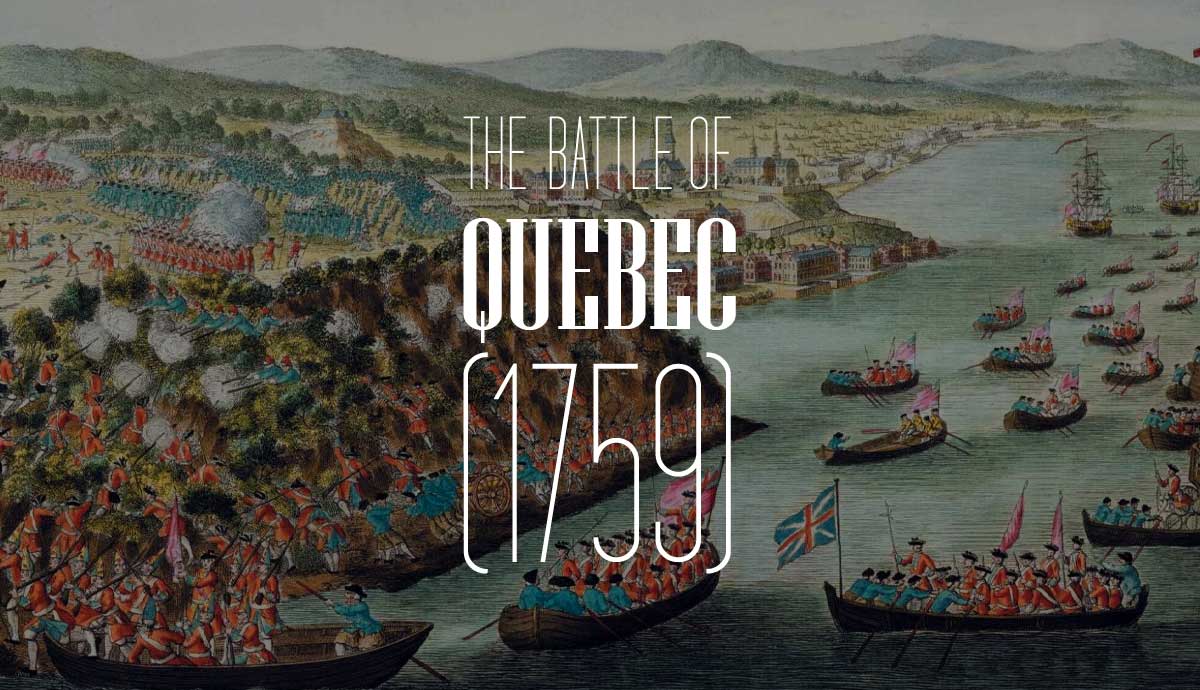
The French remained dominant in the region for the next three years. The victory convinced many previously neutral nations, including the Lenape (Delaware) and Shawnee, to side with the French. The British would not take Fort Duquesne until the Forbes expedition of 1758, when the French blew up the fort and withdrew in November. A year later, the British victory at the Battle of Quebec sealed the fate of French Canada. Wary of Braddock’s fate, nearly 6,000 soldiers came this time in an overwhelming display of force.
Washington too was to return to Duquesne as part of the Forbes expedition. He was one of the few to come away from Monongahela with his reputation enhanced. He had distinguished himself and prevented a disaster from worsening. His personal courage was also commended. Washington had two horses shot from under him and four bullets through his coat, yet escaped unhurt, as he wrote to his brother John Augustine on July 18, 1755.
The Aftermath of Braddock’s Defeat
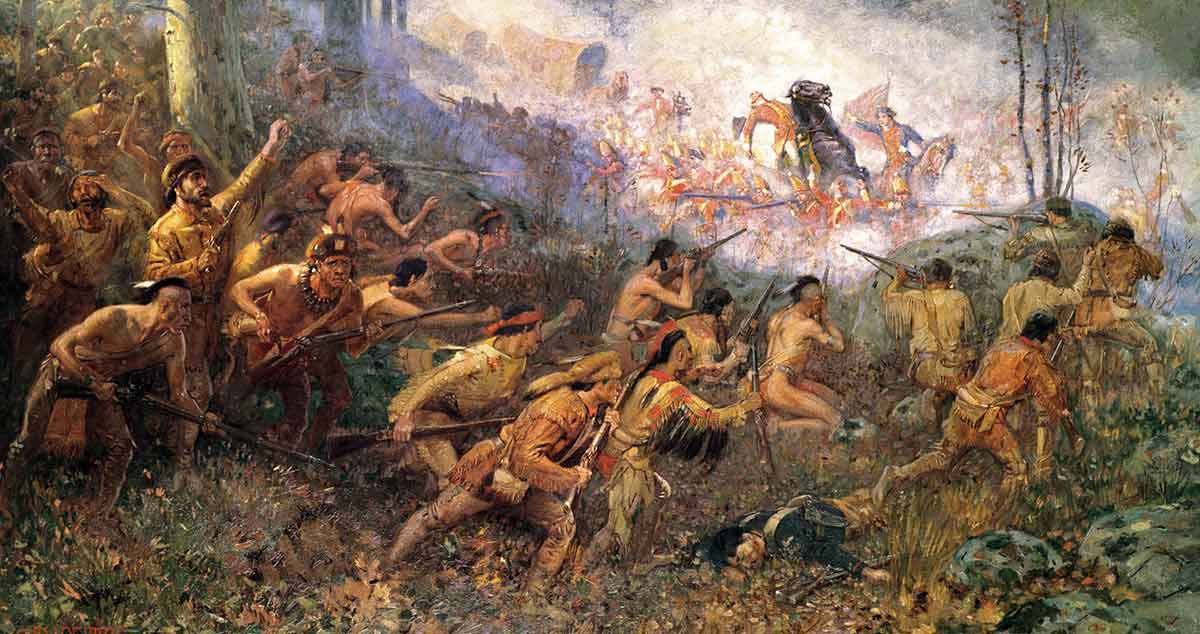
The defeat was one of the worst in British colonial history. British regulars and provincials had been routed by a smaller force made up mostly of Native warriors, backed by Canadian militia and French colonial troops. It was a harsh wake-up call for officers in North America who assumed that professional European soldiers would easily defeat irregulars.
Having reassessed their own doctrine, the British would make greater use of skirmishers and scouts in the aftermath of the battle. Ranger units like Rogers’ Rangers were expanded to fight this frontier war. The defeat unleashed a wave of Native raids on the Pennsylvania, Maryland, and Virginia frontier, and in November 1755, hundreds of frontier settlers marched on Philadelphia to demand protection. Previously pacifist colonial governments such as Pennsylvania were prompted to raise a militia, increasing the pool of manpower available to the British.
Ironically, two future enemies both survived the Braddock expedition and went on to greater commands. In August 1755, Washington became commander of the reorganized Virginia Regiment, a far larger force than his 1754 command, and worked to make it more professional. The experience deepened his knowledge of warfare and built leadership skills he would rely on during the American Revolution.
Future general Thomas Gage would also fight at the Monongahela, commanding the vanguard that started the battle. He was wounded in the fighting and forced to defend himself against accusations that he was to blame for the defeat. In 1758, he raised the 80th Regiment of Light-Armed Foot, often described as the British Army’s first light infantry regiment. Two decades after he fought alongside Washington, Gage’s attempt to seize the arms of colonial militias in Massachusetts led to the battles of Lexington and Concord in April 1775, and to the bloody British victory at Bunker Hill that June. Other future Revolutionary figures marched with Braddock too, including wagoner Daniel Morgan, a young Daniel Boone, and Captain Horatio Gates, who was wounded in the battle.